-
-
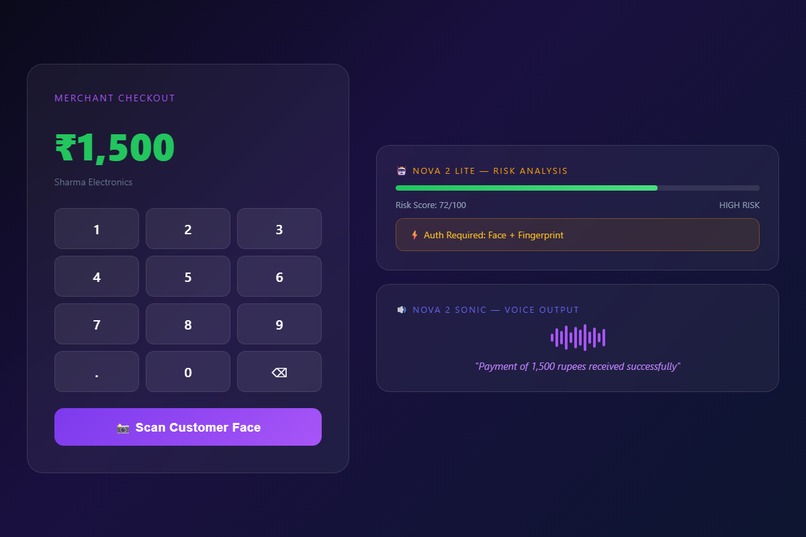
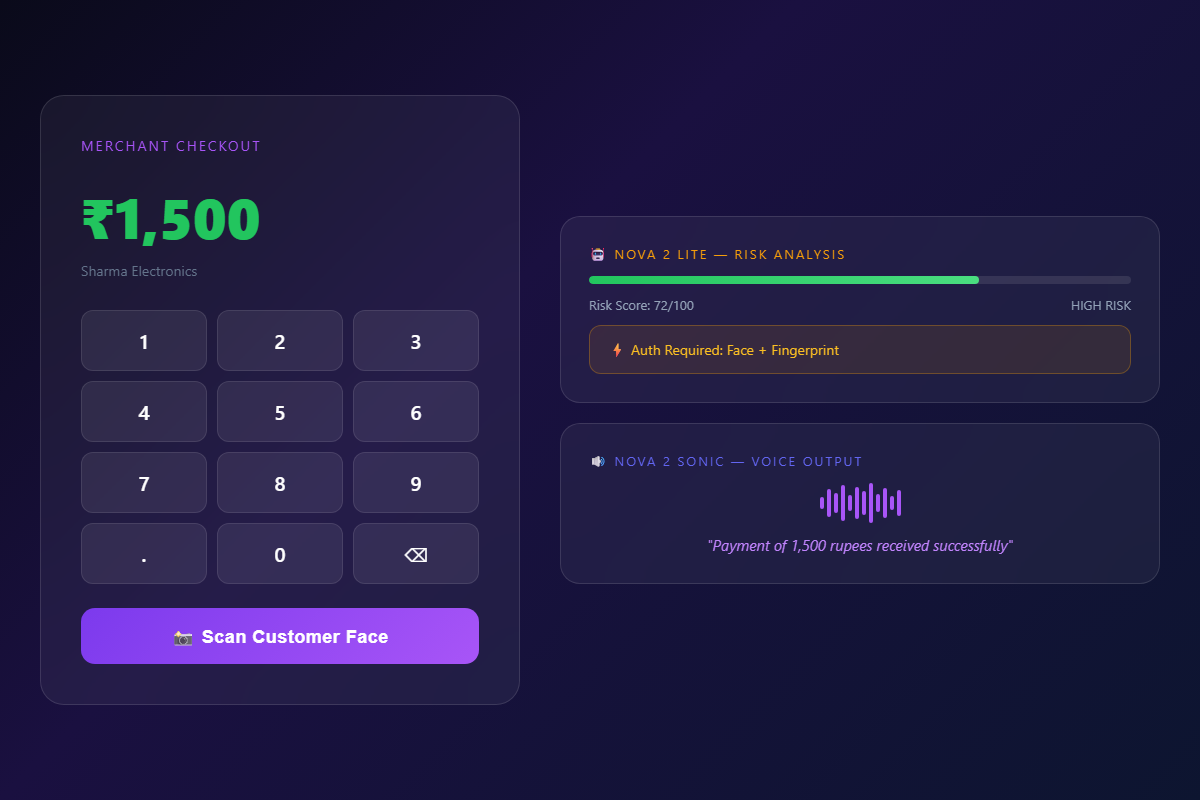
Merchant POS with Nova risk scoring + voice output
-
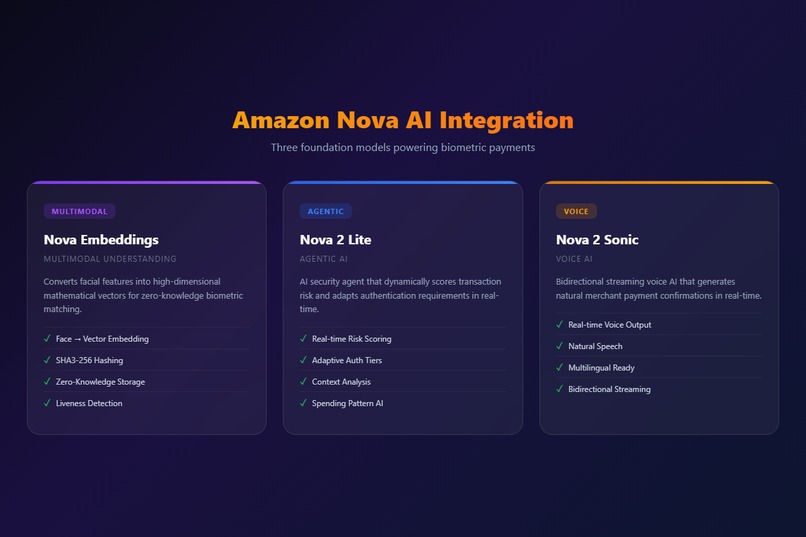
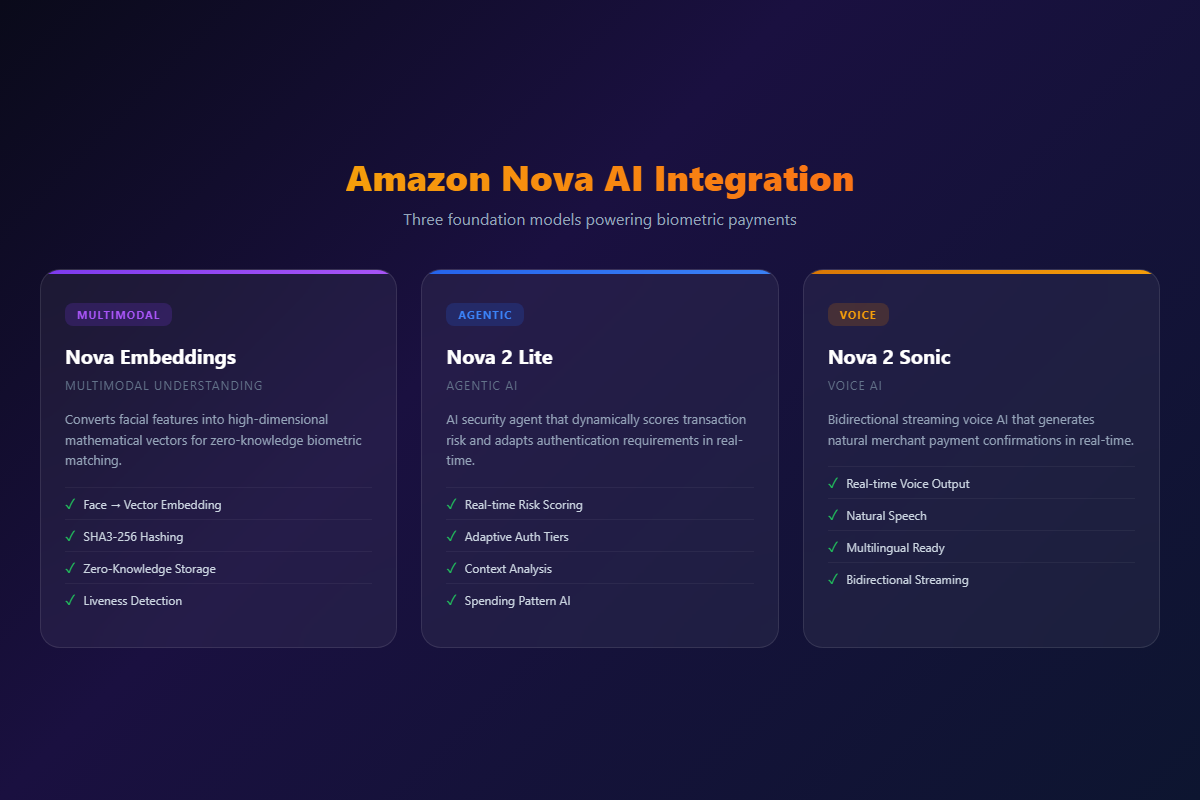
Amazon Nova 3-model architecture breakdown
-
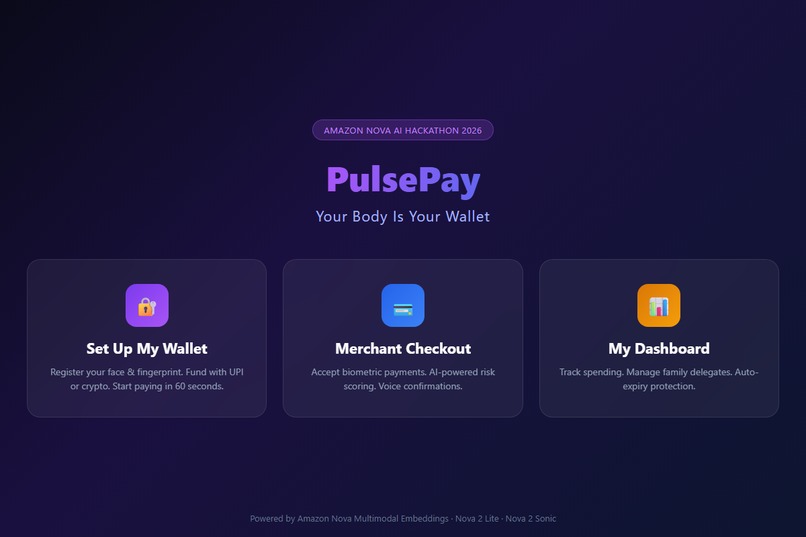
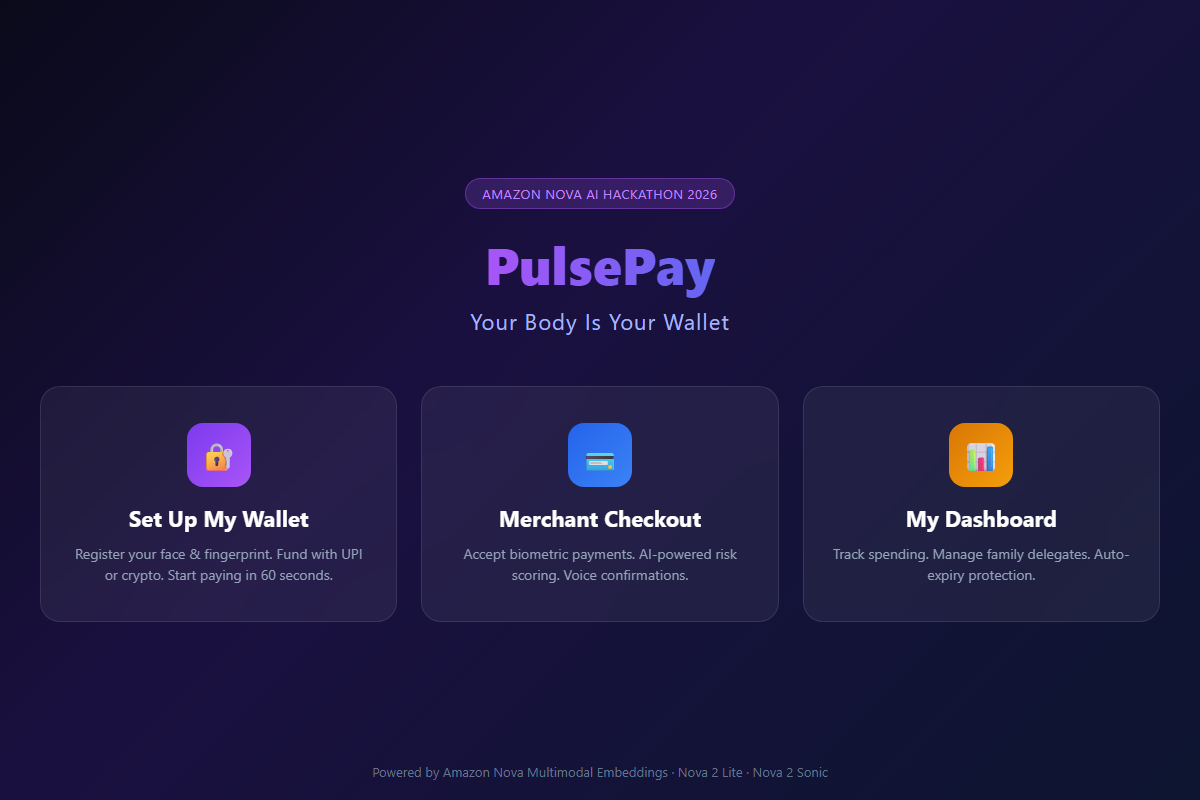
Landing page
-
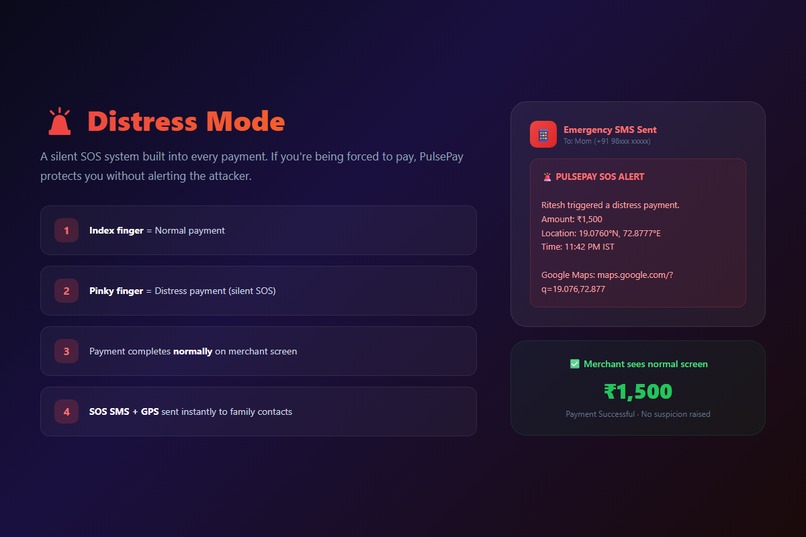
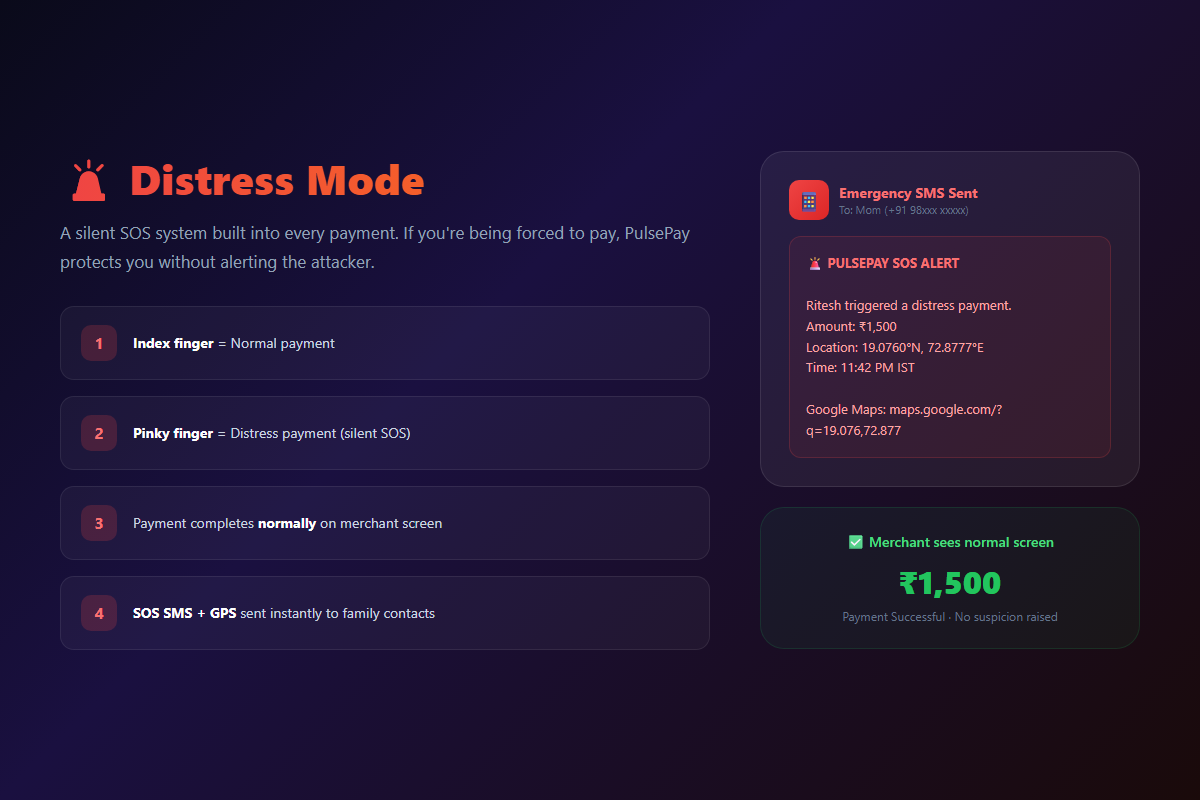
Distress Mode with SOS SMS + GPS alert
Inspiration
India has over 400 million unbanked citizens who can't access digital payments because they don't own a smartphone. Even for smartphone users, emergencies happen — your phone dies, gets stolen, or you simply forgot it. We asked: what if your body was your wallet? That question led to PulsePay.
What it does
PulsePay is a biometric micro-wallet that lets users pay using only their face, fingerprint, and voice — no phone required.
- Adaptive Authentication — Amazon Nova 2 Lite dynamically scores transaction risk and decides whether a face scan alone is enough, or if fingerprint verification is also needed
- Zero-Knowledge Biometrics — Face images are never stored. Amazon Nova Multimodal Embeddings converts facial features into mathematical vectors, which are then SHA3-256 hashed
- Voice-Confirmed Payments — Amazon Nova 2 Sonic provides real-time spoken confirmations so merchants know the payment went through
- Distress Mode — Scan your pinky finger instead of your index finger to silently trigger an SOS alert with GPS coordinates to your family
- 72-Hour Auto-Expiry — Wallets self-destruct after 72 hours with automatic refunds
- Family Wallet Delegation — Add family members with their own biometrics and spending caps
- UPI & Crypto Wallet Connect — Link existing UPI handles or crypto wallets for funding
How we built it
- Frontend: Next.js 16 + TypeScript + Tailwind CSS as a PWA with glassmorphism UI
- Backend: Node.js + Express integrating three Amazon Nova models via AWS Bedrock SDK
- CV Service: Python FastAPI handling biometric processing with Nova Multimodal Embeddings
- Database: PostgreSQL for wallet state, transactions, and family delegation
Amazon Nova Integration:
- Nova Multimodal Embeddings — Generates high-dimensional face vectors for zero-knowledge biometric matching
- Nova 2 Lite — Agentic security layer analyzing transaction context to dynamically set authentication requirements
- Nova 2 Sonic — Bidirectional streaming voice AI generating natural merchant confirmations in real-time
Challenges we ran into
- Bidirectional streaming with Nova 2 Sonic required deep research into the AWS SDK's InvokeModelWithBidirectionalStreamCommand and NodeHttp2Handler — the event protocol was complex to implement correctly
- Balancing security with usability — the AI risk engine needed to be smart enough to not annoy users on small purchases while catching suspicious transactions
- Camera-based fingerprint scanning in a browser was unreliable, so we engineered a touch-based fingerprint solution with visual progress feedback
Accomplishments that we're proud of
- Built a complete biometric payment system that works without a phone
- Integrated three different Amazon Nova models across three hackathon categories (Multimodal, Agentic, Voice)
- The Distress Mode feature could genuinely save lives in real-world emergencies
- Achieved zero-knowledge biometric storage — no raw biometric data is ever persisted
What we learned
- Amazon Nova's multimodal capabilities can replace traditional specialized ML models for biometric embedding
- Nova 2 Lite effectively acts as an autonomous security agent when given the right context
- Building accessibility-first (no phone, no literacy required) forces better design decisions for everyone
What's next for PulsePay
- Integration with India's UIDAI Aadhaar system for real identity verification
- Hardware biometric sensor support for enterprise merchant terminals
- Expanding Nova 2 Sonic to support Hindi, Tamil, and other regional languages
- Pilot program with rural merchants in partnership with local banks
Built With
- amazon-nova-2-lite
- amazon-nova-2-sonic
- amazon-nova-multimodal-embeddings
- audio
- aws-bedrock
- express.js
- fastapi
- next.js-16
- node.js
- postgresql
- python
- tailwind-css
- typescript
- web
- web-crypto-api


Log in or sign up for Devpost to join the conversation.