Inspiration
A close friend shared something with me recently that I haven't been able to stop thinking about. They wrote that their memories of someone they lost were becoming blurry. Not that they loved them less. But the details were fading. They were grieving twice — once when they lost them, and again every time a memory dimmed. That stayed with me. Because it wasn't just about grief. It was about something more universal — the fear of losing who someone was. This made me realize we lose ourselves as well. Most people can't clearly remember who they were ten years ago. Before a hard relationship. Before burnout. Before a major loss. The version of yourself that felt most real quietly slips away and you don't notice until it's already gone. Then I made the connection to dementia. Because what the rest of us experience slowly and quietly — that gradual erosion of self — people with dementia experience rapidly, completely, and with full awareness in the early stages. They know they are losing themselves. They can feel their own story slipping. And most of the tools built to help them are built for everyone around them — not for them. Lumina started as a question: what if there was something that helped you hold onto who you are, before you can't anymore?
What it does
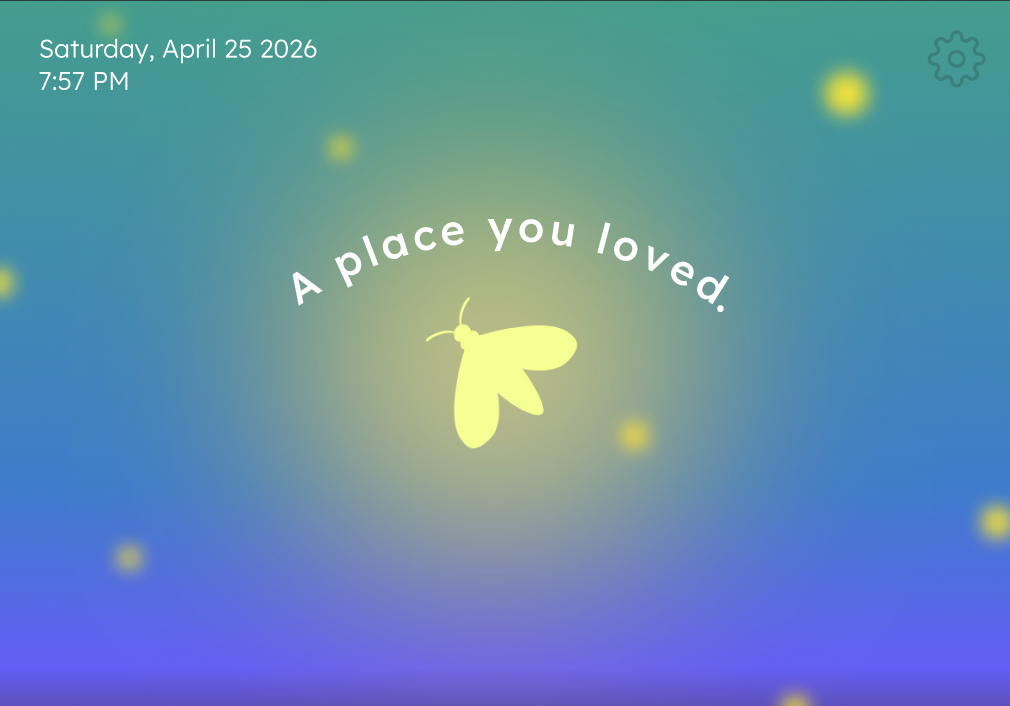
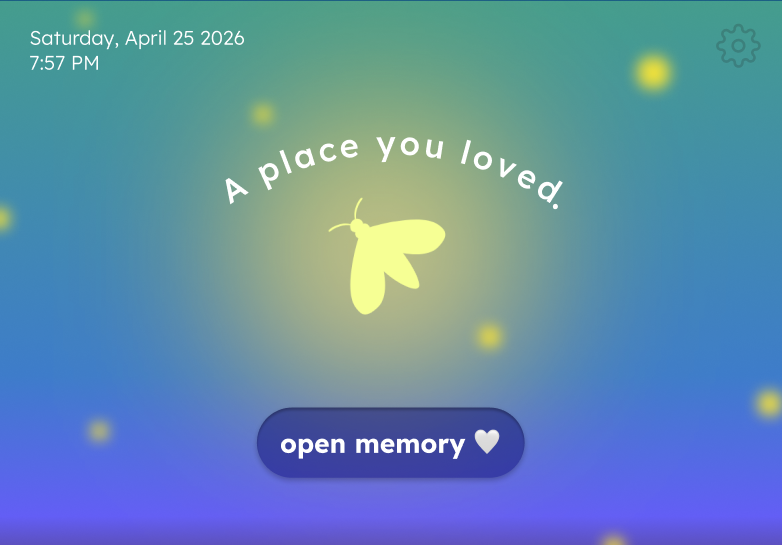
Lumina is a living identity archive — built for people with dementia, and for anyone who has ever felt lost from themselves. At its core, Lumina captures not just memories but the meaning behind them. Not just what happened, but what it felt like. Not just where you went, but why it mattered. Because research shows that autobiographical memory specificity — the details — is one of the first things dementia takes. But emotional schema — the feelings — stays far longer. Lumina speaks to what's preserved, not what's lost. For people with dementia, Lumina offers three adaptive modes that grow with the person as their needs change: Active Mode is for early stage. The person is fully present and self-directed. They answer gentle prompts, record voice notes, upload photos, and build a living self-portrait in their own words. They tag memories not by date but by feeling — this felt like home, this was the real me. Everything they contribute becomes the foundation of their own story, preserved in their own voice for when they need it most. Guided Mode is for mid stage. The app takes the wheel. A glowing firefly appears on screen — warm, alive, representing a memory waiting to be opened. The patient sees a category — a place you loved, someone who made you smile — and taps to open it. Their own photo appears, their own caption surfaces, and if they recorded a voice note, they hear themselves. Their own voice, from when they still could. At the end of the session a simple emotion check-in asks how it felt — three emoji faces, no reading required. If they tap sad, the app pauses and acknowledges them before moving on. It never rushes past a difficult moment. Ambient Mode is for late stage. There is no interaction required. Lumina becomes a gentle, breathing presence — surfacing their most comforting memories, playing their own voice softly, responding to time of day and visitor context. When a family member is about to visit, the caregiver taps their name and Lumina surfaces memories featuring that person so the patient feels oriented before they walk in. Behind everything sits the Caregiver Control Panel — accessed through a 3-second hold on a subtle settings icon, invisible to the patient. Caregivers can switch modes as the condition progresses, curate the memory library, review family contributions before the patient sees them, prep for visitor sessions, and track emotional patterns over time through passive session data.
How we built it
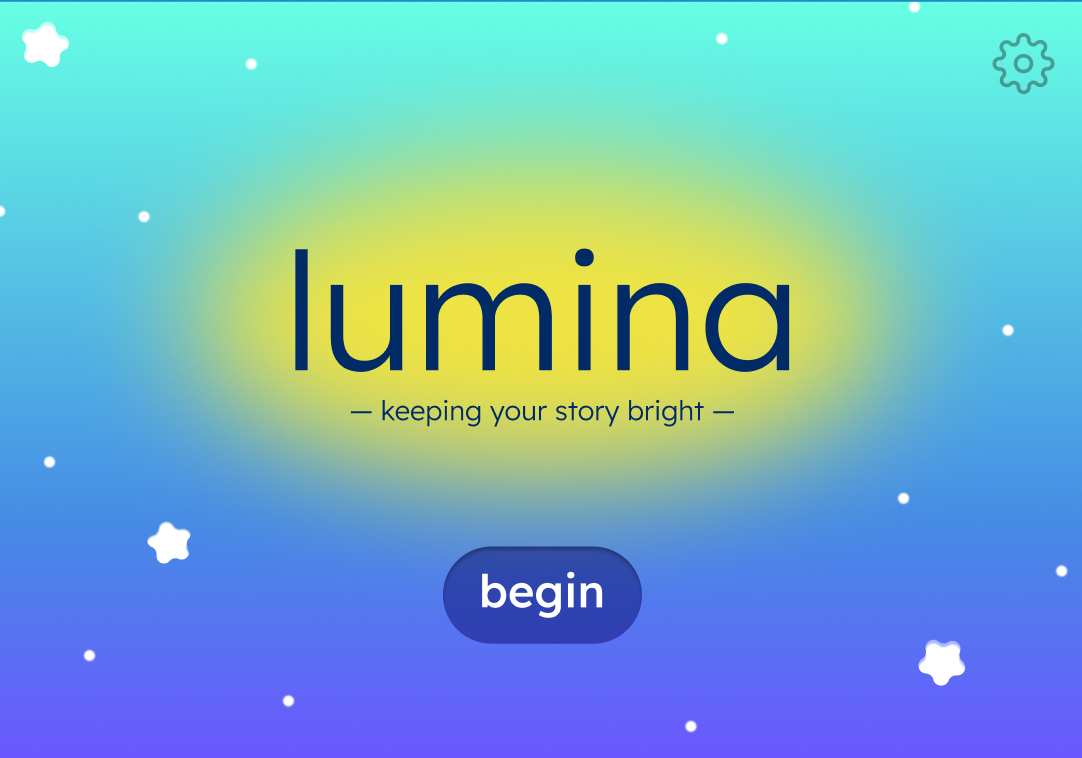
We started with the person, not the features. Before any screens were designed, we asked one question: what does it feel like to lose yourself? We sat with that question through research, conversations, and careful thinking about what dignity actually means in the context of cognitive decline. We used Notability to sketch initial concepts and map user flows — moving from rough ideas to structured journeys before ever opening Figma. We researched the clinical realities of dementia — how autobiographical memory specificity declines before emotional schema, how blue, green, and purple are clinically recommended calming colors for dementia environments, how cognitive fatigue shapes session length, how vision changes affect text size requirements. Every design decision was tested against one question: does this feel like something done to them, or something done for them? We built the full Guided Mode flow in Figma — splash screen, greeting, firefly memory selection, memory reveal with voice playback, emotion check-in, comfort screen, and caregiver control panel. We used a real photo, a real name, and a seemingly real voice recording to make the prototype feel human rather than hypothetical.
Challenges we ran into
The spectrum problem. Dementia isn't one experience — it's a wide spectrum. Designing for severe stages meant the experience was too passive for mild cases. Designing for mild stages meant severe patients couldn't interact at all. One static design serves no one well. The three mode system was our answer — but getting the boundaries right between each mode took significant iteration. The self-authored content gap. Lumina works best when started early, when the person can still build their own archive. But most people won't start early. We had to design honestly for the realistic case — someone who begins in Guided Mode with no self-authored content. The caregiver onboarding interview and Family Circle contribution system was our solution, but we had to be careful not to let family-contributed content feel like it was being done to the patient rather than for them. The autonomy tension. How much choice do you give someone with mid-stage dementia? Too much overwhelms. Too little feels undignified. We removed the skip button entirely — Guided Mode guides, that's the point. We made mood selection a caregiver toggle. We kept reactions to three simple emoji. Every removal of choice was a deliberate decision, not a shortcut. The contribution motivation problem. Why would exhausted, grieving family members go out of their way to thoughtfully contribute memories? We realized the barrier wasn't motivation — it was friction. Specific prompts remove the blank page problem. And when a family member receives a notification that their loved one smiled at their memory today — they'll come back and contribute ten more. Emotional safety in design. Designing for a vulnerable population means edge cases aren't edge cases — they're central cases. What happens when someone taps sad? What happens if a memory causes distress? What happens if the patient accidentally accesses settings? Every one of these required a specific, considered design response.
Accomplishments that we're proud of
Building for the patient — not around them — was harder than we expected. Most dementia tools default to the caregiver because it's easier. We didn't, and we're proud of that choice even when it complicated the design. The firefly interaction surprised us. What started as a visual metaphor became something that actually changed how the experience felt — less like navigating an app, more like something being gently offered to you. The comfort screen is small but it might be our most important design decision. When someone taps sad, the app stops. It doesn't move on. That felt obvious once we thought of it — but we almost didn't. We caught the ethical tension around family-contributed content late enough that it could have derailed the concept. We're proud we caught it at all and dealt with it honestly rather than pretending it wasn't a problem. And when we put a real photo and a real voice into the prototype — our own — something shifted. It stopped being a design exercise. That moment told us we were onto something worth finishing.
What we learned
We learned that designing for vulnerability requires a different kind of rigor. Every decision carries more weight. A confusing button isn't just bad UX — it's a moment of distress for someone who is already frightened and disoriented. A rushed emotional moment isn't just poor design — it's a missed opportunity to make someone feel seen. We learned that the most powerful design decisions are often removals. Taking out the skip button. Taking out reaction buttons. Taking out complex navigation. Stripping back to the one thing that matters — one memory, one moment, one person. We learned that dignity is a design principle, not just a value. It shows up in copy choices, color choices, interaction choices, and in what you decide not to build. We learned that research doesn't have to be formal to be valid. A pattern observed consistently across conversations is still a pattern worth designing for.
What's next for Lumina
Active Mode — the full self-directed experience for early stage patients. Daily prompts, voice recording, constellation view, self-portrait summary. The foundation that makes everything else richer. Ambient Mode — the fully passive late-stage experience. A breathing, living display of the patient's most comforting memories, their own voice playing softly underneath, responding to time of day and visitor context. Full Caregiver App — a dedicated mobile app for caregivers beyond the in-app portal. Real time session notifications, the ability to add and curate memories on the go, visitor prep from anywhere, and a complete view of how their loved one is doing without having to be in the room. Family Network — an expanded contribution system where multiple family members each have their own simple interface to submit memories, voice notes, and photos. Each contribution goes through caregiver review before the patient ever sees it. And when a contribution makes the patient smile — the person who submitted it gets notified. That loop transforms contribution from a duty into a connection. Deep Analytics for Caregivers — right now, Lumina passively tracks basic session data. Next, we build this out fully. Caregivers would be able to see which memory categories consistently bring positive responses, which ones cause distress, whether the patient exited a session early and at what point, how long they spent on each memory, and how mood responses trend over time. All of it presented simply — not as clinical data but as gentle, readable insights a caregiver can actually act on. Over time Lumina gets smarter about what to surface and what to avoid. ElevenLabs Voice Integration — for patients who never recorded themselves, a warm natural voice reads their captions and prompts aloud. Not a replacement for their real voice — but a bridge when nothing else exists.
In the chaos of losing yourself — Lumina helps you find your way back.
Built With
- canva
- figma


Log in or sign up for Devpost to join the conversation.