-
-
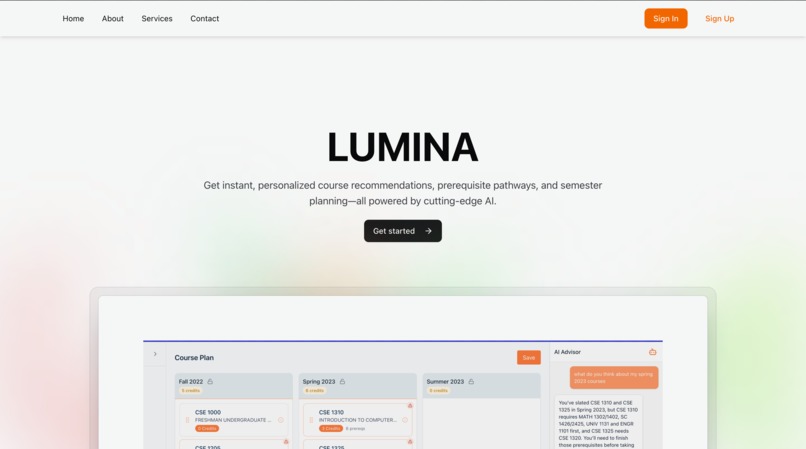
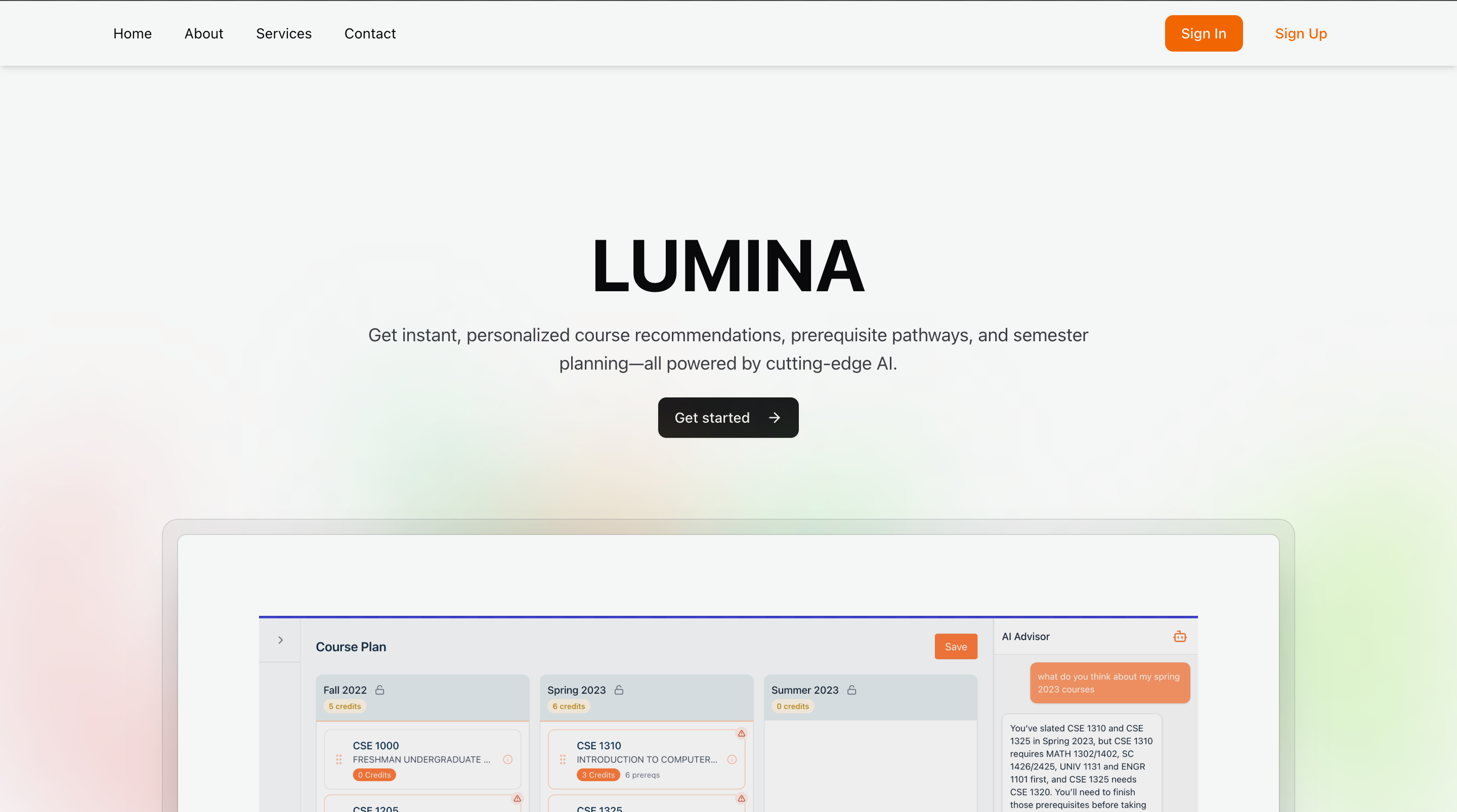
Landing Page
-
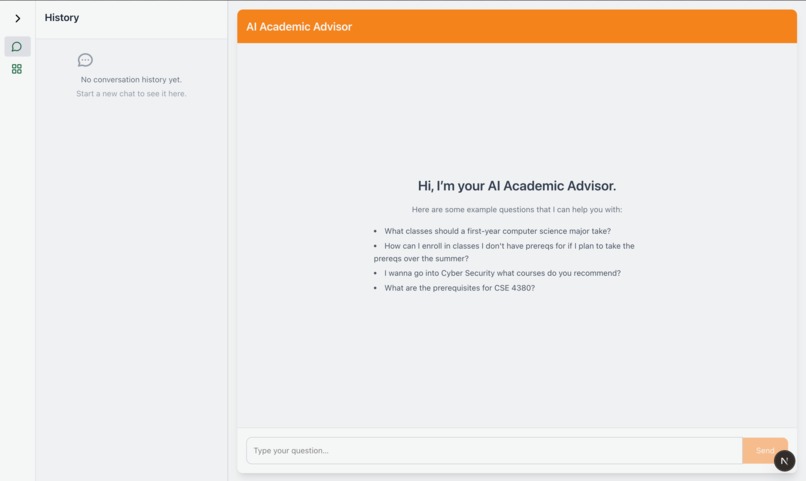
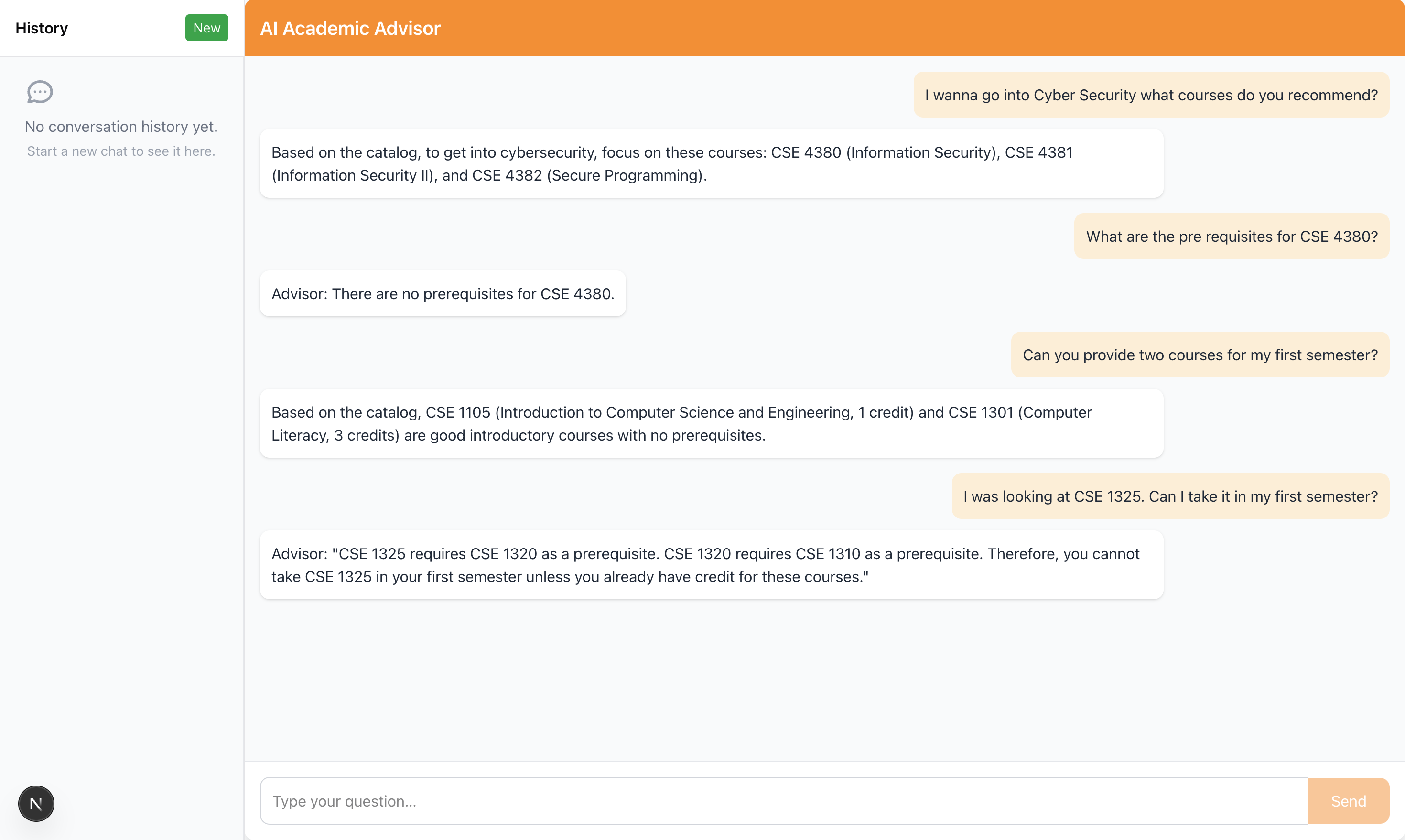
AI Advisor ChatBot
-
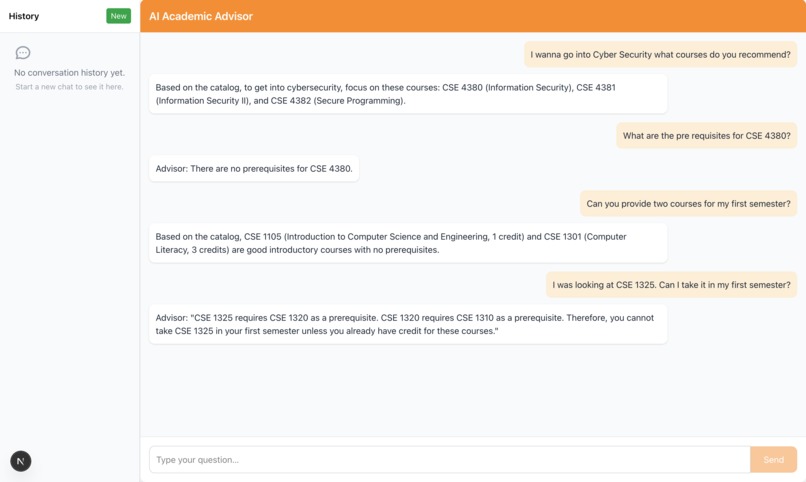
AI Advisor Conversation
-
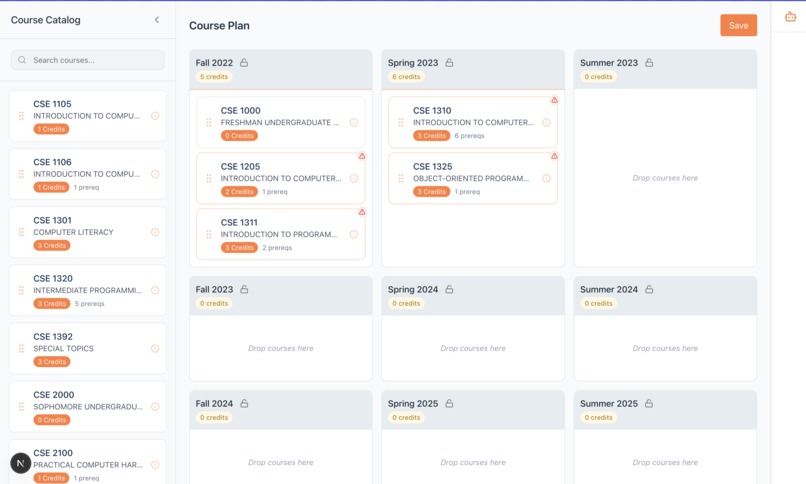
Degree Planner with Catalog Search
-
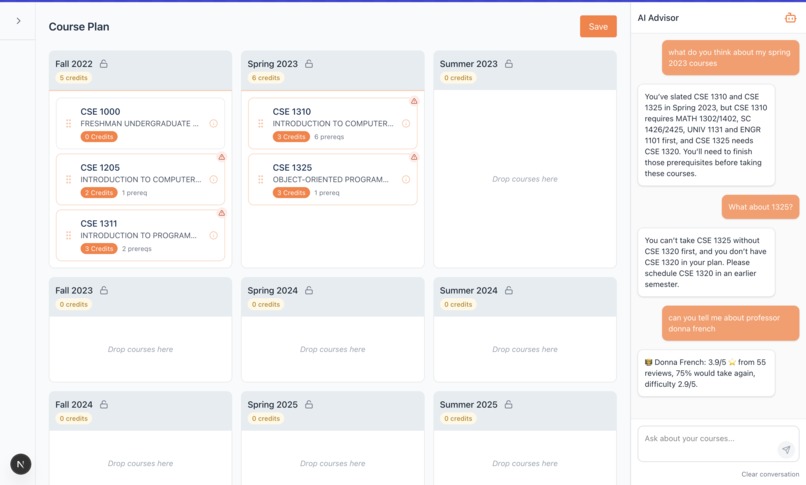
Degree Planner with AI Advisor
-
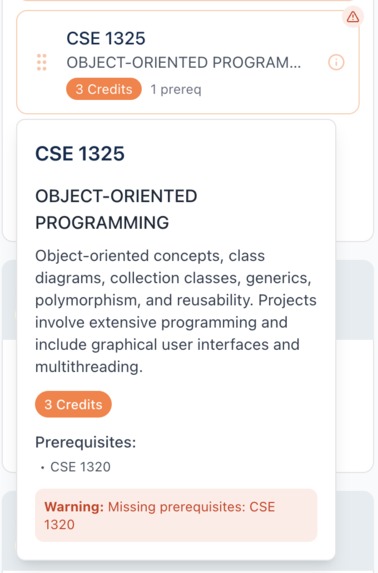
Showing Course info with pre-requisites



Inspiration
I was studying at a large public university where personalized advising and degree planning resources are scarce. With an advisor‐to‐student ratio exceeding 1:1000 (US News), it’s easy to slip through the cracks—literally. Last semester I needed Physics II to unlock my major electives, but my advisor didn’t catch that I was missing it until it was too late. That one oversight delayed my progress and revealed a systemic problem: students need a reliable, always-available guide for course selection and degree planning. Lumina was born from that frustration and the desire to make sure no one else has their graduation timeline derailed by missed prerequisites and without getting proper advising.
What it does
AI-Powered Chat: Ask any question about your degree requirements, course descriptions, or study strategies, and get instant, accurate answers.
Interactive Degree Planner: Drag and drop courses into future semesters, lock in your plan, and automatically track which prerequisites you’ve met.
Personalized Roadmaps: Based on your major, degree level, and progress, Lumina generates recommended course sequences so you know exactly what to take next.
History & Review: Every chat is saved and organized, so you can revisit past advice or share your planning history with peers and mentors.
How we built it
Tech Stack: Next.js (App Router), React, and Tailwind CSS, Google Gemini.
Authentication: Clerk handles secure sign-in/sign-up workflows with email integration.
Data Persistence: MongoDB Atlas stores user profiles, chat histories, and degree plans. Mongoose models define relationships between users, conversations, chat history and plans.
AI Integration: Google Gemini Flash powers our advising chatbot, wrapping catalog data in on-the-fly prompts for Dartmouth CS curriculum.
Drag-and-Drop: DnD-Kit enables an intuitive planner interface where you can move courses between semesters.
Challenges we ran into
Data Modeling: Balancing normalized references (users → conversations → messages) with performant queries for history and planner data took several schema iterations.
API Rate Limits: Tuning prompts and batching catalog data was essential to stay within Google Gemini’s quotas without sacrificing response quality.
Responsive UX: Building a fully collapsible, off-canvas sidebar that gracefully adapts between mobile and desktop views required careful CSS and state management.
Accomplishments that we're proud of
We’re proud of delivering a complete end-to-end flow—from quick onboarding through planning and chat—in just a couple of clicks. Persistent, sharable chat histories let users pick up right where they left off. By pre-loading the Course catalog, Lumina gives curriculum-specific recommendations, not generic advice. And our pages and AI responses load in under two seconds on average, even with large course lists.
What we learned
Building Lumina taught us the power of clear, step-by-step onboarding in boosting user engagement; how subtle prompt adjustments can dramatically improve AI accuracy and cost; and the importance of early UX prototypes to uncover edge cases—like scheduling past courses—so we could build in solid validation. We also learned that monitoring and logging AI and database performance is essential for a reliable, production-ready service.
What's next for Lumina
Looking ahead, we plan to add alumni networking so students can connect with graduates on similar paths. We’ll build an analytics dashboard for advisors to spot common planning bottlenecks, and expand beyond UT Arlington to support other majors and schools—making Lumina the universal AI academic advisor.


Log in or sign up for Devpost to join the conversation.