-
-
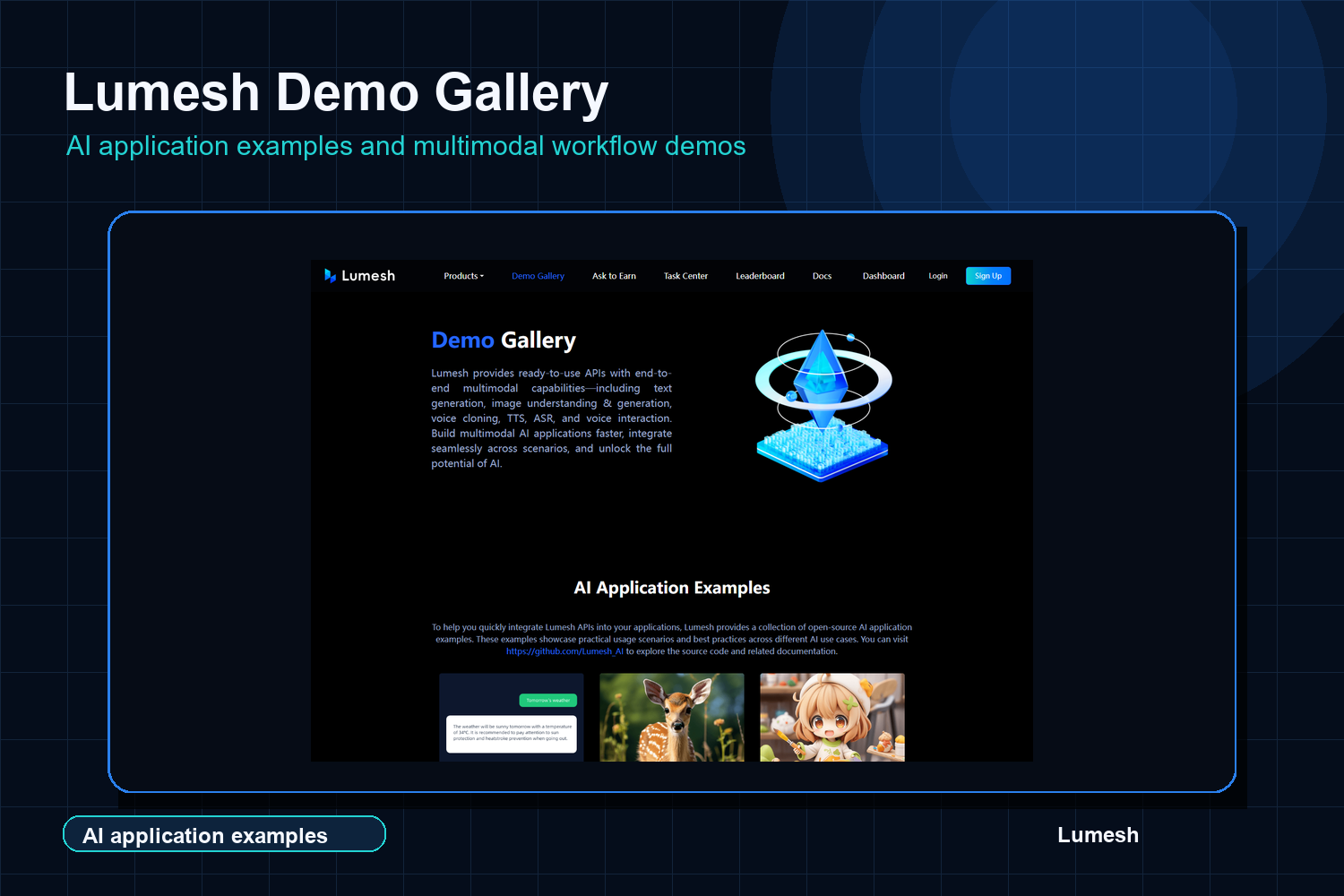
03_Lumesh_Resilient_Agent_Runtime_Workflow.png
-
02_Lumesh_Demo_Gallery_AI_Applications.png
-
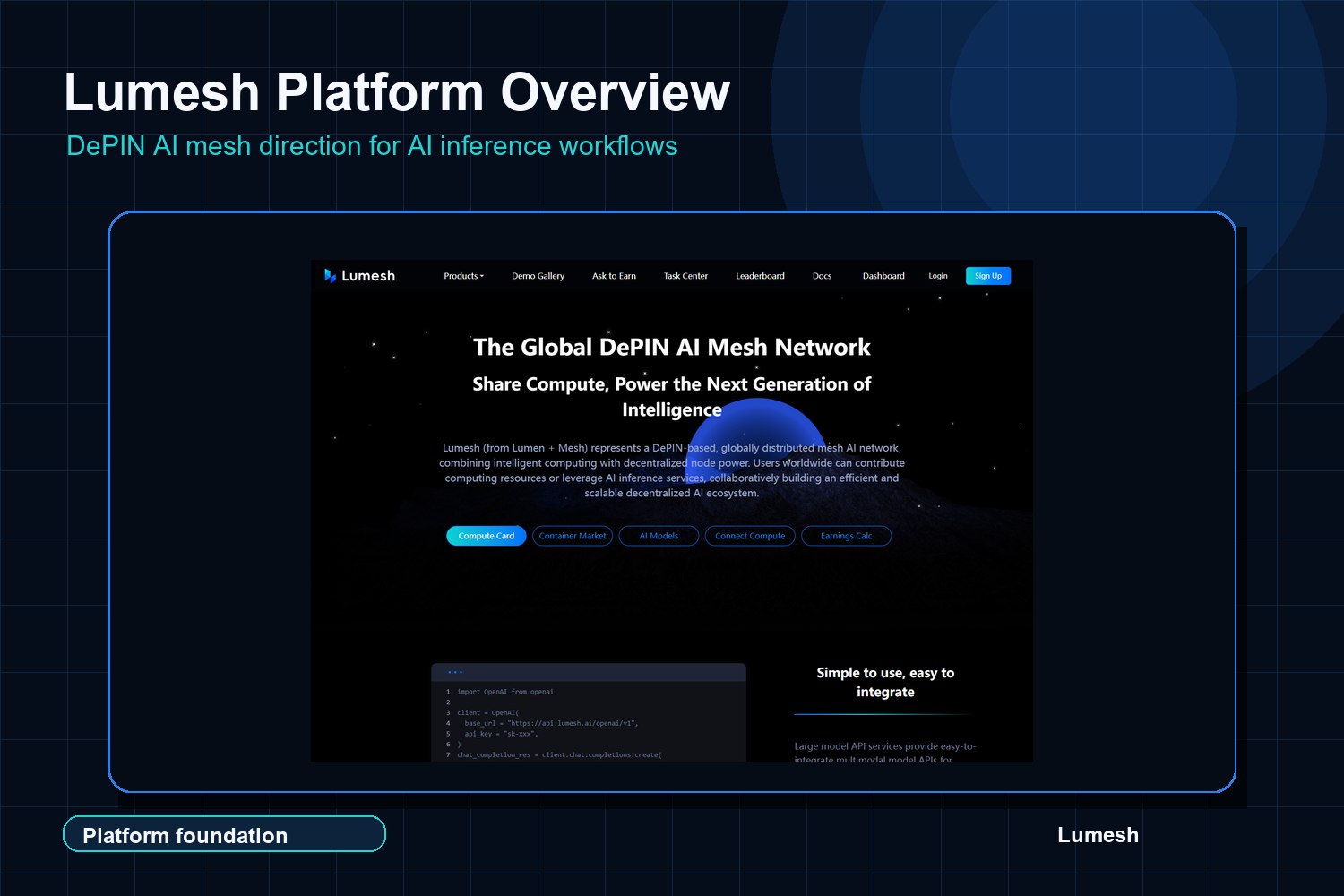
01_Lumesh_Homepage_Platform_Overview.png
Inspiration
AI agents are moving from simple chat experiences into real operational workflows. In real deployment, an agent may depend on model endpoints, tool servers, APIs, routing logic, storage, and compute resources at the same time.
When one layer becomes slow, unavailable, or inconsistent, the workflow can fail even if the model itself is capable.
Lumesh was inspired by this infrastructure problem: resilient agents need resilient infrastructure.
What it does
Lumesh Resilient Agent Runtime presents a resilience-focused workflow for agentic AI deployment.
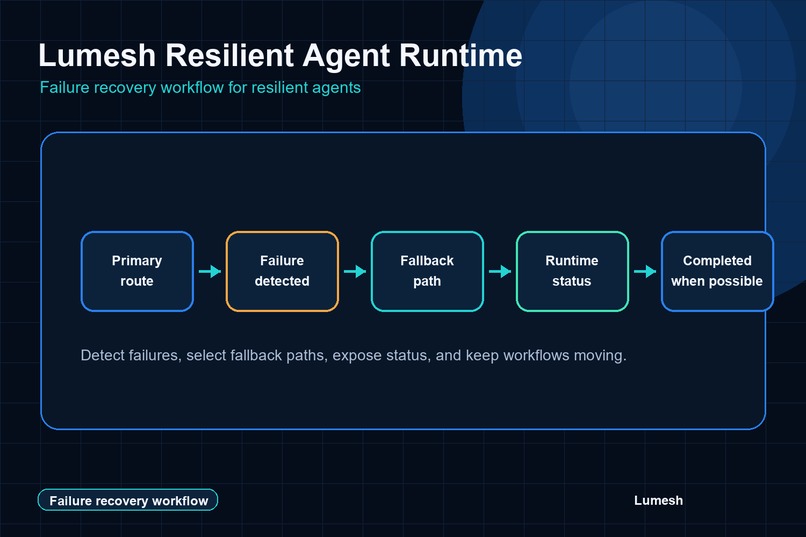
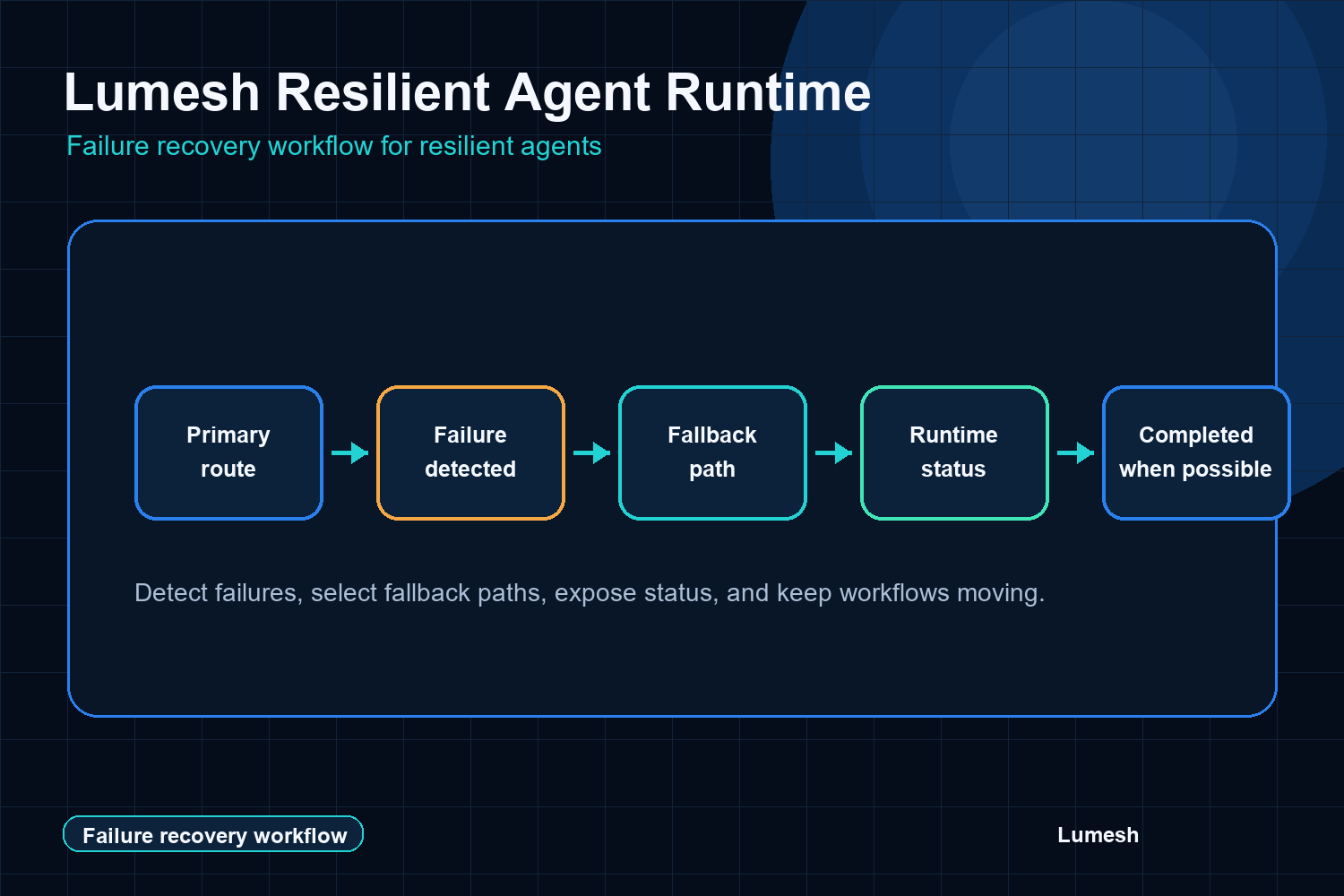
The workflow shows how an agent task can move through a primary execution path, detect a model, tool, or compute-route failure, select an available fallback path, expose runtime status, and continue toward completion when possible.
The goal is to make agent failure recovery more visible, structured, and infrastructure-aware.
How we built it
This submission is based on Lumesh's existing public platform direction and hackathon walkthrough materials.
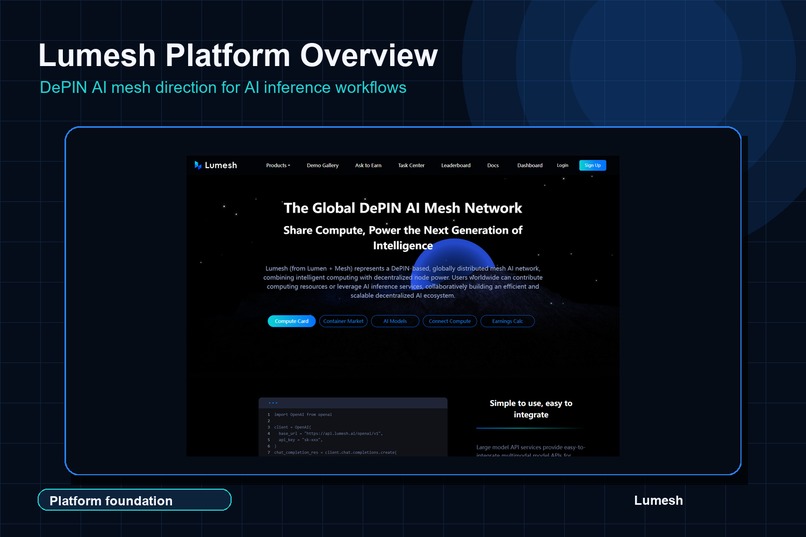
Lumesh is building toward a DePIN-based AI mesh network for distributed compute coordination, AI inference, deployment-aware workflows, and runtime visibility.
For this hackathon, we focused that broader platform direction into a resilient-agent workflow:
- Primary route execution
- Failure detection
- Fallback path selection
- Runtime status visibility
- Workflow resumption when possible
We also prepared a demo video, BP PDF, architecture visuals, and a minimal GitHub demo package to explain the runtime pattern.
Challenges we ran into
The main challenge was narrowing a broad AI infrastructure platform into one focused hackathon story.
Lumesh can touch many areas of AI infrastructure, but for this submission we chose one clear question:
What should happen when an agent workflow depends on a model, tool, or compute route that fails during execution?
Another challenge was keeping the submission honest and clear. Lumesh is still early, so we avoided overstating deployment maturity, customer traction, financing progress, token economics, or third-party endorsement.
Accomplishments that we're proud of
We are proud that this submission connects a real infrastructure direction with a concrete agent reliability problem.
Instead of treating resilient agents as only a prompt engineering or model selection issue, Lumesh frames reliability as a coordination problem across model endpoints, tools, APIs, routing, storage, and compute resources.
The demo narrative is intentionally simple:
- detect the failure;
- select a fallback path;
- expose runtime status;
- resume the workflow when possible.
What we learned
We learned that resilient agent deployment depends on more than strong models.
Real agent workflows need reliable infrastructure behavior across multiple layers. If a model endpoint times out, a tool server fails, or a compute route becomes unavailable, the system should not fail silently. It should expose runtime state and attempt a fallback path when available.
We also learned that hackathon communication needs focus. The strongest submission is the one that makes one problem clear and demonstrates a credible path toward solving it.
What's next for Lumesh
Next, Lumesh will continue improving the platform direction around distributed AI inference, hybrid compute coordination, private deployment, and developer-facing infrastructure.
For the resilient-agent direction, the next priorities are:
- clearer runtime status visibility;
- more practical fallback path design;
- stronger routing and resource selection logic;
- developer documentation for OpenAI-compatible integration;
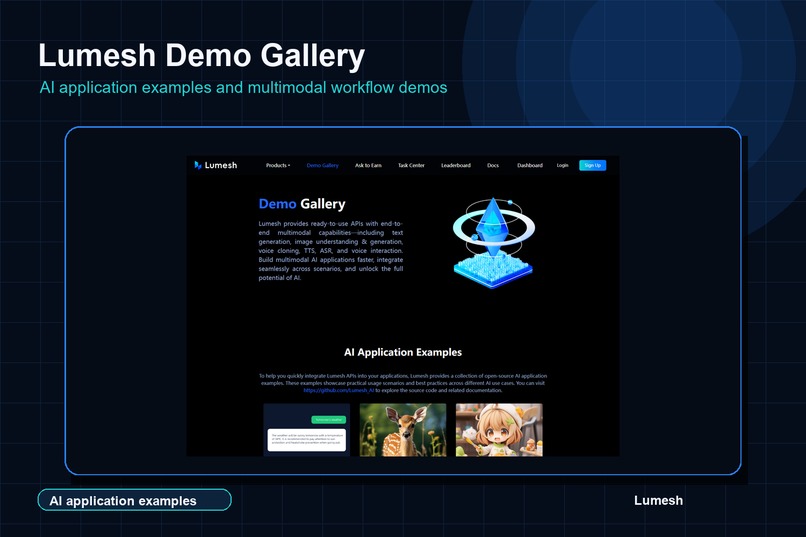
- more demo examples that connect AI applications with resilient infrastructure behavior.
The long-term goal is to help AI workflows become more deployable, observable, and resilient across distributed infrastructure.

Log in or sign up for Devpost to join the conversation.