-
-

Lume usecase
-
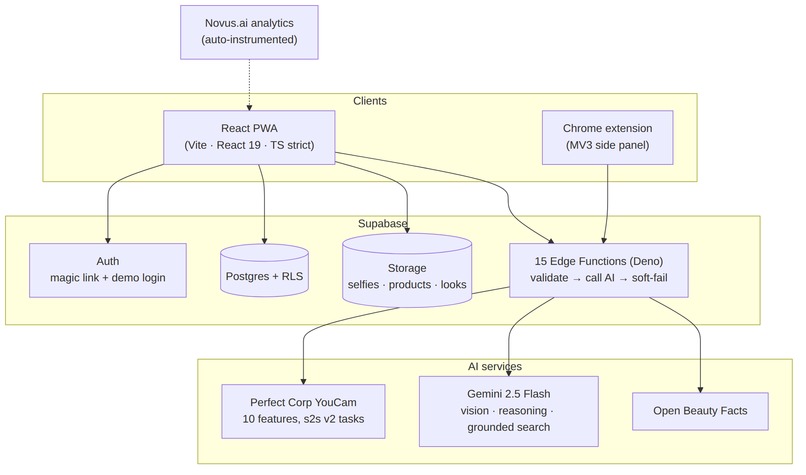
Lume Architecture
-
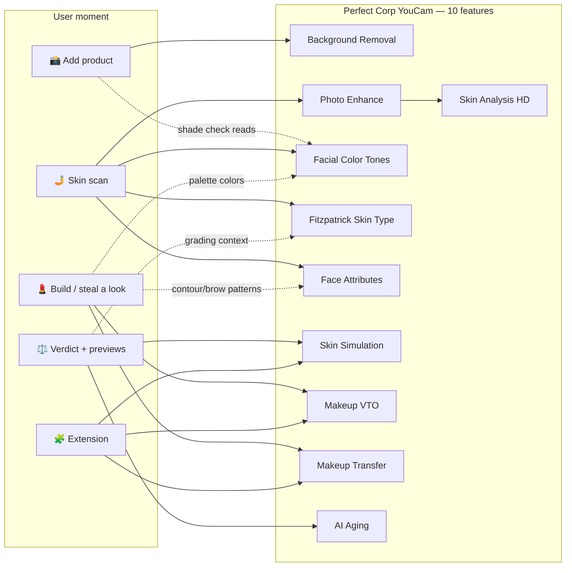
Lume x PerfectCorp's APIs
-
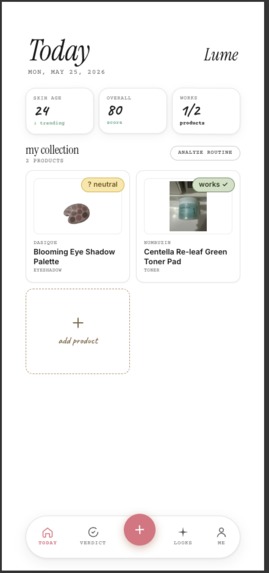
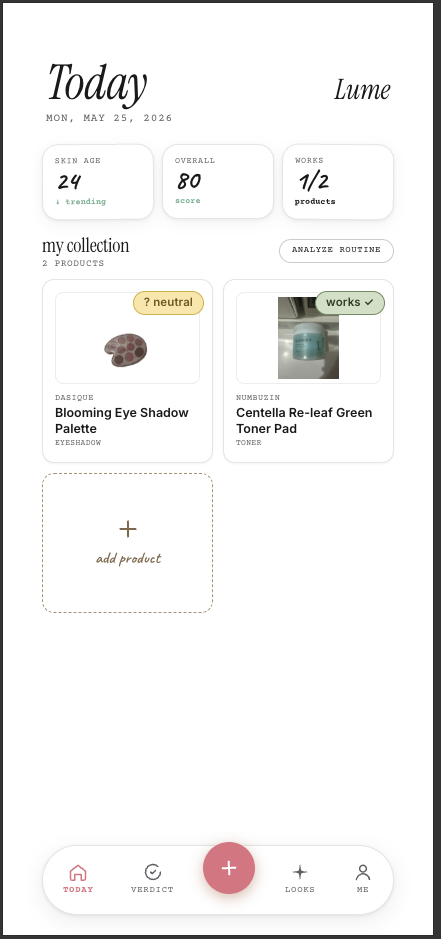
Dashboard
-
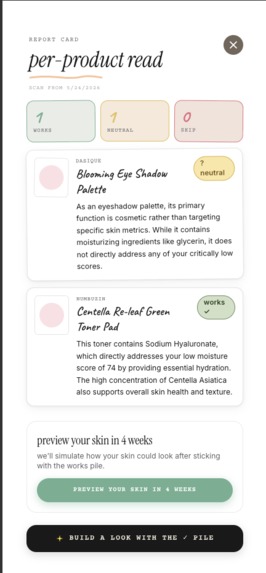
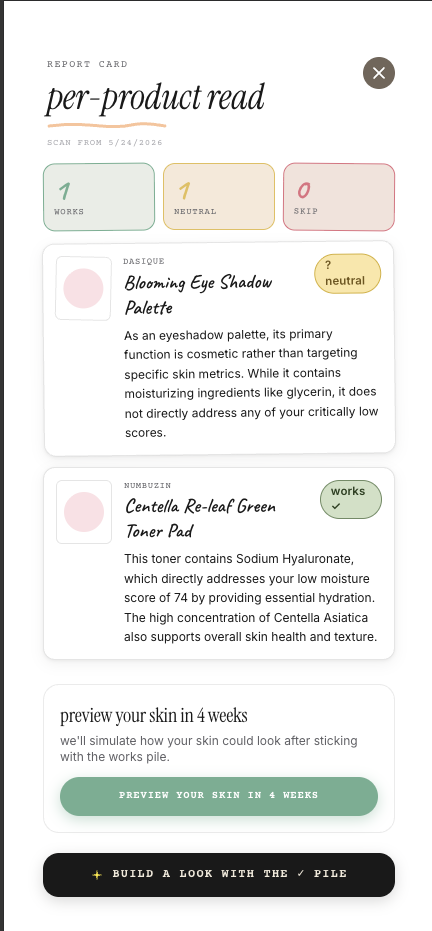
Per product read
-
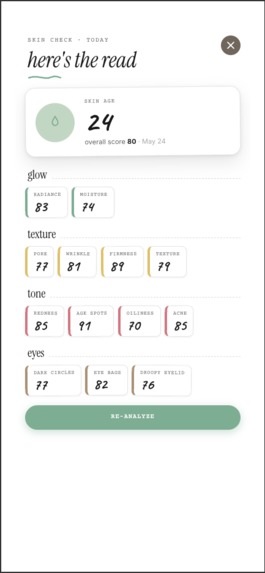
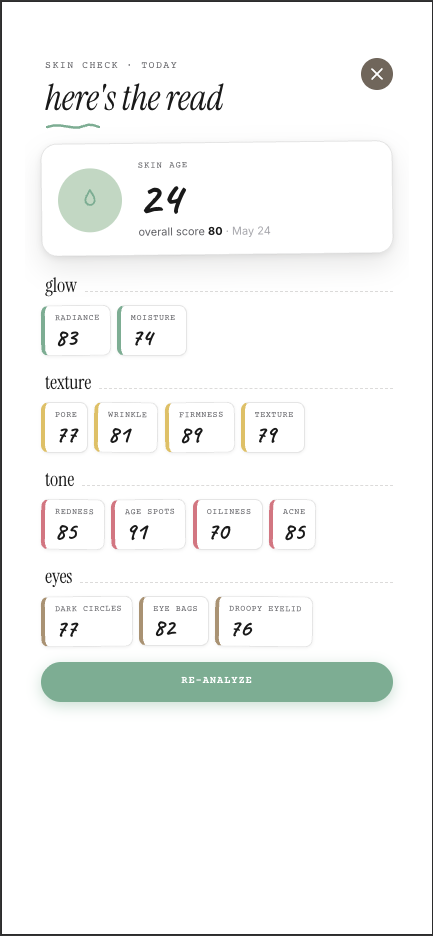
Skin analysis
-
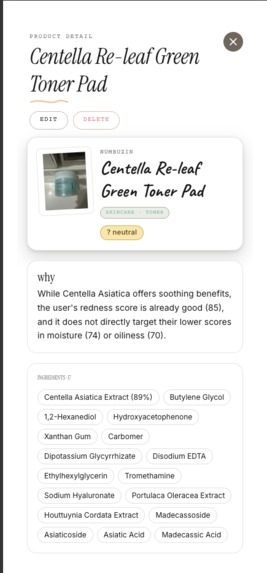
Product Detail
-
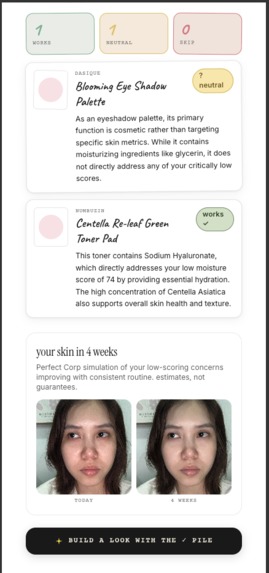
Skin verdict
-
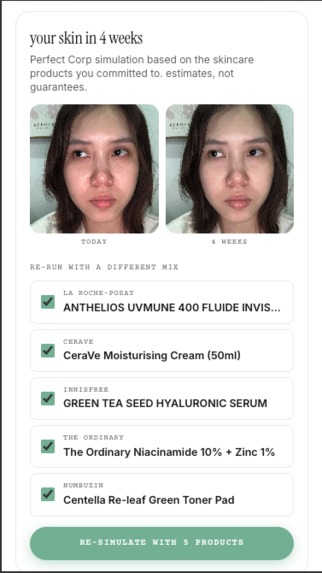
Simulate skin with specific routine
-
Generate makeup look
-
Extension Try-on Makeup
-
Extension preview Skincare product

Inspiration
Skincare shelves fill up with products bought off TikTok trends, and nobody can say which ones actually work for their skin. Reviews describe someone else's face. We wanted the opposite: point the camera at your own face and your own shelf, and let AI connect the two — this ingredient list, these skin metrics, this verdict.
What it does
- Add a product with two photos. Front photo: background removed (Perfect Corp), name/brand/category/shade read by Gemini Vision. Back photo: ingredients OCR'd. Threw away the box? Lume searches Open Beauty Facts, then falls back to Gemini grounded web search — you never type 30 ingredient names. Adding a foundation? Lume checks the shade against your analyzed skin tone and warns if it runs warm/cool/light/deep for you.
- One selfie, a full face profile. Perfect Corp Skin Analysis returns 13 metrics (wrinkle, pore, acne, moisture, …). The same selfie silently yields your skin tone palette, Fitzpatrick skin type (I–VI), and five face attributes (face shape, eye shape, eyelid, brow shape, lip shape). Blurry photo? AI Photo Enhance cleans it up before analysis.
- Routines. Group the products you actually use into named routines. The active routine is what gets graded — no more verdicts on the serum that's been in a drawer for two years.
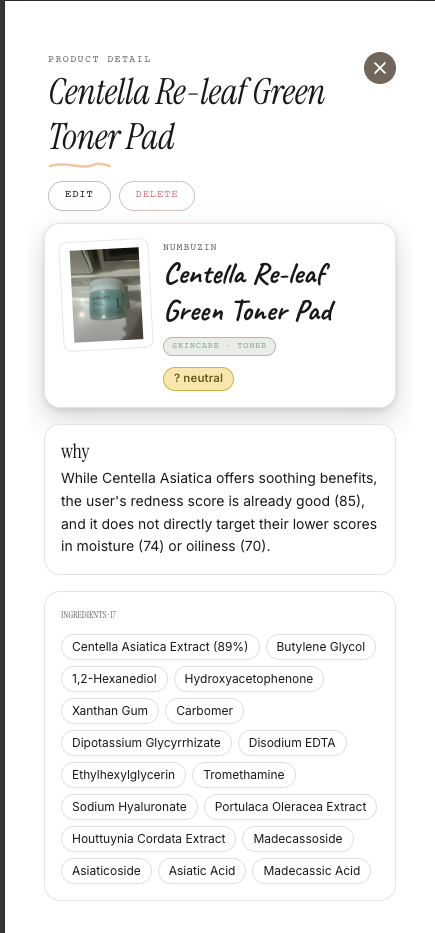
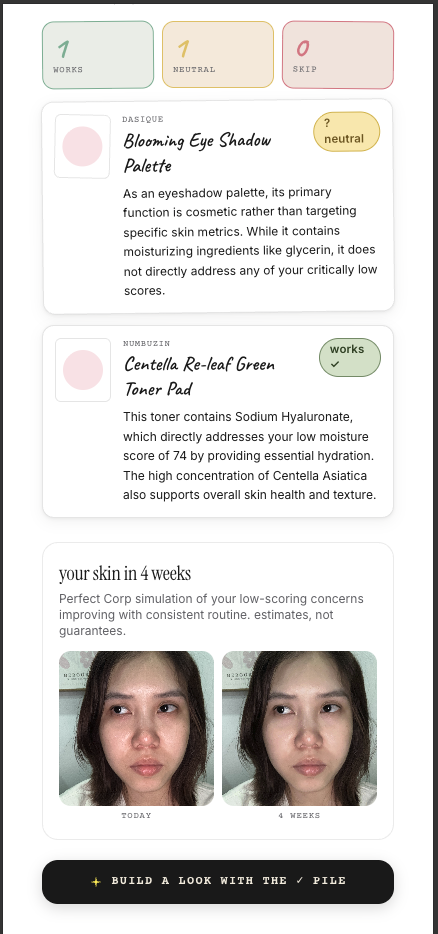
- Per-product verdict. Gemini cross-references your metrics and each product's ingredients — aware of your Fitzpatrick type (photosensitivity, SPF weight) — and tags every product works / neutral / skip with one sentence of reasoning.
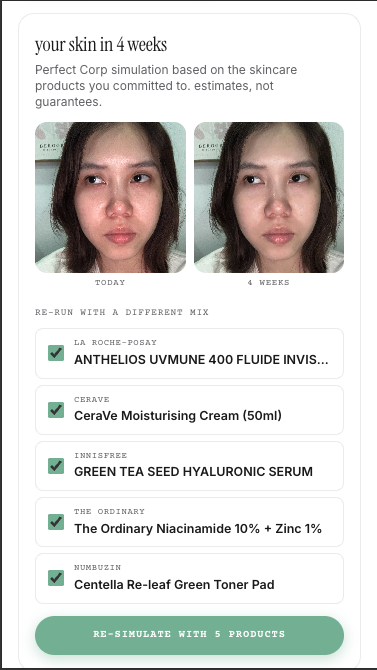
- Honest skin previews. "Preview your skin in 4 weeks" simulates only the concerns your works-pile actually targets (Perfect Corp Skin Simulation) and tells you which concerns your routine does not cover yet. A separate "fast forward" card runs AI Aging — labeled clearly as a generic simulation, not a routine-conditioned prediction.
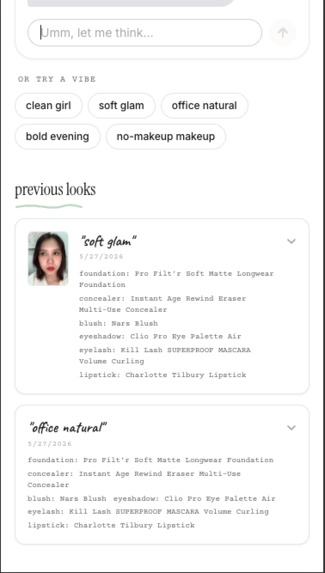
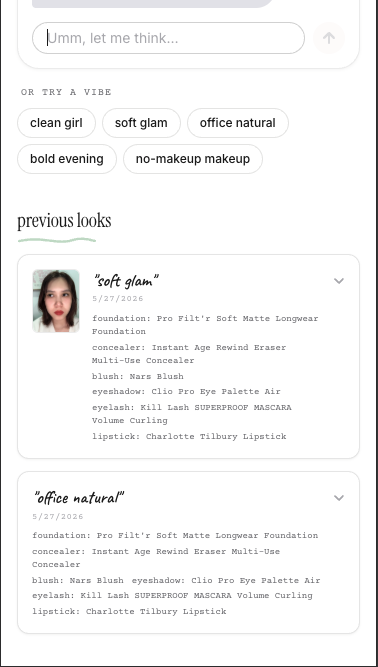
- Build or steal a look. Describe a vibe and Gemini casts your own makeup — with real product colors inferred from shade names, contour and brow patterns matched to your analyzed face shape and brow shape, and foundation matched to your skin tone — rendered by Perfect Corp Makeup VTO. Or upload any makeup photo and Makeup Transfer puts that look on your face, mapped to the products you own plus a shopping list of gaps.
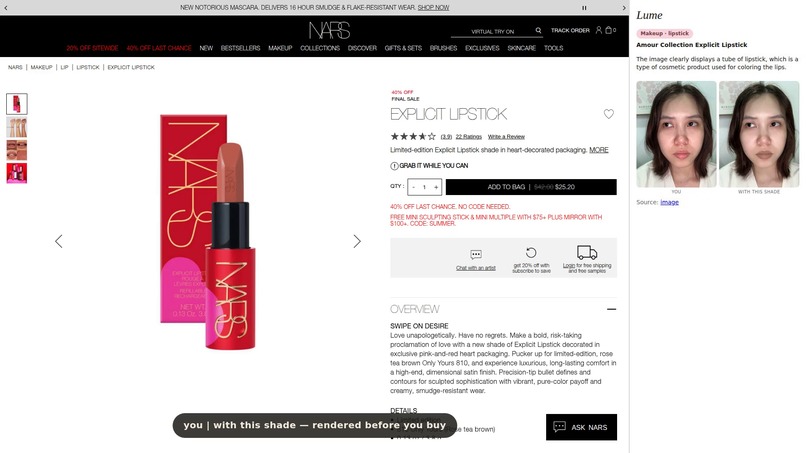
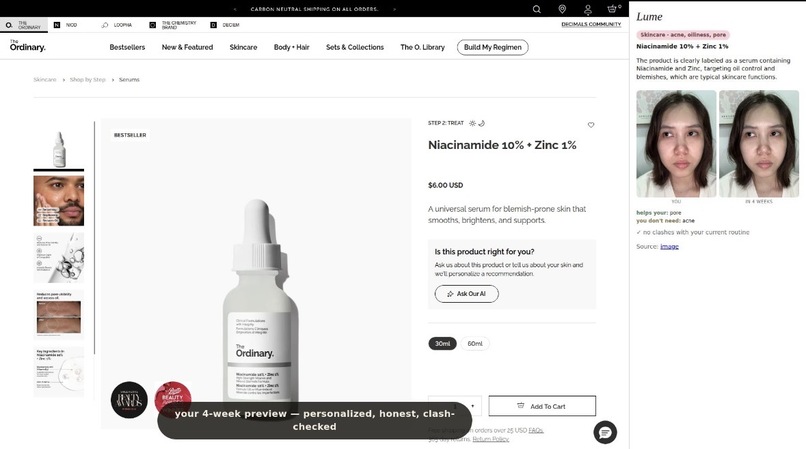
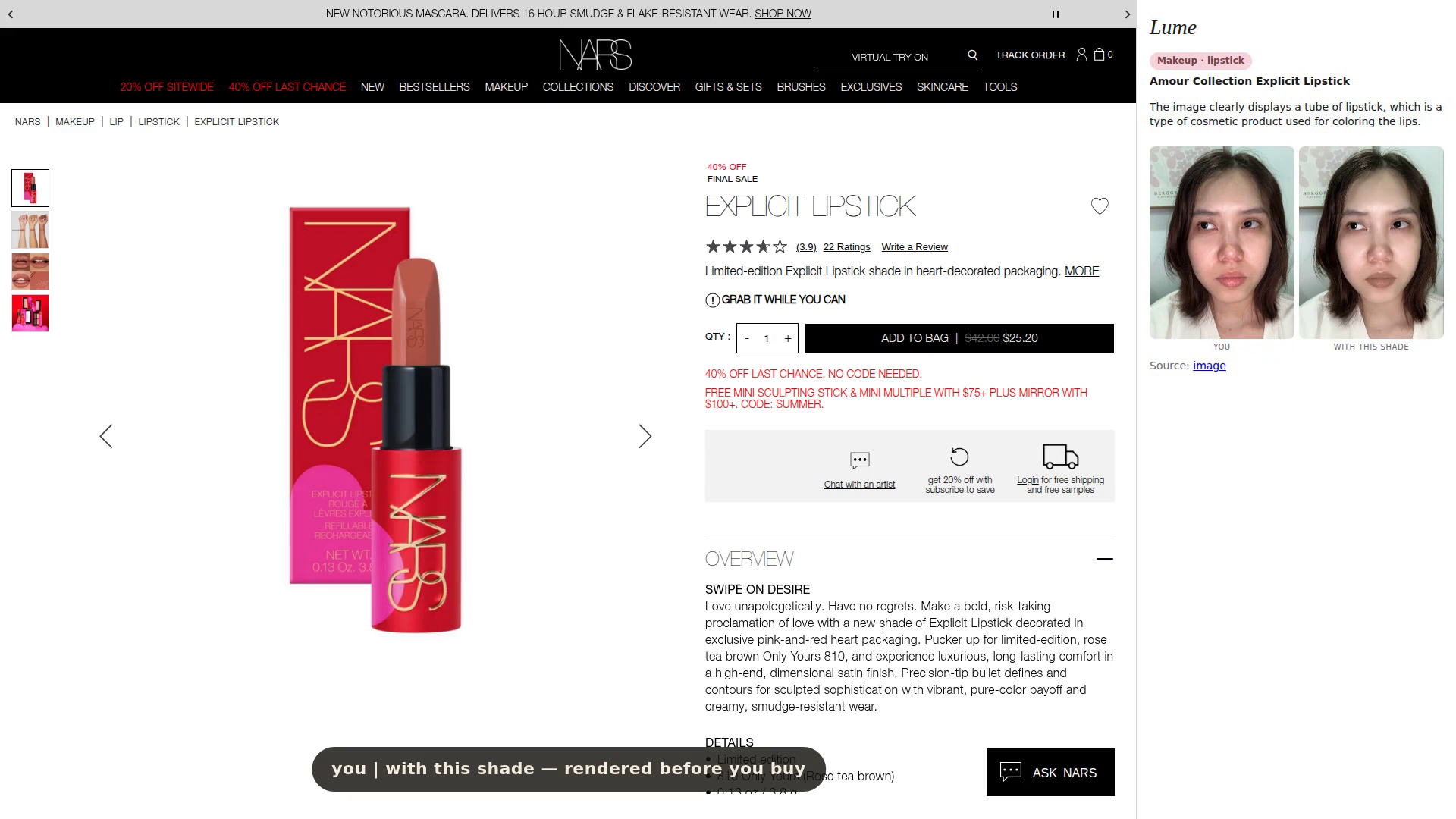
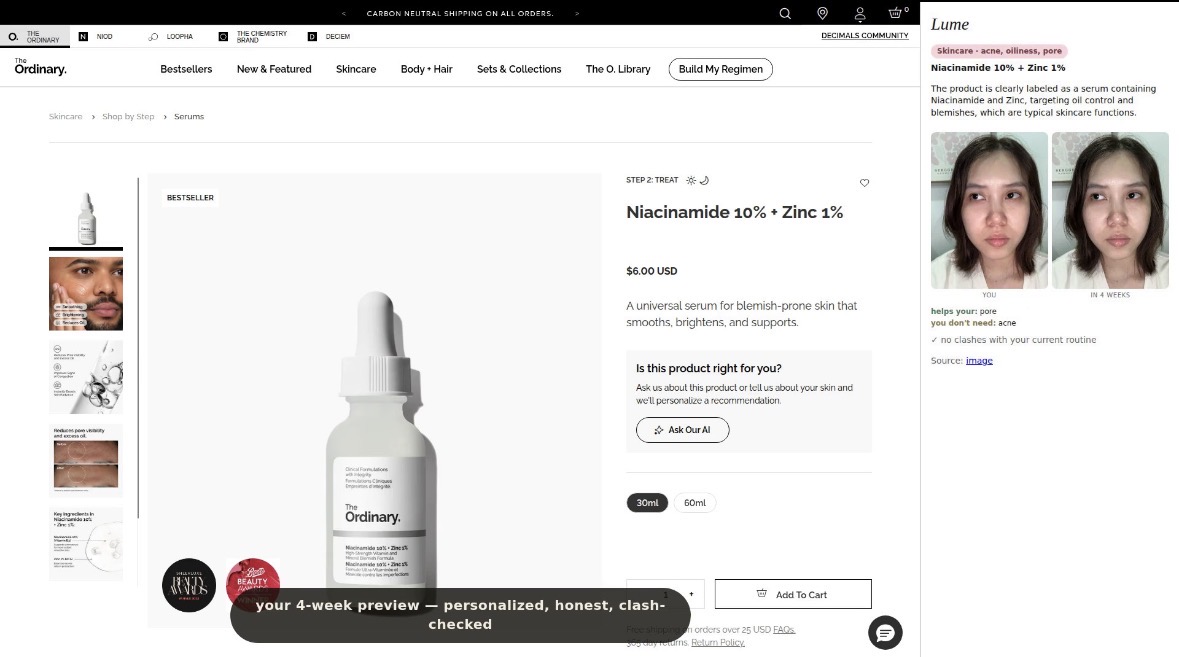
- Chrome extension: try before you buy, anywhere. Right-click any product image on the web.
- Makeup → live virtual try-on: you | with this shade, your selfie next to the Perfect Corp render.
- Skincare → a 4-week preview personalized to your latest scan: intensity scaled to your actual metric scores, green chips for the concerns it helps, and an honest "you don't need this" when it targets concerns you don't have (Lume then skips the render entirely). Every skincare product is also clash-checked against your active routine — severity-ranked warnings like retinoid × AHA before it ever reaches your shelf.
- "Steal this look with Lume" transfers the makeup in any photo onto you.
How we built it
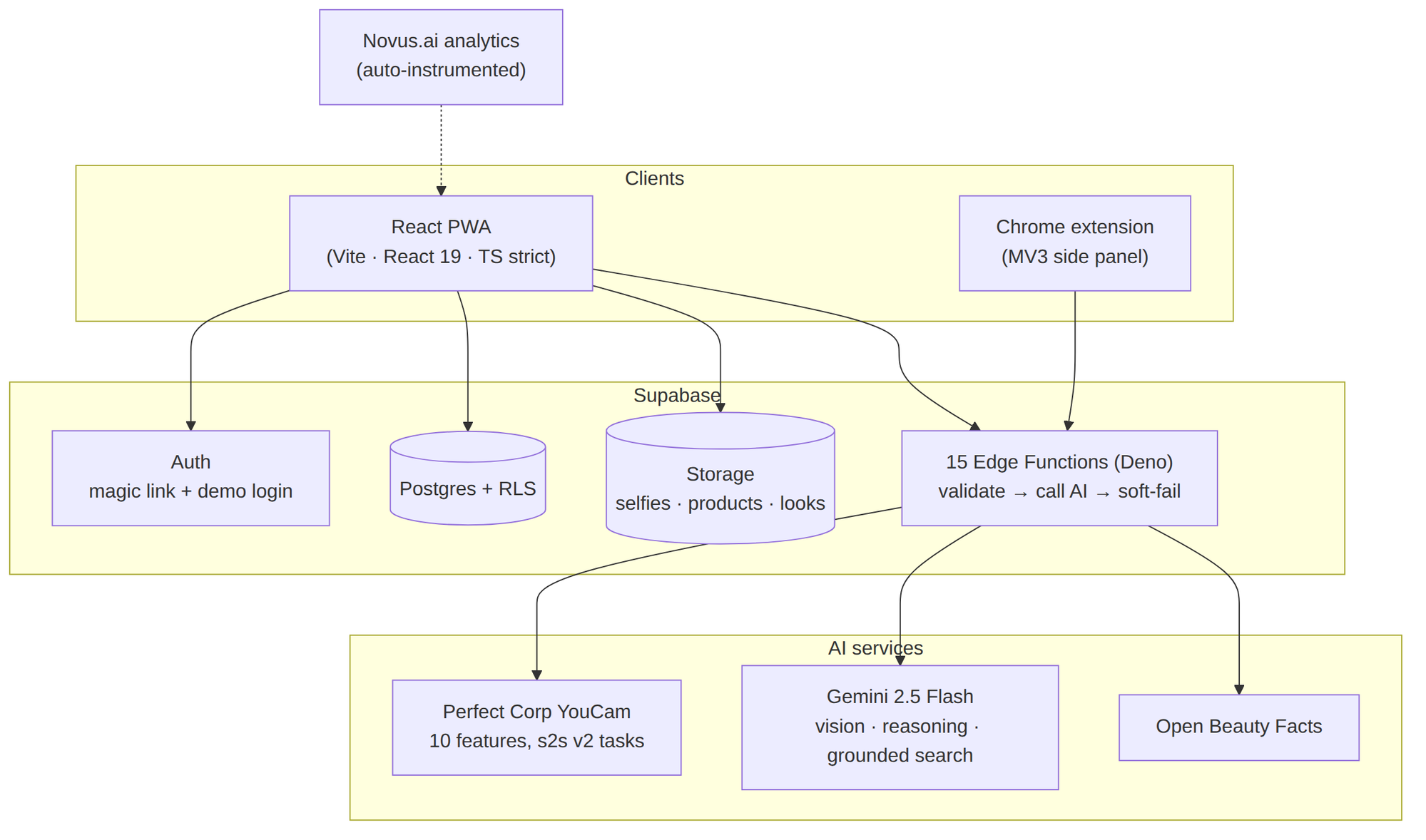
- Frontend: Vite + React 19 + TypeScript (strict), Tailwind v4, React Router v7, Zustand, TanStack Query. Chrome extension: Manifest V3 + side panel, built with @crxjs/vite-plugin.
- Backend: Supabase — Postgres with RLS, Auth (magic link + demo account), Storage, and 15 Deno Edge Functions.
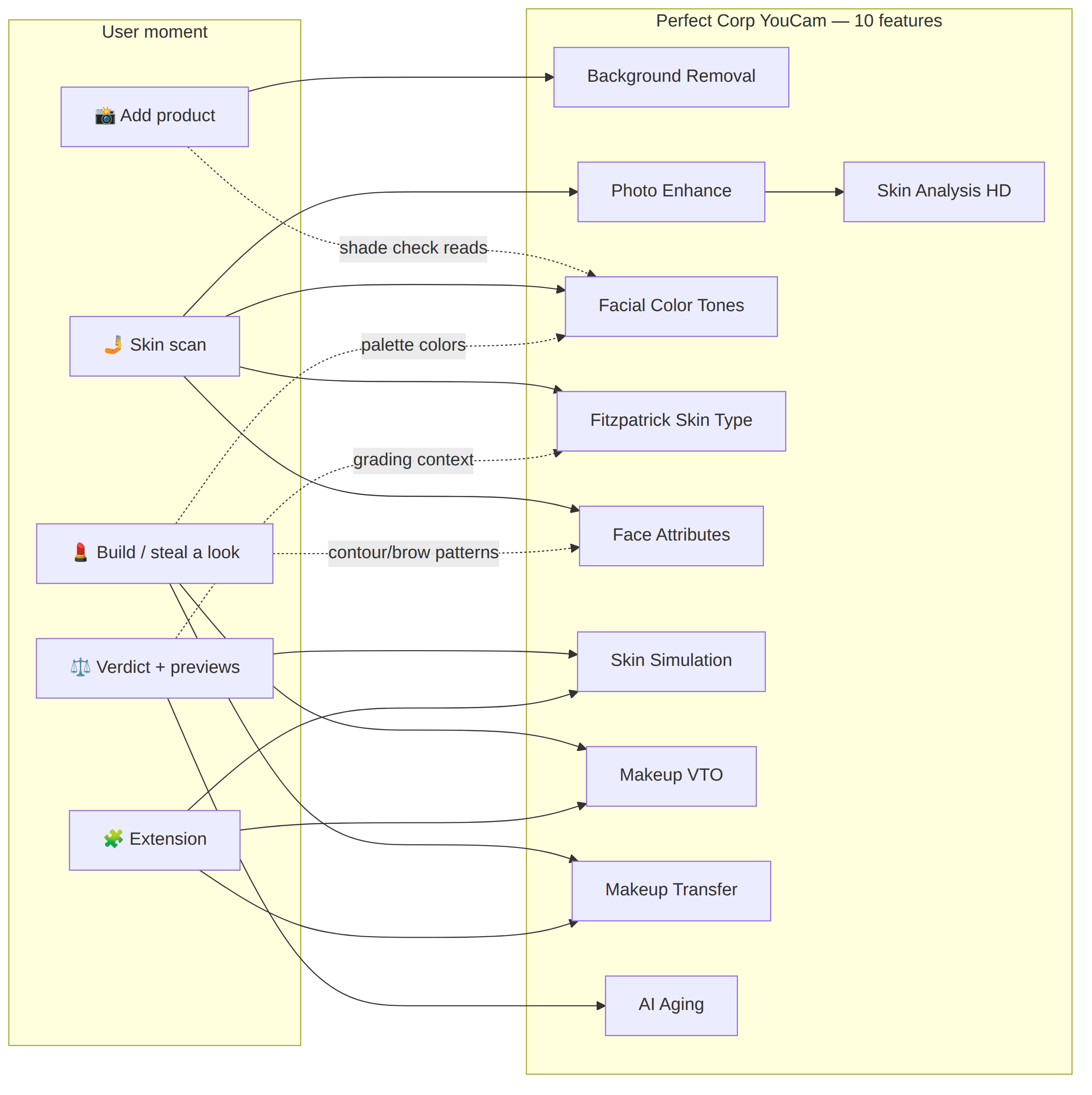
- Perfect Corp YouCam API — 10 features over the s2s v2 task pipeline: Skin Analysis HD, Facial Color Tones (skin tone), Fitzpatrick Skin Type, Face Attributes, Skin Simulation, Makeup VTO (color-aware
effectspayload), Makeup Transfer, AI Aging, Photo Enhance, Background Removal. - Google Gemini 2.5 Flash: vision OCR (labels + product fronts), verdict reasoning, look orchestration with per-product color inference, routine-coverage analysis, grounded web search for ingredients — every call Zod-validated with a stricter retry and a soft-fail path.
- Open Beauty Facts for structured ingredient lookup.
- Novus.ai auto-instrumented from the repo, so we shipped with product analytics flowing from day one.
Challenges we ran into
- API contracts are the product. We audited every Perfect Corp call against the YouCam MCP catalog and found two payloads that were silently wrong (a nonexistent feature segment; a mis-shaped skin-simulation params object). Verification became a mandatory step before every integration — and the audit also unlocked the color-aware makeup payload and face-shape-matched patterns.
- AI that fails gracefully. Every AI call in Lume has a stricter-retry and a designed fallback: OCR → Open Beauty Facts → grounded search → hand-typing; new VTO dialect → legacy dialect; no verdicts → severity-based preview. The user never sees a dead end.
- Being honest with simulations. It's tempting to render dramatic before/afters. We constrained the 4-week preview to concerns the user's routine actually addresses, skip the render entirely when it covers nothing, and label the aging card as generic.
Accomplishments we're proud of
- Ten Perfect Corp features composed into one coherent journey — not a feature museum, each call feeds the next (tone → shade check → VTO colors; attributes → patterns; verdicts → preview).
- The empty-ingredients dead end is gone end-to-end.
- A verdict → visual-proof loop: the app doesn't just say "this works", it shows your face if you stick with it — and admits what's not covered.
What we learned
- Never assume an API shape; a catalog/MCP check costs minutes and saved us from two invisible production bugs.
- Structured output + validator + stricter retry is the minimum viable contract for LLM calls in production.
- Stored data you never read is a bug that doesn't crash: skin tone and face data sat unused in our DB until an audit put them into every prompt.
What's next for Lume
- Scan timeline with metric trends per routine — did the 4-week preview come true?
- Clash checking at routine-build time (not just from the extension).
- Price-aware advice: "your money might do more elsewhere" with an actual cheaper alternative.
- Chrome Web Store release.
Built With
- deno
- google-gemini
- open-beauty-facts
- perfect-corp-youcam-api
- react
- supabase
- tailwind
- tanstack-query
- typescript
- vite
- zustand

Log in or sign up for Devpost to join the conversation.