Inspiration
I built Luma from my own frustration: as a busy adult trying to learn multiple languages, I had fragmented time, weak recall, no language environment, and no patience for courses that took months to become useful.
Busy adults rarely fail at language learning because they lack motivation or content. They fail because traditional courses are separated from real life: lessons take too long, vocabulary lists are forgotten, speaking feels risky, and there is no language environment when it matters.
Luma began with a different question: what if the learner’s life—not a syllabus—became the curriculum?
What it does
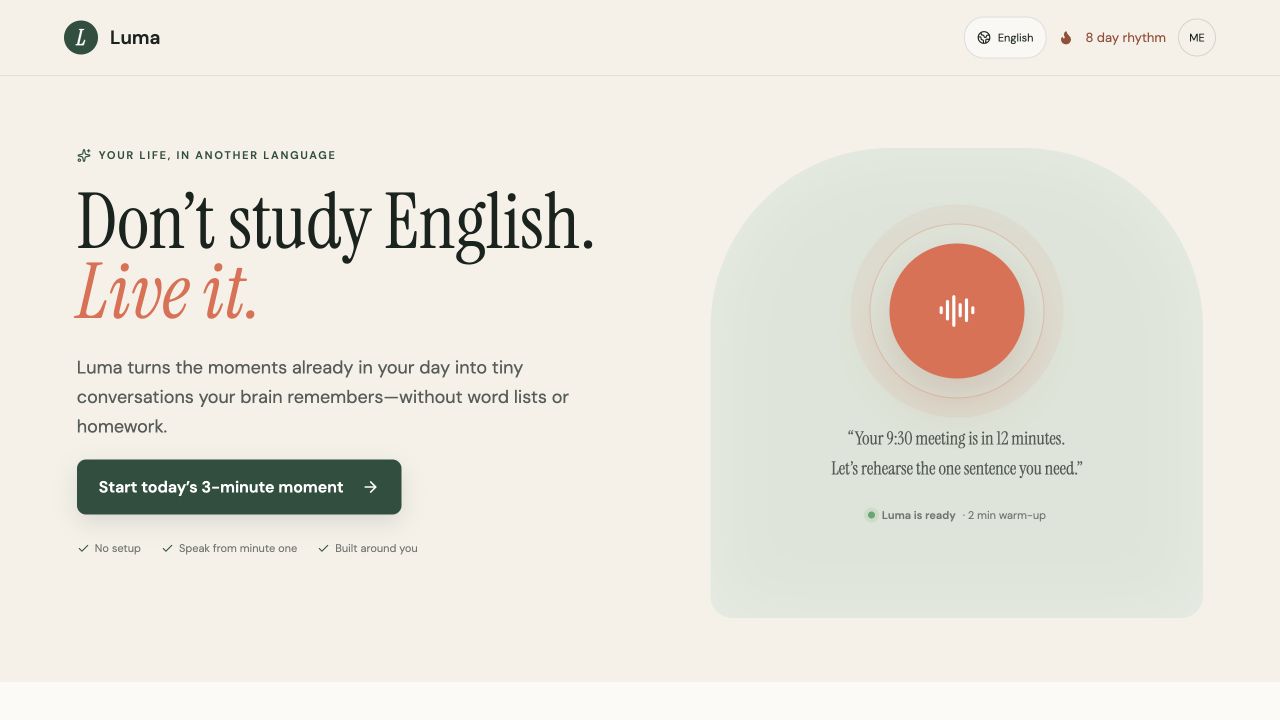
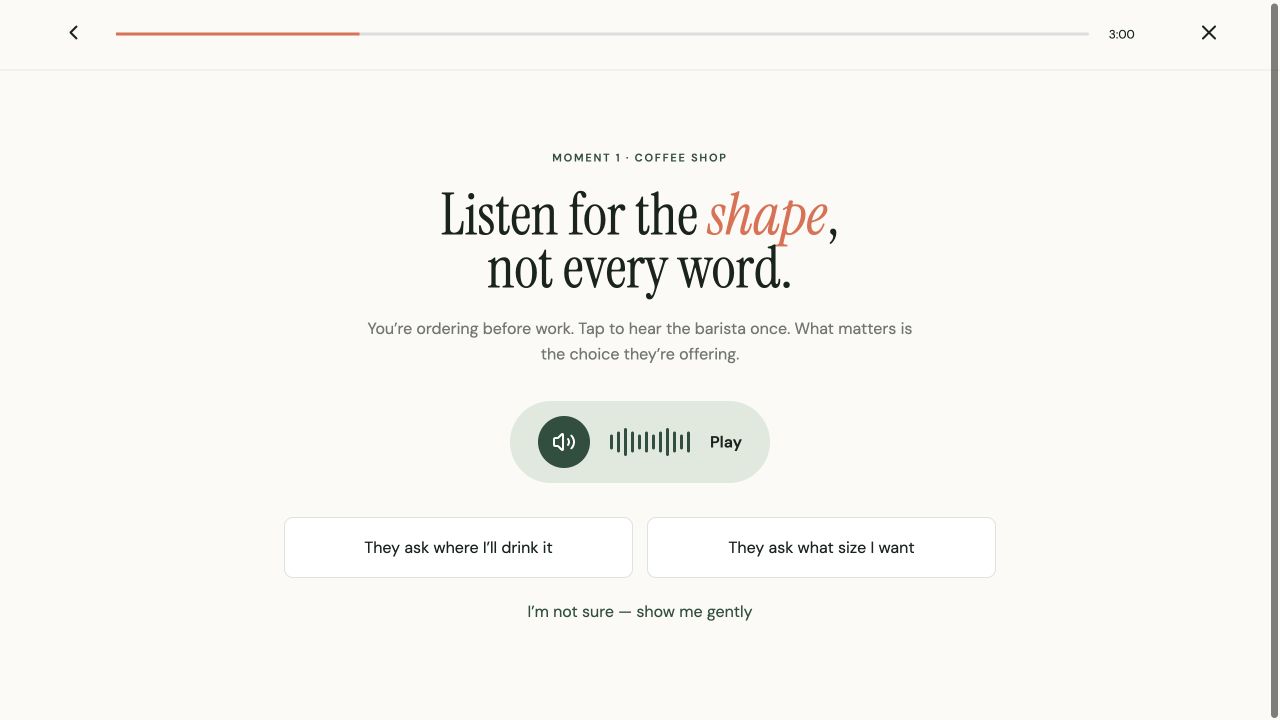
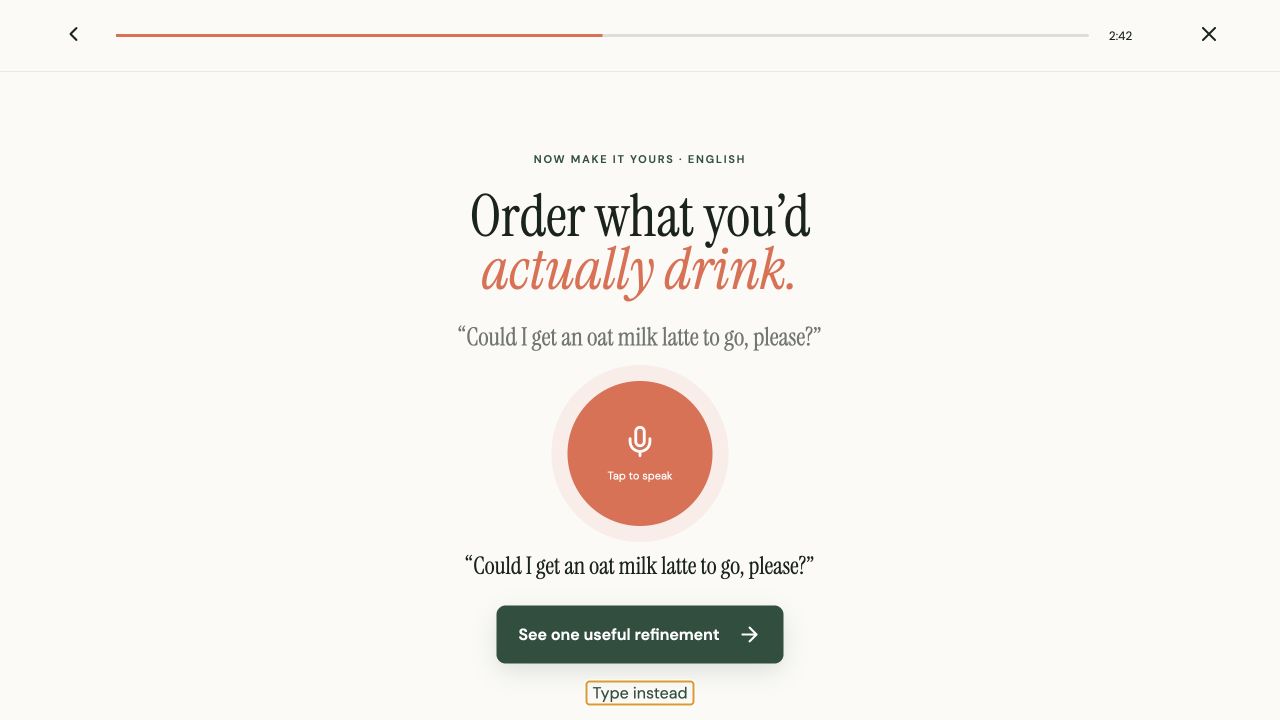
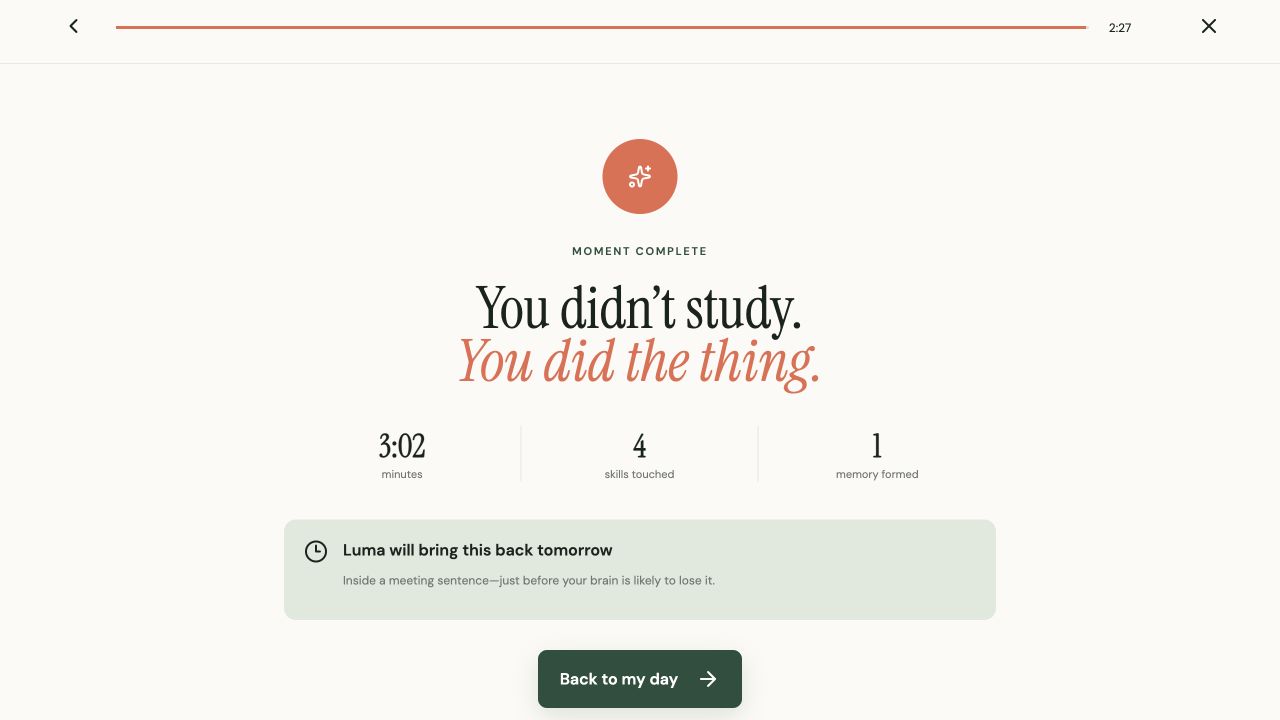
Luma is a personal AI language teacher for busy adults. It turns the learner’s next real-life moment—ordering coffee before work, clarifying something in a meeting, or handling an airport change—into a focused three-minute learning loop:
- Hear the meaning without translating every word.
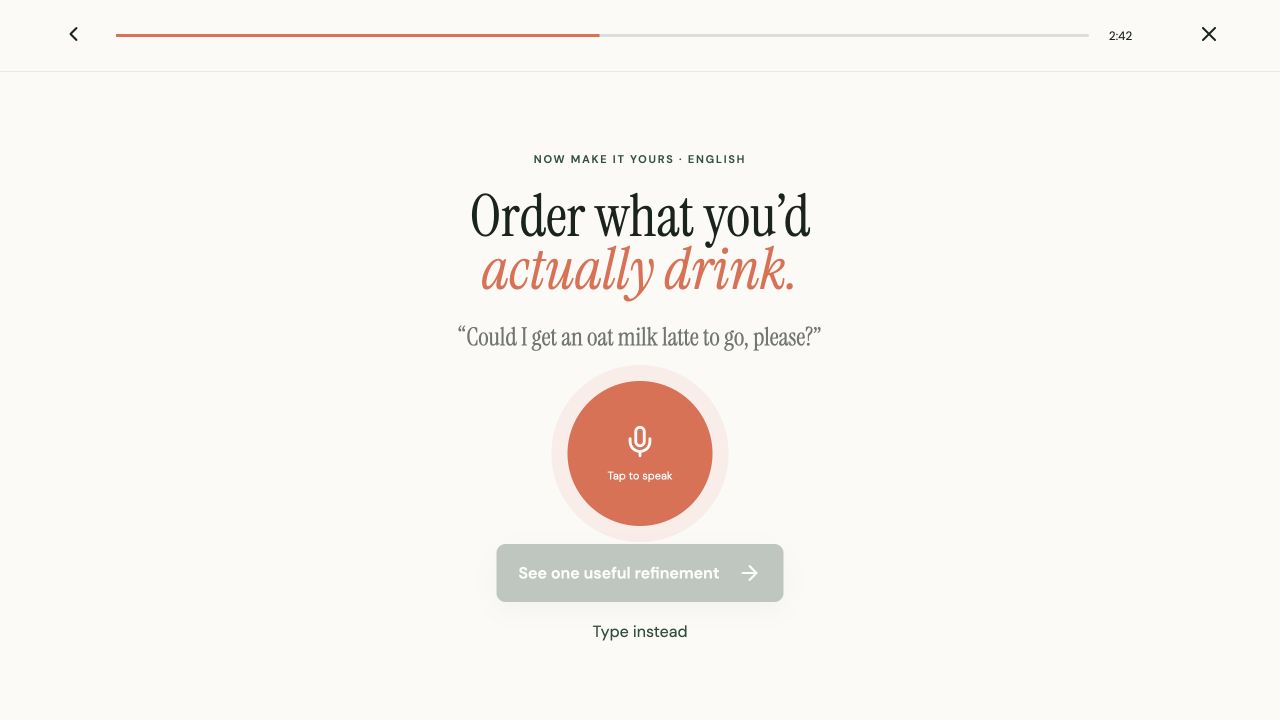
- Say what the learner genuinely wants to communicate.
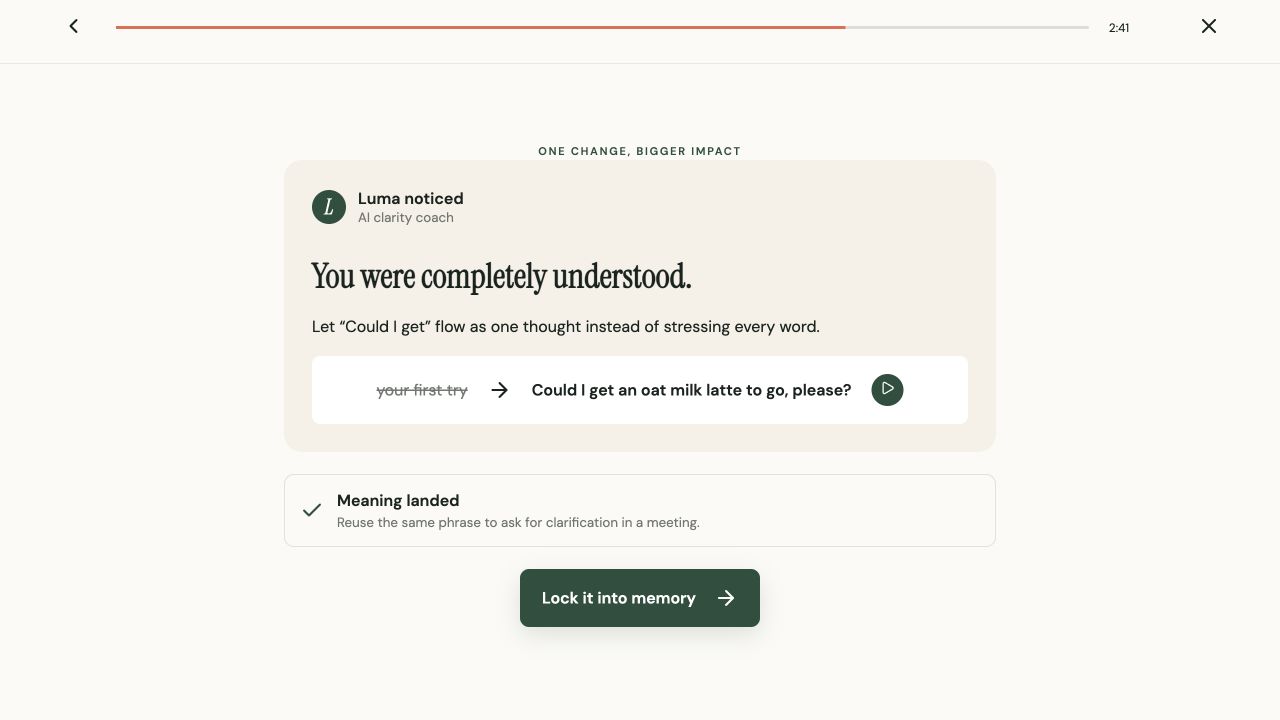
- Refine only one high-value issue, after acknowledging that the meaning landed.
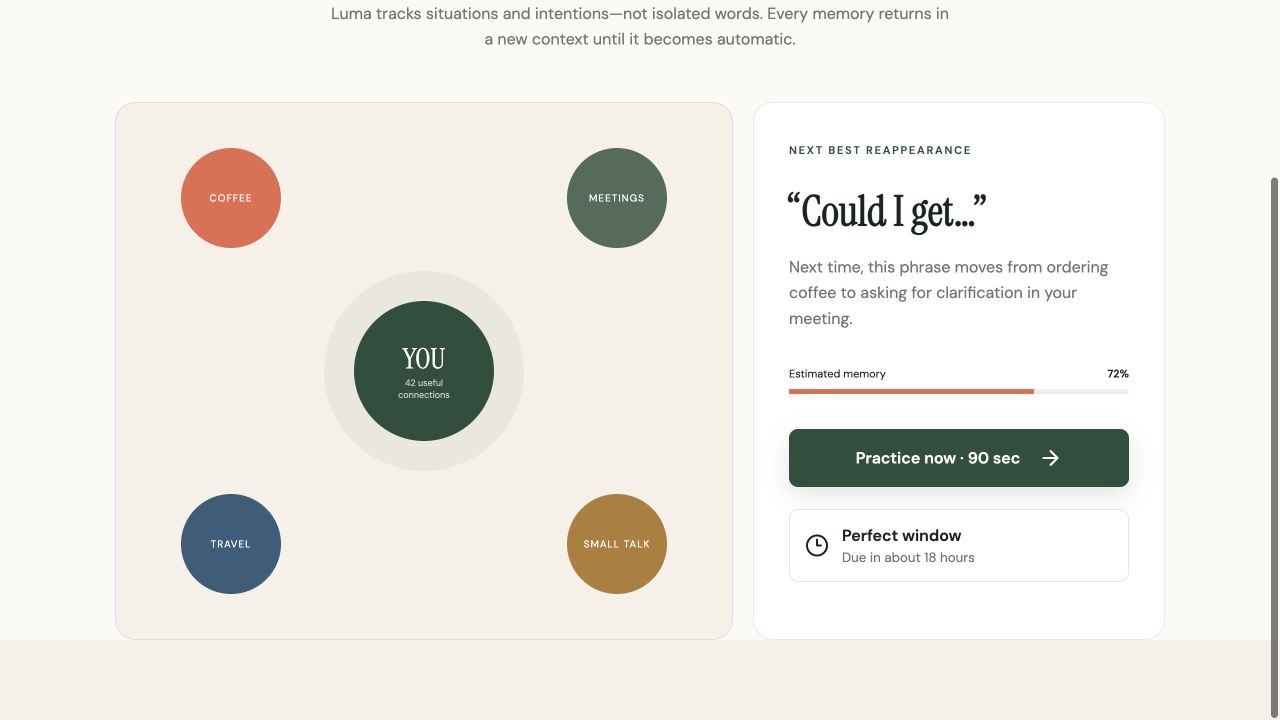
- Reappear the same language in a different situation before it is forgotten.
Instead of storing isolated vocabulary, Luma builds a living memory of intention + situation + phrase + successful use. This helps language transfer from practice into real life.
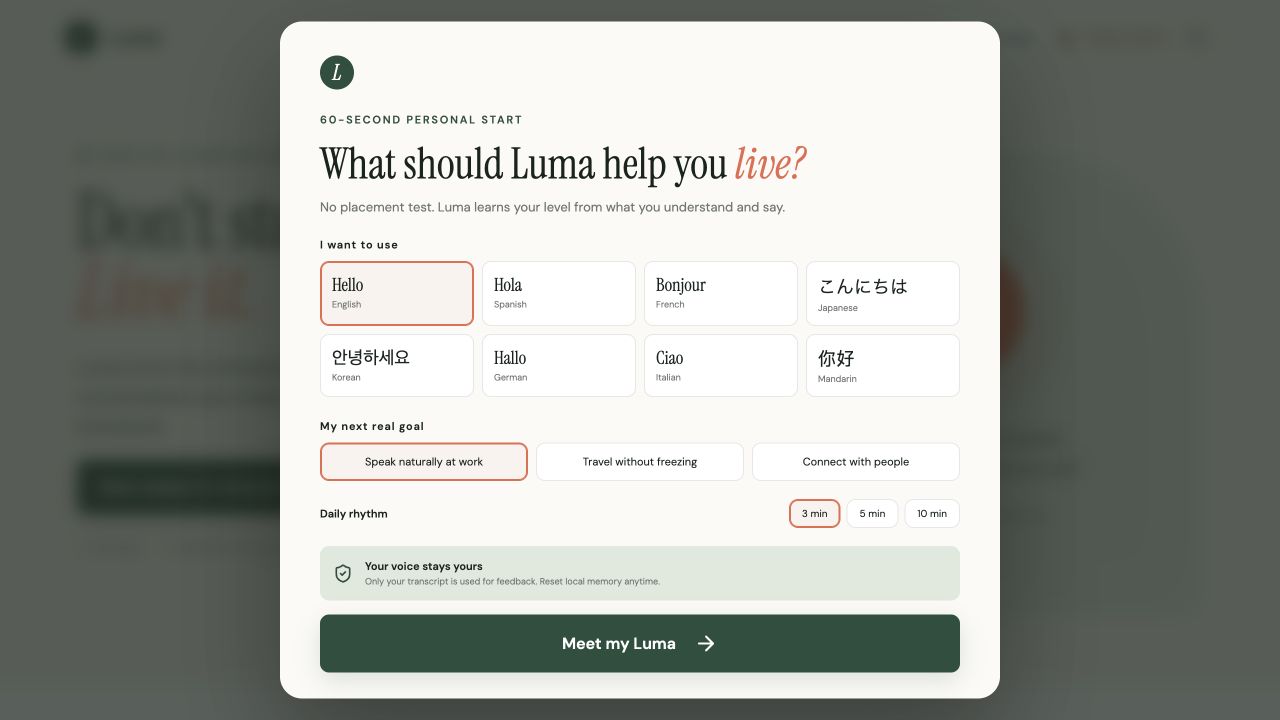
The prototype supports eight target languages, adaptive onboarding, browser-based listening and speaking, personalized AI feedback, and a visual memory map.
Why it is different
Most language products optimize for completing lessons. Luma optimizes for successful communication and long-term transfer.
It protects learner confidence by recognizing communicative success before correction. It prevents overload by selecting only one useful refinement. It then brings the expression back in a new context, helping the learner retrieve and generalize it instead of memorizing a list.
How we built it
Luma uses a responsive React and Vite frontend with browser speech recognition and text-to-speech for a setup-free voice experience.
A server-side Cloudflare-compatible worker protects the API key and sends the learner’s target language, scenario, and transcript to GPT-5.6 Terra. The model returns a structured coaching object containing:
- whether the learner was understood;
- confidence-preserving praise;
- one focused refinement;
- a natural version of the expression;
- a cross-context memory hook.
The integration prefers the Responses API and automatically falls back to Chat Completions JSON mode when the configured compatible gateway does not expose /responses. Runtime metadata verifies that both the requested and provider-reported model are gpt-5.6-terra.
Personal learning preferences and prototype memory stay on the learner’s device. A deterministic fallback preserves the complete judge experience if the live AI service or microphone is temporarily unavailable.
How Codex accelerated the build
Codex helped take Luma from an empty workspace to a tested, documented, and deployed product during OpenAI Build Week.
It helped translate the adult-learning problem into Luma’s central product mechanism, implement the responsive interface and secure worker, integrate GPT-5.6 structured coaching, test the complete learner journey, create the visual identity and demo assets, verify production behavior, document model evidence, and prepare the public submission.
The key product decisions remained human-led: make real life the curriculum, celebrate communication before correction, limit feedback to one useful change, and prove learning through transfer.
Challenges we faced
The hardest challenge was designing an experience that felt like a patient teacher rather than another chatbot or course.
We also had to make voice interaction reliable across browsers, keep credentials server-side, produce predictable structured feedback through different API surfaces, protect learner confidence, and ensure judges could complete the experience even if microphone or model access was unavailable.
Accomplishments that we are proud of
- Built a complete three-minute hear → say → refine → reappear loop.
- Supported eight target languages without requiring a placement test.
- Created a memory model based on successful intentions in context rather than vocabulary lists.
- Integrated verifiable GPT-5.6 Terra coaching through a secure server-side endpoint.
- Delivered a responsive, public, judge-ready experience with graceful fallbacks.
- Built and deployed the complete prototype during Build Week with Codex.
What we learned
The most important lesson was that adult language learning is not mainly a content problem. It is a retrieval, confidence, timing, and transfer problem.
A learner does not need every possible correction. They need the right expression, for the next meaningful moment, reinforced before it disappears.
What’s next for Luma
Next, Luma will add real-time speech-to-speech coaching, opt-in calendar and location signals for just-in-time practice, FSRS-style memory scheduling, pronunciation and hesitation-aware adaptation, and multilingual evaluations for correction usefulness, level fit, emotional safety, and cross-context transfer.
The long-term vision is a language teacher that understands the learner’s life well enough to make practice almost invisible.
Try it
Built With
- cloudflare
- codex
- gpt-5.6
- html5
- javascript
- localstorage
- openai
- outputs
- react
- recognition
- speech
- structured
- text-to-speech
- vite


Log in or sign up for Devpost to join the conversation.