-
-
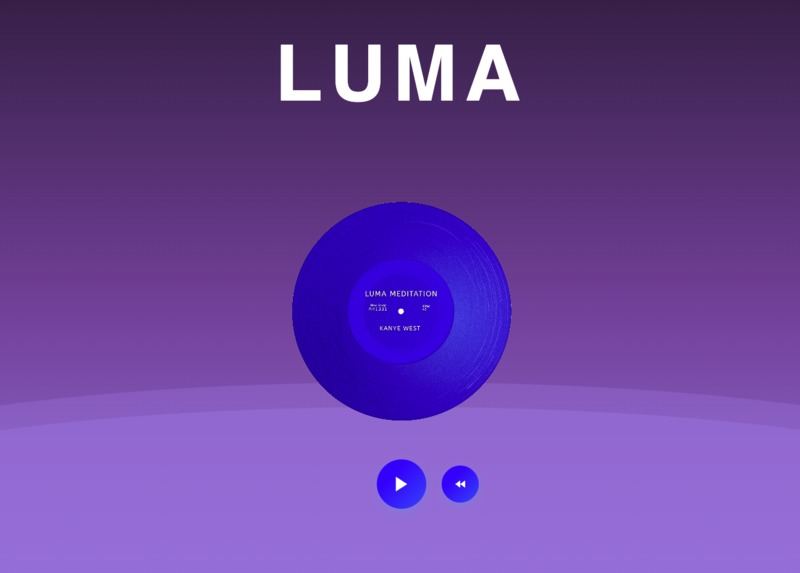
guided meditation screen
-
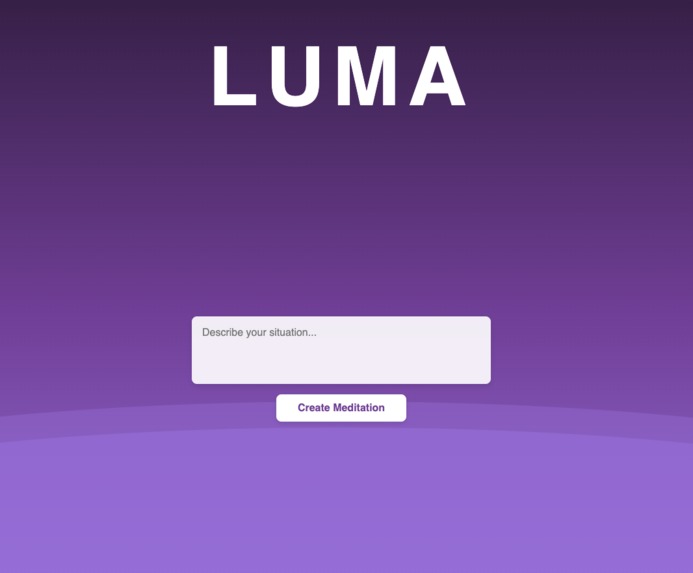
Landing page
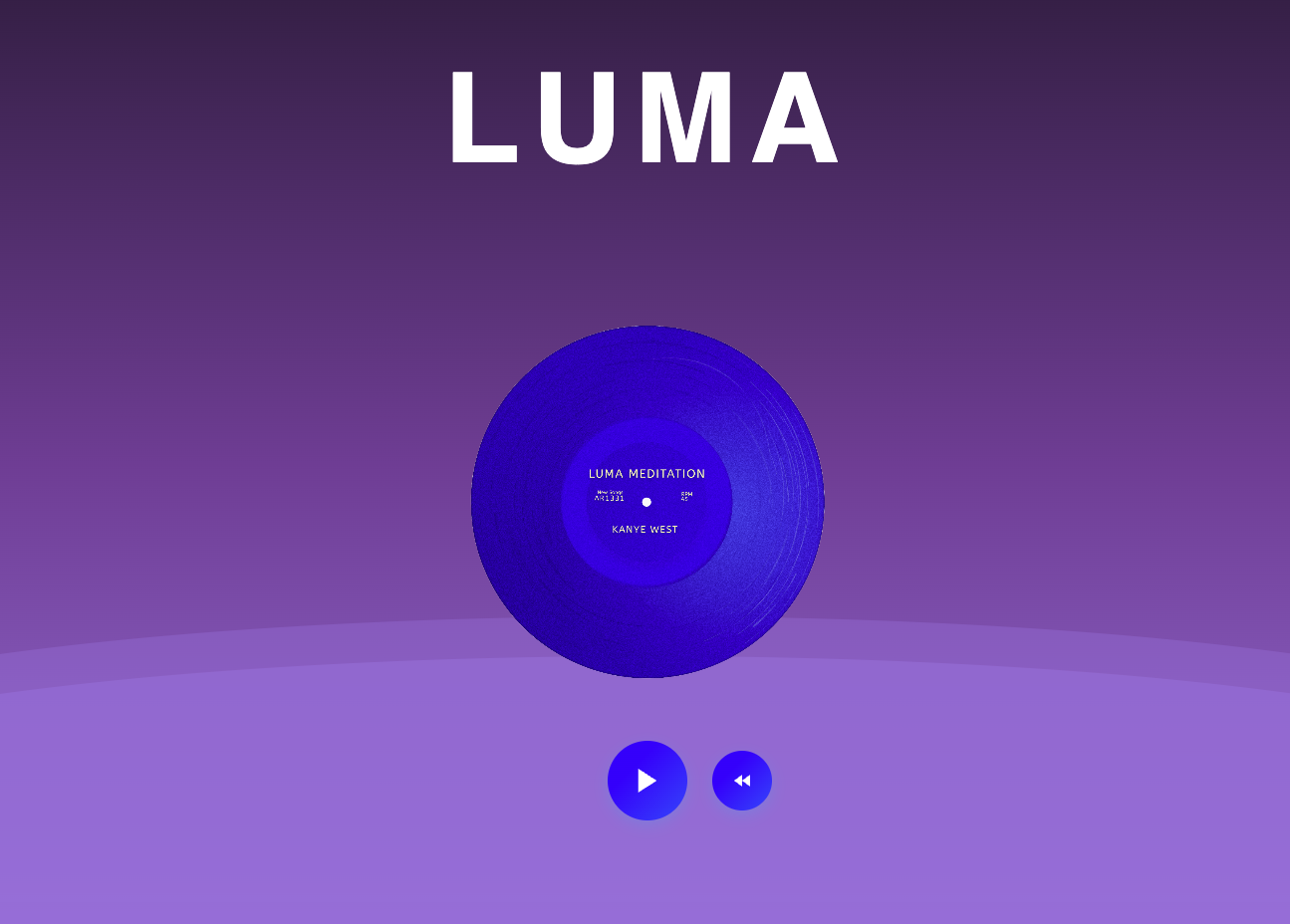
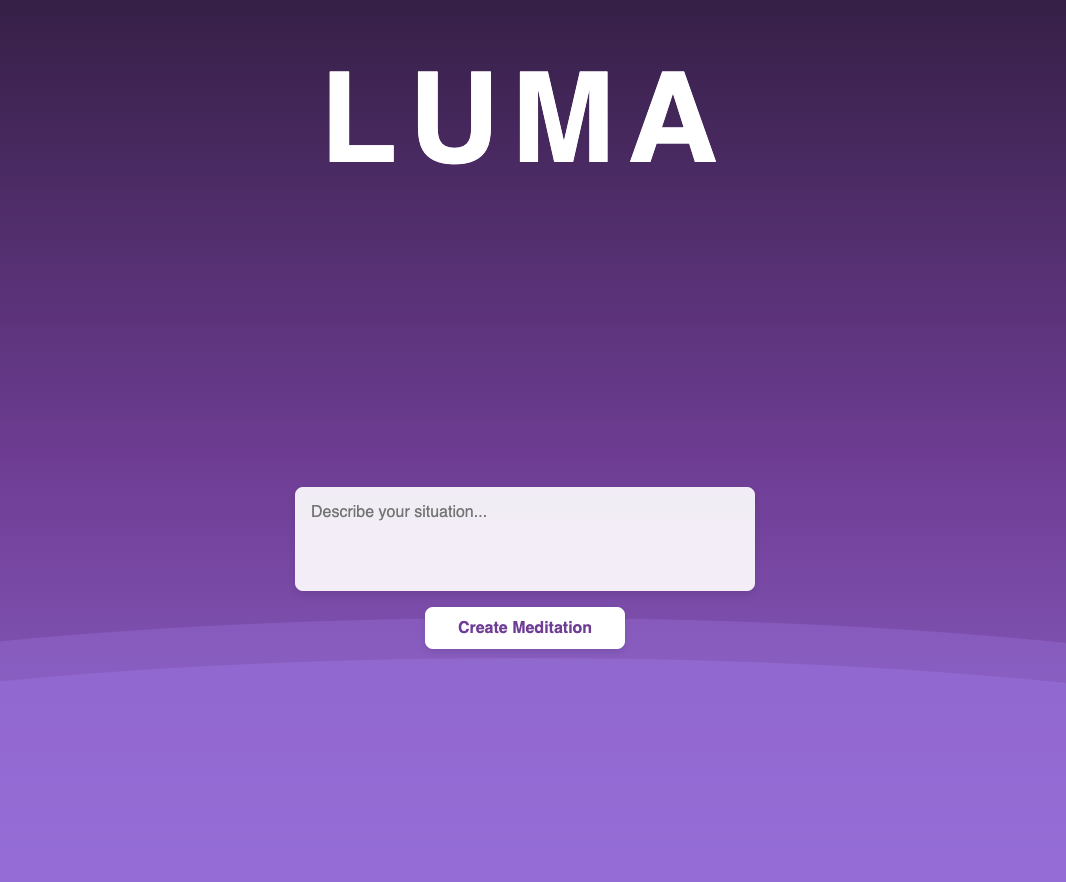
LUMA: Luminous Understanding through Mindful AI
Inspiration
A growing global mental health crisis and the potential we have to us AI to democratize access to personalized meditations. Calm and headspace are a thing but lack true personalization and accessibility.
The statistics were crazy:
- 1 in 8 people globally lives with a mental disorder (WHO)
- Nearly two-thirds of those with mental health issues never seek help
- Meditation can reduce anxiety by 30% and depression symptoms by 30-50%
- People have to pay 100-200 for meditation/therapy
So we built LUMA
What it does
LUMA us AI to generate personalized guided meditations on demand. Users simply share what they're feeling, and our advanced AI crafts a completely unique meditation specifically for their needs right now - whether that's anxiety before a presentation, grief from loss, or needing focus before an exam.
Key features include:
- One-click personalized meditation generation
- Neural voice synthesis for soothing, natural narration
- Adaptive audio processing with background music integration
- Accessibility-focused design, including customizable playback
- Culturally responsive content generation
How we built it
We built LUMA using a combination of cutting-edge AI technologies and web development frameworks:
- Frontend: React with Vite, custom CSS animations, and Web Audio API for seamless playback
- Backend: Flask REST API with CORS support
- AI Engine: Cohere Command-R LLM with example-based prompt engineering
- Voice Synthesis: Google Cloud TTS with neural voice profiling
- Audio Processing: Custom pydub mixing engine for background music integration
Challenges we ran into
Audio Synchronization: Aligning the generated voice narration with background music seamlessly required careful audio processing and timing adjustments. This was very difficult.
API Integration: Coordinating between multiple APIs (Cohere, Google Cloud TTS) while maintaining low latency was a technical challenge.
Accomplishments that we're proud of
- Creating something awesome that is truly personalized that adapts to each user's specific emotional state and context.
- Low latency
- Simple and nice-looking UI. which make it accessibility-friendly
What we learned
- The power of example-based prompt engineering for consistent, high-quality AI content generation.
- Techniques for optimizing audio processing and delivery in web applications.
- The potential for AI to create truly personalized experiences that adapt to differant contexts.
What's next for LUMA
Get real people to use it!
Super excited for people to check it out


Log in or sign up for Devpost to join the conversation.