-
-
QrCode to the page. Same as the github link above.
-
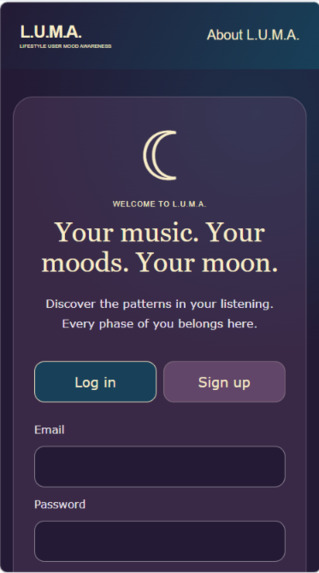
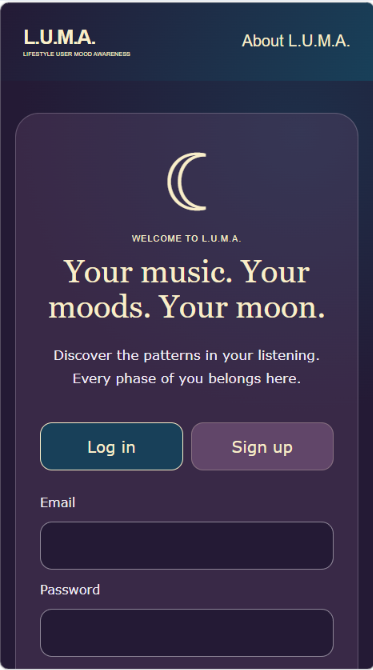
Login Page
-
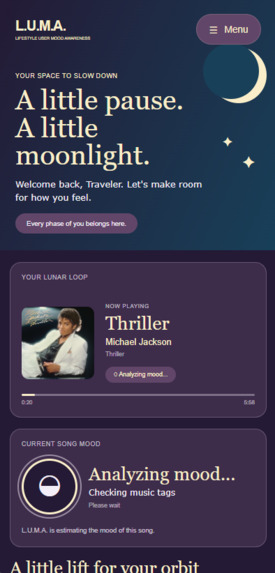
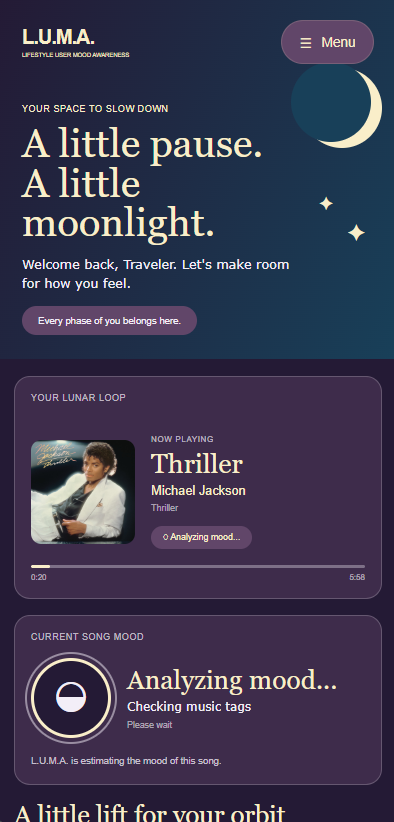
Overview
-
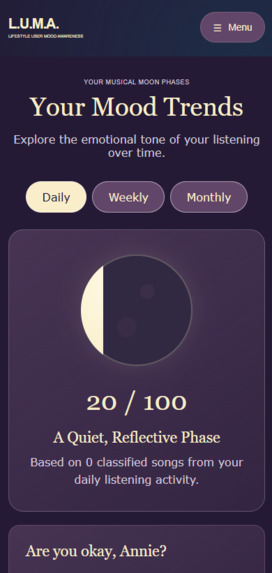
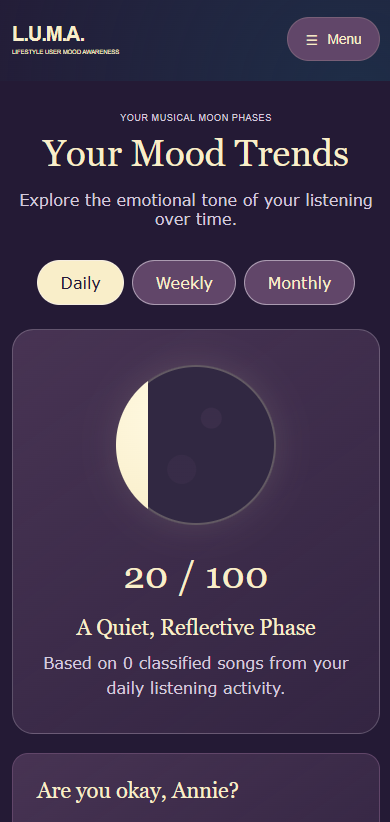
Mood Trends
-
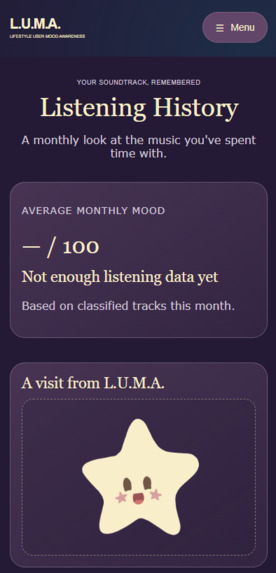
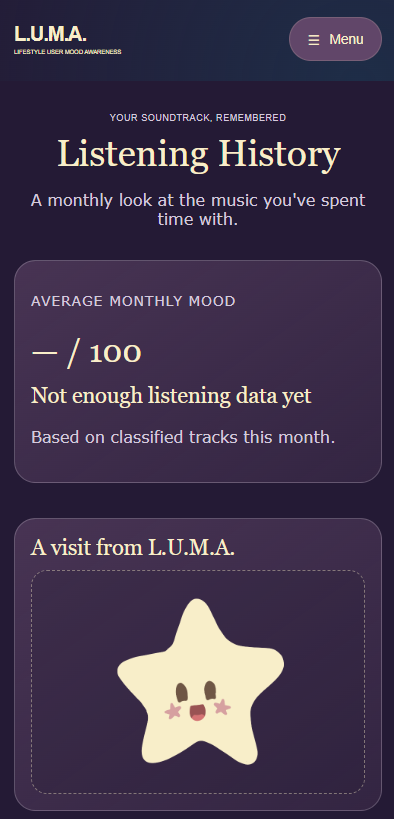
Listening History
-
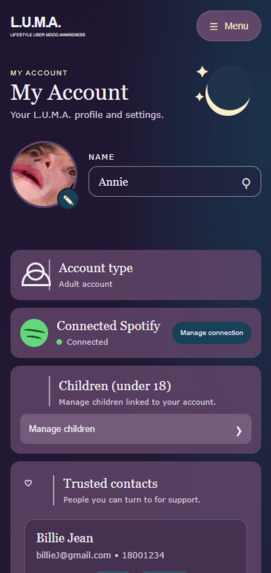
Account Page
-
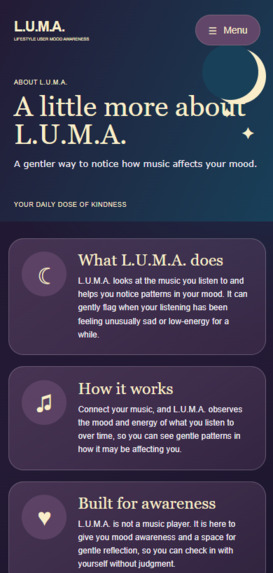
About Page
Inspiration
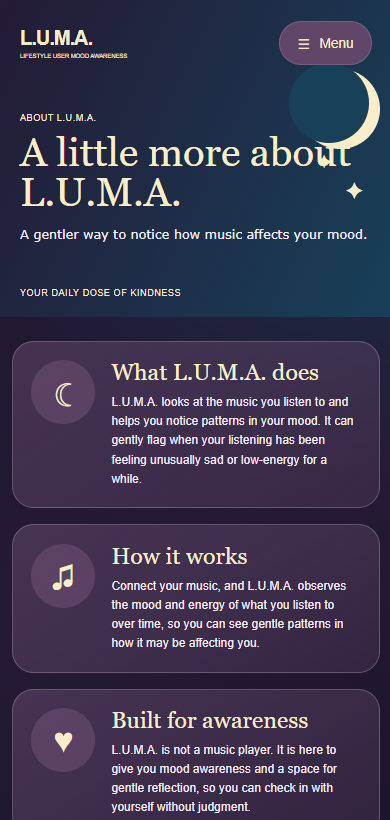
L.U.M.A. was inspired by the idea that music can reflect how people feel and help them recognize changes in their listening habits. We wanted to create a supportive self-reflection tool without presenting it as a medical or mental-health diagnosis.
What it does
L.U.M.A. connects to Spotify to track currently playing songs and listening history. It uses Last.fm community tags to estimate the mood of songs, saves listening and mood data in Supabase, and allows users to add shared mood tags that other listeners can see.
How we built it
We built the frontend with HTML, CSS, and JavaScript. A FastAPI backend connects the frontend to Spotify, Last.fm, and Supabase. Spotify authentication uses OAuth and PKCE. Last.fm provides music tags, while the backend calculates mood values from those tags. Supabase stores user accounts, listening history, current tracks, song moods, and shared community tags. The backend is deployed with Render, and the frontend can be hosted through GitHub Pages.
Challenges we ran into
We had challenges with securely managing API keys, connecting FastAPI to Supabase, correcting database schema mismatches, identifying individual users, and making shared tags visible across accounts. Spotify access tokens also timed out, so we had to add token refreshing and reconnection handling. We also worked through PowerShell testing errors, JSON formatting issues, deployment problems, and Git merge conflicts.
Accomplishments that we're proud of
We successfully connected multiple APIs into one working application. We built user-specific Spotify tracking, shared mood data, Last.fm integration, Supabase storage, automatic Spotify token refreshing, and community mood tagging. We are also proud that our team combined multiple branches into one working main branch.
What we learned
We learned how full-stack applications communicate, how to work with APIs and authentication, how to protect secrets with environment variables, how to design and update database schemas, and how to troubleshoot deployment and data-validation errors. We also gained experience collaborating with Git branches and merging team members’ work.
What's next for Luma
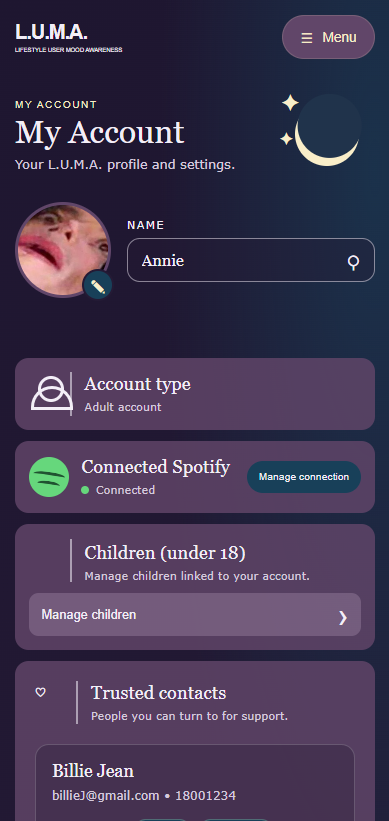
Next, we want to improve the mood algorithm, add more detailed listening trend visualizations, and continue improving the user experience. We also plan to add different account types, such as parent and child accounts, that can connect with each other through shared profiles and permissions. This could allow parents and children to view appropriate listening insights while maintaining privacy and account control. We also want to explore personalized recommendations, stronger production security, and support for additional music services.
