-
-
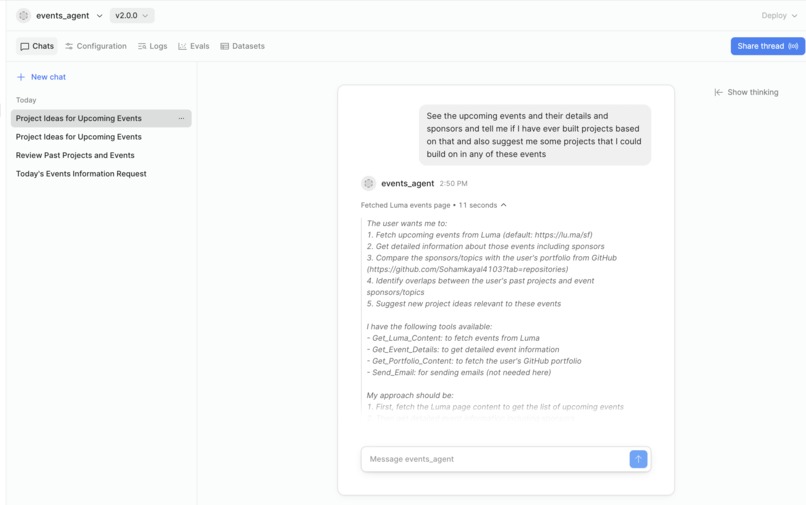
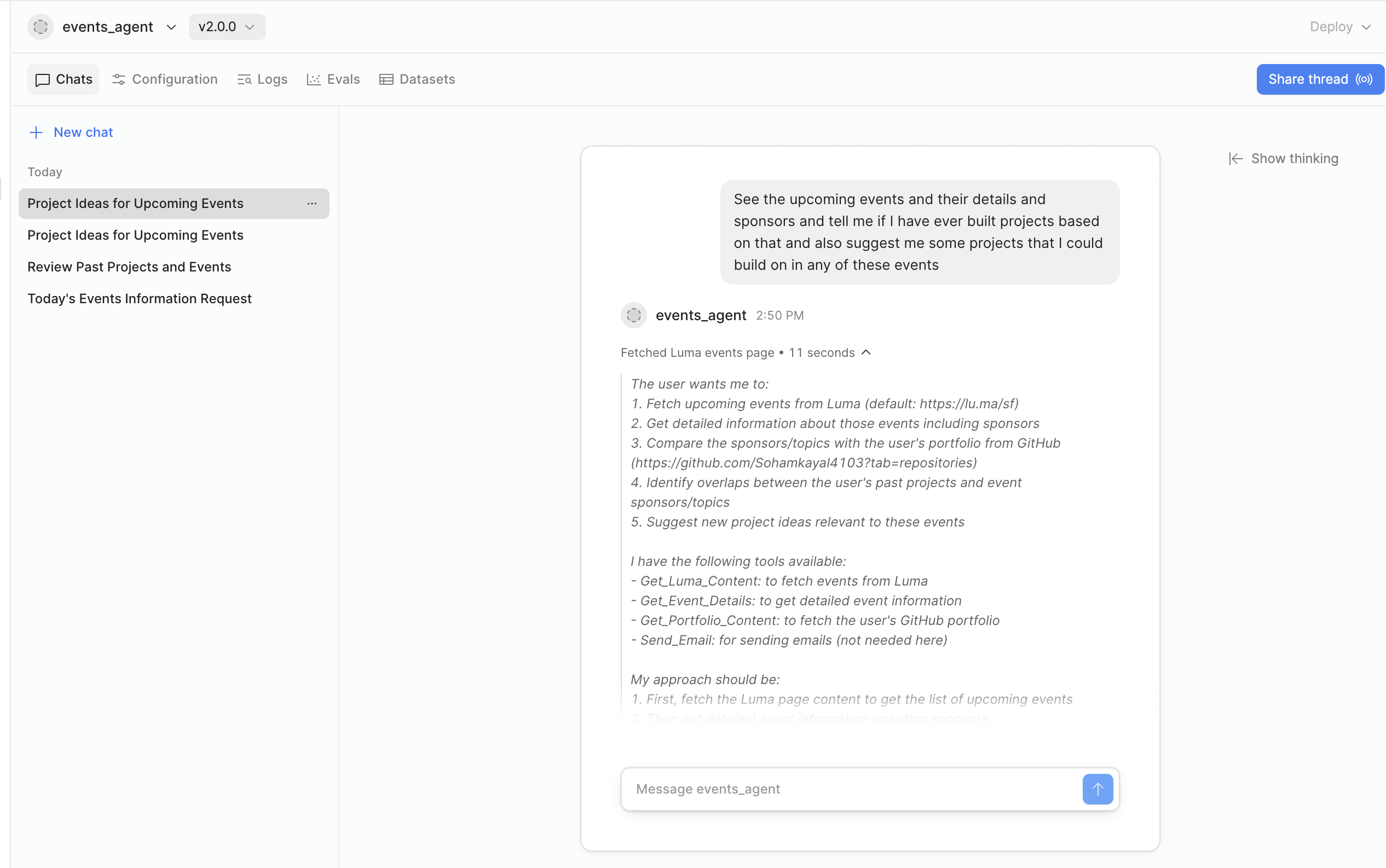
Retool_agent
-
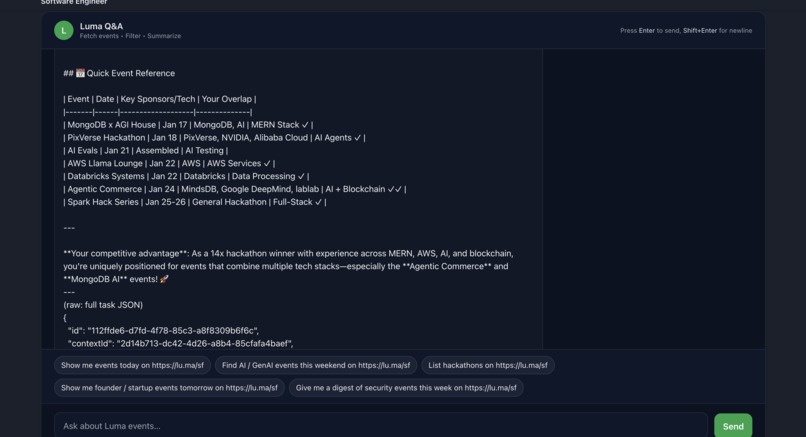
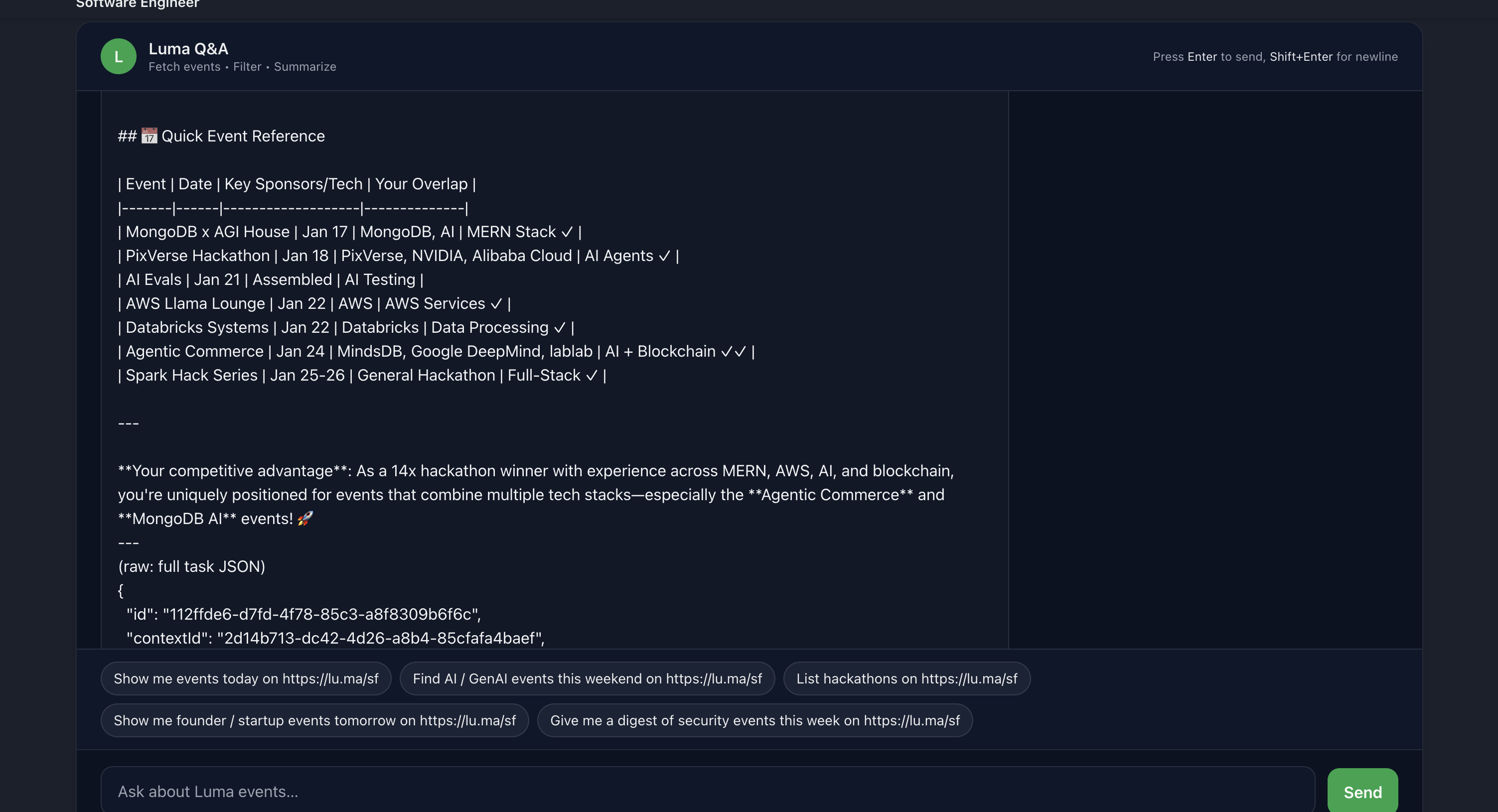
Chatbot_a2a_with_retool
Inspiration
Every time I scroll through Luma events (especially hackathons), my brain does this fun little thing where it opens 20 tabs and then immediately forgets why it opened 20 tabs.
I kept running into the same problem: “This looks cool… but should I attend? Can I realistically build something strong for this? Do I even have time that day?” I wanted a way to turn a messy list of events into a clear recommendation based on:
- My skillset + past projects
- Sponsor relevance (so I can align ideas with sponsor tracks)
- My availability (so I don’t overcommit and regret it later)
That became the core idea behind Scrapeit.
What it does
Scrapeit is an agent that:
- Scrapes Luma events (example:
https://lu.ma/sf) and extracts key details:
- event title, date/time, location, registration link
- sponsors
- tags/keywords (AI, hackathon, founders, security, etc.)
- Scrapes sponsors’ GitHub pages to understand what they actually build / maintain:
- repos, topics, tech stack hints, SDKs, integrations, APIs
- what kind of projects they tend to support
- Uses Claude (Sonnet 3.5 + Haiku) to:
- summarize events
- map sponsor tracks to realistic project ideas based on my experience
- recommend whether I should attend or skip
- Checks my calendar availability (or time windows I provide) and tells me:
- ✅ Attend + best time plan
- ⚠️ Attend but only if…
- ❌ Skip because conflict / low relevance / too risky for my skill alignment
So instead of “random FOMO scrolling”, it gives me a ranked digest of what’s worth my time and why.
How we built it
Core stack
- Retool Agents (A2A) for orchestration and tools
Claude models for reasoning + summarization:
- Claude Sonnet 3.5 for deep analysis and recommendations
- Claude Haiku for fast extraction + lightweight summaries
Auth0 for authentication and user access control
Sponsor integrations (3): Retool, Auth0, Claude
The flow (end-to-end)
Frontend (React chat UI) A simple chat interface: “Show me hackathons this weekend” or “Summarize AI events today”.
Backend (Node/Express gateway) Keeps secrets safe (Retool API key), calls Retool A2A endpoints, and polls until results are ready.
Retool Agent
- Tool 1: Luma scraper (event list + event details)
- Tool 2: Sponsor extractor (sponsor names + links)
- Tool 3: GitHub scraper for sponsors (repos/topics)
- Tool 4: Claude-powered ranking and recommendation engine
- Tool 5 (optional): calendar/availability check logic
- Claude reasoning layer
- Haiku: quick “digest + extraction”
- Sonnet 3.5: “should I attend + what can I build + risk assessment”
This setup lets Scrapeit behave like a decision-making assistant instead of a raw scraper.
Challenges we ran into
A2A request schema mismatch The Retool A2A endpoint required a specific message structure (
message.kind = "message"), and small payload mismatches returned confusing 400s.Long-running tasks Some scraping + analysis runs took 90+ seconds, which caused frontend aborts/timeouts. Fix was to:
- remove strict timeouts
- use 15-second polling
- stream status updates via repeated
/statuscalls
Keeping debugging human-readable When something fails, you don’t want “state=working forever” with no clue why. So we added:
- request IDs (
reqId) - full raw task JSON visibility
- step-by-step logs:
agent-card → message:send → task polling
- request IDs (
Sponsor understanding Sponsor pages can be vague. GitHub helps, but it still takes interpretation to map “what they build” into “what I can build quickly at a hackathon.”
Accomplishments that we're proud of
Built an end-to-end agent pipeline that goes: Luma → sponsors → GitHub → Claude reasoning → attendance recommendation ✅
Made it realistic, not motivational-poster AI: Scrapeit factors in time availability and skill alignment, not just “this sounds exciting”.
Integrated 3 sponsor ecosystems cleanly:
- Retool (agent orchestration + A2A)
- Claude (Sonnet 3.5 + Haiku reasoning)
- Auth0 (authentication)
Debugging that actually helps Instead of hiding complexity, it exposes where things are stuck and why.
What we learned
Agents aren’t hard — reliability is hard. The difference between a demo and a usable product is observability: logs, polling, retries, and clear states.
Model choice matters
- Haiku is perfect for fast summarization and extraction
- Sonnet 3.5 shines when you need: “should I attend?” + “what should I build?” with tradeoffs and reasoning
Scraping is messy Real web data is inconsistent. You need guardrails and fallbacks.
Decision support > information A list of events isn’t helpful. A ranked list with reasons is.
What's next for Scrapeit
Calendar integration (real) Sync directly with Google Calendar to compute conflicts automatically.
Personal skill profile Maintain a lightweight “builder profile” of my tech stack + past projects, so recommendations get sharper over time.
Sponsor track templates For each sponsor, generate “starter project templates” (repo scaffolds, suggested APIs, architecture hints).
Notifications Push alerts when:
- a high-relevance hackathon appears
- deadlines are approaching
- an event matches my priorities + availability
Event follow-through After attending, Scrapeit can help generate:
- project idea shortlist
- MVP scope plan
- submission write-up draft (this exact template, but auto-filled)


Log in or sign up for Devpost to join the conversation.