-
-
landing-hero
-
alexa-simulator-intro
-
your-world-future-vision
-
onboarding-environment
-
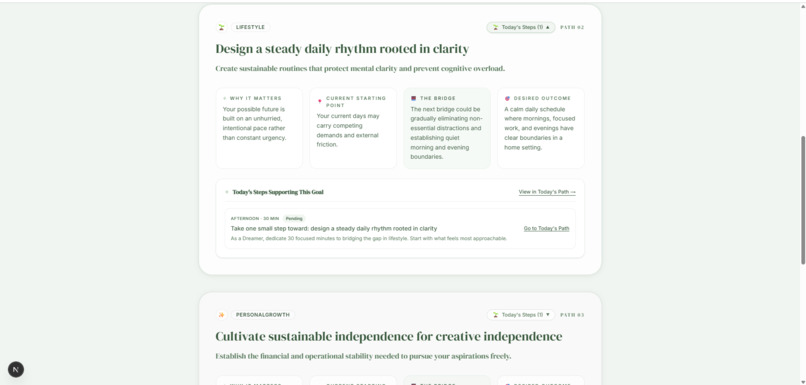
goals-lifestyle-path
-
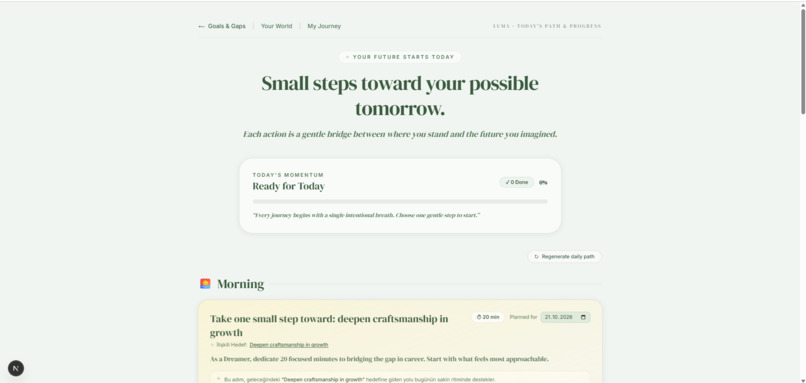
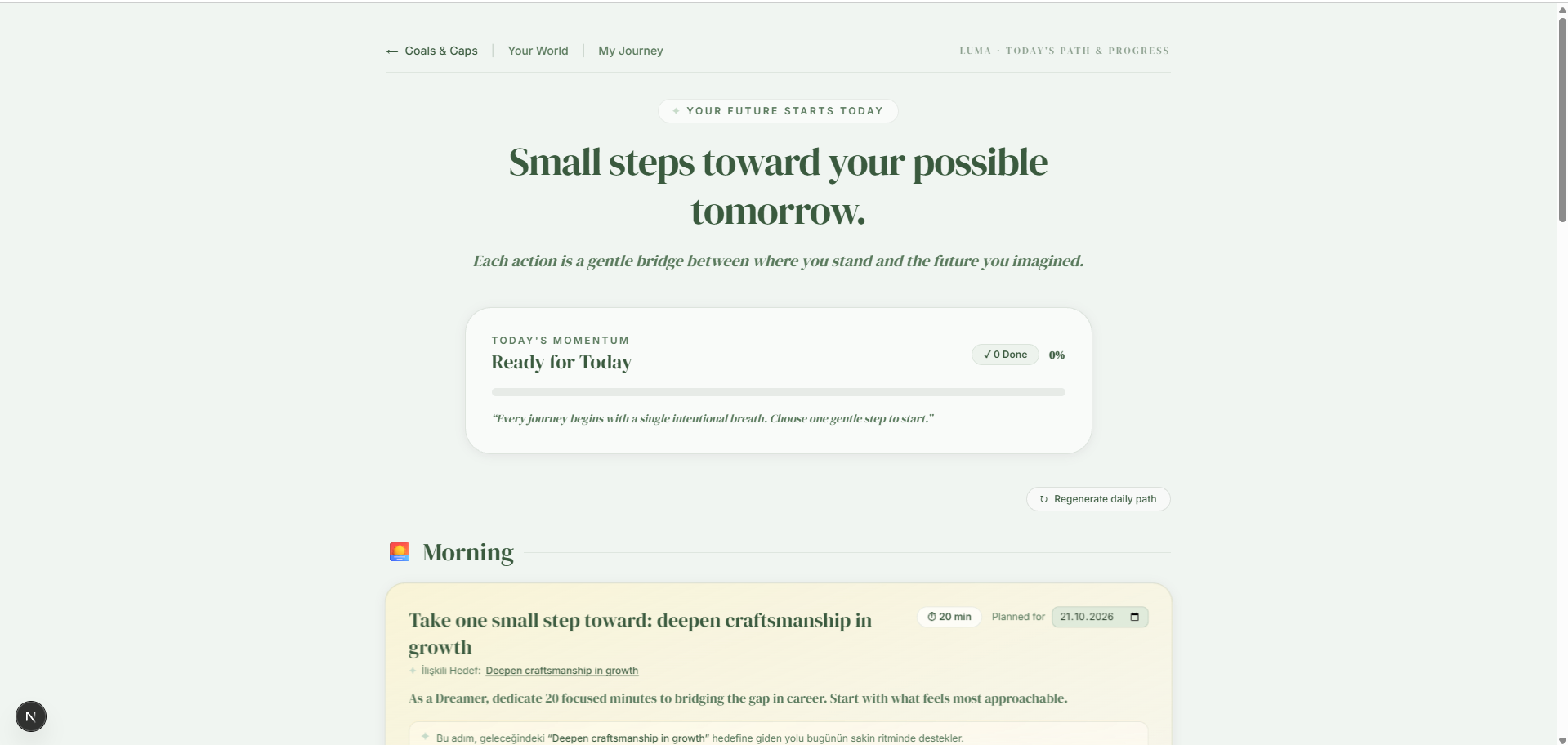
daily-path-overview
-
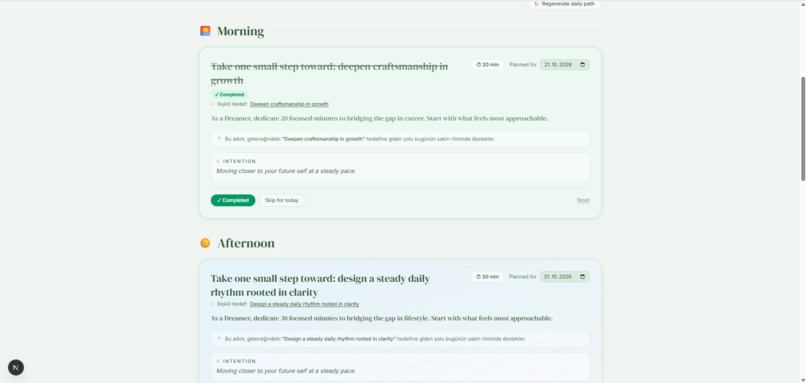
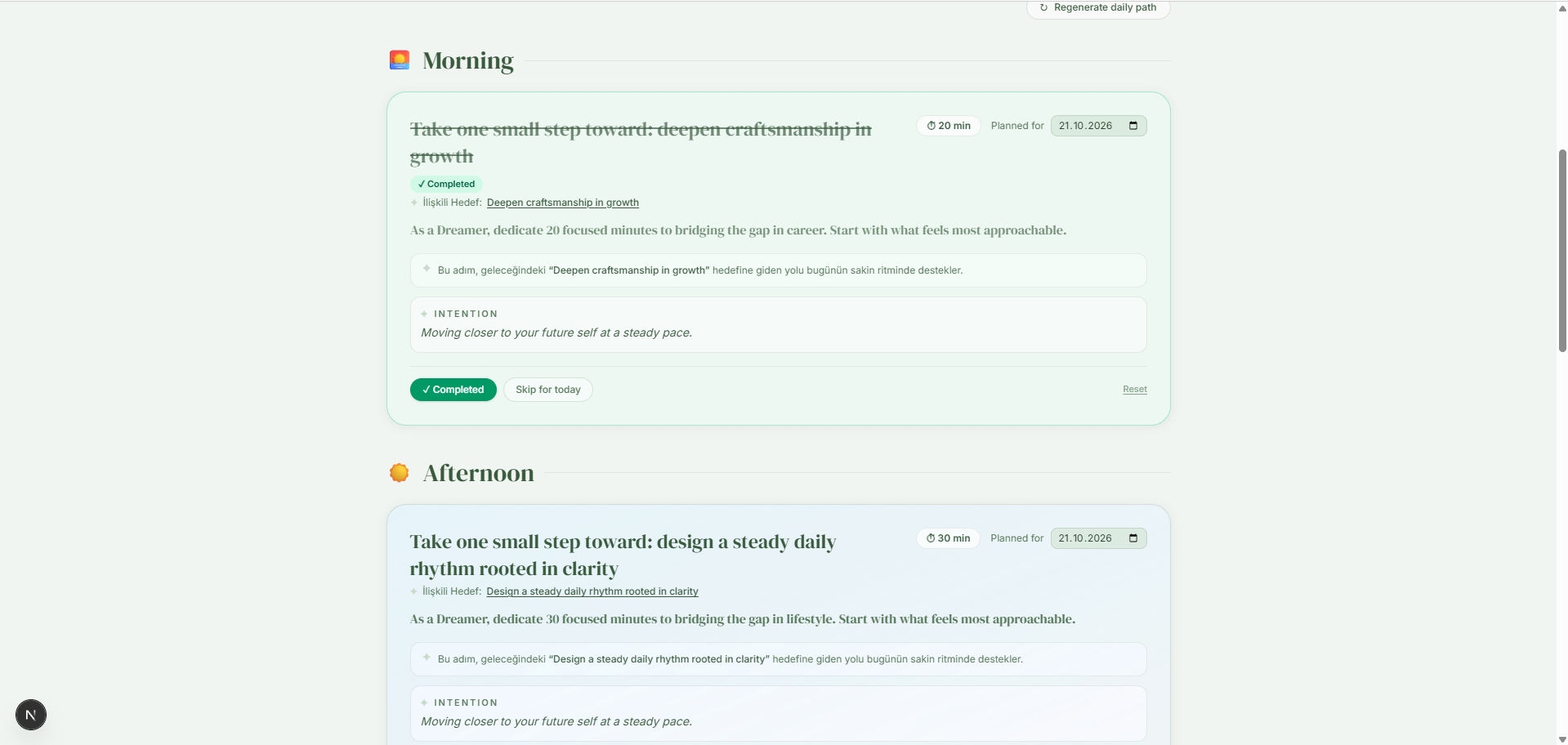
daily-path-actions
-
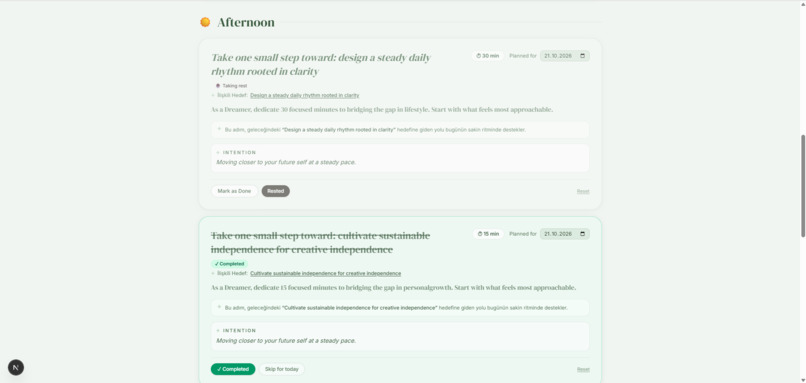
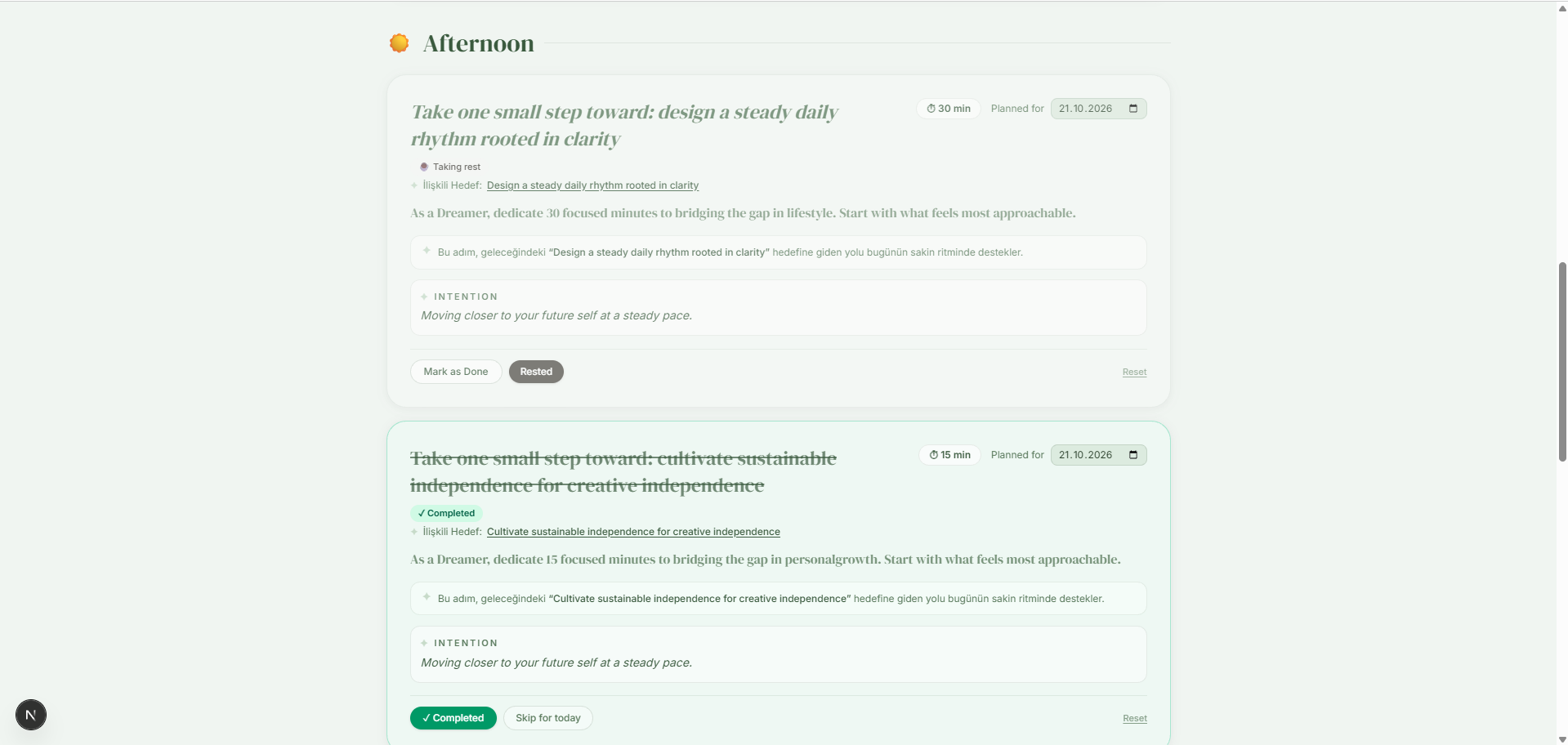
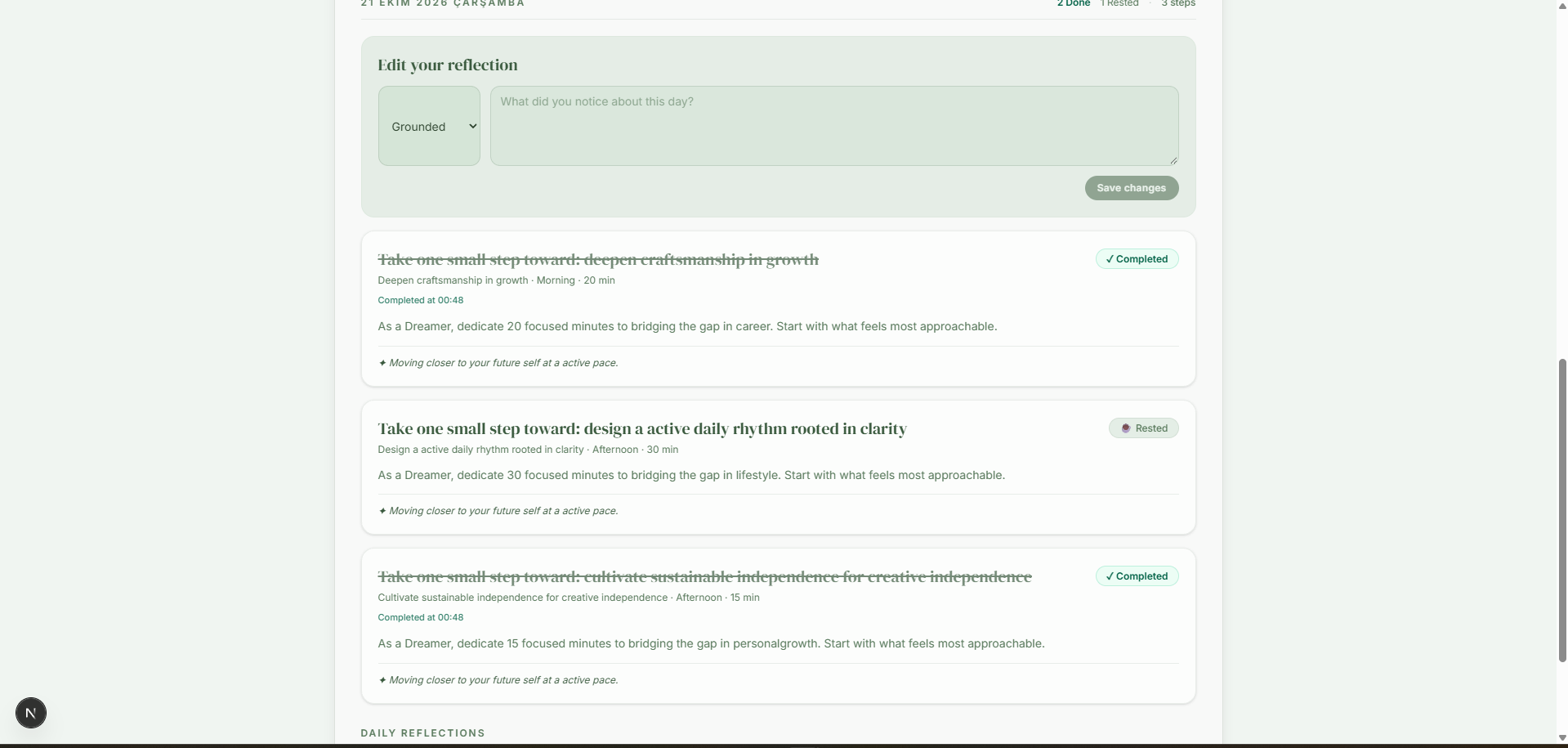
daily-path-statuses
-
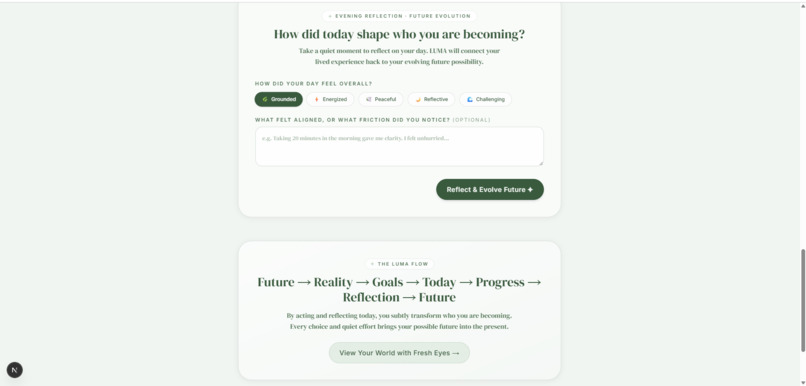
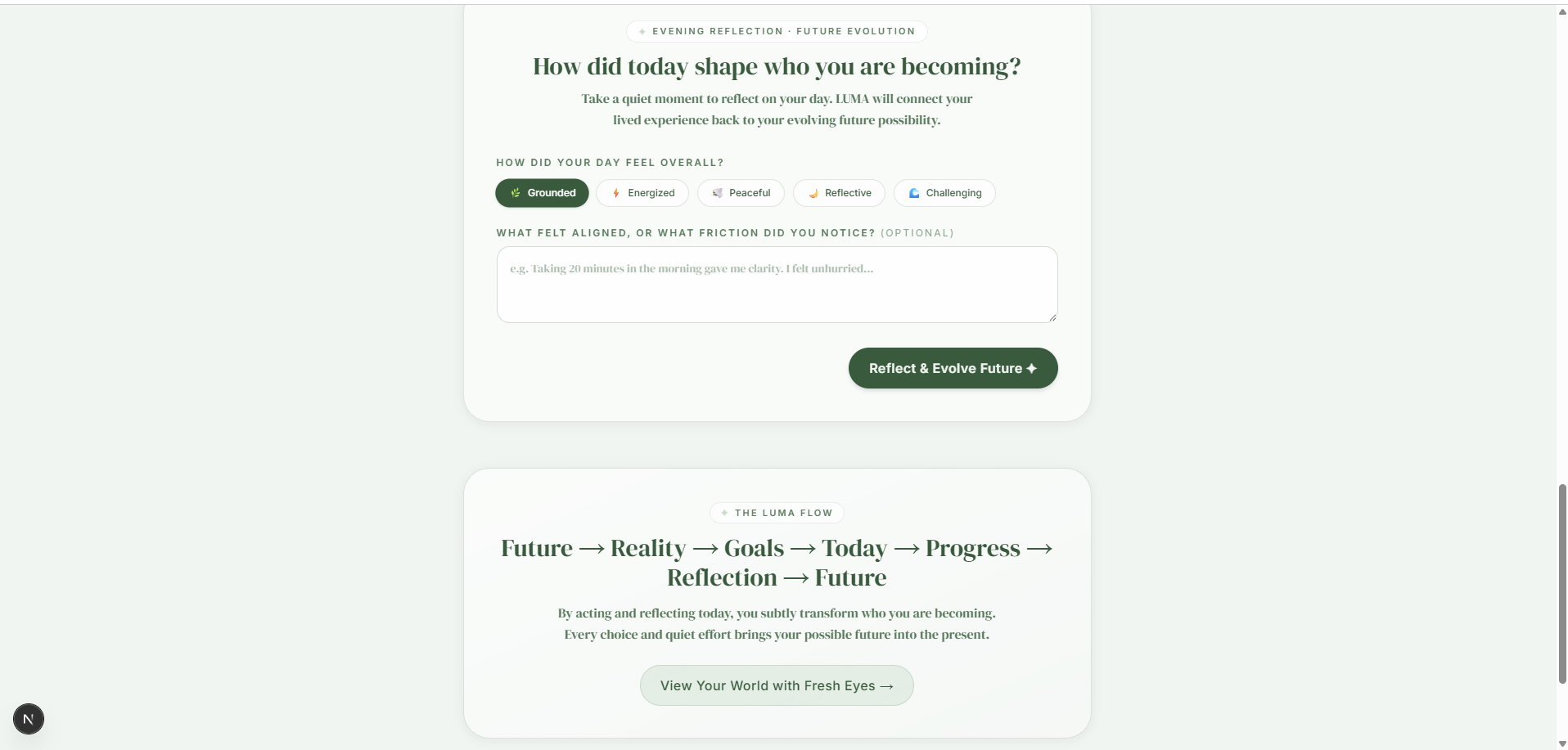
daily-reflection
-
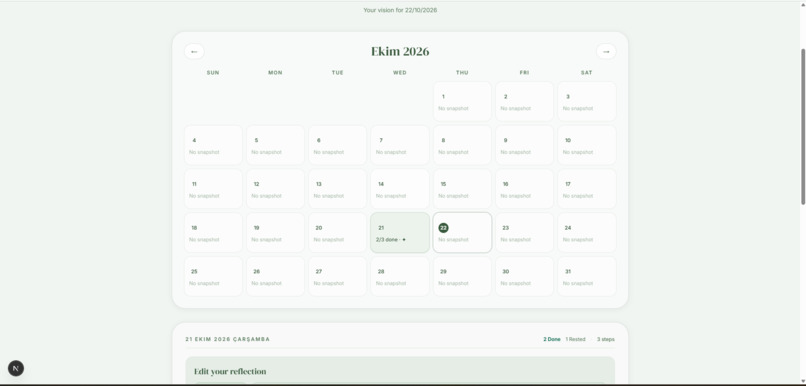
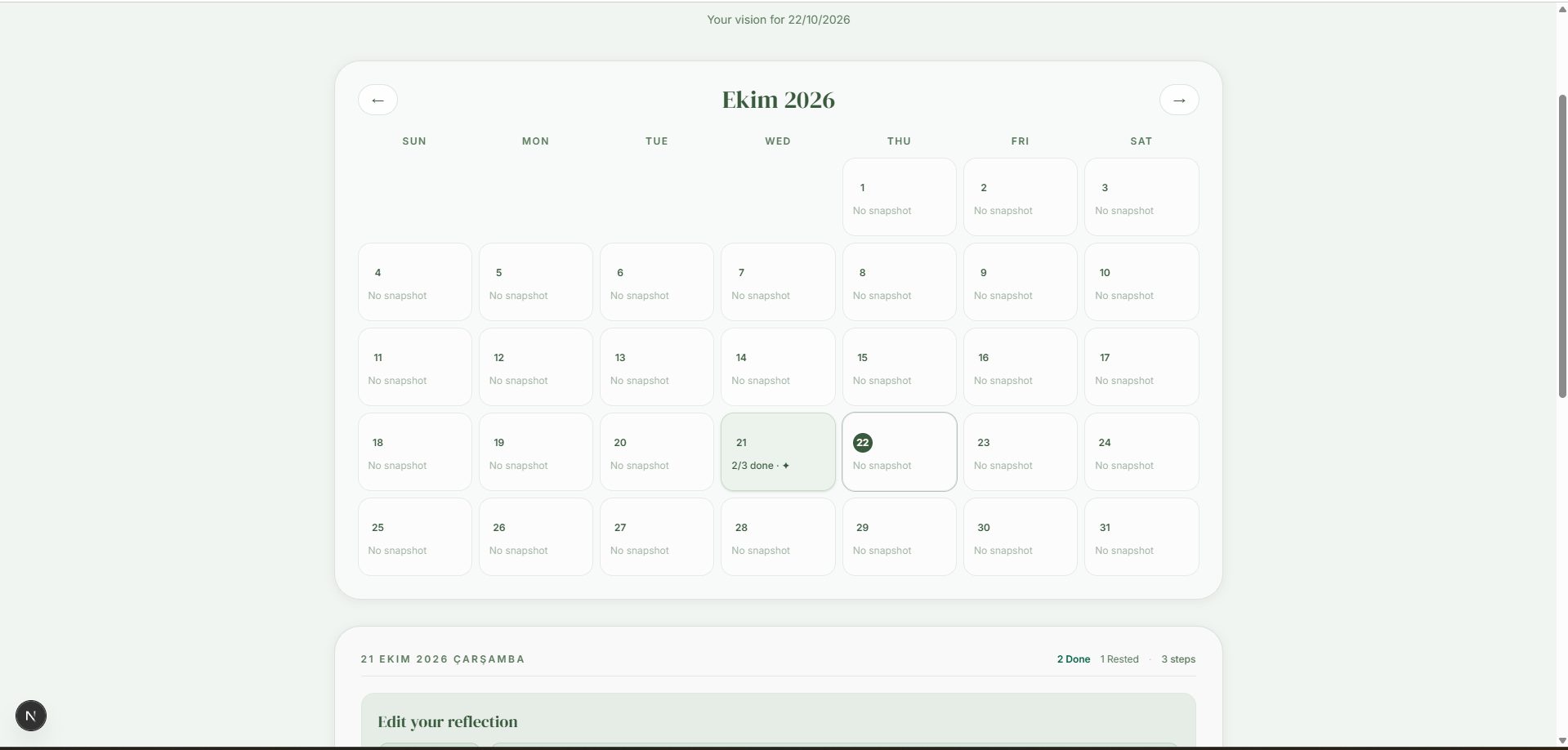
journey-calendar
-
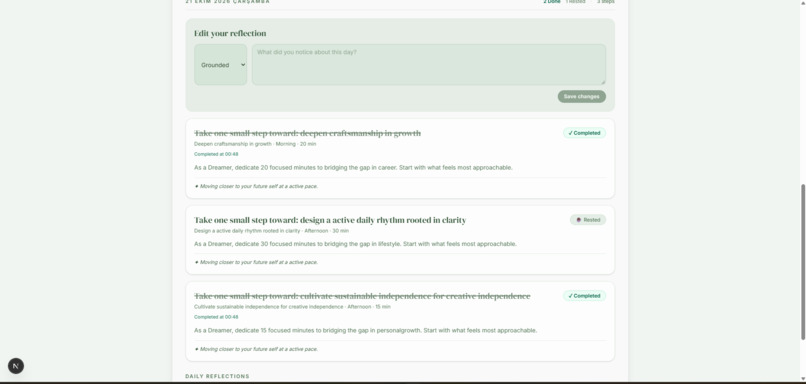
journey-selected-day
-
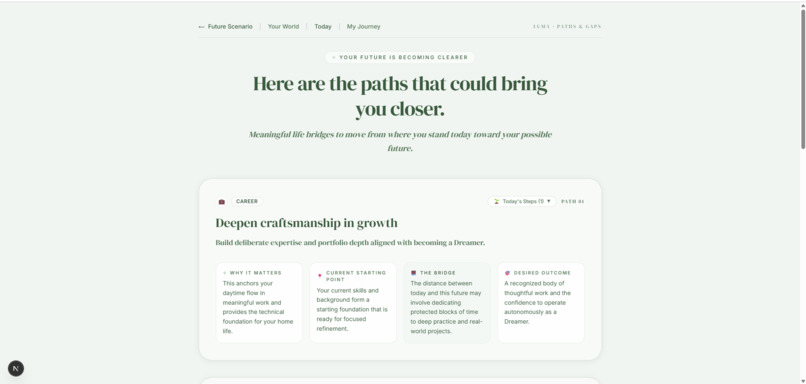
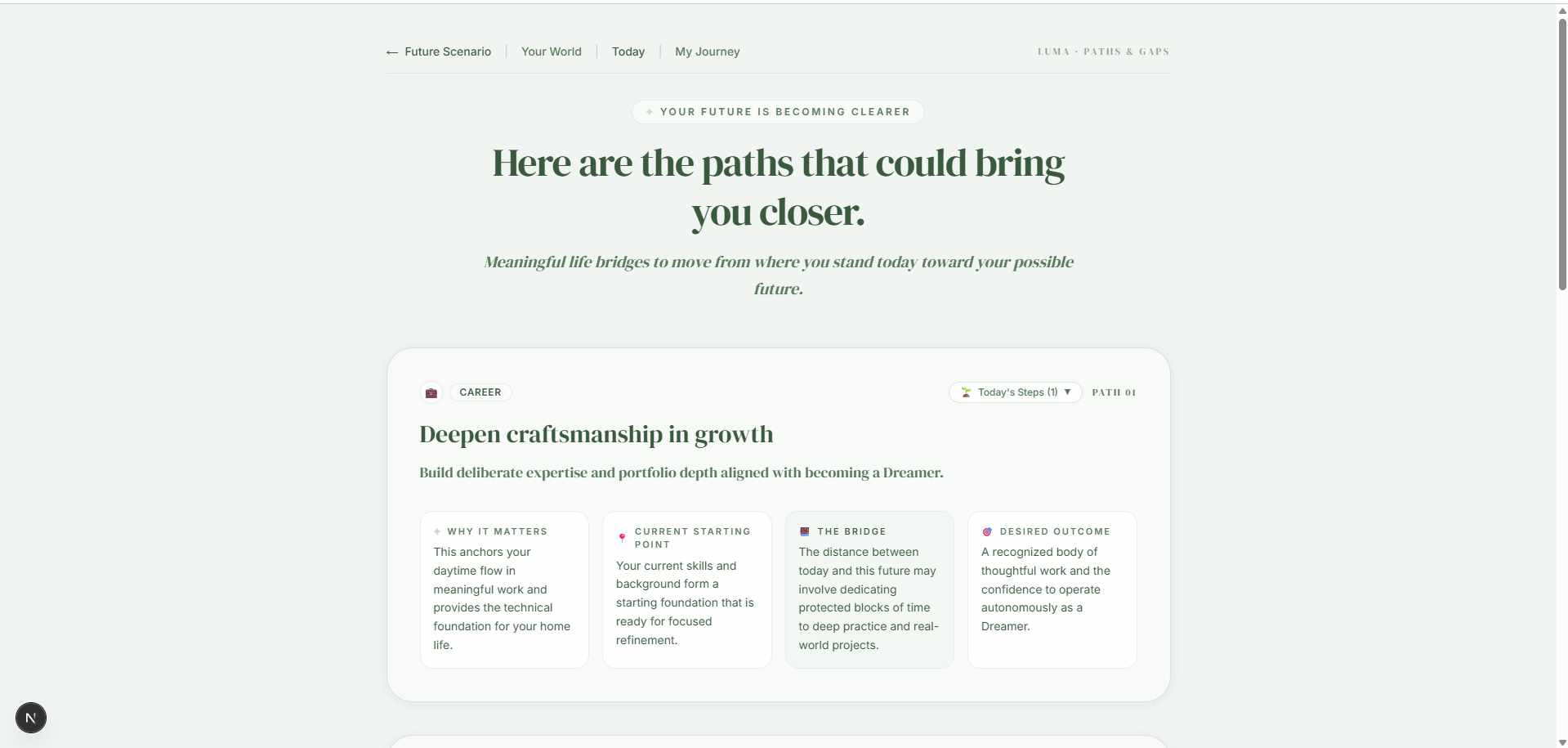
goals-career-path
-
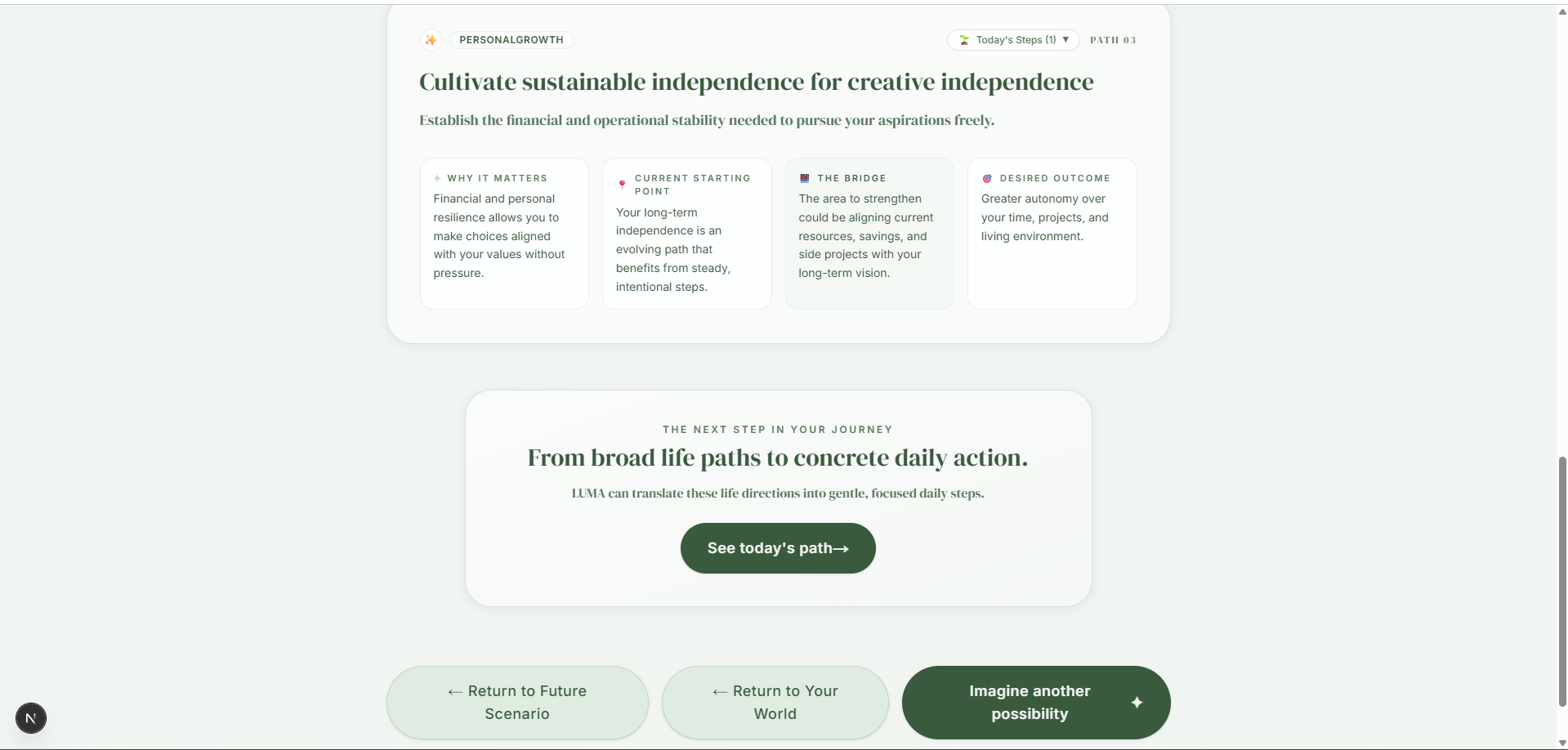
goals-next-step
-
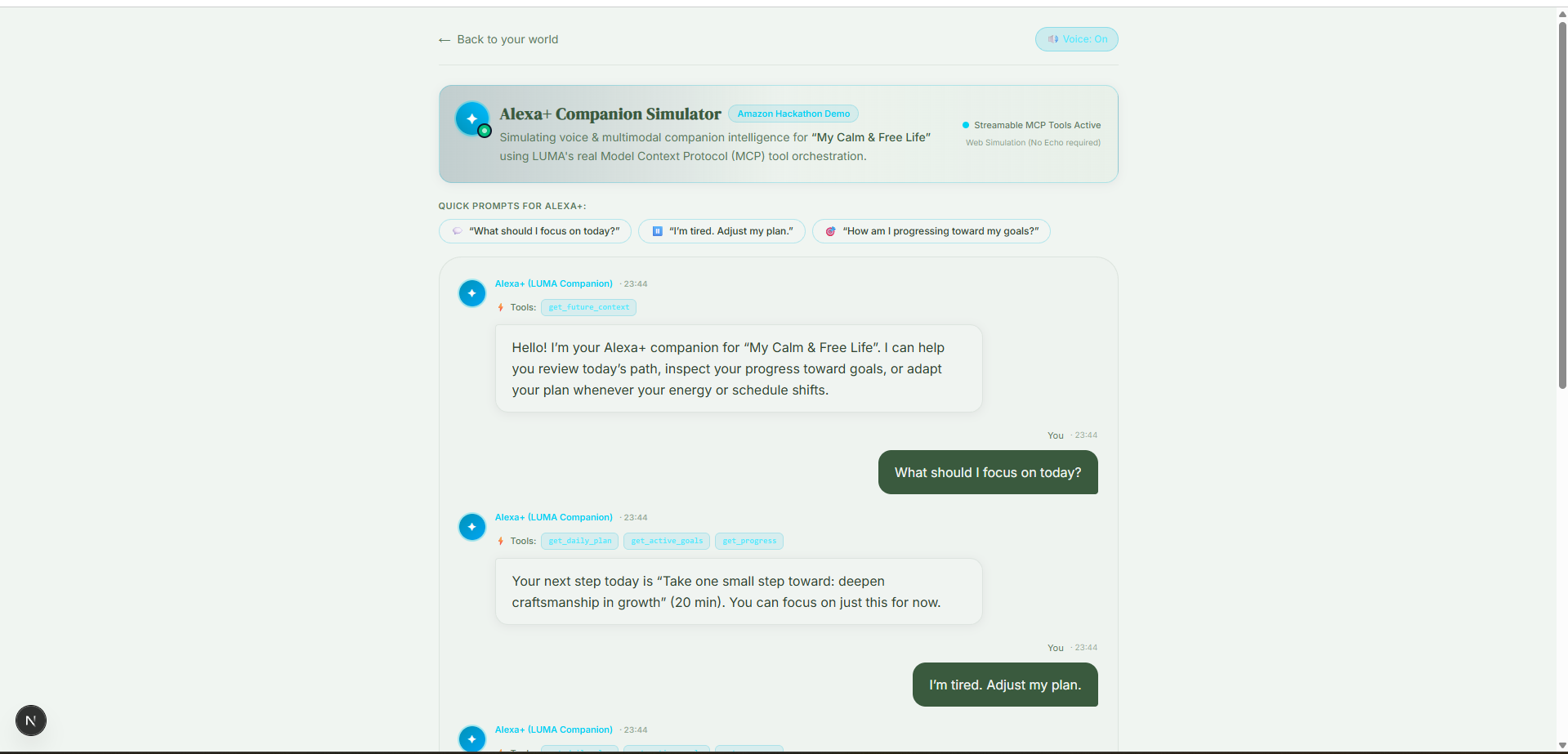
alexa-companion-chat
-
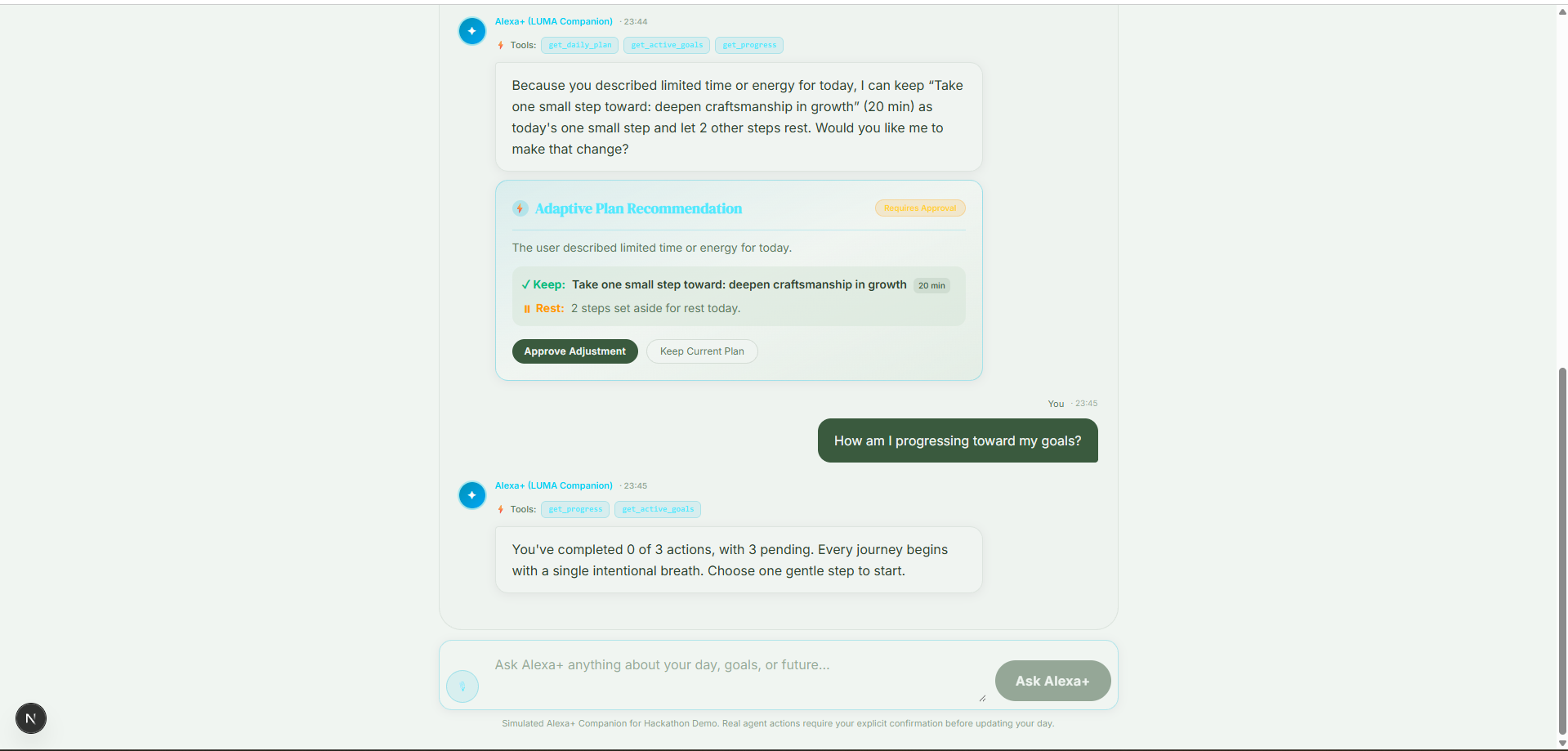
alexa-adaptive-plan-approval
Inspiration
People often know what kind of life they want to build, but struggle to translate that vision into consistent, meaningful action. Traditional productivity tools focus on tasks and deadlines, while personal growth is shaped by values, aspirations, energy, and changing circumstances.
We created LUMA to bridge the gap between the person someone wants to become and the actions they can take today. Our vision is to make personal growth feel more personal, achievable, and adaptable—not another list of tasks to complete, but a journey toward a life that feels meaningful.
What it does
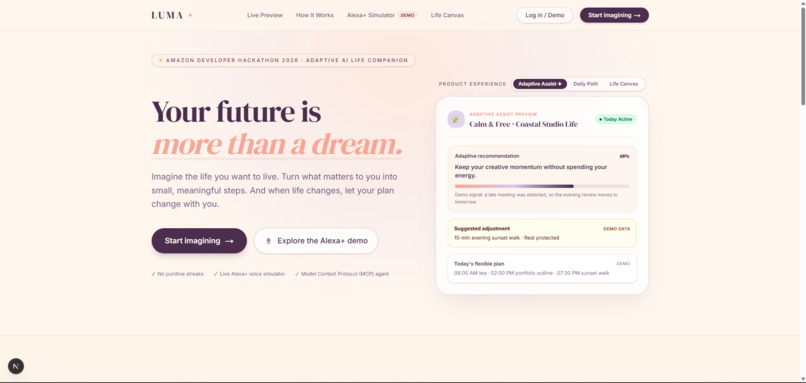
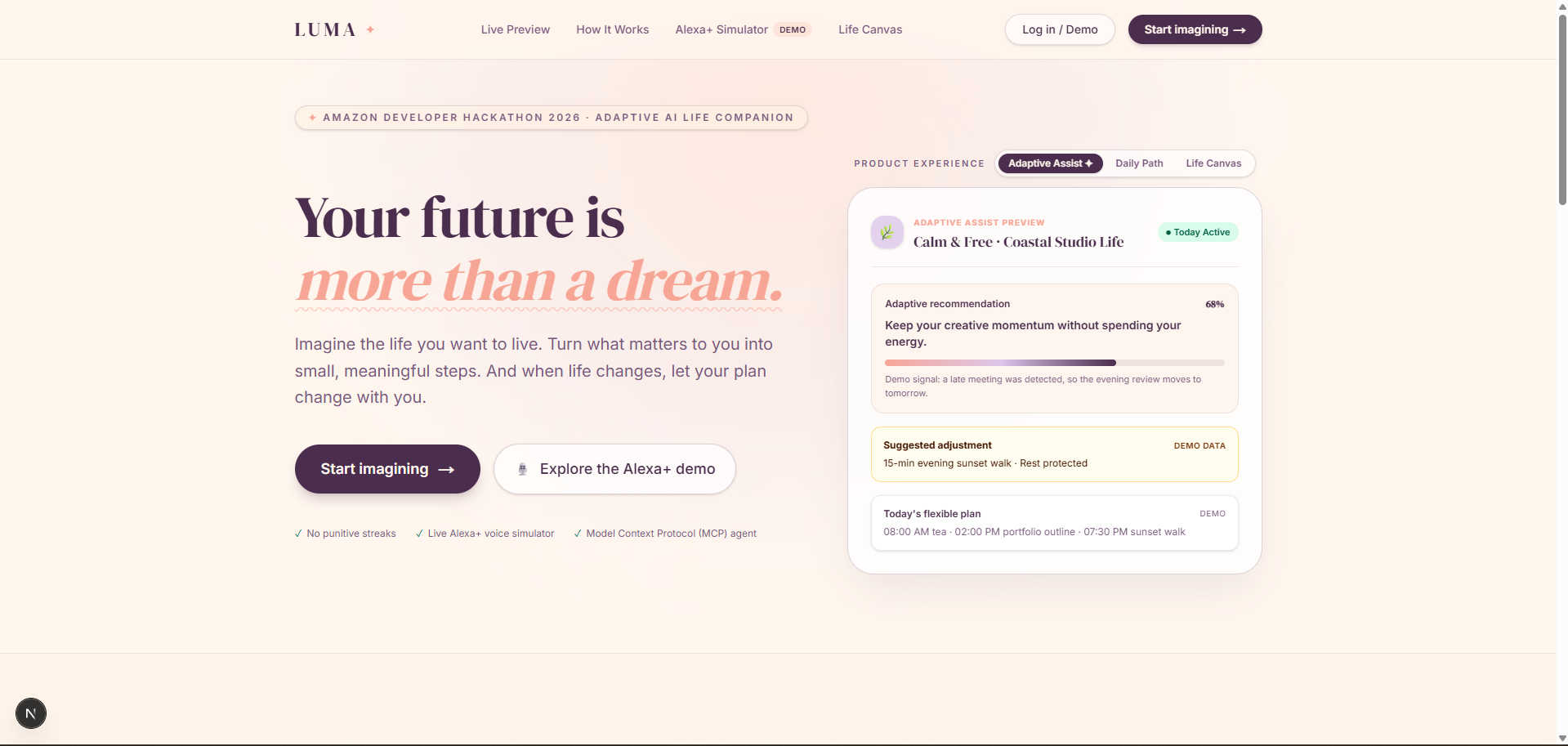
LUMA is an AI-powered future-life companion that helps users turn their aspirations into practical daily action.
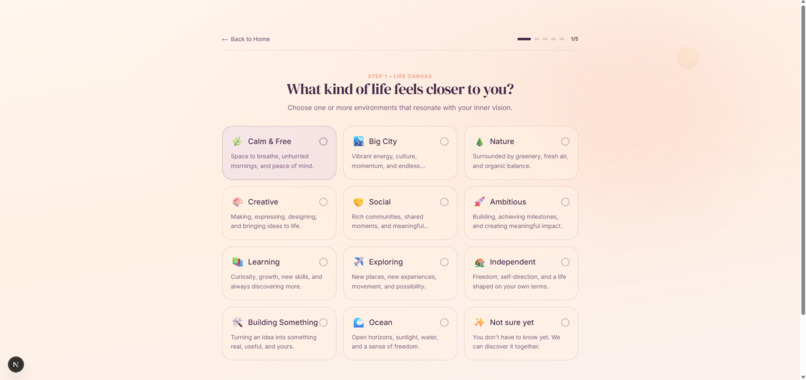
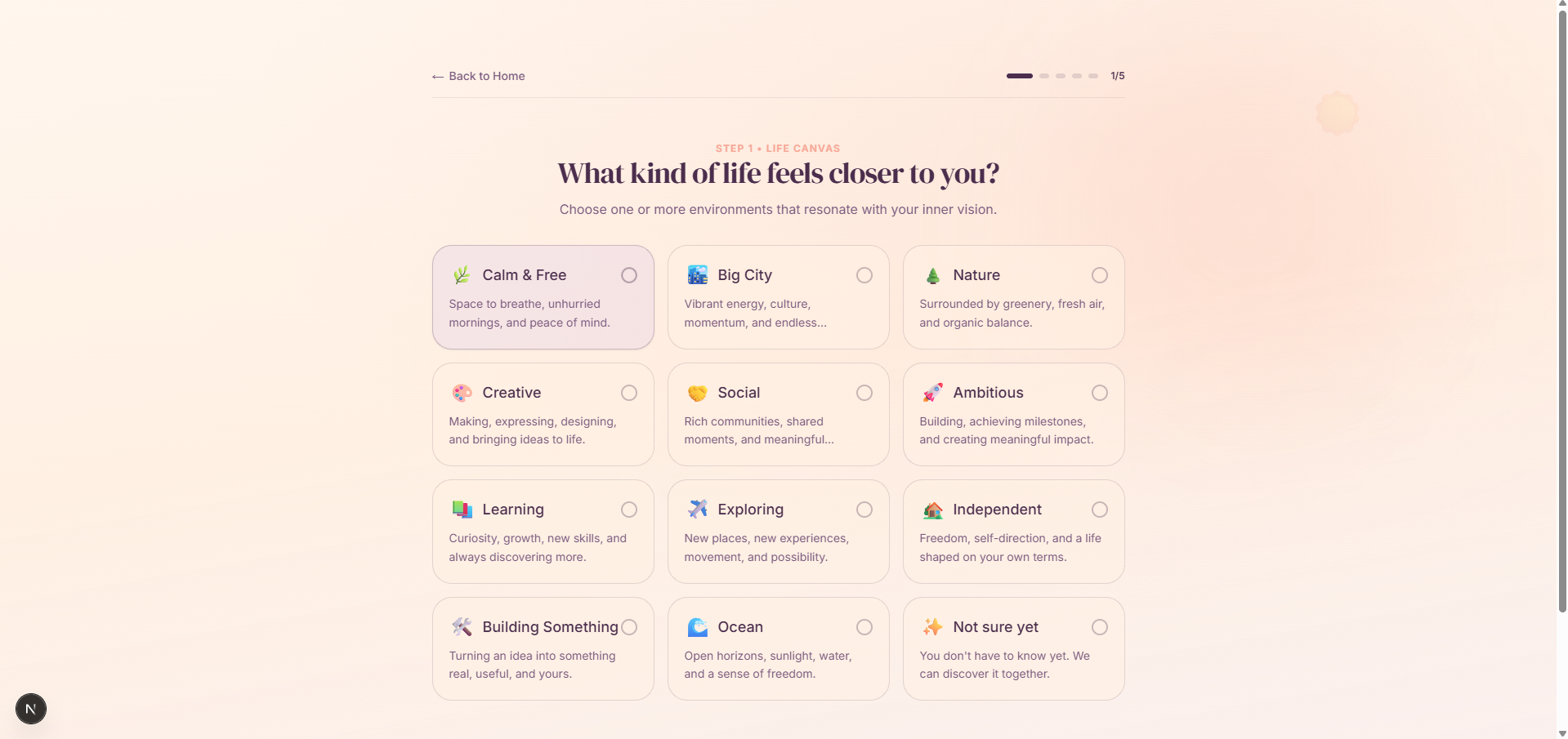
- Discover: Explore personal values, lifestyle preferences, and future aspirations.
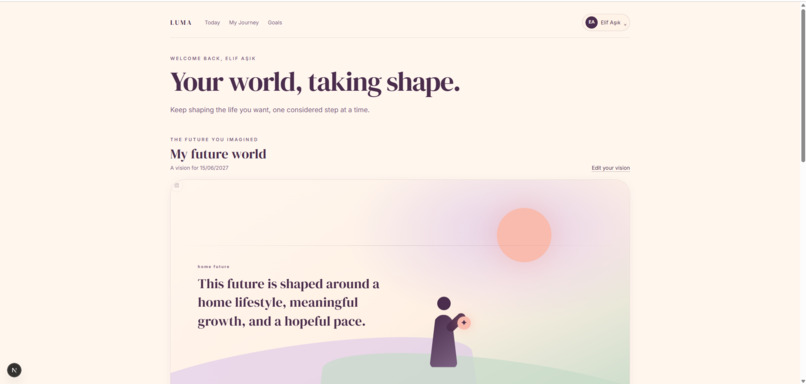
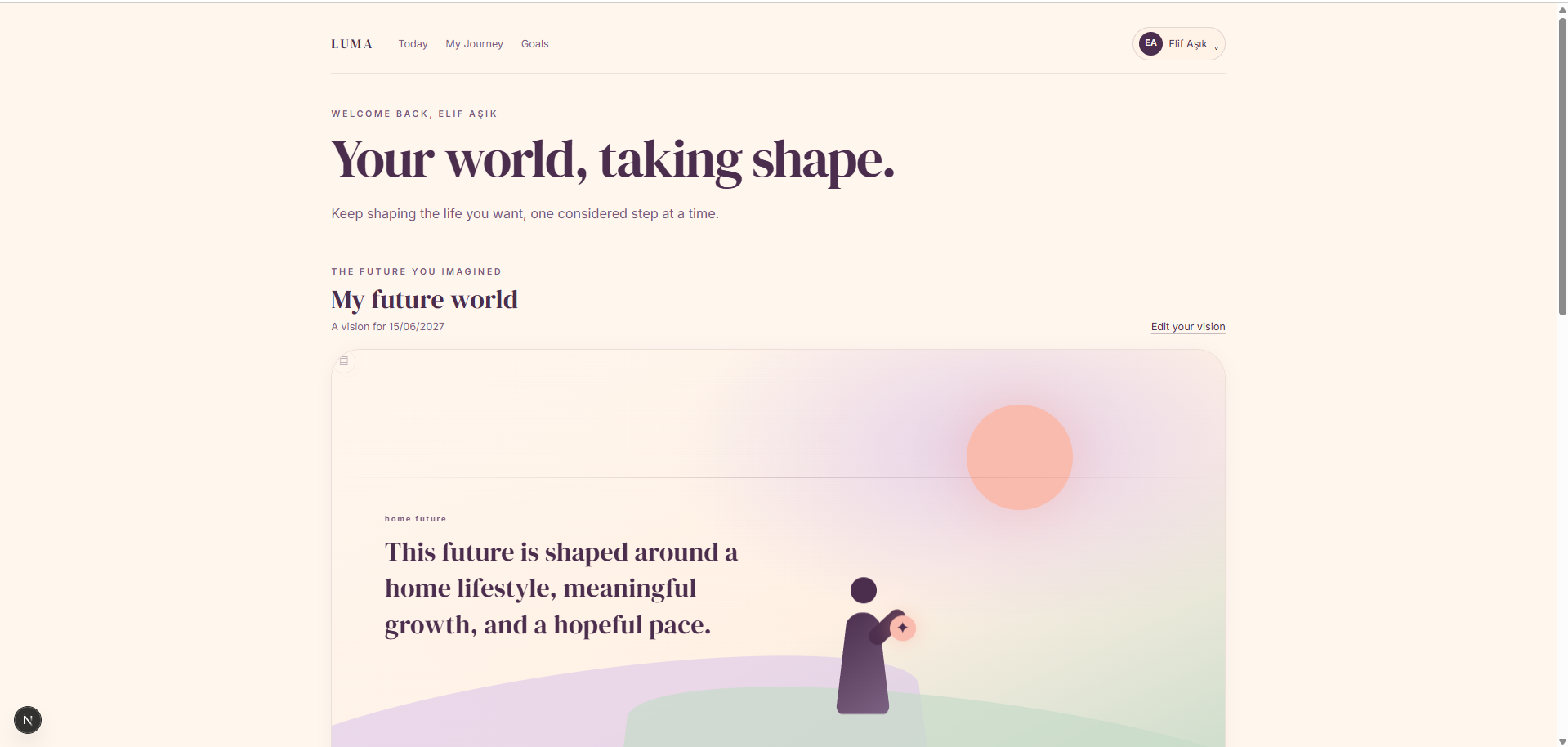
- Your World: Experience a personalized visualization of the future the user wants to create.
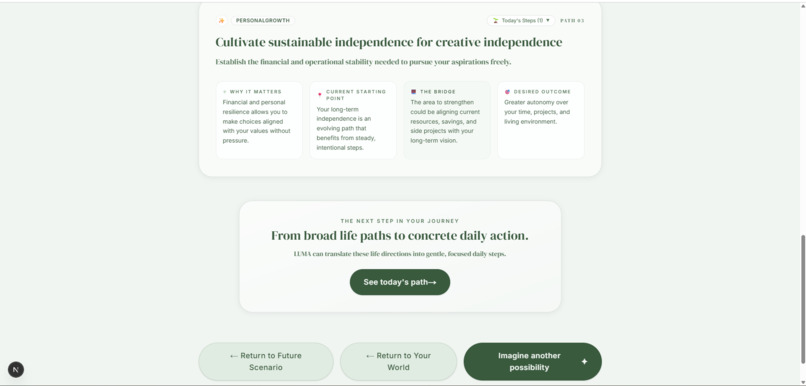
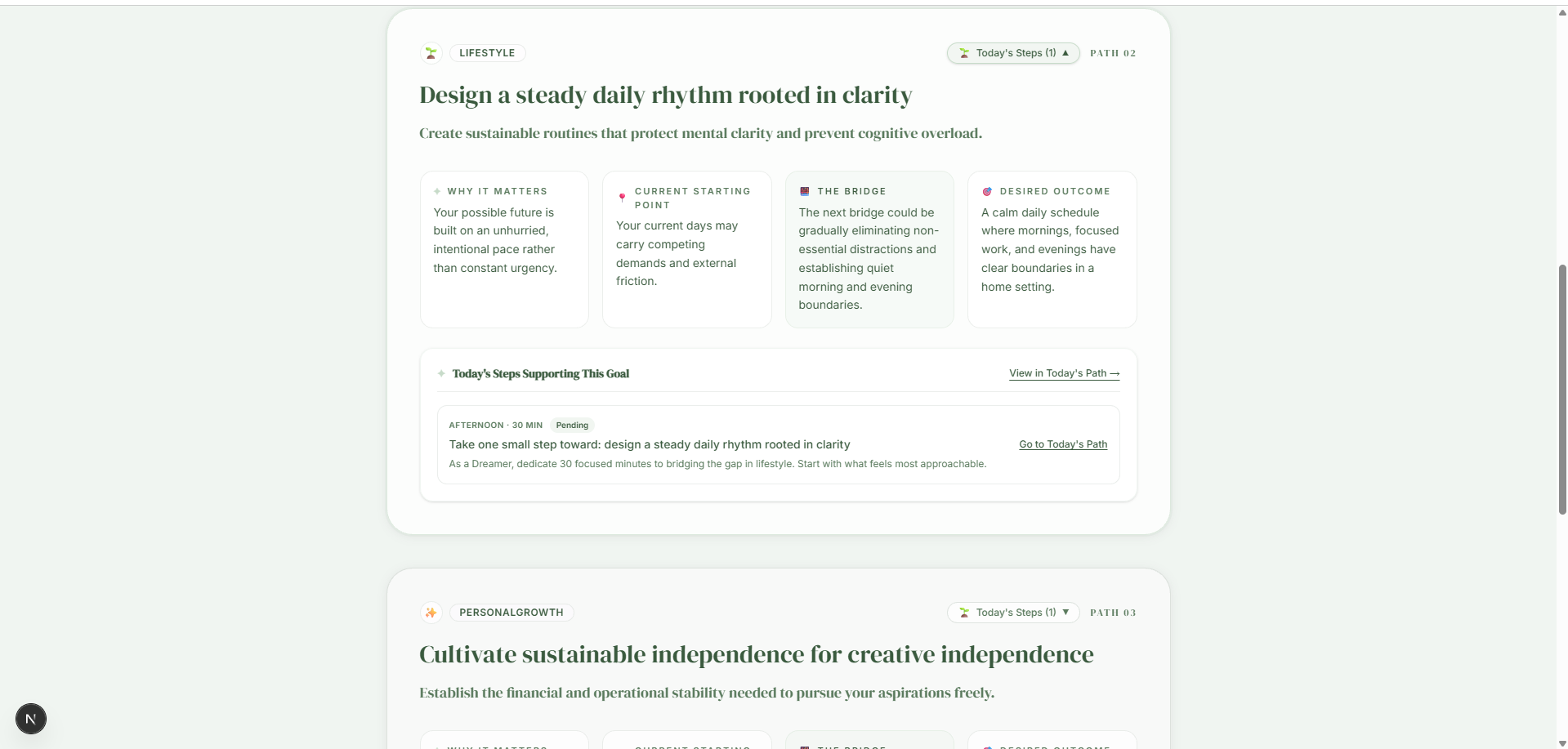
- Goals: Turn long-term aspirations into meaningful goals.
- Daily Path: Connect goals to manageable daily actions.
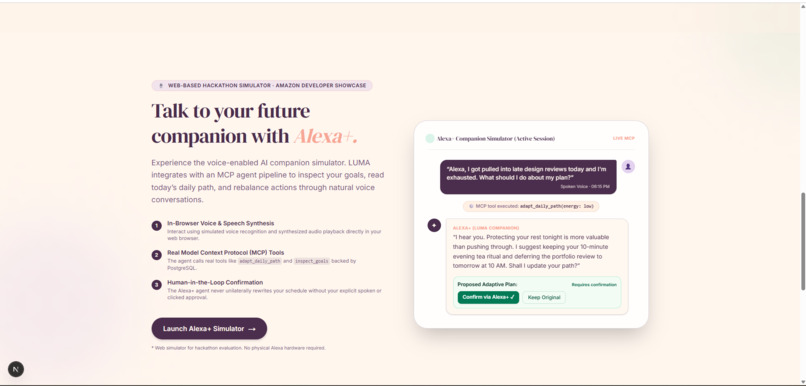
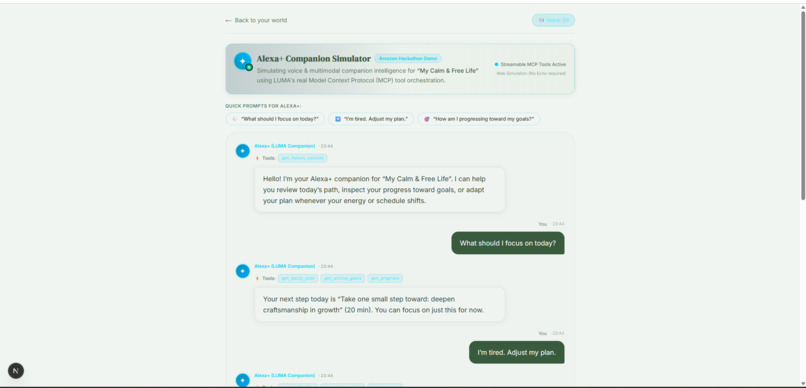
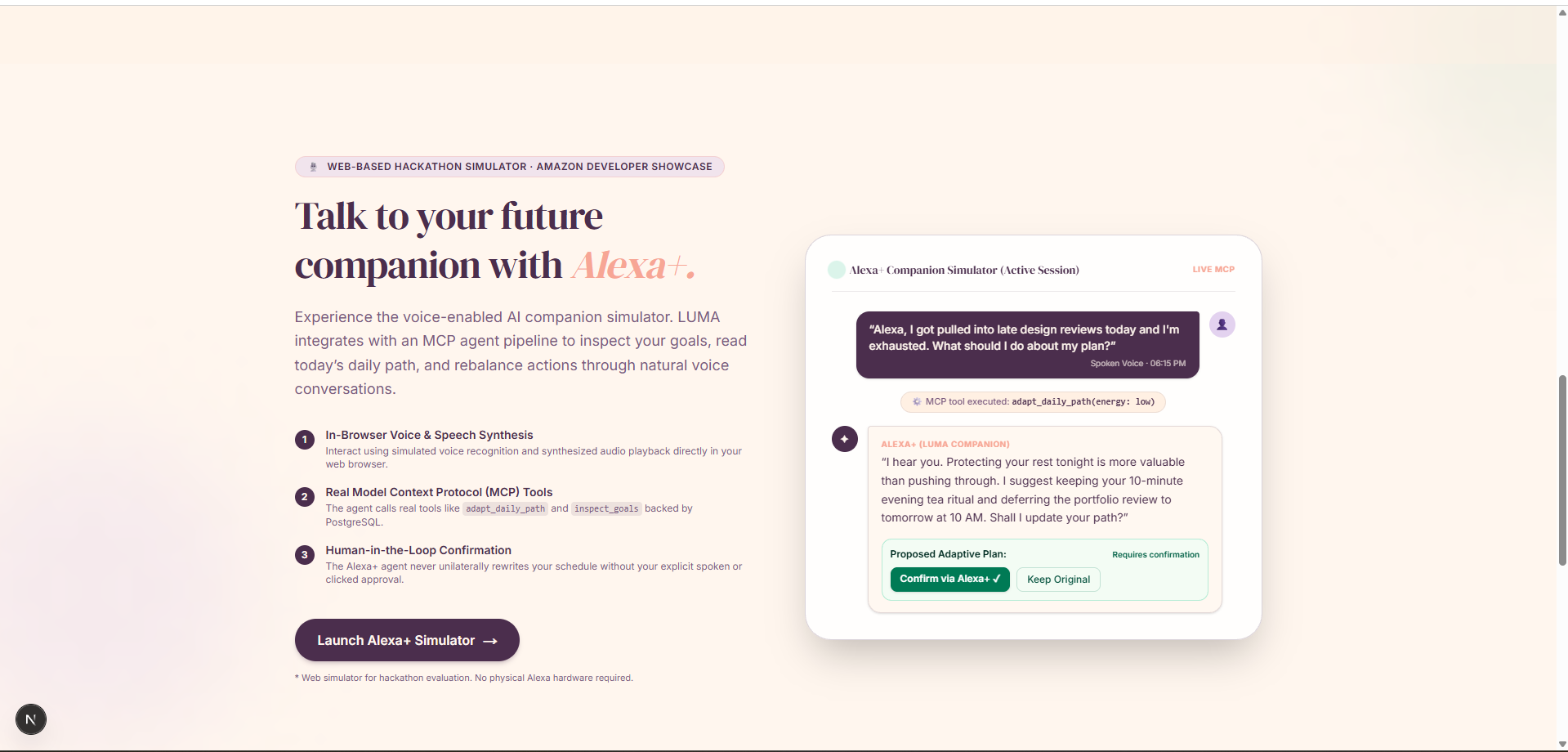
- Talk to LUMA: Interact with an AI-powered companion that can use personal context and application tools to support planning.
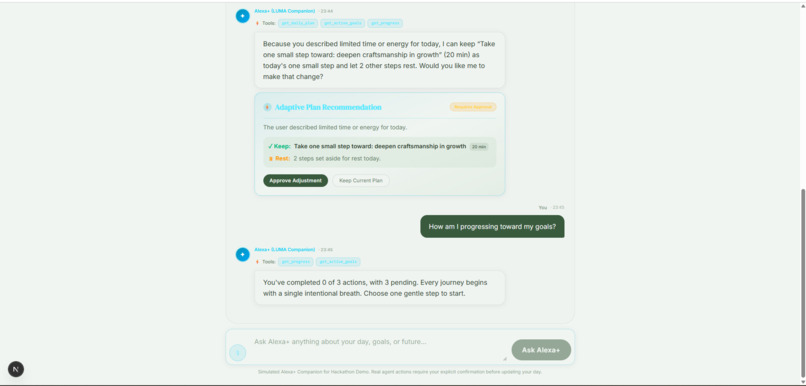
- Adaptive Planning: When time or energy is limited, LUMA can propose realistic changes to the daily plan and apply approved changes to persistent application data.
LUMA connects reflection, planning, and action in one coherent experience, helping users adjust their journey as life changes.
How we built it
We built LUMA using a Next.js and React frontend with an ASP.NET Core backend organized around a layered architecture.
Our technology stack includes:
- Frontend: Next.js, React, TypeScript, and CSS
- Backend: ASP.NET Core and C#
- Data layer: PostgreSQL and Entity Framework Core
- AI: Gemini integration with provider abstractions and deterministic fallback services
- Agent architecture: Specialized tools for future context, goals, daily plans, progress, and reflections
The agent can retrieve relevant application context, evaluate possible actions, validate proposed changes, and use an approval workflow before persisting changes that require user consent.
We focused on keeping AI services separate from core application logic so that planning behavior, validation, and persistence remain structured and testable.
Challenges we ran into
One of our biggest challenges was moving beyond a chatbot that simply generates text. We wanted LUMA to understand a user's situation, work with existing goals and daily actions, and propose changes that have real effects on the application.
Another challenge was making adaptation safe and realistic. For example, a user who has only 30 minutes available and feels tired should receive a plan that respects those constraints instead of being given an unrealistic list of tasks.
We addressed these challenges through specialized agent tools, deterministic fallback behavior, action validation, and an explicit approval-and-persistence workflow. We also worked to keep the different frontend screens and backend services consistent with one another.
Accomplishments that we're proud of
- Built a connected experience spanning personal discovery, future visualization, goal management, daily planning, and AI-assisted conversation.
- Implemented an agent architecture that works with application tools and existing user context.
- Developed an adaptive planning flow that considers explicit time constraints when selecting a suitable daily action.
- Preserved user control by requiring approval before applying proposed plan changes.
- Added focused end-to-end checks for the low-energy, limited-time planning scenario, including verification that no mutation occurs before approval and that approved changes are persisted.
- Validated the backend Release build and frontend production build, with the reported focused tests passing.
We are especially proud that LUMA is designed to connect what users aspire to become with the practical decisions they make today.
What we learned
We learned that building a useful AI companion requires more than a capable language model. Reliable tool orchestration, application-level validation, persistent state, and clear user consent are equally important.
We also learned that personalization should account for real-life constraints. A useful plan is not always the most ambitious one; sometimes it is the plan that makes meaningful progress possible with the time and energy available.
Finally, separating AI providers from core application logic gives us more flexibility to test behavior, use deterministic fallbacks, and develop the product without relying on an external AI call for every test.
What's next for LUMA
Our next step is to strengthen the end-to-end experience and make LUMA's agent interactions more robust.
We plan to:
- Validate complete user journeys through the actual interface.
- Improve how the agent interprets user intent and selects tools.
- Continue refining adaptive planning for changing time, energy, and priorities.
- Strengthen error handling, security, and production deployment readiness.
- Explore the Alexa+ experience and its integration requirements, validating the actual integration before presenting it as a completed capability.
Our long-term vision is for LUMA to become a companion that helps people move toward their desired future through thoughtful conversations, realistic plans, and small actions that adapt to real life.
Built With
- ai
- api
- asp.net
- c#
- core
- css
- entity-framework
- framework
- gemini
- next.js
- postgresql
- react
- rest
- tailwind
- typescript


Log in or sign up for Devpost to join the conversation.