-
-
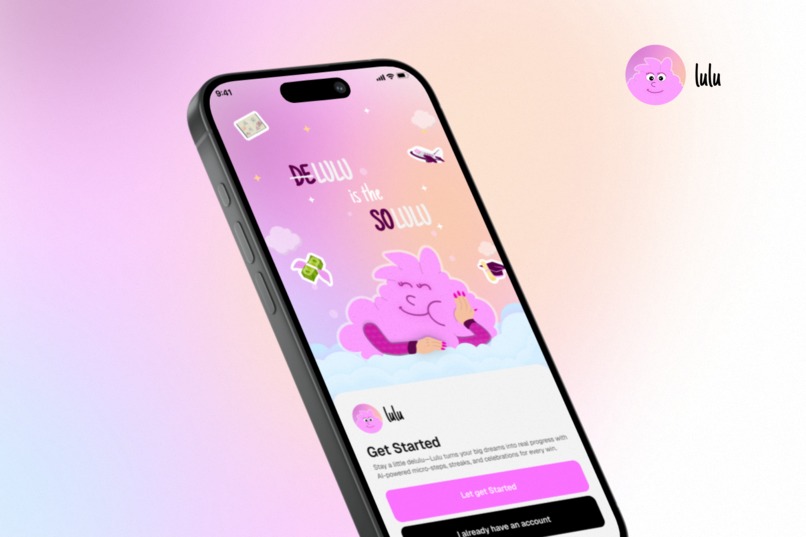
Lulu Welcome Screen
-
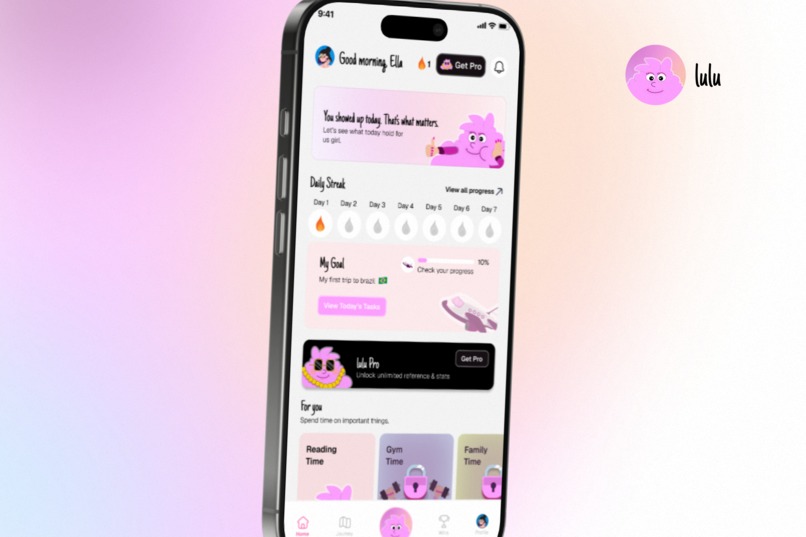
Lulu Home-Screen
-
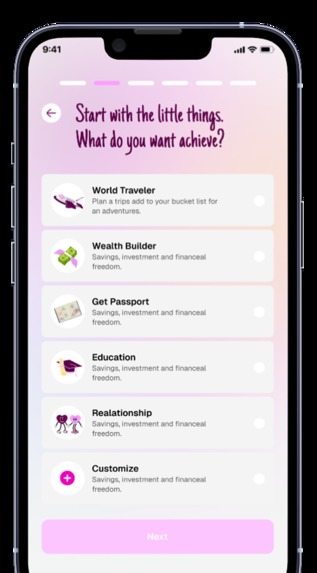
Lulu Onboarding Screen


Inspiration
We kept noticing the same pattern: ambitious women full of inspiration, starving for action. Fitness goals begin every new year. Business ideas stay stuck in Notes app limbo.
The issue wasn't motivation. It was the gap between "I want this" and "I'm doing this." Gabby's brief resonated:
"Driven, adventurous women who want big trips and major life upgrades, but often get stuck between inspiration and action."
That's not a product problem, it's a psychological one.
We asked ourselves:
- What if an app didn't just track goals but broke them down into tiny steps to achieve the big goal more easily?
- What if it supported you with habits tailored to YOUR goal, not just generic self-improvement chores?
- What if it had personality also, a hype woman who gets you moving without guilt?
That's how Lulu was born. DELULU is the solulu. Your delusions turn into reality when you have a system that transforms dreams into daily action.
What it does
Lulu is an AI-powered goal tracker that transforms aspirations into achievable daily actions and supports you with personalized habits.
Here's how it works:
- Pick a goal: Travel more, get fit, launch a side hustle, learn a skill, etc.
- Lulu breaks it down: Lulu generates 3 daily micro-actions tailored to your goal.
- Choose your pace: Pick one action or complete all three (your energy, your call).
- Build supporting habits: Unlock habits that fuel your goal (like reading time to support learning goals).
- Track your journey: Watch milestones unlock on a gamified trail map.
- Collect your wins: Completed goals become trophies in your archive.
- Share your wins: Share your wins for the world to see.
The Science of Action
Lulu isn't just another habit tracker. It's an action-activation system rooted in behavioral psychology:
- Implementation Intentions (Gollwitzer, 1999): Vague goals ("get fit") become specific actions ("research 3 gyms near you").
- Choice Architecture (Thaler & Sunstein): Users pick from options, increasing autonomy and follow-through.
- Progress Monitoring (Harkin et al., 2016): Visual milestones increase goal achievement by 30%.
- Habit Stacking (BJ Fogg): Pairing supportive habits with goals creates sustainable behavior change.
- Identity-Based Change (James Clear): Trophies = proof you're becoming someone new.
The result? Goals stop being "someday" dreams and start being today's actions.
How we built it
Tech Stack:
- React Native (Expo managed workflow) for cross-platform mobile development.
- AsyncStorage for local-first data persistence (no backend = faster MVP, offline-ready).
- RevenueCat SDK for subscription management and Google Play Billing integration.
- Custom UI components with React Navigation for seamless flow.
Team Roles:
Divine Osehotue- Developer & Content Writer:
- Built the entire React Native app architecture
- Designed and implemented local-first data layer (AsyncStorage)
- Integrated RevenueCat for monetization
- Wrote ALL app copy—onboarding flows, daily actions, Lulu's chatbot personality, microcopy
- Crafted "
Delulu is the solulu" brand voice (sassy, supportive, action-oriented) - Designed psychological triggers in copy (implementation intentions, identity reinforcement)
Daniel Odinegun - Product Designer, Brand Designer, UX Researcher & Illustrator:
- Created visual identity (pink/purple gradients, cobblestone journey maps, trophy system)
- Designed 15+ unique screens on Figma (onboarding, home, journey, chat, wins, profile)
- Conducted user research to validate pain points (stuck between dreaming and doing)
- Illustrated custom Lulu mascot and gamified elements
- Ensured accessibility (color contrast, readable fonts, intuitive navigation)
Why local-first architecture? With 3 weeks to ship, we prioritized speed and stability over complex infrastructure. AsyncStorage lets users access their data offline, reduces API call costs, and eliminates server downtime risk. Post-MVP, we'll add cloud sync for cross-device continuity.
Why Lulu's voice matters: As a content writer, I knew voice would differentiate us. Most productivity apps sound like your boss. Lulu sounds like your best friend who actually gets you moving. Every screen reinforces: You're capable. Your dreams are valid. Let's just start.
Challenges we ran into
- Defining Milestones Without Overcomplicating: Early versions had complex algorithms determining milestone spacing. We realized: simplicity wins. MVP shows a visual trail with blurred future milestones. Users see progress without cognitive overload. Post-MVP, AI will dynamically adjust milestones based on deadline and pace.
- Balancing personality with professionalism:
Lulu's sassy tone ("
Delulu is the solulu") could alienate users if overdone. We tested copy on 10+ women (ages 20-35) and found the sweet spot: supportive confidence, not toxic positivity. Lulu hypes you up but doesn't guilt you for skipping a day. - RevenueCat integration learning curve: RevenueCat docs were clear, but testing real purchases (not sandbox) required setting up Google Play Console, creating product IDs, and handling edge cases (restore purchases, subscription status checks).
- Keeping scope realistic We designed features we couldn't build in 3 weeks: AI-generated daily actions, cross-device sync, etc. We ruthlessly cut to ship a polished MVP instead of a half-built app.
- Making "habits support goals" clear Users initially thought habits were random tracking. We redesigned the UI to explicitly show: "Supportive habits to fuel your goals." Now it's obvious: Reading Time supports learning goals, not just generic self-improvement.
Accomplishments that we're proud of
Shipped a real, installable app in 21 days: From concept to Google Play Internal Testing. No corners cut on UX—smooth animations, intuitive navigation, zero crashes in testing.
Created a brand voice people remember: "Delulu is the solulu" isn't just a tagline. It's a movement. Testers quoted it back to us unprompted infact, letting us know that we did a good job with our branding.
Designed psychology-backed features, not guesswork: Every feature ties to research: implementation intentions, choice architecture, progress monitoring. We didn't just build what felt good, we built what works.
RevenueCat integration works flawlessly: Real subscriptions process. Restore purchases works. Paywall triggers at the right moments. Monetization isn't an afterthought; it's core to the product.
Built a referral system that incentivizes viral growth: Refer 3 paying users, get 2 months Pro free, which is a perfect growth strategy. Word-of-mouth from satisfied users scales faster than paid ads.
Nailed the onboarding: Users complete onboarding in 90 seconds. No drop-off. The commitment screen (name input + promise to self + hold-to-start button) creates psychological buy-in. Testers said it felt like "signing a contract with myself."
What we learned
Technical:
- RevenueCat simplifies subscription hell (handle it yourself = weeks of work)
Design:
- Personality isn't a nice-to-have; it's a differentiator (generic apps die in the App Store abyss)
- Gamification works IF it serves a purpose (our trail map shows progress; arbitrary badges feel hollow)
Content:
- Microcopy is macro-important (every button, every error message reinforces brand)
- Sassy ≠ unprofessional (Lulu's tone attracts our audience, doesn't alienate them)
Psychology:
- Implementation intentions work (specificity beats vagueness every time)
- Autonomy increases follow-through (let users choose vs prescribe rigid plans)
- Identity-based change sticks (trophies = "I'm someone who completes goals")
Monetization:
- Freemium works if the free tier is useful but limited (1 goal is enough to prove value, not enough long-term)
- Referrals align incentives (users want friends to succeed, we want growth—win-win)
- $9.99/month is the sweet spot (less = "cheap knockoff," more = sticker shock)
What's next for Lulu
Phase 1: Post-Hackathon (Weeks 1-4)
- Launch publicly on Google Play.
- Add cloud sync (Firebase) for cross-device continuity.
- Collect user feedback via in-app surveys.
Phase 2: Feature Expansion (Months 2-3)
- AI-powered action generation: Upgrade to OpenAI API for highly personalized suggestions.
- Permission Slips: Unlock motivational messages after milestone hits (validated in user research).
- Lulu Wrapped: Year-end shareable summary of all trophies with Instagram/TikTok viral potential.
- Advanced habit tracking: Streak stats, habit insights, and correlation with goal progress.
Phase 3: Revenue Acceleration (Months 4-6)
- Influencer partnerships: Partner with Gabby Beckford and productivity creators for authentic endorsements.
- TikTok growth strategy: "Lulu helped me finally..." testimonials and before/after transformations.
- Corporate wellness pilot: B2B subscriptions for companies offering Lulu as an employee benefit.
Phase 4: Scale & Retention (Months 7-12)
- Community features: Friend accountability, shared goals, and progress leaderboards.
- iOS launch: Leveraging React Native for a straightforward cross-platform rollout.
- Localization: Expand to Spanish and Portuguese for Latin American markets.
- Lifetime Pro tier: $199 one-time payment for power users.
Long-term Vision
Lulu becomes the default app for turning aspirations into accomplishments. Not just goals; life transformation. When someone says "I want to do X," the response is: "Have you added it to Lulu yet?"
Built With
- expo.io
- figma
- mermaid.js
- react-native
- revenuecat


Log in or sign up for Devpost to join the conversation.