Inspiration
Online fashion shopping can be difficult. Customers often struggle to visualise how clothing will look on them before buying, while discovering products from independent sellers can involve navigating multiple social media pages and messaging platforms.
We wanted to make that experience easier by bringing fashion discovery, AI-powered virtual try-on, and seller connections into one platform.
We named the project LUKU, inspired by Kenyan slang for an outfit. Our goal is to make discovering and exploring fashion more interactive and accessible.
What We Built
LUKU is an AI-powered fashion marketplace that connects shoppers with fashion sellers.
The application allows users to:
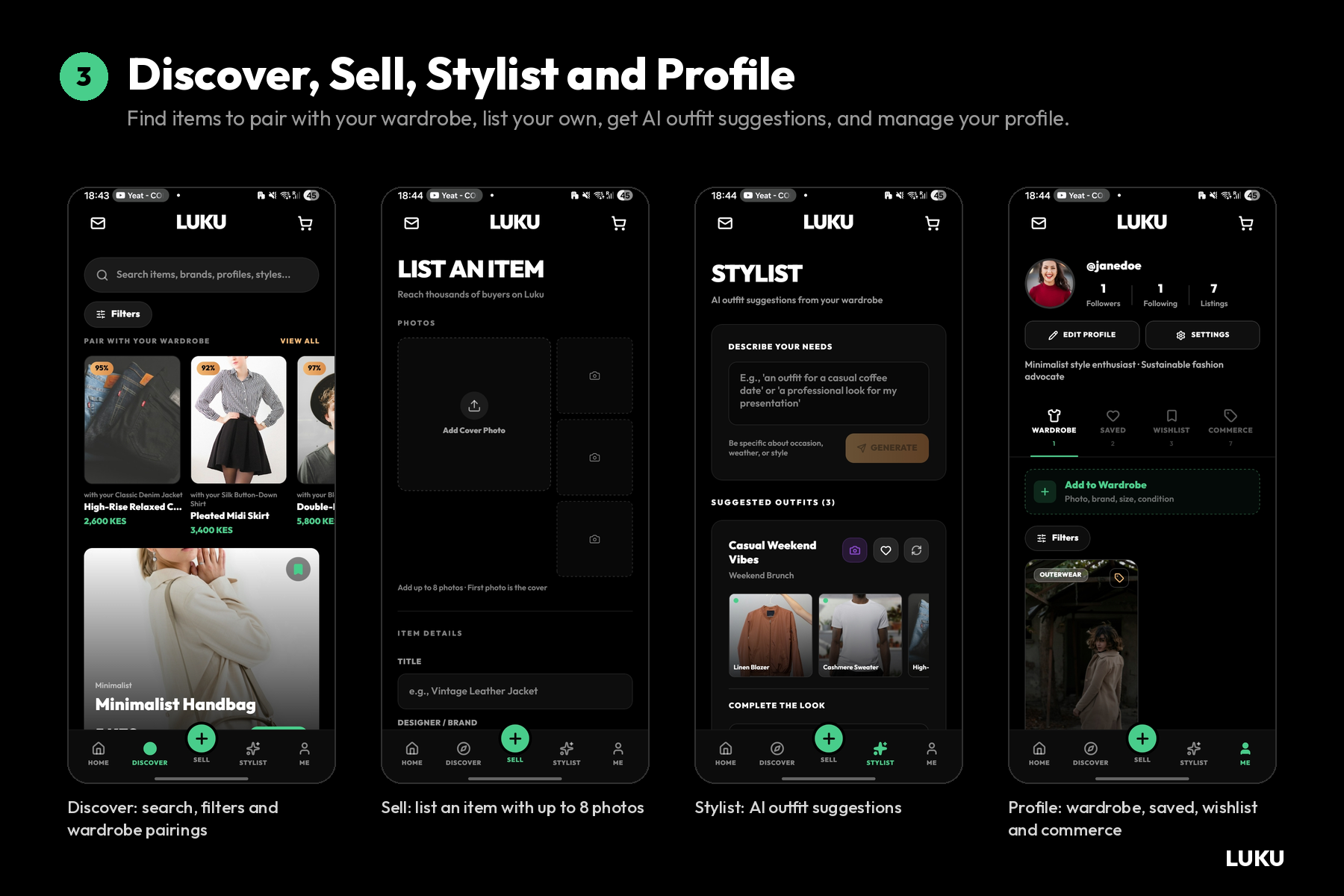
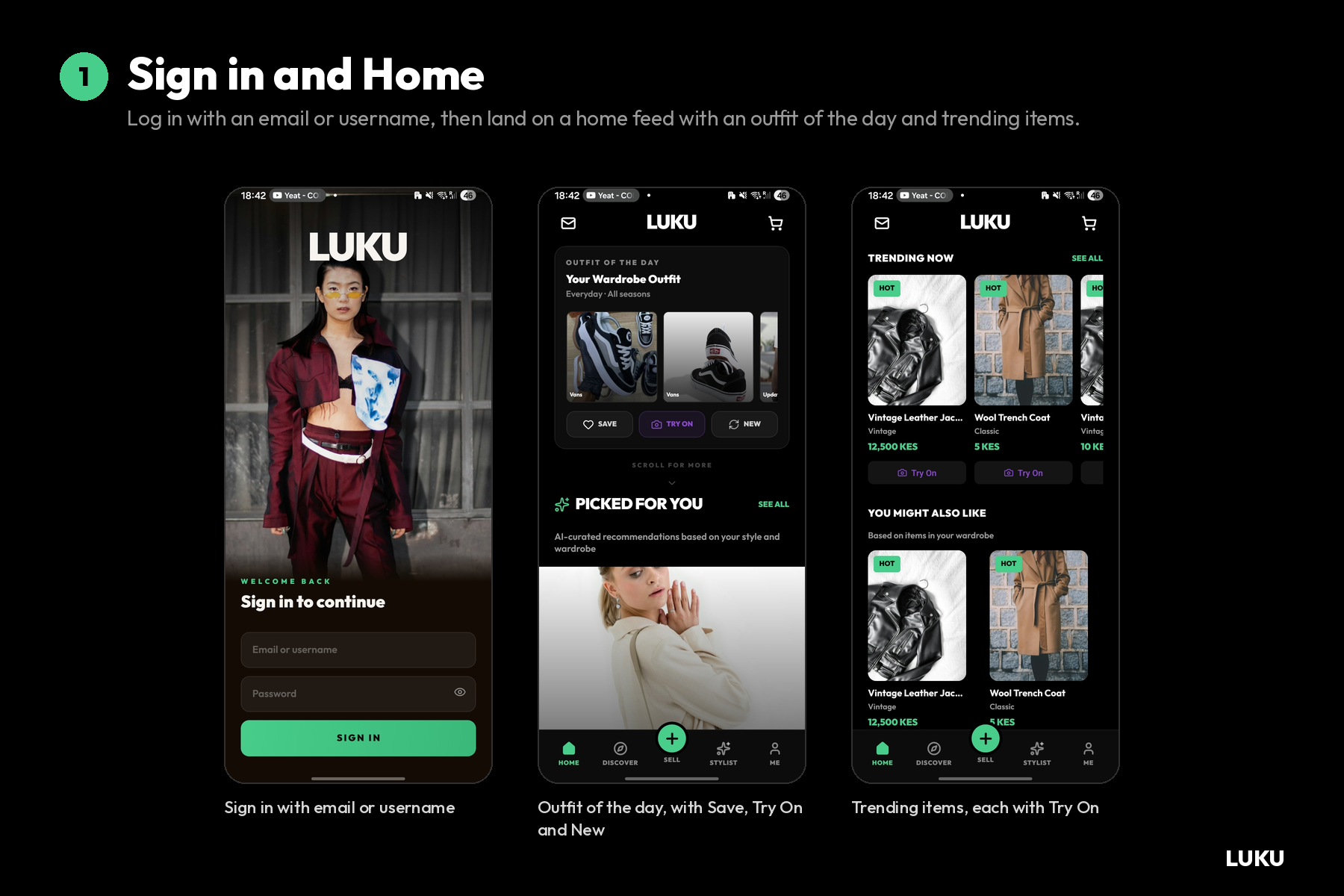
- Browse and discover fashion products.
- Explore product details and available items.
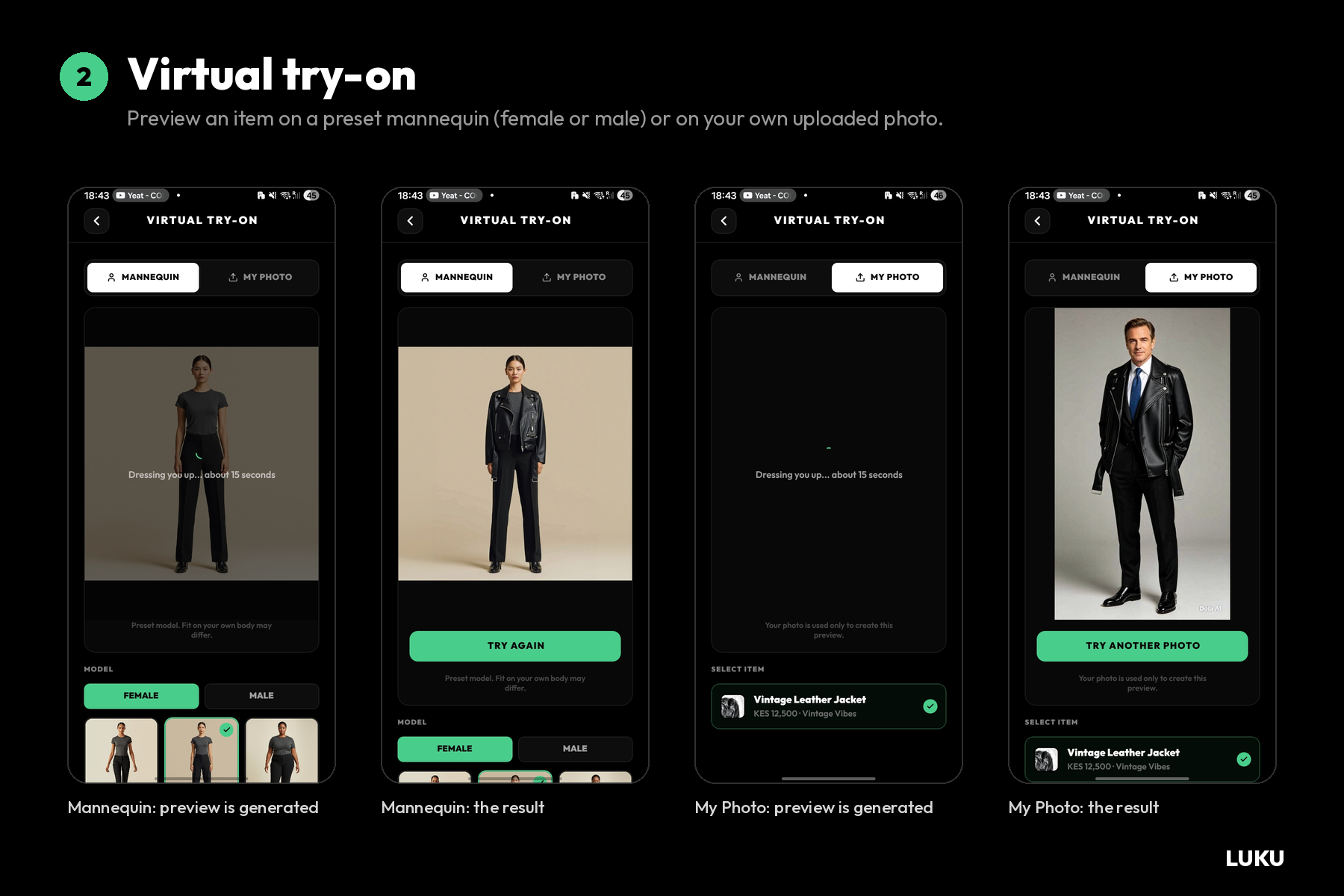
- Use AI-powered virtual try-on to visualise clothing.
- Connect with sellers directly to make enquiries.
By combining these features, LUKU aims to help shoppers make more informed decisions while giving independent sellers another way to showcase their products.
How We Built It
LUKU was developed by a team of four using a combination of mobile development, backend services, and AI technology.
Our main technologies include:
- React Native and Expo — Mobile application development.
- Node.js and Express.js — Backend API and application services.
- TypeScript — Type-safe application and backend development.
- Supabase — Authentication and data services.
- Perfect Corp. YouCam API — AI-powered virtual try-on functionality.
We focused on connecting these technologies into a single shopping experience, allowing users to move from discovering a product to visualising it and contacting its seller.
Challenges We Faced
One of our biggest challenges was integrating the virtual try-on API into the mobile application. Handling image inputs, processing API responses, and connecting the results to the shopping experience required careful testing and coordination between the frontend and backend.
We also faced the challenge of bringing multiple services together while maintaining a consistent user experience.
We addressed these challenges by testing integrations independently, troubleshooting API communication, and gradually connecting the different parts of the application.
What We Learned
Building LUKU taught us that integrating AI into a product involves more than simply connecting an API. The technology must fit naturally into the user's journey and solve a genuine problem.
We also gained practical experience with third-party API integration, image handling, mobile development, backend communication, and collaborative product development.
What's Next
We see opportunities to expand LUKU into a more connected fashion marketplace, with richer product discovery, improved virtual try-on experiences, and better tools for independent sellers.
Our vision is to make online fashion shopping more visual, interactive, and convenient for both shoppers and retailers.
Built With
- ai
- api
- artificial
- computer
- expo.io
- express.js
- generative
- intelligence
- javascript
- native
- node.js
- postgresql
- react
- rest
- supabase
- try-on
- typescript
- virtual
- vision
- youcam

Log in or sign up for Devpost to join the conversation.