Inspiration
 According to the statistics, there is 4.4m $USD spent on prizes for hackathons during Q1 2024 through Dorahacks platform alone. It is needless to say that hackathons are the primary funnels for onbaording the new talents onto Web3. However, from the experience of the beginner, there are three challendges
- It is difficult to find a team who can provide complementary skills for the successful hackathon. Practially speaking it requires more than one developer, much more likely to invovle skill sets including business developers and designers, for a quality project to come out.
- During the hackathon, teams rarely recieve proper feedback to further develop the project. In extreme cases, judgement results are not transparent enough for teams to know how their projects were viewed as supposed to the other projects.
- After the hackathon is over, the prize settlment usually takes too long which leaves terrible impression on Foundationa and Web3 industry in general. From KYC to the actual payment, it may take months before the settlement. For some builders, one unpleasant experience deters their entire carrier journey into Web3. From the talent acquisition and retention point of view, there are rooms for improvement.
What it does
 Ludium propose a Web3 Builder Matching System that consists of the following features:
- Talent Analysis: Collect individual builder's data from diverse sources (ex. Github) to analyze and assess the individual skill sets
- Team Matching: Assign builders based on the talent analysis to the most optimized tasks. It may involve team works in which case the positions are assigned based on the requirement and individual skill sets
- Automated Judgement: Based on the set criteria and the projects submitted automated asgent assess the project to determine the best project
- Onchain Contract Enforcement: Validate the work provided by the builder. For all tasks assigned, the payment amount is deposited in advance. The payment is settled when the work is validated
How we built it

Ludium's builder matching system works as follows:
- Login with Web3 Wallet: User signin with the Web3 wallet. In this case, Bitte wallet is used for Near Login
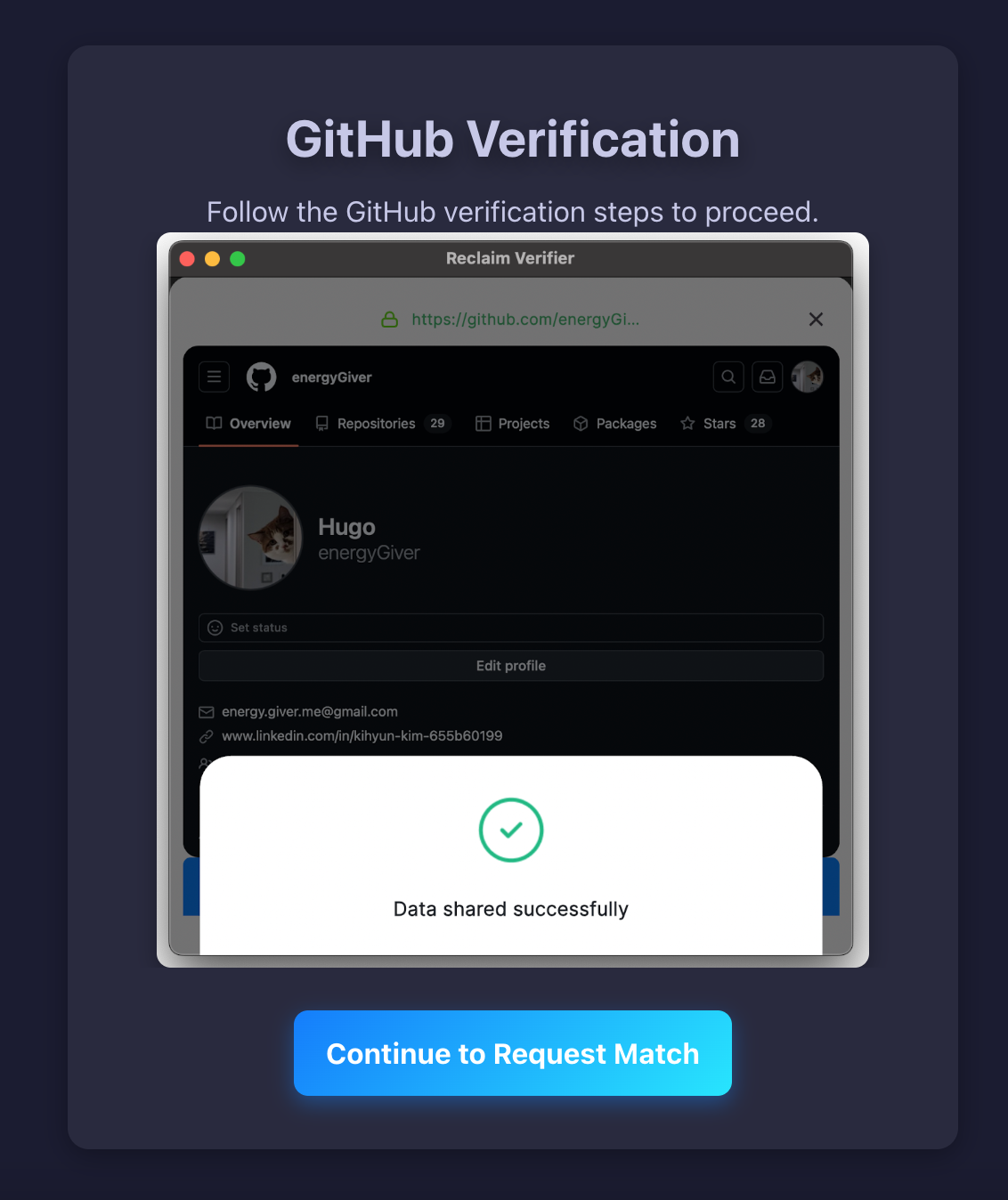
- Authenticate the builder: User authenticates the profile with the Reclaim Protocol to login to their Github page. It is to ensure that the person is authenticating is really the person of the profile owner
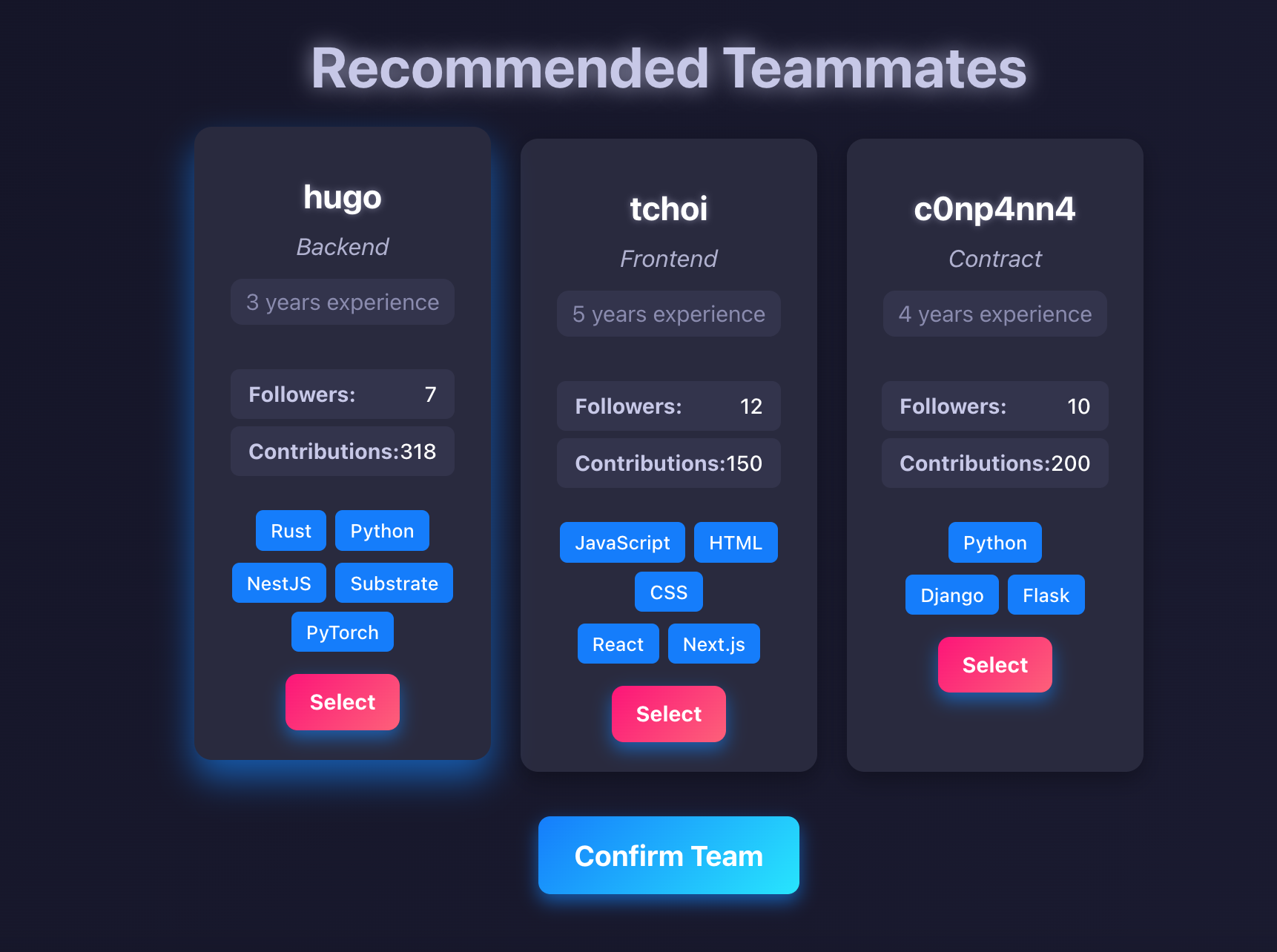
- Analyze the skillsets: AI agent retrieves the github repo, contribution, and commit data to analyze the skills. It assigns the builder to backend, frontend, and contract developer based on the previous activities
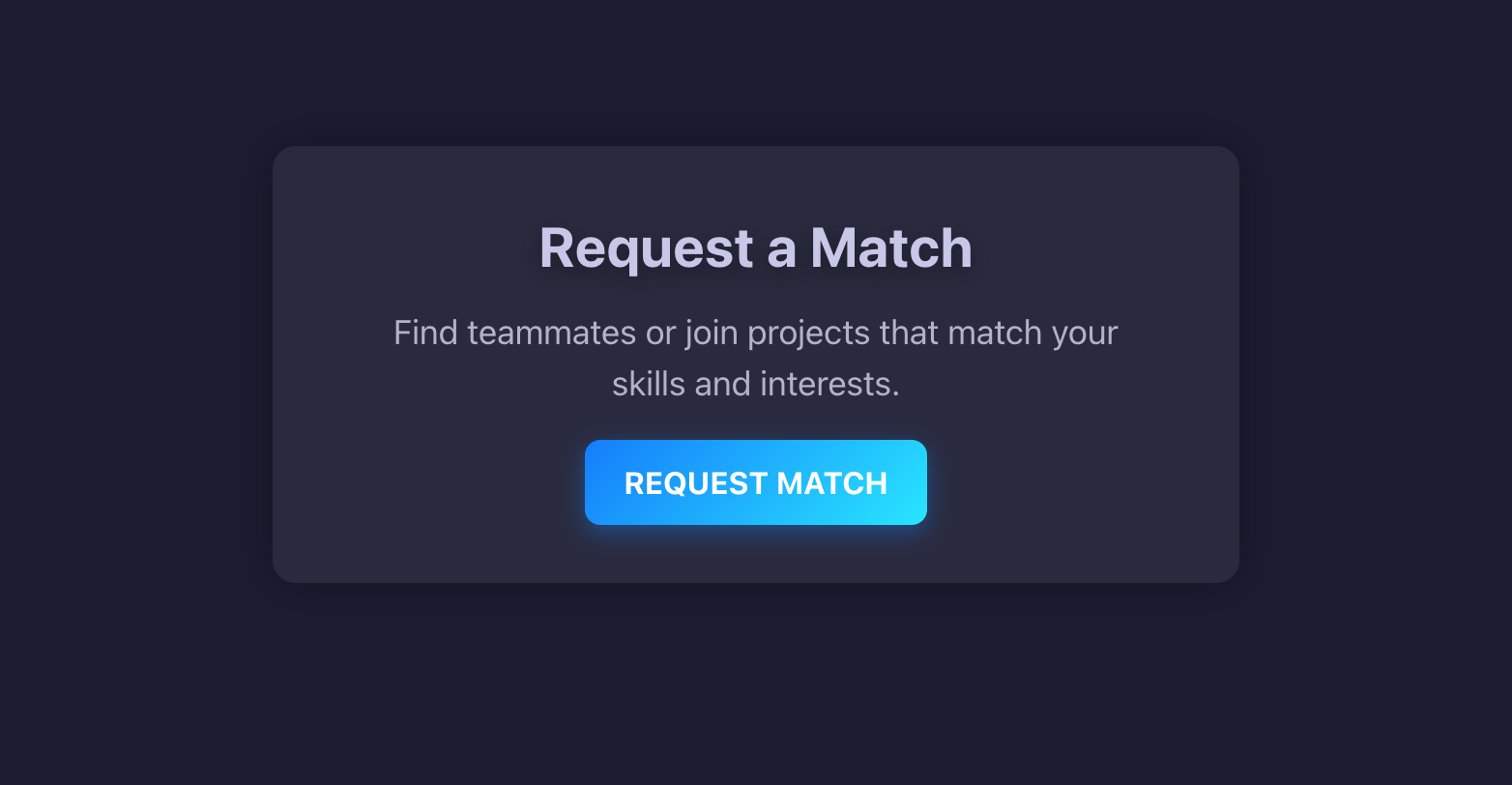
- Assign Team: AI Agent assigns the team based on the skillset. The objective is to find the optimal situation where all teams will have the highest number that fulfills all the skill categories
- Submit Work: User submits the work. Bounty program will gather all submitted work to be assessed for the judgement
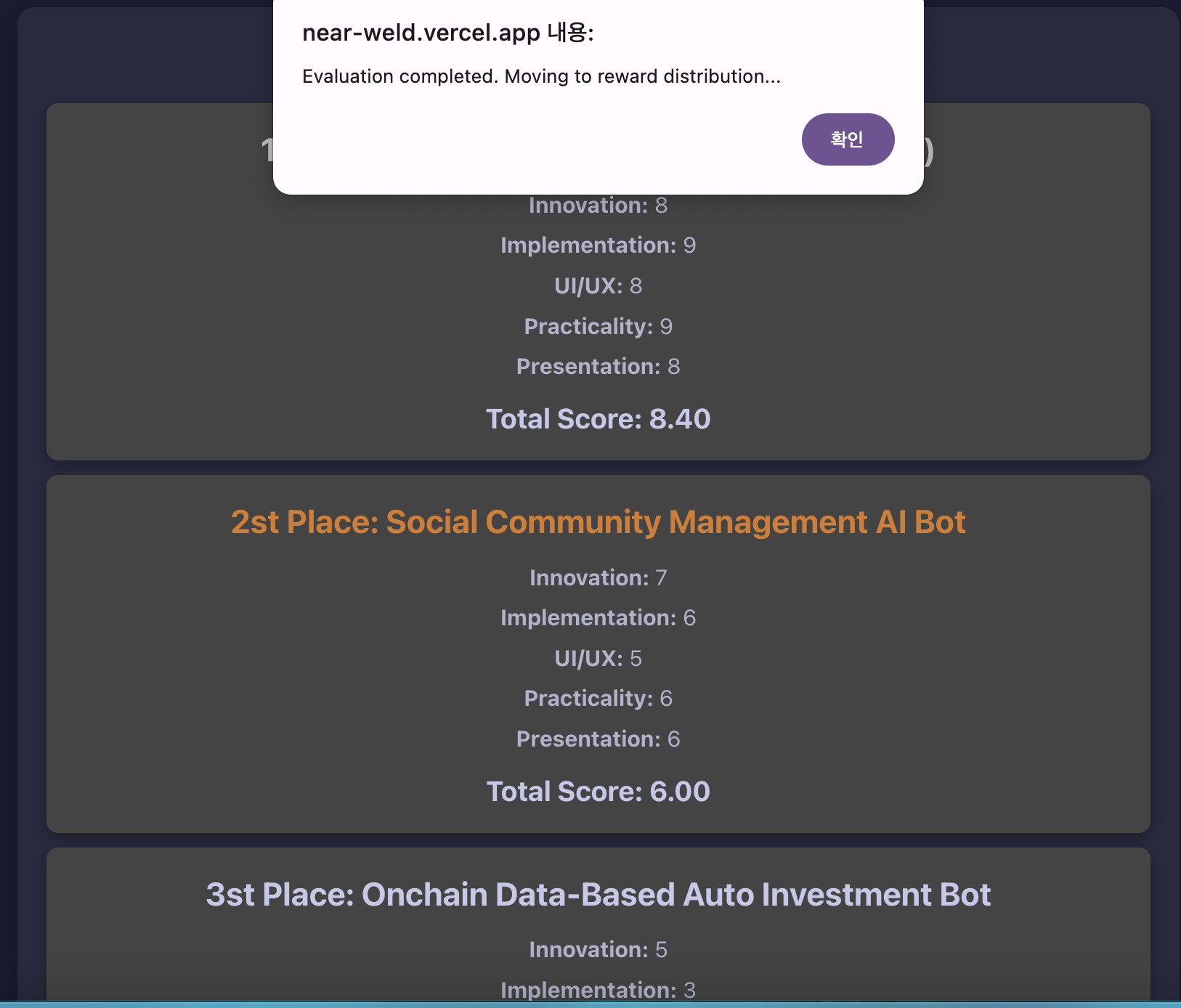
- Judge: AI agent analyzes the submitted work and judge who is the winner based on a given criteria
- Distribute Rward: Onchain contract that holds the deposits for the hackathon prizes and distribute it when the team chooses the payment. It utilizes Chain Abstraction by Near so that pools can be set up in anychain(currently Ethereum / Near) whereas one treasury can be used for the settlement
Challenges we ran into
We wanted to build the entire system not only from the perspective of the builder but also from the perspective of the hackathon managers. Also, we wanted the case to be more diverse for solo hackers, however, for the time being, we were able to focus on the very minimal technical aspects to show the most minimal features
Accomplishments that we're proud of
We are proud to implement zkTLS based digital builder profile that provides onchain identification attached to the wallet address. It can serve as a self sovereign builder profile that can be used outside in any platform. Also, we utilized two different agents to automate the hackathons process while onchain settlements can enhance the experience for builders to join.
What we learned
We learned more into how builder profiles can be segmented and think more in terms of possible usecases in the future.
What's next for Ludium
Ludium is a Web3 builder community that active runs education, hackathons, recruitments, and incubation. We would like to implement the full feature into the current website so that more dynamic collaboration can happen.


Log in or sign up for Devpost to join the conversation.