-
-
setup
-
reports
-
timeline
-
interventions
-
synthesis
-
setup
-
setup
-
sounds
-
welcome
-
recommendations
Lucidia
Inspiration
For as long as humans have existed, we’ve dreamed. Yet most of what happens in our dreams disappears within minutes of waking up. Neuroscience suggests that dreaming plays a critical role in emotional processing, memory consolidation, and psychological recovery—but we currently have almost no tools to actually understand what happens inside that experience.
Our team began with a simple question: what if the sensory world of dreams could be observed, understood, and gently guided?
Modern technology already tracks steps, heart rate, and sleep cycles. But dreams remain one of the most information-rich and least understood parts of human cognition. With emerging research in brain-computer interfaces (BCIs), we explored what a thoughtfully designed interface for dream analysis and intervention could look like.
Lucidia was created as a speculative design that imagines a near-future system where neural signals can be translated into meaningful insight about the subconscious mind. The goal was to demonstrate how interface design could help bridge neuroscience, mental health, and everyday user experience.
What it does
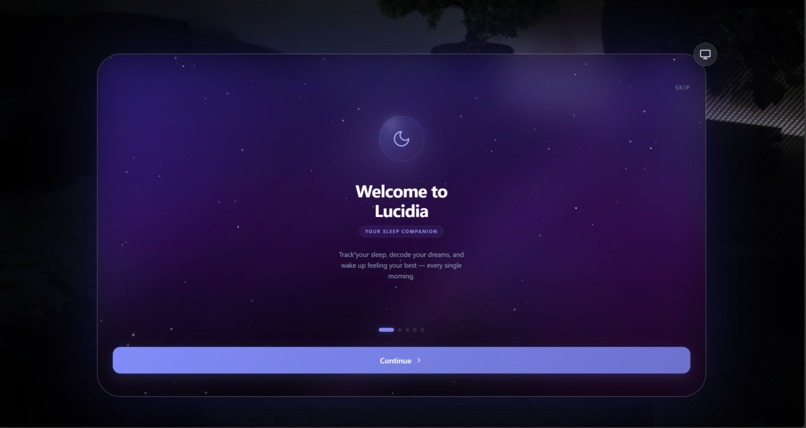
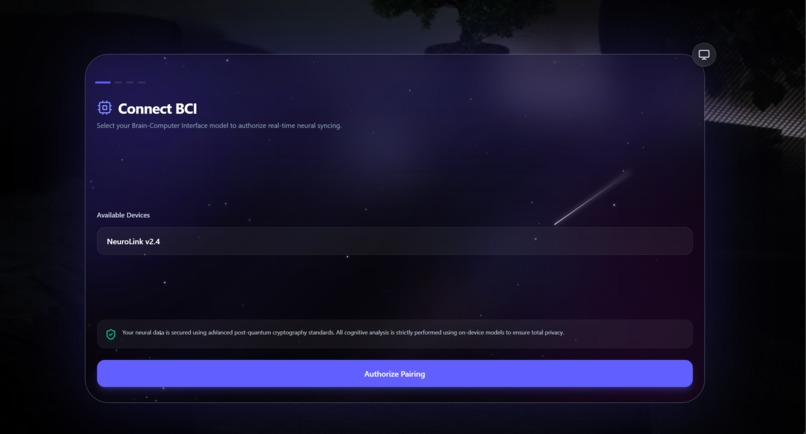
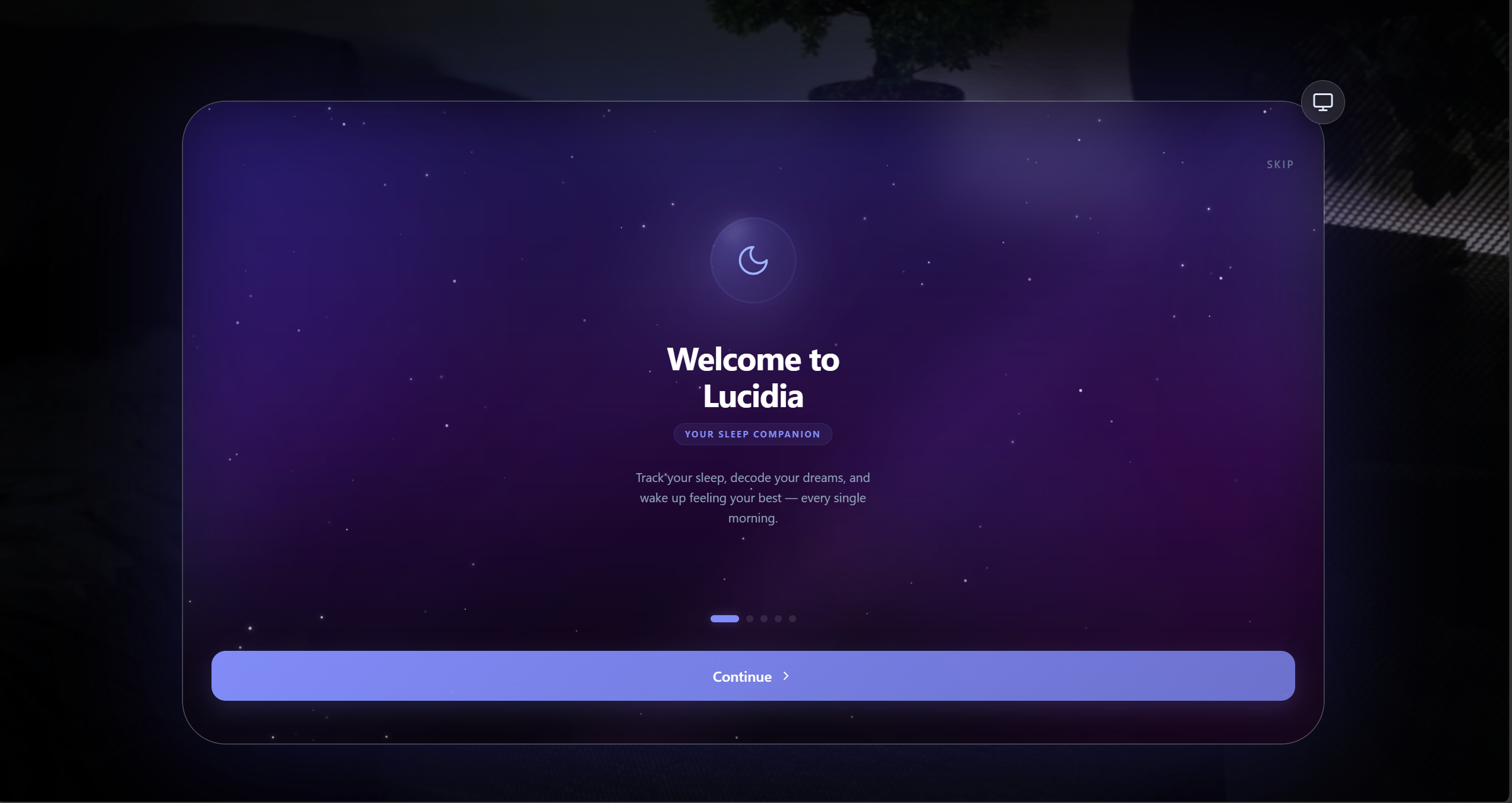
Lucidia is a conceptual control center for next-generation brain-computer interfaces. It allows users to analyze the sensory structure of their dreams and configure safe neural interventions during sleep.
Rather than treating sleep as passive downtime, Lucidia frames it as a measurable cognitive process that can support emotional recovery and psychological resilience.
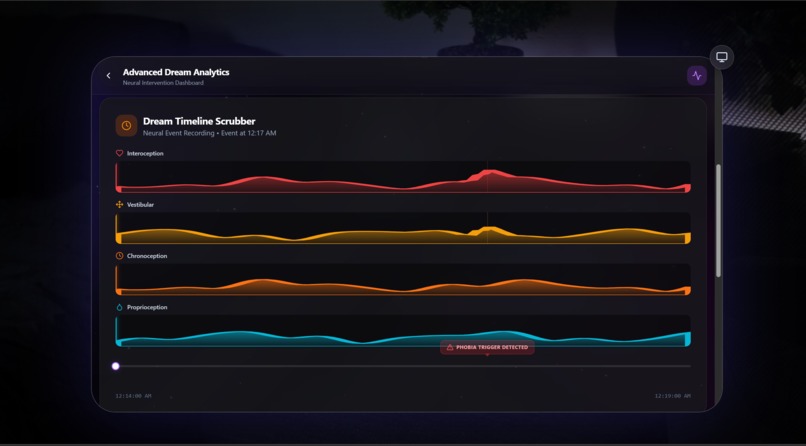
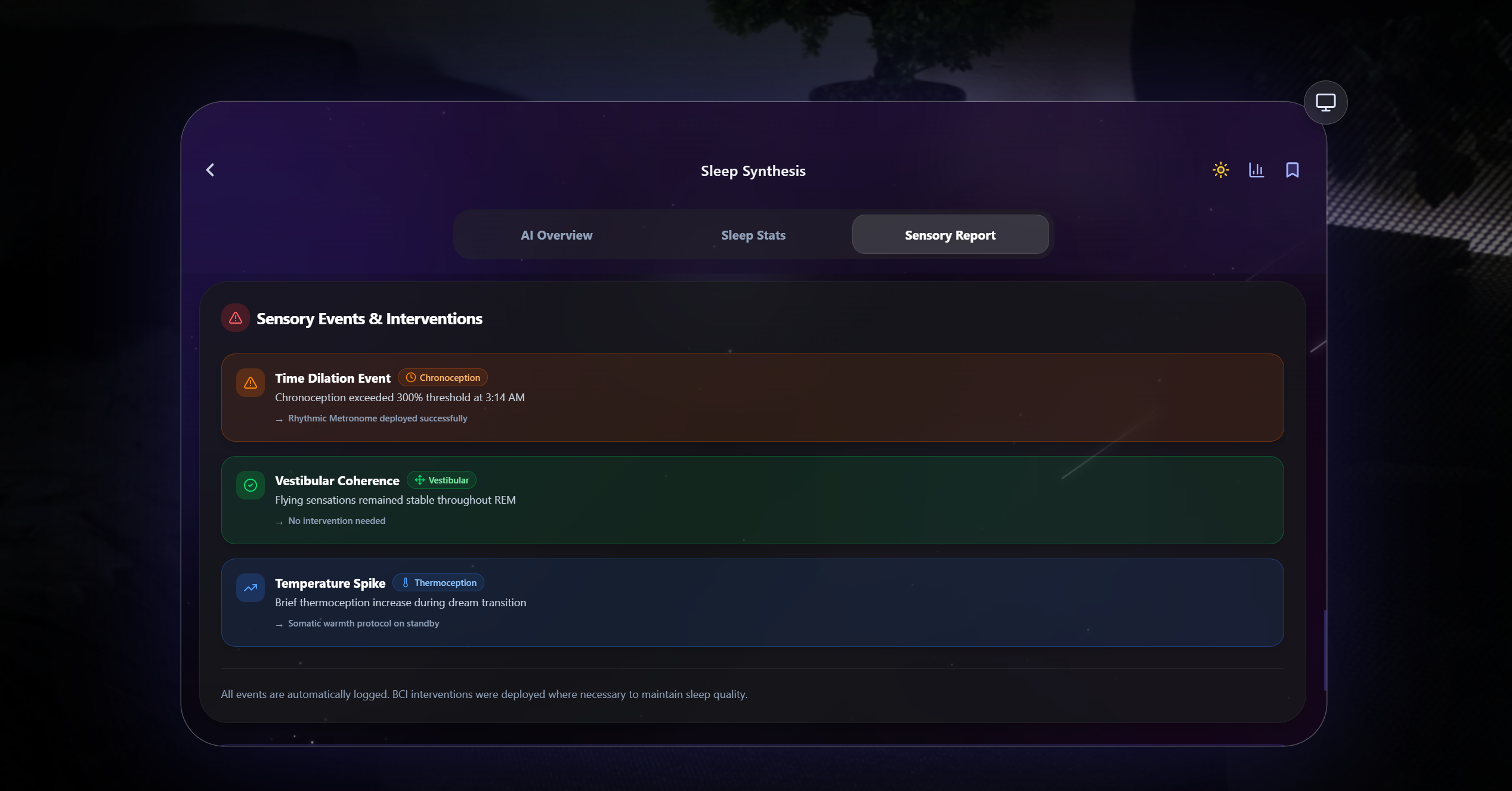
The system maps dream experiences across eight sensory channels:
- Visual (imagery intensity and color)
- Auditory (voices and environmental sound)
- Tactile (touch, pressure, and texture)
- Olfactory (smell and emotional scent triggers)
- Vestibular (balance, falling, flying sensations)
- Proprioception (body movement and spatial awareness)
- Interoception (internal bodily signals such as heartbeat or breathing)
- Chronoception (perception of time dilation or compression)
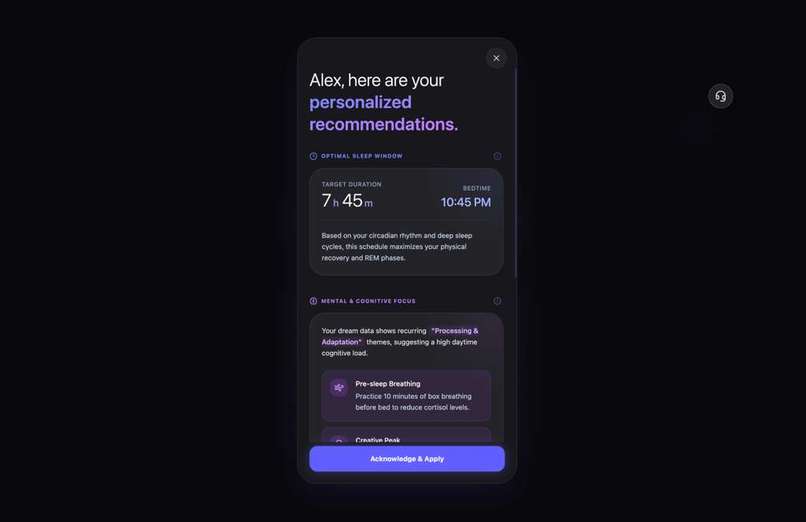
Each night, neural signals recorded by a BCI are translated into understandable insights within the Lucidia interface. Users can review patterns in their dream activity, explore emotional triggers, and configure interventions designed to reduce nightmares, support exposure therapy, and improve overall sleep quality.
In practice, Lucidia transforms the invisible sensory landscape of dreams into a system that can be explored, understood, and responsibly guided.
How we built it
Lucidia was designed as a polished mobile application prototype with an emphasis on clarity, scientific plausibility, and human-centered design.
The interface was developed using:
- React 18
- TypeScript
- Tailwind CSS
- Framer Motion
- Figma and Figma Make
- Recharts for data visualization
- Gemini / Google Cloud
The application architecture simulates the interaction between a consumer-facing app and a future BCI system.
Core systems include:
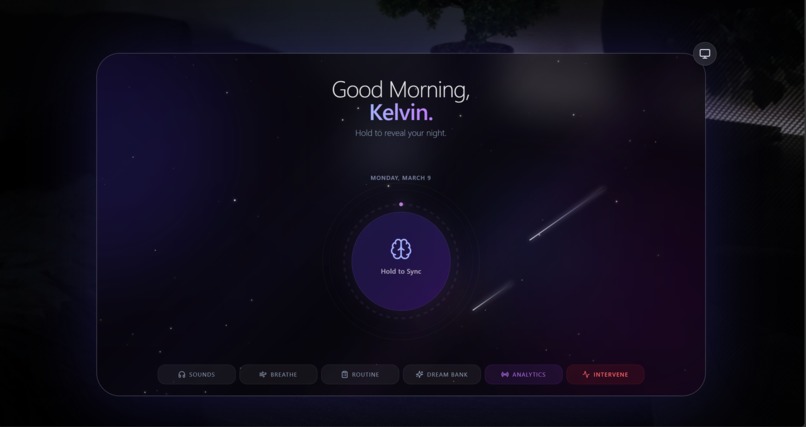
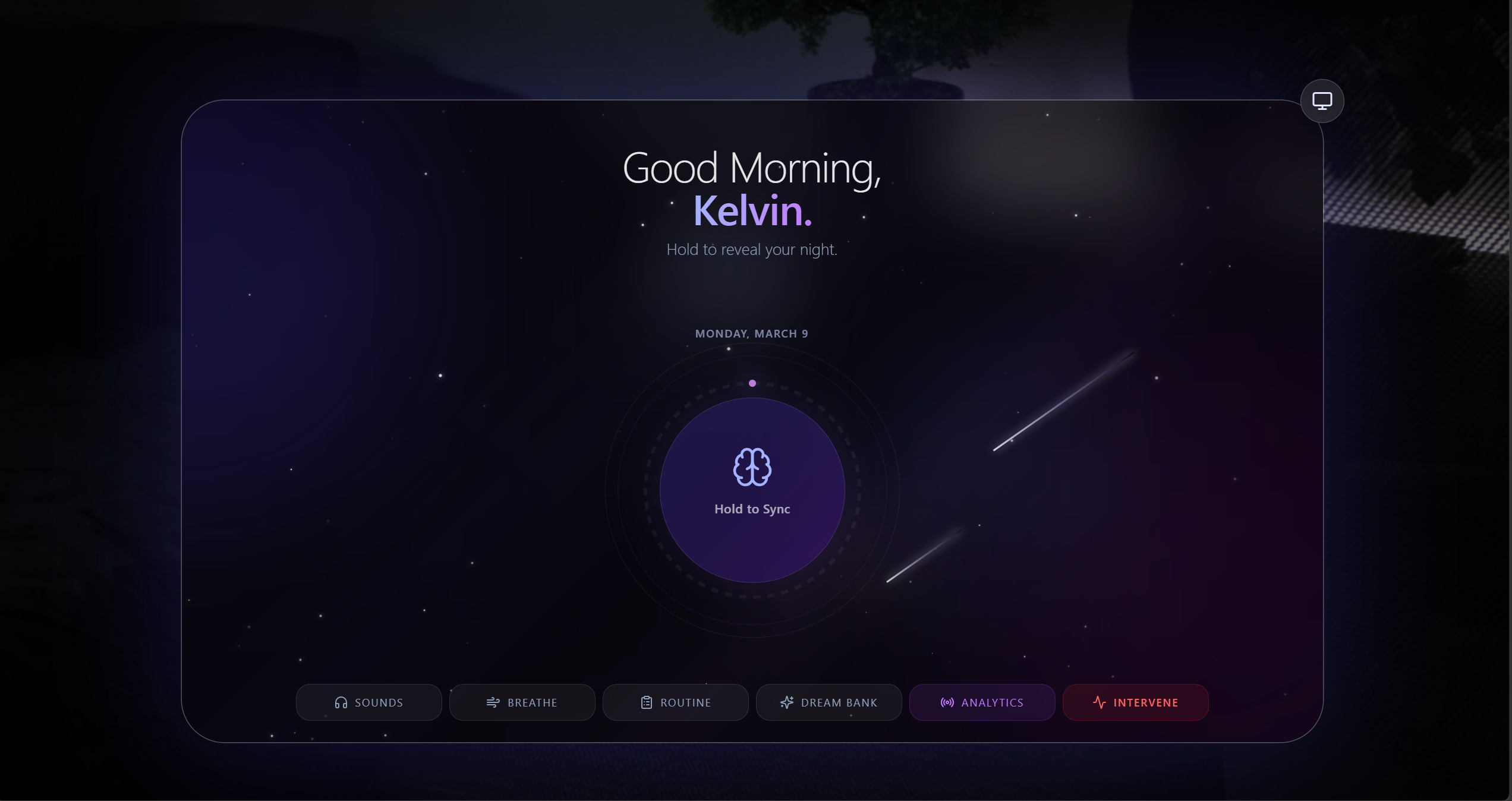
Home Dashboard
A daily overview of sleep quality, recovery metrics, and sensory load.
DreamBank
An archive where users can explore dream events, emotional themes, and recurring symbols across time.
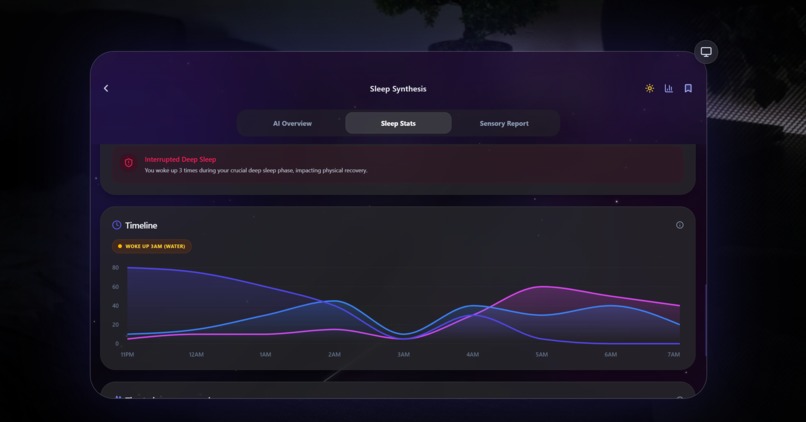
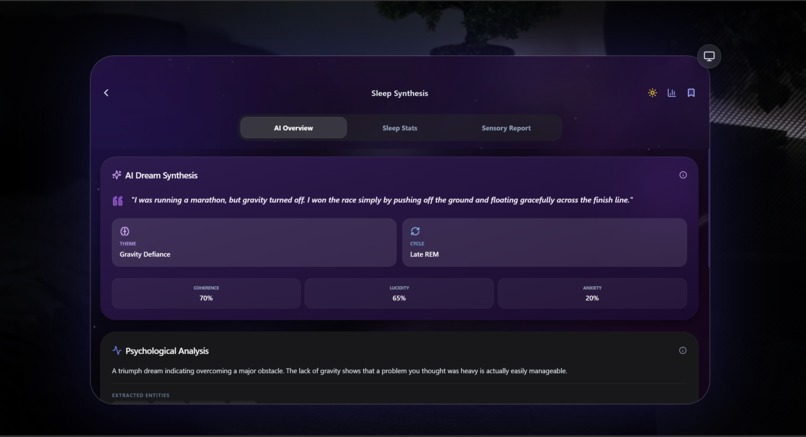
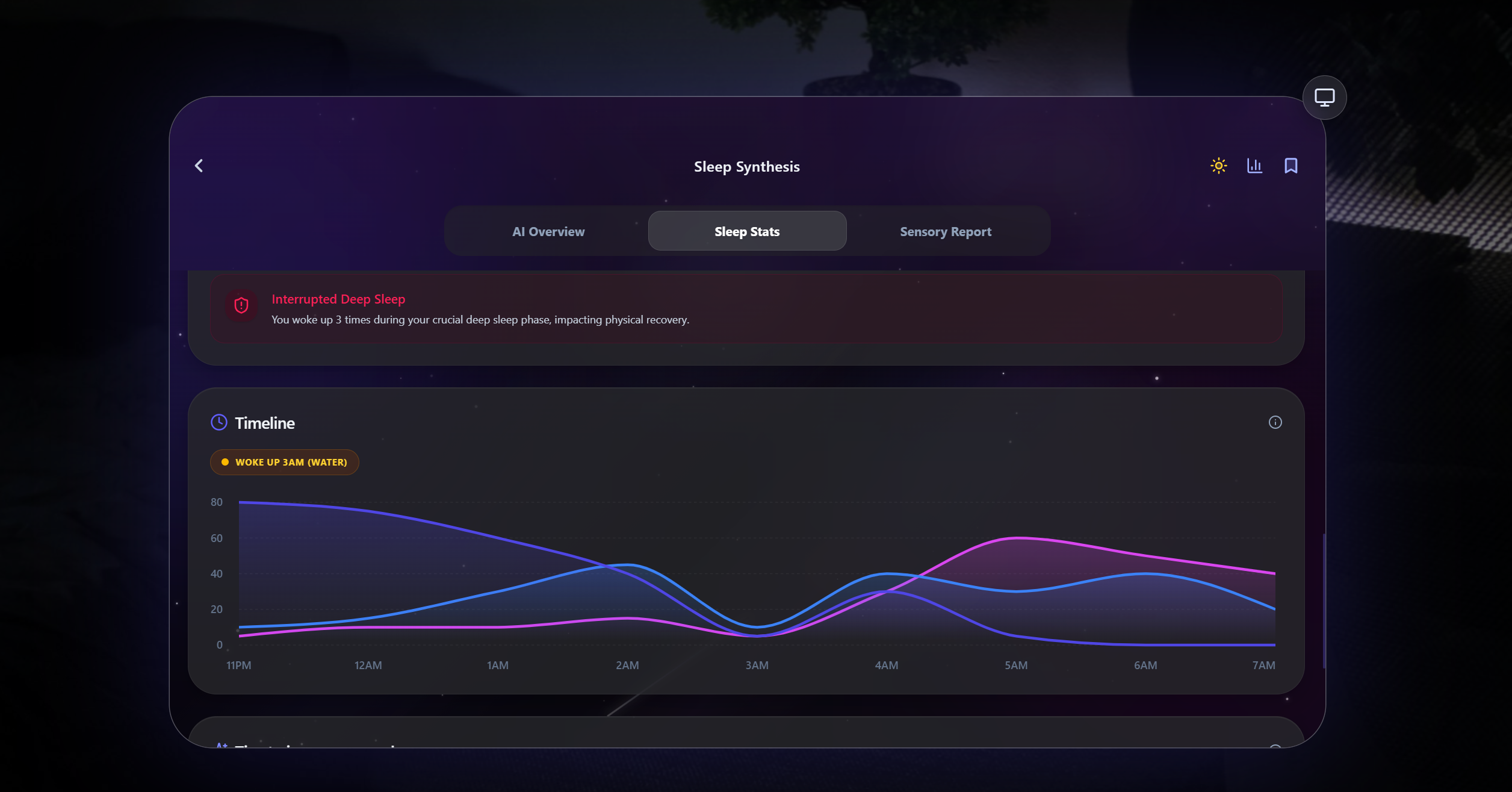
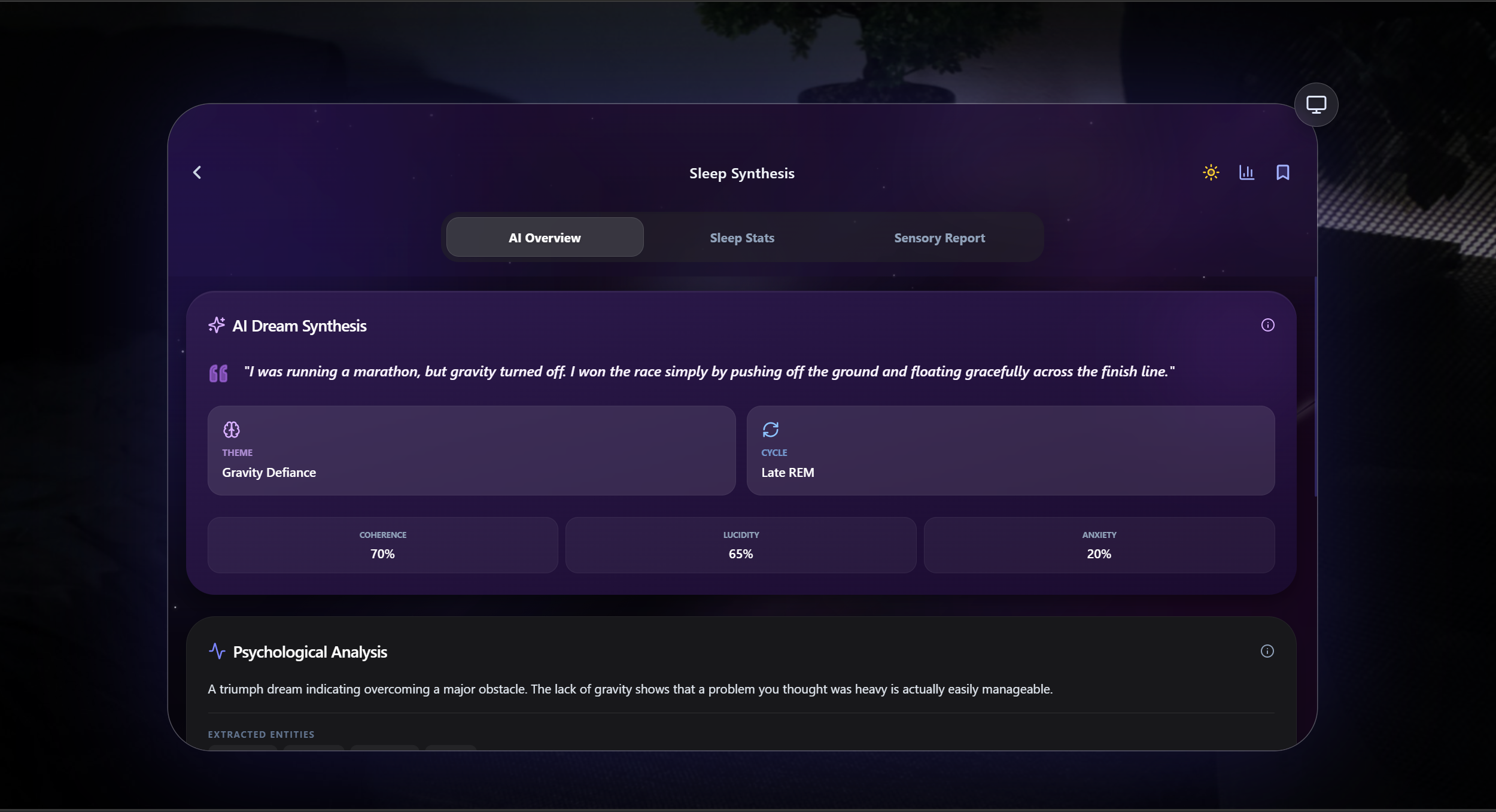
Sleep Synthesis Report
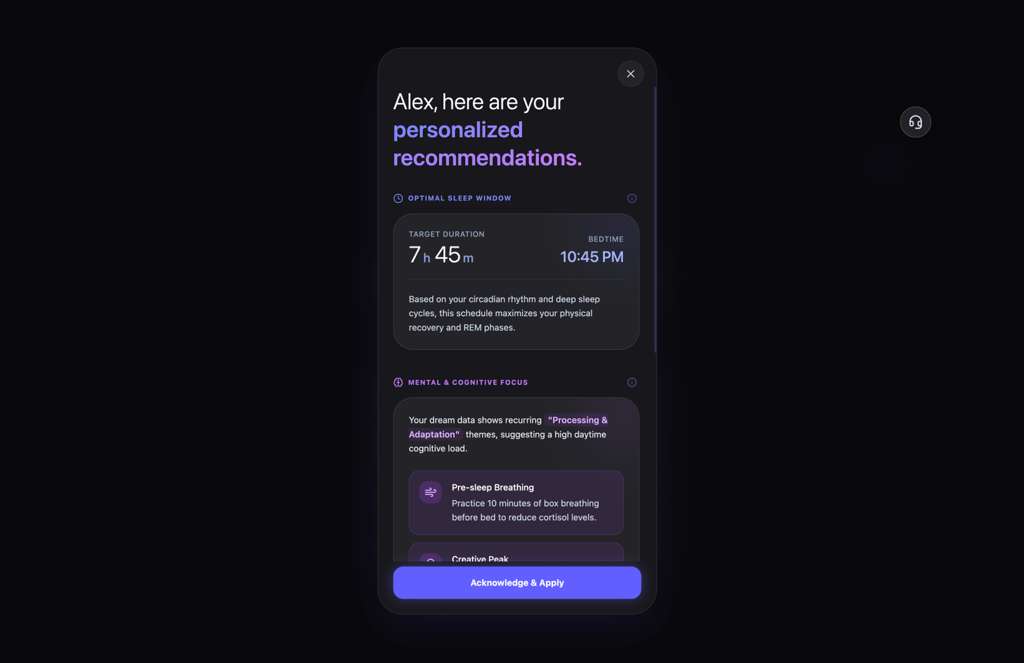
A combined analysis that integrates sleep architecture, sensory signals, and behavioral insights.
Sensory Topology Visualization
An eight-dimensional radar chart that maps dream activity across all sensory channels.
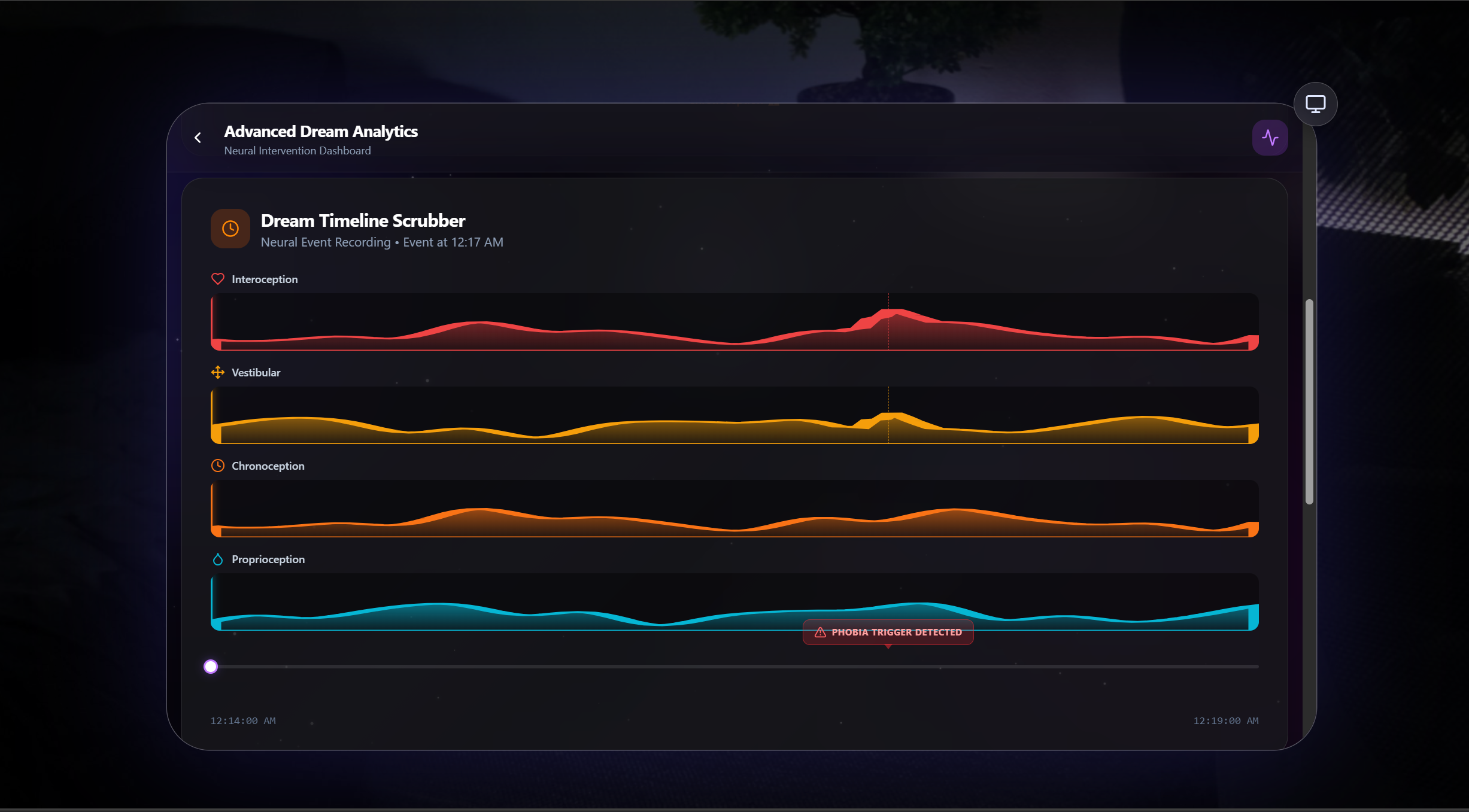
Neural Playback Timeline
A multi-channel timeline inspired by video editing tools, allowing users to explore dream events chronologically.
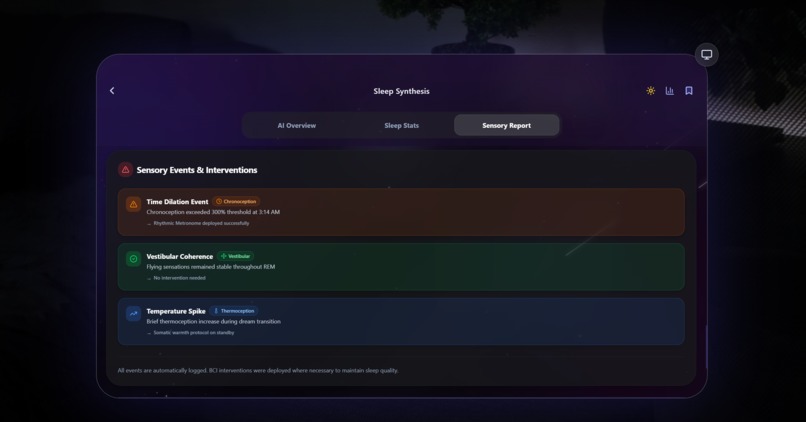
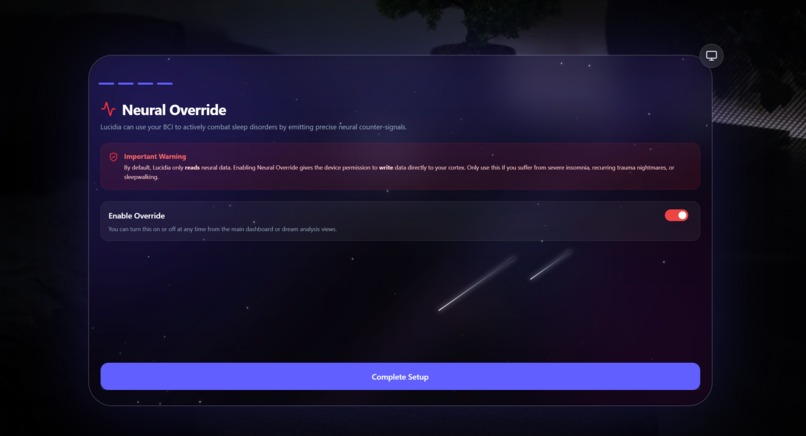
Neural Intervention Controls
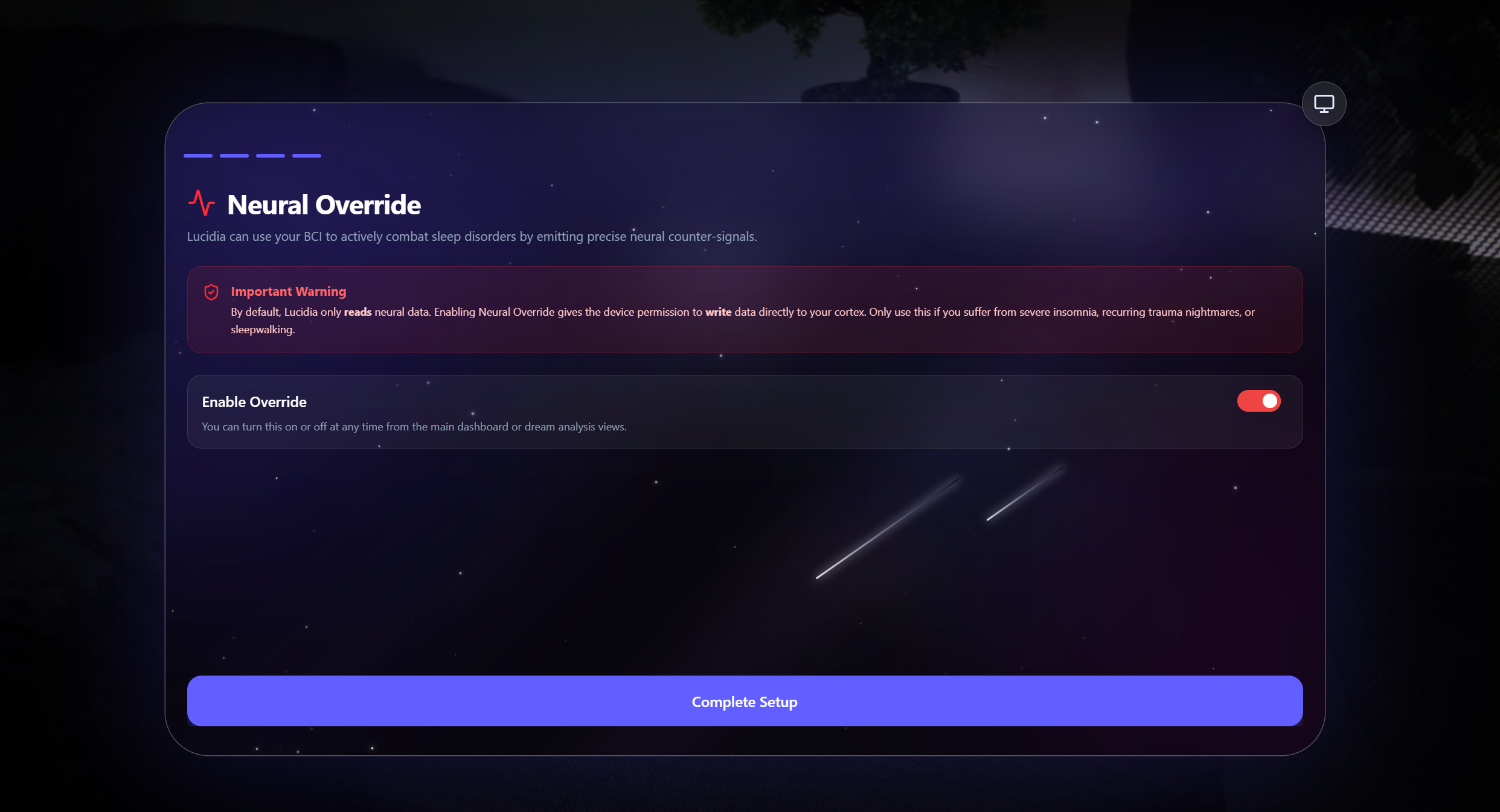
A consent-driven interface where users can configure dream interventions designed to reduce stress or guide emotional processing.
Throughout the design process, we prioritized usability and cognitive clarity. Complex neural data is presented through clean visualizations and intuitive interactions, ensuring the system remains understandable even when communicating advanced neuroscience concepts.
Challenges we ran into
The biggest challenge was translating something as abstract and subjective as dreams into structured information that could be visualized in a meaningful way.
Dreams are nonlinear experiences composed of emotional, sensory, and narrative elements. Designing systems that could represent these experiences required inventing entirely new visualization approaches rather than relying on traditional health dashboards.
Another challenge was maintaining a balance between speculative technology and scientific credibility. While full dream decoding is still an emerging area of research, we wanted every feature to feel grounded in plausible neuroscience trajectories.
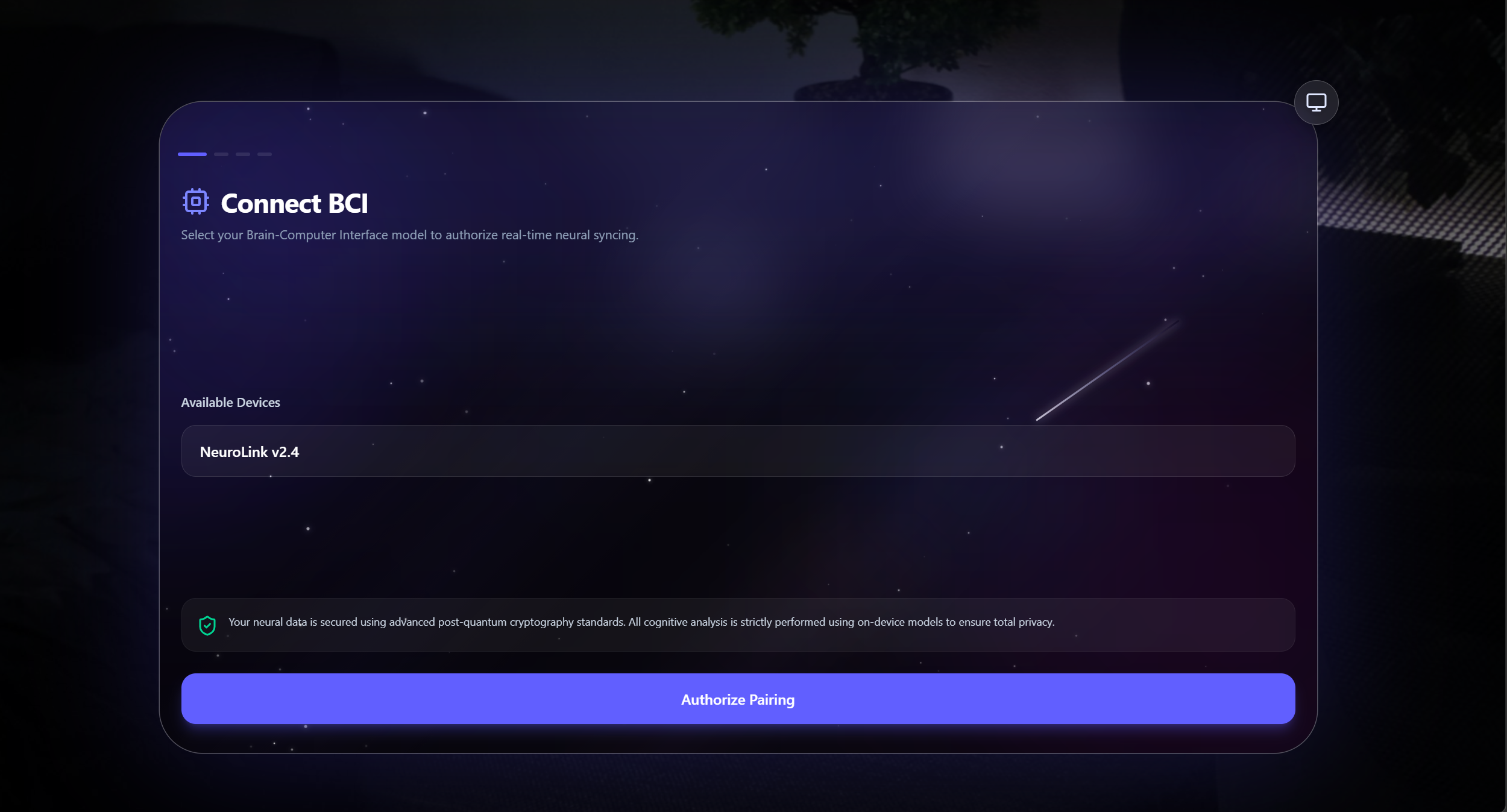
Ethical design was also a major consideration. Any technology capable of influencing subconscious experiences must prioritize user autonomy, transparency, and psychological safety. As a result, Lucidia incorporates strict safeguards such as manual consent for neural interventions, emergency wake protocols, and on-device neural data processing.
Accomplishments that we're proud of
One of the outcomes we are most proud of is how cohesive the system feels. Lucidia is not just a set of individual screens, but a complete interaction model that supports the entire sleep cycle—from morning reflection to nighttime intervention planning.
Highlights include:
- The eight-sense sensory topology visualization, which introduces a new framework for understanding dream activity
- The neural playback timeline, allowing users to explore dream events as structured sensory sequences
- The intervention configuration system, which communicates both the potential benefits and responsibilities of neural influence
- A design language that blends medical clarity with forward-looking interface design
Lucidia demonstrates that complex neuroscience concepts can be communicated through thoughtful interface design in a way that feels accessible and meaningful to everyday users.
What we learned
Designing Lucidia reinforced how much of human experience remains invisible simply because we lack the tools to measure it.
The project required us to think beyond traditional app design and consider how emerging neural technologies might integrate into everyday life. It pushed us to explore topics such as perception, identity, emotional regulation, and subconscious cognition.
We also gained a deeper appreciation for the importance of ethical design in emerging technologies. Systems that interact directly with the brain must prioritize transparency, user agency, and safety from the very beginning.
Perhaps most importantly, we learned how speculative design can help clarify the future of technology. By imagining responsible interfaces today, we can better guide how these systems should evolve tomorrow.
What's next for Lucidia
Lucidia is currently a conceptual prototype, but the design opens the door to many future possibilities.
Potential next steps include:
- Detecting recurring dream patterns across long-term sleep data
- Tools for guided lucid dreaming and dream awareness training
- Secure clinical export options for therapists and researchers
- Voice-assisted dream journaling upon waking
- Compatibility with multiple emerging BCI platforms
In the long term, we envision systems like Lucidia helping people better understand their mental health, emotional patterns, and cognitive recovery processes.
By turning subconscious sensory data into understandable insights, Lucidia suggests a future where sleep is no longer a black box—but an important source of self-understanding and personal growth.
Built With
- figma
- figma-make
- framer-motion
- gemini
- google-cloud
- react
- recharts
- tailwind
- typescript


Log in or sign up for Devpost to join the conversation.