-
-
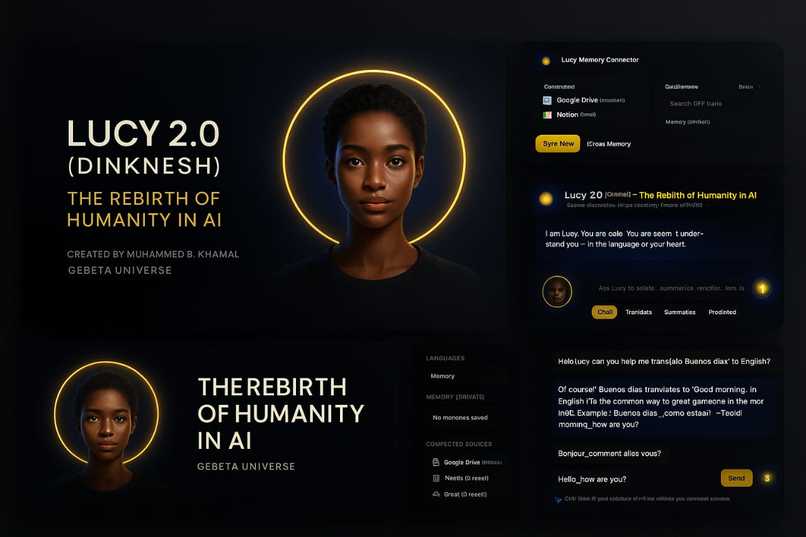
Lucy 2.0
-

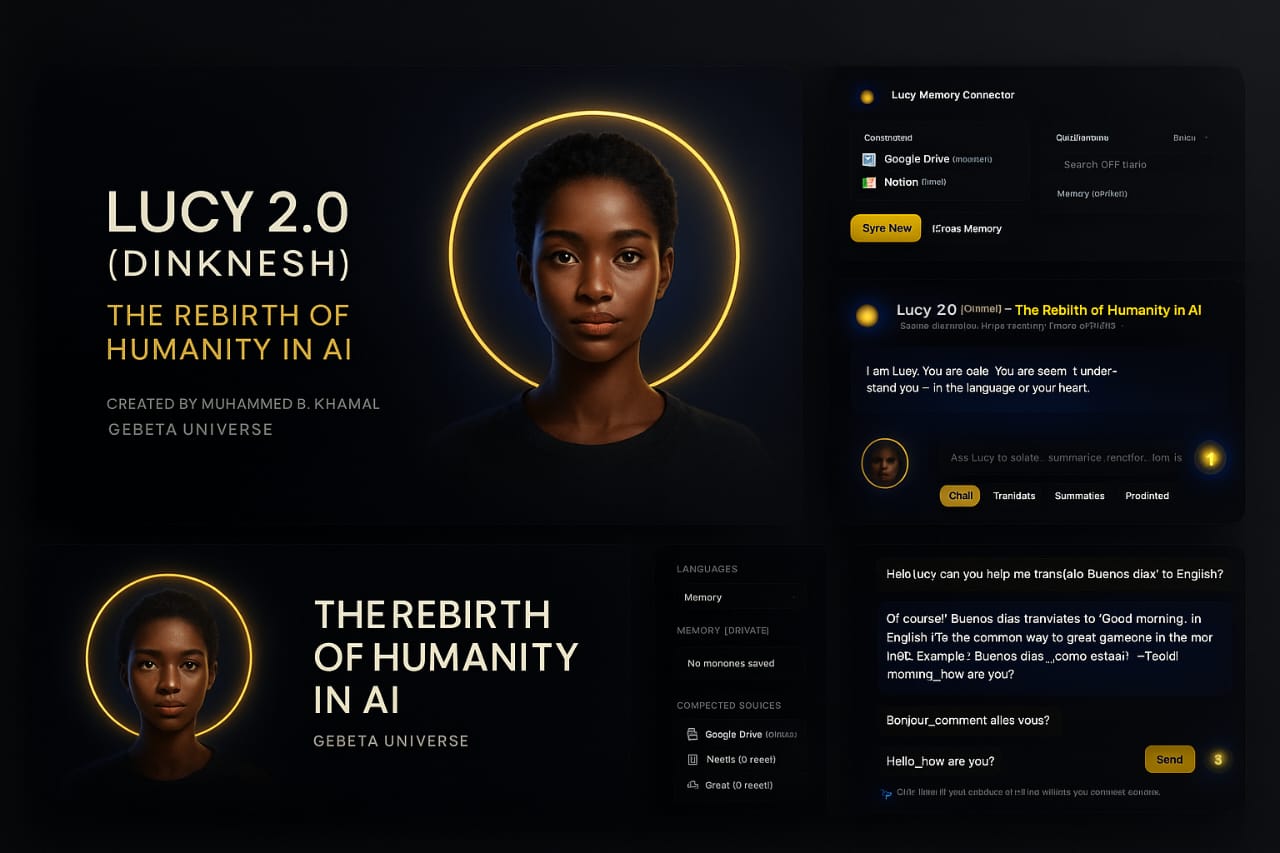

InspirationLucy 2.0 was inspired by the original "Lucy" Dinknesh, the earliest known human ancestor a symbol of our collective origin. In a world where AI often speaks only the dominant language and forgets the cultural nuances that define us, I envisioned an AI that doesn’t just process data it remembers us, in the language of our hearts.
What it doesLucy 2.0 is a multilingual, privacy-first AI assistant that translates, summarizes, rewrites, and remembers all locally on your device. It connects with tools you choose (like Google Drive or Notion), and understands cultural context, not just syntax.
How we built it
Built using Gemini Nano for on-device AI, Lucy 2.0 is powered by a lightweight local LLM paired with a custom translation + summarization API. I integrated Chrome extensions and mobile-first designs using Figma and React. Design inspiration was rooted in Afrofuturism visually blending origin and innovation.
Challenges we ran into
Built using Gemini Nano for on-device AI, Lucy 2.0 is powered by a lightweight local LLM paired with a custom translation + summarization API. I integrated Chrome extensions and mobile-first designs using Figma and React. Design inspiration was rooted in Afrofuturism — visually blending origin and innovation.
Accomplishments that we're proud of
Lucy 2.0 now speaks Amharic, Arabic, Afaan Oromo, Tigrinya — with context-aware summaries and memory that runs without needing the cloud.
What we learned## What we learned
- Building human-centered AI requires more than technical precision — it requires cultural awareness, storytelling, and empathy.
- Language is deeply emotional — we learned that translation isn’t just about words, but about preserving meaning and intention across cultures.
- Running AI locally with tools like Gemini Nano is powerful, but comes with trade-offs in memory, latency, and interface design — forcing us to rethink how "lightweight" systems can still feel deeply personal.
- Designing for Afrofuturism and multilingual UX taught us how to balance symbolism, identity, and functionality in every interface.
- Collaboration across languages and disciplines (design, dev, linguistics) is essential when building something meant to serve everyone not just the default user.
What's next for Lucy 2.0Expand to more languages & dialects
- Open-source a cultural memory layer
- Integrate voice synthesis for oral traditions
Built With
- chrome-extension-api
- cloud
- figma
- for
- gemini-nano
- google-drive-api
- langchain
- local-llm-(onnx)
- node.js
- notion-api
- optional
- python
- react.js
- vercel


Log in or sign up for Devpost to join the conversation.