-
-
Intro
-
"hoodies"
-
"sundress"
Inspiration
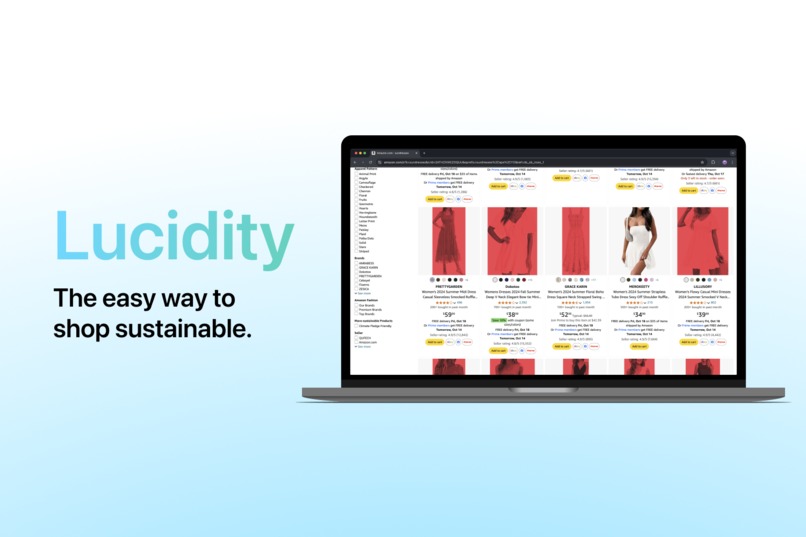
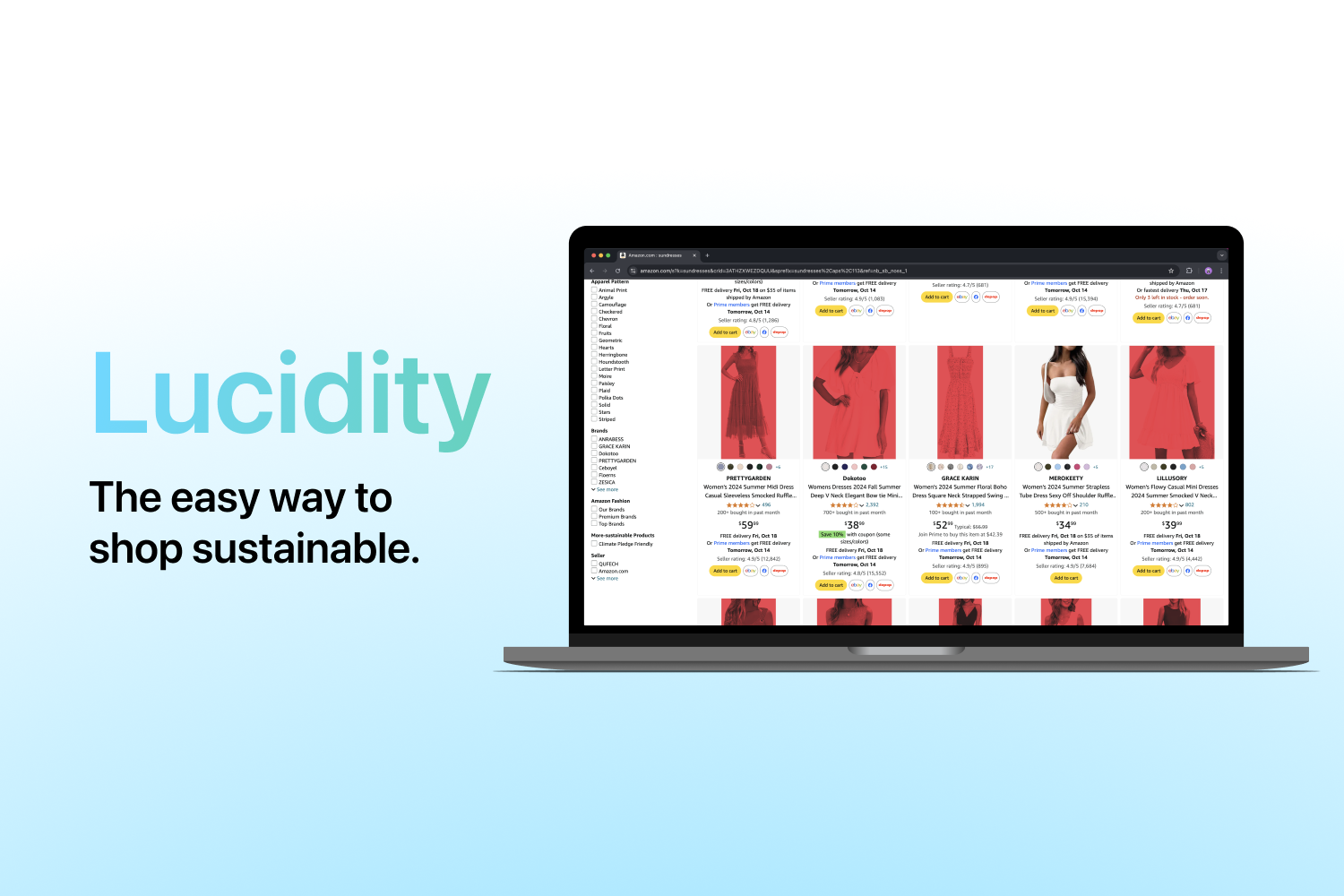
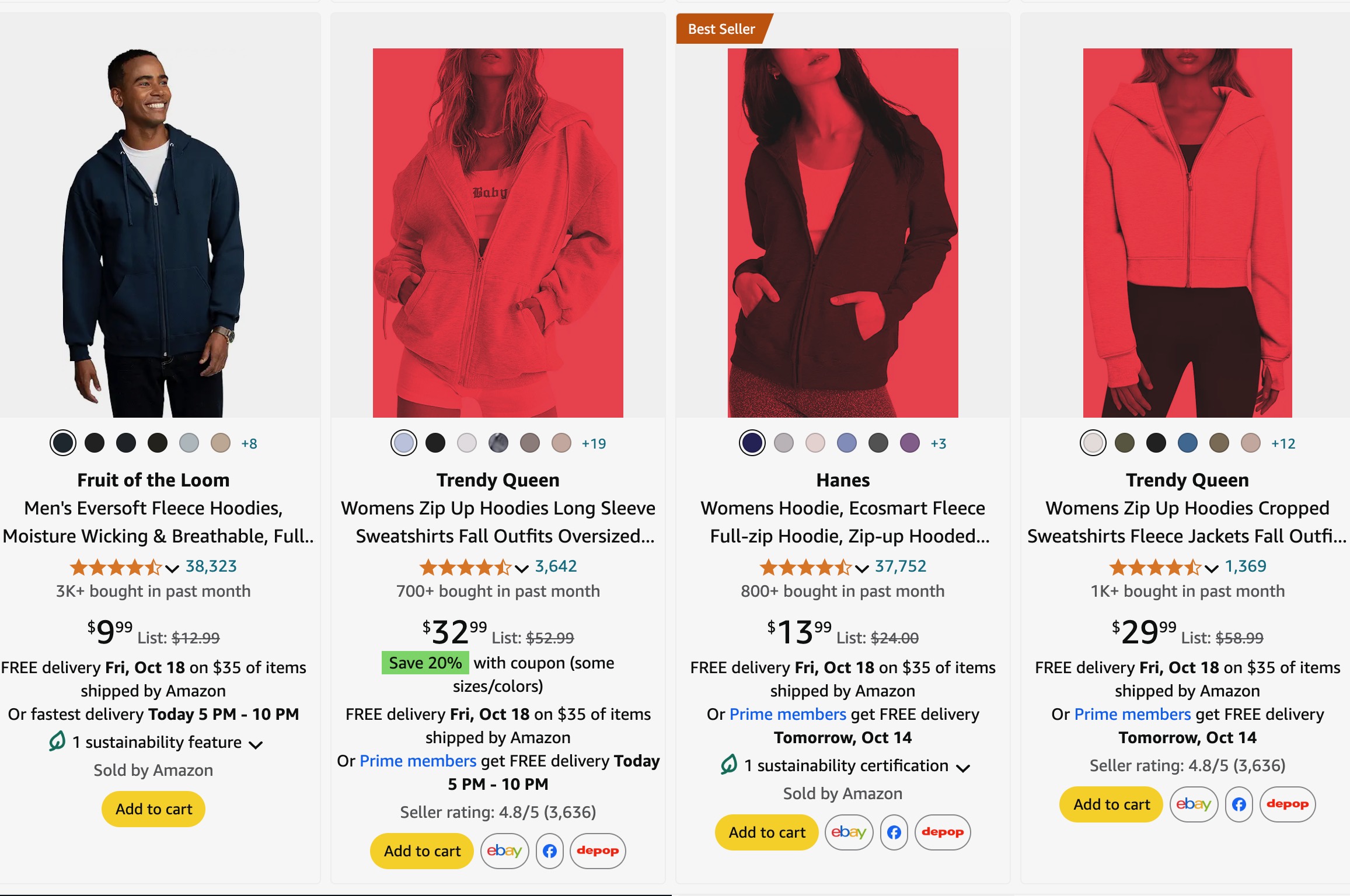
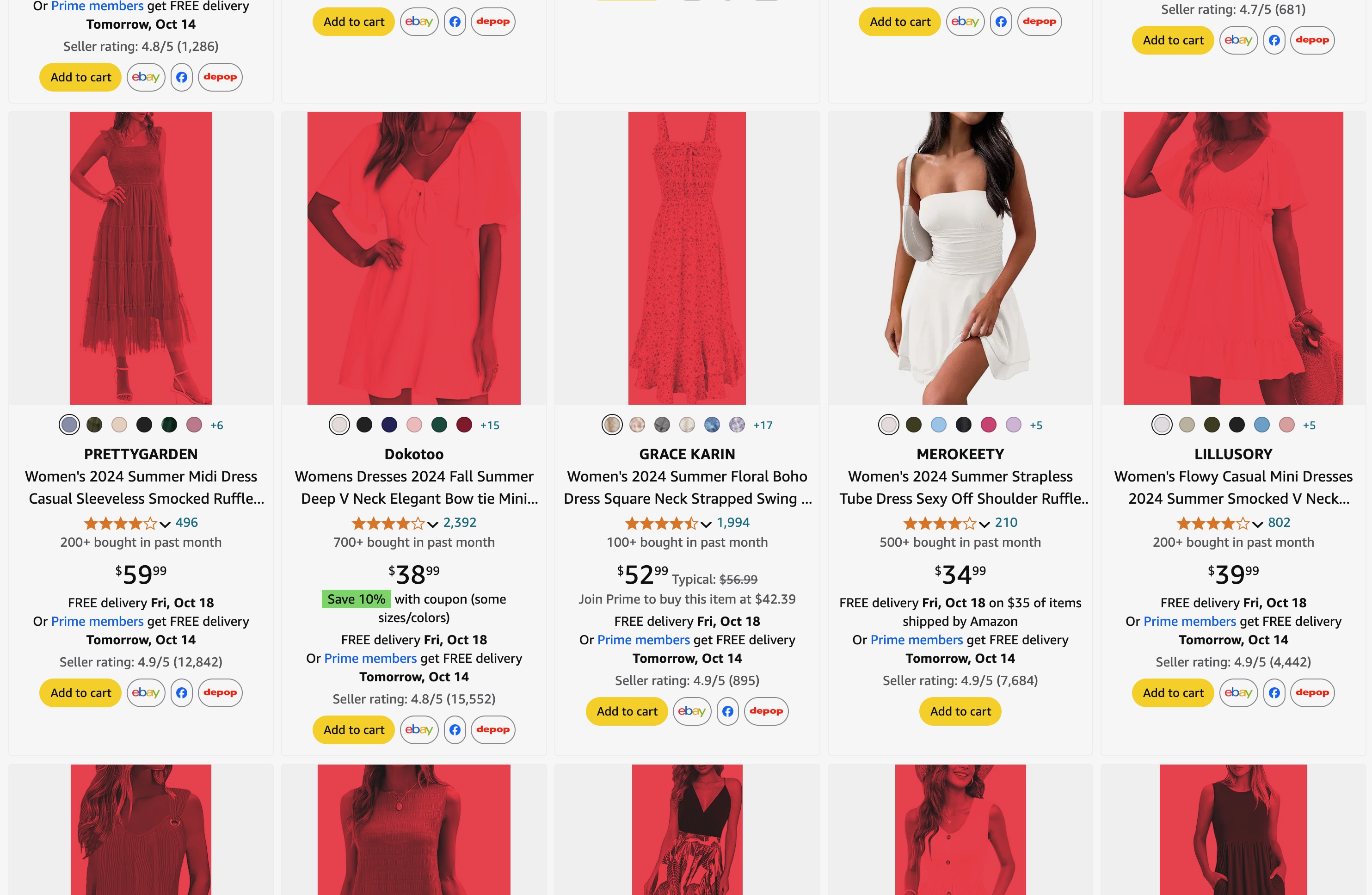
While shopping on Amazon, my partner and I noticed nearly all the search results were self-preferenced, low-quality, high-polyester/polyamide/nylon clothing options. Without clicking each and every option and reading the often garbled product description, it was impossible to quickly tell whether an item was sustainably produced or not. The few-and-far ethically produced clothes were buried between scourges of fast-fashion filler. So, we developed Lucidity: with a quick glance, see what clothes are fast-fashion, which clothes are not, and sustainable alternatives to that once 95% polyester piece that you might really love the look of.
What it does
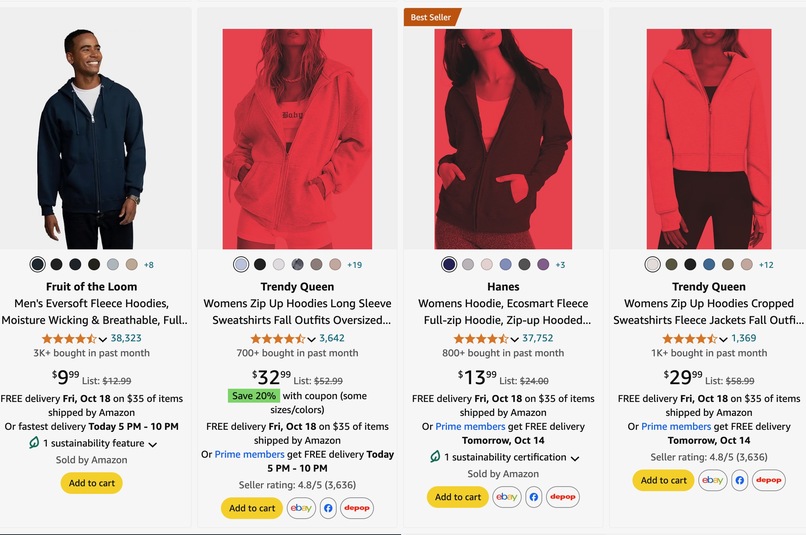
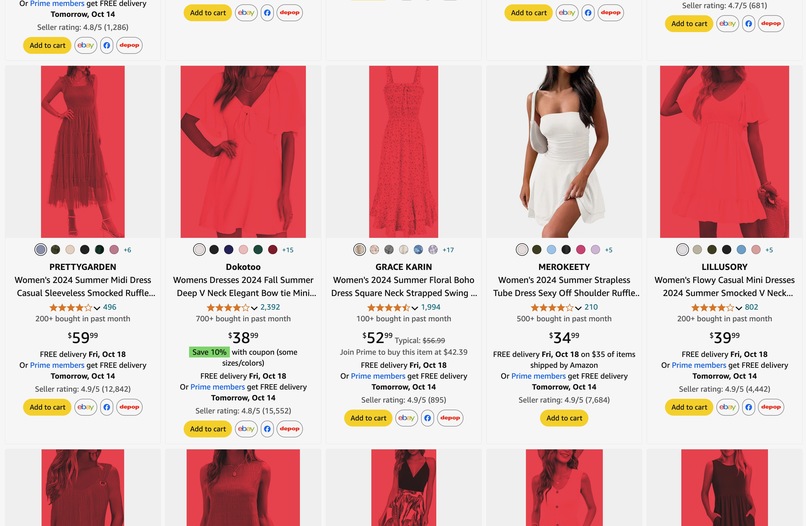
Lucidity combs through Amazon results in batches and checks a few factors to determine whether each clothing item is considered "fast fashion": fabric materials, ratios of said materials, clothing manufacturers, and price. If items are deemed fast fashion, they are flagged. For flagged items, links to eBay, Facebook Marketplace, and Depop are provided to encourage shopping secondhand if such items are still desired.
How we built it
We developed Lucidity to run conveniently in your web browser through a chrome extension. There's no need to manually activate it--it will get to work when you pull up Amazon. The codebase was built using JS, ScraperAPI, and a bit of design work in Figma/Photoshop.
Challenges we ran into
The algorithm initially processed and classified each listing individually, slowly working through the products on the search page. We optimized the algorithm for concurrent batch processing to accelerate sustainability calculations so the user knows which products to buy instantly.
Accomplishments that we're proud of
We're proud of how simple, yet how essential a product like this is. 310 million people use Amazon, and the vast majority are stripped of the ability to make smart, sustainable choices by Amazon's self-preferencing, fast-fashion favoring algorithm. Lucidity makes it easy for anyone to shop sustainably by highlighting the "good" and the "bad," no research required.
What we learned
Through the process of putting together our algorithm, we researched the concept of fast fashion, it's market penetration, and why fast fashion is unsustainable. We also learned how to develop and ship a chrome extension.
What's next for Lucidity
Lucidity will be published to Google Chrome Extension marketplace, free for all shoppers on Amazon. We're hoping a frictionless way to shop sustainably will encourage more people to adopt better shopping practices. We will also iterate and improve Lucidity, aiming to reduce barriers to shopping sustainable.
Built With
- chrome
- dom
- javascript
- scraper

Log in or sign up for Devpost to join the conversation.