-
-
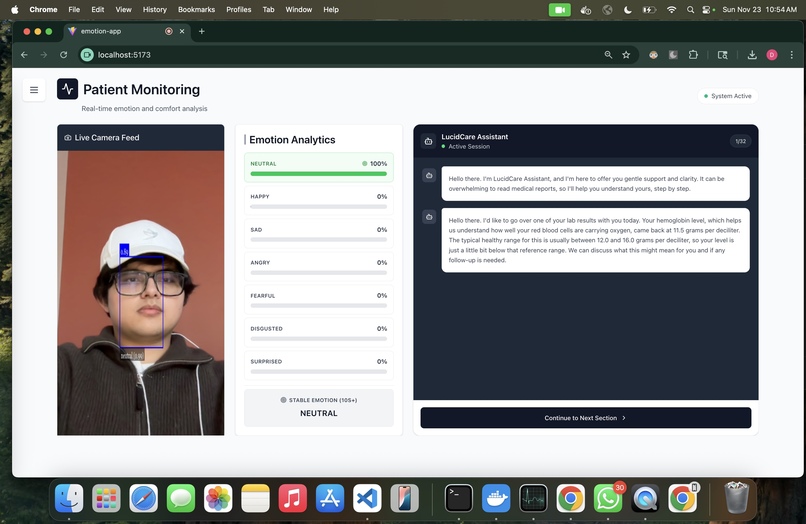
Dashboard Page
-
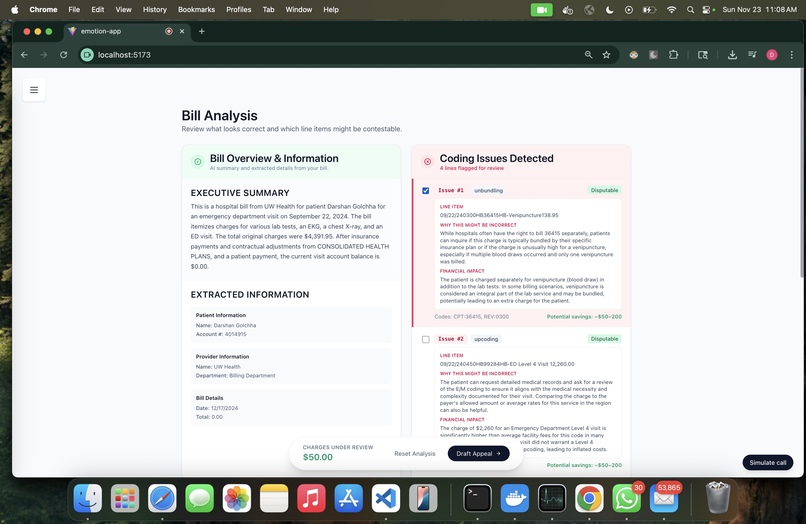
Bill Report Analysis
-
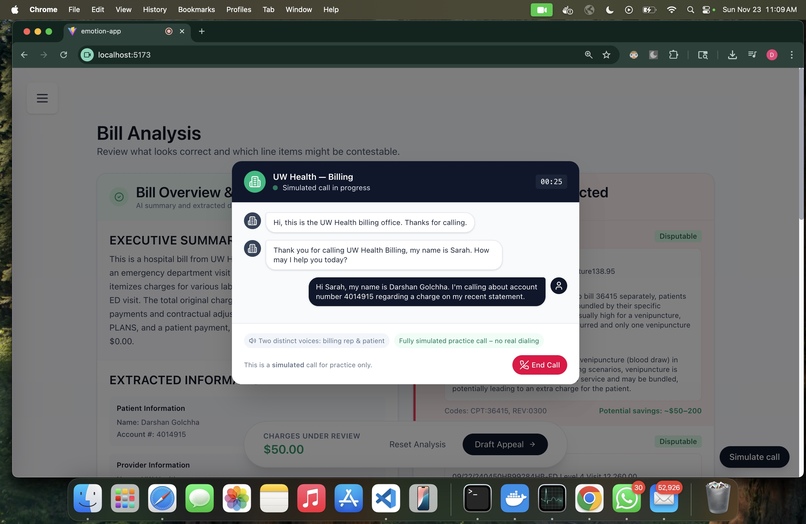
AI agent Call Simulation
Inspiration
Our project was inspired by something very real: both medical bills and medical reports are extremely stressful for people. Most patients have no idea what the medical codes, terminology, or line items mean. The documents feel alien, overwhelming, and sometimes even scary. We wanted to build something that actually helps people feel informed instead of anxious.
What it does
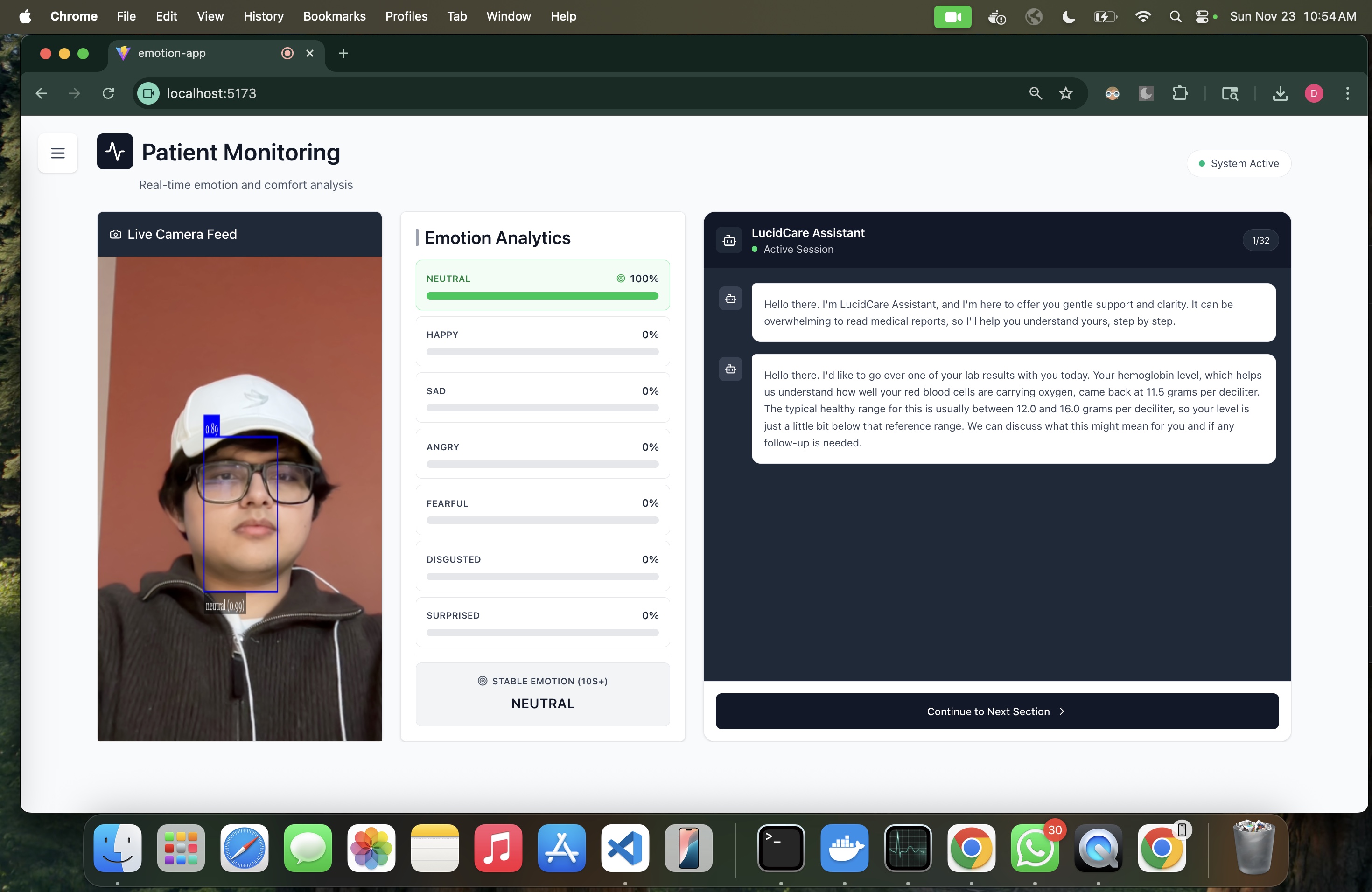
To solve that, we built an AI medical report assistant that reads your report and calmly explains everything in simple language. What makes it special is that it changes its tone and behavior based on your emotions. Using facial expression and sentiment analysis, the AI can sense whether you’re sad, stressed, confused, or surprised—and it responds in a supportive, reassuring way. The goal was to make the experience feel like talking to a calm nurse who genuinely wants to help you understand your health.
How we built it
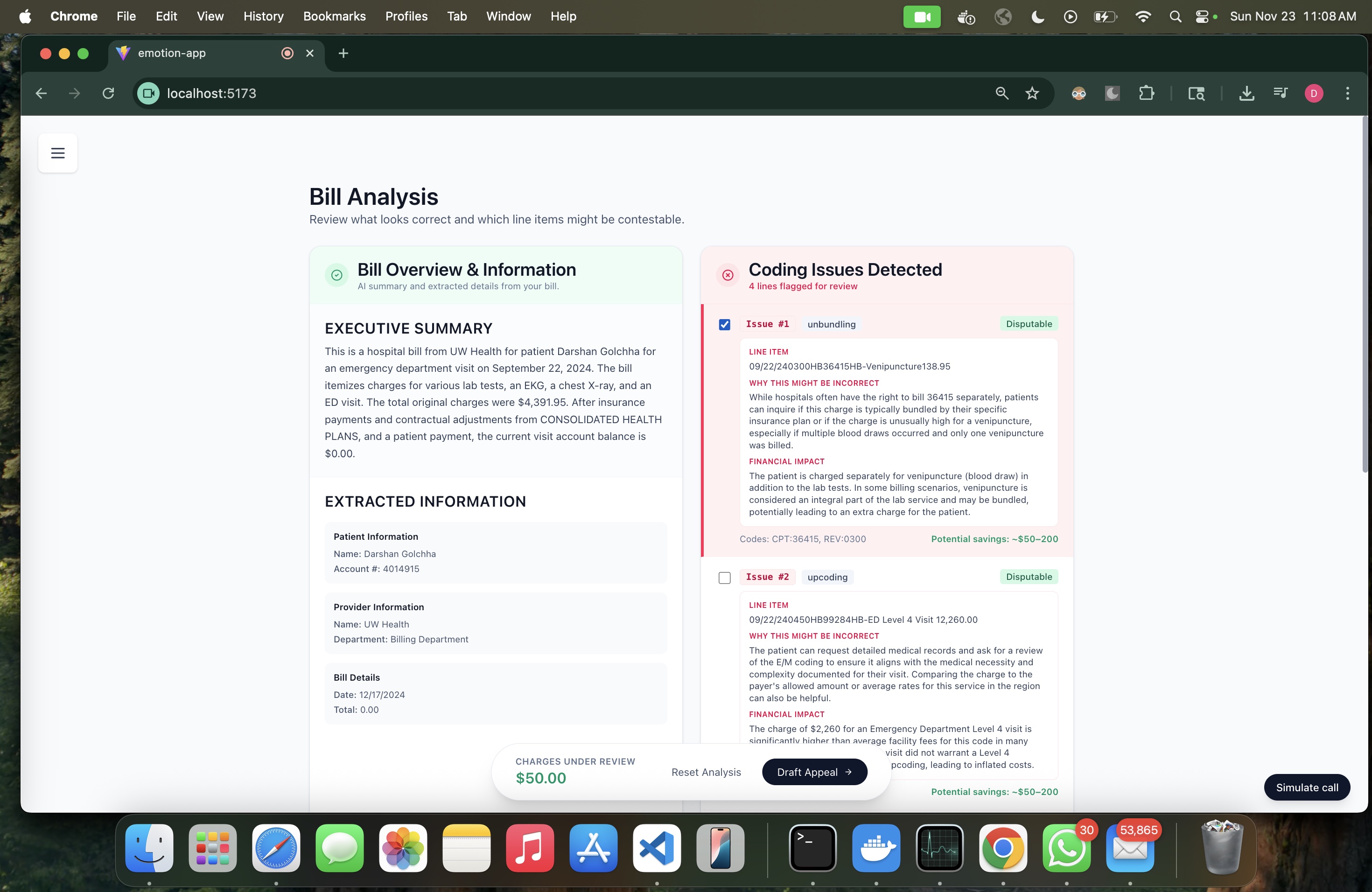
For medical bills, we built a system that automatically analyzes the charges and looks for common problems like upcoding, unbundling, duplicate charges, or clerical mistakes. It extracts patient info, provider info, and all the important details so everything becomes easy to understand. Then, based on what’s wrong, the AI can generate a professional dispute letter for the user.
Challenges we ran into
Our biggest challenge—and our biggest achievement—was taking something that normally causes stress and confusion, and turning it into an experience that feels supportive, empowering, and easy to understand. But some of the technical challenges we're integrating the voice from fish studio
Accomplishments that we're proud of
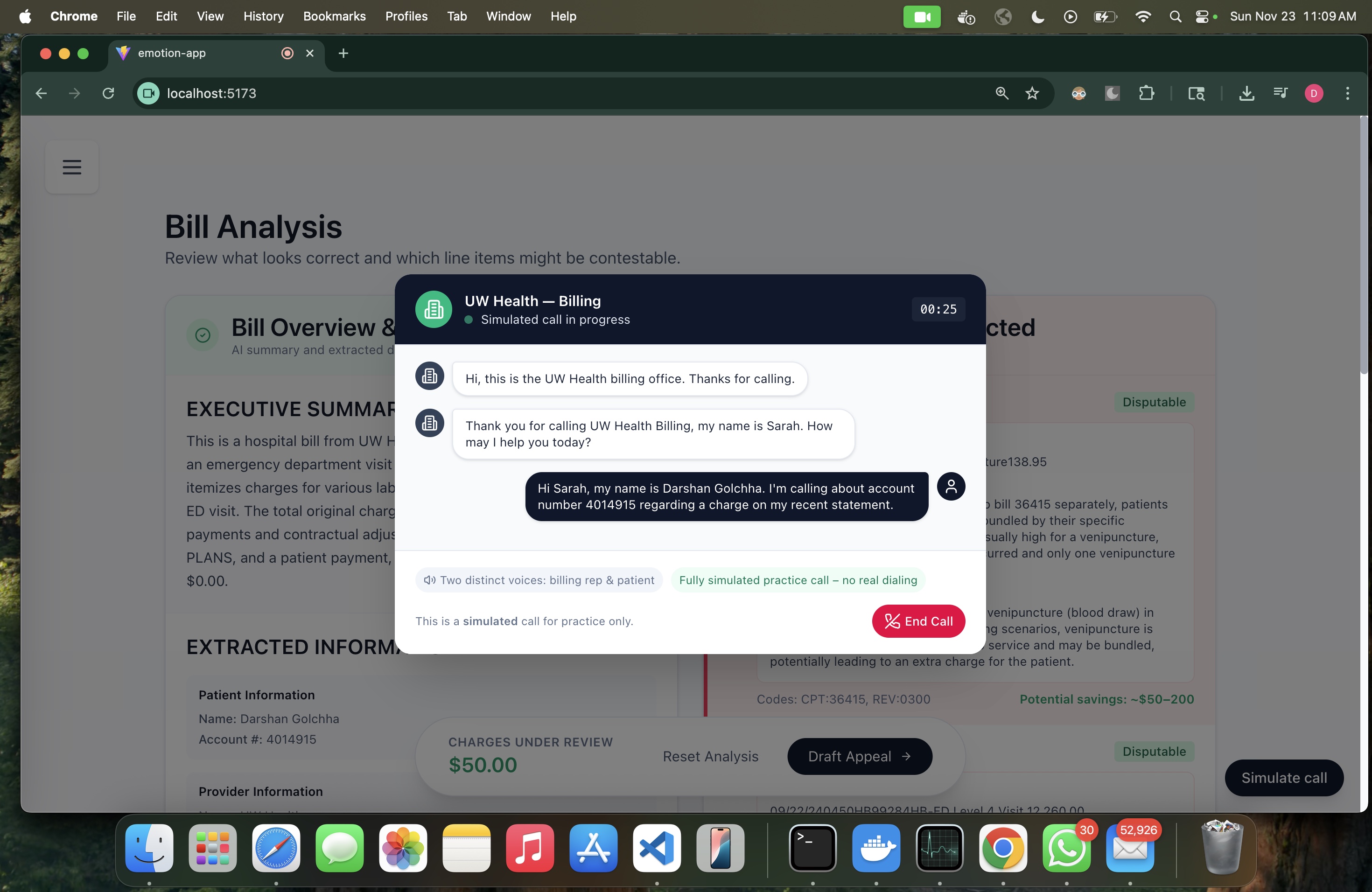
One of the most unique parts of the project is the AI phone call simulator. We created two consistent voices—one for the billing representative and one for the patient—so users can practice calling the billing office. The AI responds naturally and helps them learn what to say. This makes the stressful process of calling a hospital billing department much easier and more comfortable.
What we learned
While building this, we learned a lot. Getting voice AI to sound natural and consistent was harder than expected, and syncing audio timing took a lot of trial and error. Cleaning messy PDF text and structuring it for analysis was also challenging. But solving these problems helped us understand how to build something that feels smooth and human.


Log in or sign up for Devpost to join the conversation.