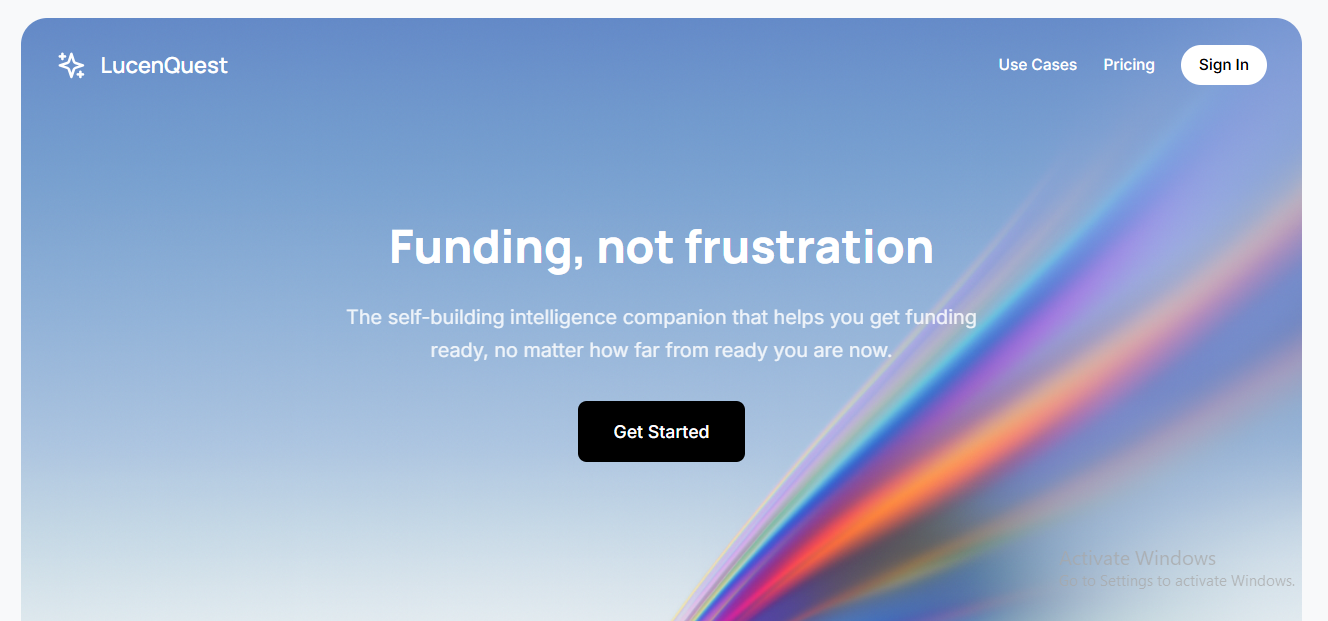
LucenQuest was born from a simple but sobering truth: those who need funding the most are often the least equipped to access it. As a young founder, a medical researcher, and someone immersed in building purpose-driven technology, I kept encountering a bottleneck — incredible ideas dying quietly because the grant application process felt cryptic, bureaucratic, and emotionally exhausting.I watched peers, mentors, and mission-driven founders hesitate not because their projects lacked merit, but because the system wasn’t built for them. I wanted to reverse that power dynamic — to create something that meets people where they are, not where institutions expect them to be.So I imagined a platform that would act like a co-founder in your corner: emotionally intelligent, strategically sharp, and always working in your favor. That’s where LucenQuest began.
Building LucenQuest reshaped my understanding of both technology and people. I came to realize that onboarding isn’t just a UX step — it’s a moment of emotional trust, a psychological handshake that says, “We see you.” I learned that agentic software, especially when infused with AI, must walk a careful line: powerful enough to provide direction, yet respectful enough to leave control in the user’s hands. It was a study in emotional tone as much as technical architecture — every block of UI, every phrase of copy, had to feel more like a mentor than a menu. Most of all, I learned that accessibility isn't just about reducing friction — it's about designing experiences that affirm a user's dignity, momentum, and purpose.
Built With
- bolt.new
- css3
- entri
- html5
- ionos
- javascript
- lucidreact
- markdown
- netlify
- nodely
- openai
- react.js
- revenuecat
- tailwind
- typescript

Log in or sign up for Devpost to join the conversation.