L.U.C.A.S
Live User Care Assistant & Scheduler
Inspiration
Explaining pain is harder than it should be, especially when you feel unwell or stressed. People often struggle to describe symptoms clearly or decide whether something is serious enough to see a doctor. L.U.C.A.S was built to bridge that gap by helping users communicate pain visually, detect warning signs early, and move toward booking care when needed. The goal is not diagnosis, but better triage and clearer next steps.
What it does
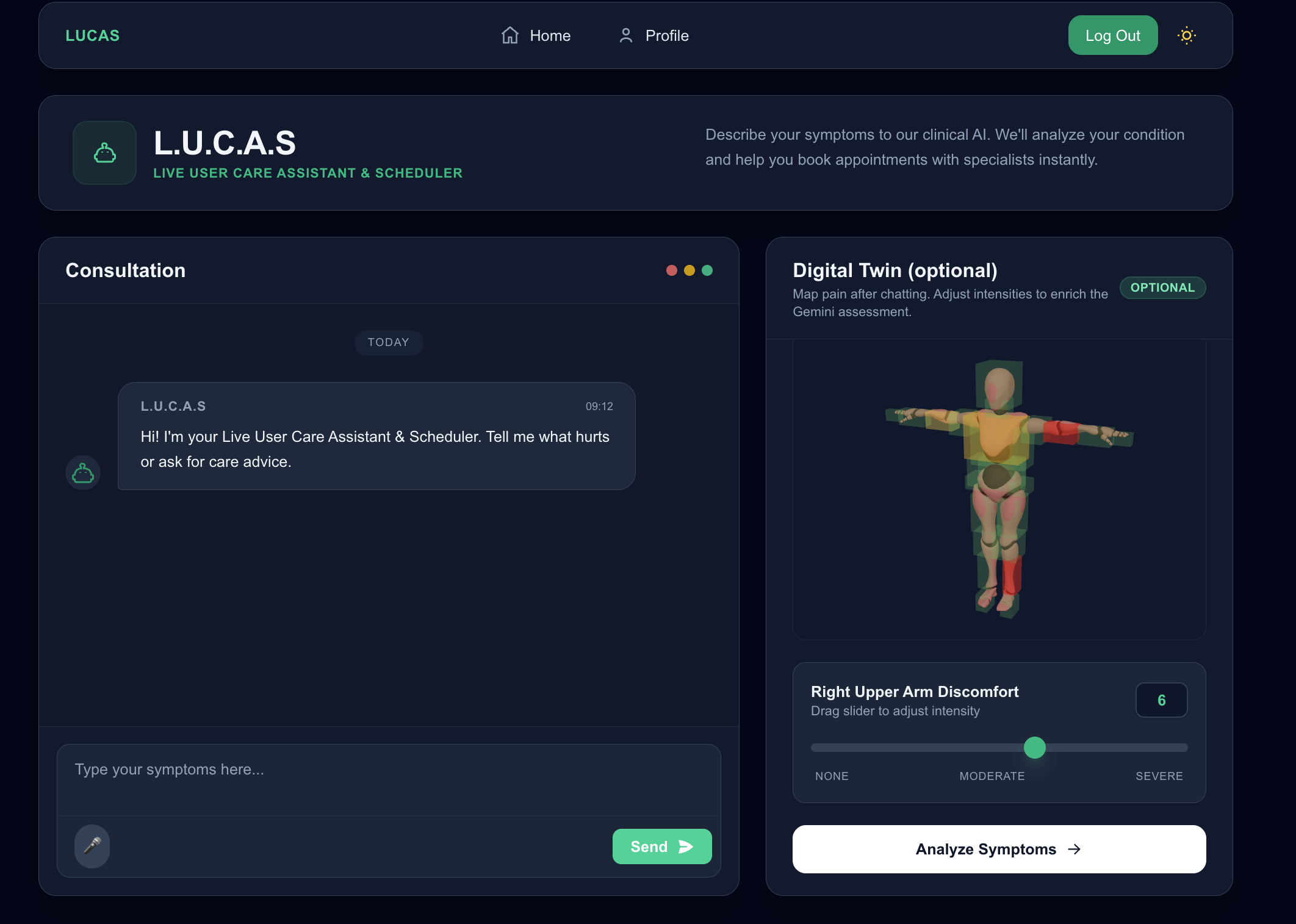
L.U.C.A.S (Live User Care Assistant & Scheduler) is a responsive web app that helps users describe symptoms and pain, then determines whether an in clinic appointment should be recommended.
Core features
- User authentication using Auth0
- Chat based symptom conversation that adapts over time
- Chat history storage to build better context about the user for future interactions
- 3D body interface where users select the body parts that hurt
- Pain intensity sliders that generate a visual heat map of pain
- Red flag detection that recommends seeing a doctor when needed
- Clinic calling flow that:
- Calls nearby clinics using Twilio
- Communicates appointment details via text to speech
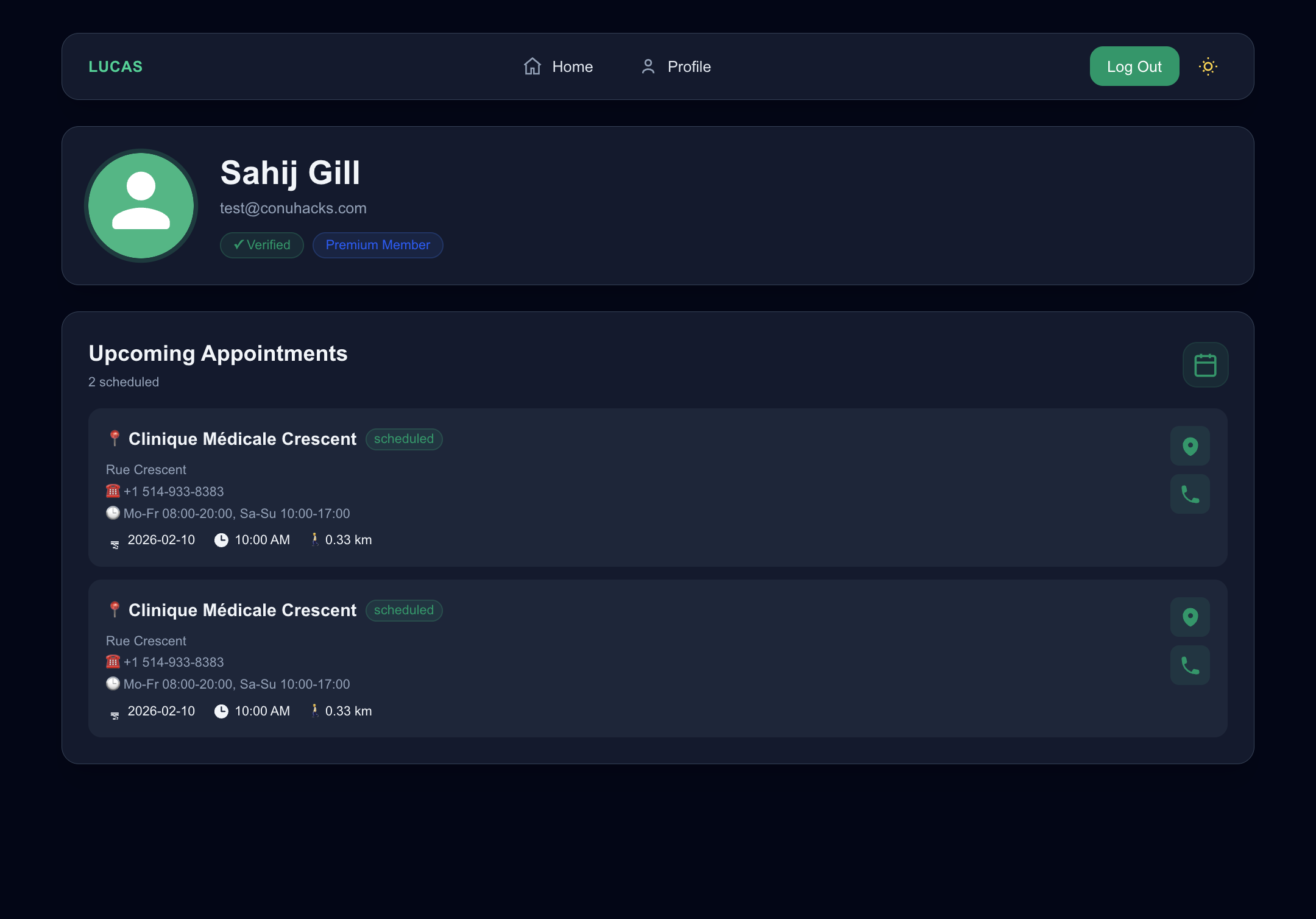
- Saves booking details in a Scheduled Appointments tab inside the app
The app is fully responsive and works on both mobile and desktop.
How we built it
Front End
- Next.js
- Auth0
- Tailwind CSS
- HTML
Back End
- FastAPI
- Python
- Gemini API
Integrations
- Twilio for calling clinics
- ElevenLabs for text to speech during calls
- Google Maps API to find nearby clinics and verify location and hours
Triage logic
L.U.C.A.S focuses on safety first triage rather than medical diagnosis.
Red flag triggers
The system looks for keywords and symptom patterns such as:
- Fever lasting more than three days
- High fever
- Symptoms worsening over time
When these are detected, L.U.C.A.S recommends booking an in clinic appointment and initiates the clinic calling flow.
Challenges we faced
- Using chat history responsibly to improve context without adding friction
- Translating vague symptom descriptions into meaningful triage signals
- Designing a 3D pain interface that feels intuitive on both phone and desktop
- Handling clinic availability and closed hours gracefully
- Building a reliable and safe automated calling experience
Accomplishments
- A personalized symptom conversation that improves with continued use
- A visual pain mapping system that makes pain easier to explain
- A working automated clinic calling flow using Twilio
- A clear escalation path based on red flag detection
What we learned
- Context from conversation can replace long onboarding flows
- Triage and guidance are more responsible than diagnosis
- Health focused UX must be calm and simple
- Real value comes from connecting insight to real world action
What’s next
- Improve long term context building from chat history
- Handle closed clinics by storing requests and retrying later
- Surface clinic availability so users can choose a time
- Expand voice interaction during clinic calls
- Strengthen privacy controls around stored chat data
Built With
Next.js, Auth0, Tailwind CSS, HTML, FastAPI, Python, Gemini API, Twilio, ElevenLabs


Log in or sign up for Devpost to join the conversation.