-
-
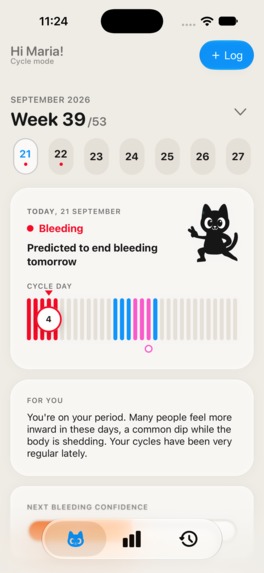
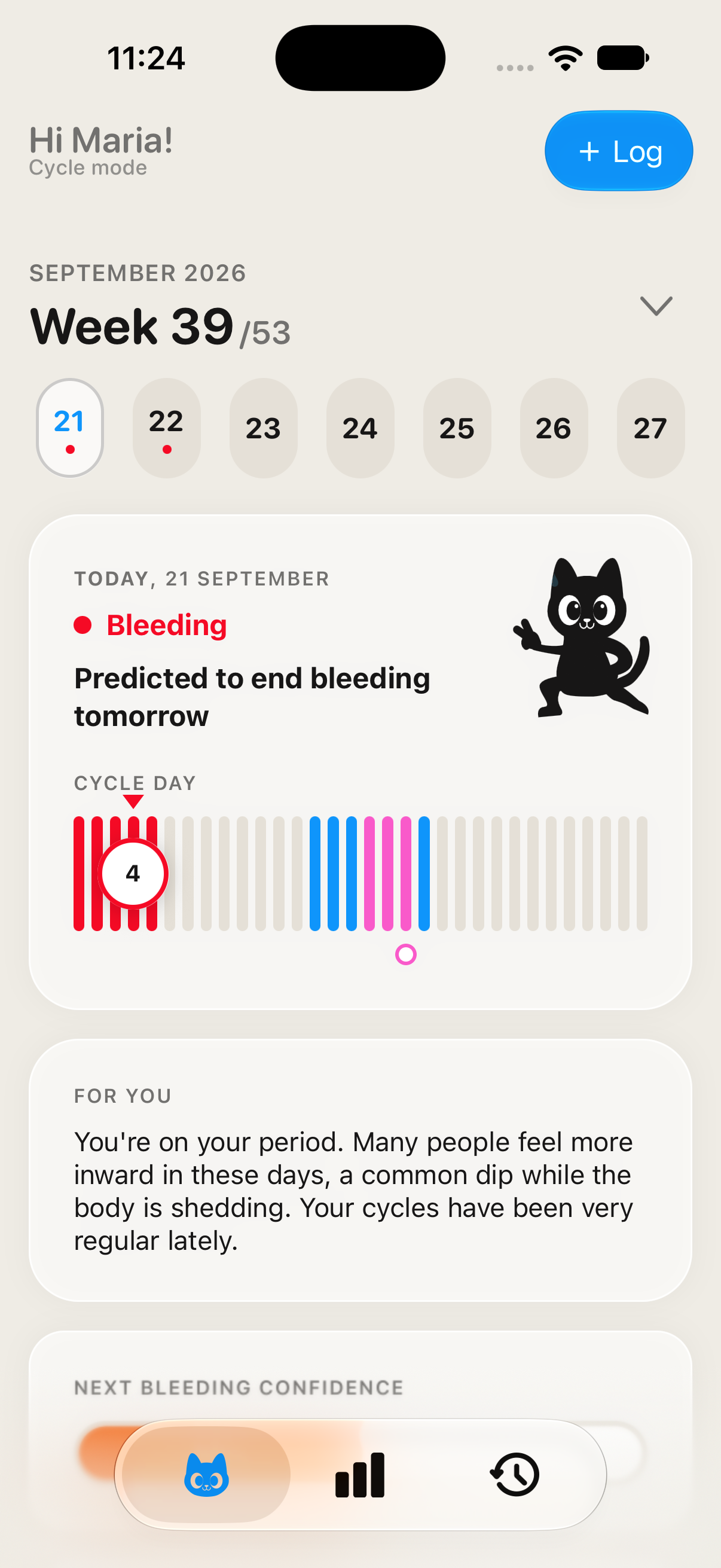
Home view
-
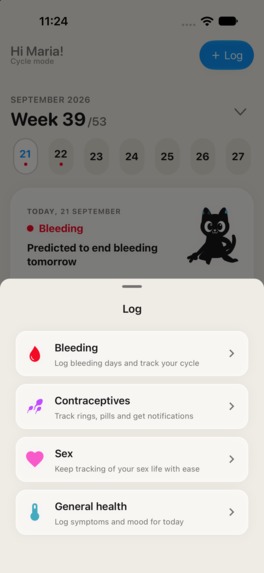
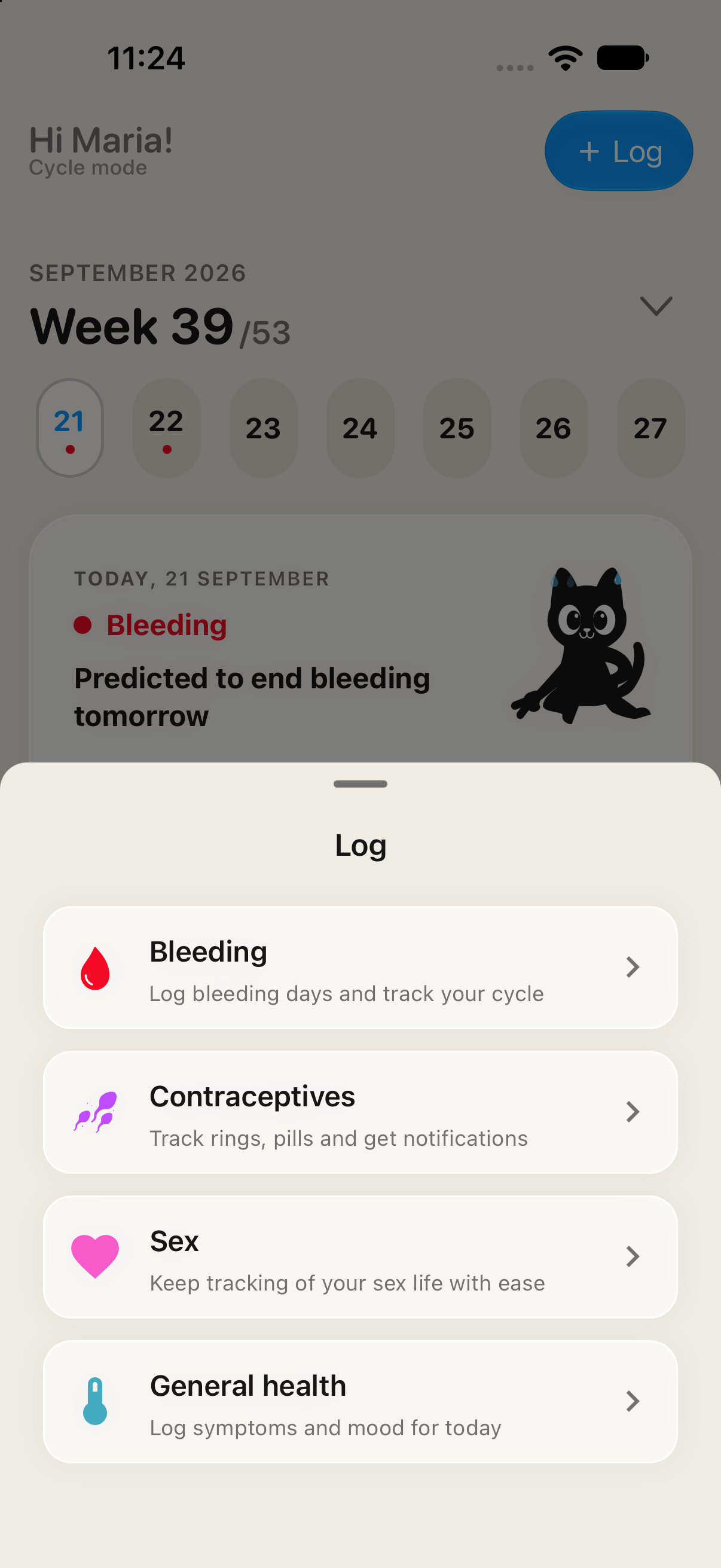
Log view
-
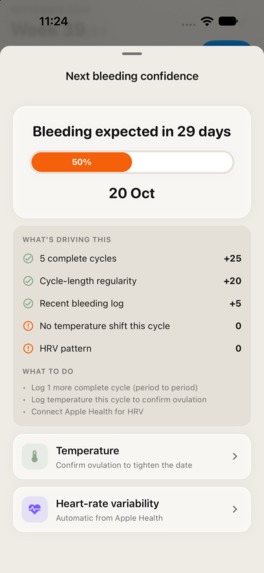
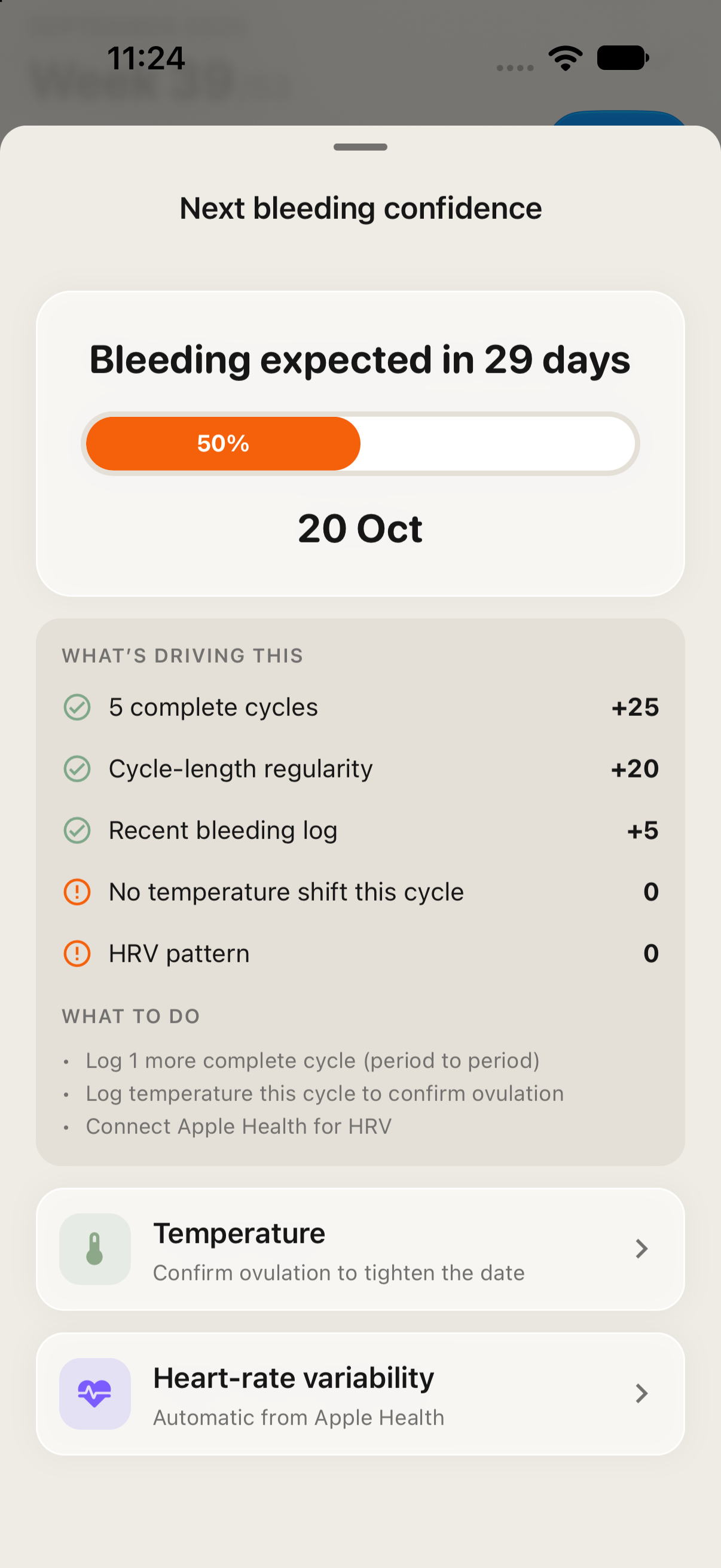
Confidence and what to do example
-
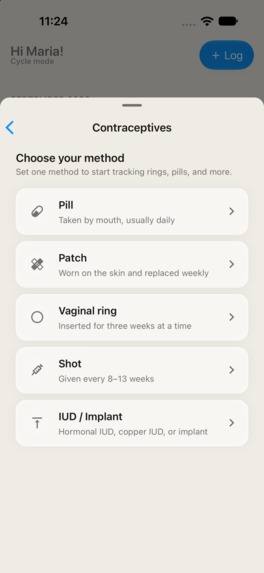
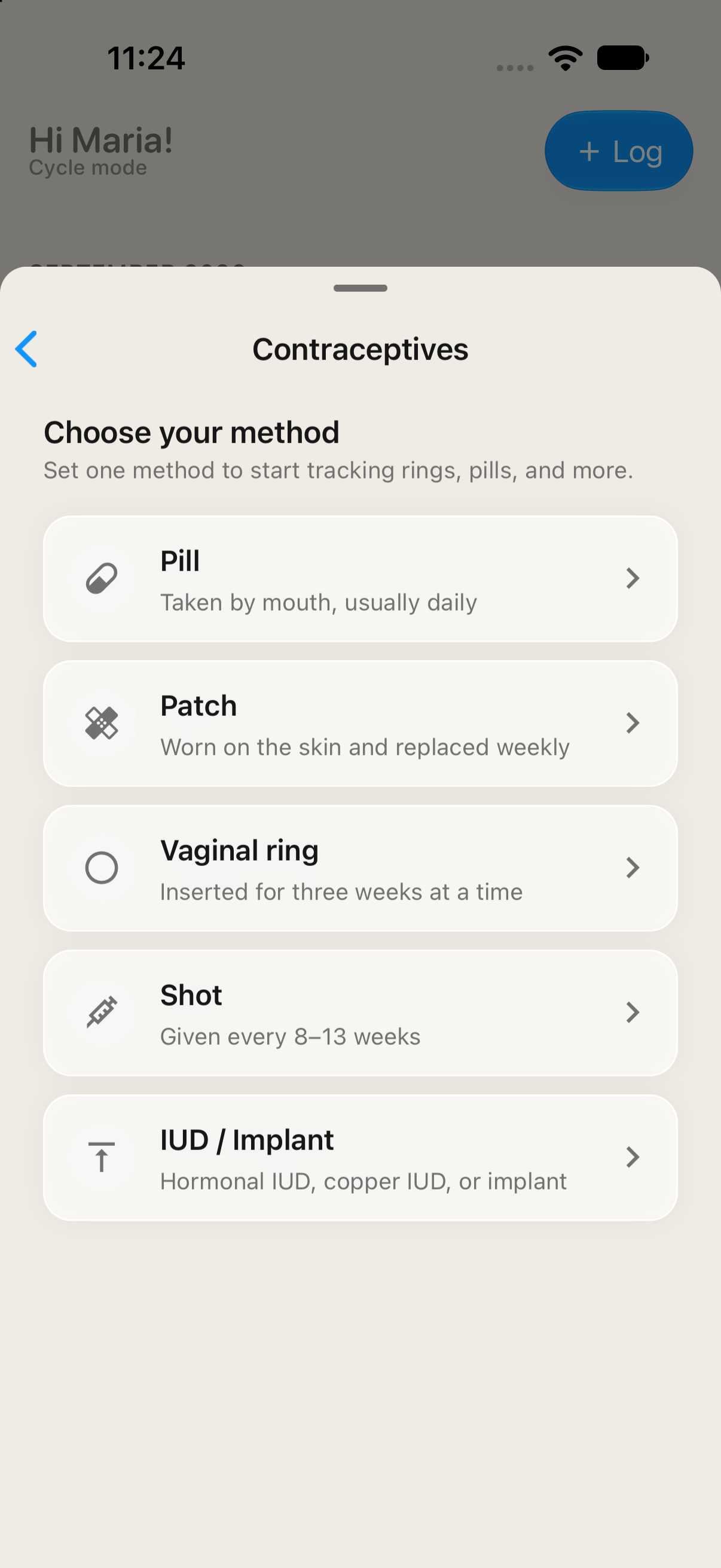
Contraception options
-
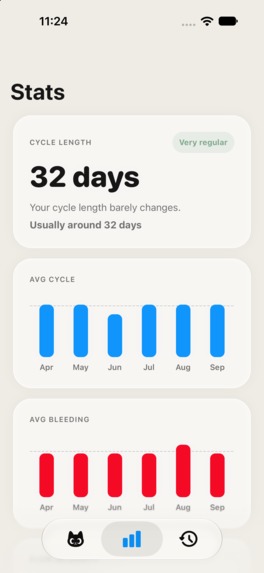
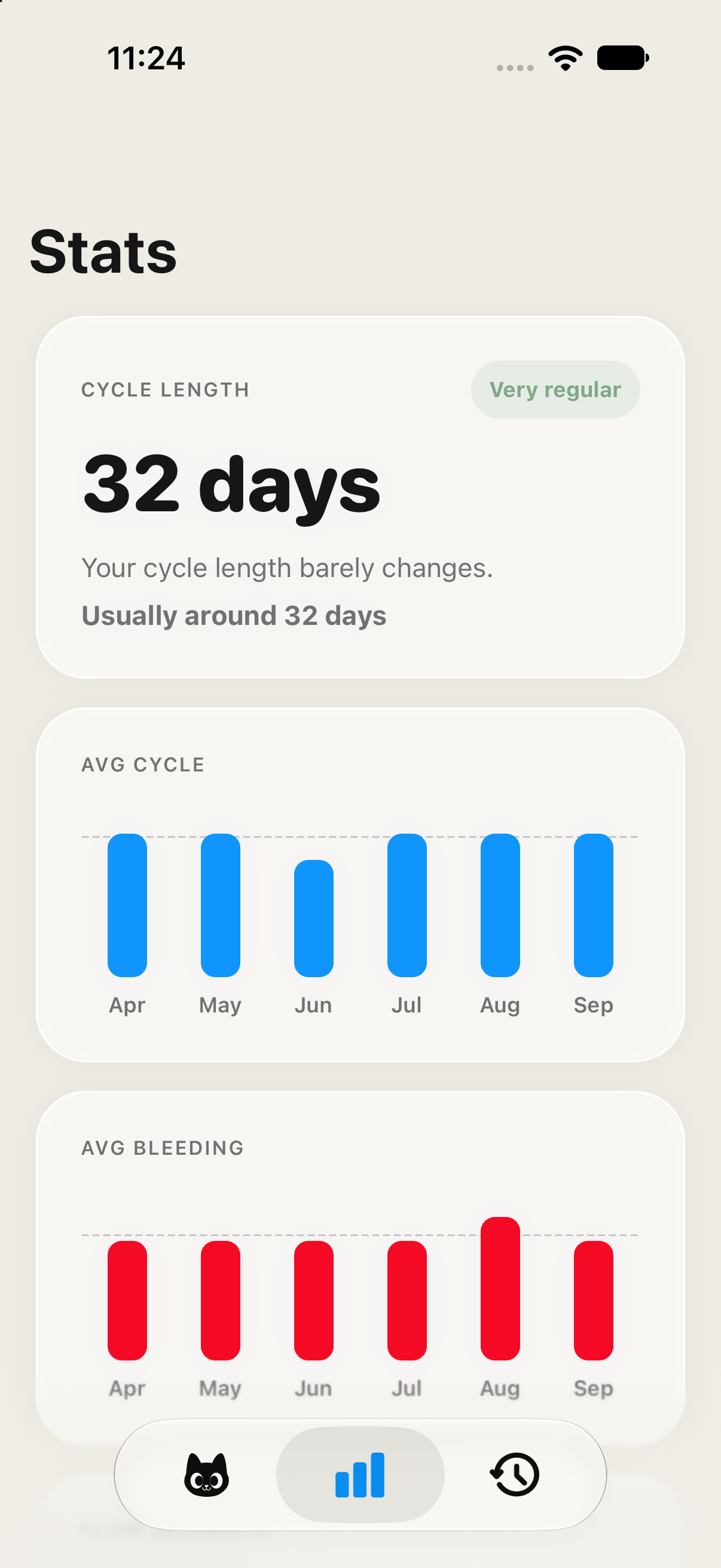
Stats and charts
-


Inspiration
Lua started from a simple idea: something as personal as reproductive health should not require giving away your personal data.
Most period trackers ask you to create an account, sync your information to the cloud, or accept that very sensitive data is being handled somewhere outside your phone. We wanted to see if we could build something different.
A useful, friendly period tracker that works entirely on your iPhone, while still covering more than just periods.
What it does
Lua is a private reproductive health tracker for iPhone.
It helps you track your period and cycle, manage contraception reminders, follow your fertile window when trying to conceive, and continue into pregnancy tracking if that journey begins.
Everything is designed to feel simple and calm, but a bit nerdy as well with tons of data and exposing how the algorithms can give the user more confidence on their predictions. You can quickly understand where you are in your cycle, what may be coming next, and the information that matters without digging through complicated charts.
Most importantly, your health data stays on your device.
No account. No Lua servers. No ads. No selling your data.
How we built it
Lua was built around a local-first approach.
Cycle history, symptoms, contraception information, predictions, and other health data are stored and processed directly on the iPhone.
We also integrated Apple Health so users can optionally bring existing period history into Lua and avoid starting from zero.
On supported devices, Lua can use Apple's on-device language model to turn cycle information into short, natural insights without sending health data to any servers.
For subscriptions, we use RevenueCat to keep the purchase experience simple while letting us focus on building the product.
Challenges we ran into
Privacy sounds simple until you actually try to build around it.
Choosing not to rely on accounts or a traditional backend meant we had to rethink many things that are normally easy to take for granted, from onboarding and data storage to restoring the app experience.
Reproductive health is also not one single use case. Someone may be tracking their cycle today, using contraception next month, trying to conceive later, and eventually tracking a pregnancy.
Making all of those experiences feel like parts of one simple app, instead of separate products stitched together, was one of the biggest design challenges.
Also spent a lot of time finding the right balance between giving useful information and being clear about what Lua can estimate versus what it cannot know.
Accomplishments that we're proud of
We are especially proud that Lua launched as a genuinely local-first health app.
You can use the core product without creating an account, sharing an email address, or sending your reproductive health history to us.
We are also proud of how broad the product has become while still feeling simple.
Periods, cycle insights, contraception, fertility, pregnancy, Apple Health, and private on-device intelligence all live inside the same experience.
And, of course, shipping the first version to the App Store was a pretty good moment too.
What we learned
We learned that privacy is not just a feature you add at the end. It changes how you design the whole product.
It forces you to make different technical decisions, but it can also make the experience simpler. No accounts means no passwords. No cloud profile means less setup. Local processing means many things can happen instantly or in the background or even offline.
We also learned that reproductive health products need to communicate uncertainty well.
Cycles are not perfectly predictable, bodies change, and estimates should feel helpful without pretending to be exact.
Finally, we learned that simplicity takes a lot of work. The easiest screen for a user is often the result of many complicated decisions behind it.
What's next for Lua - Period tracker
We want Lua to become a more useful companion throughout the whole reproductive journey while staying just as private and simple.
That means better cycle insights, smarter on-device predictions, more useful contraception tools, richer fertility tracking, and a more complete pregnancy experience.
We also want to explore more ways to use on-device intelligence to explain what is happening in plain language instead of giving users more charts to interpret.
The goal is simple: make Lua more helpful without asking users to give up more of their privacy.
Built With
- expo.io
- health
- intelligence
- react-native


Log in or sign up for Devpost to join the conversation.