-
-
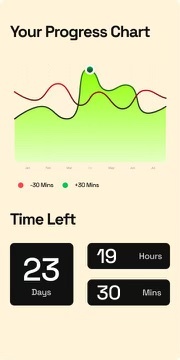
Figma Home Screen #2
-

Figma Onboarding #3
-
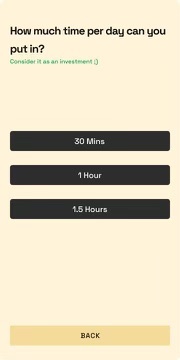
Figma Onboarding #2
-
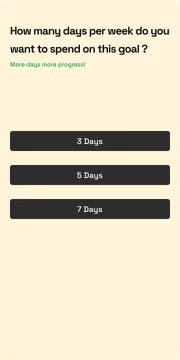
Figma Onboarding #1
-
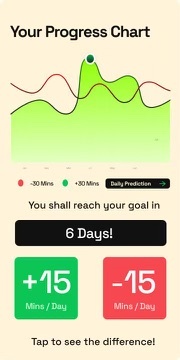
Figma Home Screen #1

Inspiration
When I graduated high school, I was extremely overweight. It was hard to get up and walk, sit in airplane seats, had risks of high blood pressure, and it was hard for me to play sports. Overall, my lifestyle was pretty bad. What changed is I decided to start going running, and over a couple of years, my entire life turned around.
But back then, I was running without knowing when I would achieve my goals, and I wish I had a more realistic timeframe in mind for when I would reach my body weight goals so that I had clarity and motivation throughout my journey.
What it does
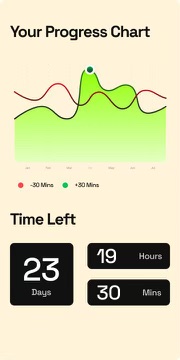
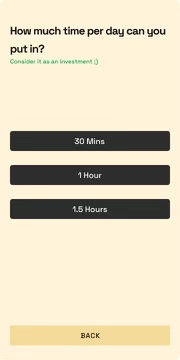
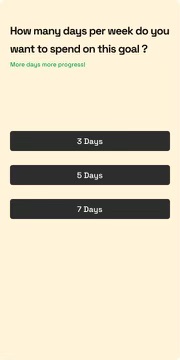
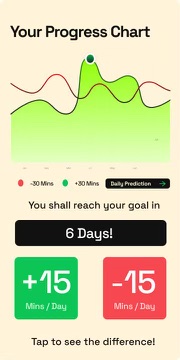
Introducing LTFIT, short for long-term fitness. This app uses predictive analysis to calculate what your future body weight will look like based on your current body weight and time and frequency spent on running. On top of that, you can manipulate the amount of time spent on running to find out how your future body weight will be affected.
How we built it
To build a mobile app that was Android and iOS-friendly, we used a cross-platform framework called React-Native. In addition, we used Figma to build our wireframes and integrated them into the application.
Derived from existing online web applications, the formula we used to predict future body weight factors in: time spent running, the metabolic equivalent, and current body weight. We fit a linear regression line against user weight loss journey data to verify it against our model. What is amazing about the formula is that the metabolic equivalent is constant depending on the type of exercise performed, which could make this app extensible to accommodate a variety of methods of exercise for weight loss.
We persisted the data locally making it a completely offline app.
Challenges we ran into
At the start of building the app, we were unclear on what formula we needed in order to calculate future body weight. We went through many versions, and we even used ChatGPT to generate a formula… that did not work one bit.
A bigger challenge we had however is understanding the scope of our team’s abilities and what could be achieved in 1 day. In the end, we had to pivot our idea multiple times to create something achievable while still being impactful for the 2023 HackSC.
Accomplishments that we're proud of
We figured out the formula to calculate future body weight through running and how to display that in a graph on our app. Also, the formula is fairly accurate.
A couple of runner friends of mine who were “beta users” said that they would genuinely see a far bigger use case for this, which made us feel like we can create an impact.
What we learned
It is important to have an open mind and don’t romanticize your idea. In the end, we were looking to create something meaningful for this event rather than work on a specific idea or vertical, which helped us ideate in an abundant manner.
What's next for LTFIT
This MVP of the app can translate into several other use cases for predictive analysis, and we don’t believe it can stop at fitness.
Inspired by the book Atomic Habits, a vision we had in mind is to build an app that incentivizes users to maintain good habits by showing how consistency can compound and lead to life-changing results.
Based on that, we can possibly show multiple charts in our app that could possibly show values like daily energy levels, stress levels, and possibly even happiness levels based on inputs like sleep, exercise, diet, and water intake.
Built With
- bootstrap
- chart-apis
- figma
- javascript
- matieral-ui
- react-native
- regression(ml)

Log in or sign up for Devpost to join the conversation.