-
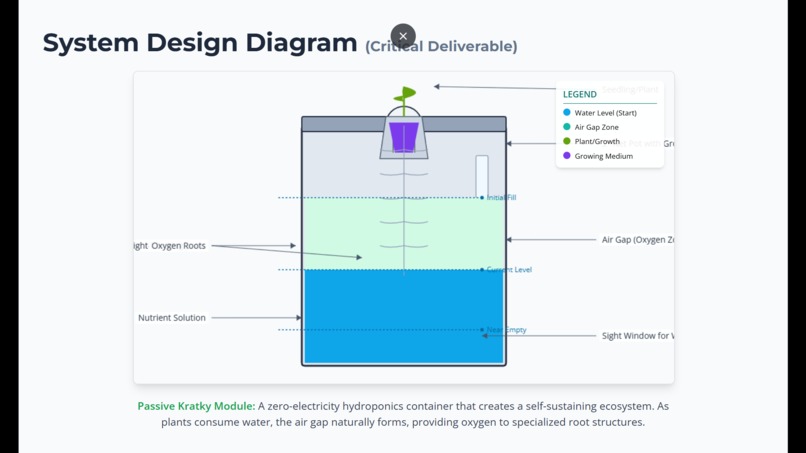
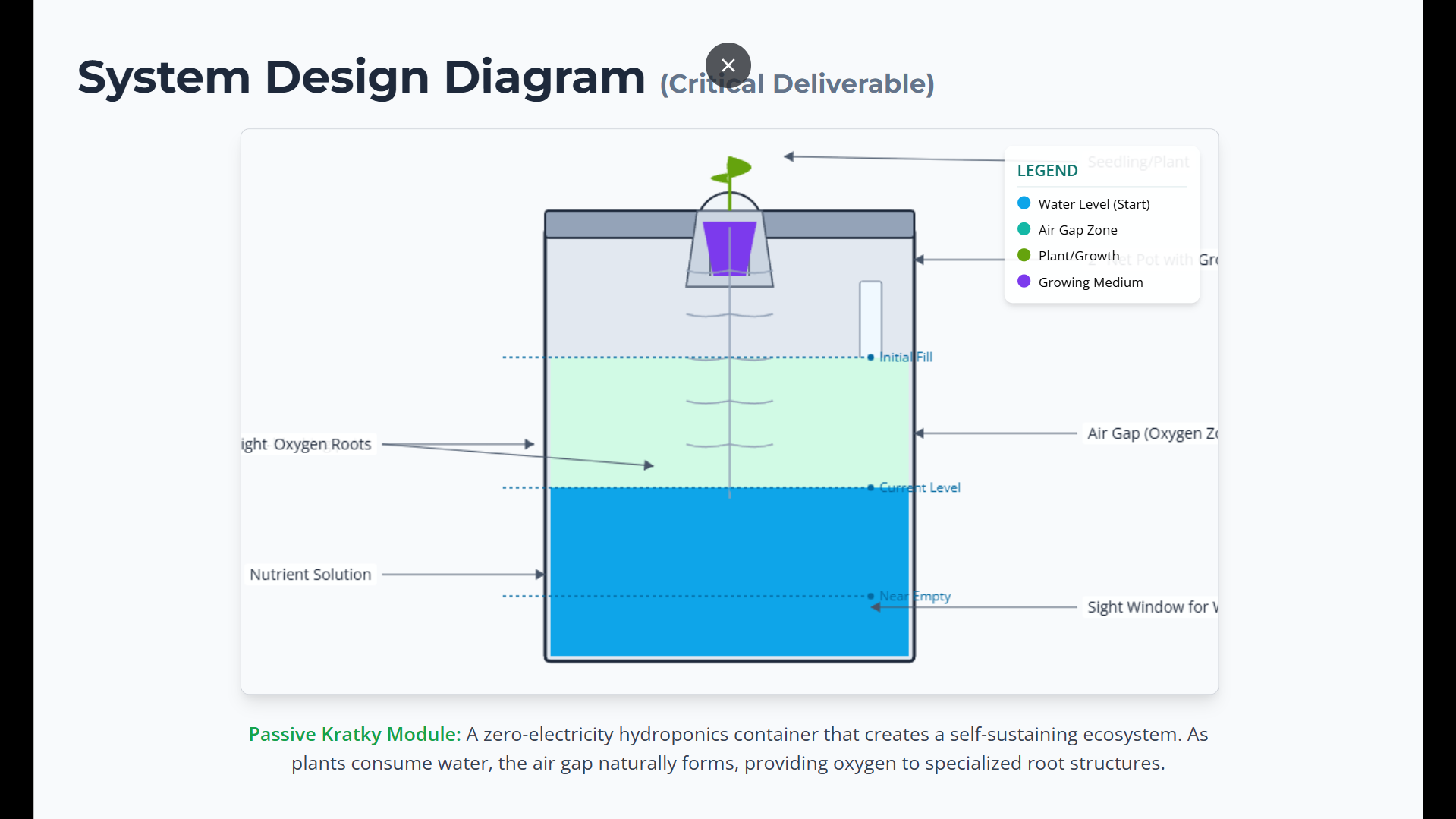
System architecture
Inspiration
We wanted to design a farming method that’s simple, energy-free, and sustainable for anyone to grow fresh food. Traditional hydroponics need power and pumps, so we aimed for a zero-power alternative.
What it does
Our Low-Power Kratky Hydroponic System grows leafy vegetables without electricity, pumps, or aeration. It uses a passive water-air balance that lets plant roots get both nutrients and oxygen naturally.
How we built it
We used a food-grade opaque container as a nutrient reservoir, a 2" net pot with coco coir or clay pebbles, and basic hydroponic nutrients. The setup was painted or taped to block light and prevent algae. For indoor use, a small 10–20W solar-powered LED provides extra light efficiently.
Challenges we ran into
Maintaining the right water level and preventing algae growth without using sensors or electricity was a key challenge. We also optimized nutrient concentration for consistent plant growth.
Accomplishments that we're proud of
We successfully built a completely passive system that grows healthy greens with 0W base power and only ~10W with lighting, saving hundreds of kWh per year compared to typical systems.
What we learned
We learned how plant root zones self-regulate oxygen and water uptake, and how small design tweaks—like opacity and gap control—can make passive systems highly effective.
What's next for Low-Power Kratky Hydroponic System
We plan to scale the design for community gardens and smart city applications, integrate IoT-based monitoring, and experiment with different crops and modular setups for urban farming.
Built With
- architecture
- diagram

Log in or sign up for Devpost to join the conversation.