-
-

Lovelle – made for couples to stay close, even when apart.
-
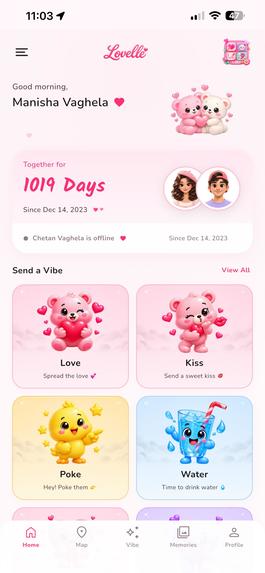
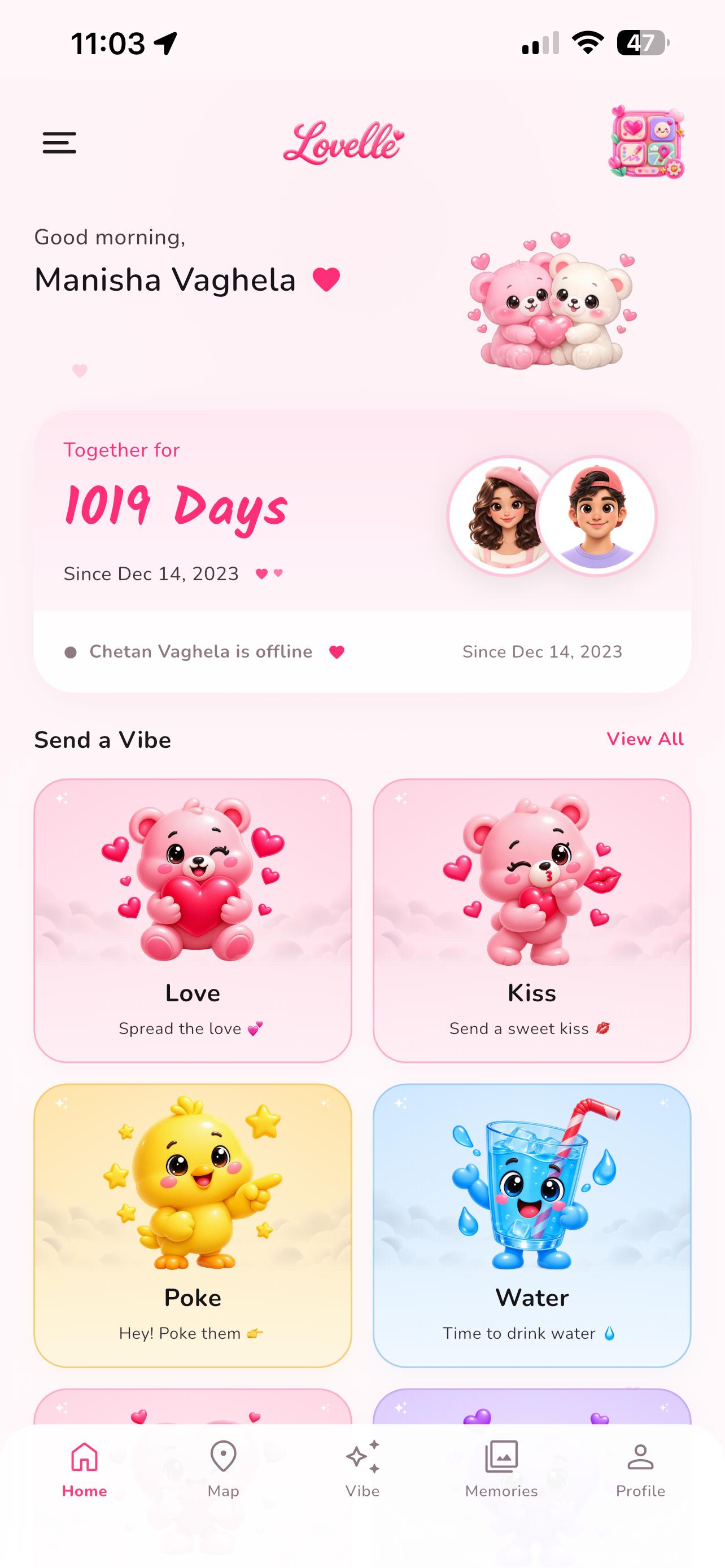
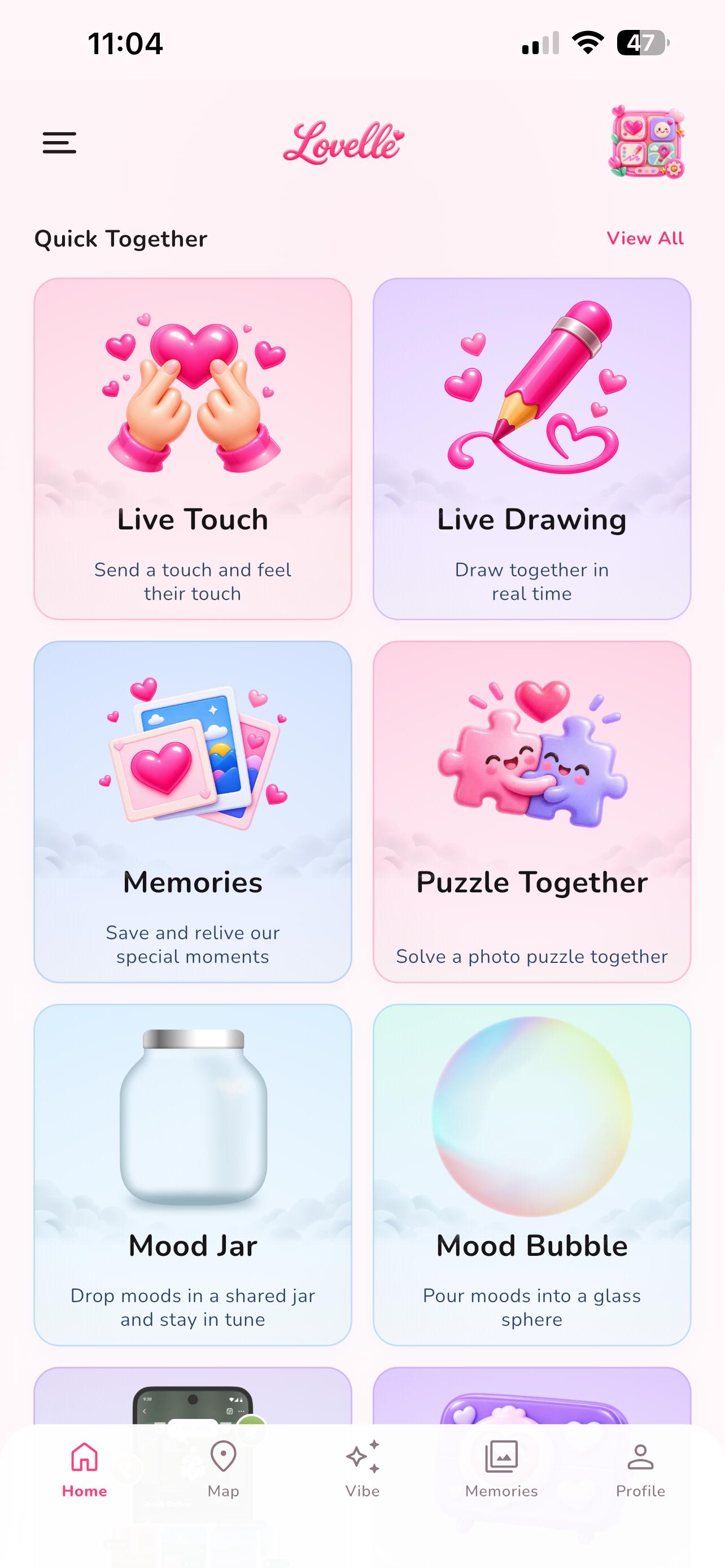
The Lovelle home screen, where you can see your partner and quickly send them a Vibe.
-
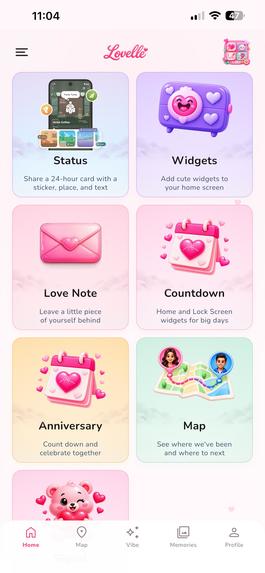
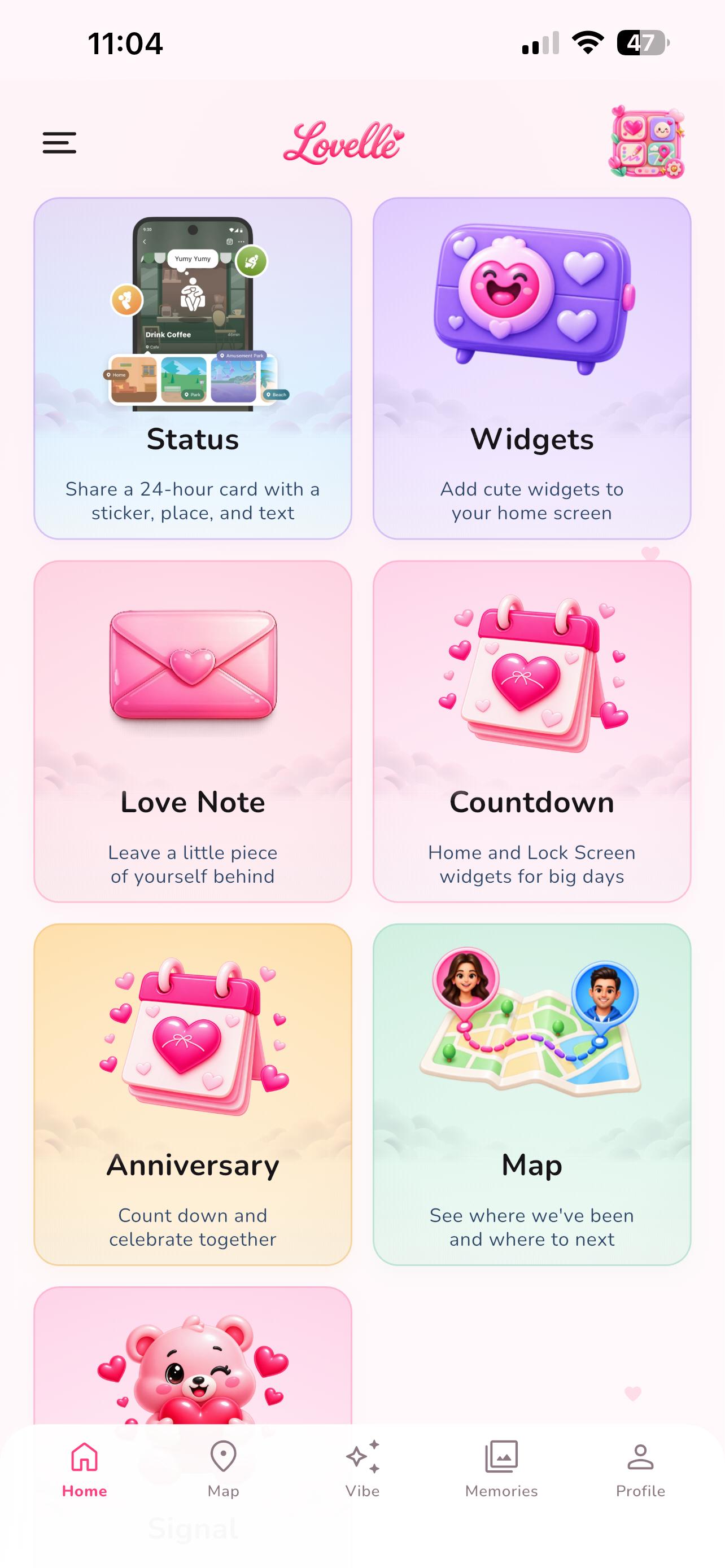
Widgets, Love Notes, countdowns, anniversaries, shared location and more.
-
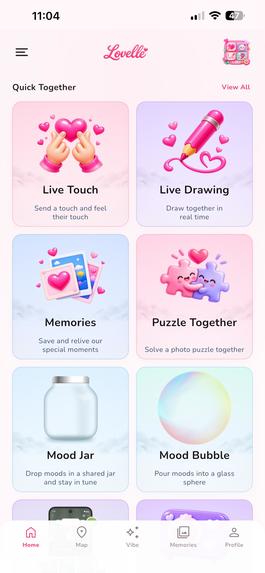
A few things couples can do together, like Live Touch, Drawing, puzzles and sharing moods.
-
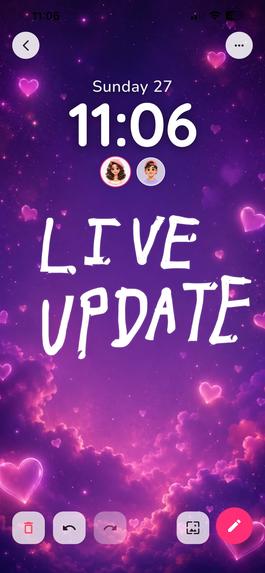
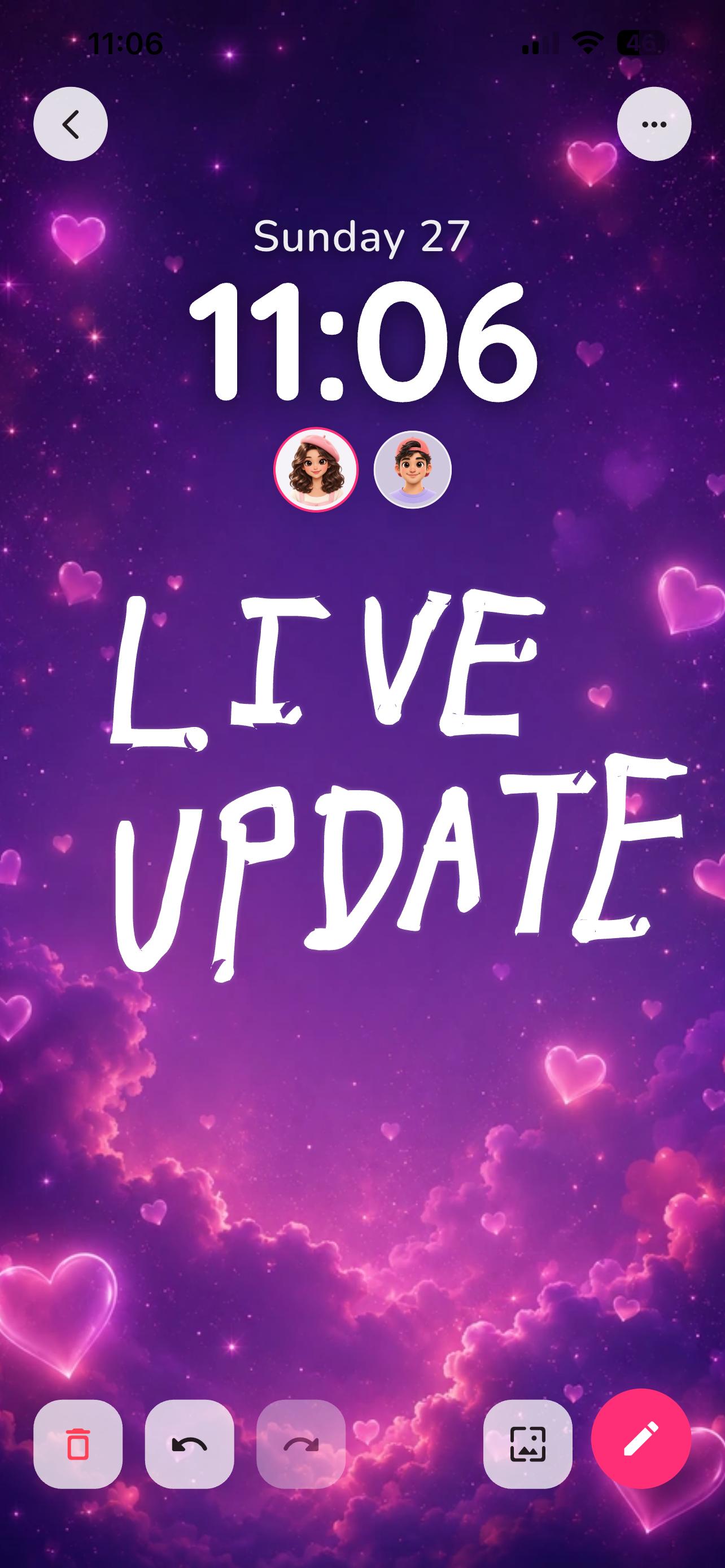
Draw together in real time and see what your partner is drawing as it happens.
-
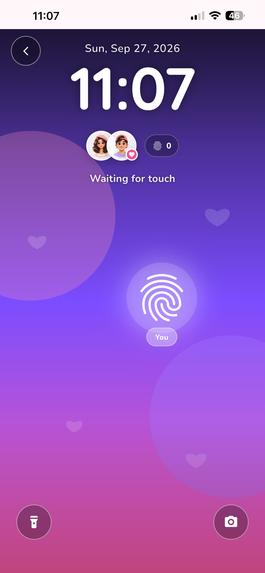
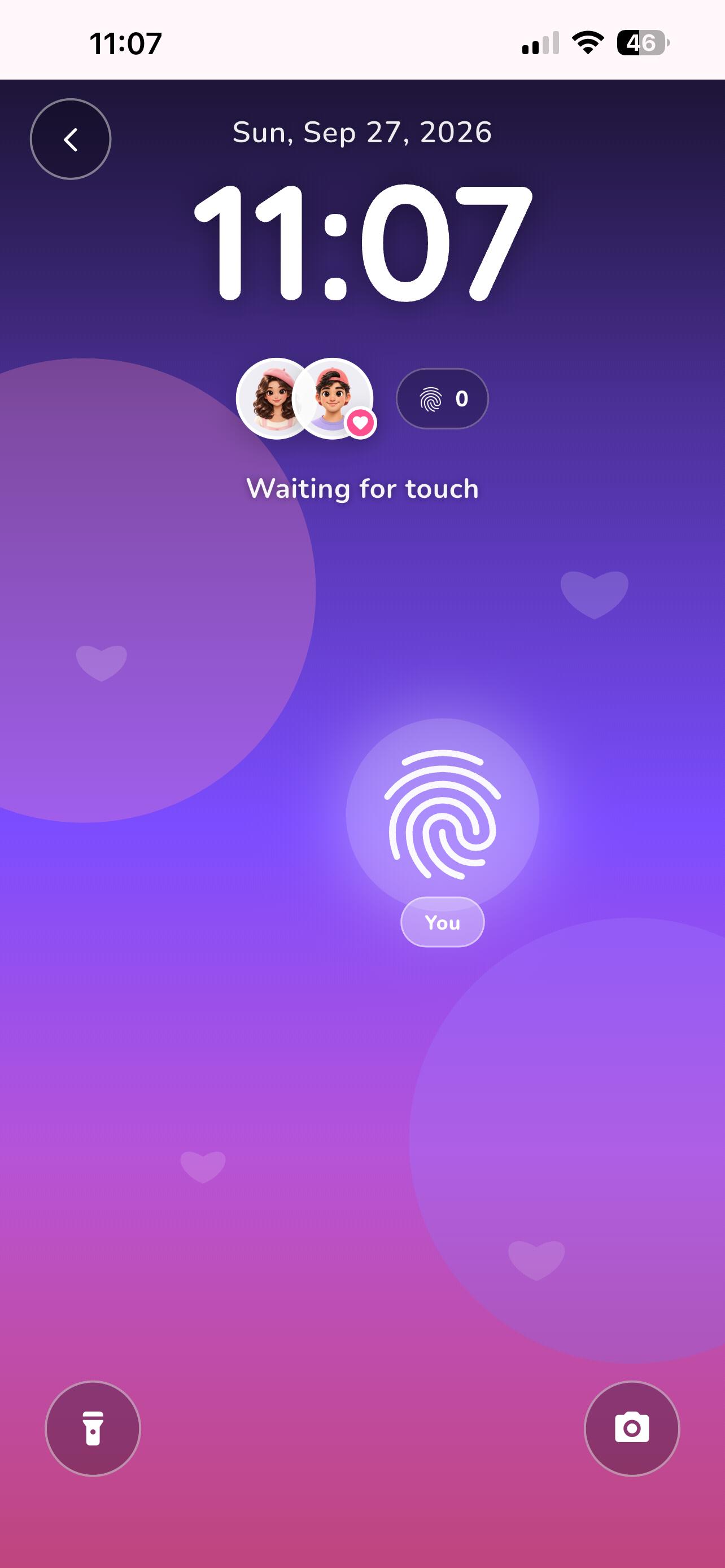
Touch the screen and your partner can feel it on their phone in real time.
-
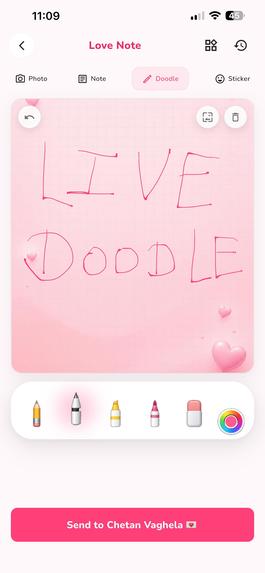
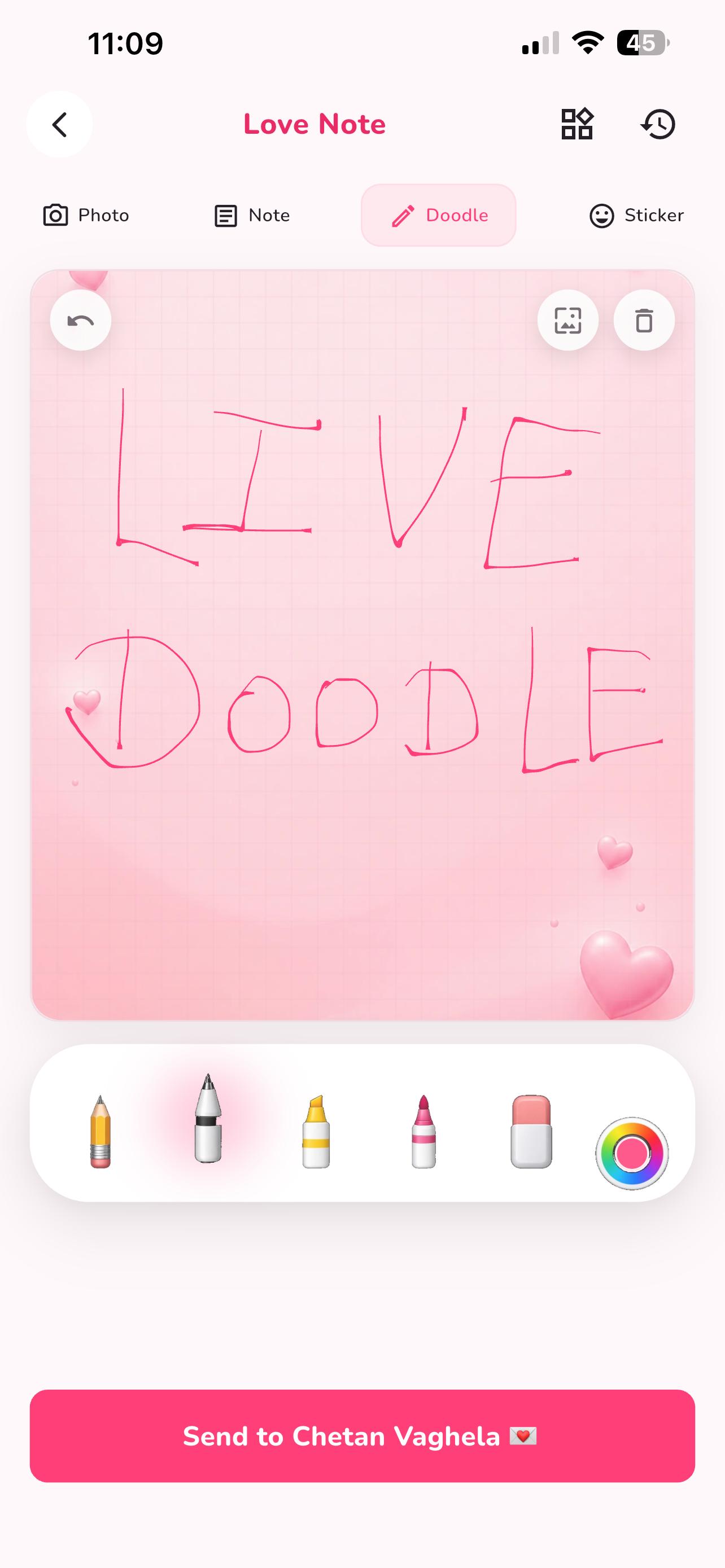
Send a little note to your partner using a photo, text, doodle or sticker.
-
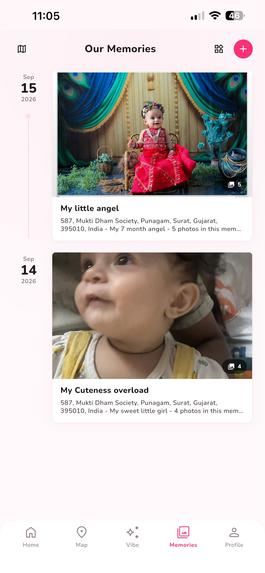
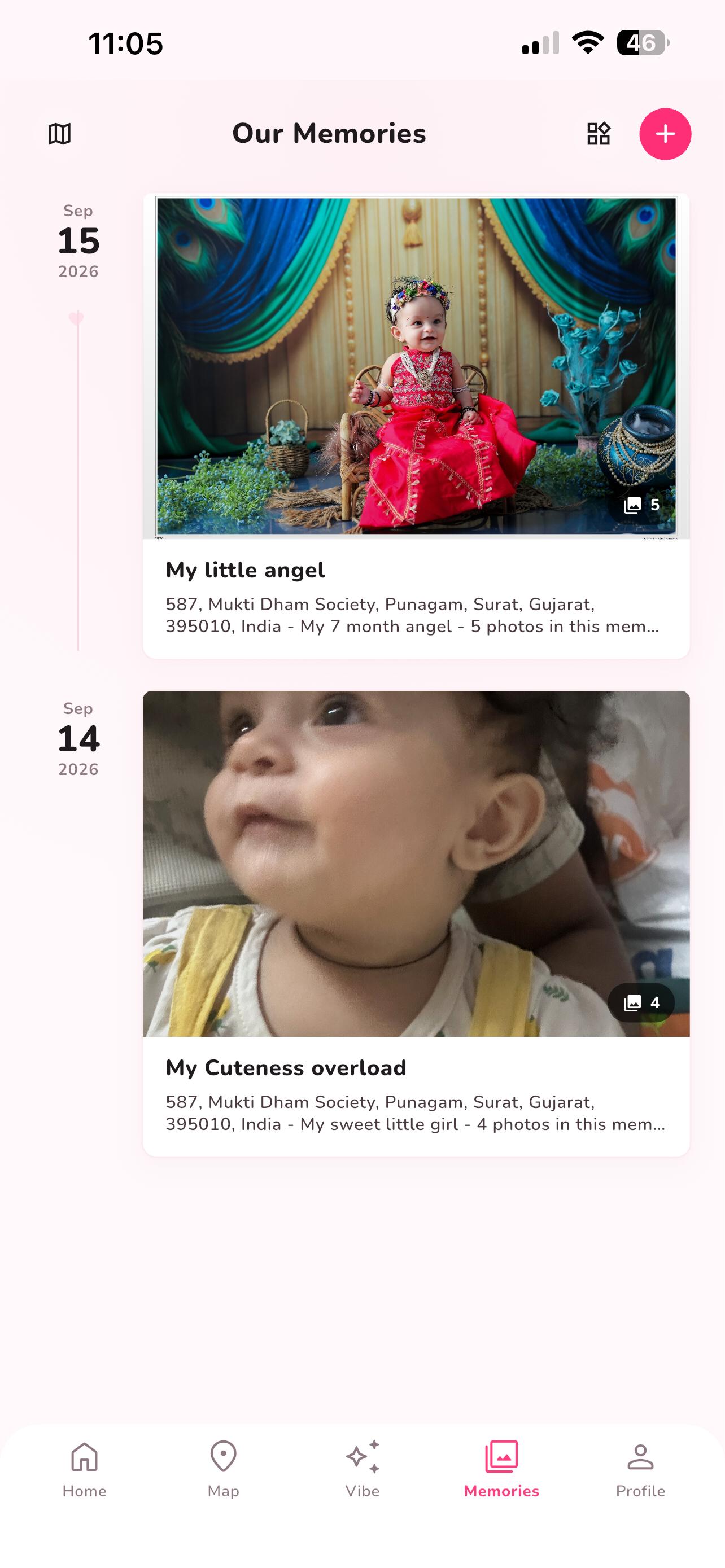
A shared place to save our photos, places and little memories together.
-
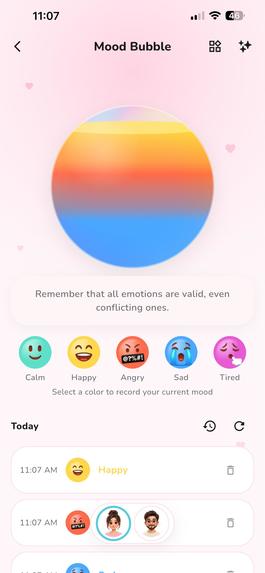
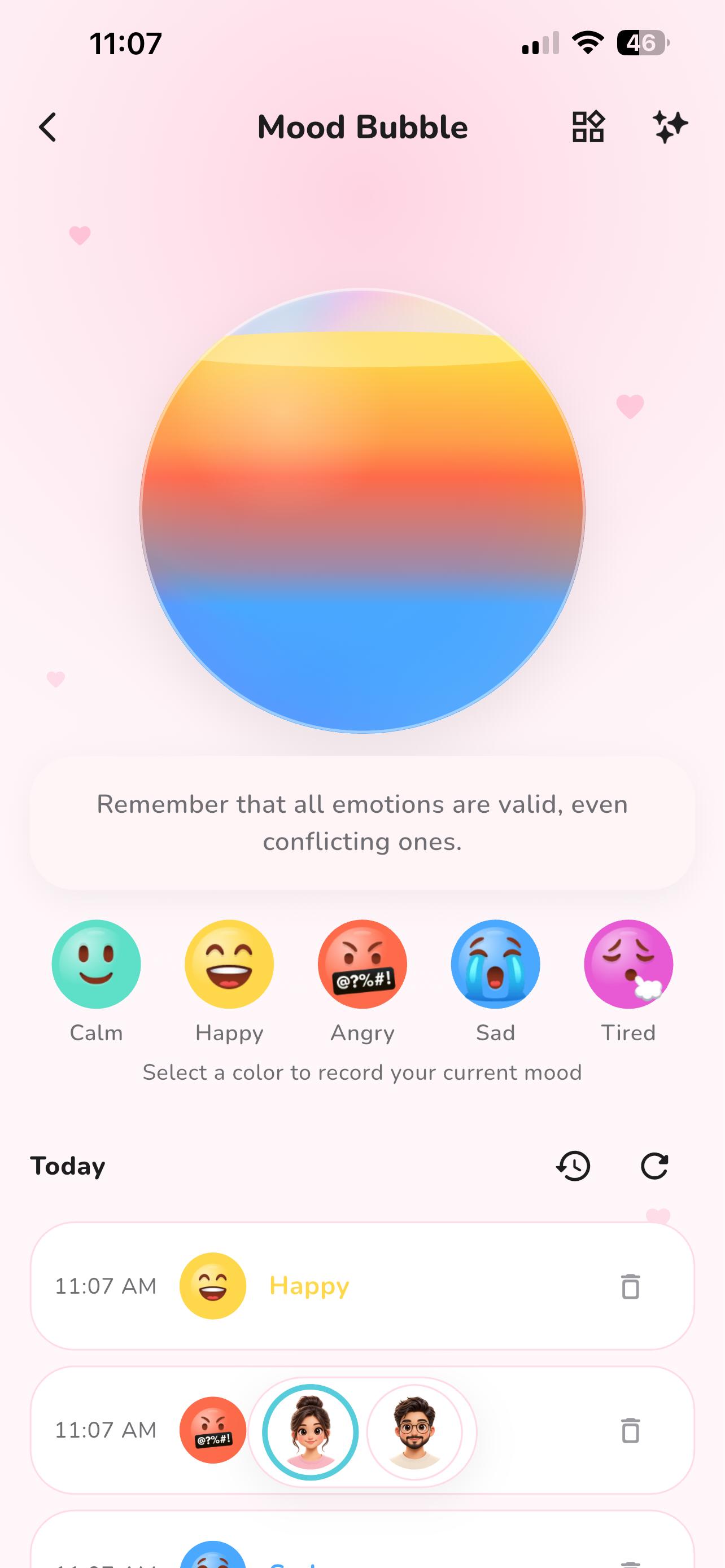
Mood Bubble lets both of us quickly share how we're feeling during the day.
-
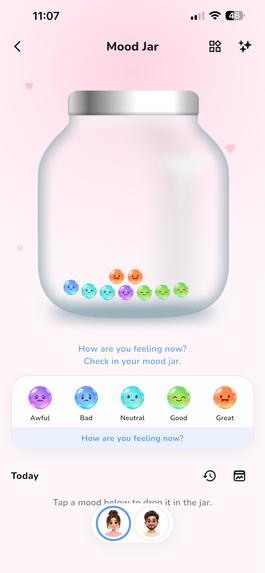
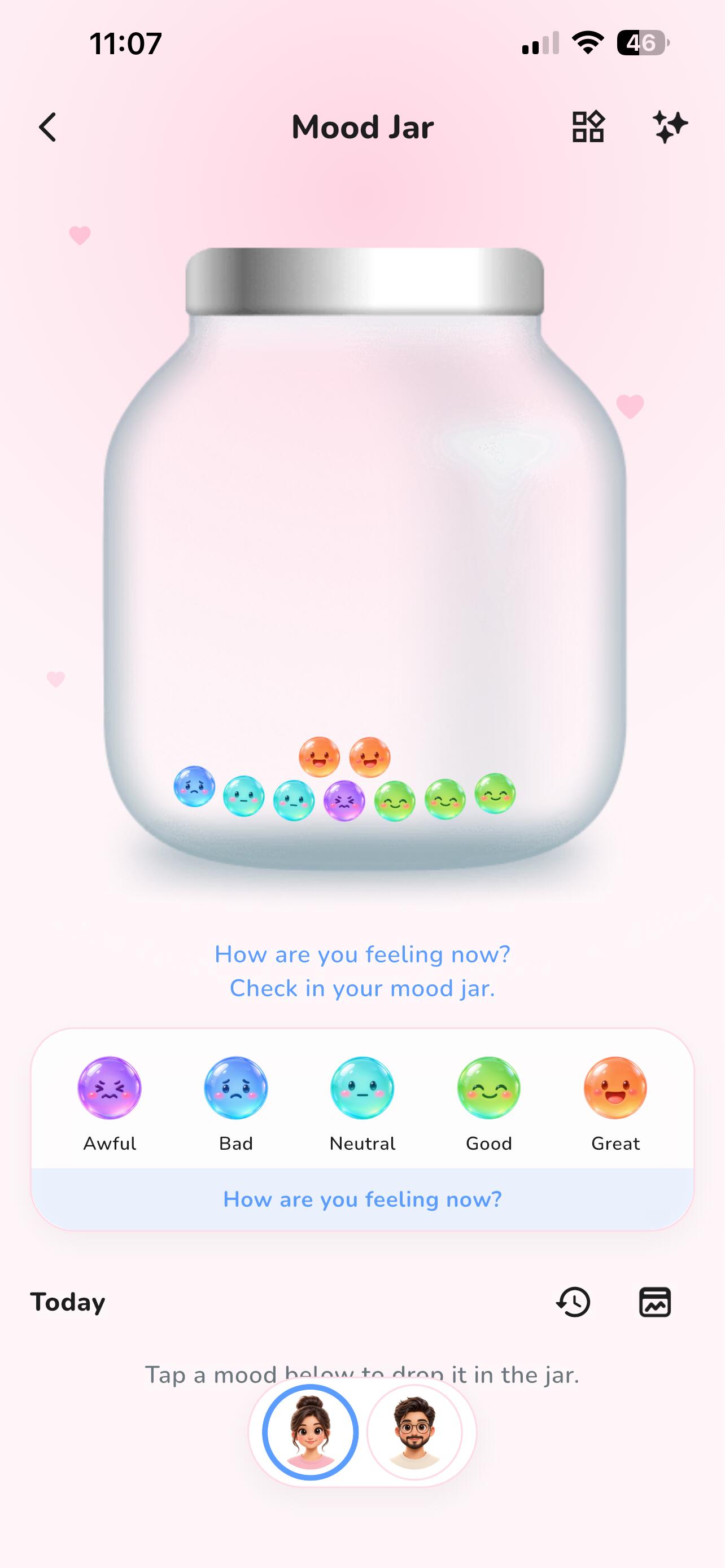
Drop your mood into the jar and slowly fill it with moods from both partners.
-
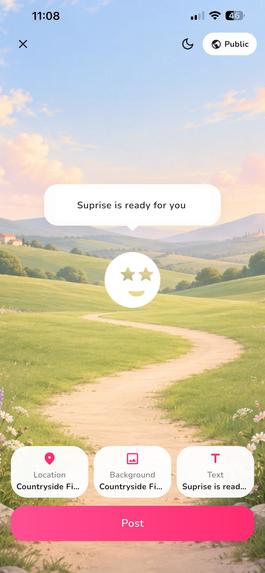
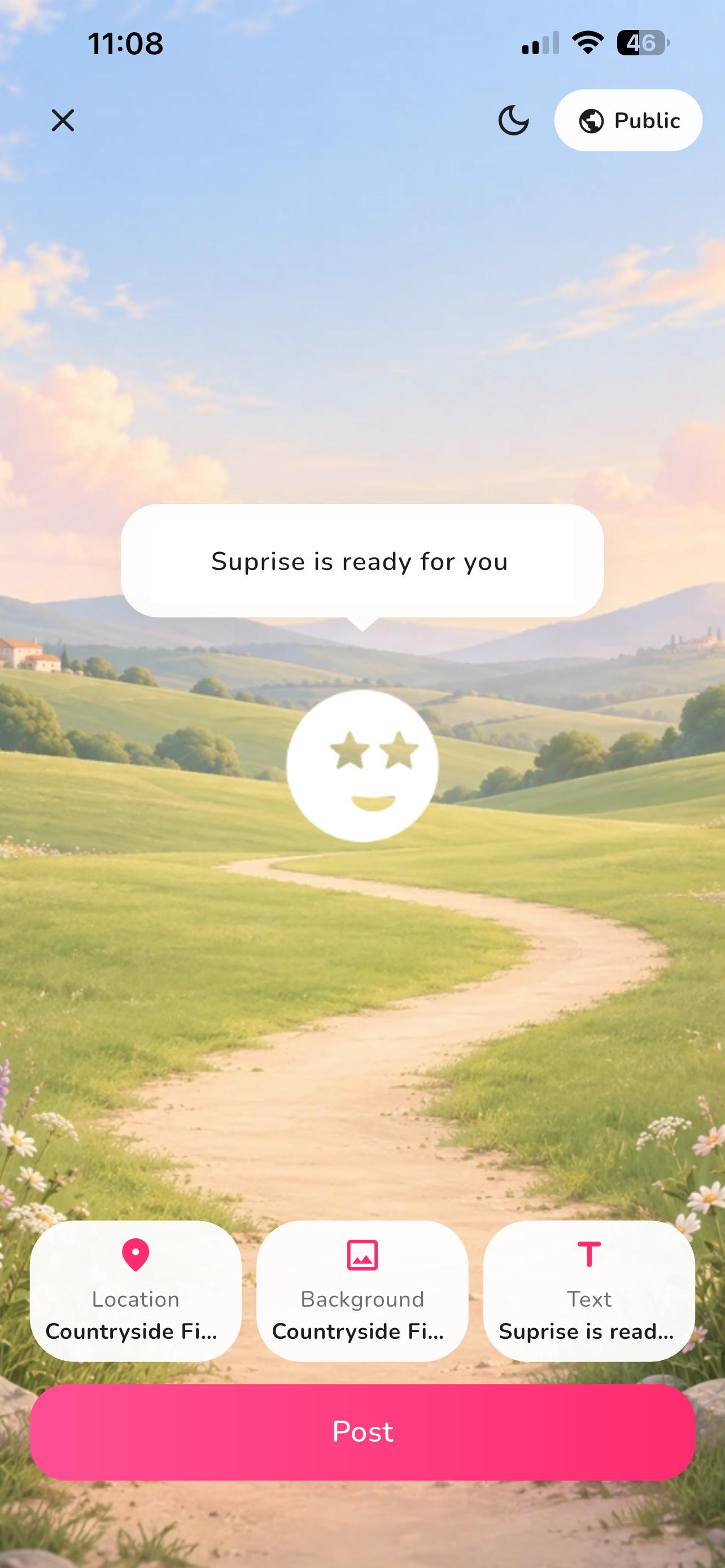
Share what you're doing with a background, location and a short message for your partner.
-
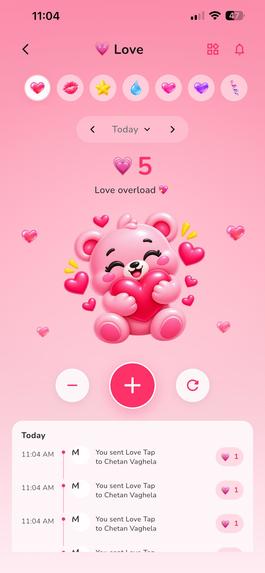
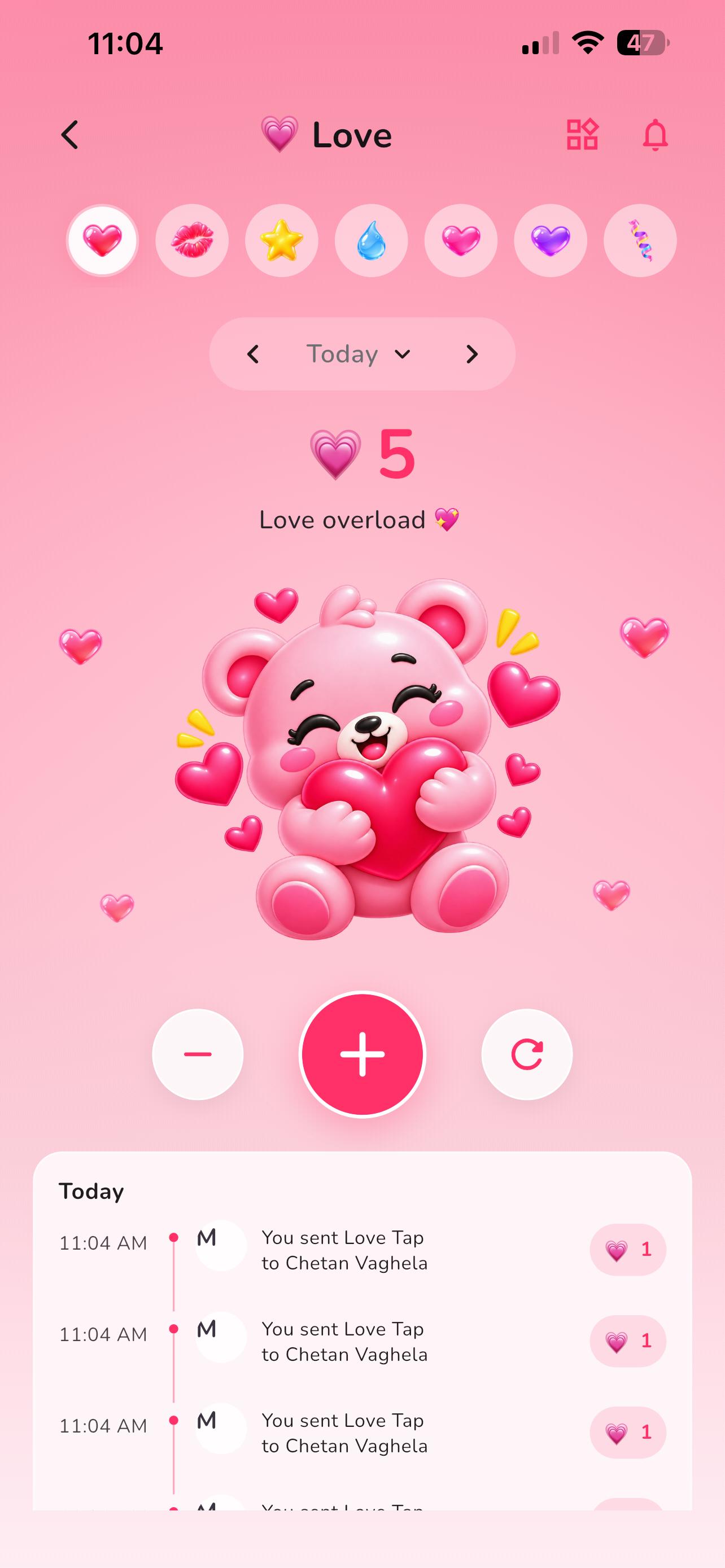
A simple Love Vibe you can send when you just want to say “thinking of you.”
-
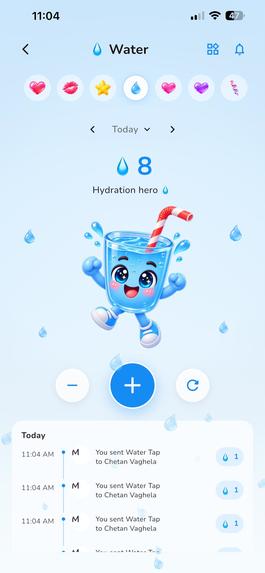
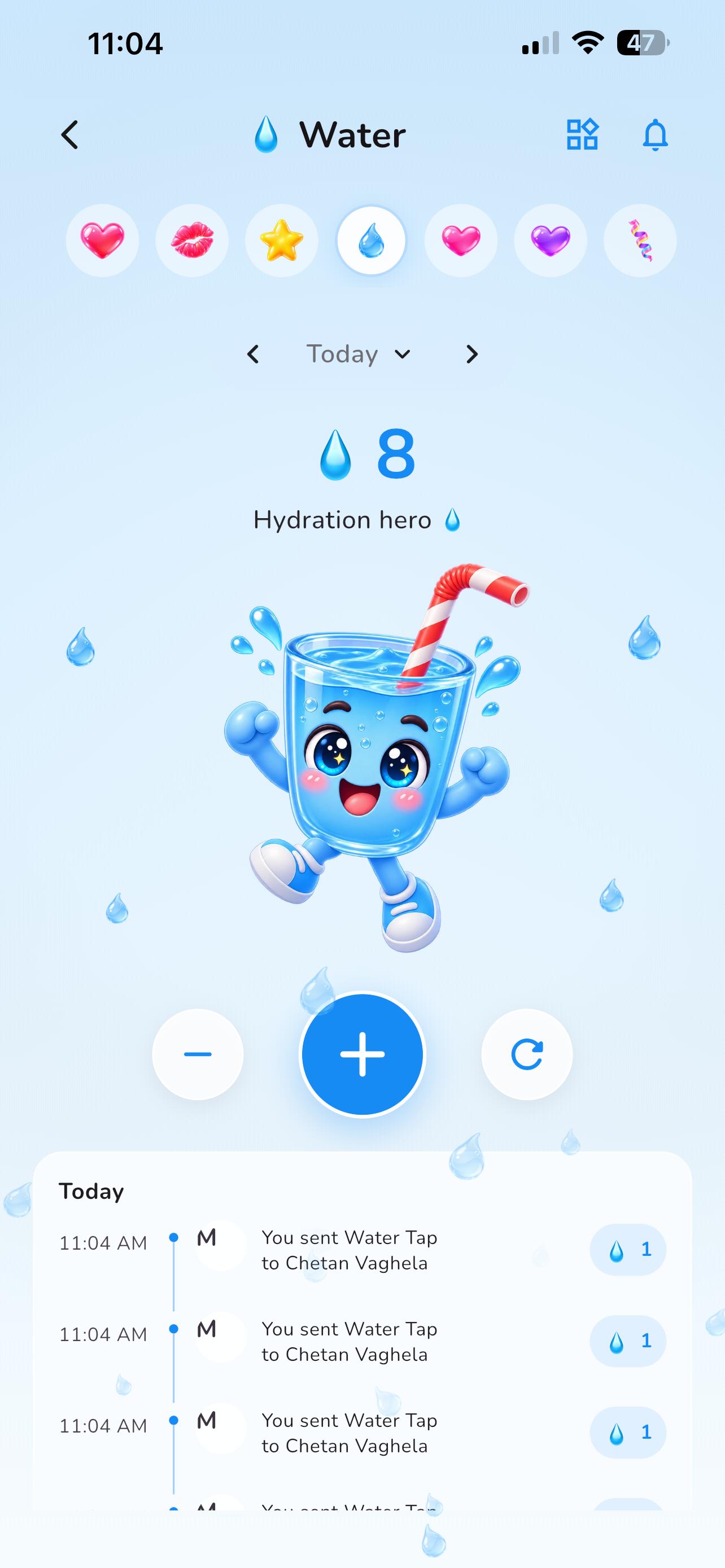
You can even remind your partner to drink some water in a more fun way :)
-
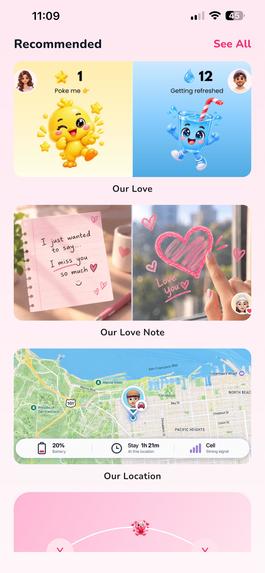
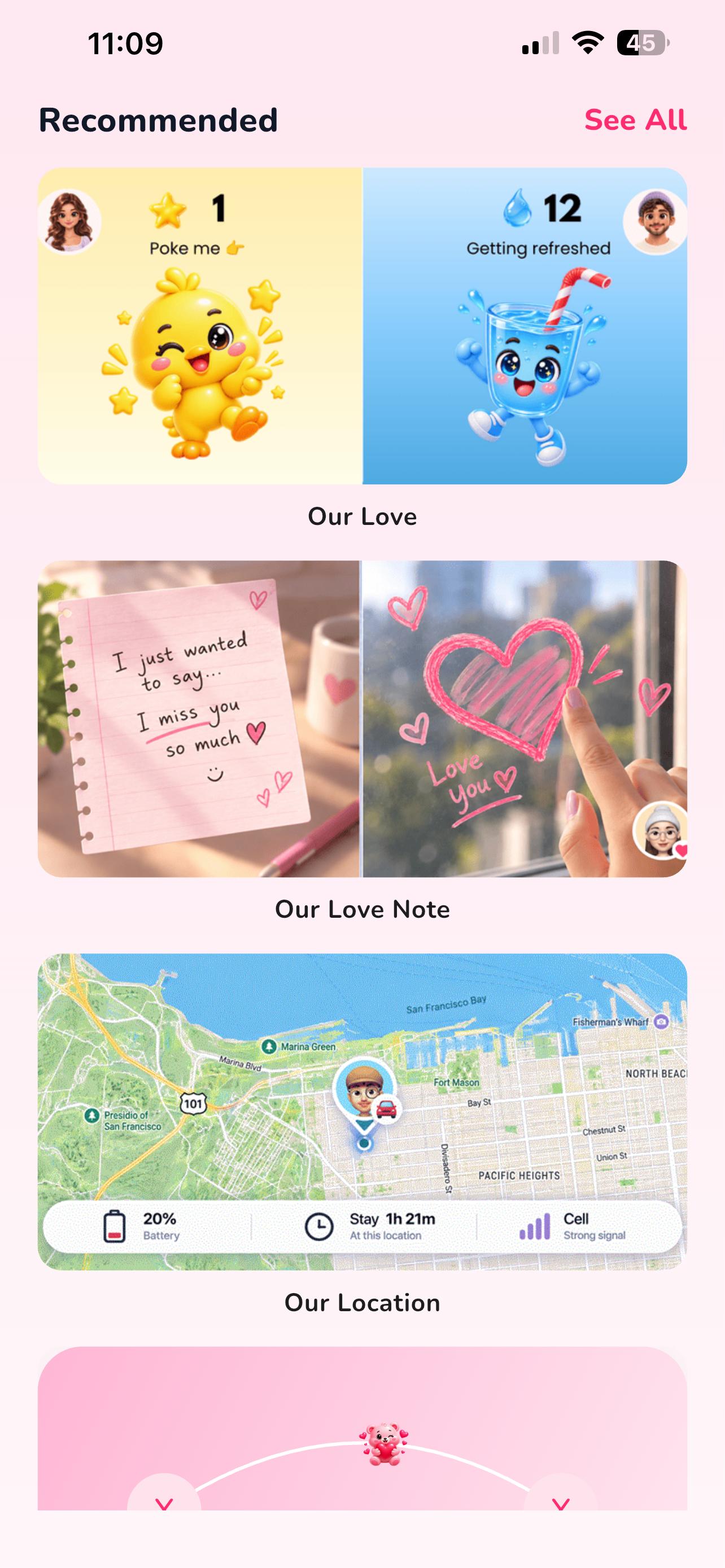
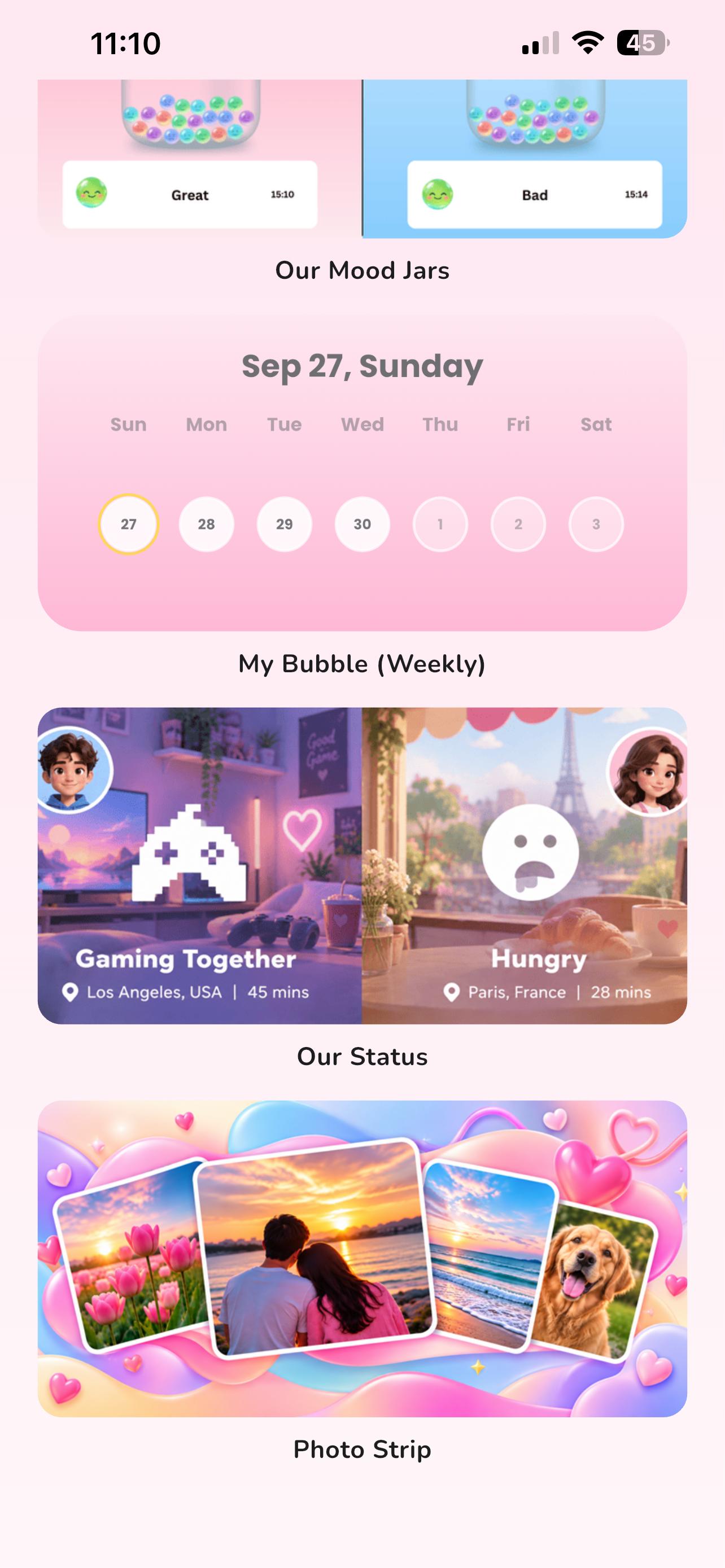
Some of the Lovelle widgets for keeping our notes, location, moods and memories on the Home Screen.
-
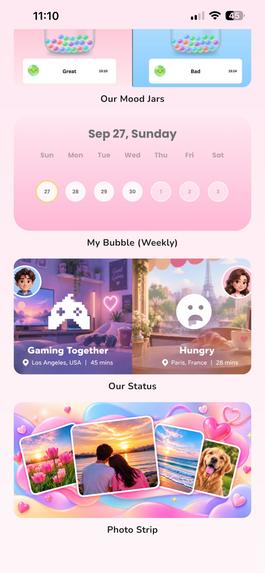
Some of the Lovelle widgets for keeping our notes, location, moods and memories on the Home Screen.

Inspiration
Most couples already have plenty of ways to message each other. I didn't want to build another chat app.
The idea behind Lovelle came from something much smaller: the little moments between conversations. A quick touch while your partner is working. A doodle. Sending them a coffee or a kiss. Seeing that they're getting closer to home. Finding a memory from a day you spent together.
None of these things need a full conversation, but they can still make someone feel remembered.
I started building Lovelle around that idea: help couples feel close, even when they're apart.
What it does
Lovelle is a couples app built around small, shared interactions.
Couples can send each other Vibes for everyday moments — Love, Kiss, Miss You, Coffee, Water, Hug, Flowers and more — and use features such as Live Touch and Live Drawing to interact together in real time.
There is also live location and distance, shared memories, relationship milestones, moods, stories, widgets, and small activities couples can do together.
I wanted the home screen to feel less like a dashboard and more like a small space that belongs to two people. You can see how long you've been together, whether your partner is around, send something in a few seconds, or jump into something together.
Widgets were especially important to me because Lovelle shouldn't only exist when you open the app. A note, memory, distance update or relationship milestone can live directly on your home screen.
And one decision I cared about from the beginning was subscriptions: one plan unlocks Lovelle for both partners. It didn't feel right to ask two people to separately pay for something designed for them to use together.
How we built it
Lovelle is built primarily with Flutter so I could develop the iOS and Android experience from one codebase while still integrating deeply with each platform where needed.
Firebase handles much of the real-time side of the product, including syncing experiences between partners. I also had to work with native platform capabilities for things such as background location, notifications and widgets.
RevenueCat handles Lovelle's subscription infrastructure. The interesting part wasn't simply adding a paywall — Lovelle is a paired product, so I had to think about entitlement at the couple level rather than treating every account as an isolated subscriber.
A lot of the work went into making features feel immediate. When one partner touches, draws, sends something, changes something or requests a location update, the other side should feel it with as little friction as possible.
I built the product feature by feature, tested it on real devices, redesigned parts that felt too complicated, and kept reducing the number of steps needed to do the small things Lovelle is built for.
Challenges we ran into
The hardest parts of Lovelle weren't the individual screens. They were the features where two phones need to behave like one shared experience.
Live location was one of the biggest examples. Updating a partner's location while the app is open is straightforward. Making it reliable when the app is backgrounded or closed, while respecting iOS and Android restrictions, battery usage and permissions, is a very different problem.
Real-time features such as Live Touch and Live Drawing brought another set of problems: keeping both devices in sync, handling reconnects, and making the interaction still feel instant rather than like data being passed through a backend.
Widgets also took more work than I expected. The app can change frequently, but the operating system controls when widgets are allowed to refresh. Getting useful data onto the home screen reliably meant designing around those limitations rather than assuming the widget could behave like the app itself.
Subscriptions had their own edge cases because a purchase made by one person needs to unlock the experience for their connected partner as well.
And then there were all the less exciting but very real parts of shipping: authentication, permissions, localization, App Store review requirements, subscription testing, background services, notification behavior and lots of testing across different device states.
Accomplishments that we're proud of
The biggest accomplishment is simple: Lovelle shipped.
What started as an idea is now a real product available on the App Store, with the website, subscriptions and core couples experience working end to end.
I'm particularly proud that I didn't reduce the first version to one small interaction just to get it submitted. Lovelle already has Vibes, Live Touch, Live Drawing, live location, memories, relationship milestones, moods, widgets and other shared experiences working together as parts of the same product.
I'm also proud of how much attention went into the small details. Lovelle has its own visual language, characters, interactions and personality. It doesn't feel like a collection of generic Flutter screens.
Getting the product through the less visible parts of shipping — background location, widgets, subscriptions, store requirements and real-device behavior — was just as meaningful as building the features people can see.
What we learned
One of my biggest lessons was that a couples app has two users, but one experience.
A feature isn't finished just because it works perfectly on my phone. I have to think about what happens on my partner's phone, what happens when one app is closed, what happens with a weak connection, and what happens when only one person has completed a setup step.
I also learned that adding more features doesn't automatically make a couples app feel more connected. Often the best interactions are the smallest ones — something you can send or do in a few seconds without starting another conversation.
Building Lovelle also reinforced how different a production app is from a working prototype. The final 10% — permissions, background behavior, subscriptions, widgets, localization, edge cases and store review — can easily become a huge part of the work.
Most importantly, shipping changed the questions I'm asking. I'm no longer thinking only about what I can build. I'm now learning which parts couples actually return to, what creates a habit, and what deserves to become simpler.
What's next for Lovelle
Now that Lovelle is live, the focus moves from simply building features to learning how couples actually use them.
I want to improve the experiences that create those small daily moments, make widgets and live interactions even more useful, and keep reducing friction between thinking about your partner and doing something about it.
I'm also exploring how Lovelle can extend beyond the phone. An Apple Watch experience is a natural direction: receiving a Vibe on your wrist, sending a quick touch, or seeing a relationship milestone without opening your phone fits the original idea of Lovelle really well.
There are still plenty of things I want to build, but I don't want Lovelle to become an app full of features for the sake of having features.
The goal is still the same one I started with:
Make the distance between two people feel a little smaller.
Built With
- android
- apple-push-notifications
- apple-sign-in
- background-location
- cloudfirestore
- cloudmessanging
- core-location
- dart
- firebaseauth
- flutter
- google-sign-in
- ios
- remoteconfig
- revenuecat
- storekit
- swift
- swiftui
- widgetkit

Log in or sign up for Devpost to join the conversation.