-
-
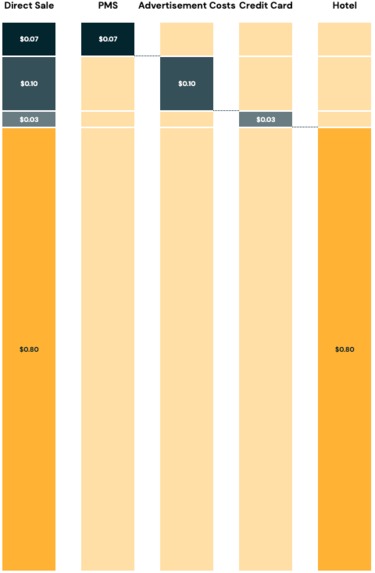
Direct
-
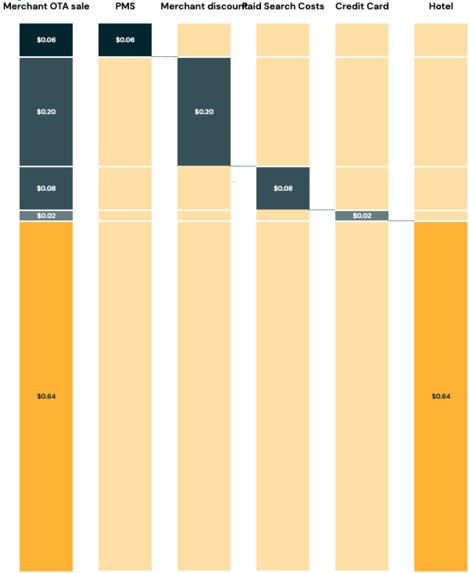
Online Travel Agency
-
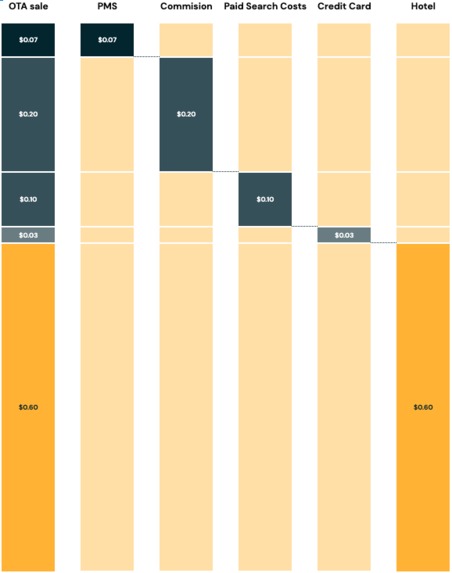
Merchant
-
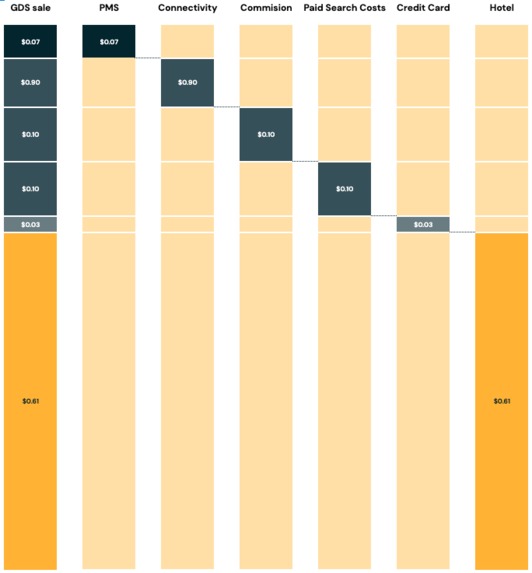
Global Distribution System
-
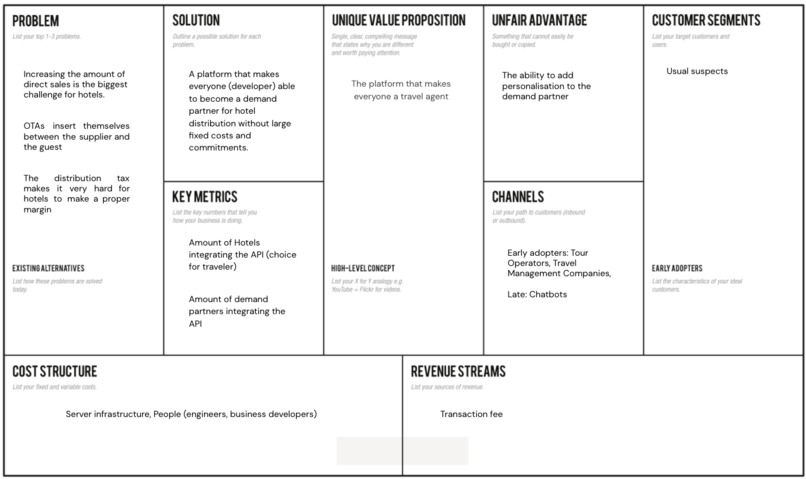
Business model canvas
Problem
The travel book experience for hotel booking is broken, travellers are forced into a booking process where the rooms they book are being sourced by either many layers of 3rd parties or necessitate a huge organisation of sourcing experts. This prevents smaller new entrants from delivering products and travel services that could move the industry forward. In today’s landscape of e-commerce platforms, mobile apps and chatbots, it would be ideal if any platform, app or bot could provide hotels with direct bookings.
This will fundamentally change the way people are booking their trips. Today, they depend on Online Travel Agencies and in the near future they should be able to ask Slack or Alexa to take care of their booking.
Hotels suffer a lot from the legacy technology and 3rd party sales and connectivity layers. In the last decade hotels started to find their way to the direct guest and these efforts have paid off, but they still lack in taking control of their audience at scale. The distribution ‘tax’ is placing a big burden on hotels profitability. With distribution tax we mean margin and fees to 3rd parties like bed banks, GDSs and OTAs.
We have broken down the problem definition into four components:
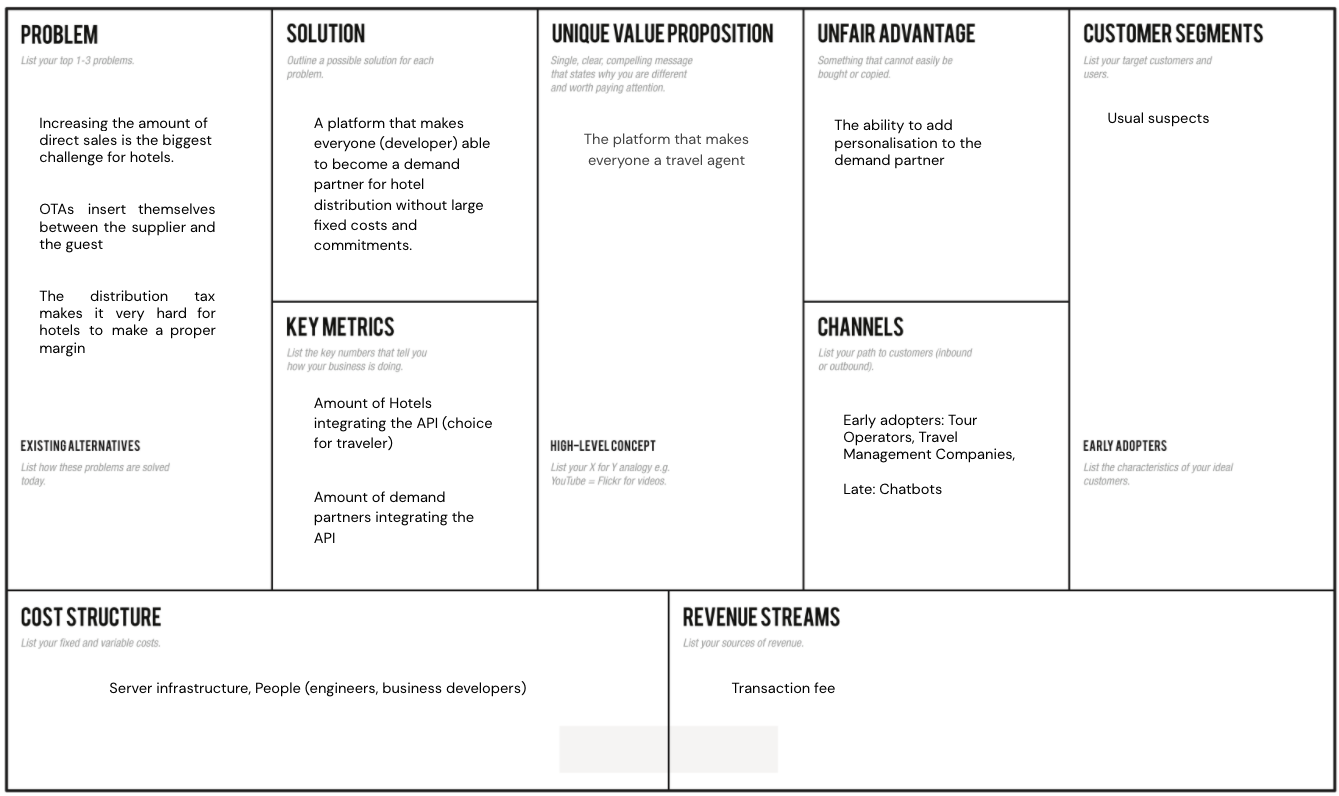
Increasing the amount of direct sales is the biggest challenge for hotels. OTAs insert themselves between the supplier and the guest The distribution tax makes it very hard for hotels to make a proper margin All connectivity layers make entry for new travel product sellers to market complex and pricy
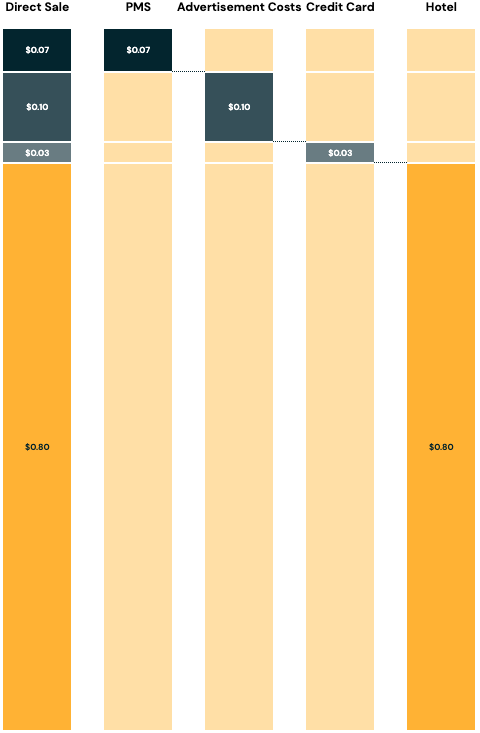
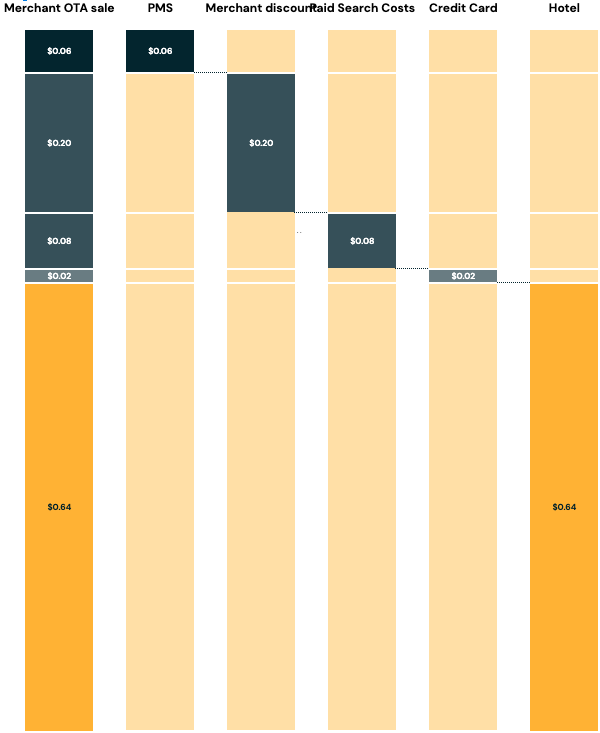
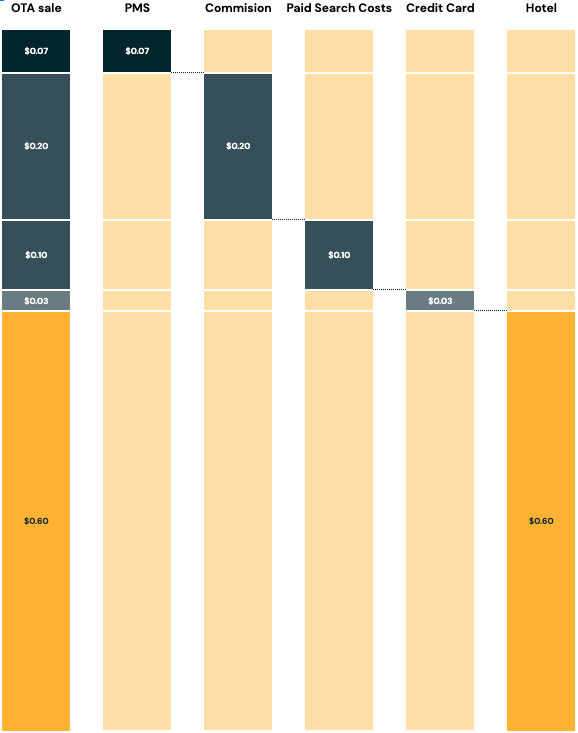
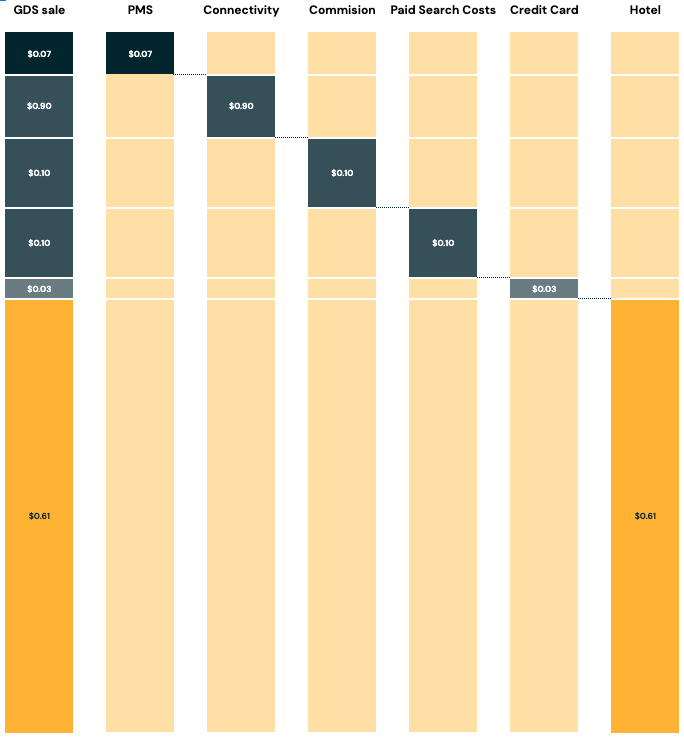
For reference please find below the breakdown of how 1 dollar booking revenue is broken down into net revenue for the hotel. The direct model delivers the highest net revenue.
Our solution
A platform that opens hotel inventory up and allows travel sellers to connect the traveler directly to the hotel. This makes everyone (developer) able to become a demand partner for hotel distribution without large fixed costs and commitments.
Example of demand partners will vary from travel booking service providers on the short term to mobile application build with our API on WeChat, Whatsapp, Facebook messenger, Slack etc. even Amazon Alexa.
How did we build it
We investigated the world of hotel distribution and after several interviews with both hotels and OTAs we came to the conclusion that the systems they work with are very much from the 20th century. The amount of distribution layers is comparable with industries like the telecom or advertising industry from 25 years ago. Looking at the evolution of the telco industry or advertising industry today, they distribute their services all via API based digital partnerships. Take Twilio for communication services or Google for advertising as examples.
The airline industry takes advantage of this development and based on IATA’s new distribution capabilities (NDC), more and more airlines make their inventory directly available via a flexible API to travel sellers.
We looked very closely at these examples and became very enthusiastic about the fact that the hotel industry has a comparable initiative like NDC. This is called Open Travel Alliance (OTA). OTA is striving for a standard and its mission is: Enabling the future of travel by driving the evolving digital experience for consumers. Based on the OTA specifications we build the direct hotel booking API that will connect with an extranet to onboard the hotels content, description and manage availability.
We are proud of
Not being afraid to take this challenge and to change the industry. Our solution on scale will make a large impact for all players. It is time for hotels to choose their own path and expand their direct sales beside their own websites transparent partnerships that make the traveler more respect the booking experience and thus their complete travel experience.
Our next steps
Our next step we will take is after evaluating feedback from the Trave/Scrum jury to further research willingness of hotels to join our mission. We will continue to build and test our MVP with early adopting demand partners and deploy it at scale. All foregoing will be mandatory to make a solid financial planning and assess funding options.
See for reference our business model canvas for high-level overview
What tech did we use
We developed our API using Go to provide sub second performance and achieve high scalability. As the backing database we used a distributed MongoDB server with replicas across all the continents to provide low latency responses to users spread across the globe. Finally we deployed the API in our Kubernetes cluster.


Log in or sign up for Devpost to join the conversation.