-
-
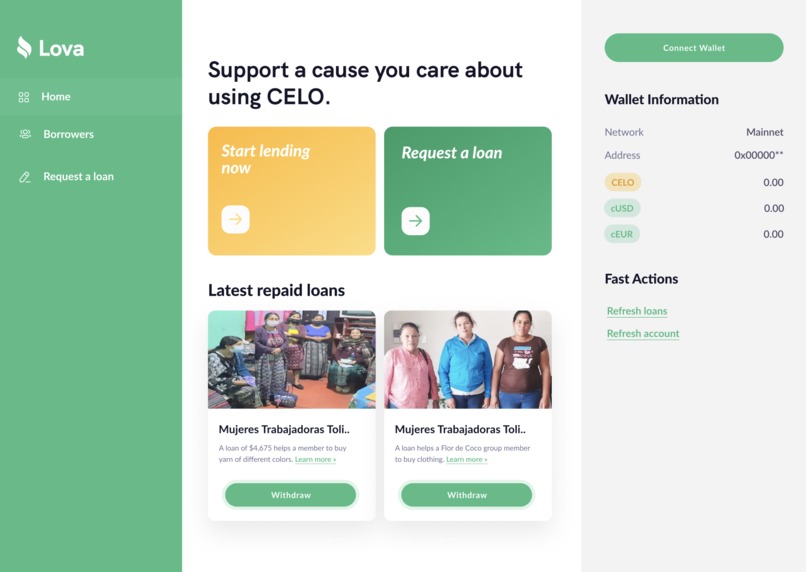
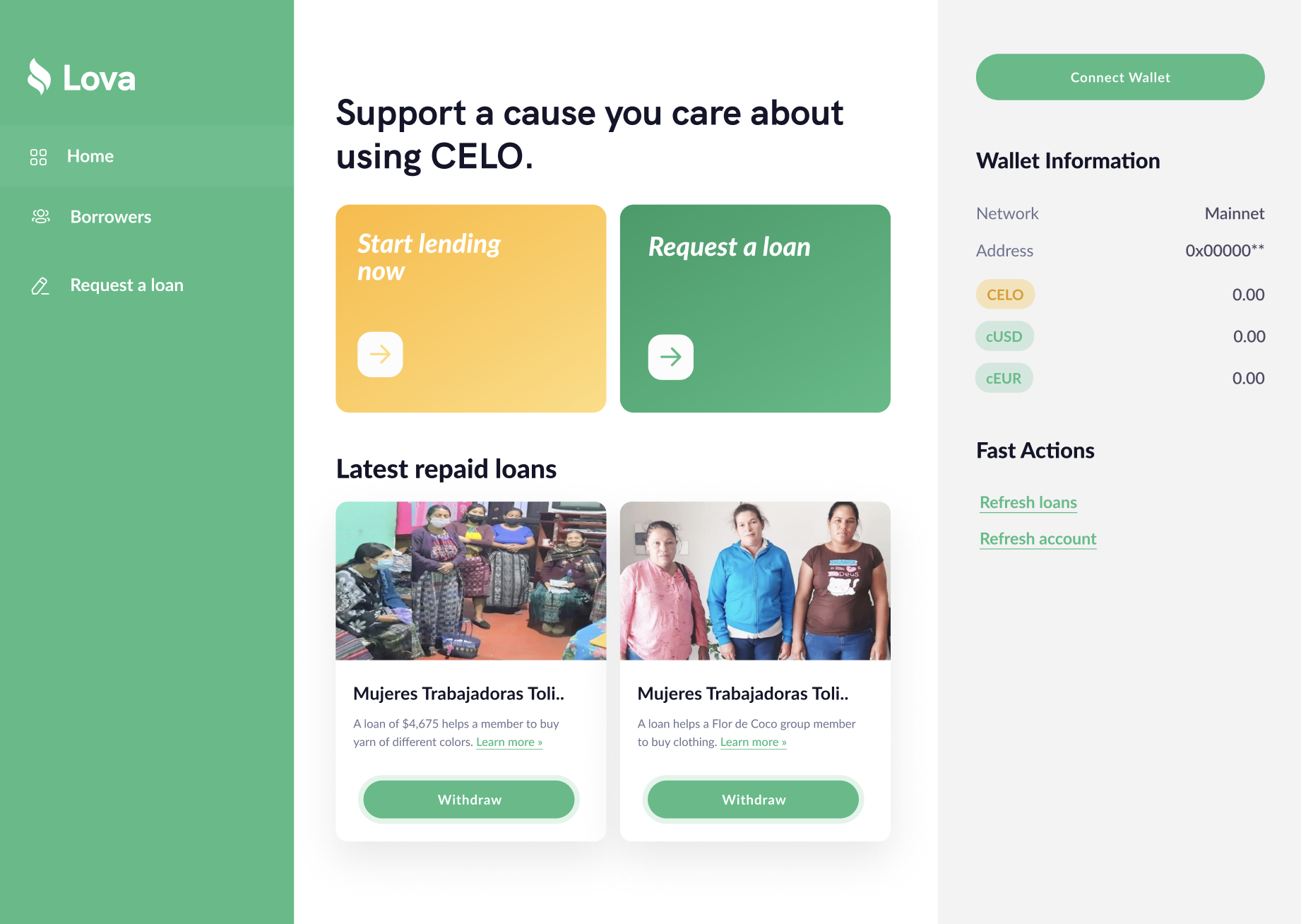
Web design
-
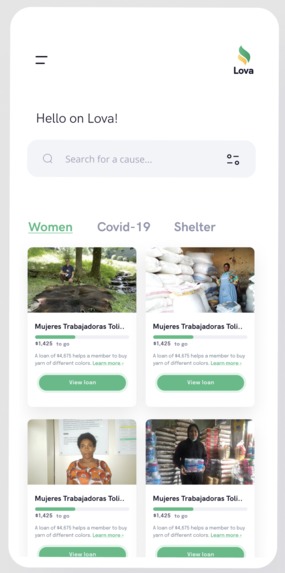
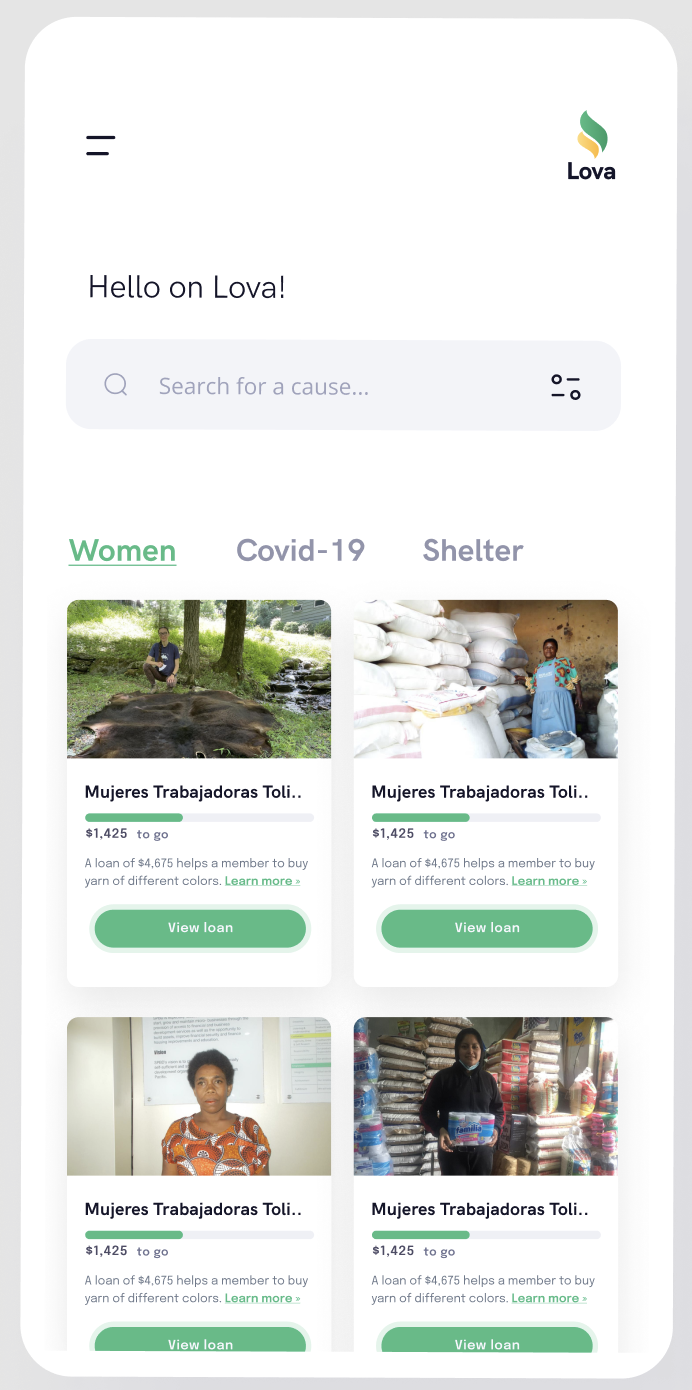
Mobile design
-
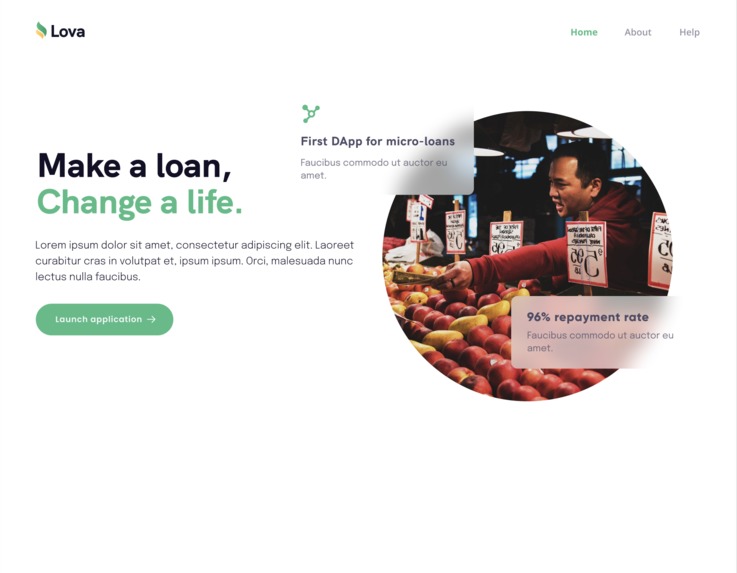
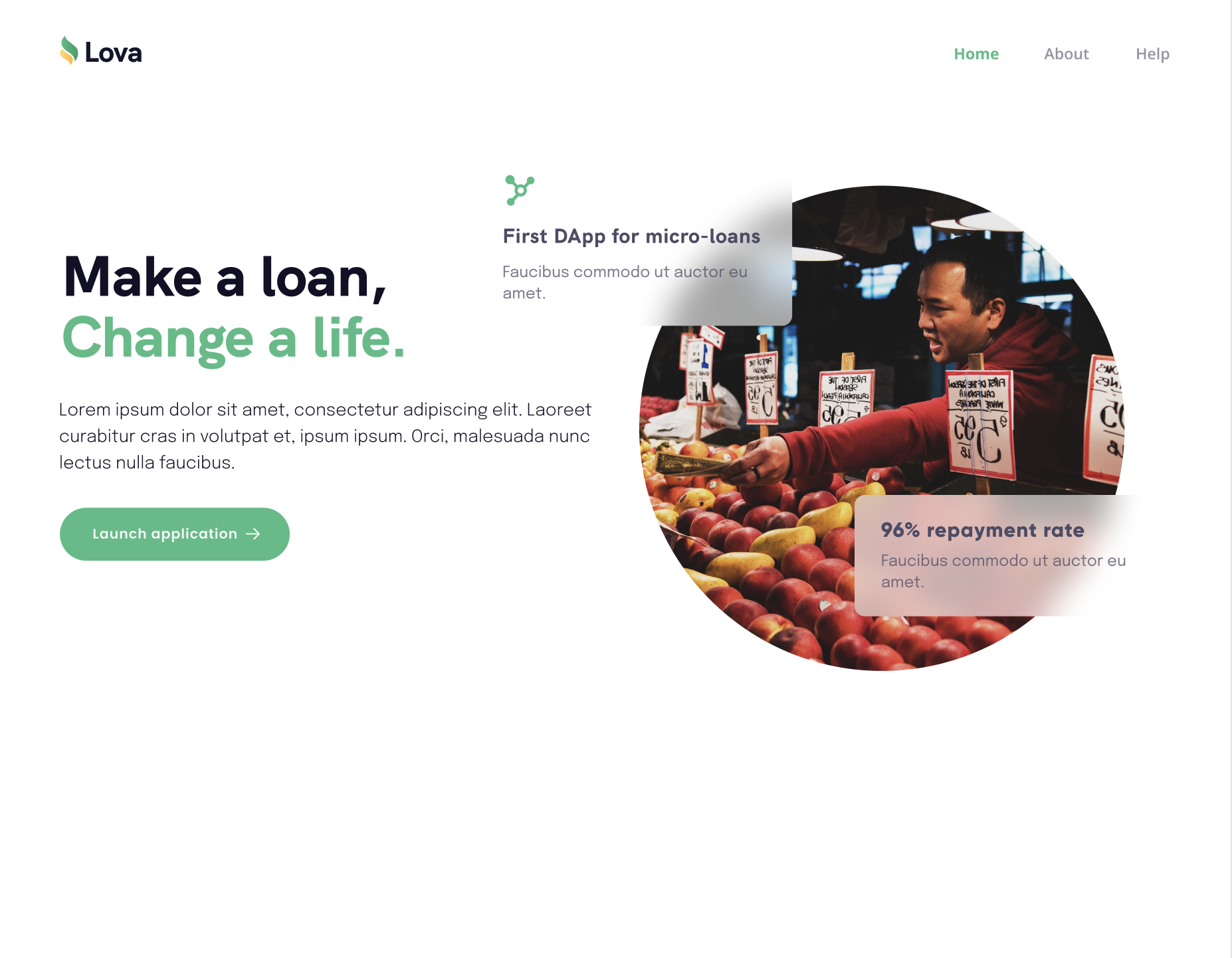
Landing page
-
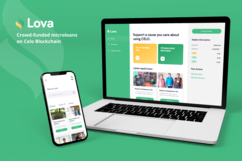
Final product view
Inspiration
This project was inspired by the micro-loan crowdfunding platform Kiva, which allows internets users to connect and lend directly to borrowers around the world at 0% interest. However, due to the nature of Web 2.0, there are a number of parties that sit in between borrowers and lenders and not everyone has access. With Web 3.0 and Celo there's the opportunity for them to connect directly, be more transparent, and reach more users. The name Lova combines Ce lo + Ki va.
What it does
The project consists of a Celo smart contract and web DApp front end that manages all stages of a crowdfunding microloan marketplaces. This includes: borrowers creating loans, lenders viewing fundraising loans and lending to them, borrowers repaying loans, and lenders withdrawing their repayments.
How we built it
This project contains both a smart contract deployed to Celo's Alfajores testnet, and a front-end Dapp built with React+Typescript. The smart contract is based on the ERC1155 standard, which allows generating multiple loans that are unique, similar to an NFT, while also allowing each loan to contain generic and interchangeable number of shares. A borrower can "mint" or create a loan via the smart contract - currently with metadata based on Kiva's API, but eventually this loan data can live in IPFS. They can choose any ERC20 to denominate the loan, by default though, it's cUSD, Celo's native stable coin. Lenders can lend to specific loans by exchanging ERC20 tokens for loan shares. When the borrower repays to the loan contract over time, these loan shares can then be "burned" or exchanged back for the repaid ERC20 tokens.
Challenges we ran into
- Figuring out which wallet to use was a bit of a struggle because a number of them didn't work with the Alfajores testnet (or were difficult to configure). We ended up using MetaMask as it was familiar and worked the best.
- Internet issues at the coworking space in Morocco
- Knowledge about cryptocurrency for some team members
Accomplishments that we're proud of
- Writing a Smart Contract using the ERC1155 standard so that it can be used in all kinds of other financial applications
- Product design
What we learned
- A lot about working with the Celo blockchain and smart contracts
- Using React which was new for some team members
- We learned how to center our designs around the experience of the lender and the borrower and make it easy for them to use cryptocurrency for micro-lending
What's next for Lova
One of the advantages of Defi is its composability and extensibility. For example, lenders could easily trade or transfer loan shares on a secondary market, something that's not possible with sites like Kiva today. It would also be possible to pool loan shares into various tranches to provide lower risk and higher risk lending pools. This would appeal to more recreational lenders who didn't want to choose their loans directly. Finally, because the blockchain is a public record of transactions, a credit scoring system could be built to look at repayment records to better assign risk, and allow borrowers to work their way up the financial ladder. There's also several things we did to simplify the UX flow for the demo, including hard coding amounts and token types - these will eventually be made customizable. We also didn't get to a few things as part of the MVP including: a landing page, a fully mobile view, a mobile app.
Tracks
This project falls under the "Defi Track" as well as the Africa regional track as all the participates are residing in Morocco.
Built With
- celo
- mui
- nextjs
- react
- solidity
- typescript


Log in or sign up for Devpost to join the conversation.