-
-

Logo
-
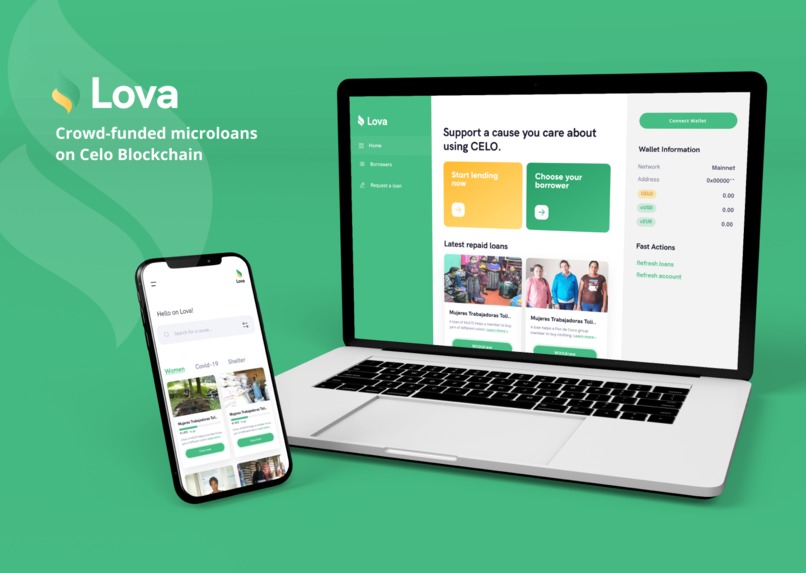
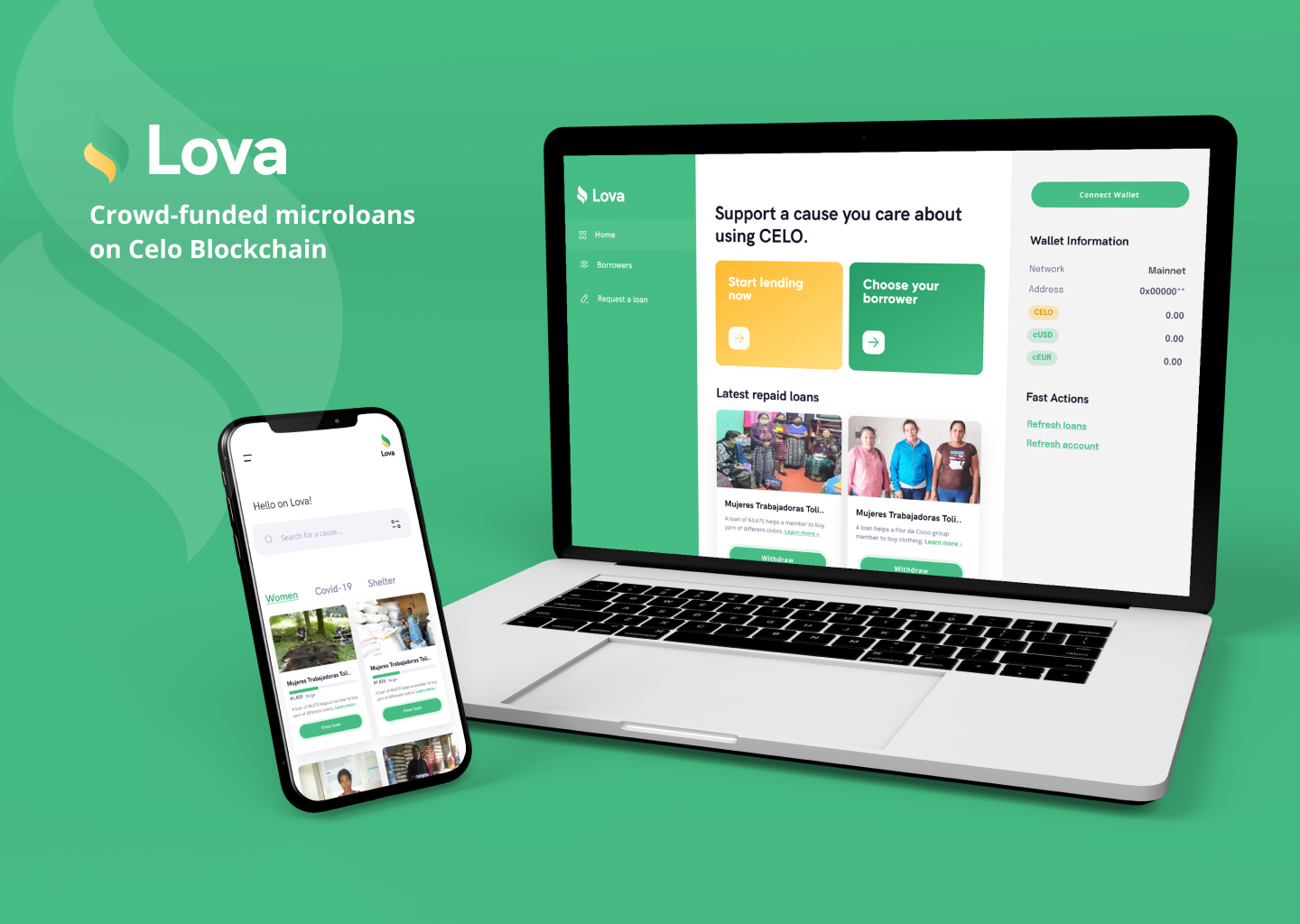
Lova - Final Product

Inspiration
The crowdfunding platform Kiva allows internets users to connect and lend directly to borrowers around the world at 0% interest. However, due to the nature of web 2.0, there are a number of parties that sit in between borrowers and lenders. With web 3.0 and blockchain there's the opportunity for them to connect directly.
What it does
Lova is a two-sided Dapp, where borrowers from anywhere in the world can request micro-loans in cUSD, while the lenders can choose from the app the borrower based on the cause they care the most about.
How we built it
This project contains both a DeFi smart contract and a front-end Dapp to interact with it. The smart contract is based on the ERC1155 standard, which allows generating multiple loans that are unique, similar to an NFT, while also allowing each loan to contain generic and interchangeable. A borrower can "mint" or create a loan via the smart contract with metadata based on Kiva's API. They can choose any ERC20 to denominate the loan, by default though, it's cUSD the native Celo stable coin. Lenders can lend to specific loans by exchanging ERC20 tokens for loan shares. When the borrower repays to the loan contract, these loan shares can then be "burned" or exchanged back for ERC20 tokens.
Challenges we ran into
- Figure out which wallet to use for CELO, before deciding to go with MetaMask
- Internet issues at the coworking space
- Knowledge about cryptocurrency for some team members
Accomplishments that we're proud of
- Writing a Smart Contract using the ERC1155 standard so that it can be used in all kinds of other financial applications
- Product design
What we learned
- A lot about working with the CELO blockchain and smart contracts
- We learned how to center our designs around the experience of the lender and the borrower and make it easy for them to use cryptocurrency for micro-lending
What's next for Lova
One of the advantages of Defi is its composability and extensibility. For example, lenders could easily trade or transfer loan shares on a secondary market, something that's not possible with Kiva today. It would also be possible to pool loan shares into various tranches to provide lower risk and higher risk lending pools. Also because the blockchain is a public record of transactions, it also servers as a credit history for borrowers to be able to take on larger and larger loans.
Built With
- celo
- graphql
- mui
- nextjs
- react
- solidity
- typescript


Log in or sign up for Devpost to join the conversation.