🌱 Lot to Life
Reclaiming Vacant Land for Community-Led Development in Chicago
Inspiration
Chicago is one of the most diverse cities in the country a true melting pot of culture, history, and neighborhood identity.
But it is also a city shaped by segregation, redlining, and decades of disinvestment.
Today, more than 40,000 vacant lots are concentrated in the very communities that give Chicago its color and character.
Vacant land is not randomly distributed.
In many neighborhoods, opportunity has historically been constrained by geography.
While the city has programs like ChiBlockBuilder to sell and redevelop vacant land, communities often lack access to the tools needed to meaningfully participate.
Residents don’t have:
- Easy access to zoning knowledge
- Feasibility insights
- Clear development pathways
- Structured proposal frameworks
The people who know their neighborhoods best are often the least equipped with planning tools.
We wanted to change that.
What We Built
Lot to Life is an AI-powered civic platform built specifically for Chicago.
We translate zoning into plain English, generate viable development options aligned with policy, and help communities structure actionable proposals.
Our platform centers:
- Sustainability
- Affordability
- Neighborhood identity
Every vacant lot becomes an opportunity for:
- 🏘 Housing
- 🌳 Green space
- 🛍 Small businesses
- 🌱 Climate resilience
Not imposed from above but shaped from within.
Key Features
🗺 Interactive Lot Finder (Mapbox GL JS)
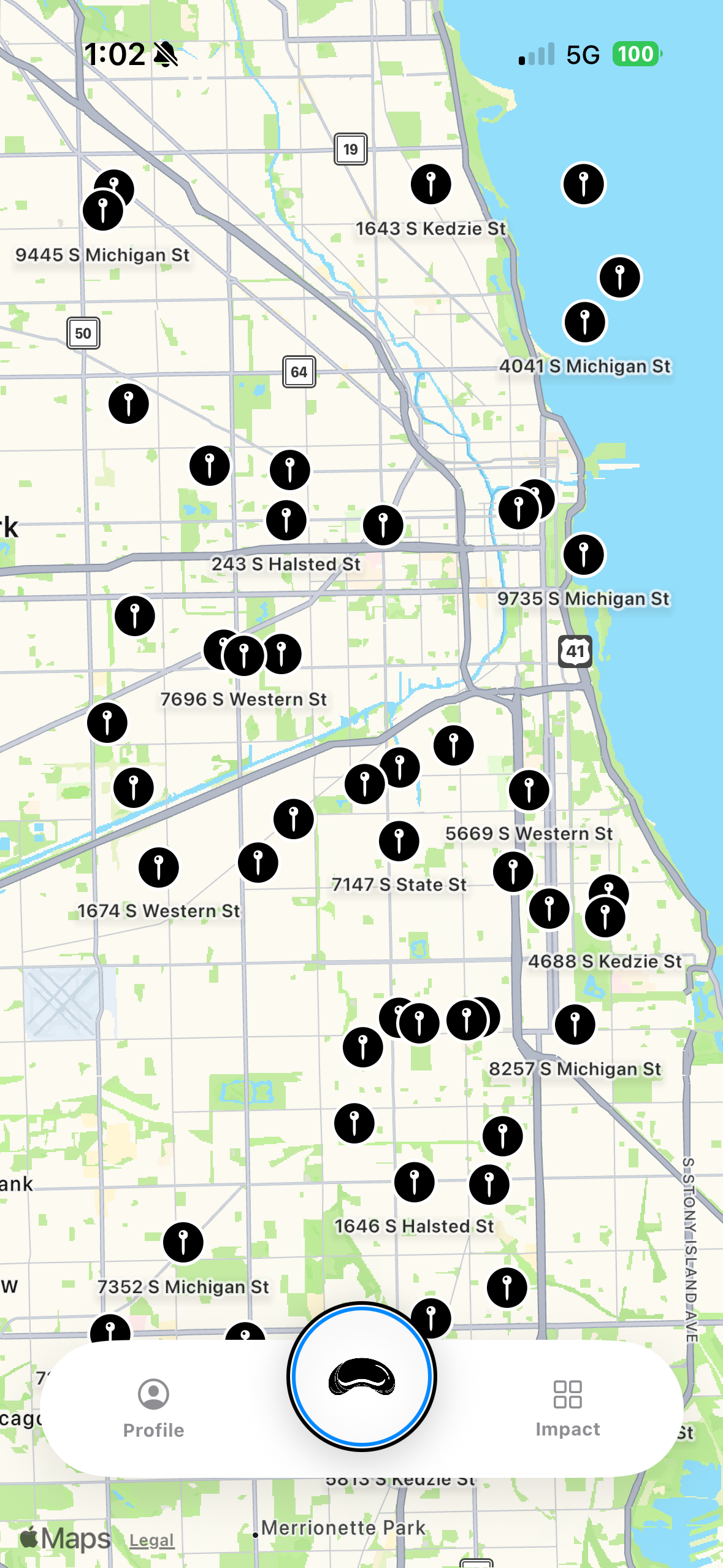
We built an interactive geospatial map using Mapbox GL JS to allow residents to explore vacant lots across Chicago in real time.
Users can:
- Discover available land
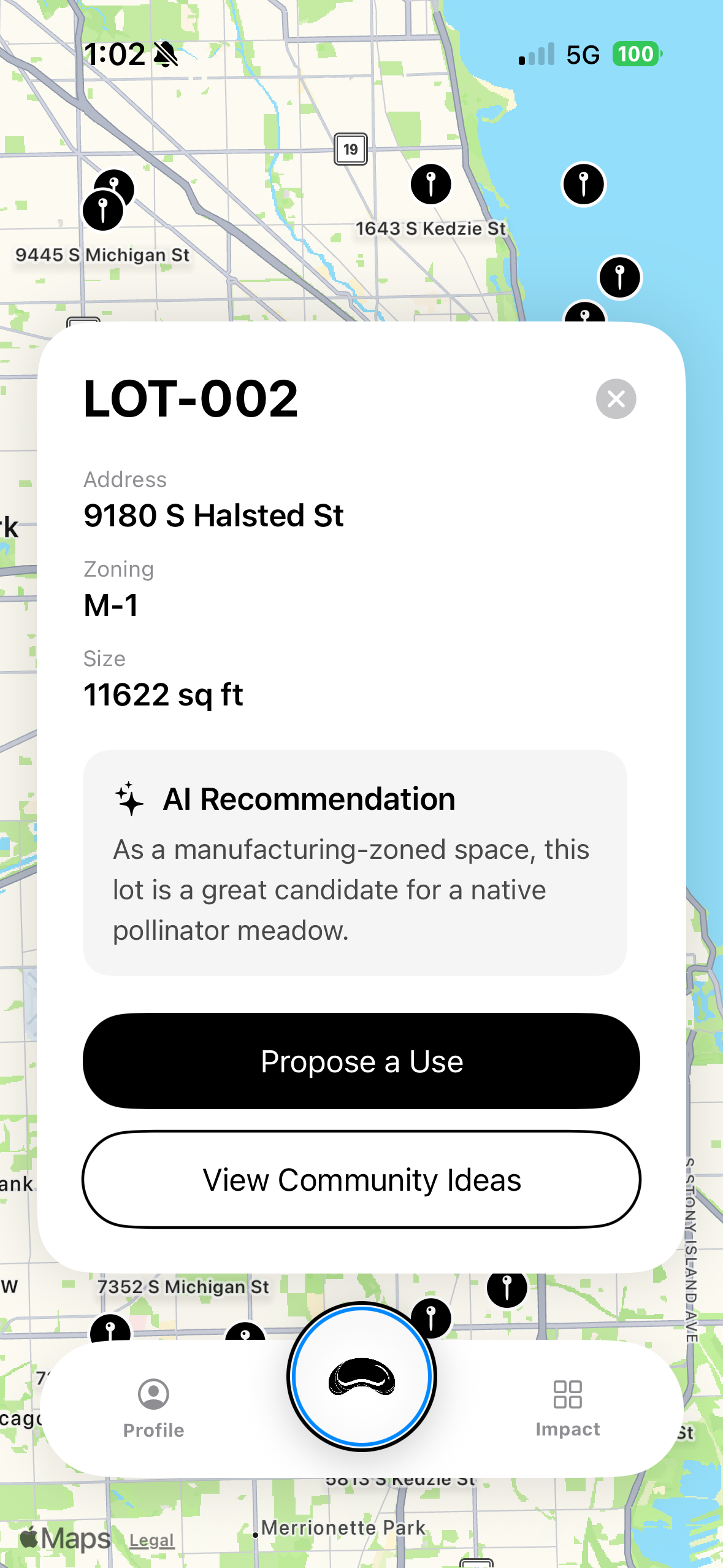
- View contextual zoning and lot information
- Zoom into neighborhood-level data
🤖 AI-Powered Development Recommendations
Using the OpenAI API, we analyze:
- Zoning context
- Neighborhood characteristics
- Sample civic datasets
We then generate feasible, policy-aligned development suggestions for each lot.
One of our biggest technical challenges was ensuring the AI did not produce generic answers.
We iteratively refined prompts and structured data inputs so that recommendations were:
- Context-aware
- Actionable rather than aspirational
- Zoning-compliant
🗳 Community Proposal Structuring
Beyond suggestions, we allow users to:
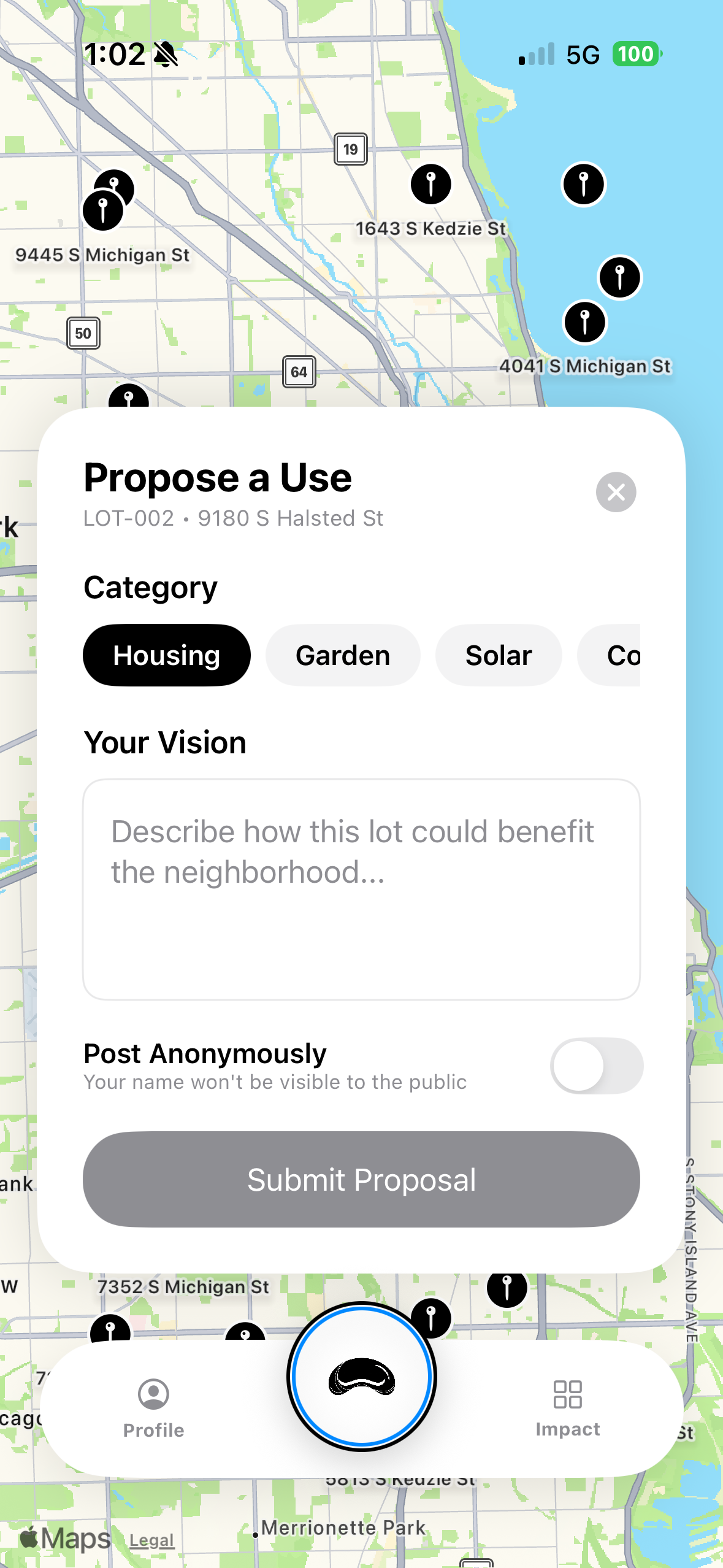
- Draft structured development ideas
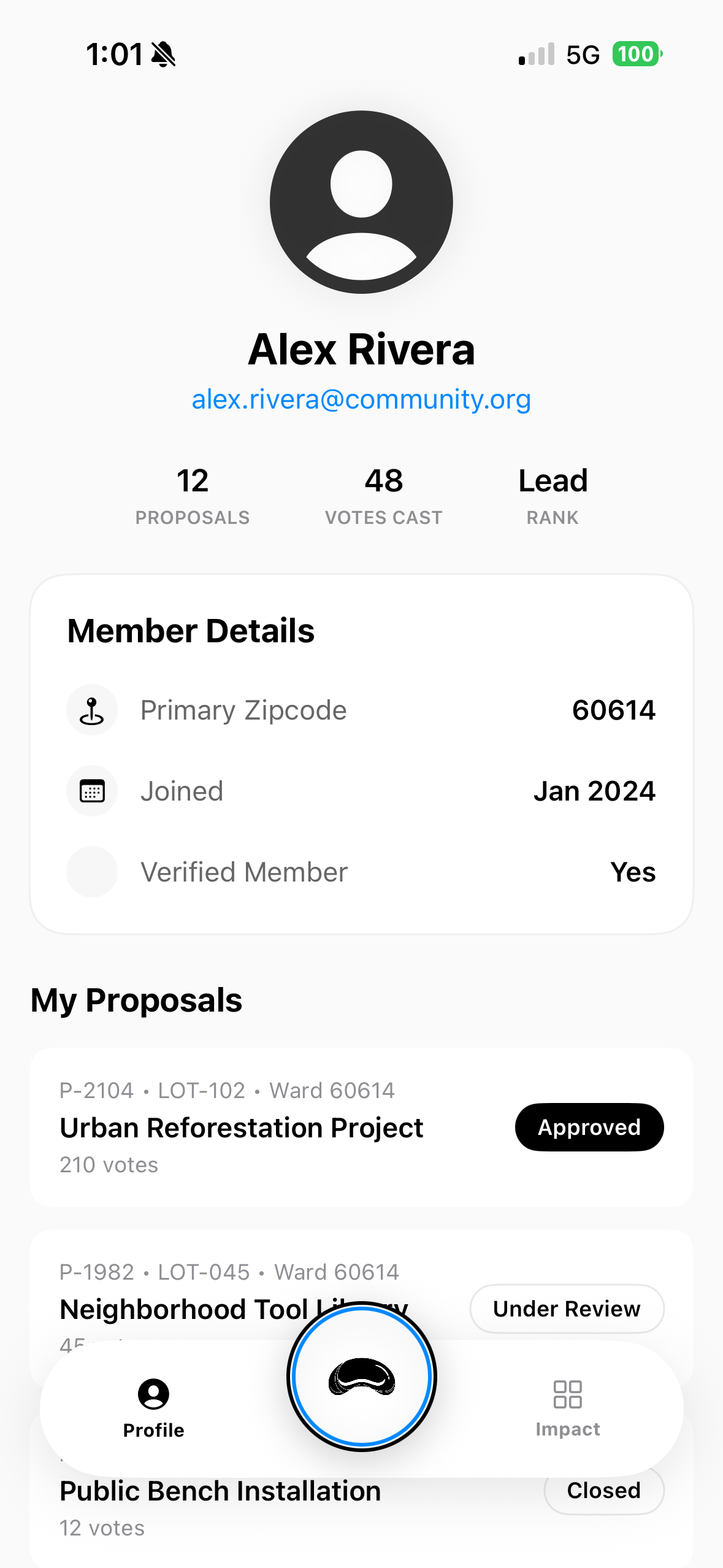
- Vote on community-supported proposals
- Translate ideas into clearer action pathways
We focused on transforming vague ideas into proposals that feel real and buildable.
How We Built It
Frontend
- Next.js (App Router)
- React
- TypeScript
- Tailwind CSS
Geospatial Layer
- Mapbox GL JS for interactive civic data mapping
Backend
- Server-side Next.js API routes
- OpenAI API for AI-driven lot analysis
Security
- Environment-based API key management
- Server-only AI requests (no exposed secret keys)
We learned how to:
- Build secure server-side AI integrations
- Design scalable frontend architecture
- Structure civic datasets for AI interpretation
- Improve frontend responsiveness and mapping UX
Challenges We Faced
Prompt Engineering Getting AI to generate realistic, zoning-aware proposals required multiple iterations.
Data Translation Zoning and land-use policies are complex and technical. Translating them into plain language without losing nuance was difficult.
Civic Responsibility We had to be careful that AI recommendations empowered communities rather than overriding them.
Frontend Performance Handling map rendering while keeping UI responsive required optimization and thoughtful component structure.
What We Learned
We learned that civic tech is not just about building tools it’s about building trust.
We also strengthened our frontend architecture skills, improved our API security practices, and developed a deeper understanding of how urban policy intersects with technology.
The Bigger Vision
Lot to Life is not just about filling empty land.
It is about strengthening Chicago’s neighborhoods sustainably, equitably, and collaboratively.
Built With
- chicago-open-data
- css
- mapboxgljs
- next.js
- node.js
- openai-api
- react
- tailwind
- typescript


Log in or sign up for Devpost to join the conversation.