-
-
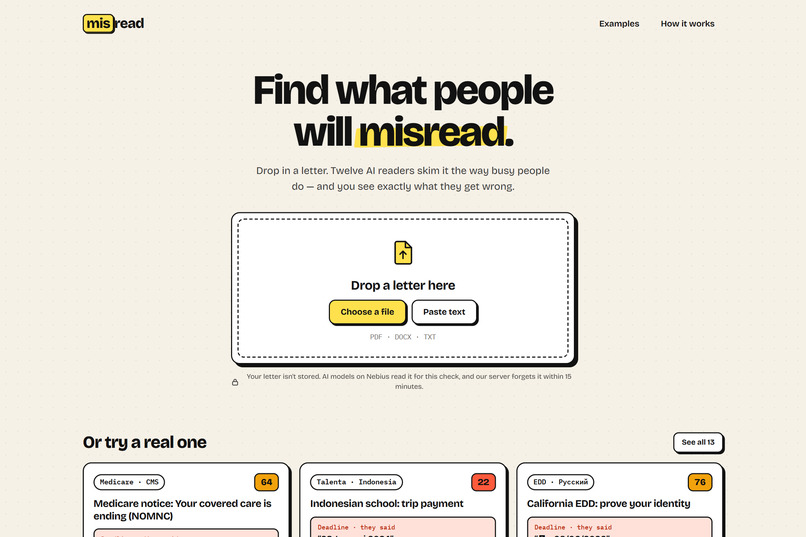
Homepage
-
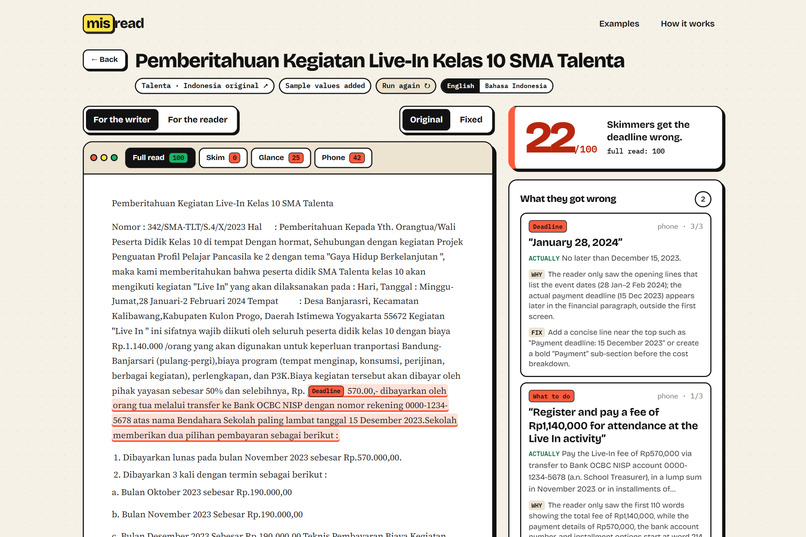
Upload
-
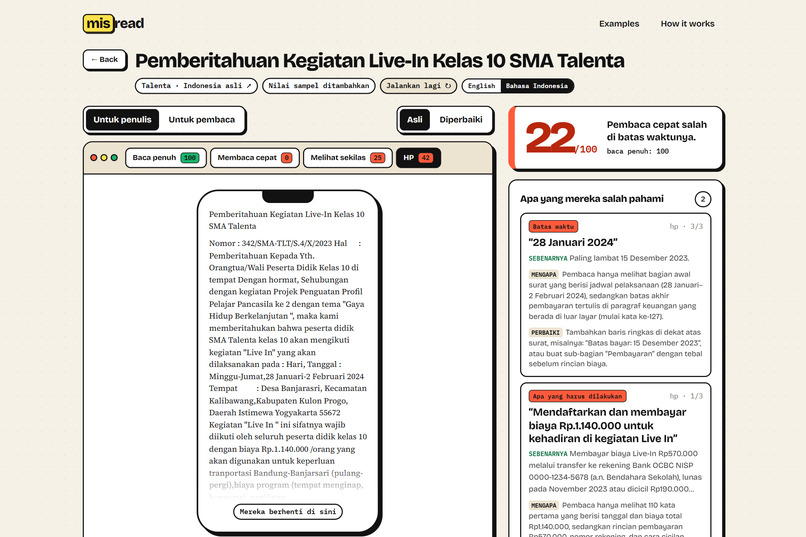
Phone View
-
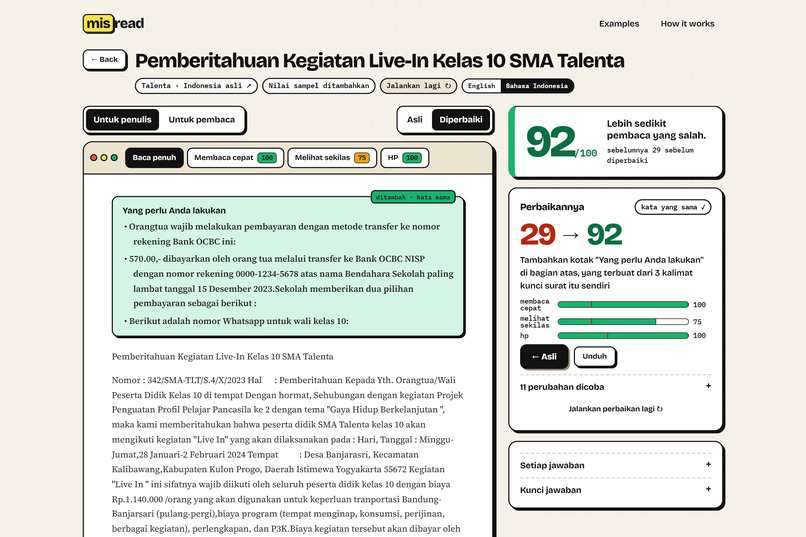
After Fixing
-
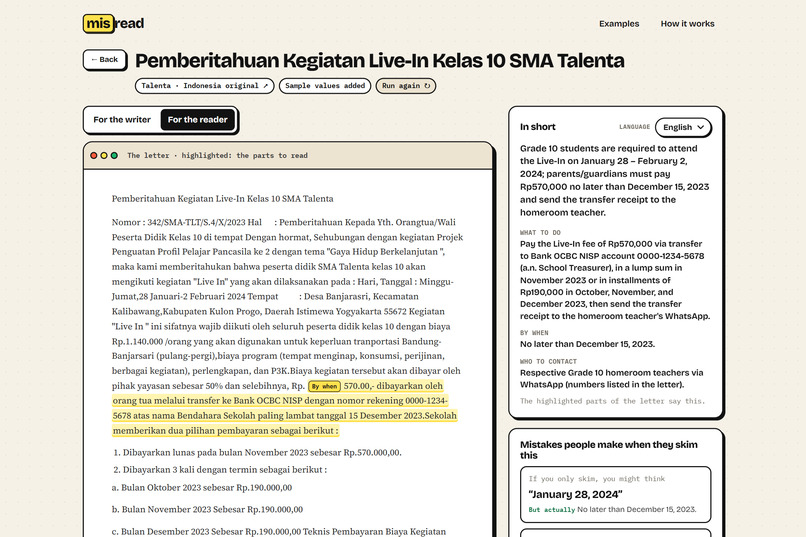
Highlight
-
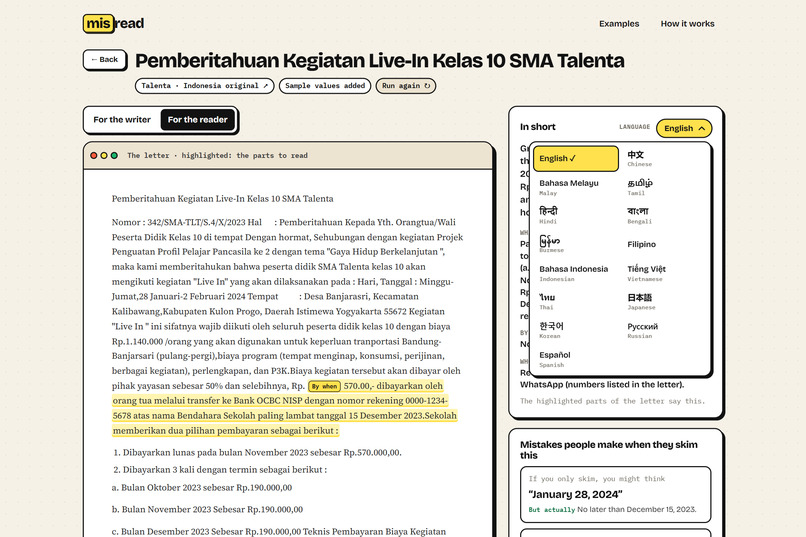
Language Choice
-
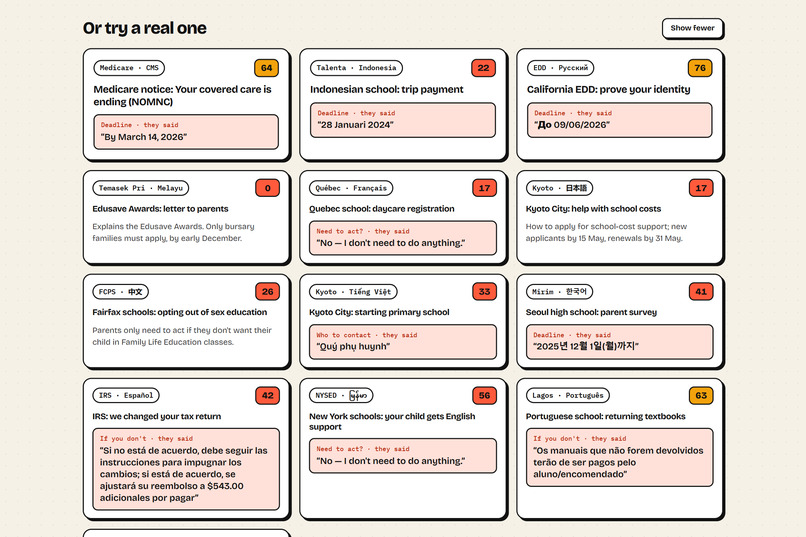
Different samples
-
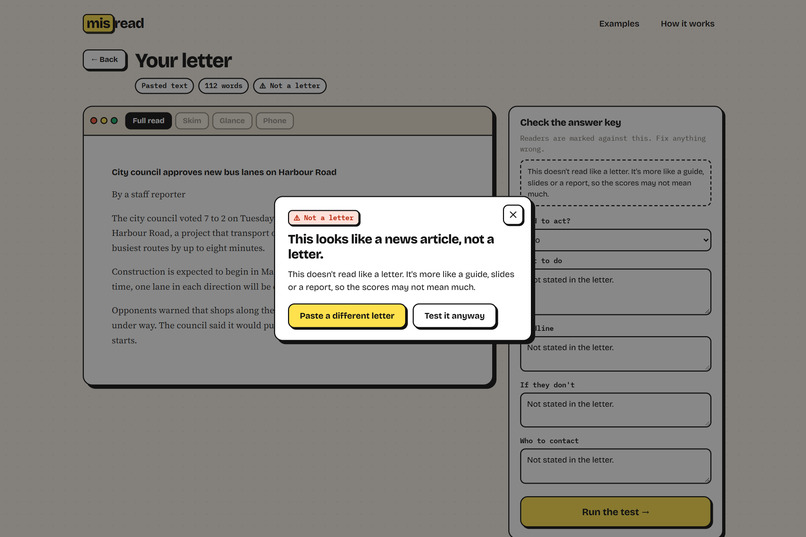
News article alert
Inspiration
We thought about it, in a hackathon of over 20,000 people, what is something that we could make that would be distinct? So while going through different ideas, we came upon this. Something that could actually help multiple people in their day to day lives. At times when we are busy and we get a letter, we just skim through it, not knowing the importance it really holds. What does that result in? The consequences like maybe we miss an insurance payment or a specific claim date. I myself, Thu Aung have faced this before when applying for scholarship, misread the date because I blindly skimmed through the letter and what was the outcome? I missed the deadline of submission by a day.
People who write letters for consumers do check before writing but they mainly check how they wrote them. Top to bottom for grammar mistakes. But they don't really check on how it is actually read, how it is when its skimmed and especially when its read on a phone. At times readers who suffer the most are often either reading in their second language or face difficulties in understanding what the letter wants, especially when its content heavy.
So we based our idea off this point: something that shows a writer what busy readers will walk away believing, before the letter goes out.
What it does
Misread presents a letter to AI readers in a way where busy people see it. Then, it checks what they understood against what the letter really asks for and then finds the smallest edit which stops the misreads.
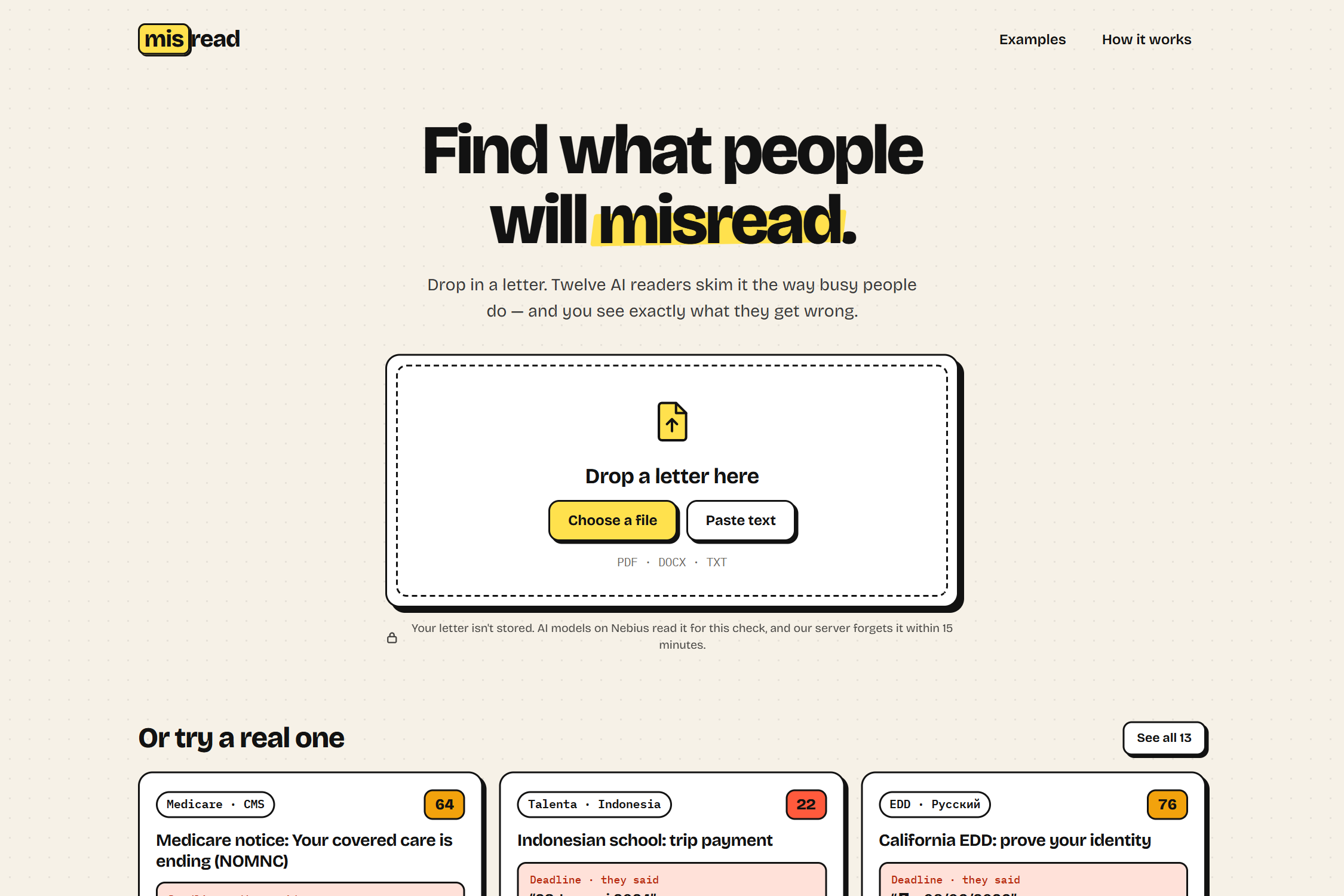
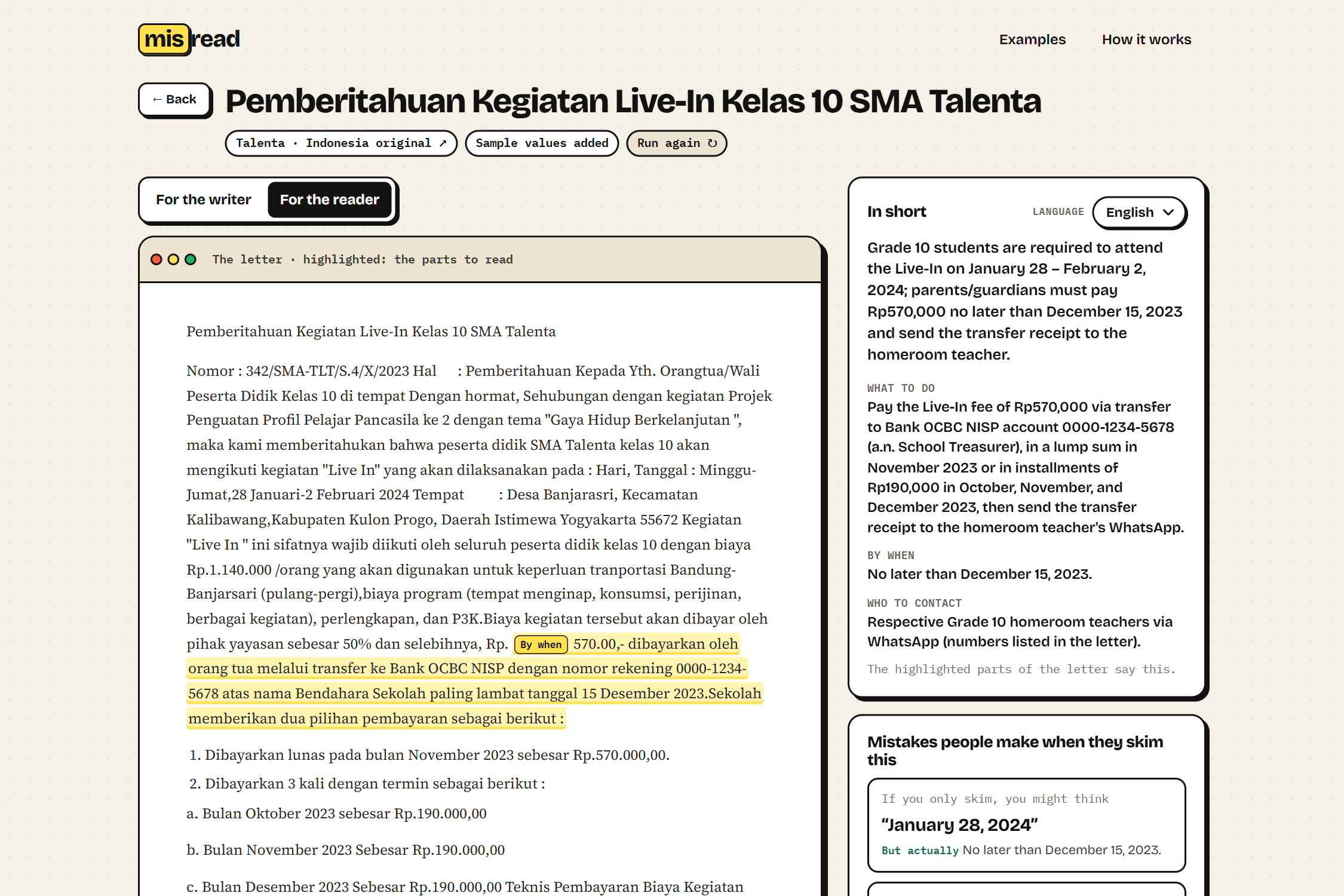
Upload or paste a letter: PDF, Word or text, up to 15 languages. The page switches to the letter's language
Check the answer key. Nemotron writes down what the letter asks. What to do, by when, who to contact, and whether you need to act at all. You correct it.
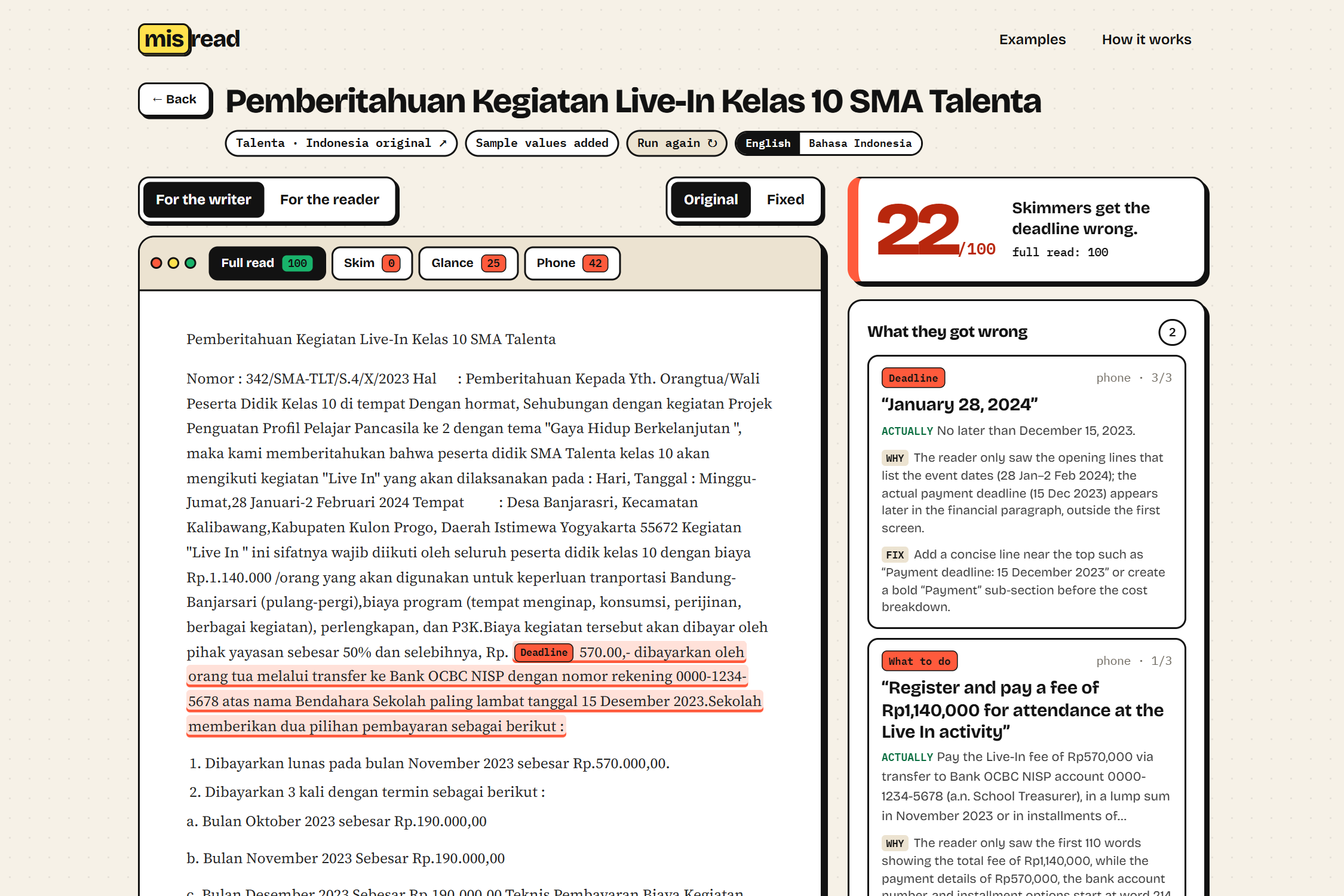
Busy readers read it. Four views of the letter (full read, skim, glance, phone screen) are each read three times. Each answer is graded right, missing or wrong.
Check the misreads. A score per view showing each confident wrong answer and why it happened and how to fix it, the sentences highlighted in the letter and a checklist for phone screens, bold, repetition and also length.
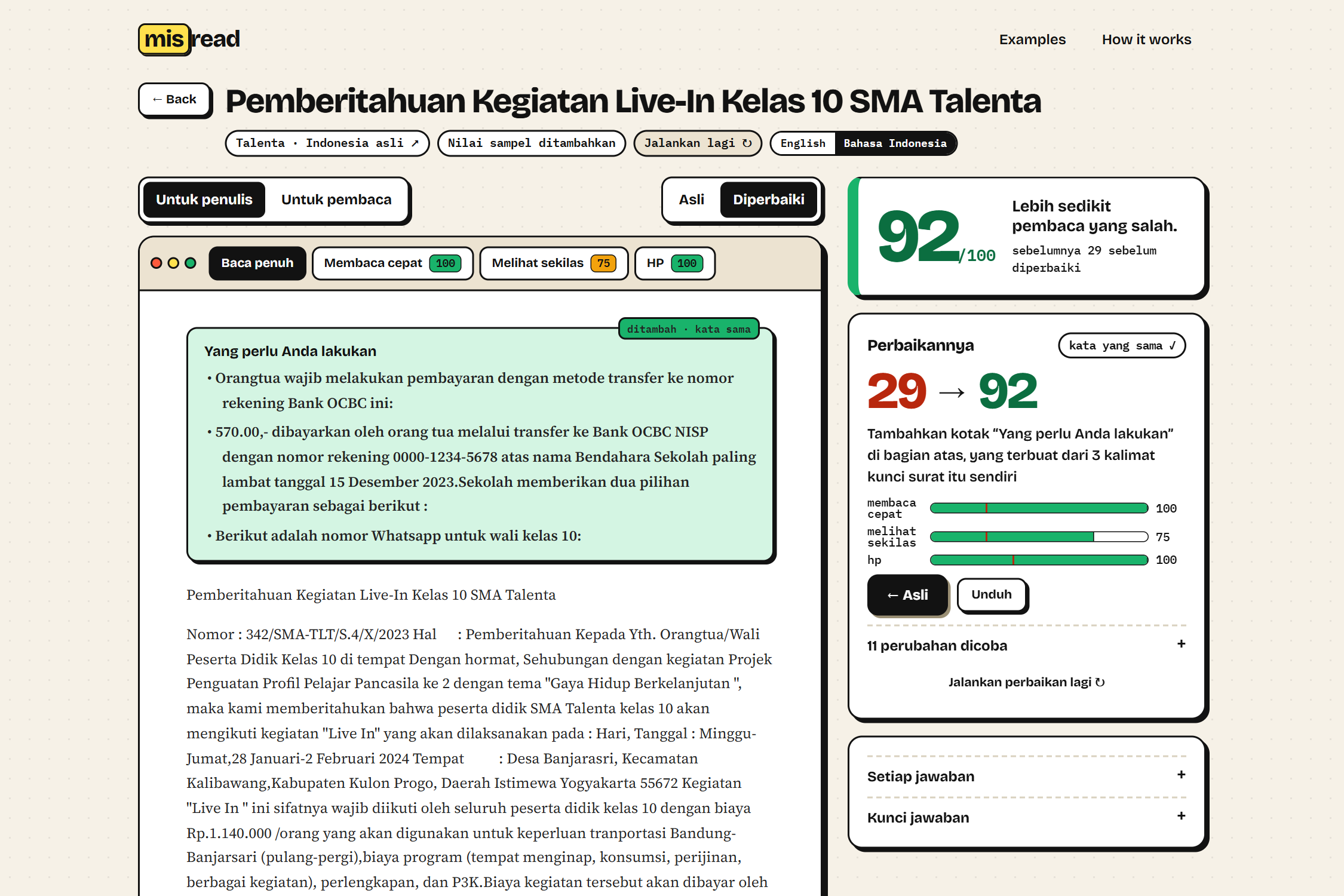
Fix it. About a dozen small edits are tried and re-read by busy readers. Bolding a sentence, making it a heading, move it to the top, add a "What you need to do" box built upon from the letter's own sentences or one rewording. Misread shows the best one which beats the original or says that no one did.
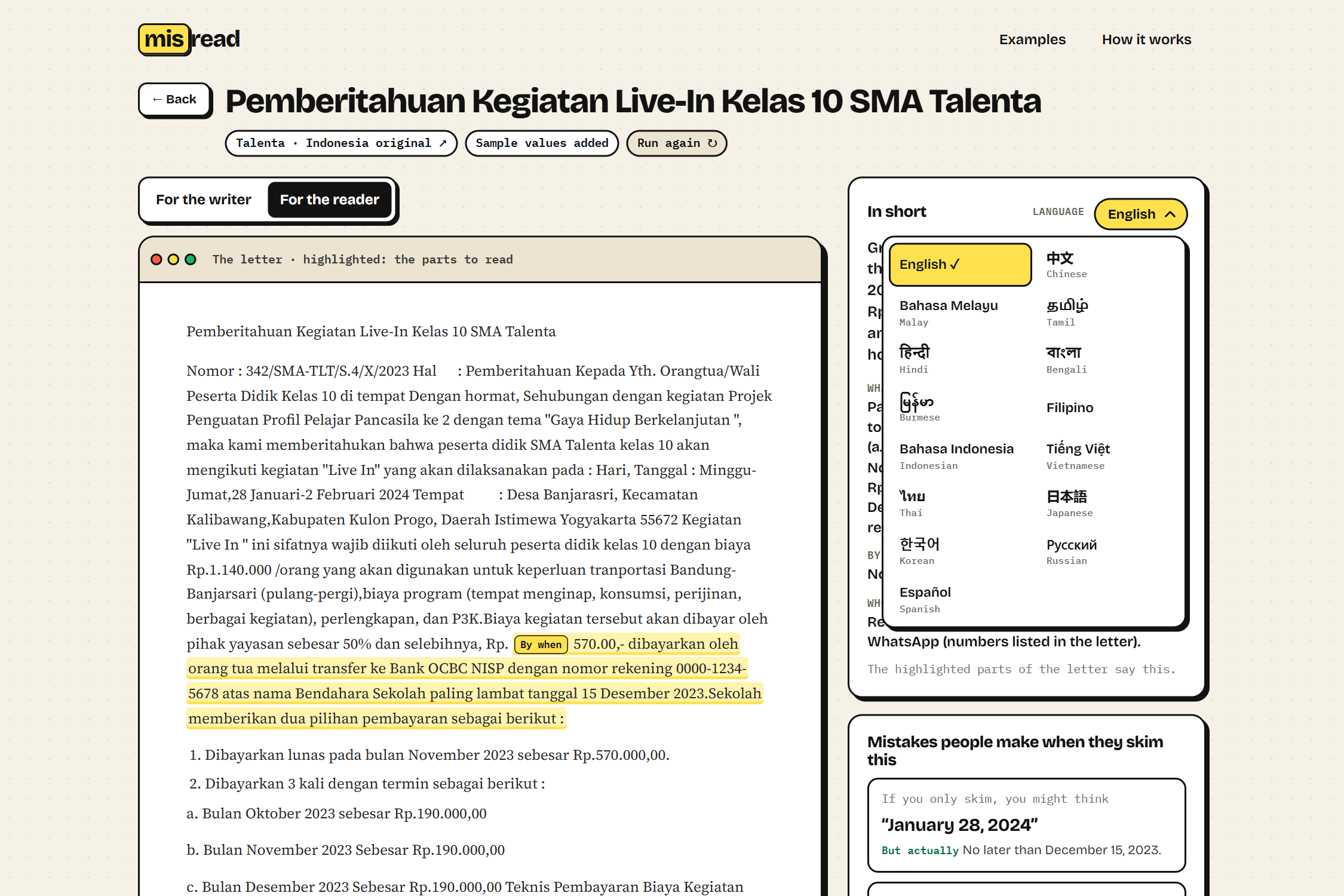
Reader view. A plain summary for the person receiving the letter, in 15 languages.
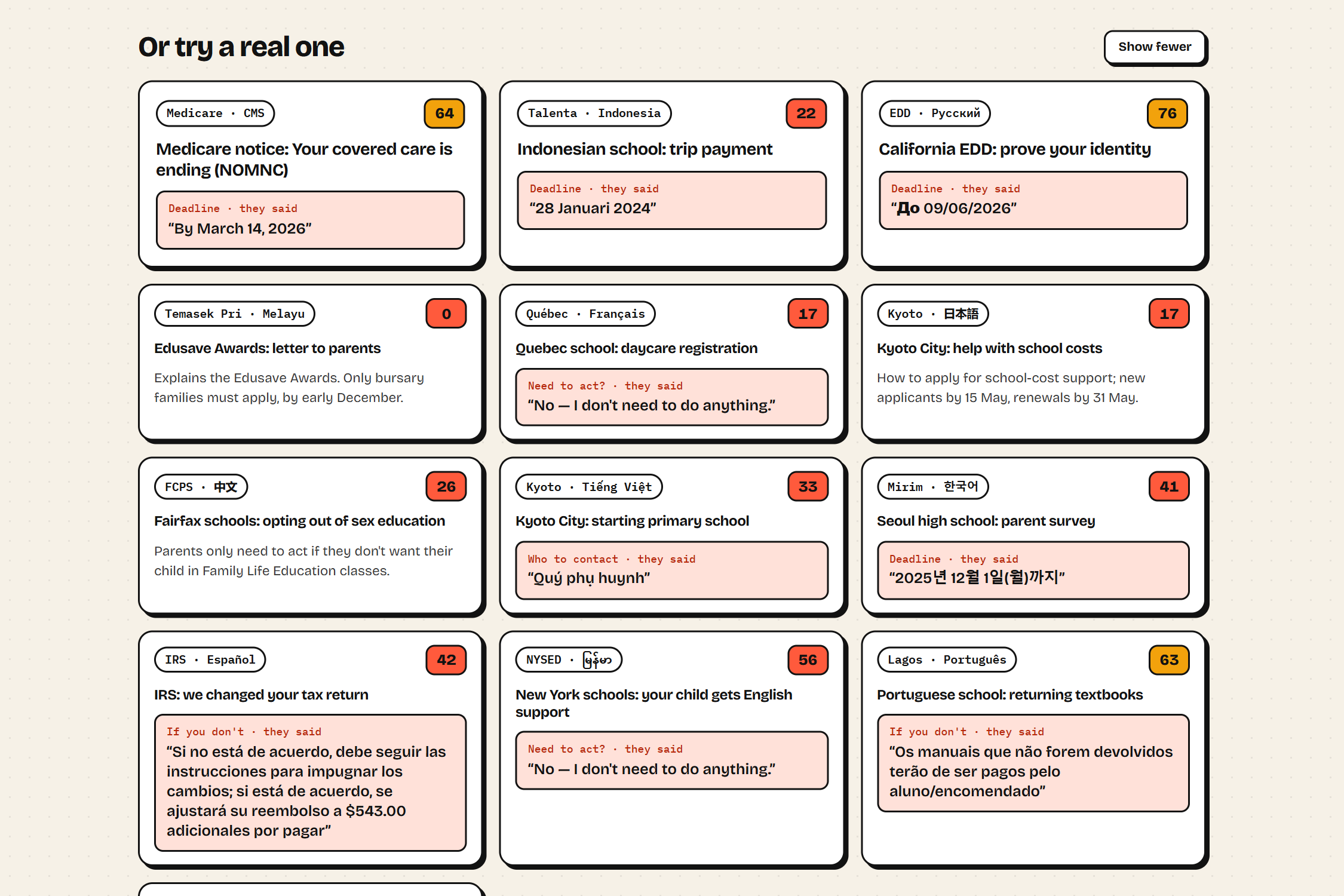
Thirteen real public letters are built in, each in different languages. English, Indonesian, Russian, Chinese, Spanish, Burmese, Korean, Portuguese, French, Japanese, Vietnamese, Malay and Hindi.
How we built it
Nemotron 3.5 Lightning is the busy reader (12 readings per letter): fast and cheap enough to read every view several times.
Nemotron 3 Super grades the answers, finds the key sentences and detects the language: careful, consistent judgments.
Nemotron 3 Ultra writes the answer key, labels the document type, and does the coaching, rewording and translation: the hardest reading and writing in the pipeline.
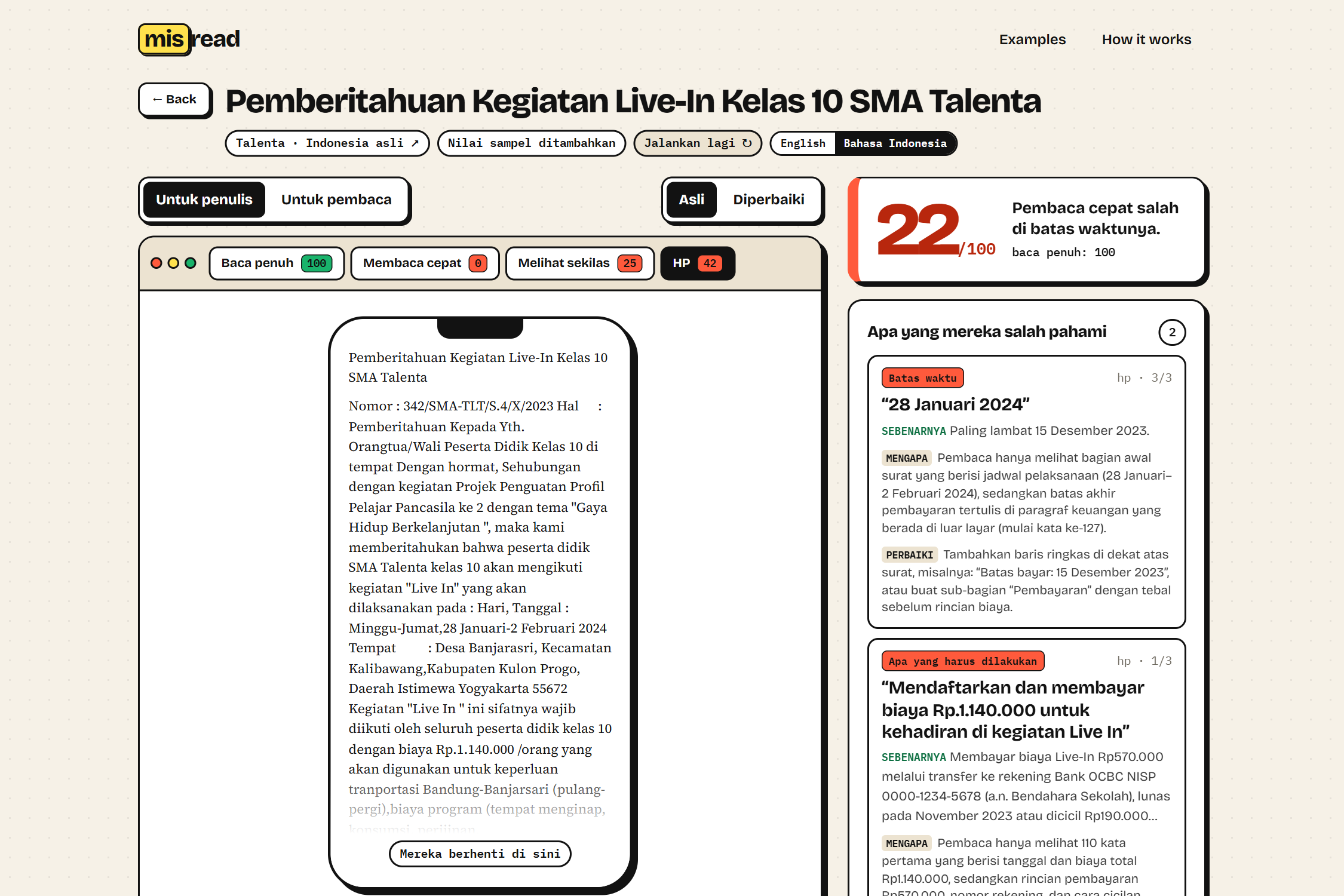
Reading views. The busy views are built in code, not by a model: skim keeps headings, bold text and the first sentence of each paragraph; glance keeps about 1 word in 5, the way eyes scan down a page; phone keeps the first 110 words. Languages without spaces are counted fairly: Chinese, Japanese and Korean at 2 characters a word, Thai, Lao and Khmer at 6 letters, Burmese at about 2.5 syllables.
Grading. Each answer is graded right, missing or wrong against the answer key. Every "wrong" is checked again against the whole letter before it is shown, so a vague answer doesn't count as a misread.
The fixer. Nemotron points to the sentence behind each fact, and code checks it is really in the letter. Most edits only move, bold or repeat the letter's own sentences, and code checks every original word is kept. One rewording is allowed and flagged for review. Each version is re-read by busy readers, and the best few are re-tested so luck doesn't pick the winner.
The app. A Python server using only the standard library, and a plain HTML and JavaScript page. Files are read in the browser with pdf.js and mammoth, keeping bold and large text for the skim view. The 146 page texts are translated once per language and cached, with hand-checked translations taking priority.
Privacy. Letters are never written to disk or logs, and the server forgets a finished run after 15 minutes.
Challenges we ran into
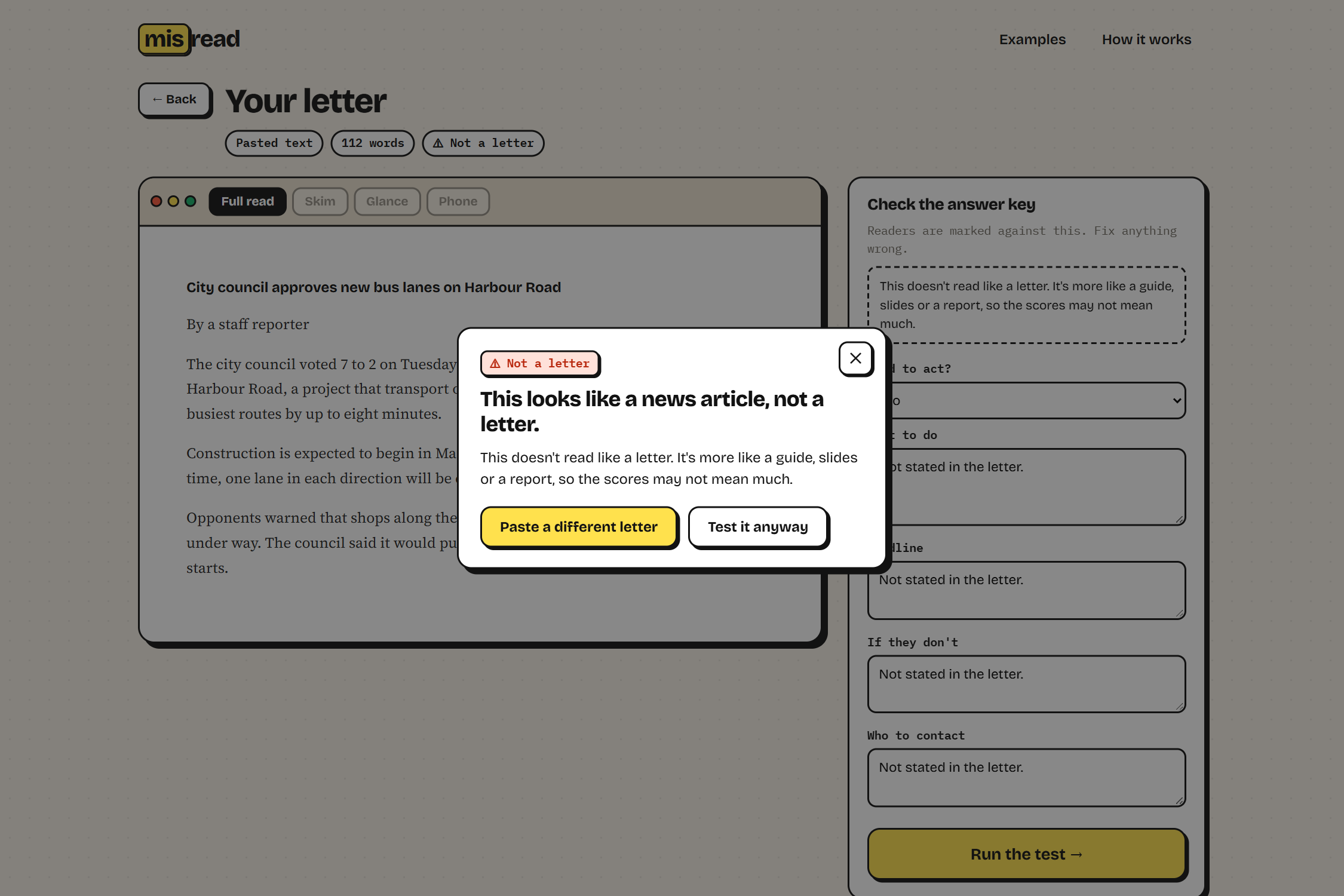
Not everything is a letter. Newsletters, slide decks and blank templates scored badly for reasons that had nothing to do with busy readers. A separate call now labels each document, and the page warns when it isn't a letter.
Broken text from real PDFs. Some PDFs extract as scrambled characters, and most real Burmese letters use the old Zawgyi encoding instead of Unicode. Misread now warns when text may be garbled, and the Burmese example was converted to Unicode.
Languages the models don't handle yet. The reader model returned blank answers on Tamil letters, so Tamil isn't offered as a letter language. Nemotron reads Burmese well but writes it poorly, so we checked its Burmese by translating it back to English.
Accomplishments that we're proud of
It finds real misreads in real letters. We backtested on 100 public documents: 50 from Singapore schools and agencies, 50 from the US and UK. On the 71 that are real letters, busy readers got something confidently wrong in 37. When each "wrong" card was re-checked against the whole letter, 49 of 51 held up (96%).
It works in 13 languages. Each built-in example is a real letter in a different language, with a hand-checked answer key. Among them: Chinese, from 33 to 83 (only parents who object need to act); Russian, from 67 to 90 (the effective date taken for the 10-day deadline); Spanish, from 38 to 71.
It knows when not to fix. A well-written NHS letter in Hindi scores 89 and needs no fix. When no edit beats the original, Misread says so instead of inventing one.
What we learned
An AI grader needs grading too. Our first automatic checks looked strict and were far too generous. Only judging flags by hand showed which changes actually helped.
Multilingual means more than translation. Word counts, encodings and fonts all broke in different scripts before any model was involved.
Where a sentence sits matters more than how it's worded. All 11 winning fixes in the backtest kept the letter's own words: they moved a sentence to the top, made it bold, or repeated it in a box.
What's next for misread
Share results. A link to a tested letter's results, so a writer can send them to a colleague.
Native-speaker review of the page text and tips in Malay, Hindi, Burmese, Korean, Japanese and Vietnamese.
Built With
- css
- html
- javascript
- mammoth.js
- nebius-token-factory
- nemotron-3-super
- nemotron-3-ultra
- nemotron-3.5-lightning
- nvidia-nemotron
- python
