-
-
-
-
additional information
-
-
-
-
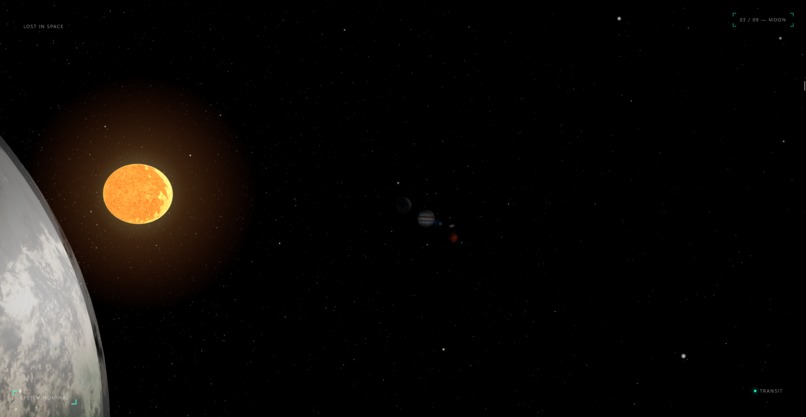
view to the planets
-
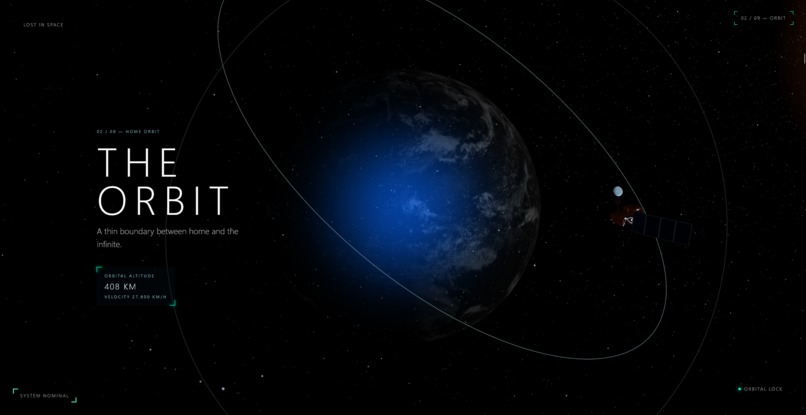
orbit
-
-
main section
-
Inspiration
Space makes us feel both incredibly small and endlessly curious. We wanted to turn that feeling into an experience rather than another informational website.
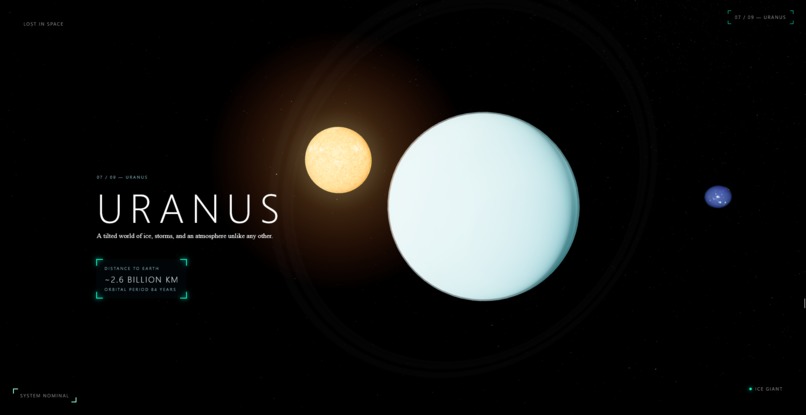
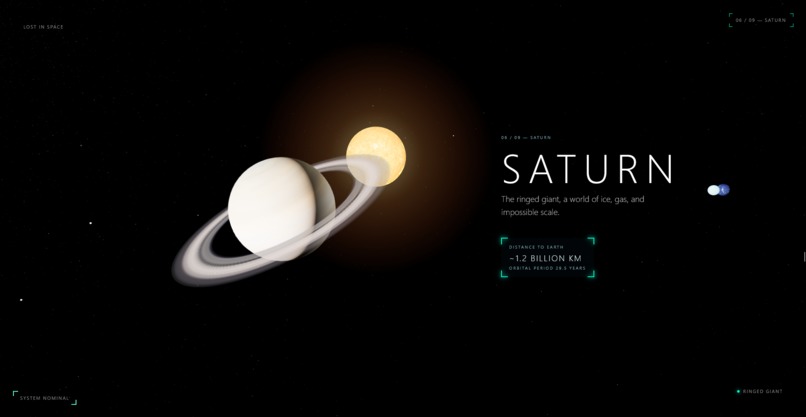
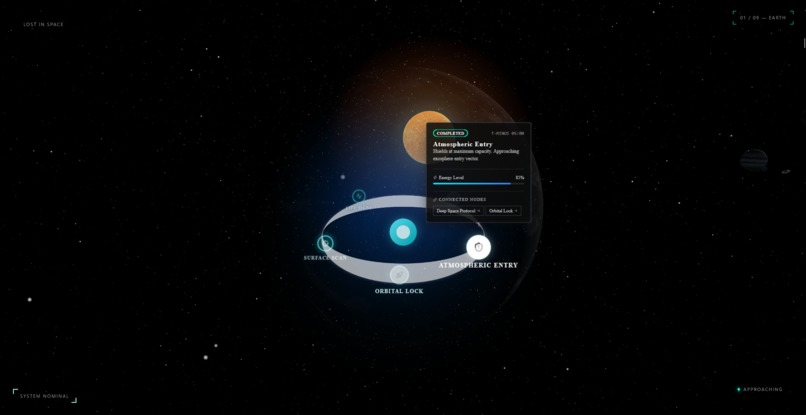
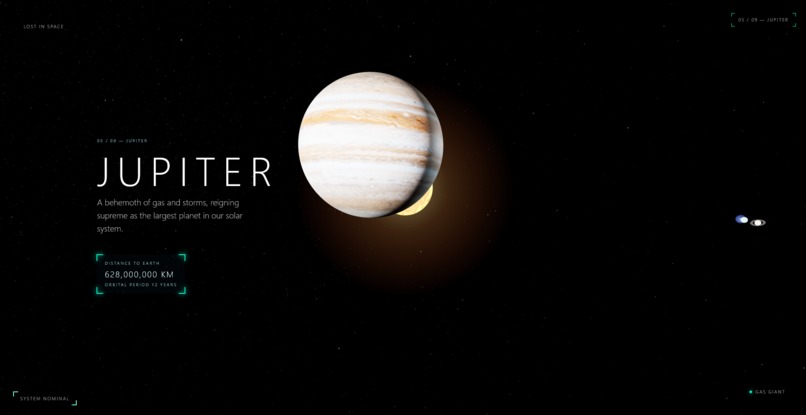
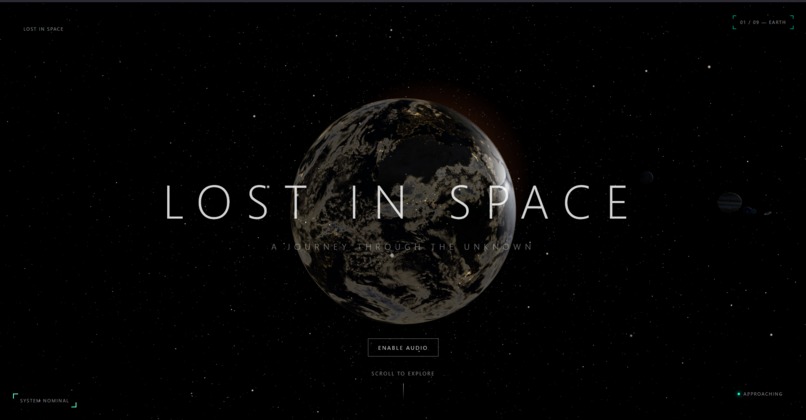
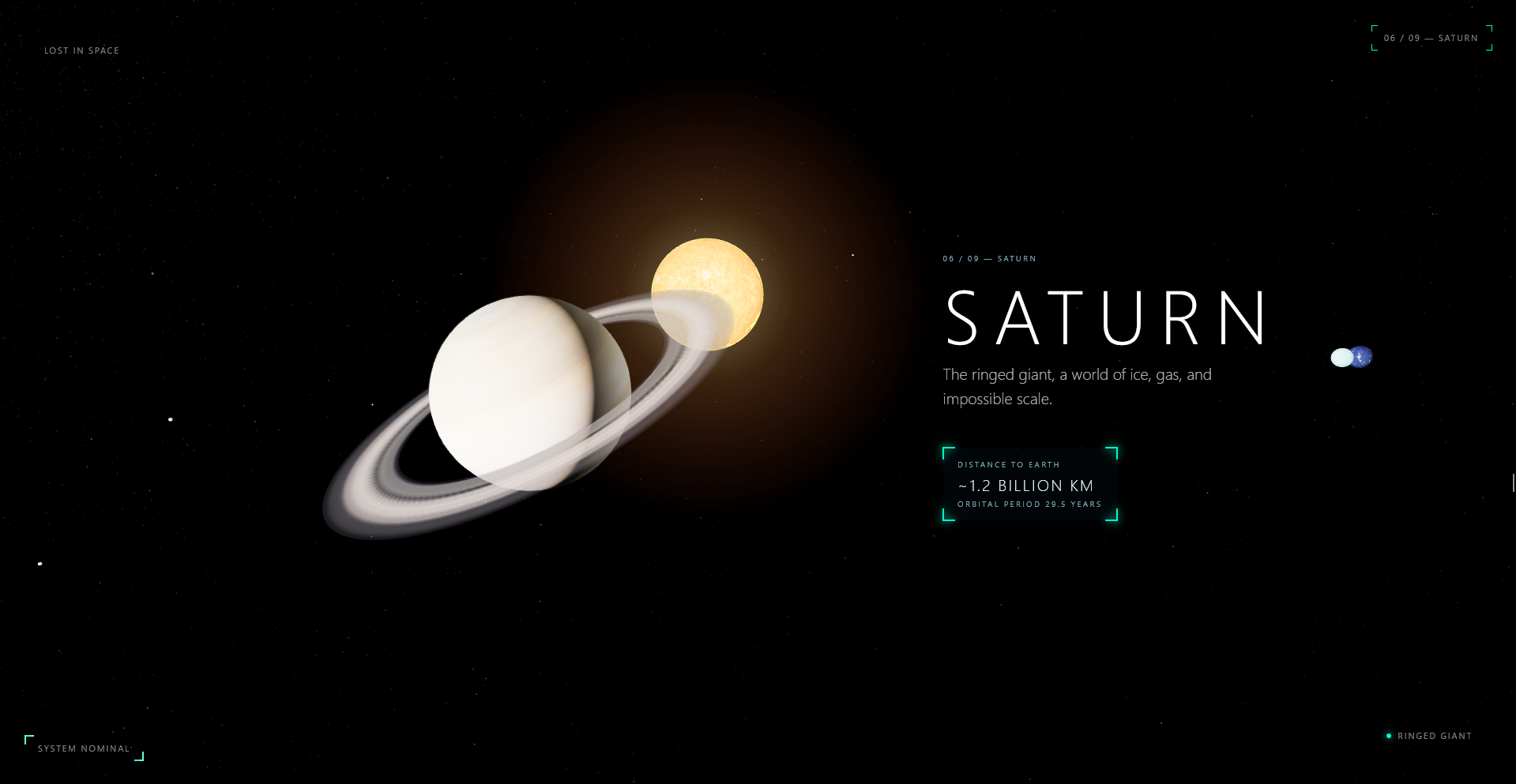
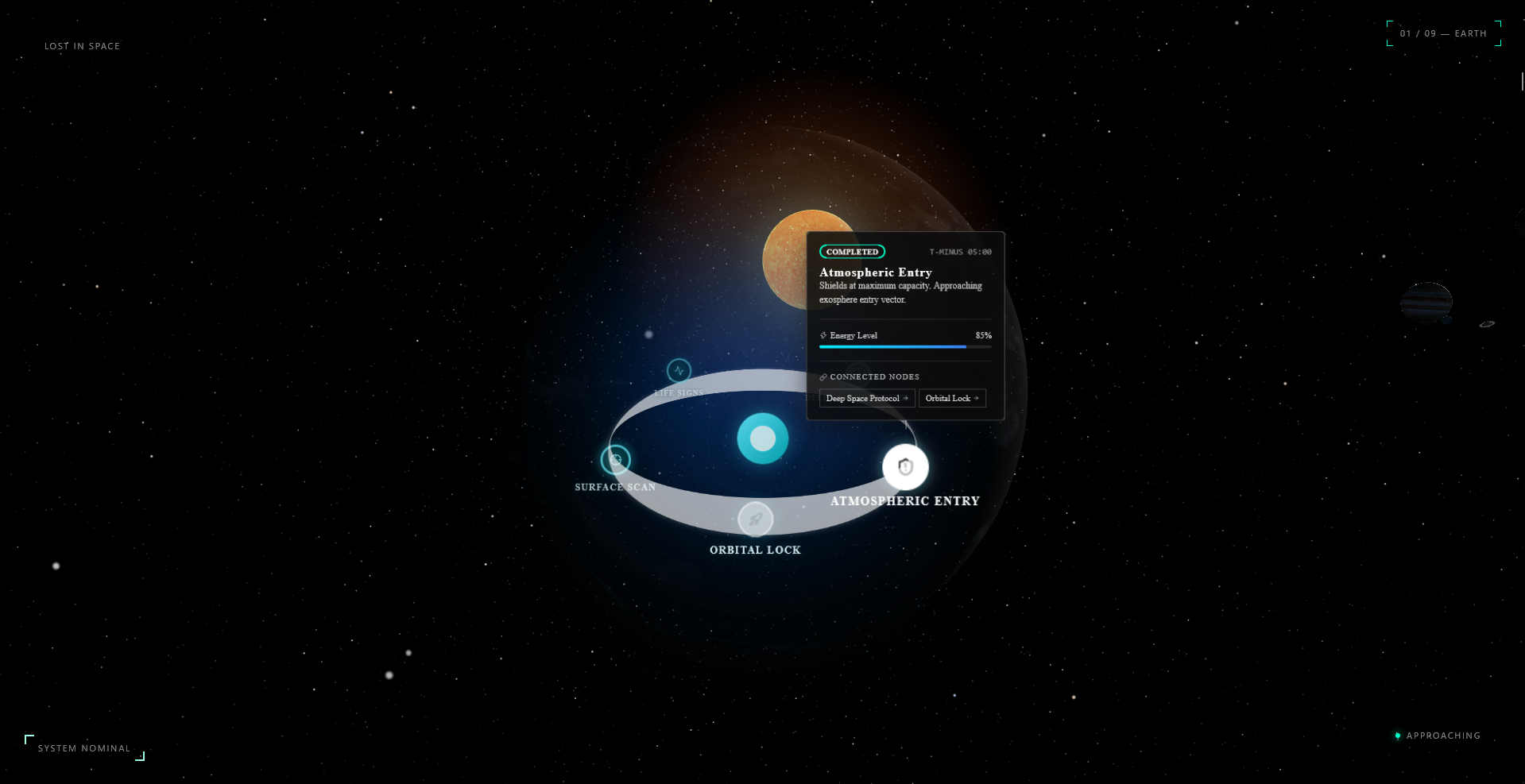
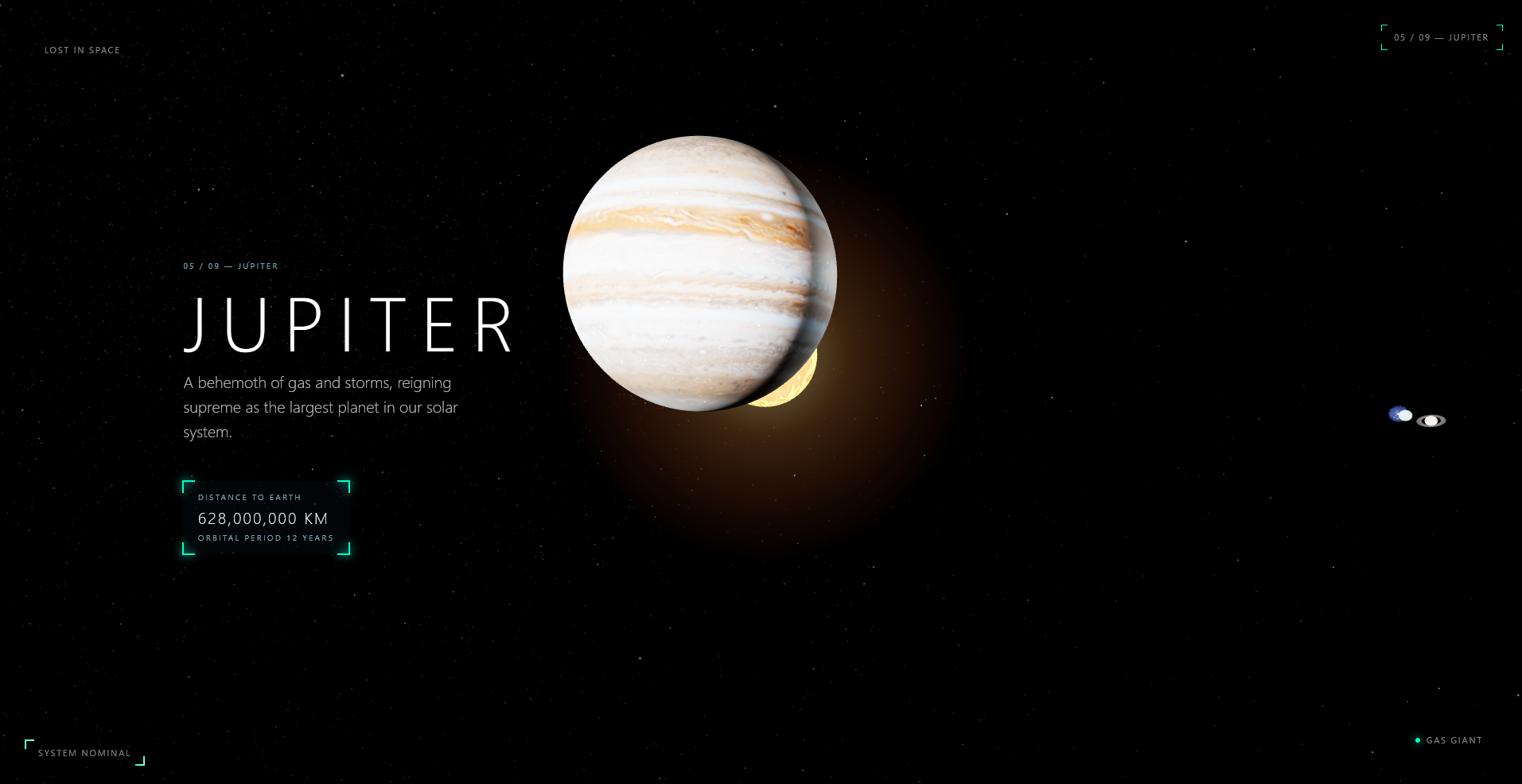
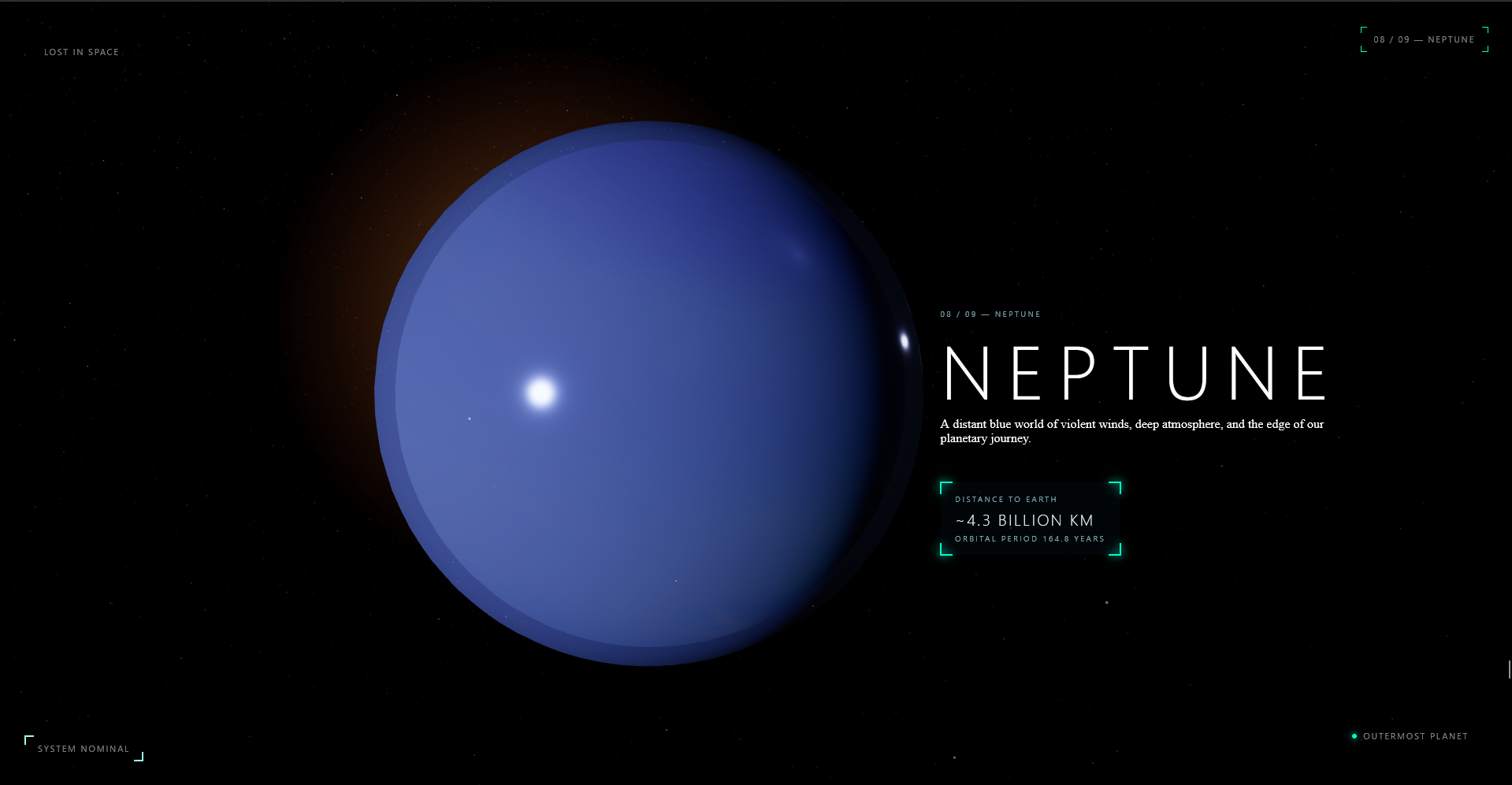
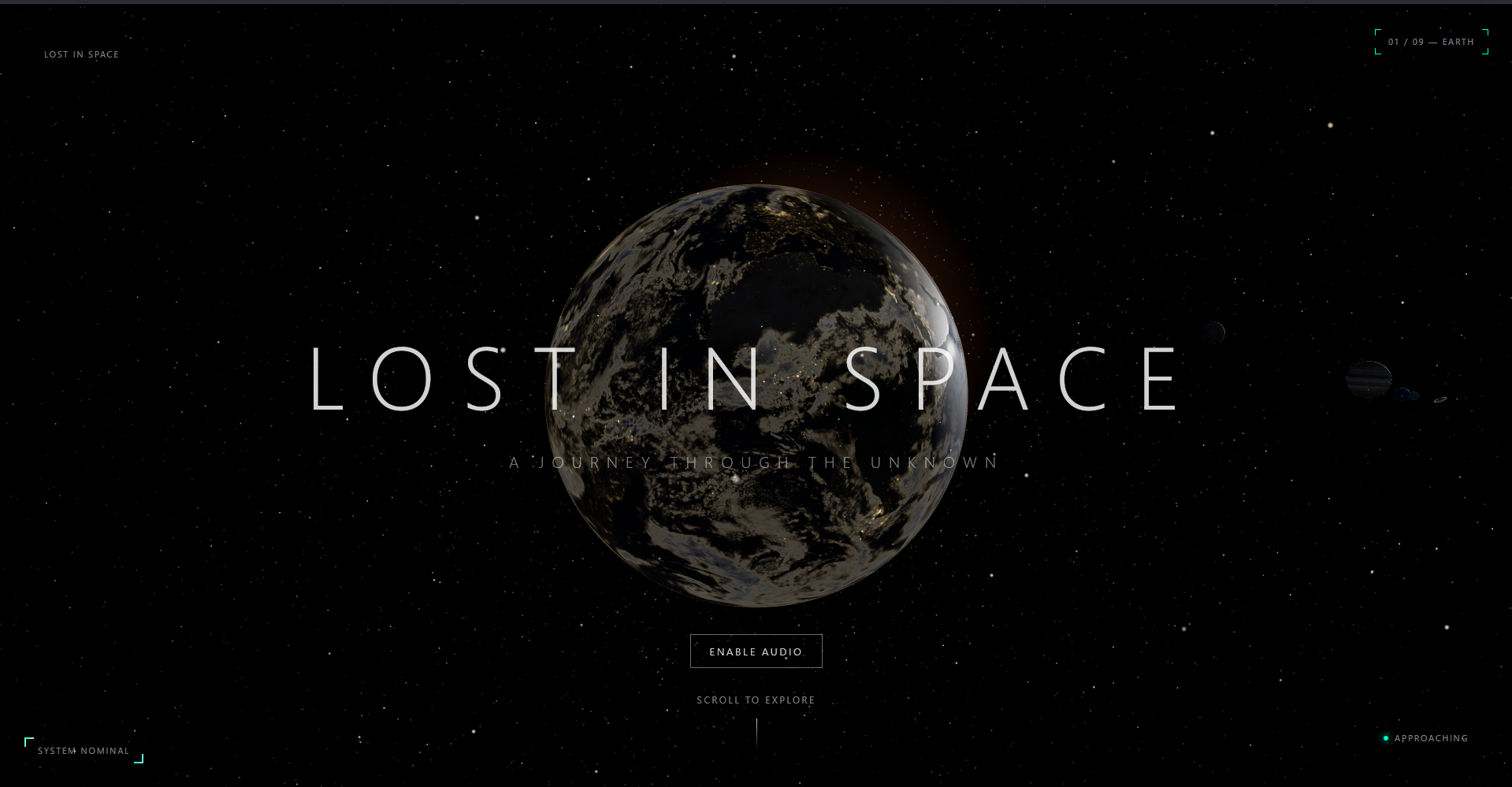
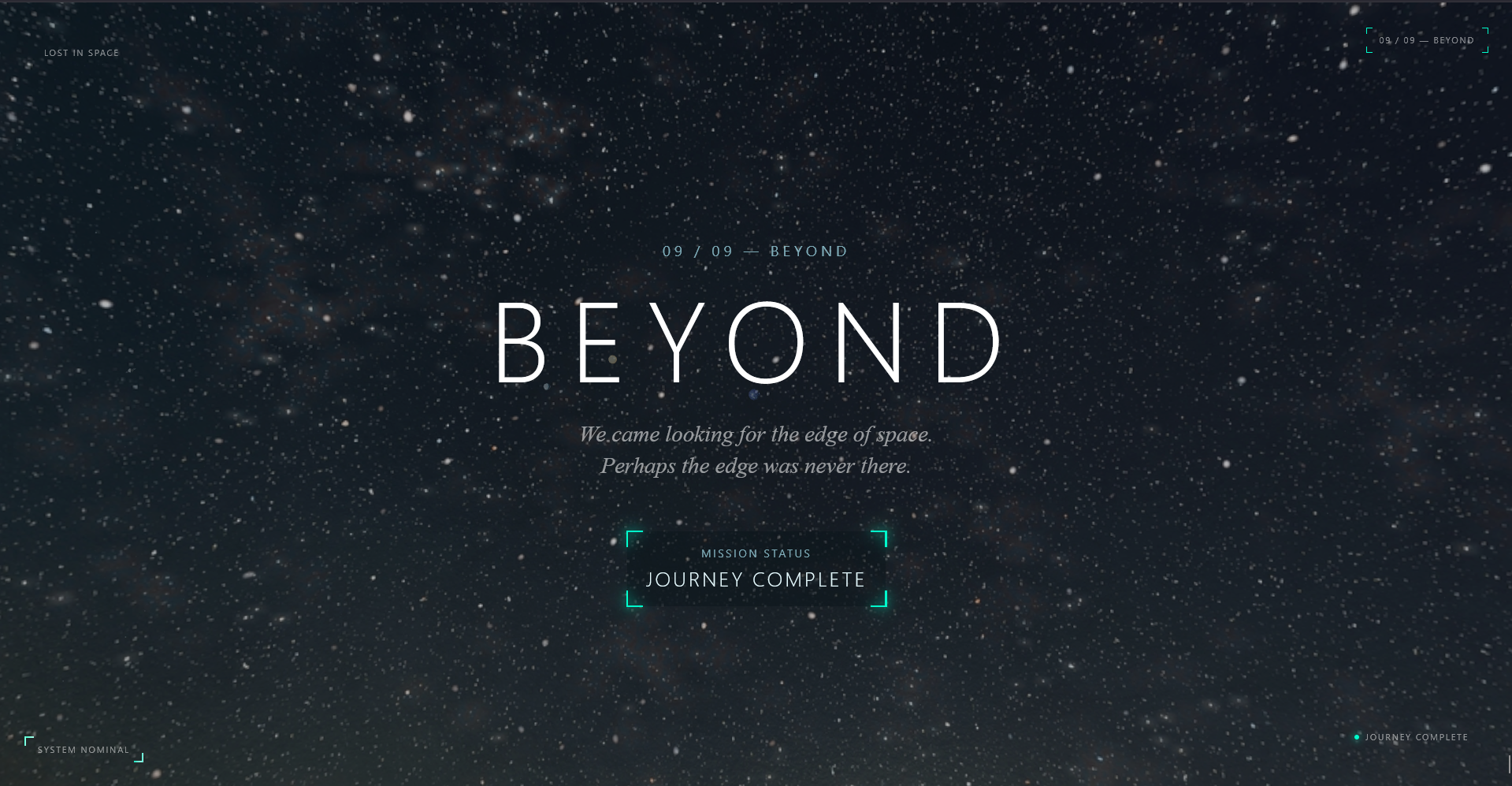
LOST IN SPACE is an interactive 3D journey where users explore an unknown environment, guided by mysterious signals and discoveries scattered across space.
What We Built
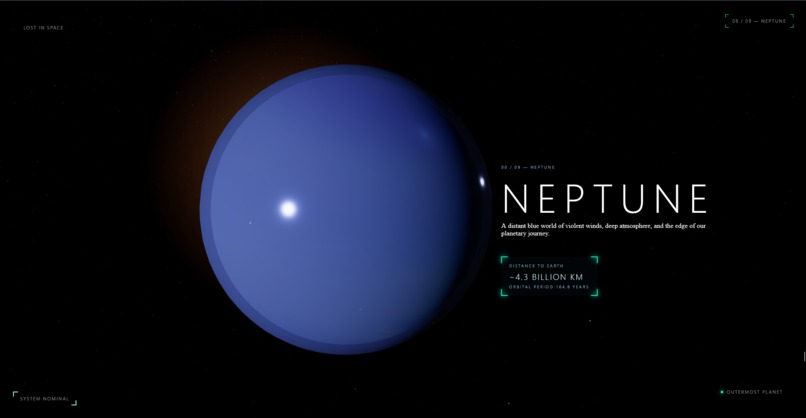
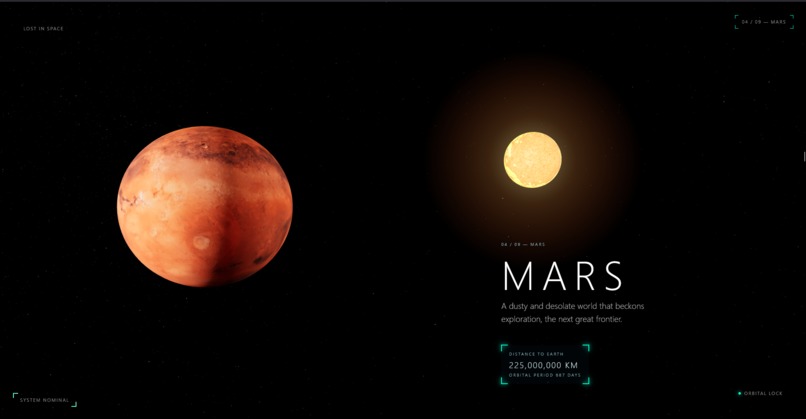
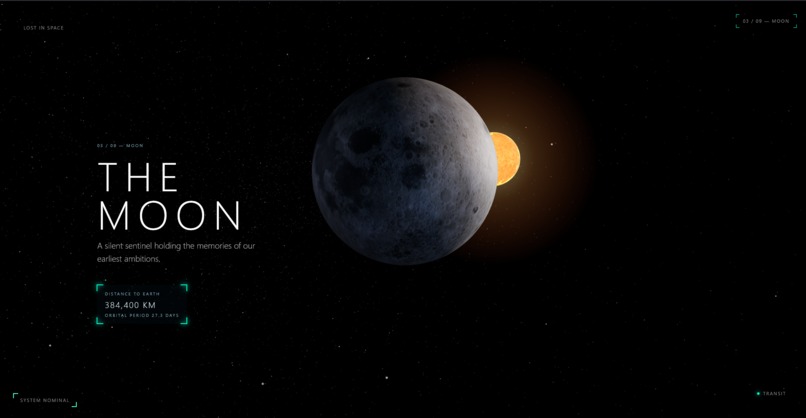
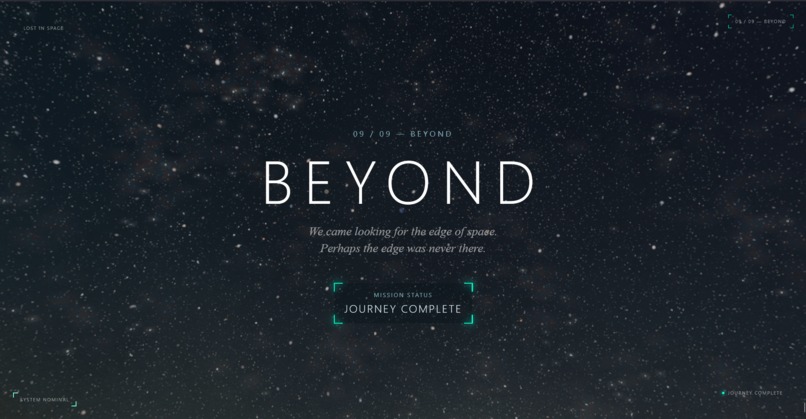
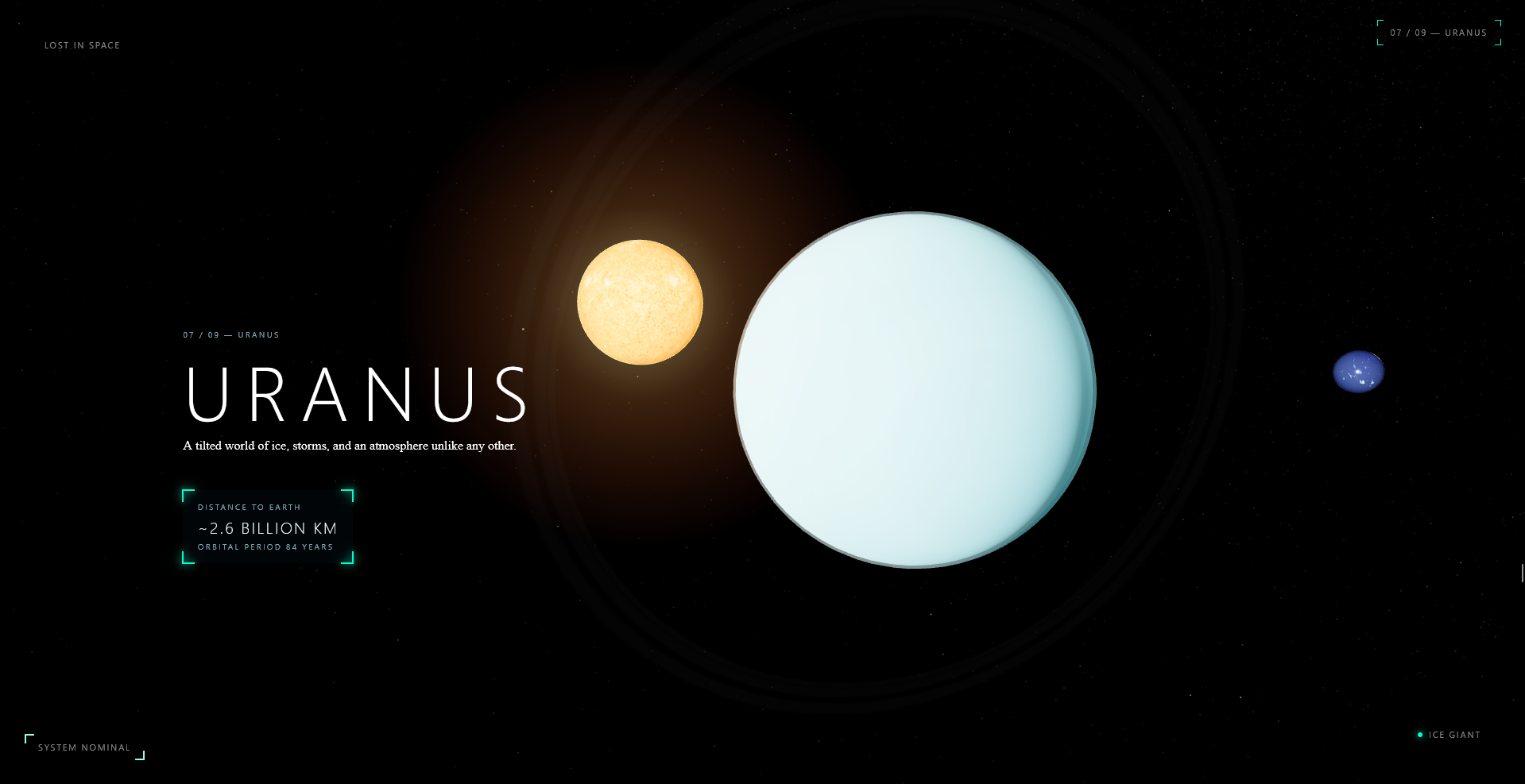
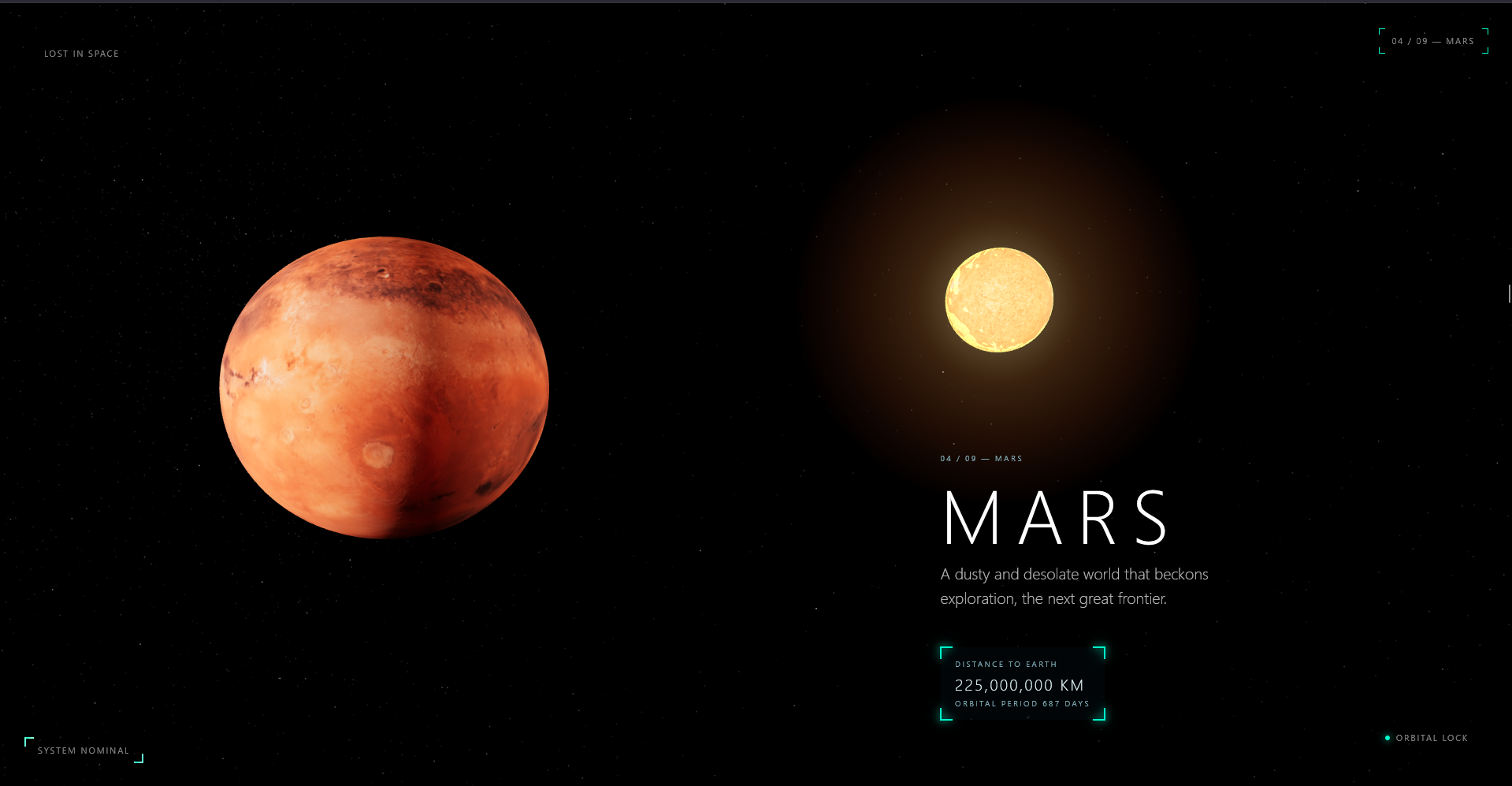
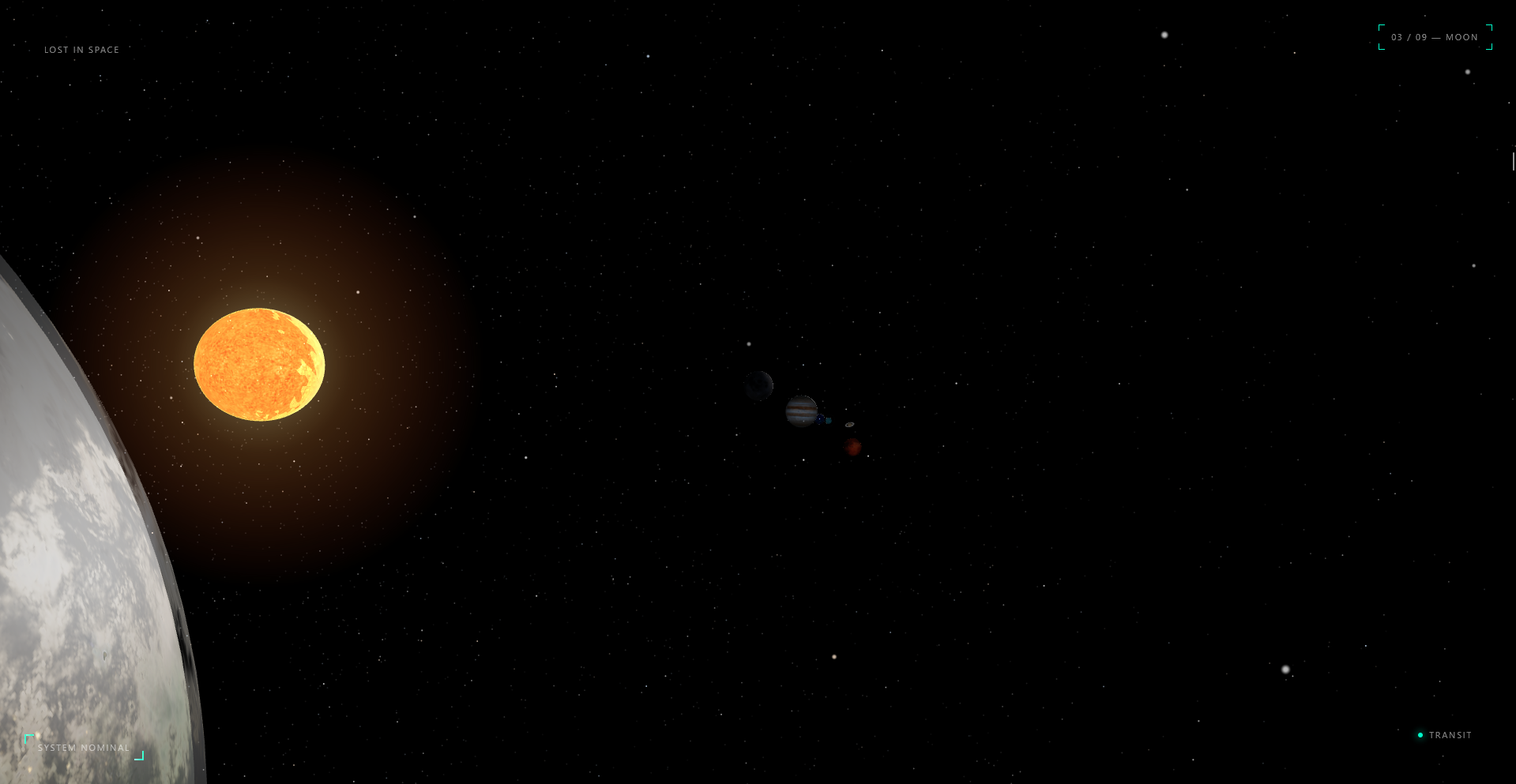
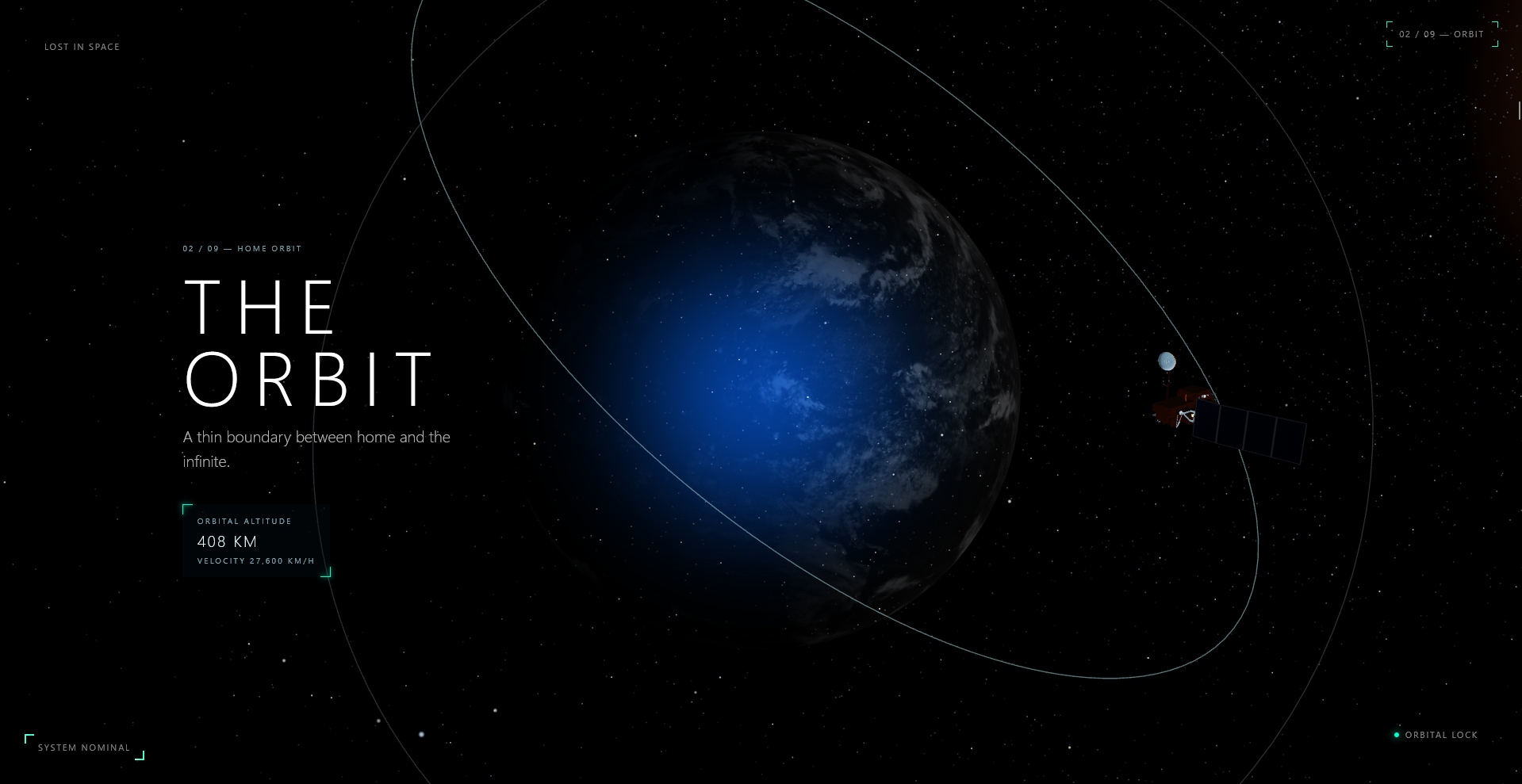
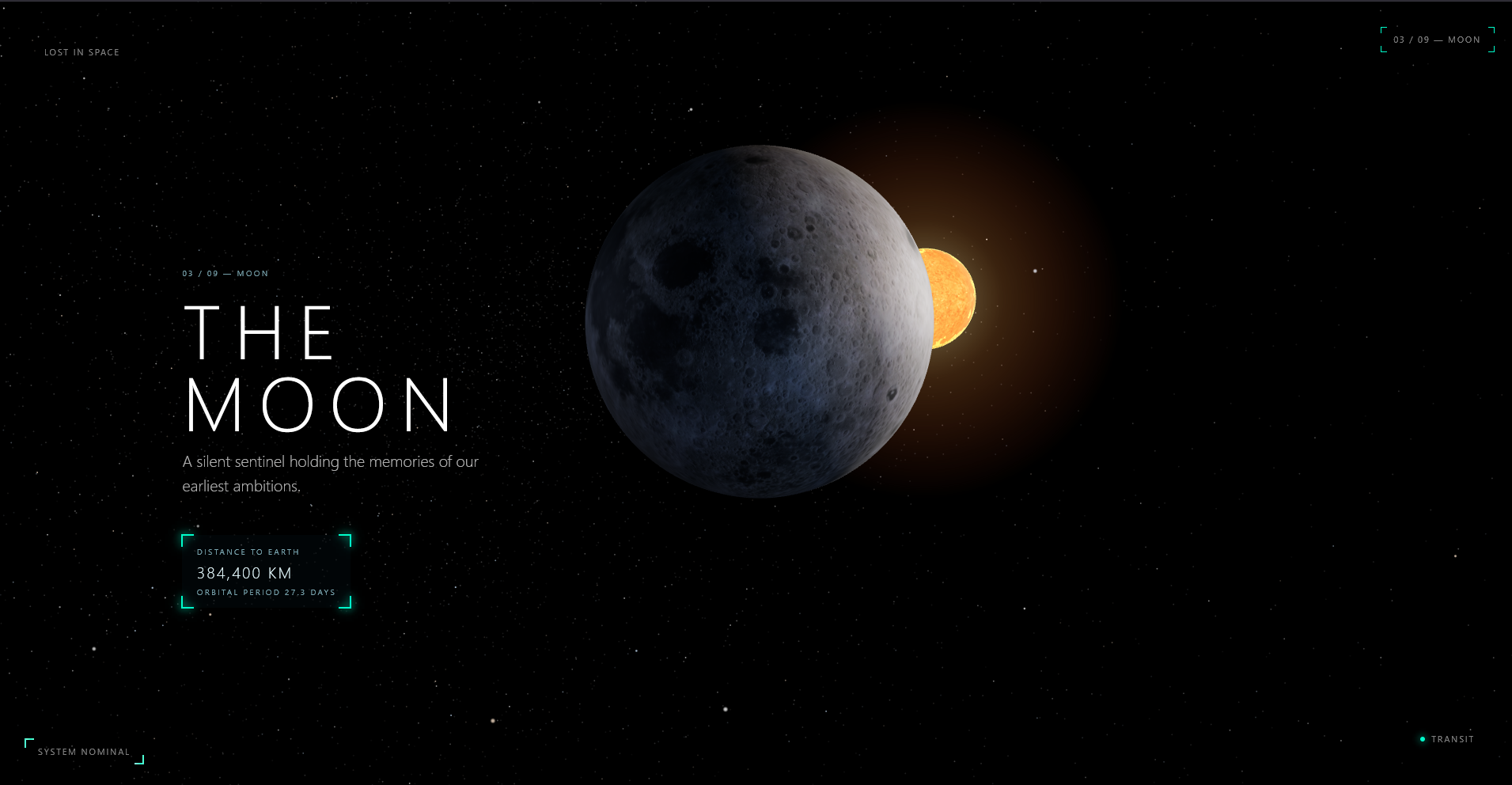
We created a web-based 3D space exploration experience where users can interact with different planets as the scroll through. Each discovery combines interactive 3D elements with real-world information, making the experience both immersive and educational.
How We Built We used Three.js, JavaScript, HTML, CSS, and WebGL, along with real 3D assets from NASA and other open repositories.
We combined 3D models, lighting, animations, camera movement, and interactive UI to create an explorable space environment.
Challenges
Our biggest challenge was integrating different 3D models while maintaining consistent scaling, lighting, textures, and browser performance.
We also had to find the right balance between providing information and keeping the experience immersive rather than turning it into a traditional educational website.
What We Learned
We learned that an immersive 3D experience is about more than just models. Storytelling, interaction, lighting, animation, and sound all contribute to how users experience a digital world.
Accomplishments We're Proud Of
We are proud of turning a simple space exploration concept into an interactive experience using real-world space assets.
Most importantly, LOST IN SPACE is more than a collection of 3D models — it is the beginning of a story.
What's Next for LOST IN SPACE
We plan to expand the experience with more planets, moons, spacecraft interiors, missions, puzzles, sound design, mysterious transmissions, and a deeper narrative.
Our long-term goal is to make users feel less like they are visiting a website and more like they are actually exploring the universe.
Don't just learn about space. Explore it.

Log in or sign up for Devpost to join the conversation.