-
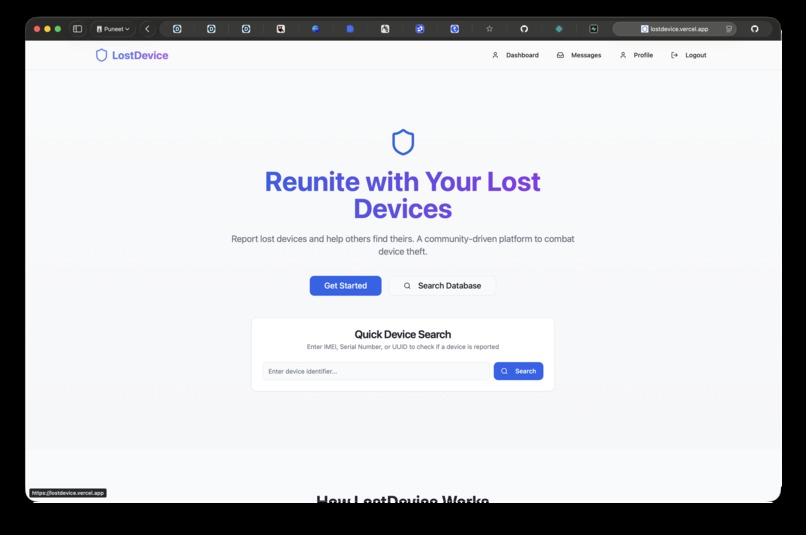
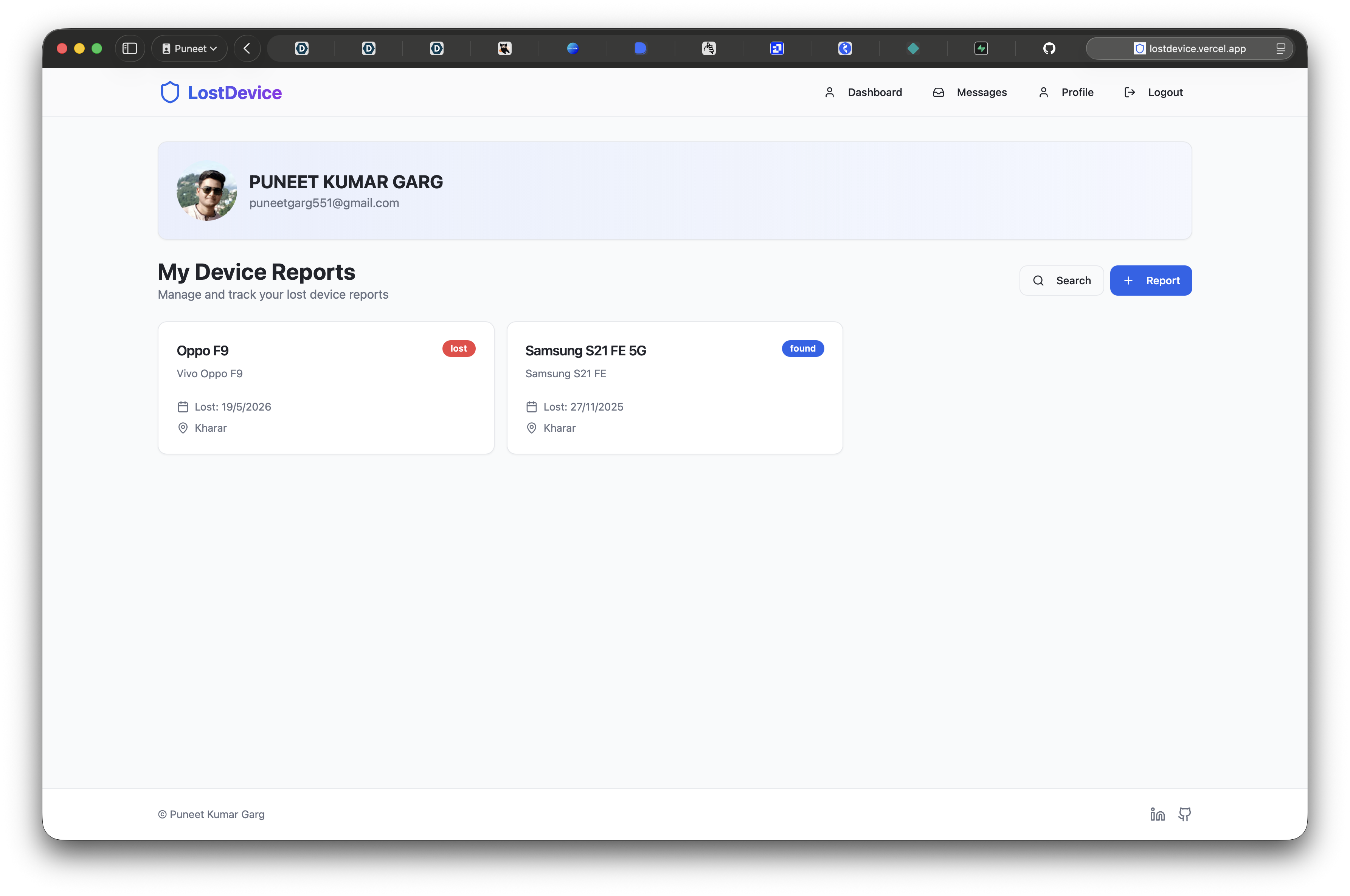
Dashboard to report, track, and recover lost devices effortlessly.
-
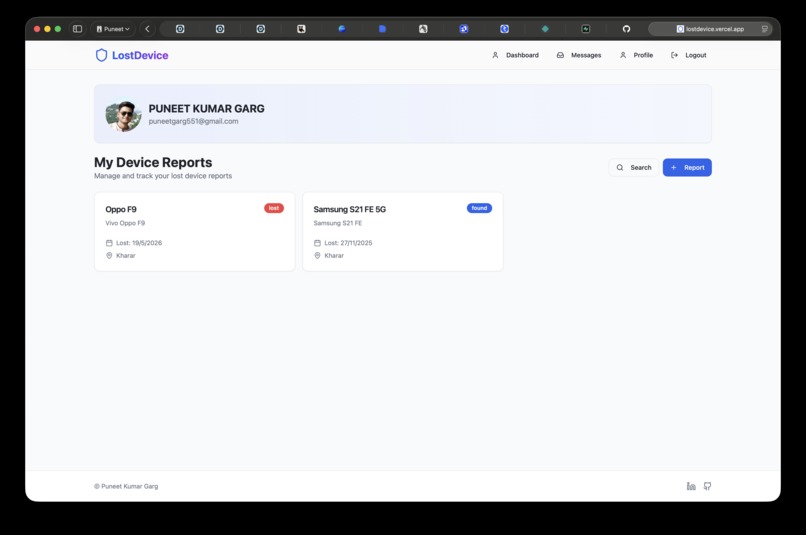
Track and manage reported devices with real-time status updates through a personalized dashboard.
-
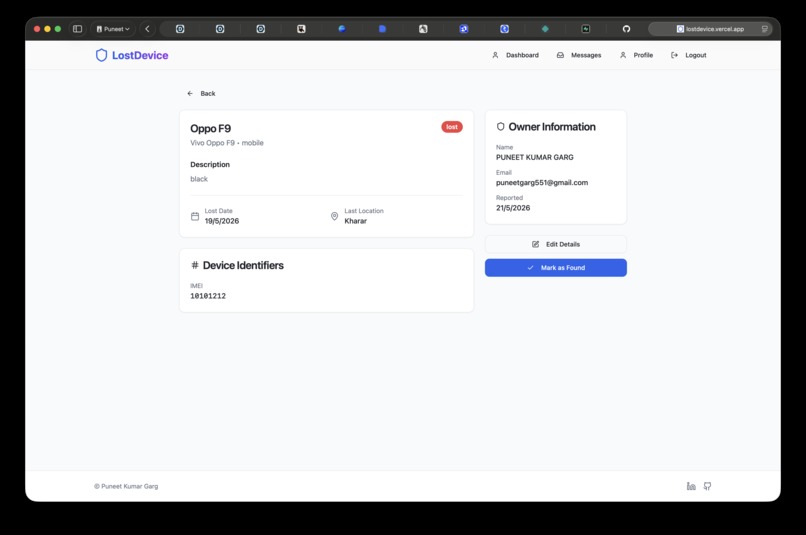
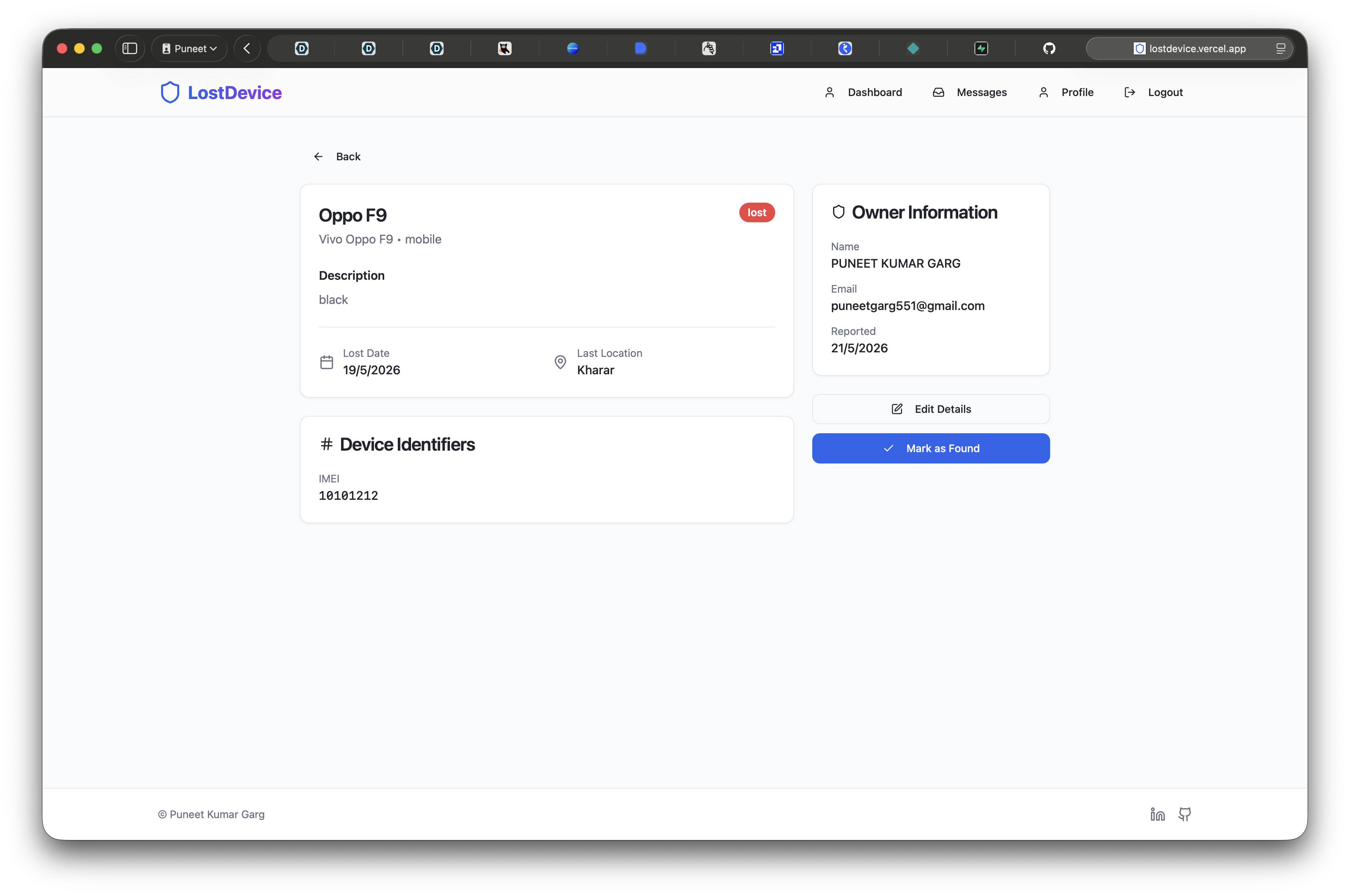
Detailed device reports with owner verification and unique identifiers for secure recovery tracking.
Inspiration
Every year, millions of phones, laptops, tablets, and other personal devices are lost or stolen. In most cases, people have very limited ways to recover them, and stolen devices are often resold in second-hand markets without any verification process. We wanted to create a platform that not only helps users recover lost devices but also helps buyers and shopkeepers verify whether a device has been reported as lost or stolen.
The idea behind LostDevice was to build a community-driven recovery and verification platform that improves device recovery chances and helps reduce illegal resale of stolen devices.
What it does
LostDevice is a real-time device recovery and verification platform where users can report lost or found devices, search listings, and securely communicate with each other.
The platform allows users to:
- Report lost or found devices
- Search devices using serial numbers, IMEI numbers, and device details
- Connect through real-time messaging
- Manage and edit device listings
- Securely authenticate and maintain user profiles
One of the platform’s key features is its device verification system. Before buying a second-hand device, shopkeepers or buyers can search the device’s IMEI or serial number on LostDevice. If the device has already been reported as lost or stolen, the platform can match it with the original report and help reconnect with the rightful owner. This helps reduce illegal resale and increases the chances of recovery.
How we built it
We built LostDevice using a modern full-stack web development stack focused on scalability, responsiveness, and real-time communication.
Technologies used:
- React 18 + TypeScript + Vite for the frontend
- Supabase for authentication, database, and real-time features
- Tailwind CSS + shadcn/ui for UI and design system
- TanStack Query for server state management
- React Router v6 for routing
- React Hook Form + Zod for form validation
We also used Supabase Edge Functions for optimized search functionality and maintained the backend schema using migration files for scalability and maintainability.
Challenges we ran into
One of the biggest challenges was implementing real-time messaging and ensuring instant synchronization between users. We also faced challenges designing a scalable database structure capable of handling device reports, user profiles, messaging, and search efficiently.
Another challenge was building an effective matching and verification flow using serial numbers and IMEI data while keeping the user experience simple and easy to use.
We also focused heavily on responsiveness, validation, and secure authentication to make the platform reliable for real-world usage.
Accomplishments that we’re proud of
We are proud that we built a fully functional platform solving a real-world problem with practical use cases.
Some accomplishments include:
- Implementing real-time communication between users
- Building a scalable full-stack architecture
- Creating a working IMEI and serial number verification system
- Designing a responsive and user-friendly interface
- Integrating secure authentication and protected workflows
- Developing a platform that can assist both in recovering lost devices and identifying potentially stolen ones
Most importantly, we transformed an idea into a live working product with real-world impact and future scalability.
What we learned
Through this project, we learned:
- How to build scalable full-stack applications
- Real-time database and messaging implementation
- Better frontend architecture and server state management
- Authentication and backend integration with Supabase
- Database schema design and optimization
- The importance of user experience in problem-solving applications
We also gained experience solving real-world engineering challenges related to scalability, security, validation, and deployment.
What’s next for LostDevice
In the future, we plan to expand LostDevice with:
- AI-powered smart device matching
- Image-based device recognition
- Location-aware recovery assistance
- Mobile applications for Android and iOS
- Automated alerts for matched devices
- Partnerships with local shops and second-hand marketplaces
- Advanced fraud prevention and verification systems
Our long-term vision is to make LostDevice a trusted recovery and verification ecosystem that helps reduce device theft, prevent fraudulent resale, and reconnect people with their valuable devices faster and more securely.
Built With
- css3
- git
- github
- html5
- javascript
- postgresql
- react
- supabase
- tailwind
- tailwind-css
- typescript
- vite
- zod


Log in or sign up for Devpost to join the conversation.