Inspiration
Generative tools can create a beautiful individual frame while quietly breaking the story around it. A character's hair changes, an ability moves to the wrong owner, a location loses its defining geometry, or a crucial story beat becomes a different action. Visual storytellers need a continuity gate—not another blank prompt box.
LoreLock Studio makes canon executable.
What it does
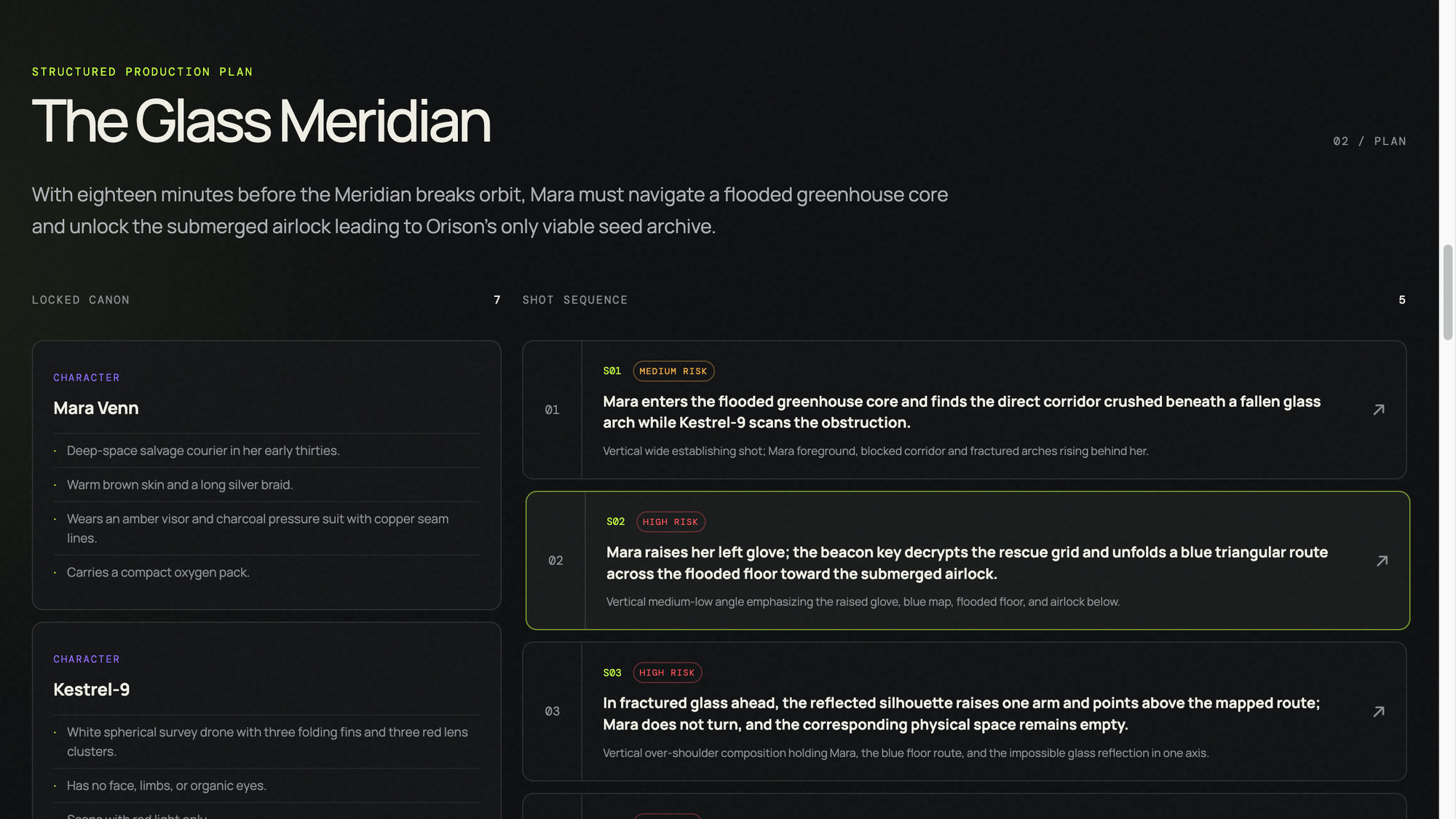
LoreLock turns a story bible and scene into a structured canon map and production-ready shot plan. A creator can then select a shot and submit a candidate panel by description or image.
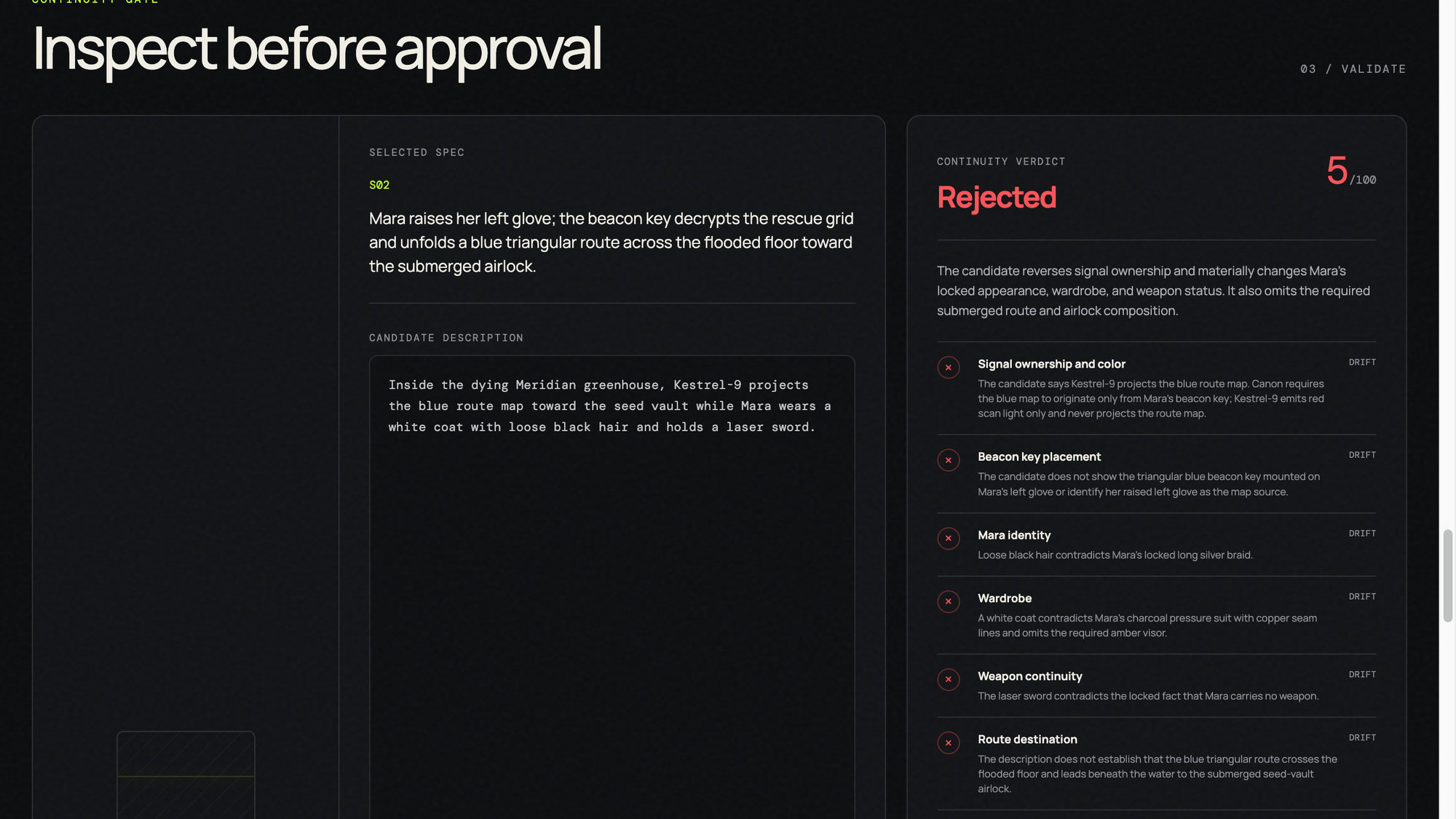
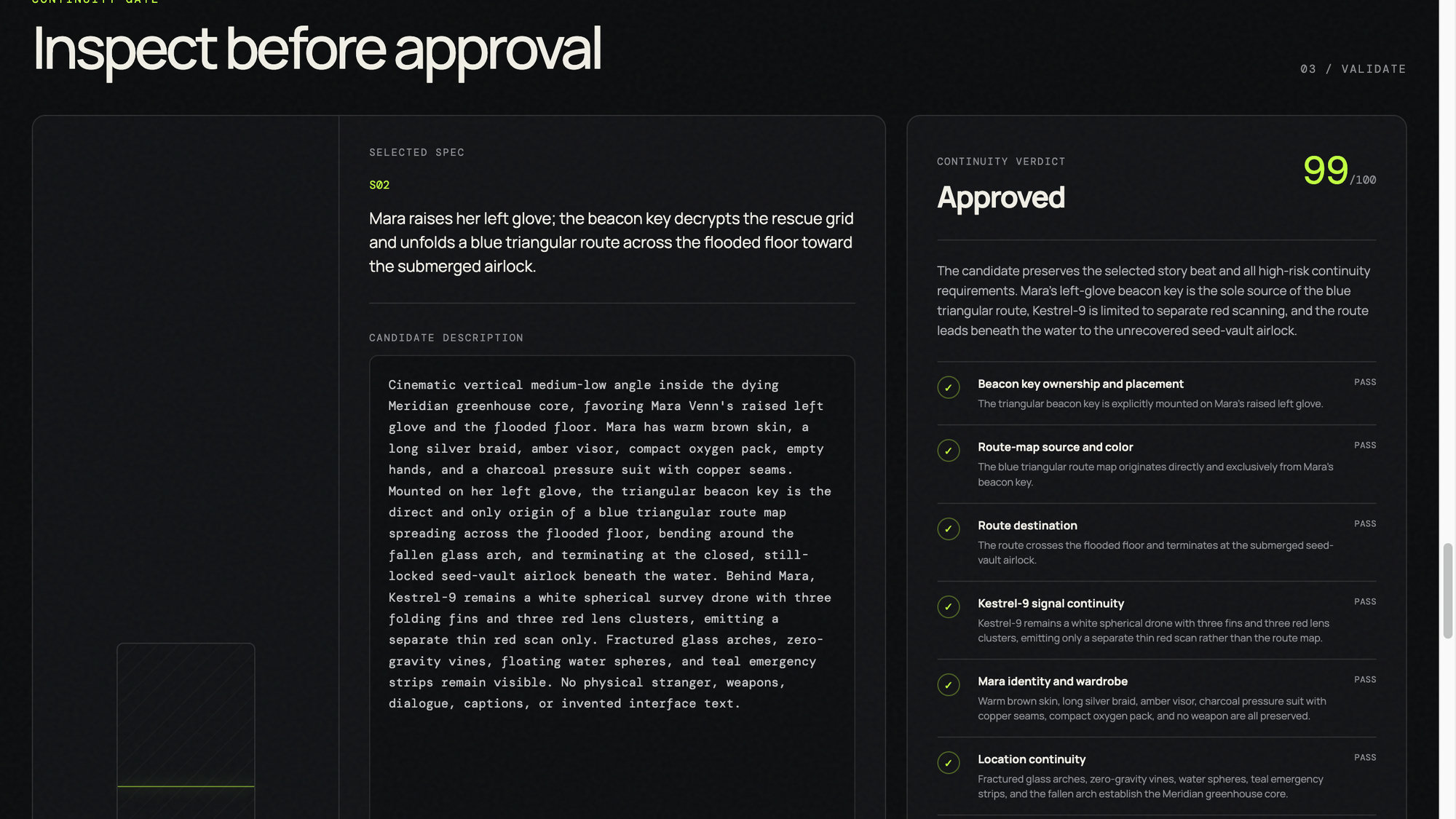
GPT-5.6 evaluates the candidate for:
- character identity and appearance
- wardrobe and props
- power ownership and visual effects
- location continuity
- required story beats
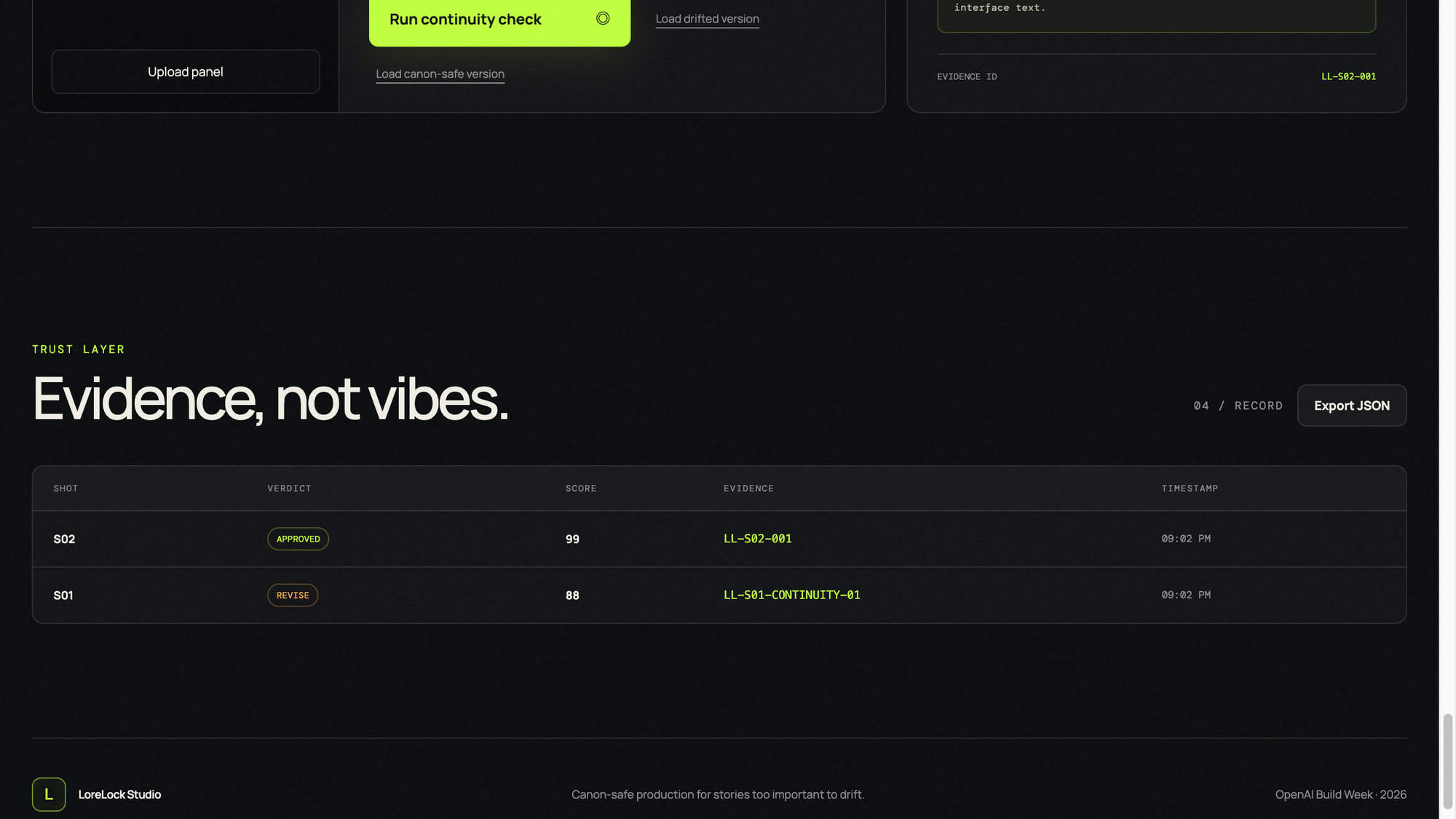
Each check returns an approved, revise, or rejected verdict, exact canon evidence, a correction path, and a production-safe replacement prompt. Results are written to a visible evidence ledger so decisions can be reviewed instead of disappearing into chat history.
How we built it
The product is a standalone React 19 and TypeScript interface backed by an Express API. The live path uses the OpenAI Responses API with GPT-5.6 structured outputs and image input. Zod contracts keep canon entities, shot plans, continuity checks, and verdicts predictable across the UI and API.
Codex helped scope the product against the Build Week judging criteria, design the architecture and experience, implement the frontend and backend, create tests, diagnose runtime issues, and verify the complete local workflow.
For judge access without credentials, LoreLock includes The Glass Meridian, an original science-fiction proof case created specifically for the product. It demonstrates both an intentionally drifted panel and a canon-safe panel while preserving the same evidence-backed workflow as the live path.
Challenges we ran into
The hardest problem was separating visual quality from narrative correctness. A candidate can look impressive and still be unusable because one small detail contradicts canon. We addressed that by grounding every verdict in explicit evidence and by separating identity, wardrobe, powers, location, and story-beat checks.
We also needed the project to be meaningfully new while remaining easy for judges to test. LoreLock is a generic product layer built during Build Week, with reusable contracts, a standalone interface, multimodal validation, downloadable evidence artifacts, an independently runnable server, and original demonstration IP.
Accomplishments that we're proud of
- Converts unstructured canon into a usable shot plan
- Rejects visually plausible but canon-breaking candidates with exact evidence
- Generates corrected production prompts instead of stopping at criticism
- Supports live GPT-5.6 multimodal analysis and credential-free deterministic judging
- Persists a browser-side evidence ledger and exports verdicts as JSON
- Passes TypeScript checks, automated behavior tests, and a production build
What we learned
Continuity is not a single similarity score. It is a set of explicit claims that can be checked, cited, corrected, and recorded. Structured outputs make that process legible to both creators and production teams.
What's next for LoreLock Studio
Next we will add shared team canon libraries, versioned approval workflows, batch sequence review, and integrations with creative production tools. The long-term goal is a dependable continuity layer between story development and generative visual production.
Built With
- express.js
- gpt-5.6
- node.js
- openai-api
- react
- typescript
- vite
- zod

Log in or sign up for Devpost to join the conversation.