-
-
thumnail
-
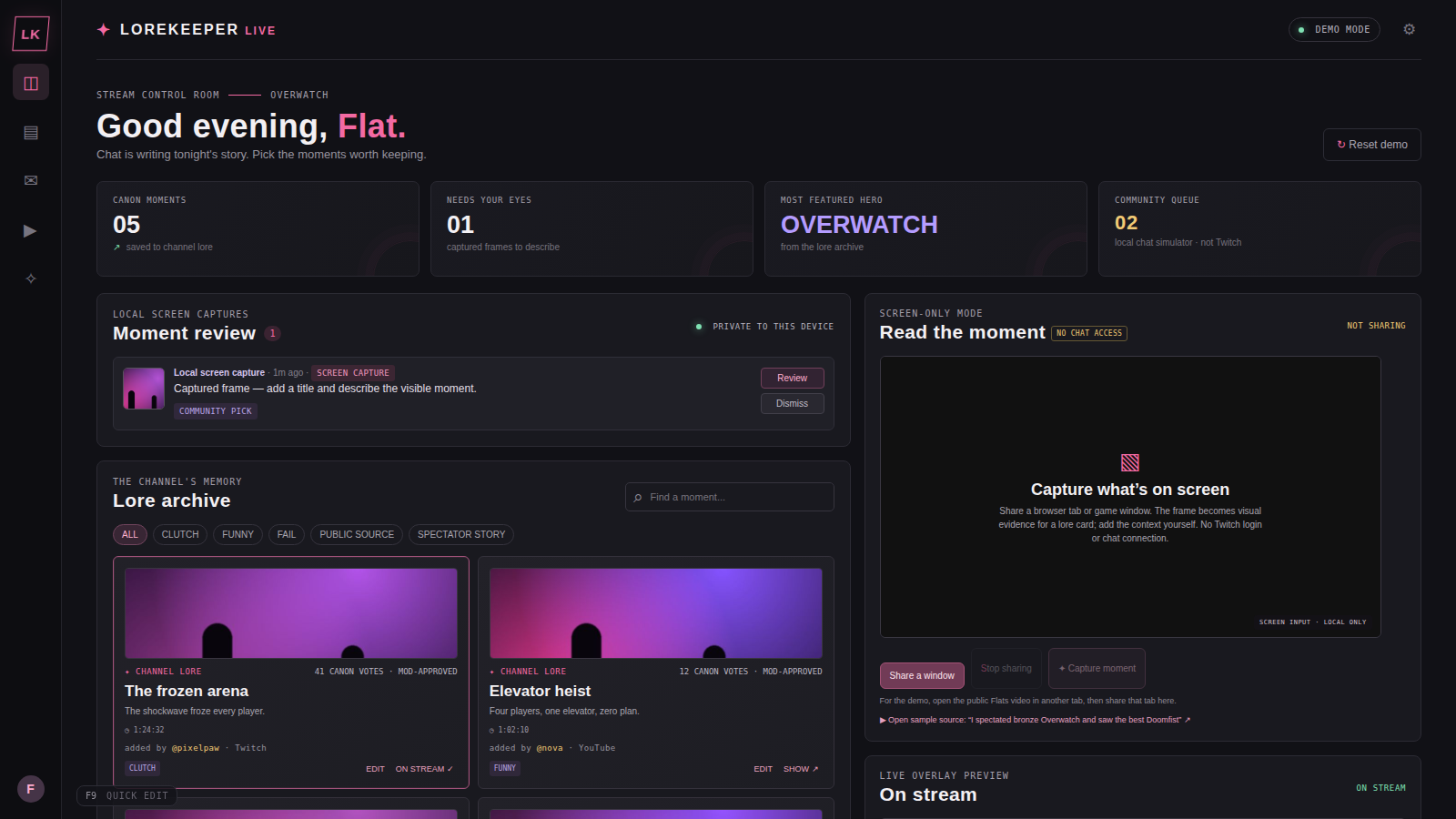
dashboard
-
canon
-
edit
-
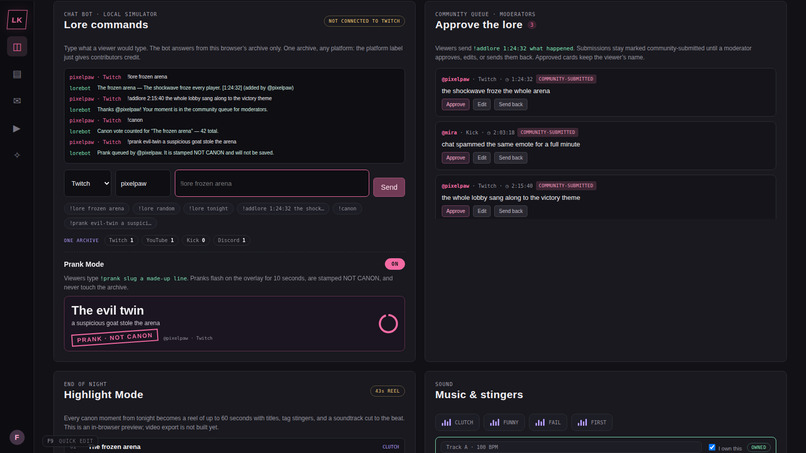
command
-
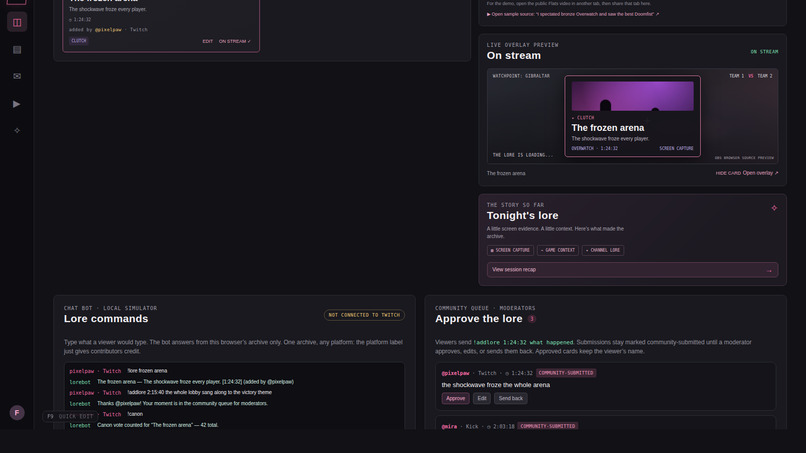
search
-
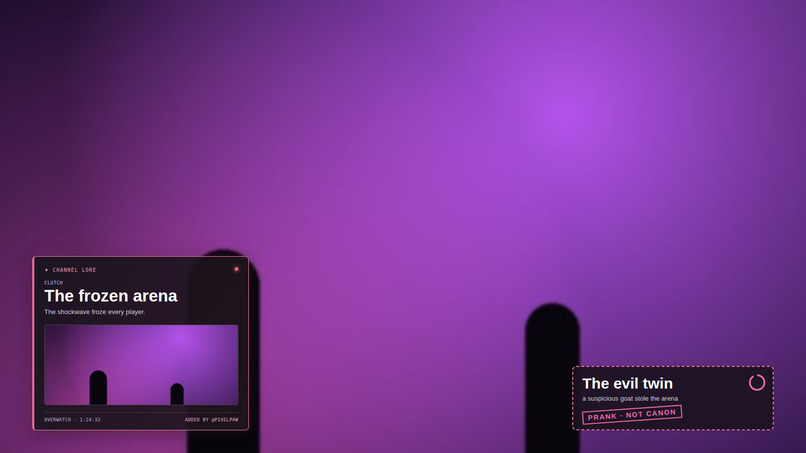
prank
-
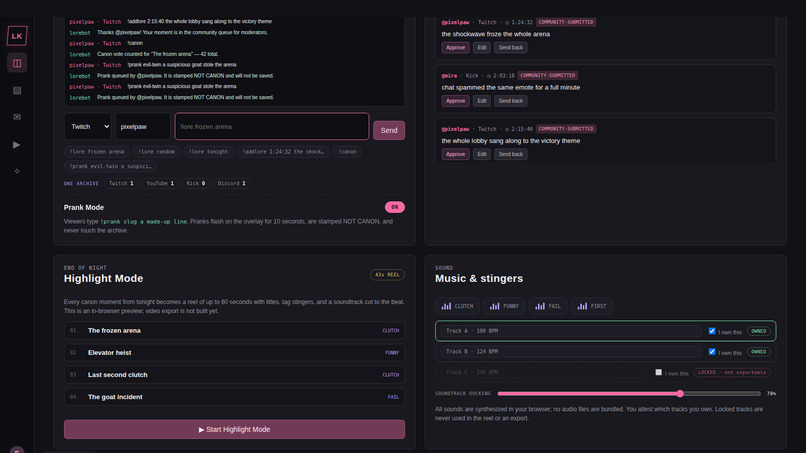
music
-
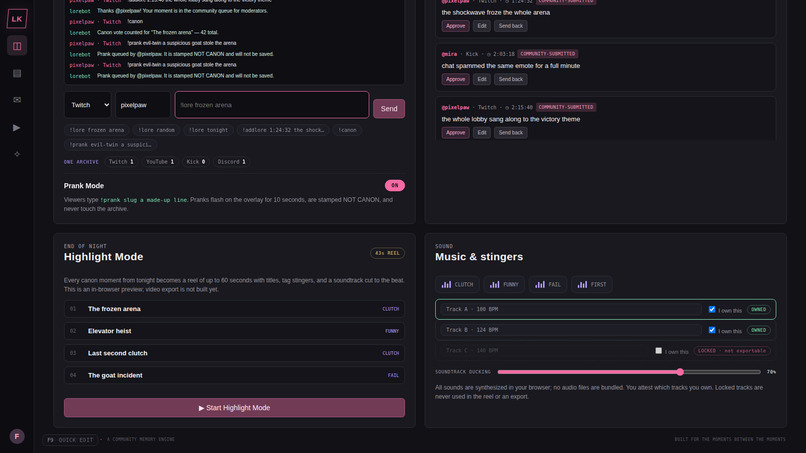
highlight
-
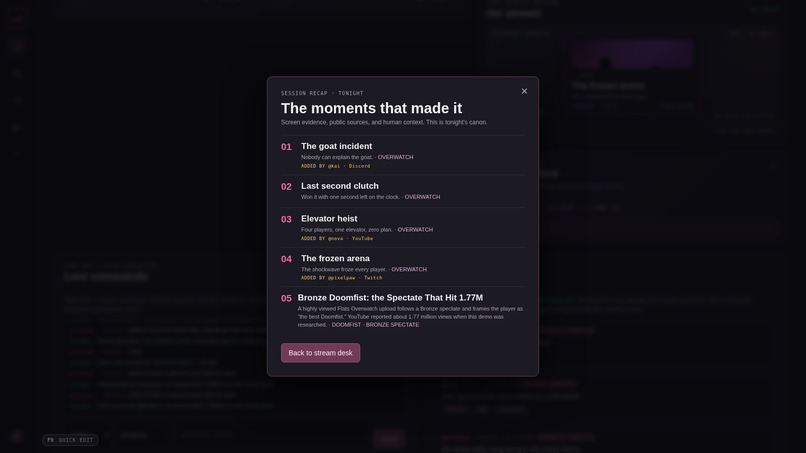
recap
Inspiration
Live streams create moments that a whole community remembers: a clutch play, a running joke, something nobody saw coming. But a stream is hours of footage, and a few weeks later nobody can find that one moment, or remember who first said it. The lore lives in people’s heads and chat logs, and it fades.
We were inspired by how much of a channel’s identity comes from its community, not only the streamer. We wanted a simple way to save those moments while they happen, let anyone contribute and get credit, and keep it all searchable. The streamer decides what becomes canon, and the viewers help write it.
If you’d like it to be more personal, tell me how you came to the idea (for example, from watching streams, from a game you play, or from a class or hackathon), and I’ll work that in.
What it does
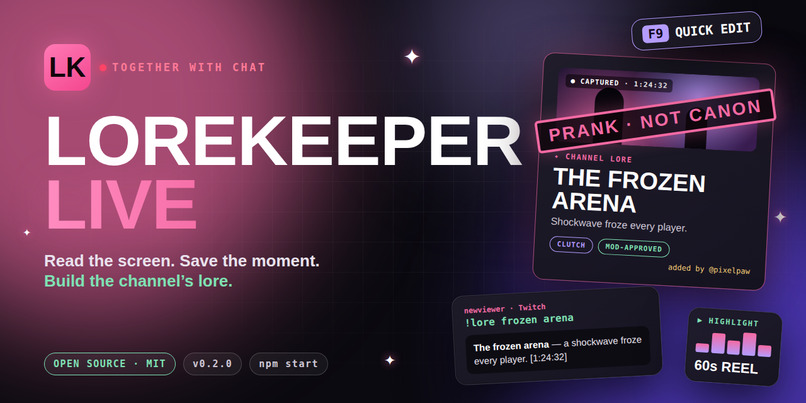
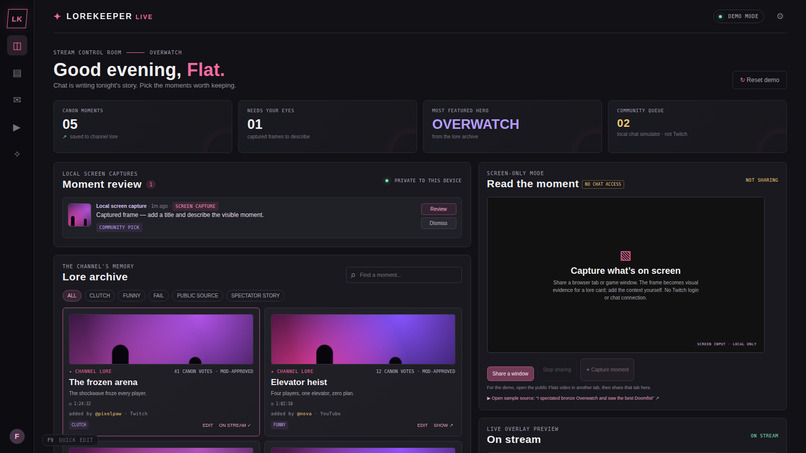
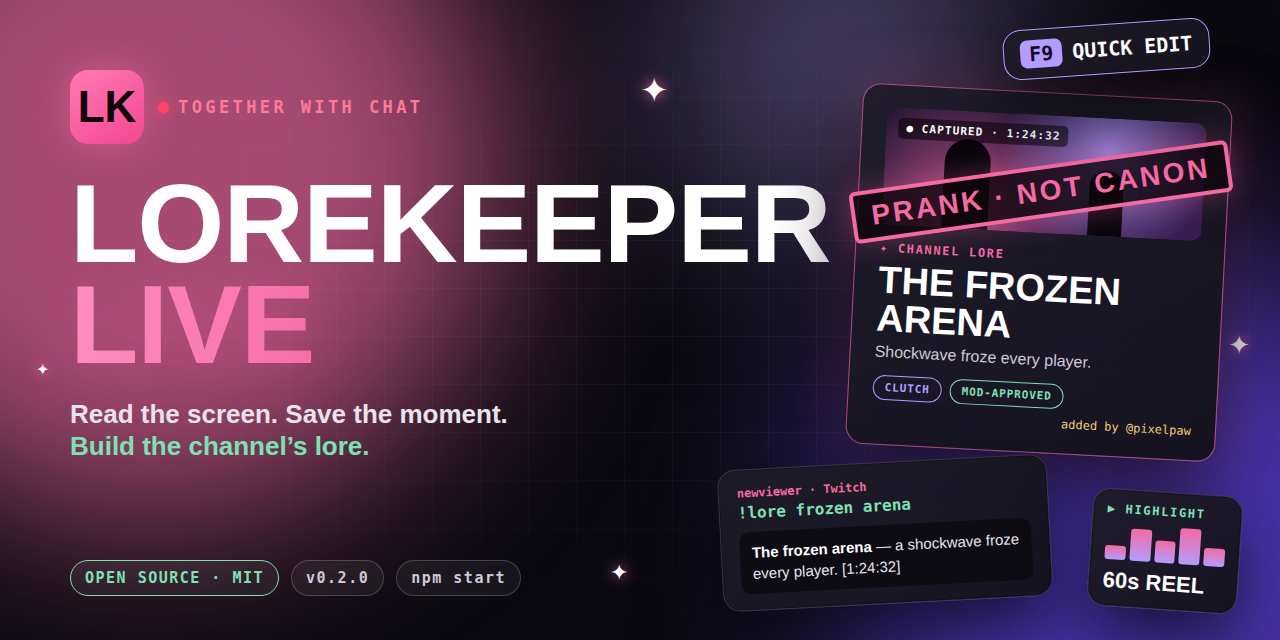
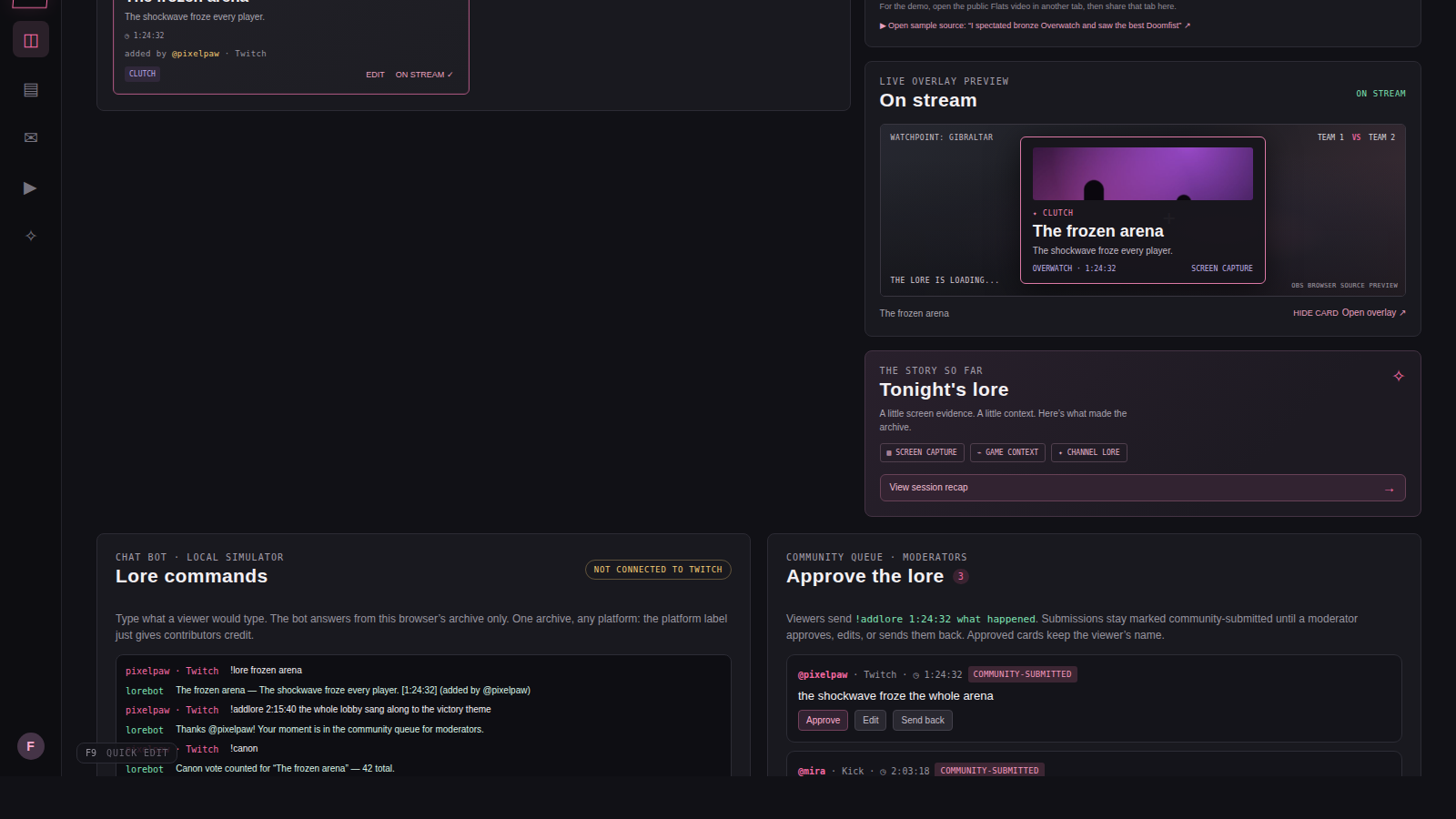
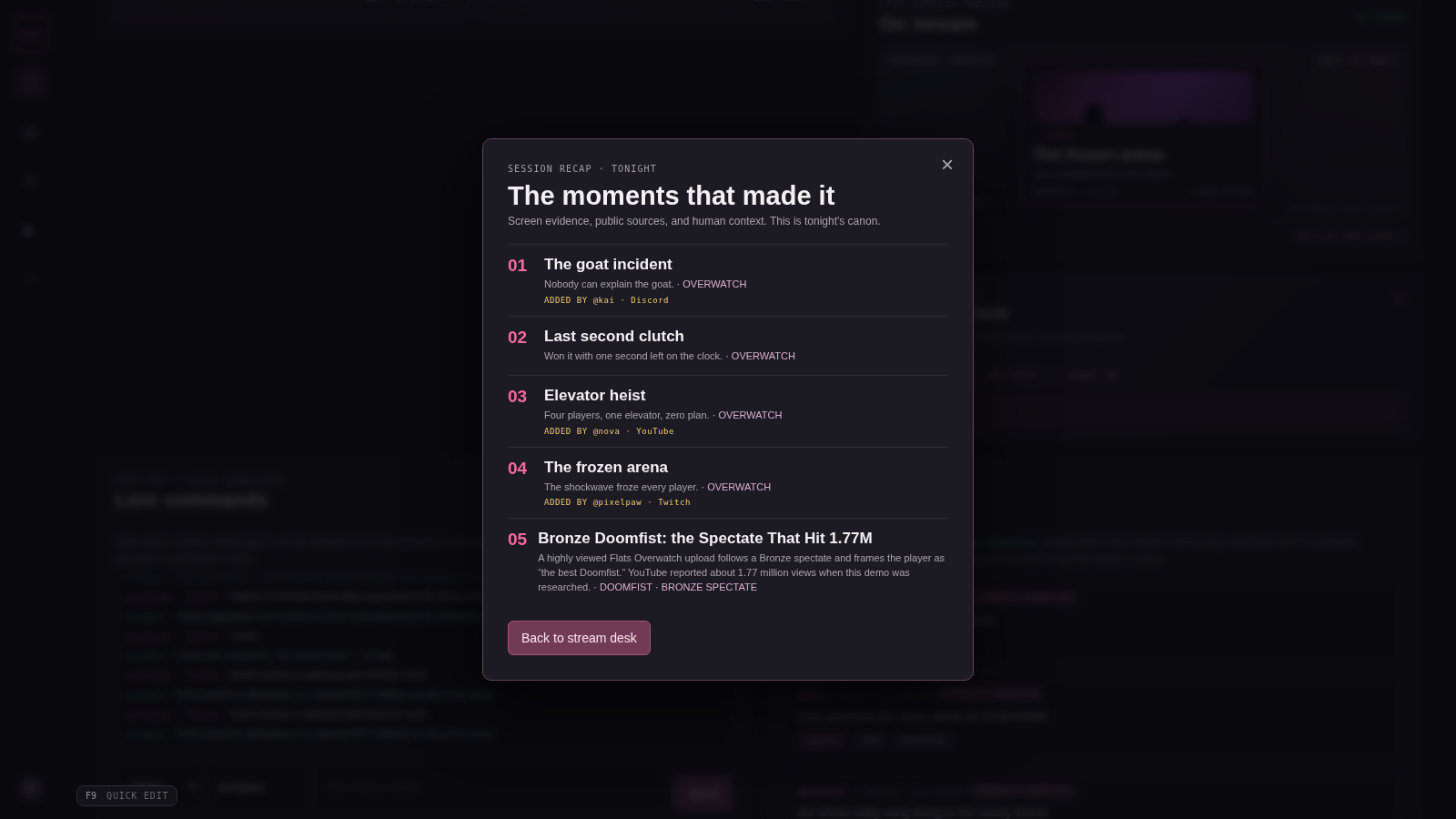
Lorekeeper Live turns stream moments into a searchable lore archive.
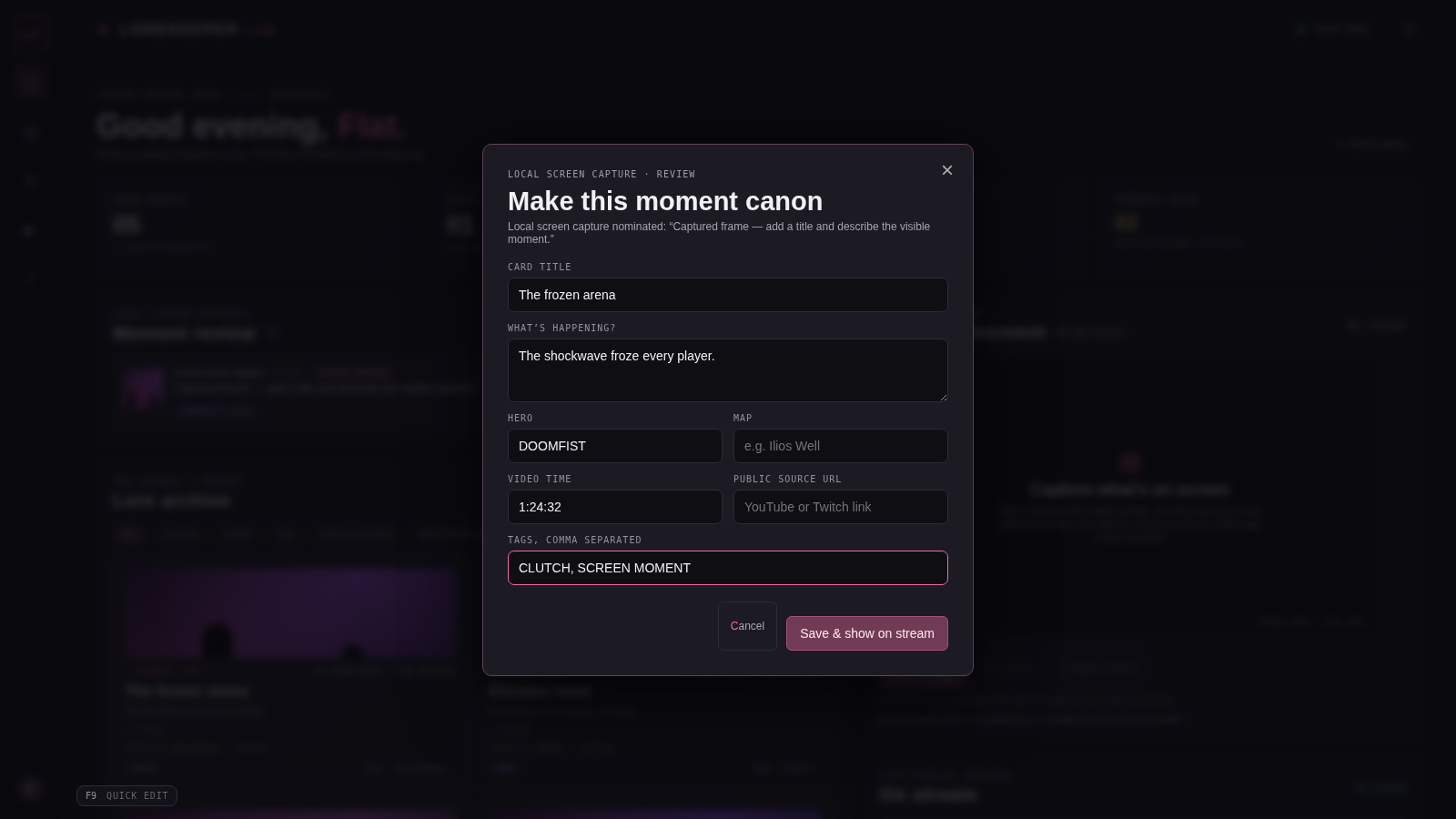
- Capture: share a tab or window and save a still frame. Nothing is uploaded.
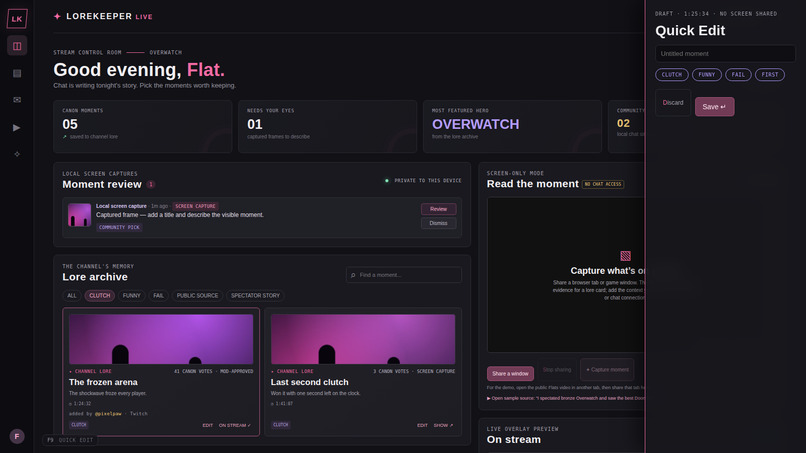
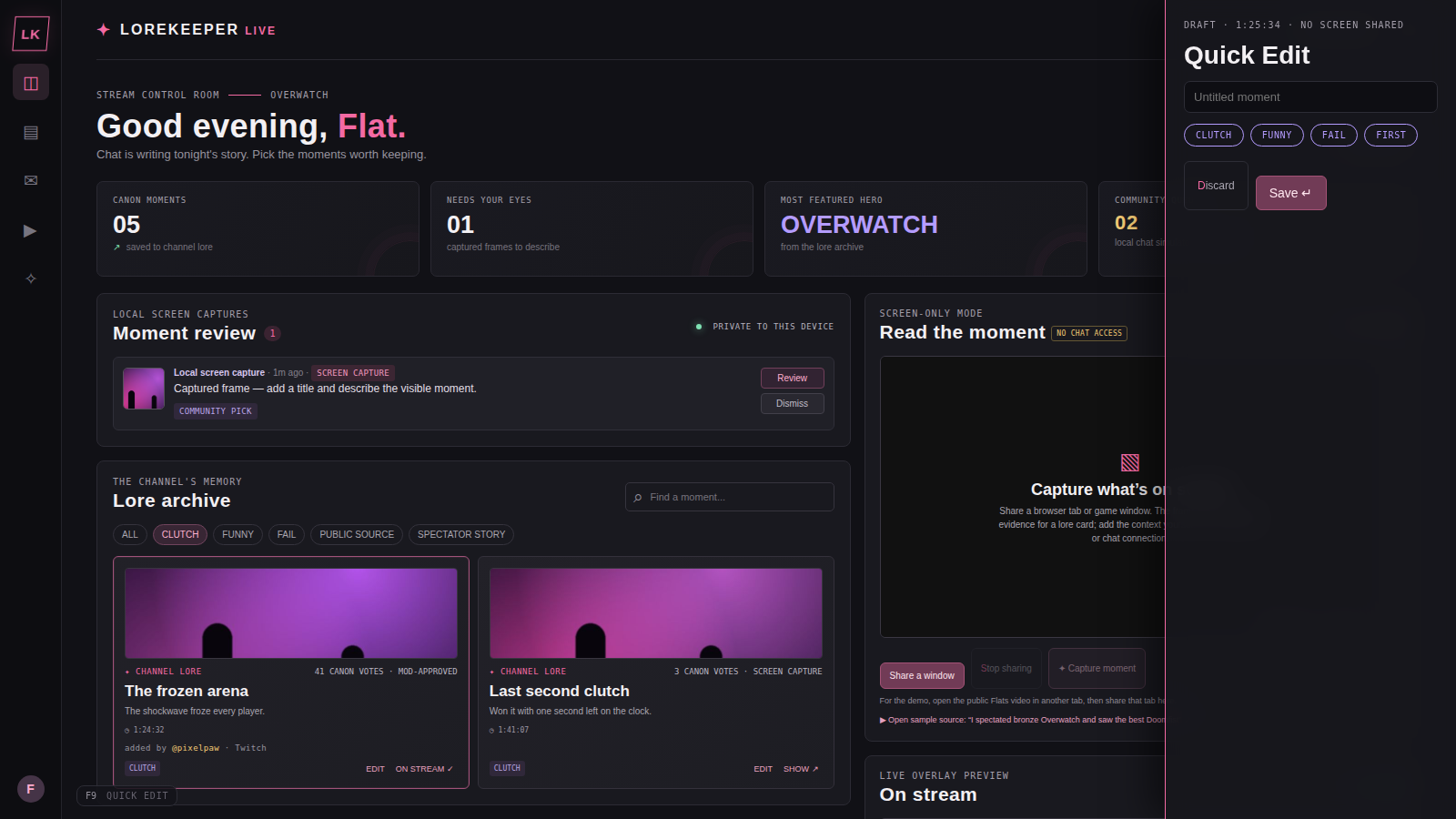
- Quick Edit (F9): grab a moment mid-stream, tap CLUTCH / FUNNY / FAIL / FIRST, save, or undo.
- Chat commands:
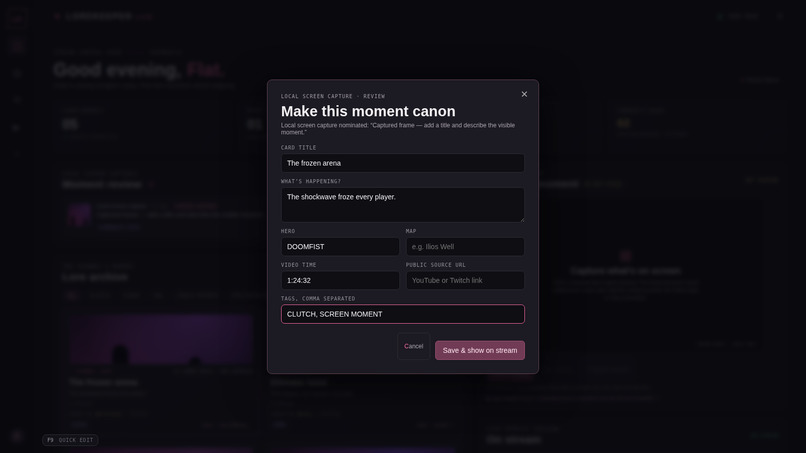
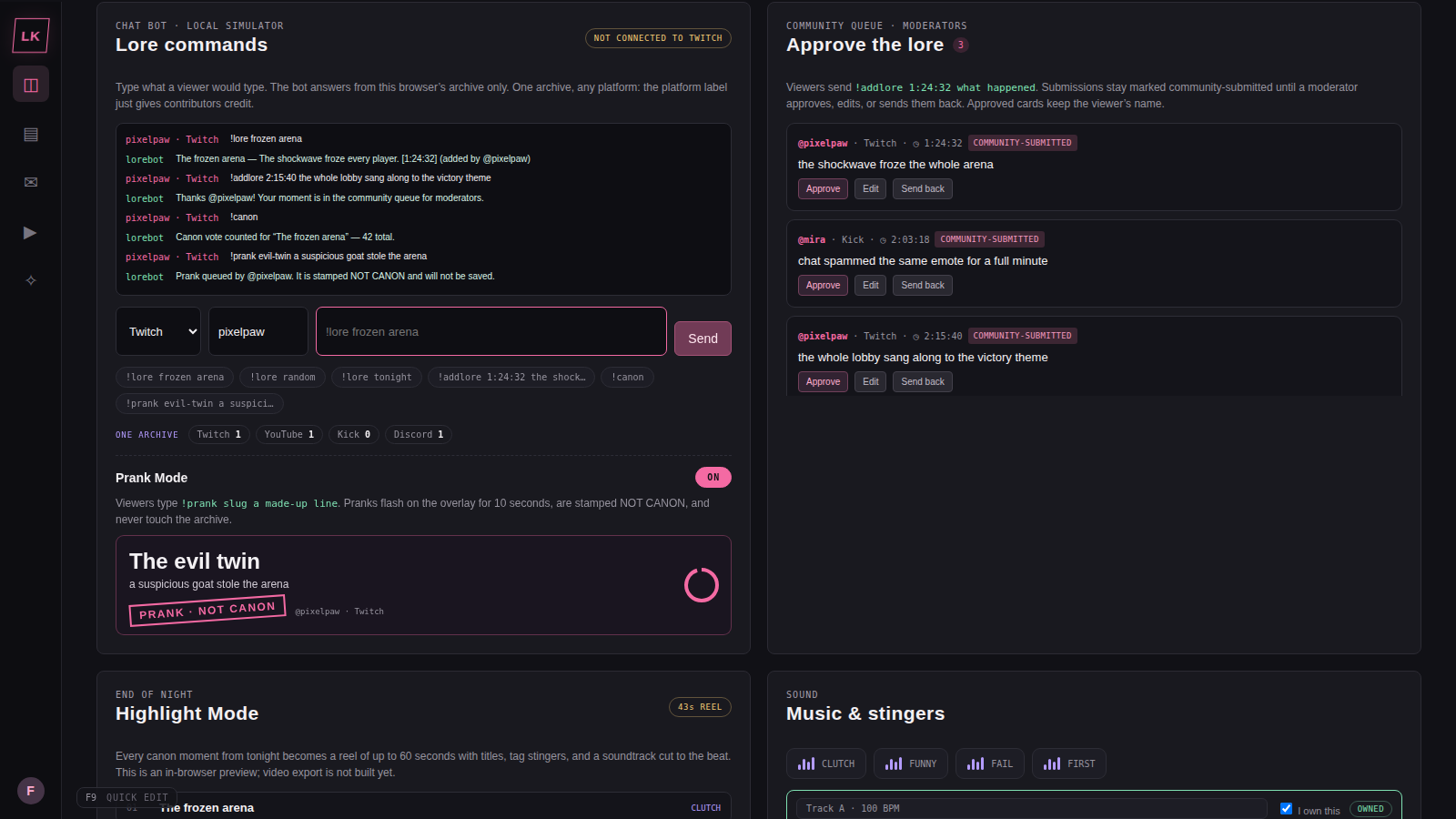
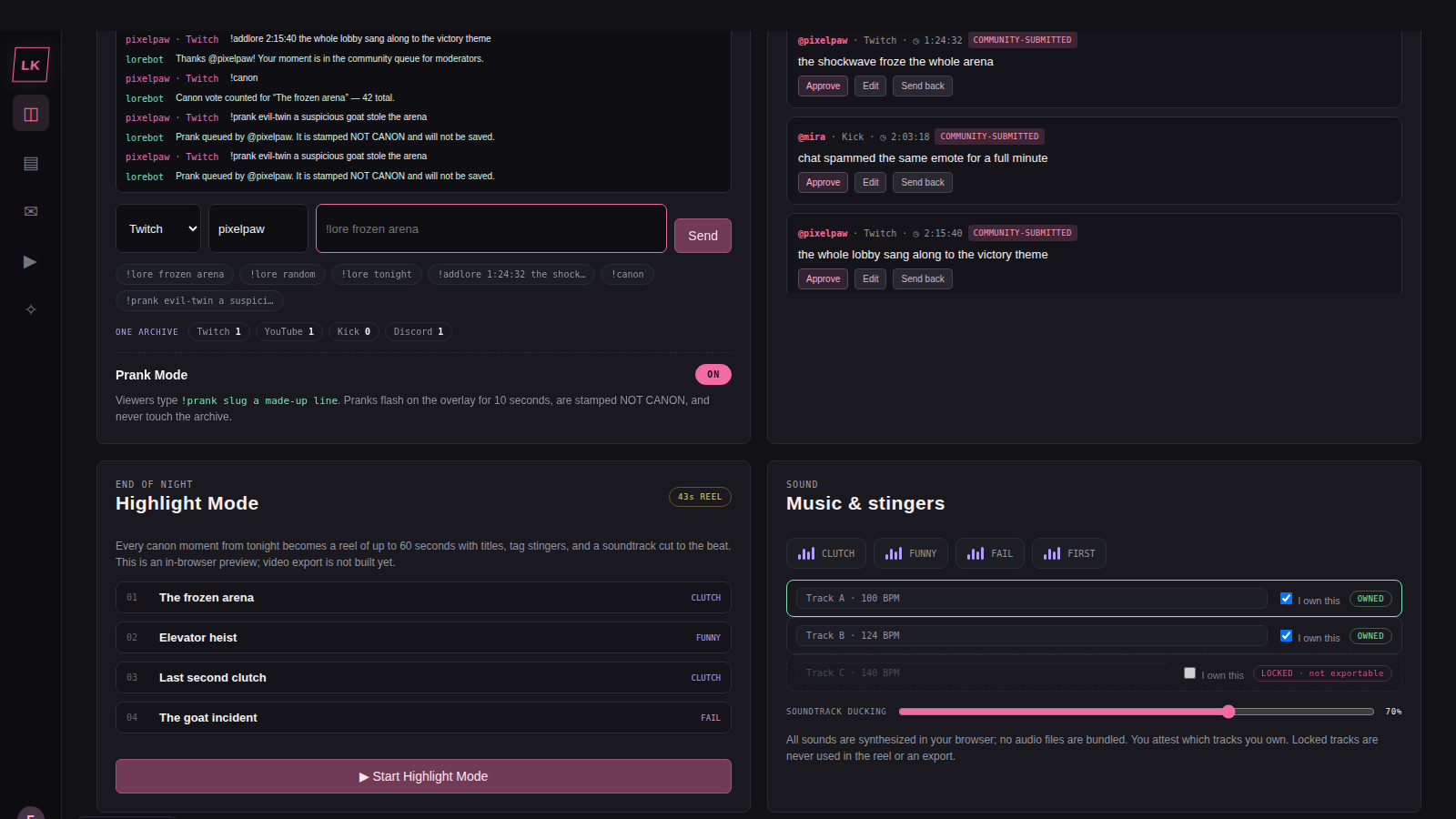
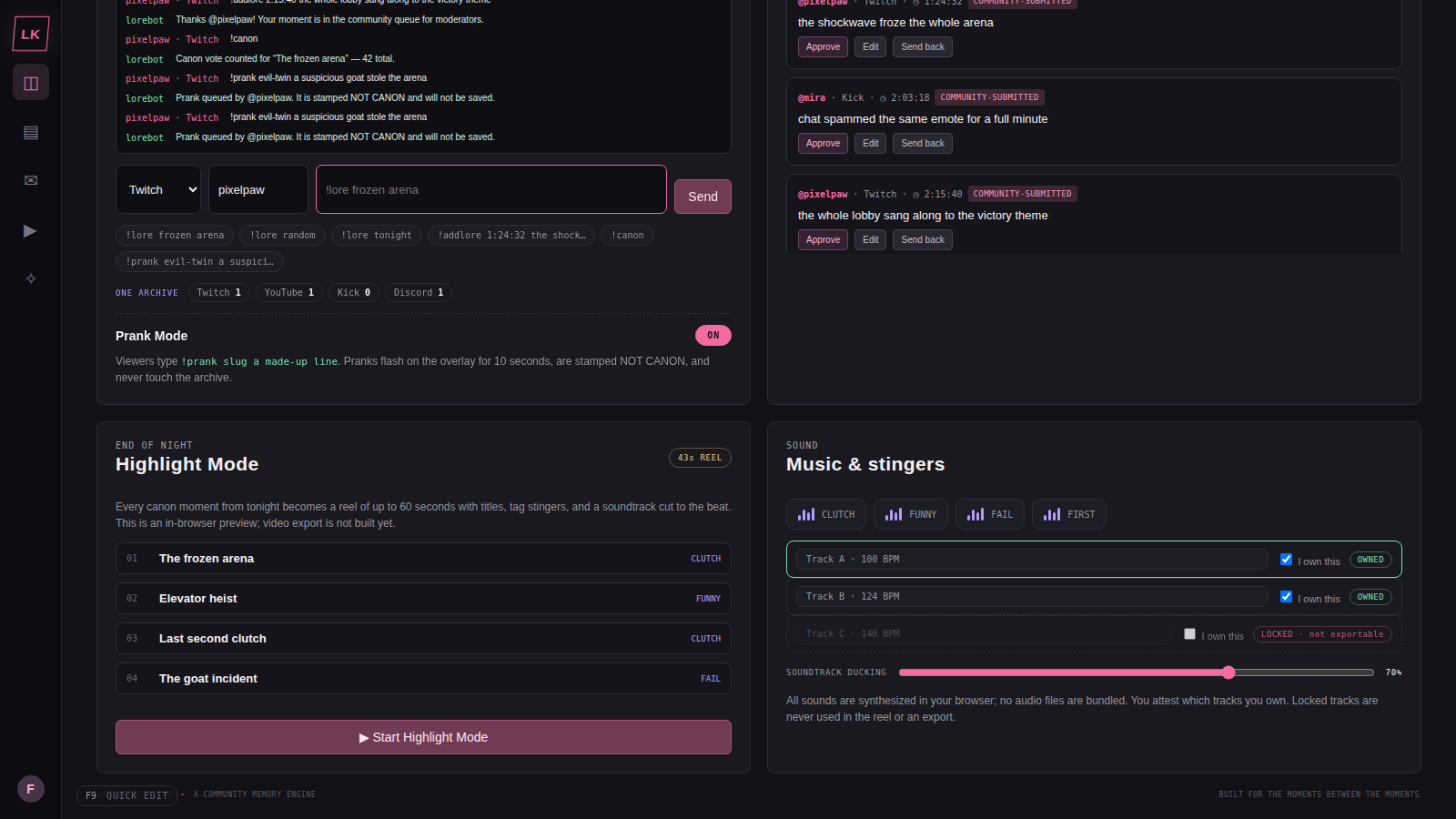
!lorefinds a moment,!addlorelets viewers submit one, and!canonvotes for it. - Moderation: moderators approve, edit, or send back submissions. Approved cards keep the viewer's name and platform.
- Highlight Mode: plays a reel of up to 60 seconds from tonight's moments, with a stinger per tag and a soundtrack cut to the beat.
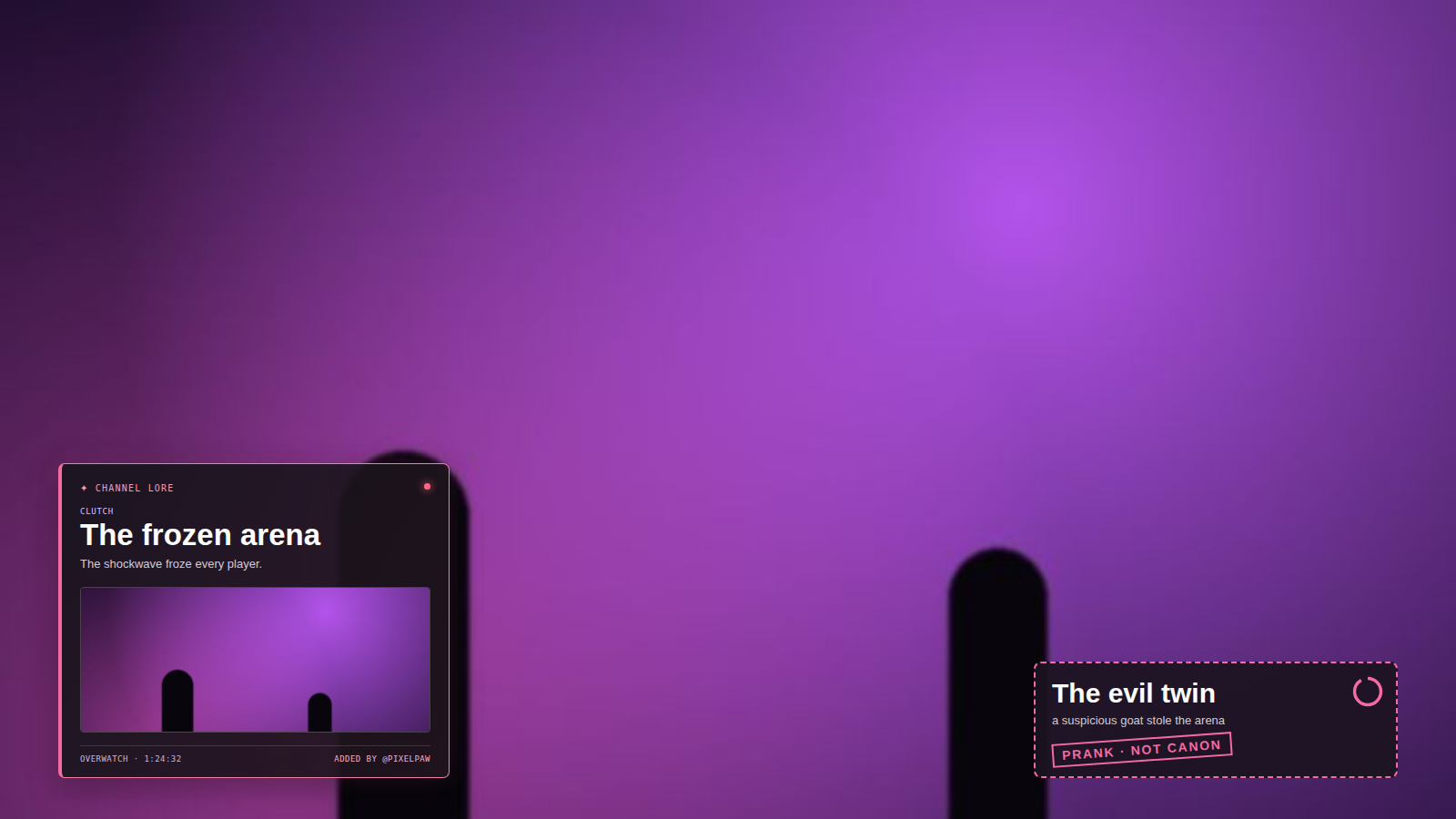
- Prank Mode: shows made-up lore on the OBS overlay for 10 seconds, stamped NOT CANON, and never touches the archive.
How we built it
It uses plain HTML, CSS and JavaScript with no frameworks and no dependencies. Screen capture uses the browser's screen-sharing API and a canvas, and data lives in local storage. The OBS overlay reads the same storage. Stingers and the soundtrack are synthesized with the Web Audio API, so no music files ship with the project. A small Node server and a one-click launcher serve it locally, and we packaged the launcher as a Windows .exe. We built the features by following the storyboard of our demo film scene by scene, and smoke-tested the main flows in a headless browser.
Challenges we ran into
- No chat access: we don't connect to Twitch, YouTube, Kick or Discord, so chat is a local simulator, and we say so in the app and the README.
- Music rights: bundling tracks wasn't safe, so we synthesized all sound and added owned and locked tracks.
- Overlay sync: the overlay and dashboard share state through local storage, so they only stay in sync in the same browser profile.
- Storage size: captured frames are stored in the browser, so we downscale and compress them.
- Packaging: we had to build the Windows exe from Linux, and it's unsigned, so SmartScreen may warn.
Accomplishments that we're proud of
The film's whole story works in the app: capture, quick edit, chat lookup, community submissions, moderation, reel and prank. It runs with no sign-in and no uploads, and Windows users can start it with a double-click. We also kept the project honest by labeling what is simulated and what isn't built yet.
What we learned
Being clear about what is real and what is simulated builds more trust than faking an integration. The Web Audio API can do a lot, including a beat-matched reel, with no audio files. Designing around the person at the keyboard mid-stream, who has no time for forms, shaped Quick Edit more than any other decision.
What's next for Lorekeeper-Live
- Real chat integrations for Twitch, YouTube, Kick and Discord, with proper authorization
- Exporting the highlight reel as a video
- Syncing the archive and moderation across devices, with real moderator accounts
- A signed Windows build, plus macOS and Linux builds
- Search across the whole archive by phrase, tag, hero or map
- Optional help writing lore cards, only if people want it and with clear consent
Built With
- codex
- community
- highlight
- livestream
- local
- open-source
- streaming
- twitch

