Inspiration
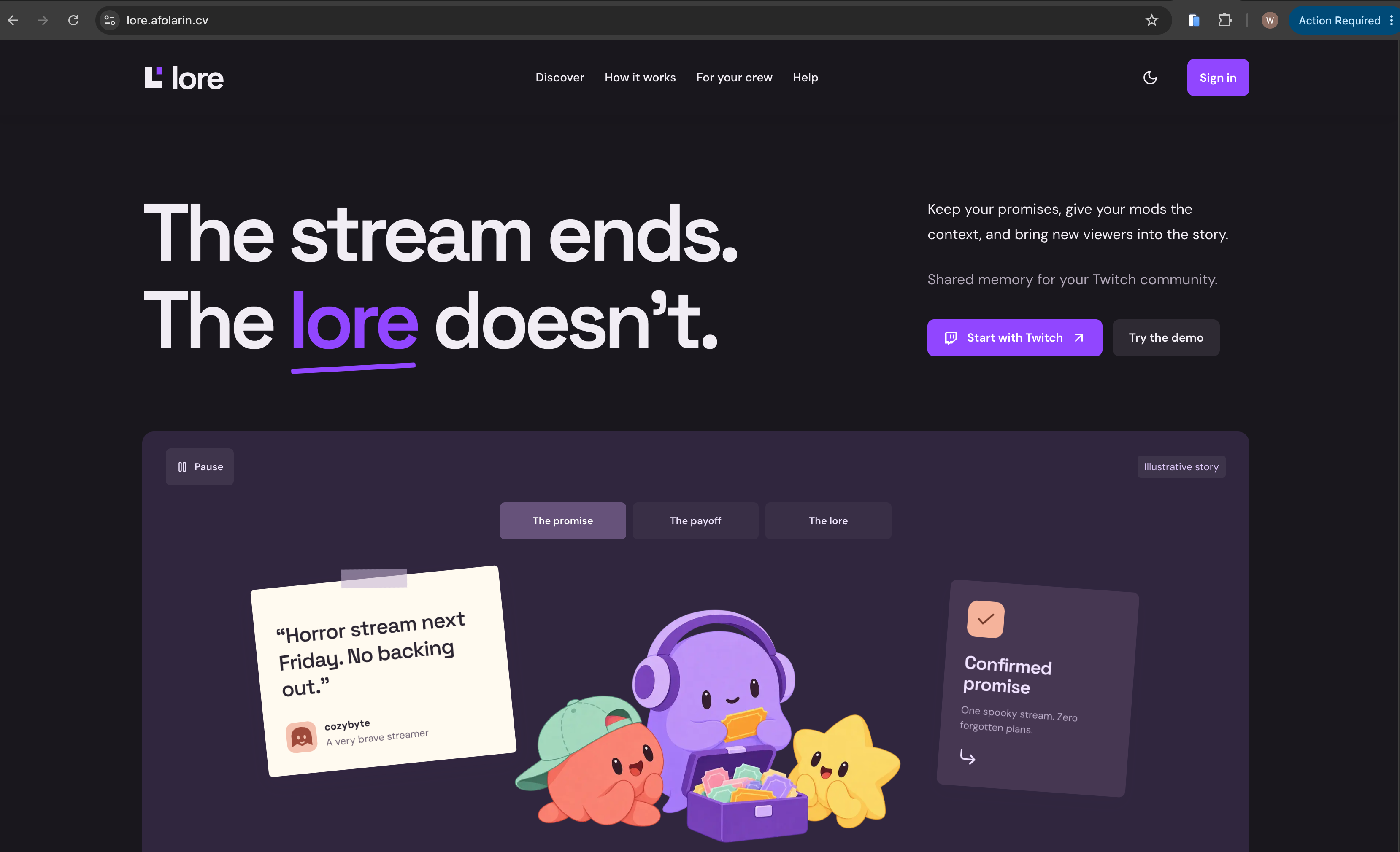
A stream ends, but the community’s story keeps going.
Someone promised an island tour next stream. A moderator made a difficult decision that the next shift needs to understand. A returning viewer missed the moment that became everyone’s favourite inside joke.
That context often ends up scattered across chat, clips, private messages, and people’s memories. Streamers repeat themselves, moderators reconstruct past decisions, and newcomers struggle to feel included.
I built Lore to help Twitch communities remember what matters and carry it into the next stream.
What it does
Lore connects three needs: streamer follow-through, moderator continuity, and community belonging.
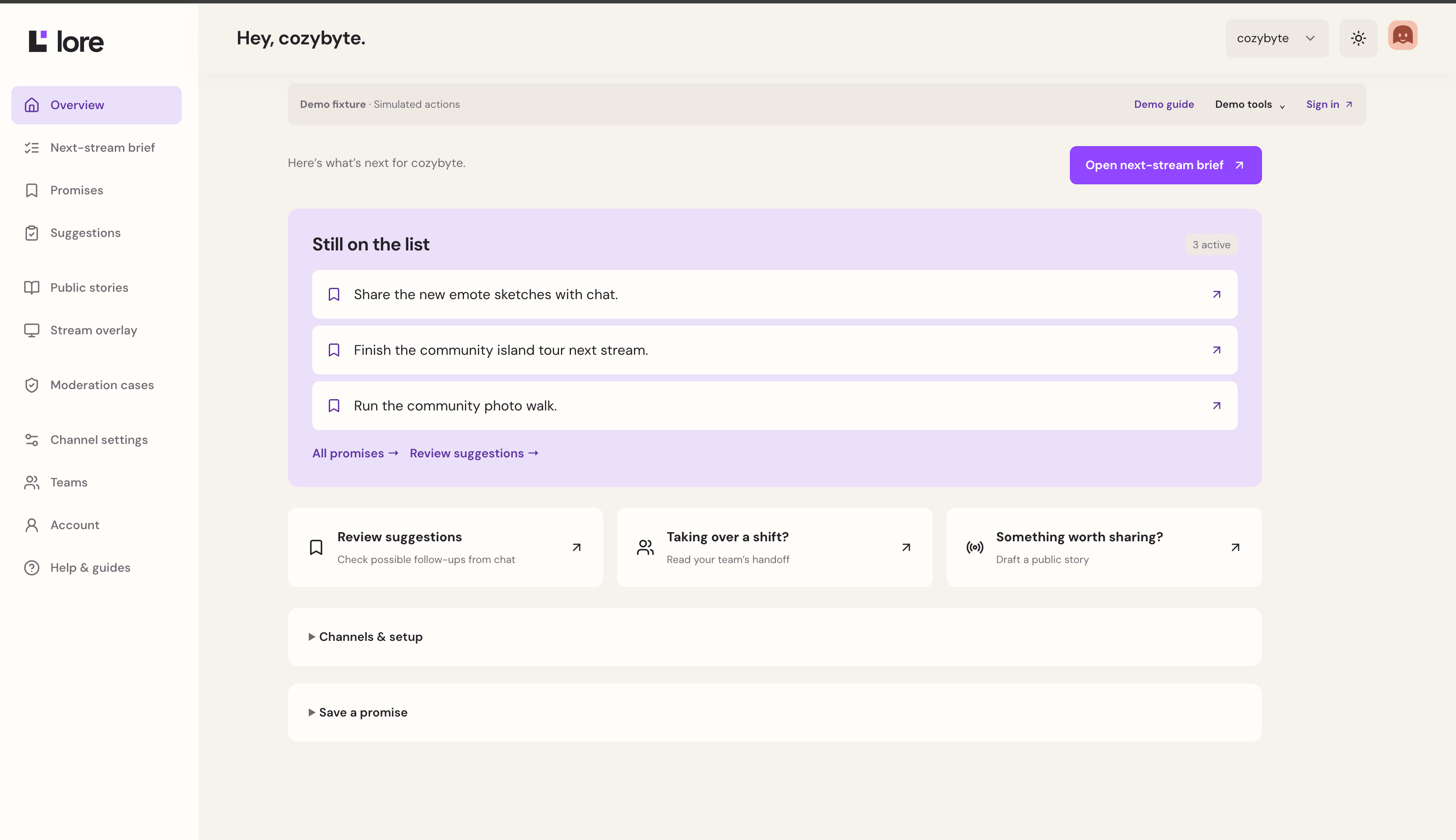
Keep promises moving. Streamers and authorised moderators can capture commitments through Twitch chat with !promise or add them directly in Lore. A next-stream brief brings unfinished plans and their source context together. Optional AI suggestions surface possible follow-ups for human review.
Keep moderation context together. Teams can document cases, evidence, rule versions, decisions, and appeals in a private workspace. Moderator handoffs, consistency reviews, and repair actions help the next person understand what happened and what still needs attention. AI-assisted precedent retrieval supports review; people make the decisions.
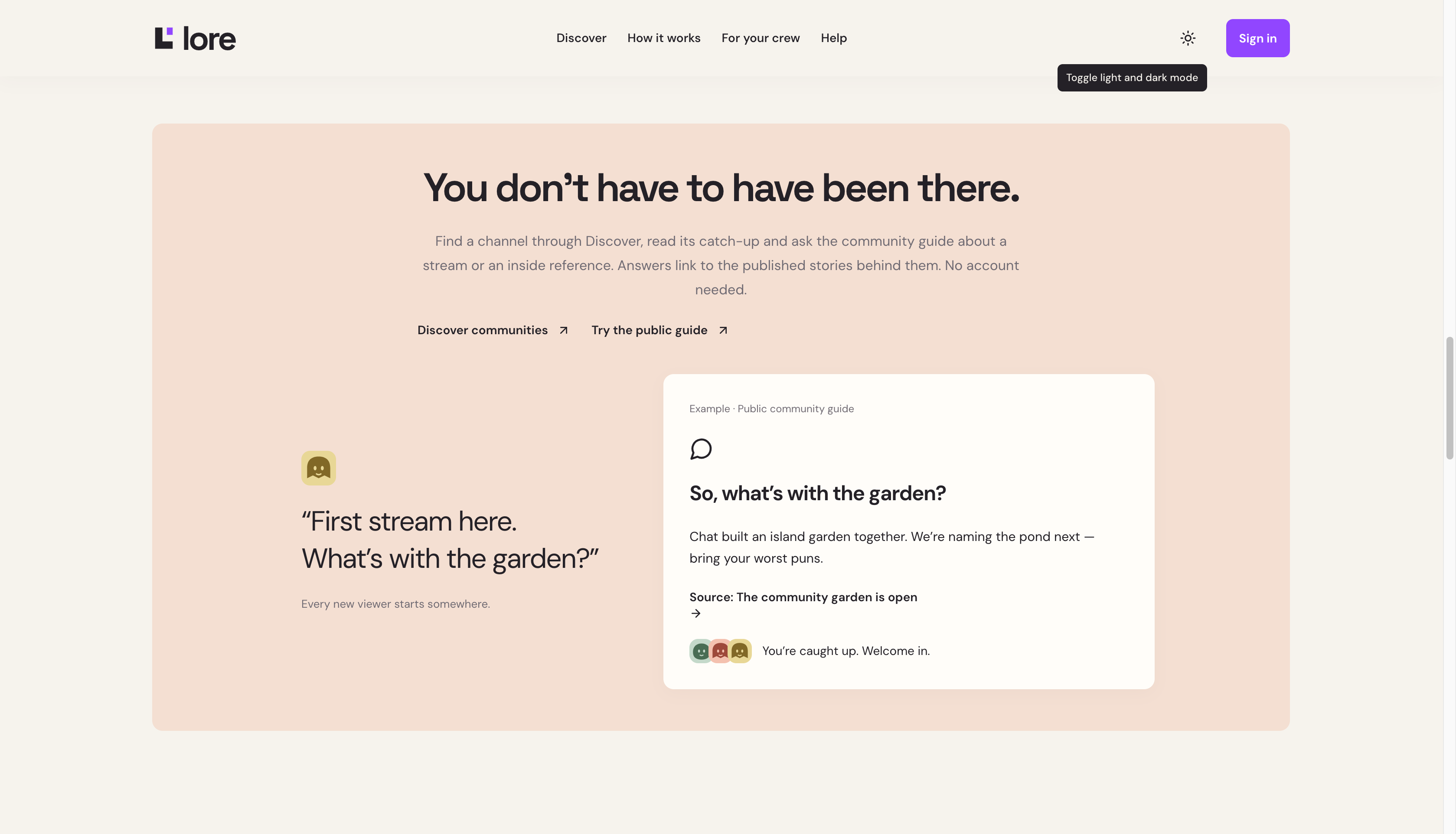
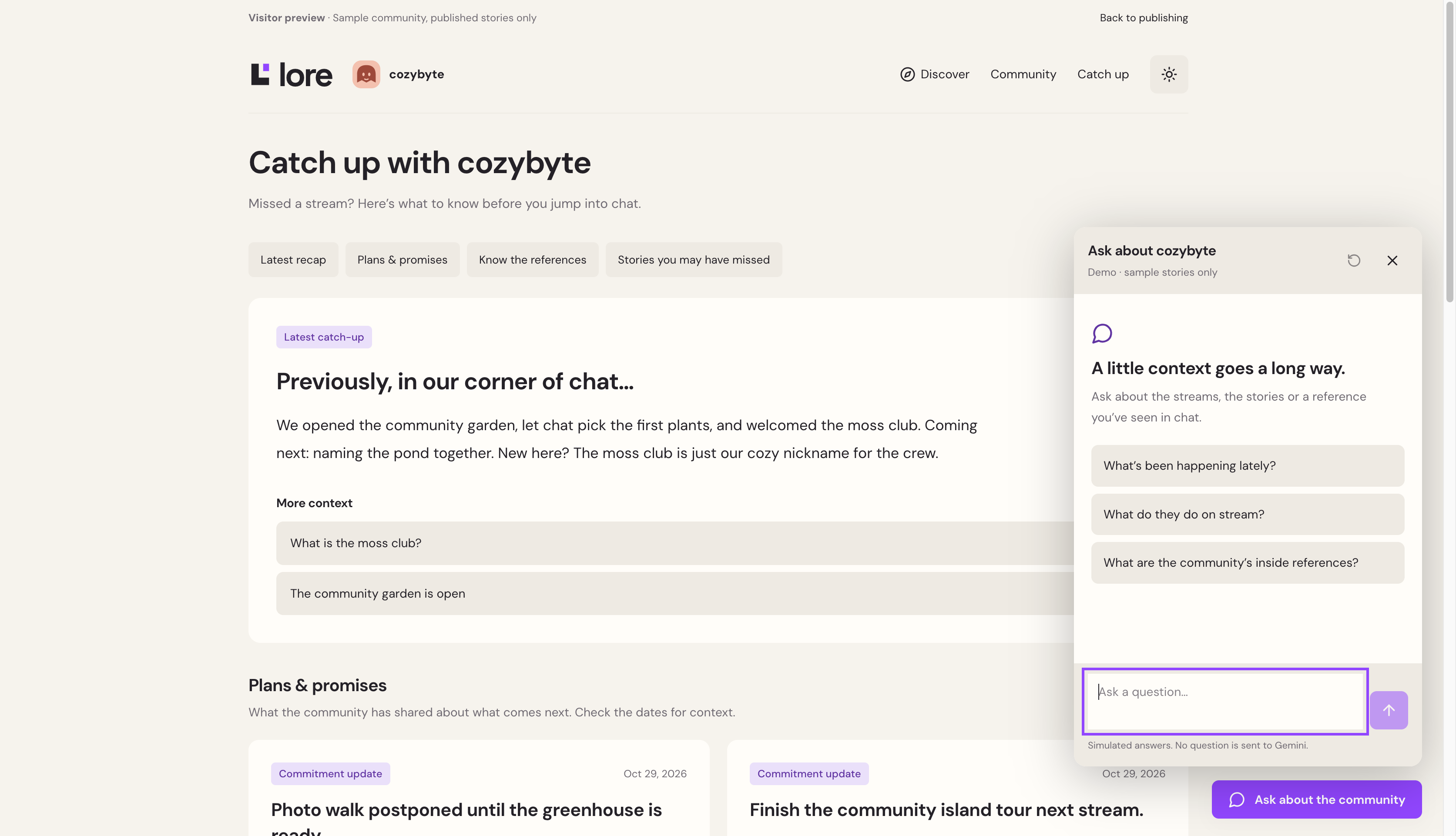
Help the community catch up. Teams publish approved stories, inside references, and plans to a public community page. Stories can include Twitch clips and screenshots. Viewers can browse without an account or ask a source-linked community guide questions about published stories. With the relevant permissions enabled, !catchup brings an approved recap directly into Twitch chat.
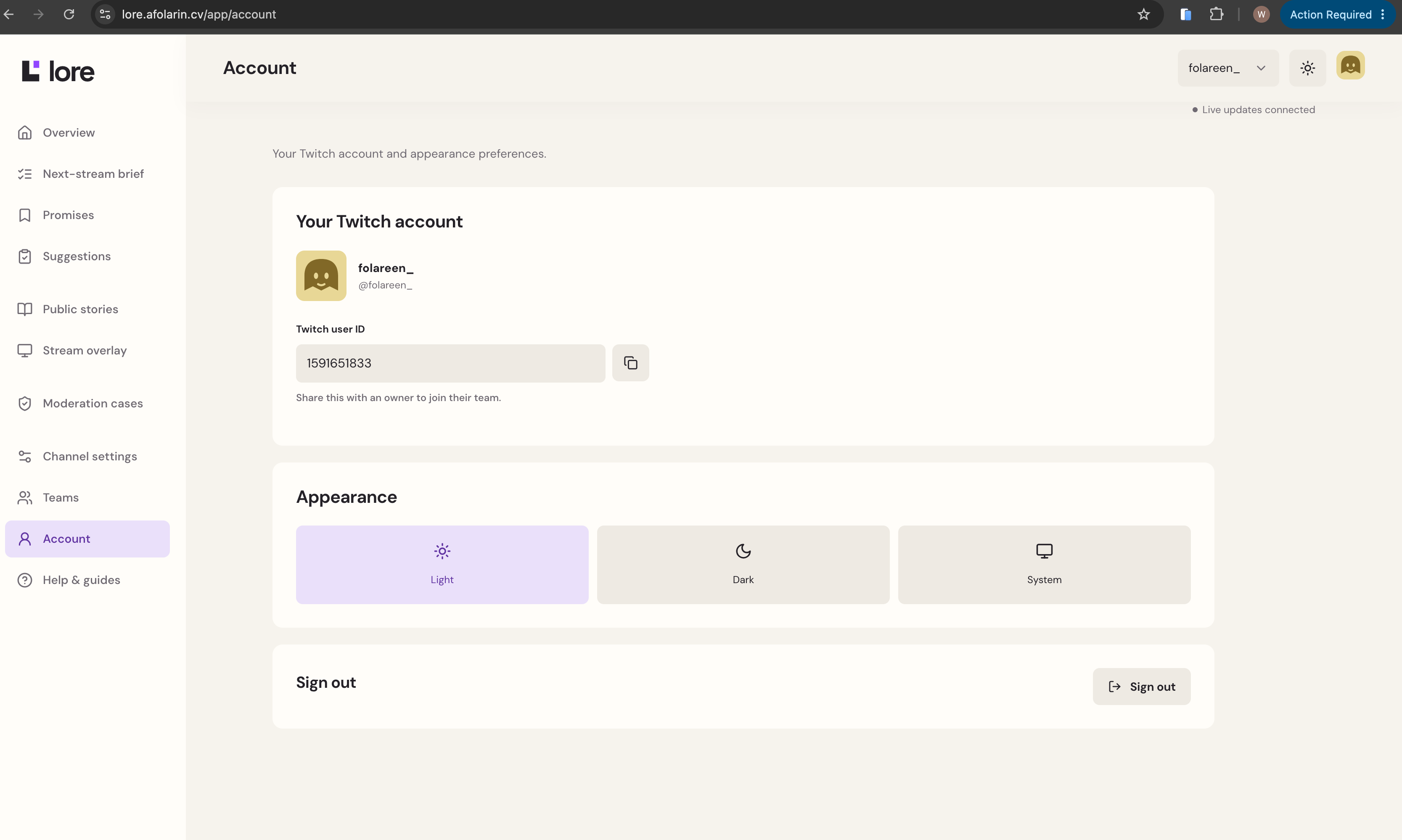
Lore also includes an approved-content OBS Browser Source, channel-specific team roles, responsive desktop and mobile layouts, role-based help guides, and a populated interactive demo.
Private moderation records remain separate from public community content.
How I built it
I built Lore with Codex throughout the development process: refining the idea, planning the architecture, implementing features, improving the design, writing and running tests, debugging integrations, preparing deployment, and producing the demo video.
I directed the product decisions, reviewed changes, tested workflows, and iterated with Codex through focused pull requests.
Lore uses a TypeScript monorepo with a Next.js and React frontend, a NestJS API, and shared Zod validation. PostgreSQL, Drizzle ORM, and pgvector support structured records and moderation precedent retrieval. Redis and BullMQ handle background work, while Cloudflare R2 stores private media and evidence.
Twitch OAuth connects accounts and permissions. EventSub delivers authorised channel events, and Twitch APIs support enabled chat replies. Optional runtime AI features use Gemini.
The deployed application runs as native Node.js services behind Caddy, with managed PostgreSQL on Neon and Redis Cloud.
Challenges I ran into
The hardest part was deciding what should become lasting context—and who should be allowed to see it.
I separated captured chat, retained case evidence, private team records, and explicitly published stories. I designed AI suggestions around human review and source links rather than automatic publication or moderation decisions.
Twitch permissions, reconnect behaviour, chat deletion, retention, media access, and mobile usability all needed careful attention. Deployment introduced another challenge: moving existing accounts and channel data to managed PostgreSQL without losing them.
The interface also needed to serve three different audiences without becoming overwhelming. I refined the navigation, wording, layouts, and demo paths around the tasks each audience actually needs to complete.
Accomplishments I'm proud of
I demonstrated a real Twitch-to-Lore workflow: a live chat promise became a saved commitment in Lore, and !catchup returned an approved recap to Twitch chat.
I connected streamer follow-through, moderator continuity, and public community storytelling in one application, with clear privacy boundaries.
Validation included 201 unit/UI tests, 98 database integration tests, and 50 browser journeys, alongside live integration checks and desktop/mobile testing.
The credential-free interactive demo lets judges explore populated workflows without connecting a Twitch account or changing a real channel. Its simulated actions are clearly labelled, while the video separately demonstrates the live Twitch integration.
What I learned
Community memory needs context, ownership, and a clear audience.
A saved message becomes useful when someone can understand where it came from, decide what it means, and know what happens next. AI is most helpful when it makes that work easier while keeping people in control.
I also learned that building with Codex works best as an iterative collaboration: define the problem clearly, inspect the result, test real behaviour, and refine it. Automated checks and live testing each revealed issues the other could not.
What's next for Lore
My next priority is feedback from streamers and moderation teams using Lore across consecutive streams.
I plan to improve onboarding, tune suggestions and briefs around real routines, expand accessibility, and make community catch-up easier to discover.
The goal stays the same: help communities spend less time reconstructing yesterday and more time building what comes next.
Built With
- bullmq
- cloudflare
- codex
- drizzle
- gemini
- neon
- nestjs
- next.js
- openai
- orm
- pgvector
- playwright
- postgresql
- react
- redis
- tailwind
- twitch
- typescript
- zod


