-
-
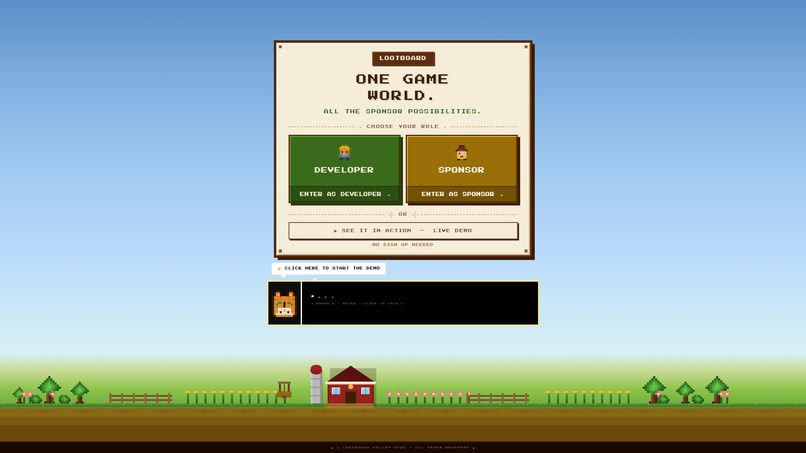
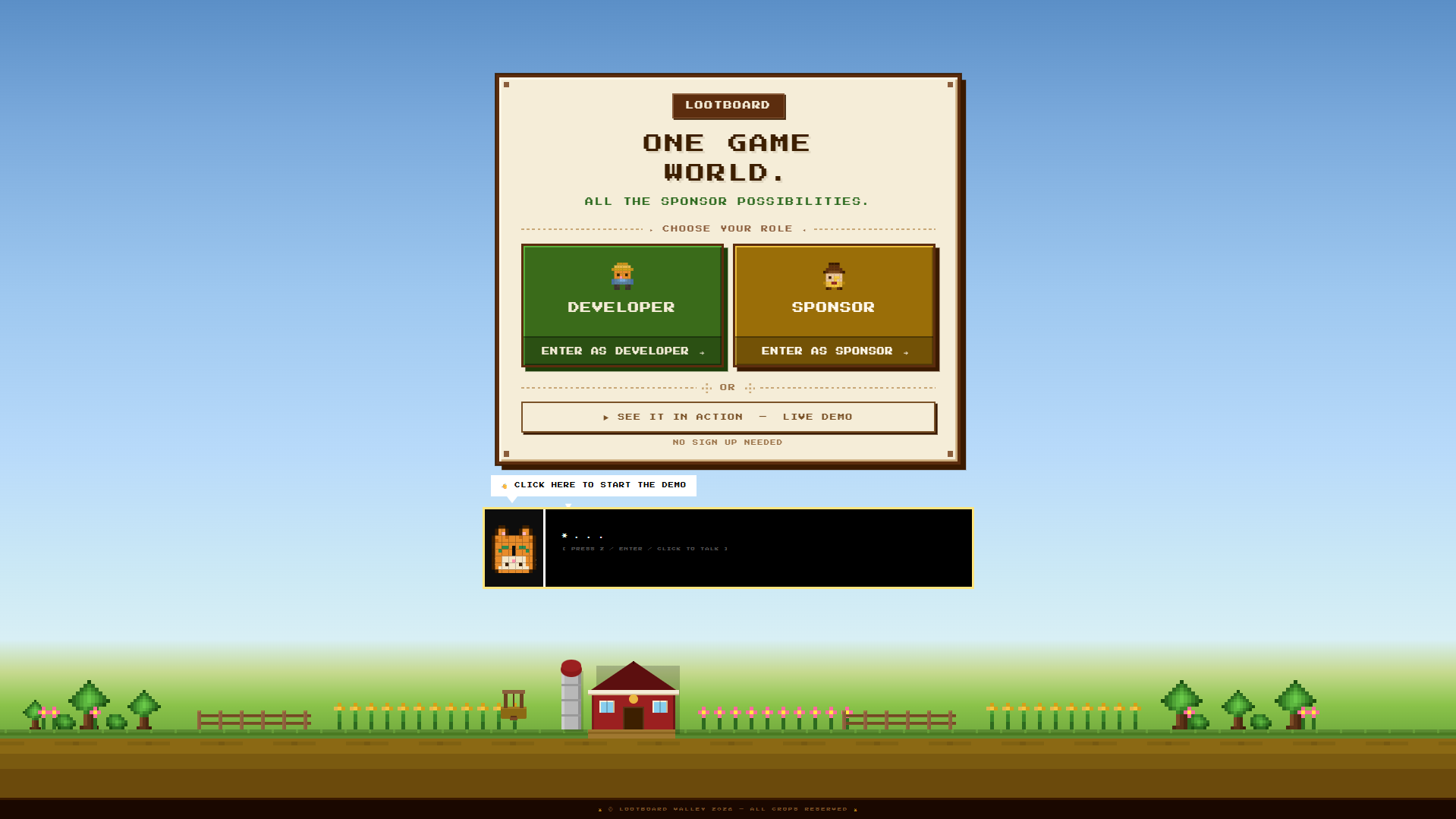
Our homepage: join us to earn as a developer or advertise as a brand!
-
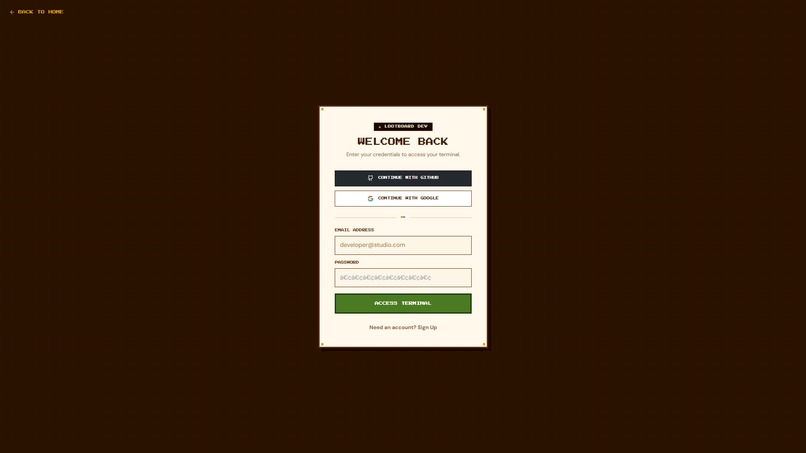
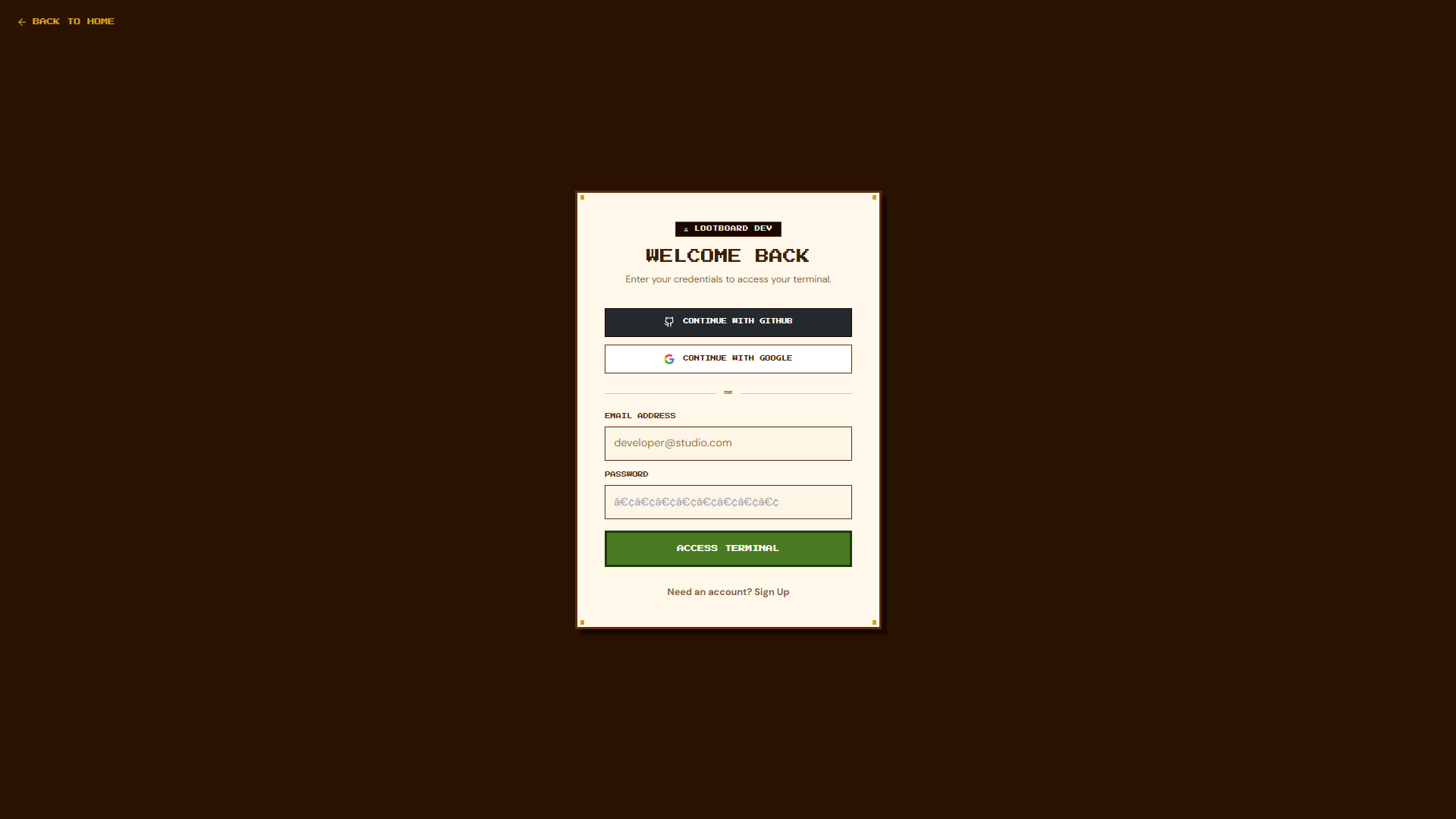
Sign up/sign in page.
-
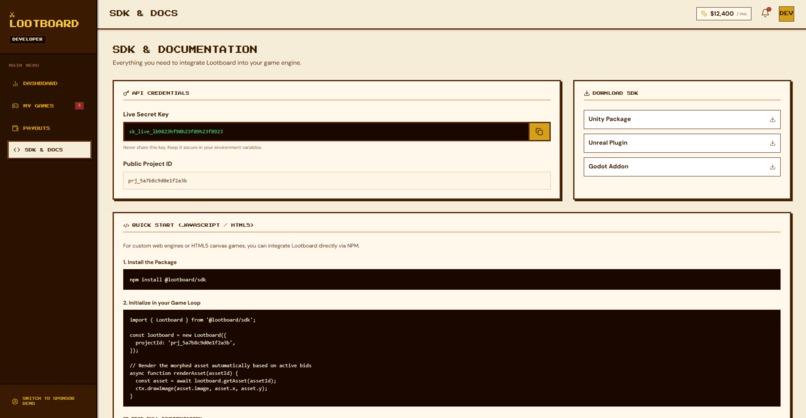
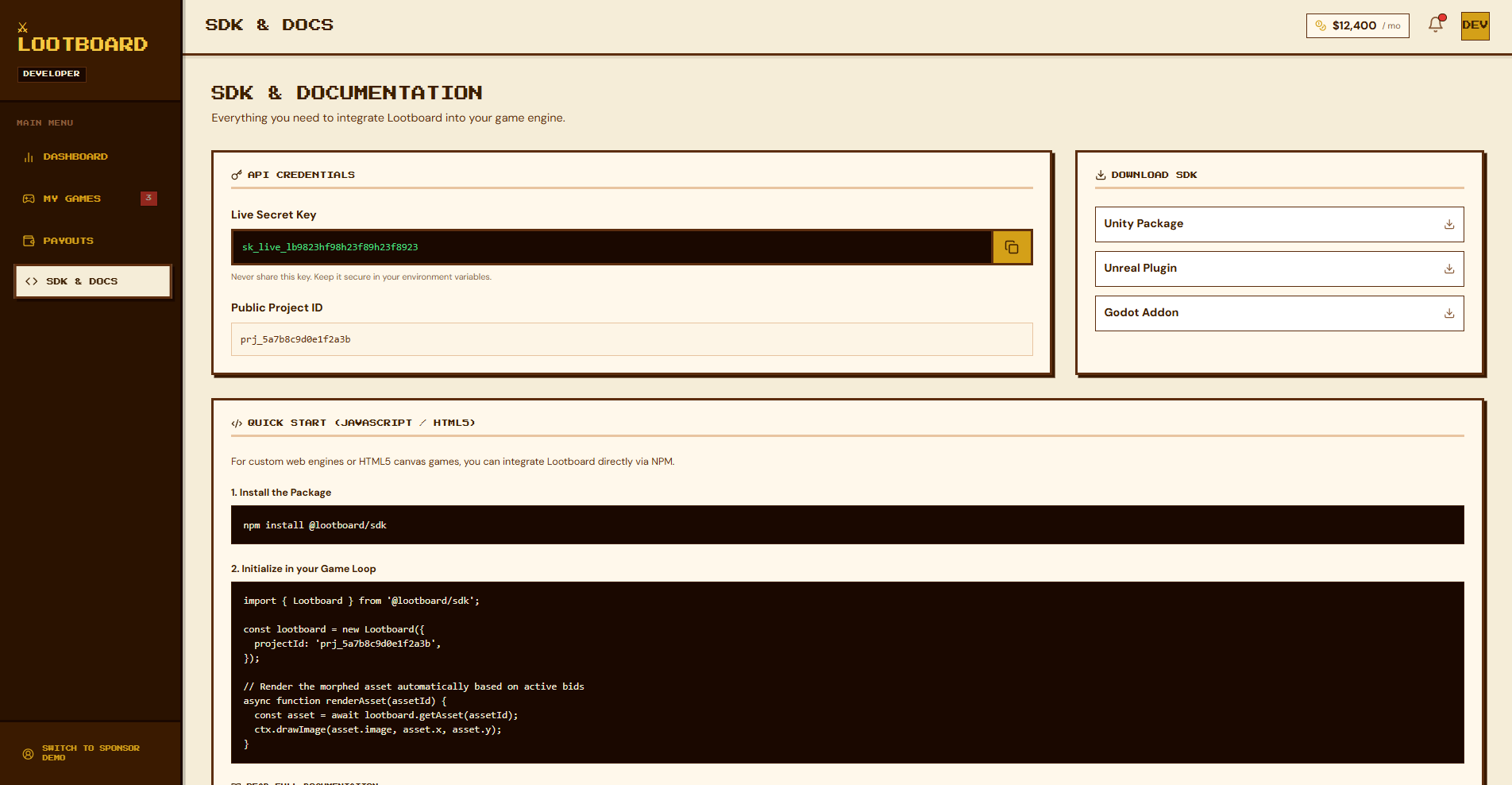
Developer dashboard.
-
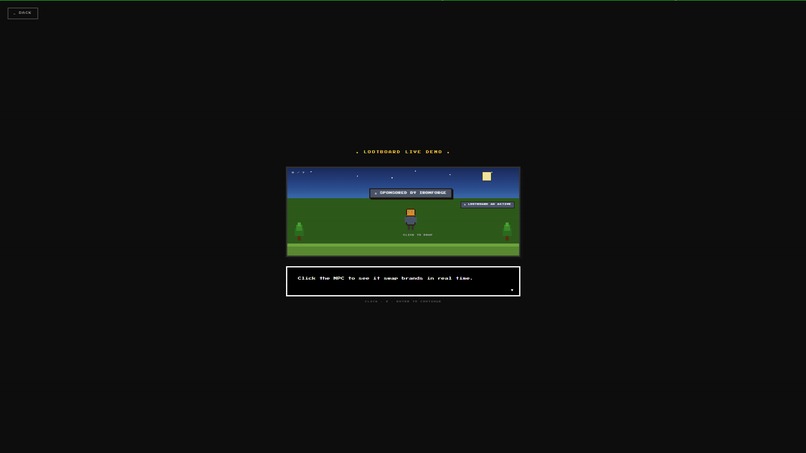
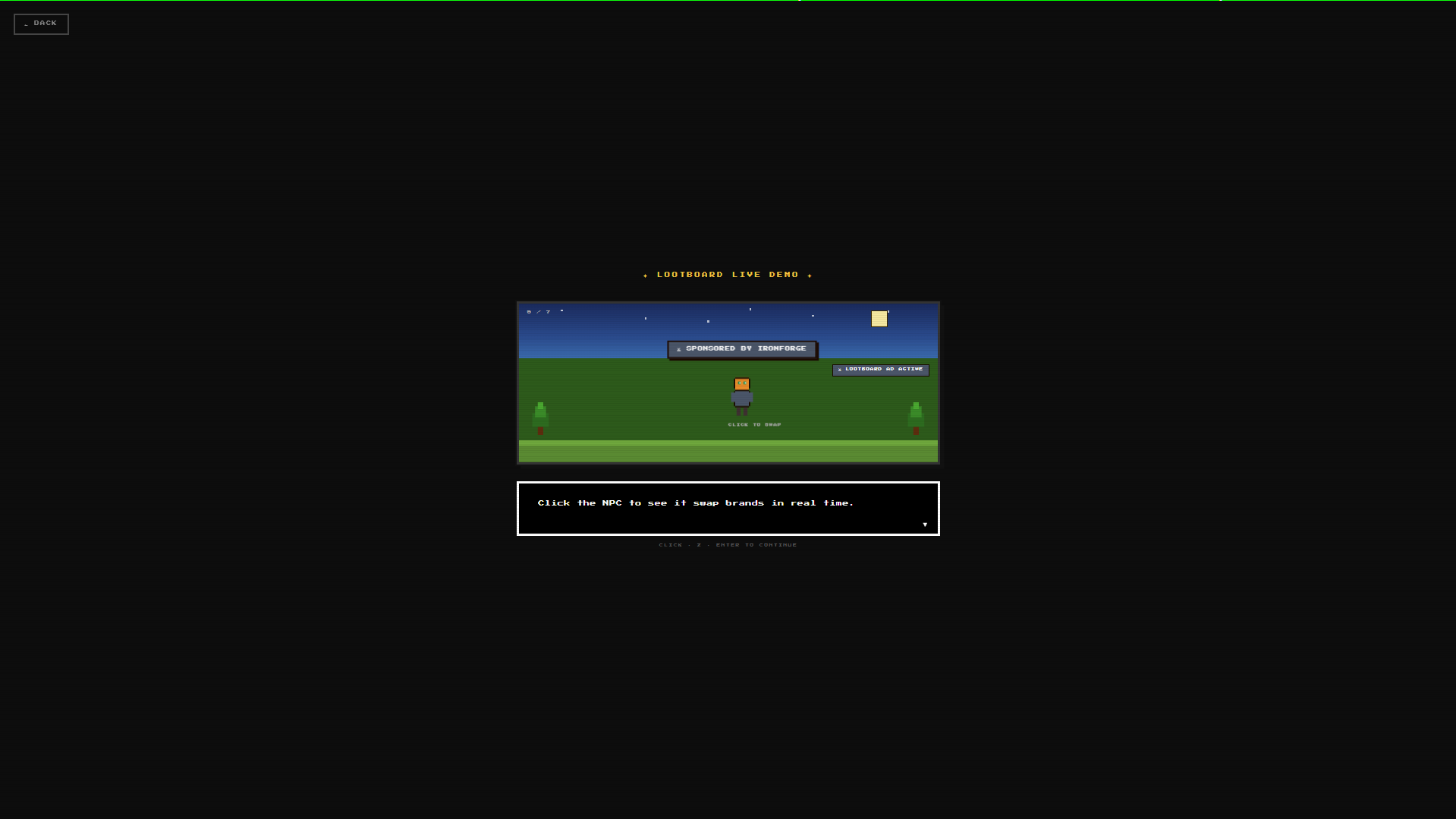
Example demo.
Inspiration
Game ads are so cursed, especially on mobile.
You are fighting zombies, solving puzzles, or drifting around a racetrack, and suddenly a giant pop-up appears asking you to buy toothpaste, crypto, or something suspiciously close to a meal delivery app. You have to wait 5 seconds. It breaks immersion, annoys players, and makes developers feel like they have to choose between making money and keeping their game fun.
We wanted to fix that. We want to find a way for developers to monetize games without turning the player experience into a billboard with health bars.
What it does
LootBoard is an AI-powered in-game sponsorship marketplace that turns ordinary objects inside games into native brand placements. Instead of interrupting gameplay, sponsors become part of the game world.
For example, an apocalyptic zombie world could have vending machines that dispense a generic soda, but with in-game placement, they could become a can of Red Bull.
Developers stay in control the whole time. They can approve, reject, request revisions, compare mockups, and track revenue before anything goes live.
Sponsors can create brand profiles, get matched with games that fit their audience, review placement concepts, place bids, and track campaign performance.
How we built it
We built the platform as a two-sided marketplace:
Developers connect their game projects, design docs, assets, and repos. AI agents scan the game to understand its genre, tone, art style, mechanics, and monetization opportunities.
Sponsors create AI-assisted brand profiles with details like visual identity, campaign goals, target audience, preferred game genres, and placement restrictions.
Then our matching layer finds sponsorship opportunities like:
- Billboards
- Vending machines
- Vehicles
- Storefronts
- Food and drink items
- Character accessories
- Environmental props
- Background audio
- Small quest or story moments
Once a match is found, AI generates placement ideas, before-and-after previews, visual assets, and code changes. After both the developer and sponsor approve, the final integration can sync back into the developer’s workflow.
Challenges we ran into
The hardest part was balancing automation with creative control.
If the AI is too passive, it does not save developers much time. If it is too aggressive, it starts making brand choices that feel cursed, like putting a fast-food chain inside a tragic fantasy village where everyone is starving.
We had to design the flow so AI can suggest, generate, and package integrations, while humans still approve everything before it becomes part of the game.
Another challenge was making sponsor matching feel meaningful. It is not enough to say “brand plus game equals money.” The placement has to fit the world, the audience, and the tone.
Accomplishments that we're proud of
We are proud that the idea solves a real problem for three groups at once:
- Developers get a new revenue stream without wrecking gameplay.
- Sponsors get immersive placements that are more meaningful than standard ads.
- Players get to stay inside the experience without being attacked by pop-ups every five minutes.
We are also proud of attempting to incorporate all of the sponsors into our project. Learning and orchestrating all sponsors' tools was an impressive feat for us since it was pretty complicated.
What we learned
We learned that in-game advertising does not have to be annoying. It mostly becomes annoying when it is treated like something pasted on top of the game instead of something designed into the game.
We also learned that AI is especially powerful when it acts like a creative production assistant, not an unchecked chaos goblin. The best workflow is collaborative: AI proposes, humans approve, and players hopefully never have to see another “claim your reward after this 30-second ad” screen again.
What's next for LootBoard
Next, we would expand the marketplace with:
- More advanced sponsor-game matching
- Unity and Unreal integrations
- Automatic pull request generation
- More detailed campaign analytics
- Player sentiment tracking
- Revenue forecasting for developers
- Stronger brand safety and game-fit controls
Long term, we imagine a marketplace where indie developers can monetize their worlds without sacrificing the soul of their games, and sponsors can become part of interactive experiences instead of yelling at players from the pause menu.
Built With
- ai-agents
- backboard
- cloudinary
- composio
- cystack
- github
- gmail
- google-drive
- pingram
- polarity


Log in or sign up for Devpost to join the conversation.