-
-
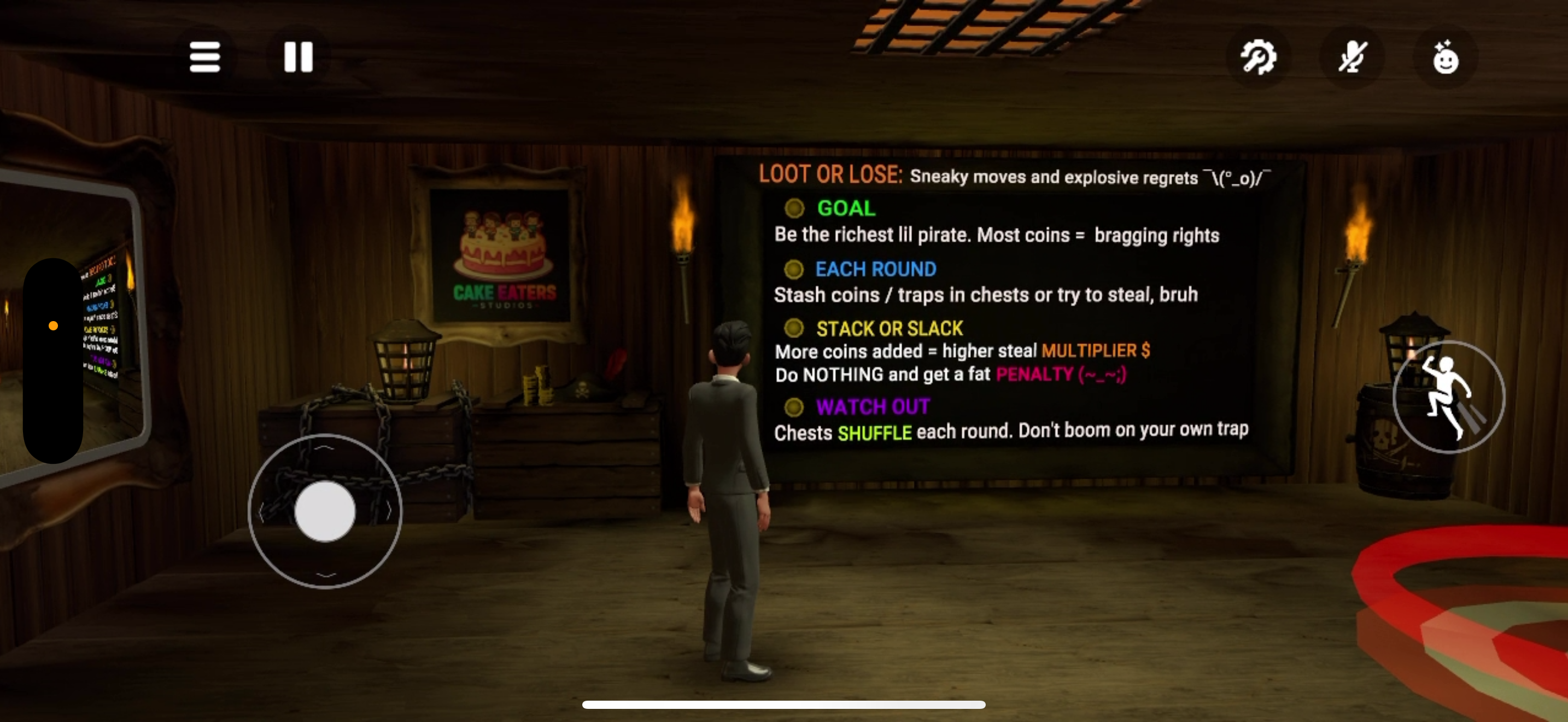
Lobby Rules
-
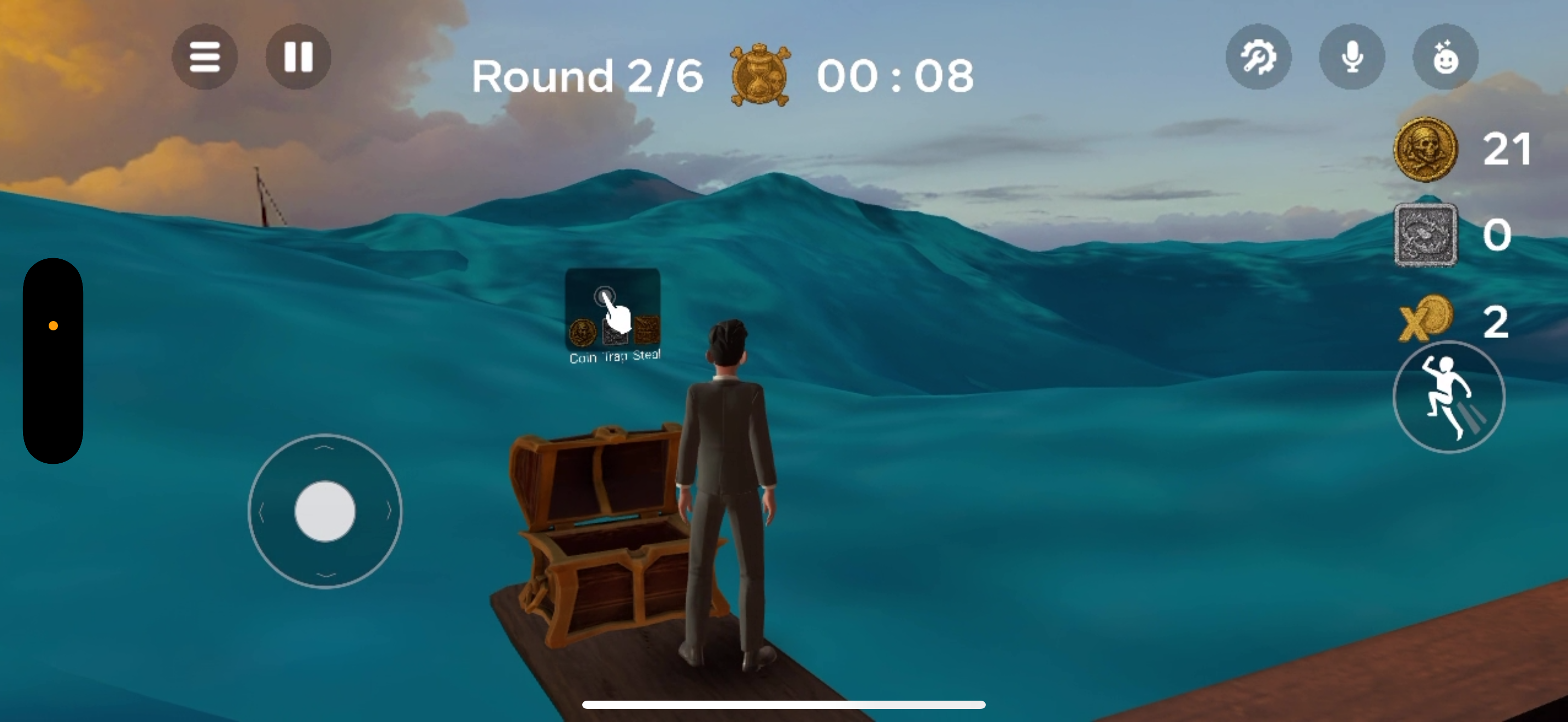
Chest Interaction
-
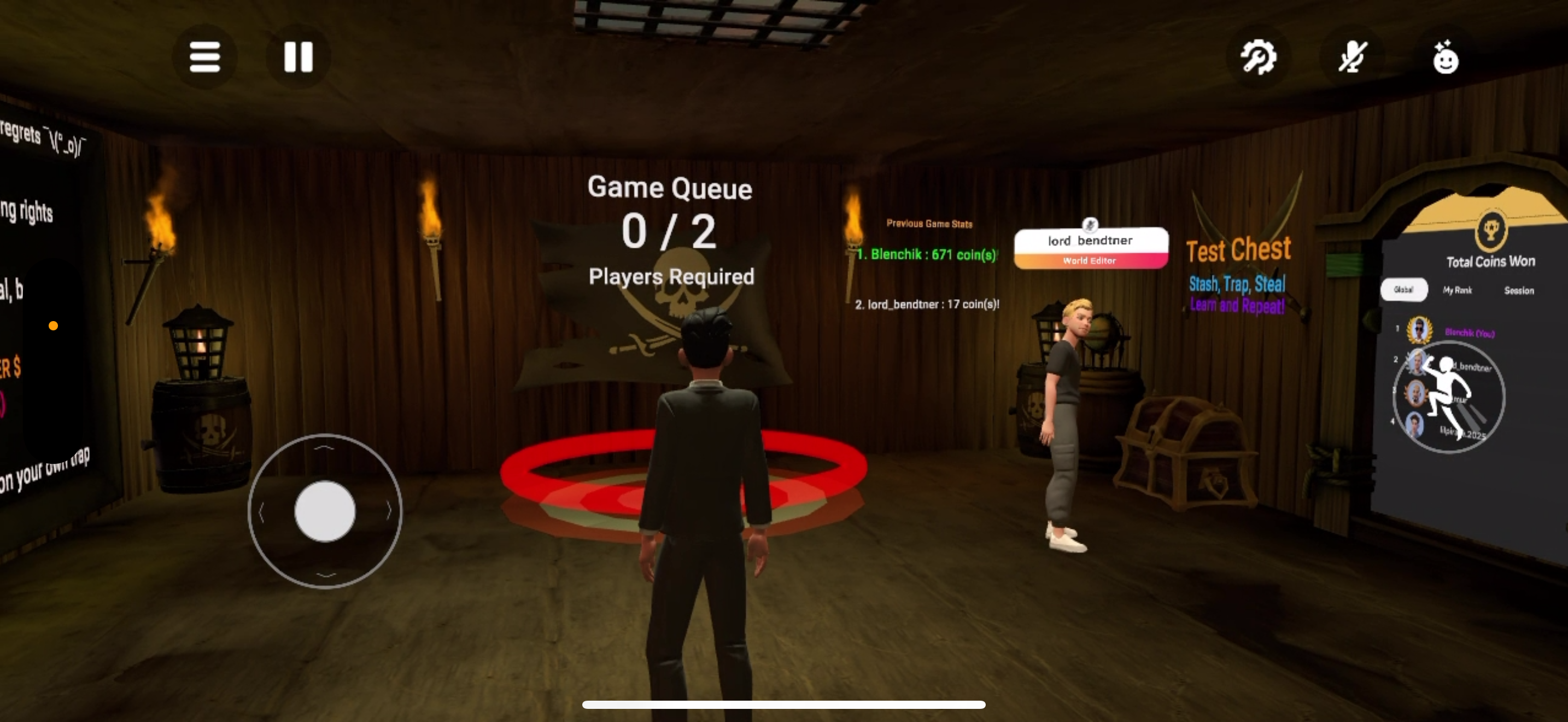
Lobby Area
-
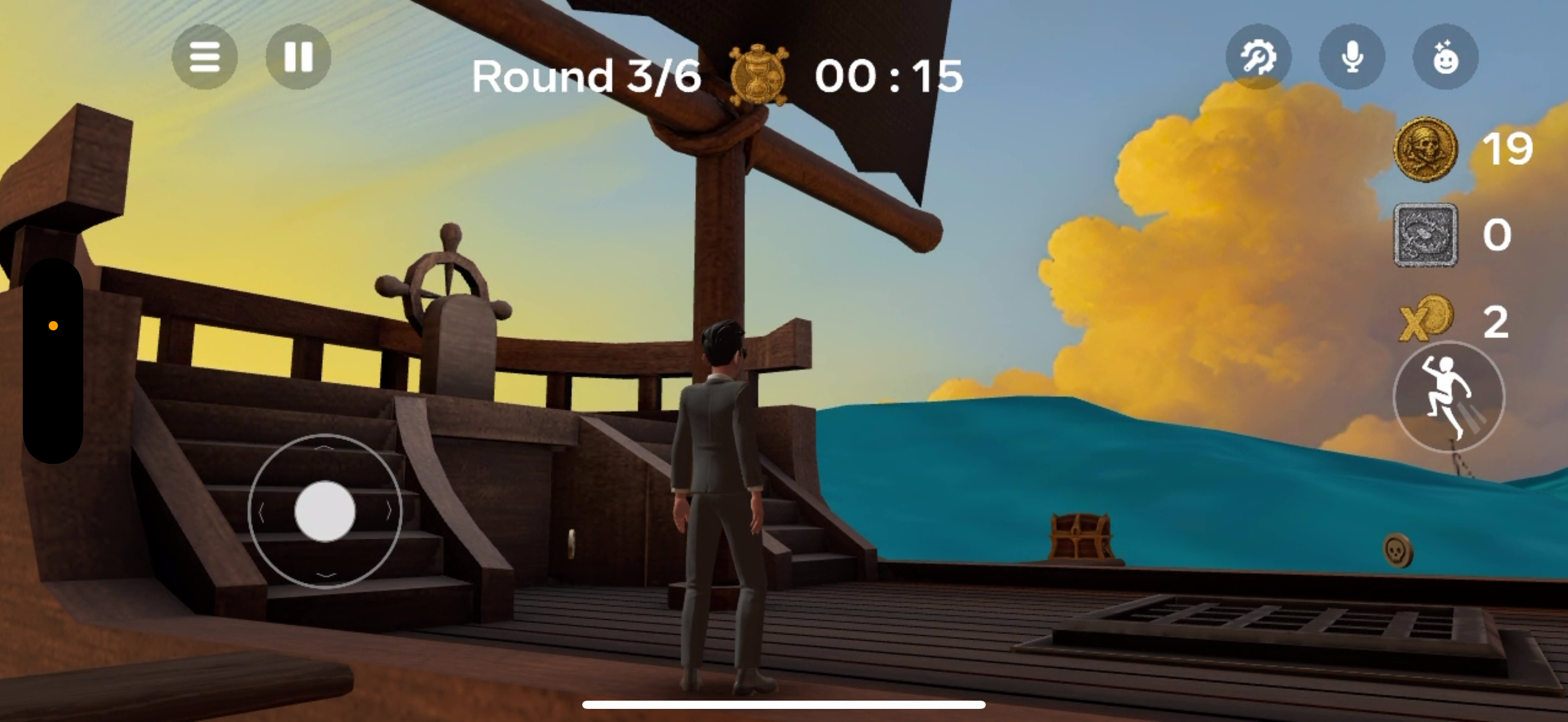
Gameplay Ship
Inspiration
My friends and I live in different states, so we use Horizon Worlds as a fun way to stay connected. Every week, we hop on a call and hang out together in VR or most recently on the Meta Horizon app. Horizon Worlds has been the perfect platform for us because it’s accessible, free to use, and makes grouping up easy.
We often find ourselves playing Super Rumble because of its engaging flow that keeps us coming back. That experience inspired us to create something new—a game that all of us could enjoy together, whether we’re playing on mobile, in VR, or a mix of both.
We wanted to design a party game that captured the same excitement and energy we love, while offering a fresh challenge and room for strategy and laughs.
What it does
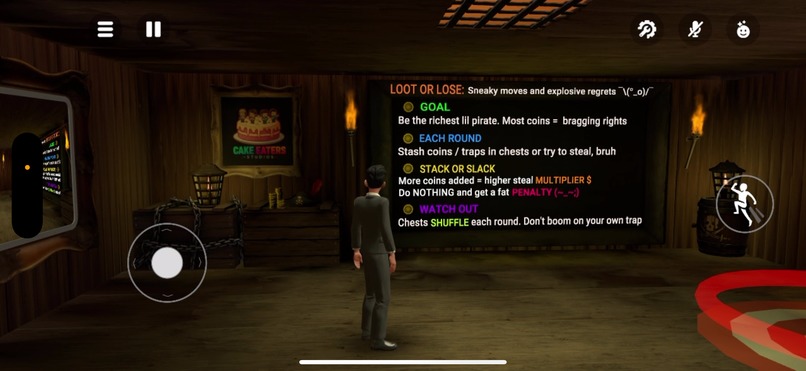
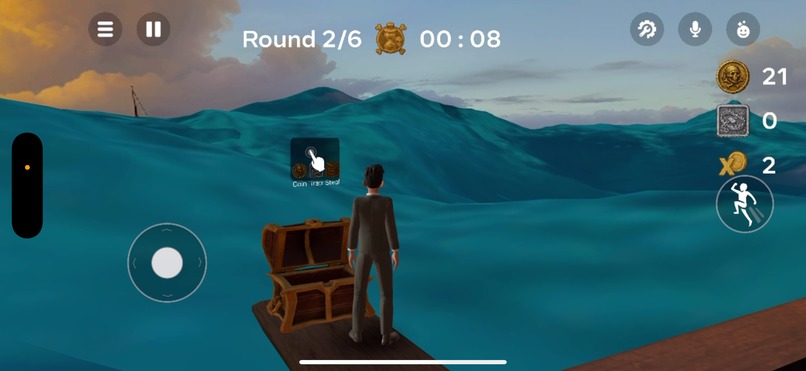
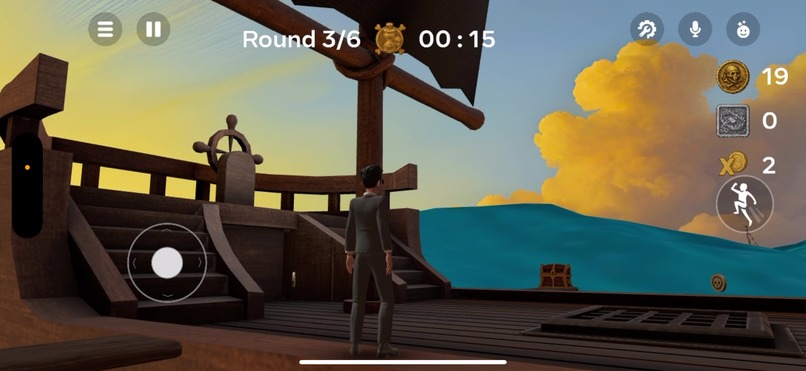
Loot or Lose is a competitive, multiplayer party game for 2-4 players. Each game takes place over 6 rounds, where players interact with treasure chests by:
- Placing coins into a chest (increasing their coin pick-up multiplier over time).
- Placing a trap in a chest (hoping to catch a greedy thief).
- Stealing from a chest (hoping to snag the jackpot—unless it's trapped).
Players start with 21 coins, 2 traps, and a 1x multiplier. Each time they invest coins, their multiplier grows by 1.2x (up to 10x max), boosting future steals. Stealing from a chest rewards players with the total coins inside multiplied by their current multiplier, but if trapped, they lose coins instead. Chests shuffle each round, adding mystery and unpredictability.
At the end of 6 rounds, the player with the most coins wins!
The game emphasizes psychological gameplay, bluffing, reading others, and strategic risk-taking.
How we built it
Loot or Lose was built in Horizon Worlds using its visual scripting tools and environment editor. We focused on keeping interactions simple for both VR and mobile users, ensuring players could play with just a few button presses and gestures.
Key systems we developed include:
- A chest randomization system that shuffles chests' data each round.
- A multiplier and investment tracker for each player.
- A trap detection system that triggers penalties and animations when a player hits a trap.
- A round progression system with clear UI prompts and transitions.
- A coin economy and scoreboard that updates for all players.
We playtested extensively with small groups to ensure that rules were intuitive and interactions were responsive on both VR and mobile platforms.
Challenges we ran into
One of the biggest challenges we faced was figuring out how to let players interact with a chest that supports multiple actions (invest, trap, or steal).
Initially, we tried using the Custom Input API. It seemed like an ideal solution because it automatically handled input across platforms:
- In VR, we could map actions to controller buttons.
- On PC, those actions were mapped to keyboard keys.
- On mobile, it generated on-screen buttons for each supported action.
At first, it looked like everything was working—until we discovered a critical issue: the button scripts ran locally, but our game logic relied on server-side scripts. This meant the buttons weren’t communicating with the server the way we needed, breaking the core interactions between the player and the chest. (Or perhaps there’s a workaround we haven’t discovered yet, but despite my efforts, we couldn’t get it working.)
As an alternative, we shifted to modifying the Button script from the "Custom UI Examples" world provided by Meta. We created a custom interactive HUD interface that appears above the chest, using textures to represent the different actions.
In the end, this approach worked even better than the Custom Input API:
- It gave us more flexibility in customizing the icons and text.
- It allowed full control over the interaction flow across both VR and mobile platforms.
This challenge forced us to think creatively about cross-platform interaction design and ultimately led to a solution that felt more polished, intuitive, and adaptable to the needs of the game.
Accomplishments that we're proud of
We are proud of how Loot or Lose turned out as a social, accessible, yet strategic game that sparks laughter, surprises, and competitive fun.
- It successfully blends luck, strategy, and social deduction in under 5 minutes per session.
- It works seamlessly on both VR and mobile, ensuring broad accessibility.
We are also very proud of how well we were able to fine-tune the game economy. It was not a small feat to ensure that players don’t run out of coins too quickly or get overpowered by having too many traps. These dynamics got even more complicated once we introduced the multiplier system, which was intended to motivate users to continue contributing coins to the chests through the game. We are happy that our continuous testing and iterations resulted in a fun, dynamic, well-throughout, and rewarding gameplay!
Additionally, we are proud of how we were able to lean into each of the team member’s strengths - from idea generation to project management to coding to asset design to music composition (yes, Loot or Lose has a bespoke soundtrack made specifically for the game!)
What we learned
Building Loot or Lose taught us valuable lessons about:
- Balancing game mechanics, so that no single strategy dominates.
- The importance of player feedback loops—how multiplier incentives, penalties, and randomness shape player behavior.
- Designing for cross-platform input and simplifying interfaces for mobile without sacrificing depth.
Most importantly, we learned how crucial playtesting and iteration are in creating a party game that feels both fun and fair.
What's next for Loot or Lose
We have several exciting plans to expand Loot or Lose and make the gameplay even more dynamic and engaging. Some features we’re exploring include:
New Modifiers and Mechanics
We plan to introduce various modifiers to keep each round unpredictable and fresh. For example:
- Disarm Ability: Players will have the option to attempt to disarm a trap in a chest. However, if the chest doesn’t contain a trap, the disarm attempt is wasted—adding an extra layer of bluffing and risk.
Extra Trap: Players will have a chance to get extra traps after contributing a certain amount of coins throughout the game.
Random Power-Ups: Power-ups will occasionally drop during the game, providing temporary advantages or disadvantages. These could alter core mechanics in ways that shift the balance between players, creating surprising and strategic moments.
Enhanced Player Interaction
We want to expand how players interact with each other beyond the chests themselves. One idea we’re exploring is:
- Unique Guns with Special Effects: Players could obtain different types of guns, each with unique abilities or effects that influence gameplay. These guns could be purchased using coins in a shop that appears at a certain round or even in the game lobby.
Persistent Currency and Progression
We’re also considering adding persistent coins as a form of in-game currency:
- Coins earned during gameplay would carry over between sessions rather than resetting after each game.
- Players could use their accumulated coins to buy cosmetic upgrades, guns, or possibly other power-ups in future sessions.
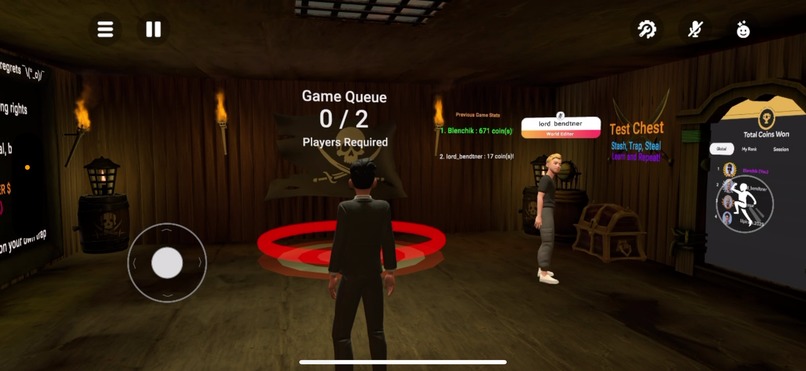
- Since we’re already tracking total coins earned by each player, this system can be implemented smoothly without requiring players to “start over” with every new game.
Monetization and Further Gamification
We will also introduce rewards and incentives for players to come back to the game (in addition to the already existing fun!). Such incentives include unlocking skins for chests, custom sound effects, clothing items for their avatars, and other cool ways to make our players feel special. Unlocking mechanisms might include total coin count, time spent in the game, and optional in game purchases.
Built With
- horizon
- typescript


Log in or sign up for Devpost to join the conversation.