-
-
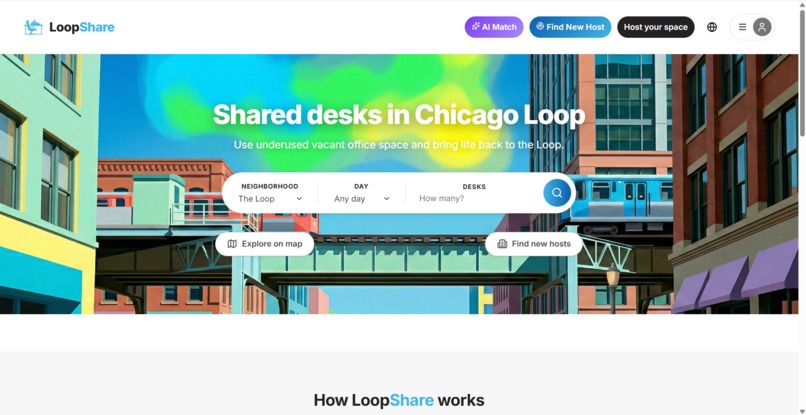
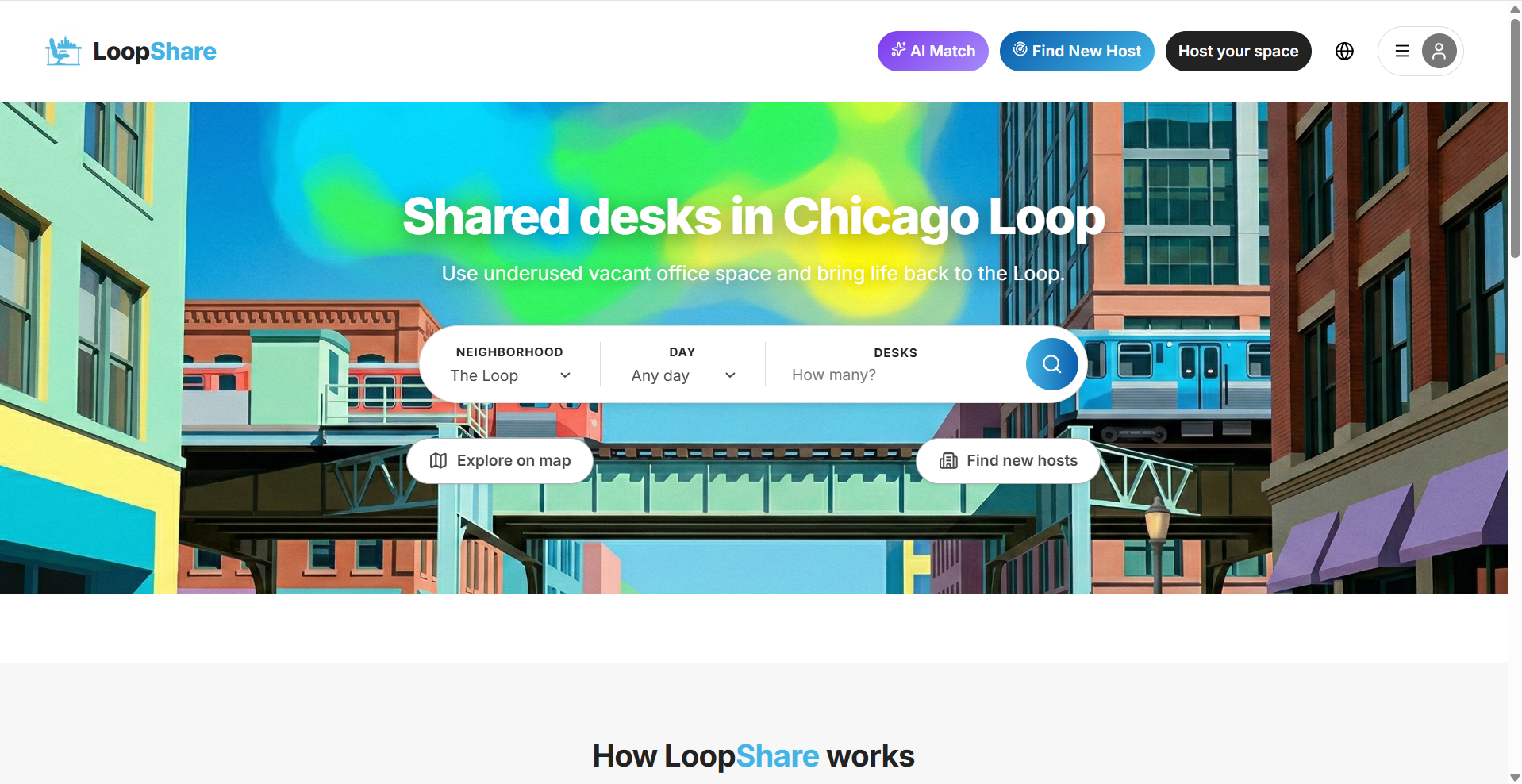
Home Page: Search for desks, explore the map, or let AI find your next Loop office.
-
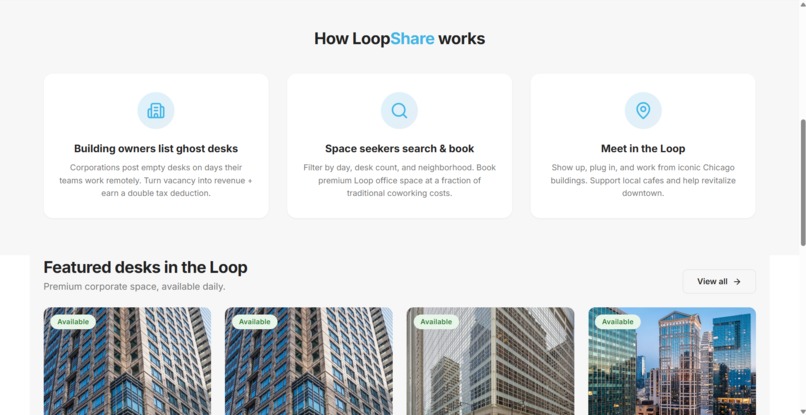
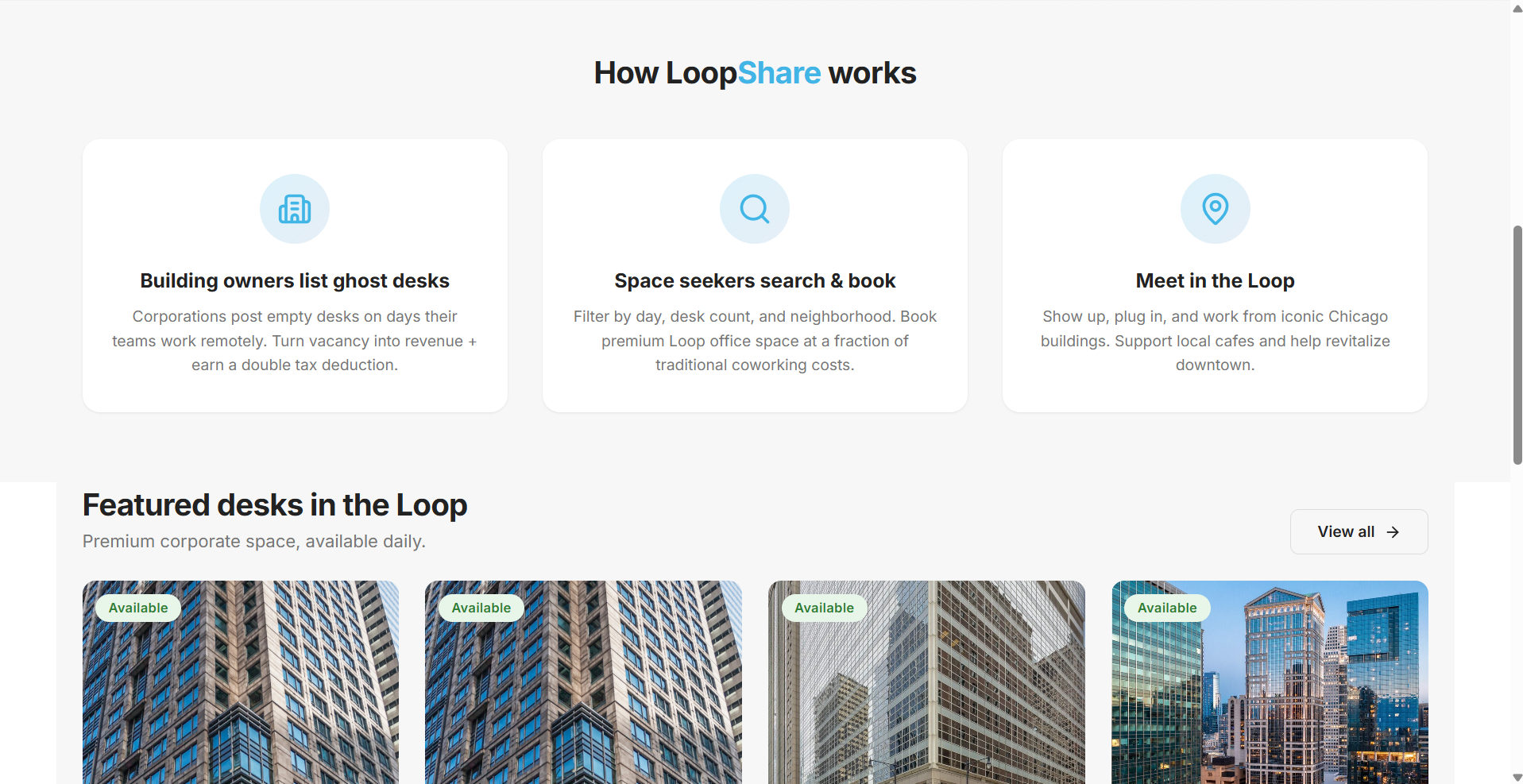
Home Pape Cont.
-
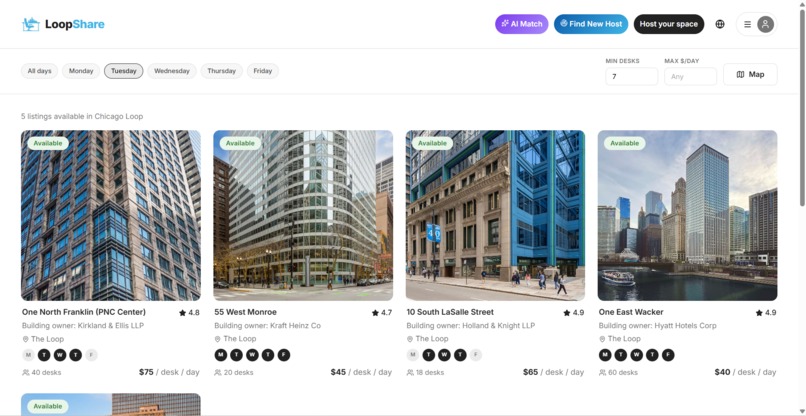
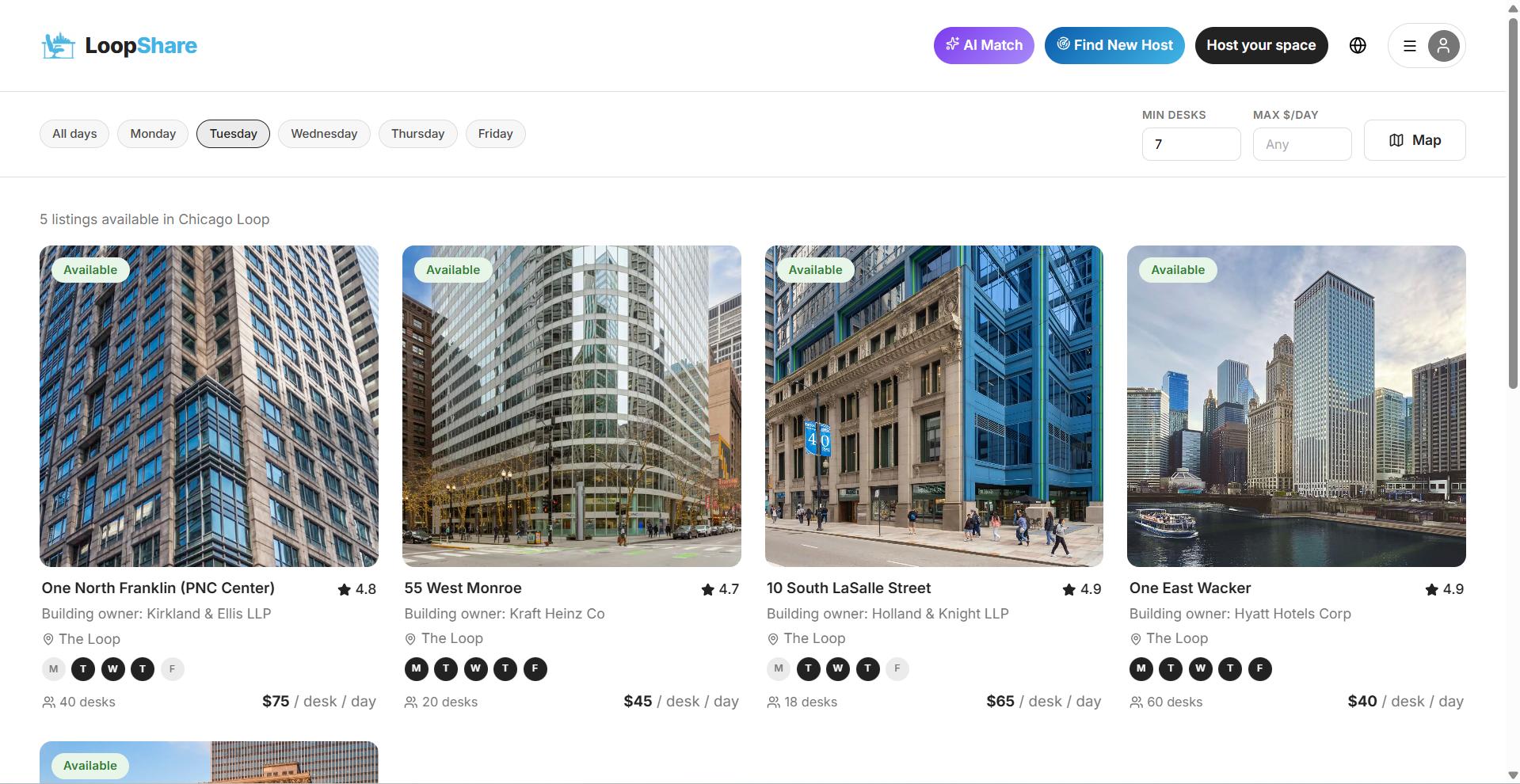
Listings Page: Browse available desks in the Loop filtered by day, price, and capacity.
-
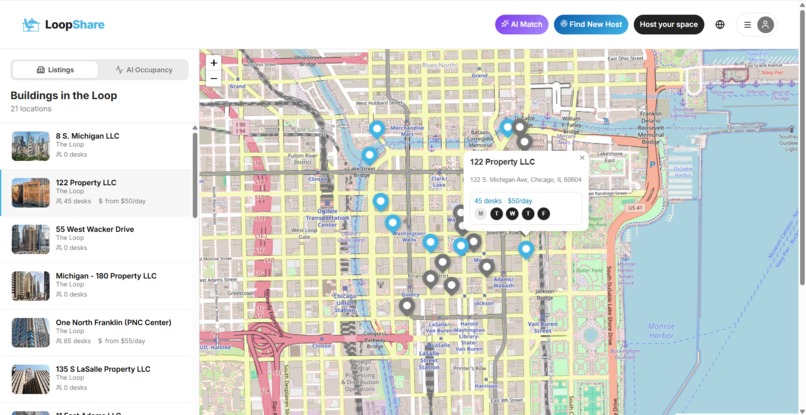
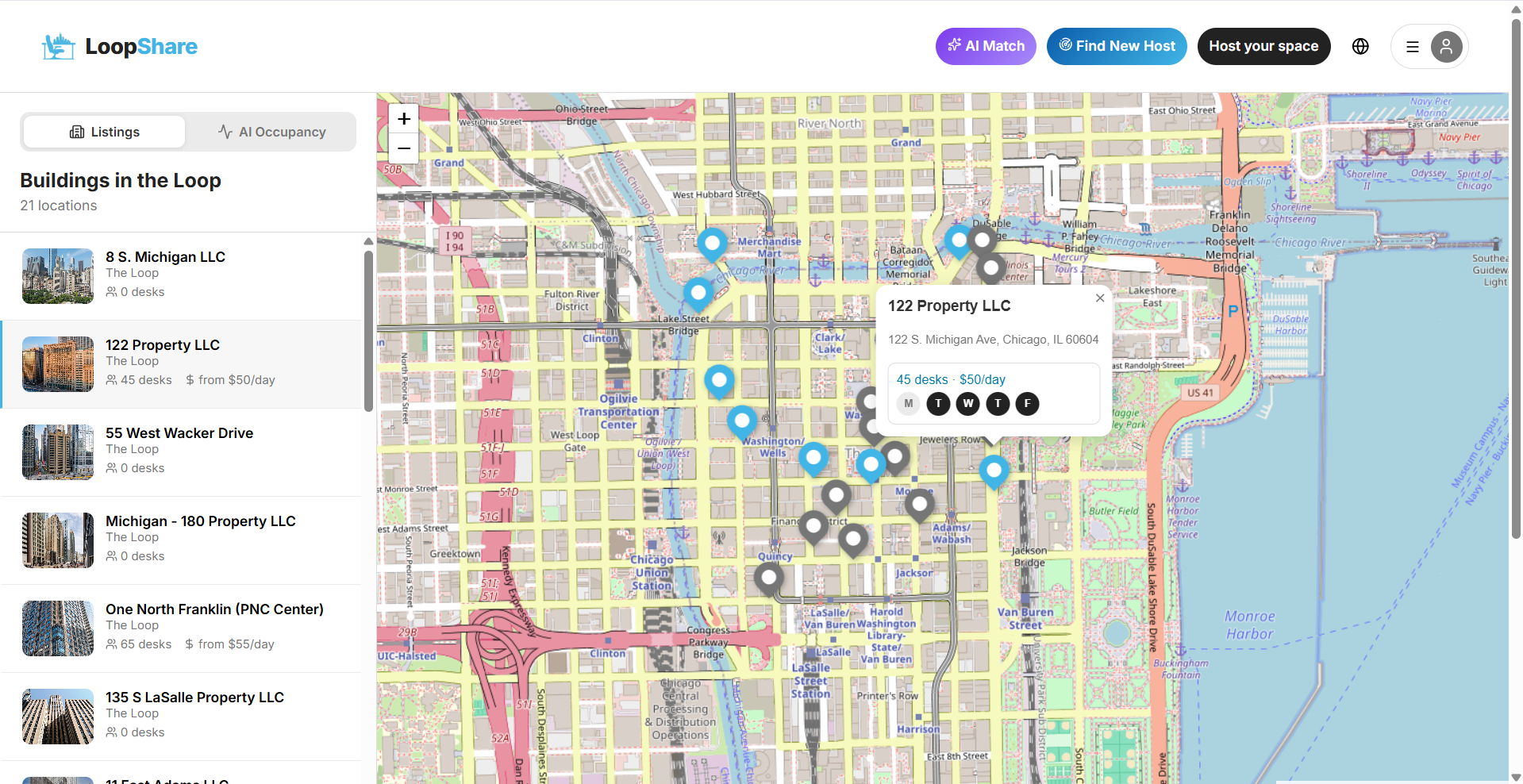
Map Explore: Browse all 21 Loop buildings on an interactive map with desk availability and pricing.
-
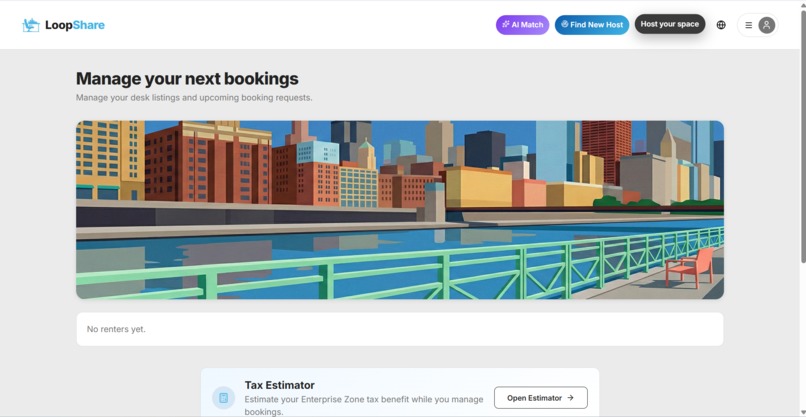
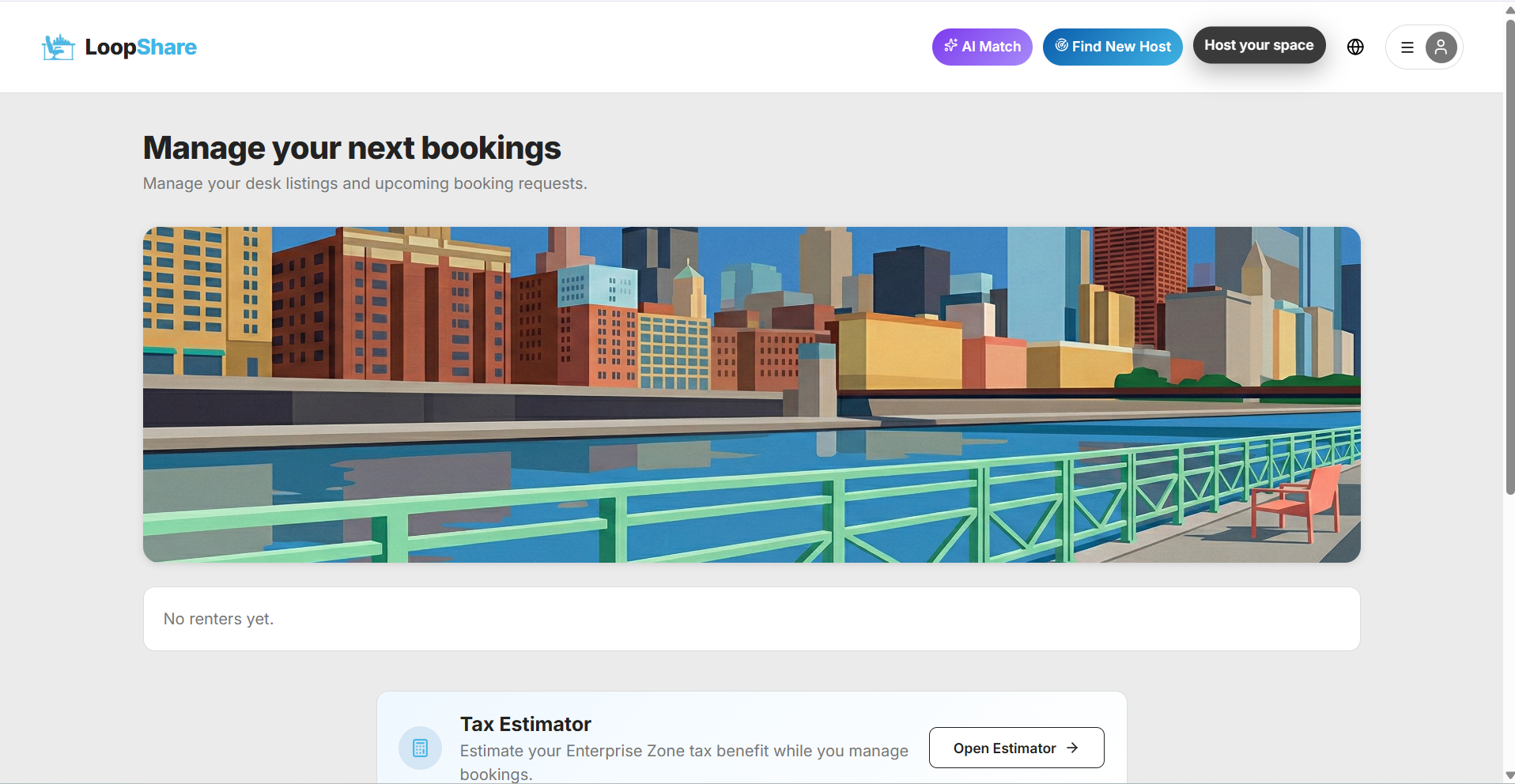
Host Dashboard: Manage your listings, track bookings, and estimate tax benefits in one place.
-
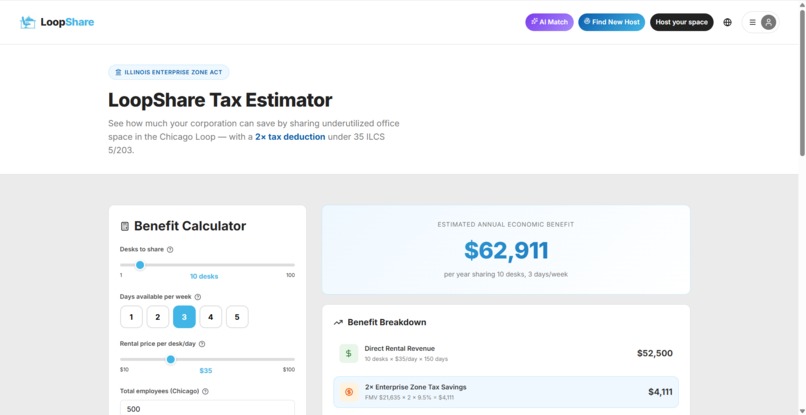
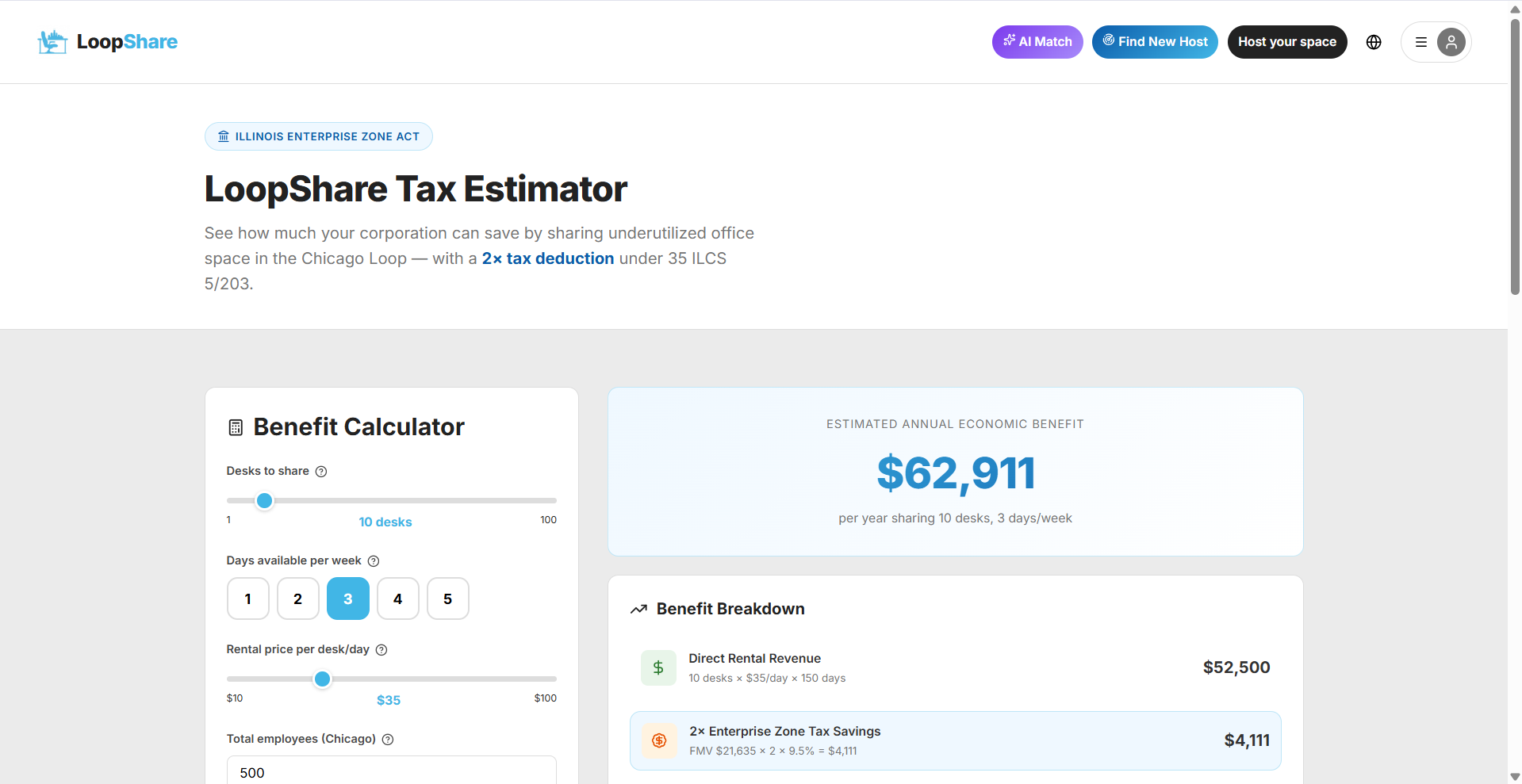
Tax Estimator: Calculate your annual savings from desk sharing using the Illinois Enterprise Zone Act.
-
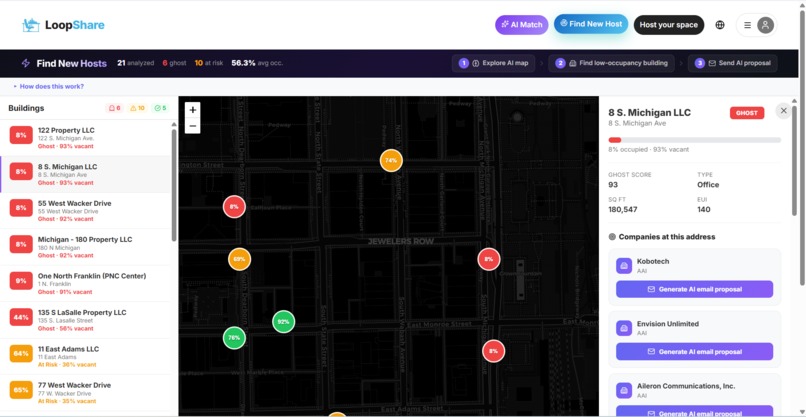
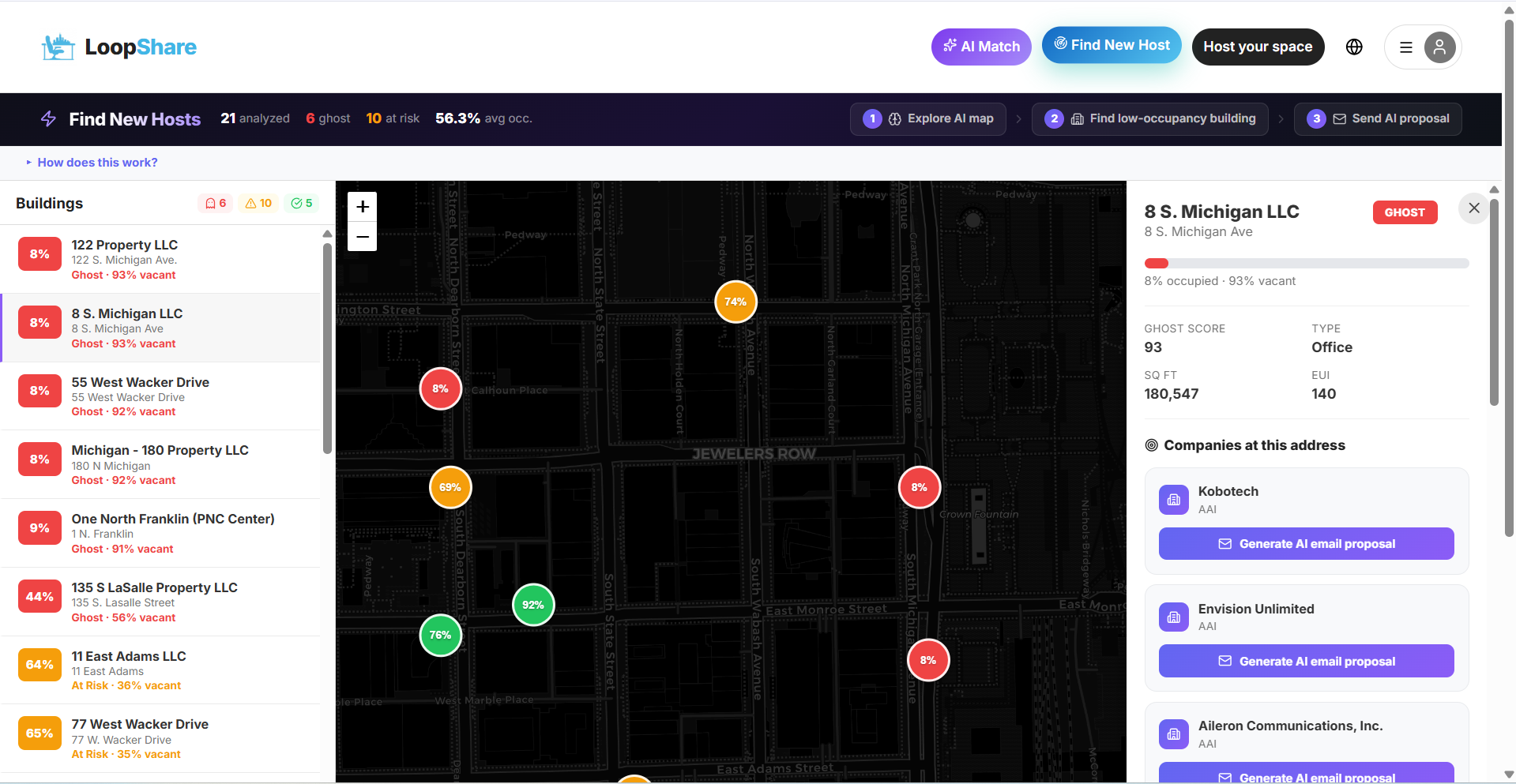
Find New Hosts: Our ML model predicts building occupancy from energy data and maps ghost buildings across the Loop.
-
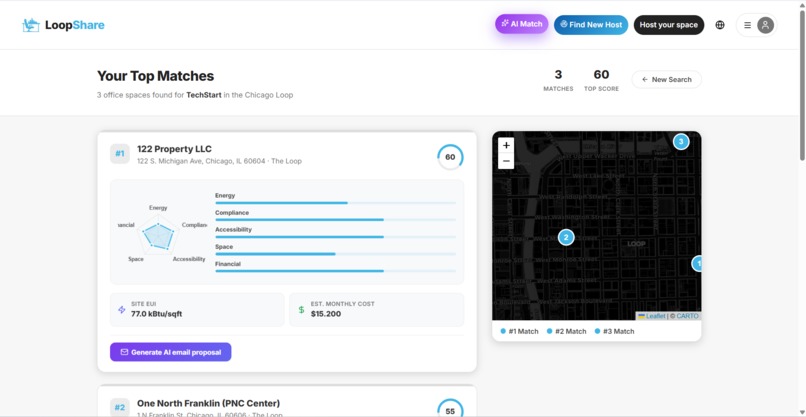
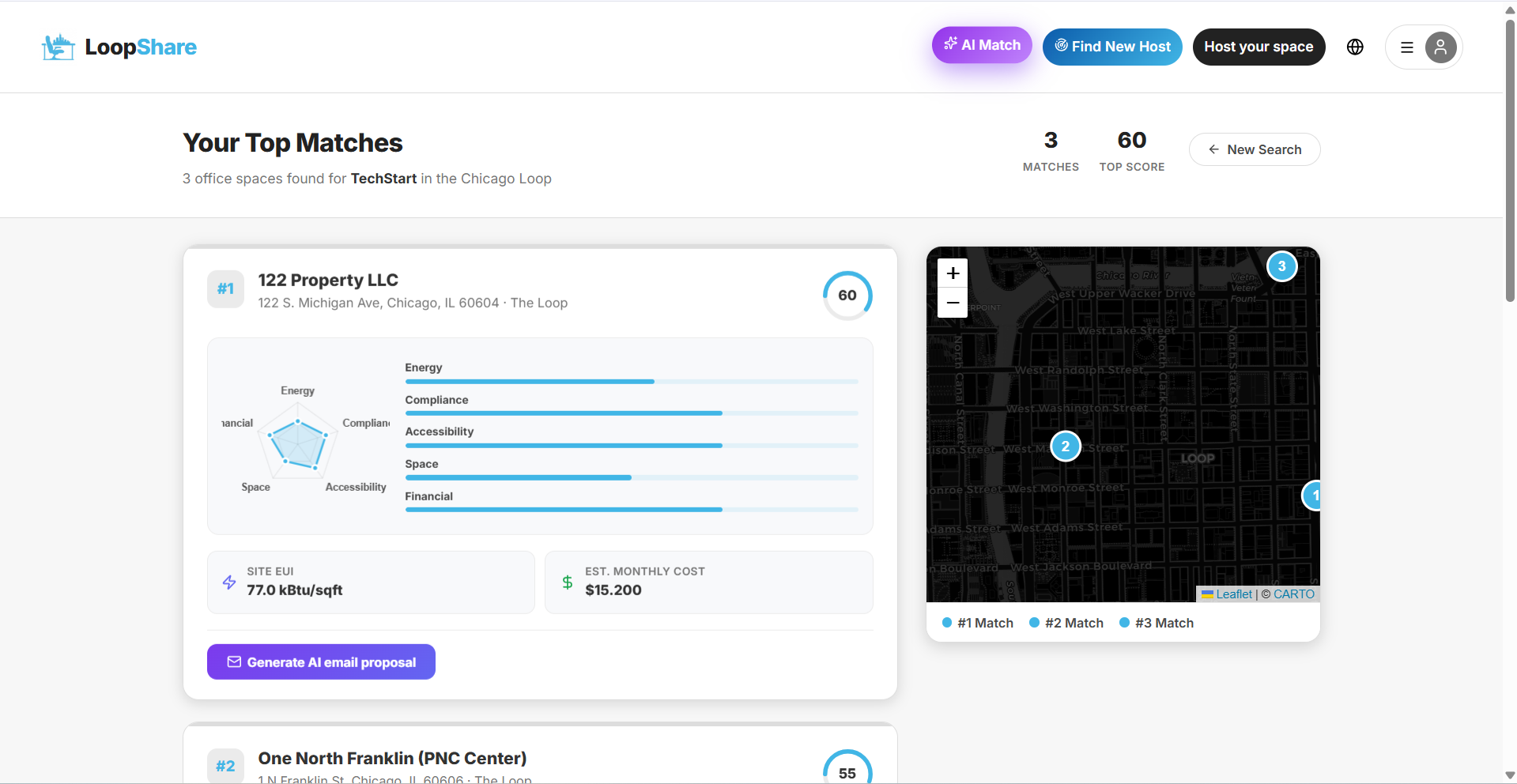
AI Match: Ranked building matches scored by energy, compliance, accessibility, space, and cost.
-
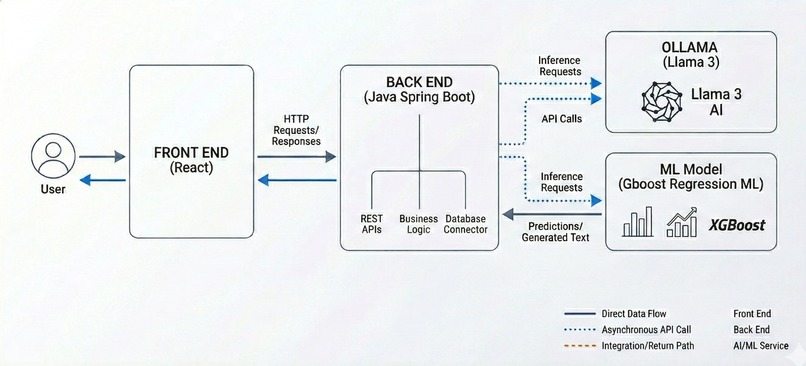
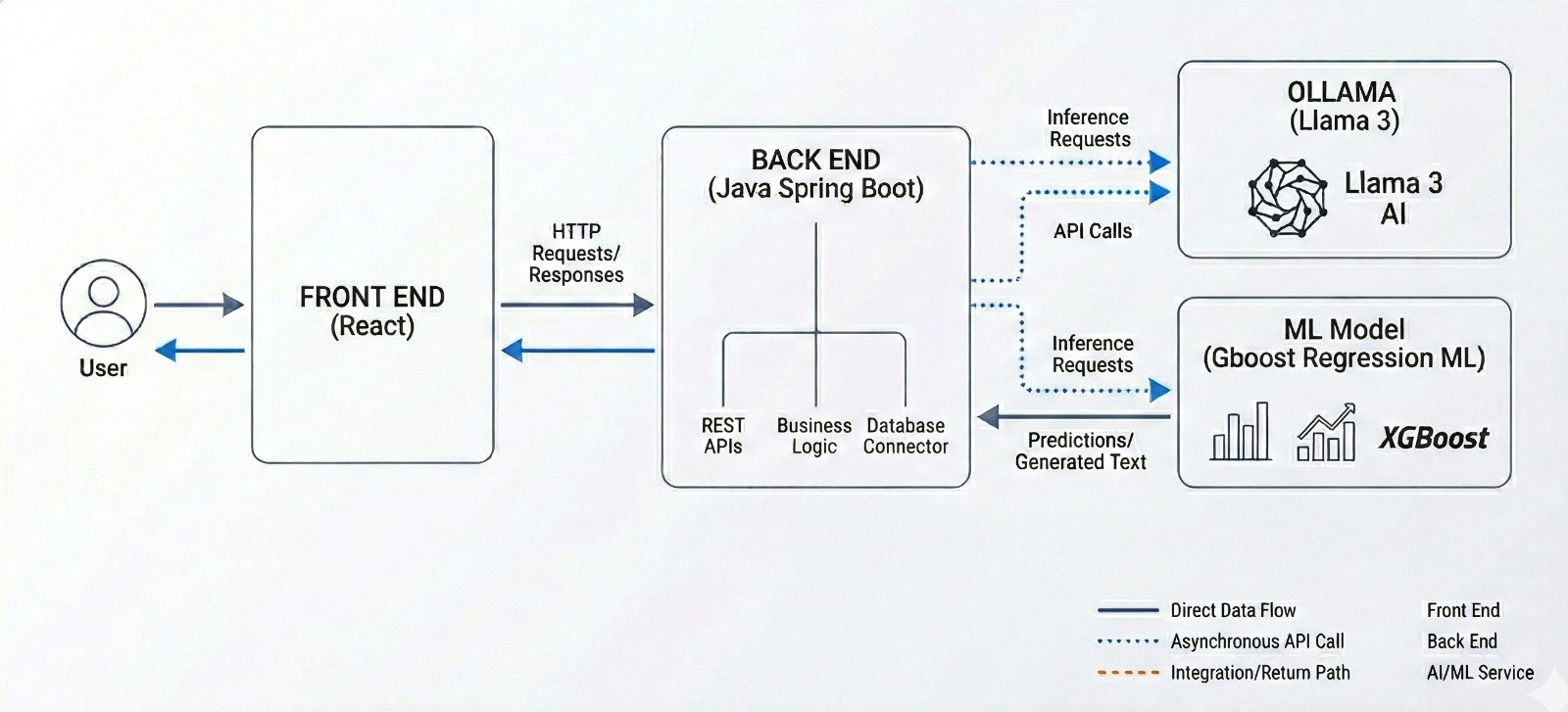
Software Architecture of the Project
Inspiration
The Loop is the heart of Chicago, but empty office floors are hurting the entire neighborhood, they aren't just a corporate problem. When big buildings are half-empty, local cafes and small shops lose the customers they need to stay open.
We want to revitalize the Loop by making the most use of its spaces. We don't want to build just another "post-and-wait" marketplace. We were inspired to create a proactive system that hunts for the solution.
By using Chicago’s public data, we identify "ghost buildings" before they even think about listing. Our platform reaches out to these owners automatically to help them rent out their unused desks to small businesses that need a place to work. This brings people back to the area and helps the whole local economy thrive again.
What it does
LoopShare is a self-starting AI marketplace that turns underutilized corporate real estate into affordable workspaces for small businesses.
Our machine learning model scans Chicago’s public data to find buildings that are mostly empty (based on energy use and physical attributes of the building). The platform then uses local AI agents to automatically find and contact the building owners and explain how they can save money through the Illinois Enterprise Zone Act by hosting startups.
This creates a win-win for everyone involved. Building owners get new revenue, small businesses find professional offices they can afford, and the local neighborhood gets more people visiting cafes and shops every day.
How we built it
We engineered a high-complexity, "local-first" architecture:
ML Occupancy Model: A Gradient Boosting Regressor (Python/scikit-learn) trained on 10+ years of Chicago Energy Benchmarking data. It predicts occupancy by analyzing EUI, electricity, and natural gas usage trends.
Agentic AI (The Outreach Engine): A multi-agent system powered by Ollama (llama3.2) running locally. This includes an OutreachAgent that generates personalized lease drafts and a RiskAgent that verifies business licenses using public API data.
Full-Stack Core: A Spring Boot (Java) backend for robust orchestration and a React 19 frontend featuring interactive Leaflet maps and data visualizations.
Challenges we ran into
The biggest technical hurdle was building a bridge between the predictive ML model and the generative AI agents. We had to ensure the AI agents understood the specific energy data and legal tax incentives well enough to draft professional, persuasive outreach emails. Additionally, cleaning massive datasets from the Chicago Open Data Portal to train a reliable regressor required significant data engineering effort.
Accomplishments that we're proud of
Our "Local-First" architecture is a major technical win because it ensures zero API costs by running Ollama locally while keeping all building data and legal drafts secure on our own infrastructure. We have successfully turned raw public data into a self-starting tool that doesn't just wait for a solution, it actively hunts for it.
Every desk we fill puts another worker in the Loop: another lunch order, another coffee run, another reason for a small business to keep its doors open. That's how we bring life back to downtown Chicago.
What we learned
We discovered that public data is more than just statistics, it’s a roadmap for urban renewal. We learned how to use energy consumption as a way to measure human activity and how to navigate the legal complexities of tax incentives (The Illinois Enterprise Zone Act) to create real financial reasons for companies to help their community.
What's next for LoopShare
We plan to spin off our detector into DealScout, a B2B tool for real estate brokers to find off-market opportunities. By giving brokers ranked lists of "ghost buildings" and AI pitch decks, we accelerate the process of filling empty spaces. This doesn't just create a revenue stream; it scales our mission to eliminate vacancy and bring life back to the Loop's streets as quickly as possible.
Built With
- chart.js
- css
- flask
- h2-database
- html
- java
- javascript
- leaflet.js
- ollama
- pandas
- python
- react
- scikit-learn
- spring-boot
- swagger
- vite


Log in or sign up for Devpost to join the conversation.