Inspiration
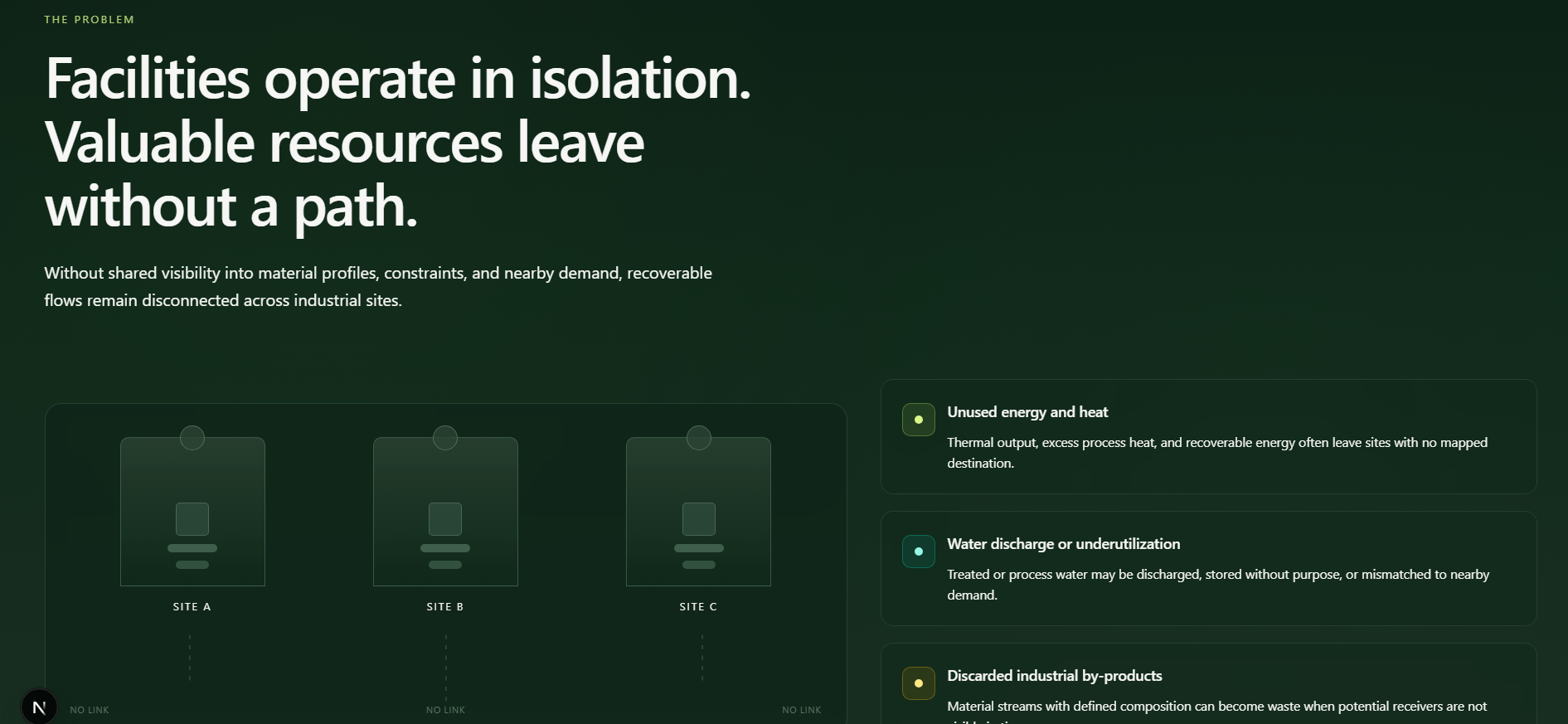
Industries often discard materials that could serve as valuable resources for other organisations. At the same time, businesses spend time and effort searching for reusable materials and reliable recovery partners.
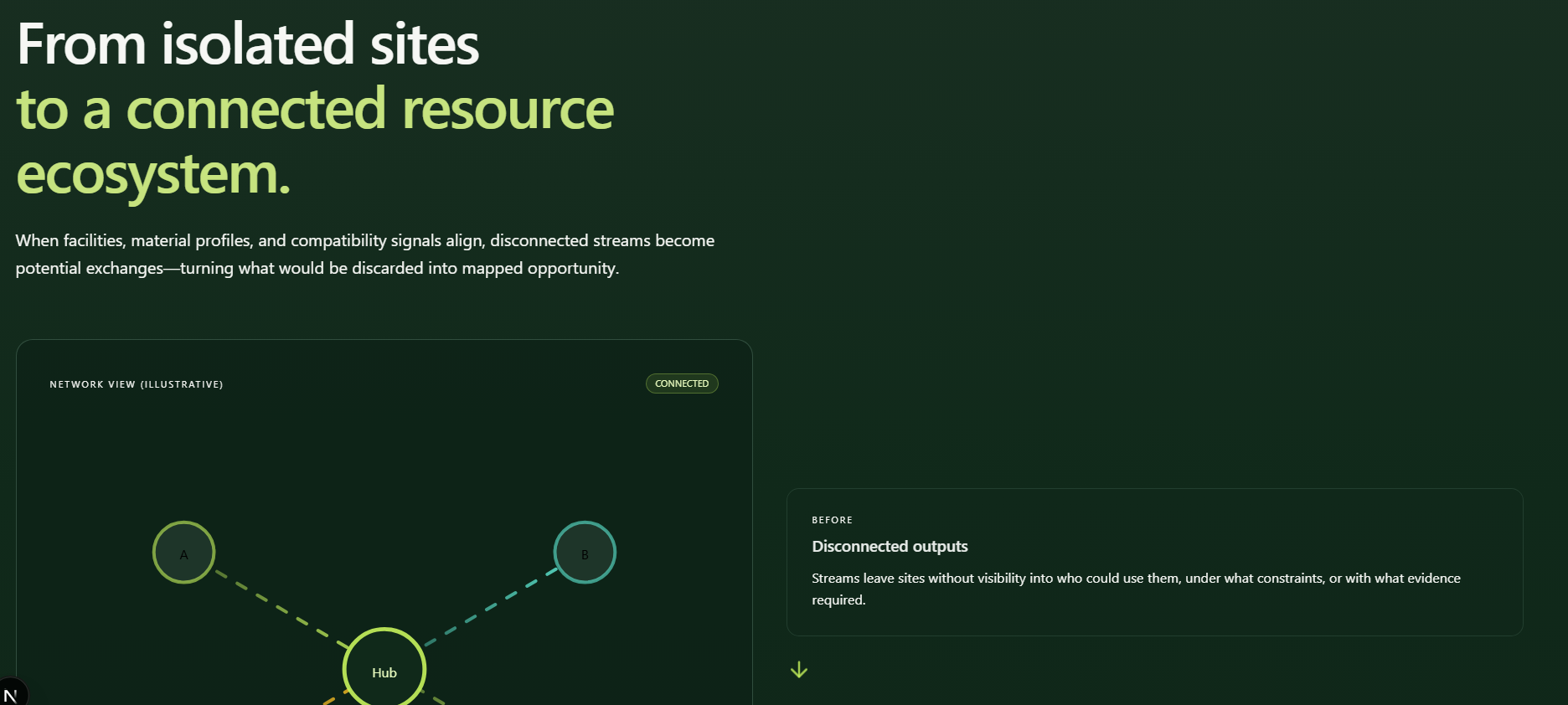
We wanted to address this disconnect by creating a platform where industrial resources can be discovered, matched, exchanged, and tracked through a transparent and accountable process.
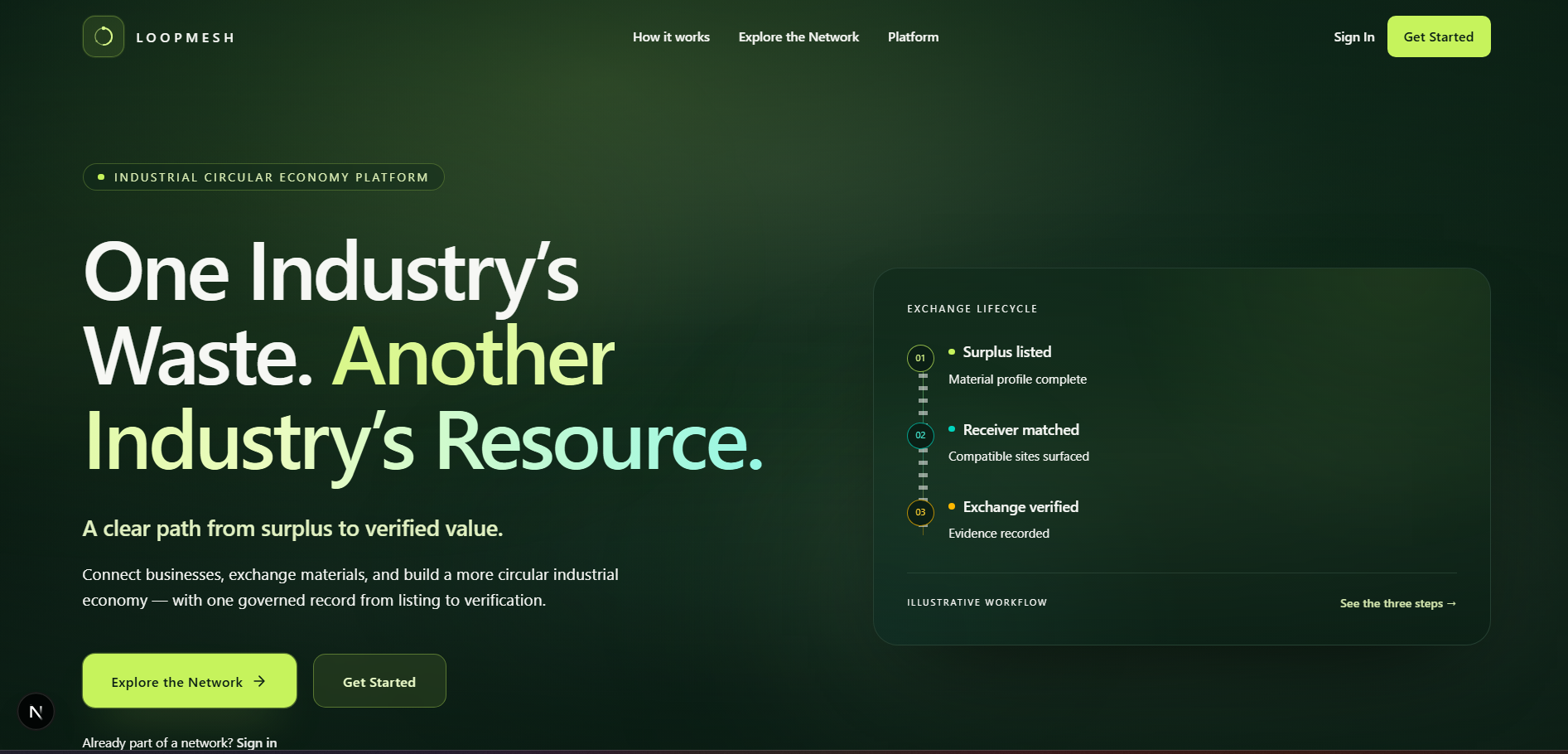
This inspired LOOPMESH — One Industry's Waste. Another Industry's Resource.
What it does
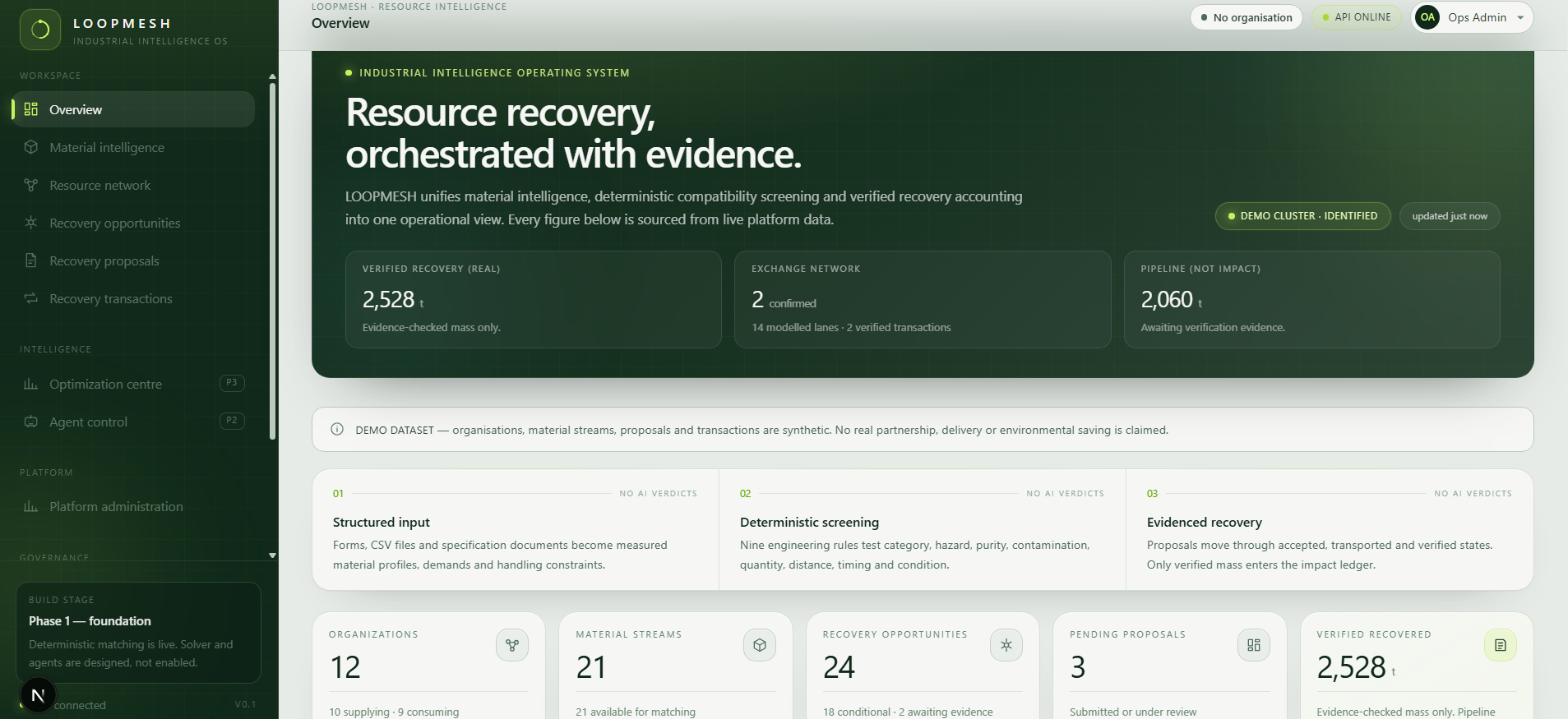
LOOPMESH is an industrial intelligence platform designed to connect organisations and transform unused industrial materials into potential recovery opportunities.
The platform provides:
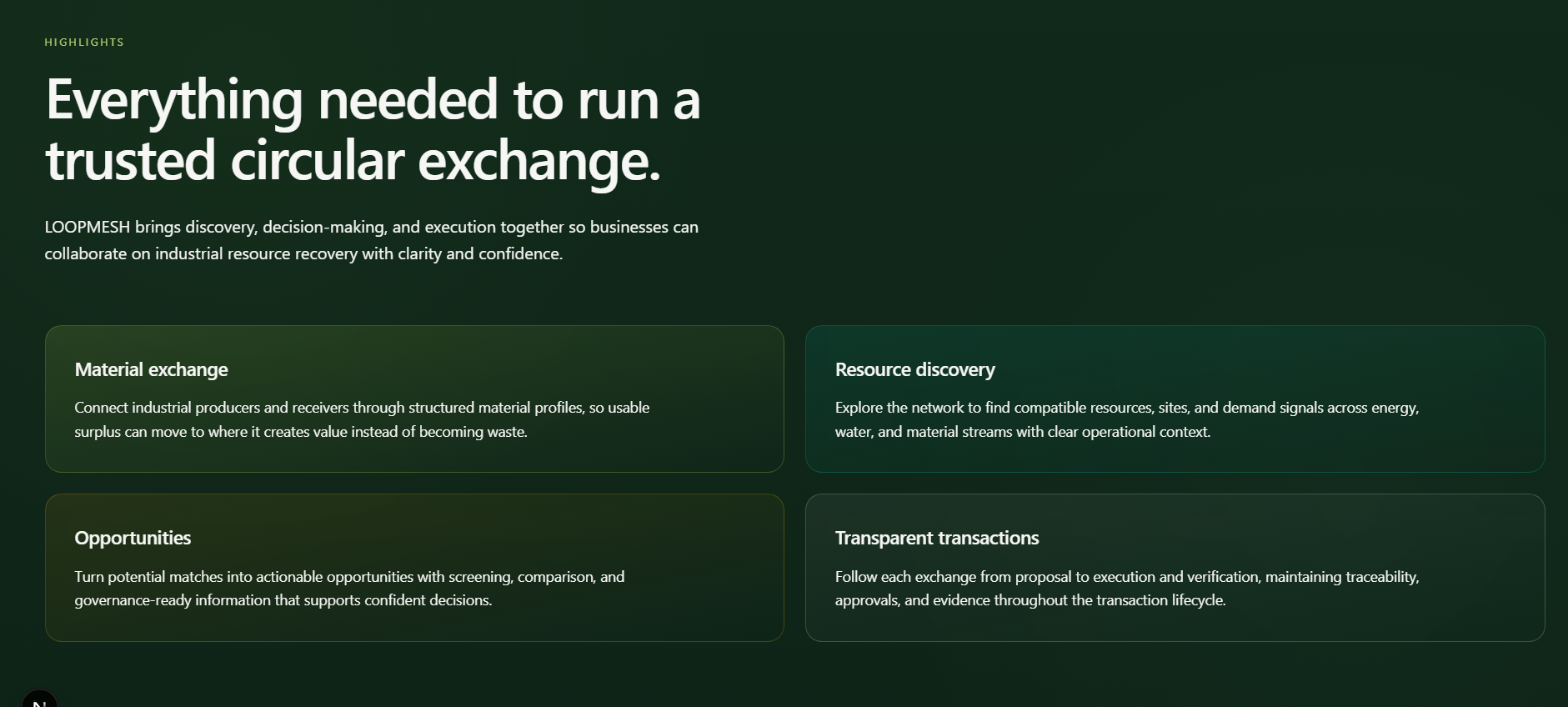
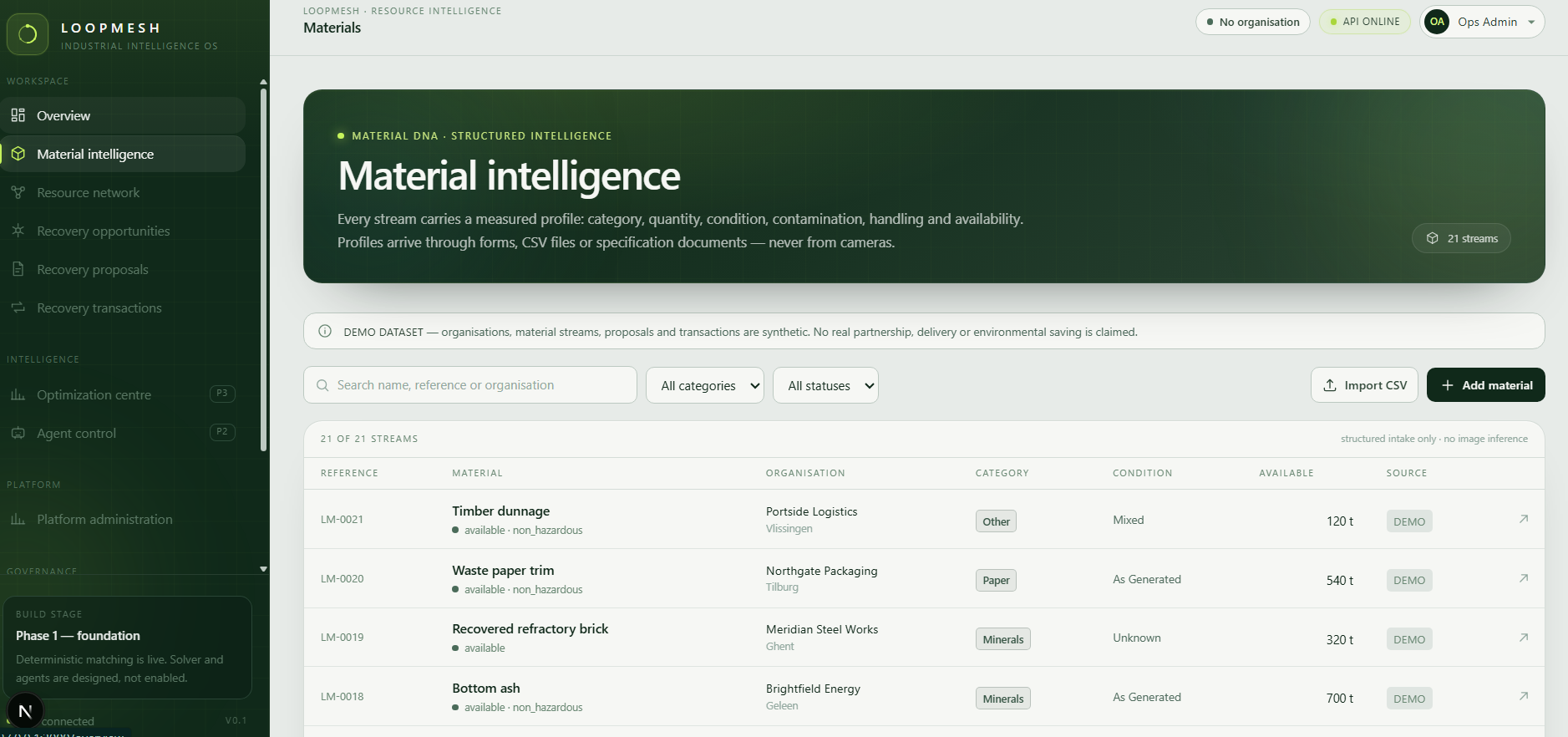
- Material Intelligence: Structured visibility into available industrial materials, quantities, and resource requirements.
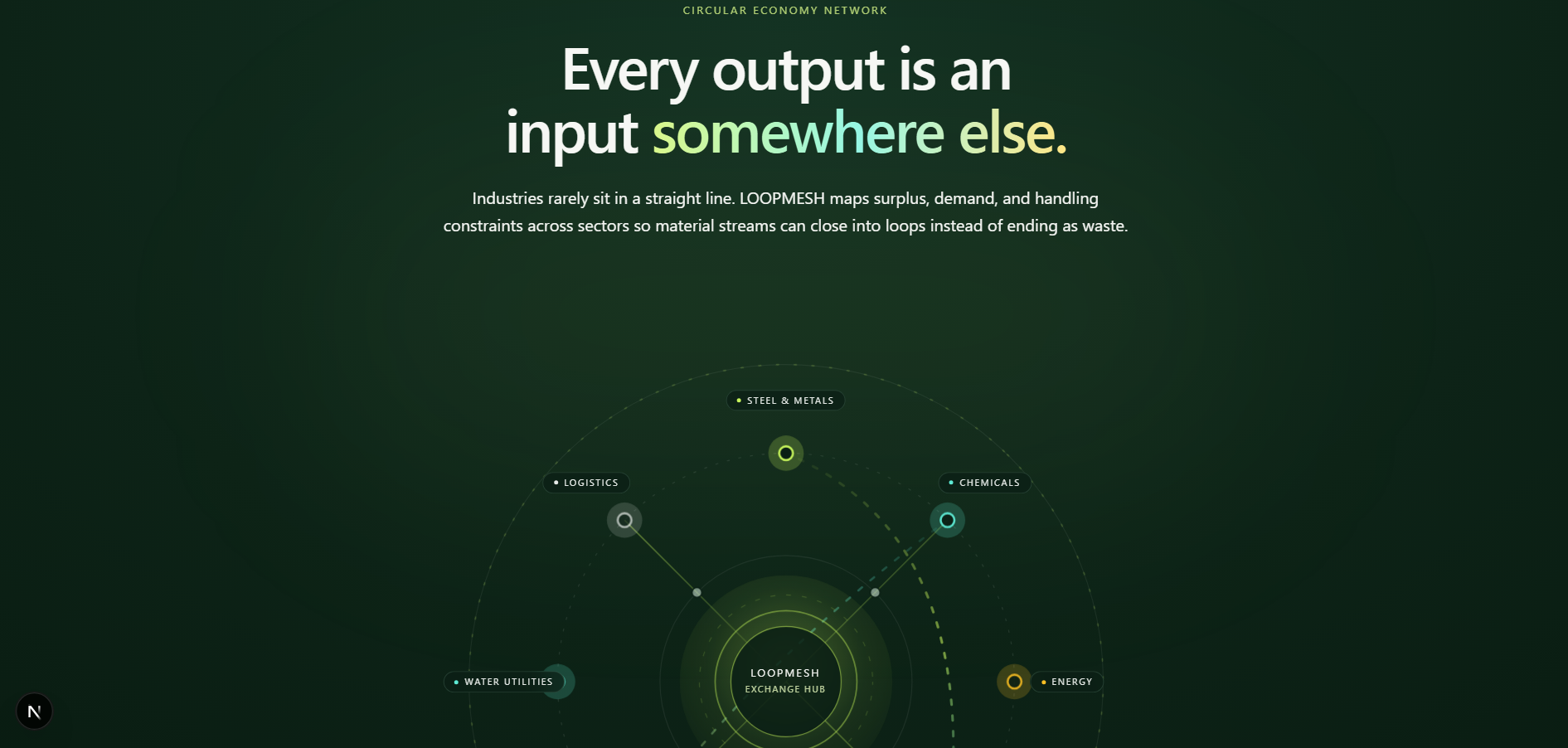
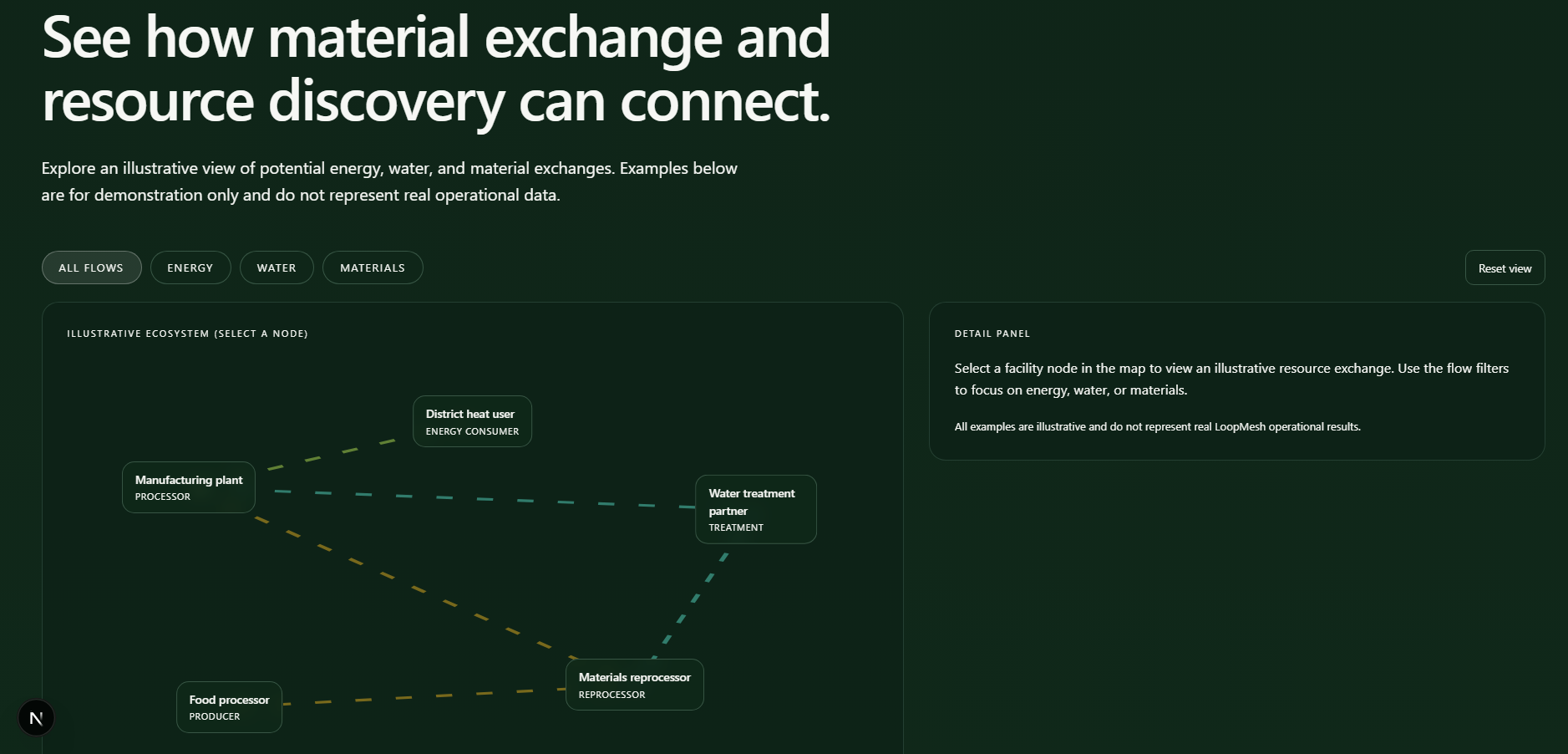
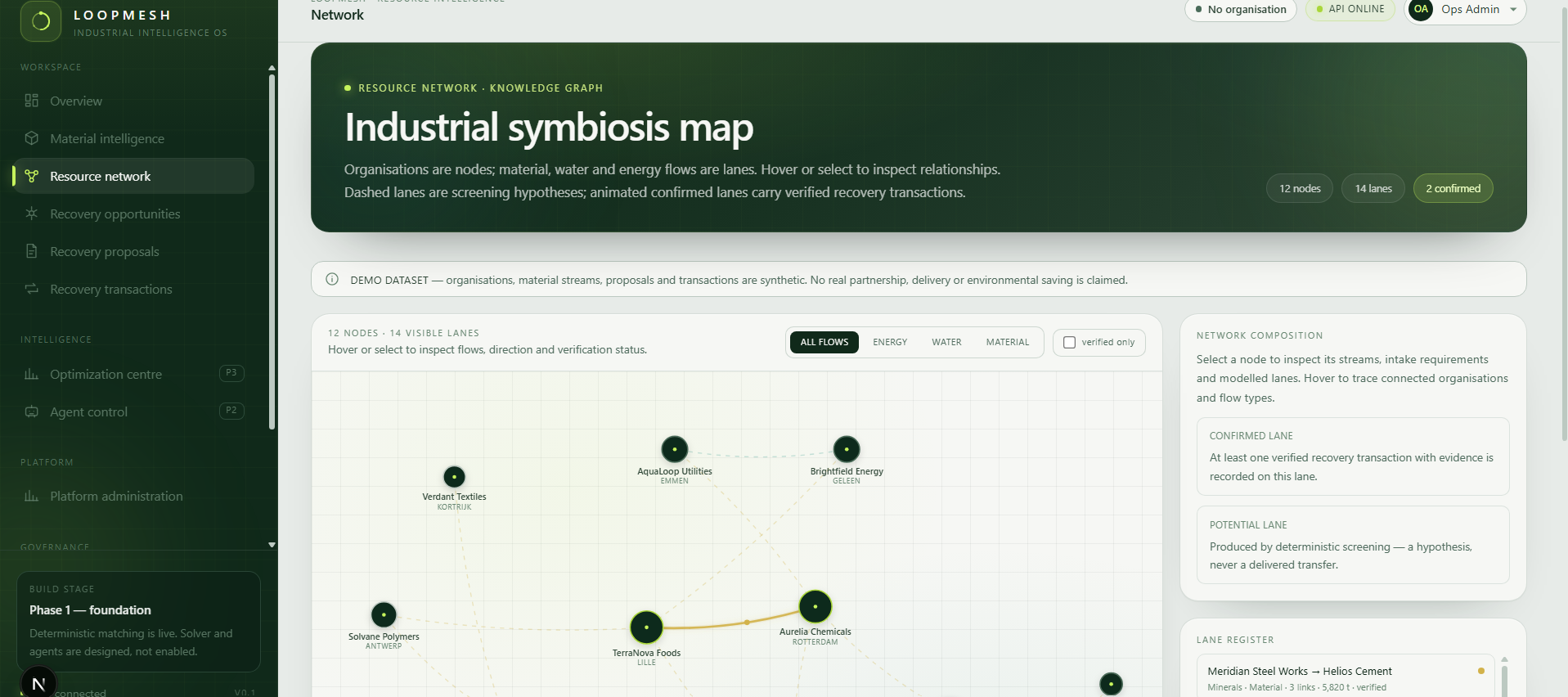
- Resource Network: A connected view of organisations and potential material exchange relationships.
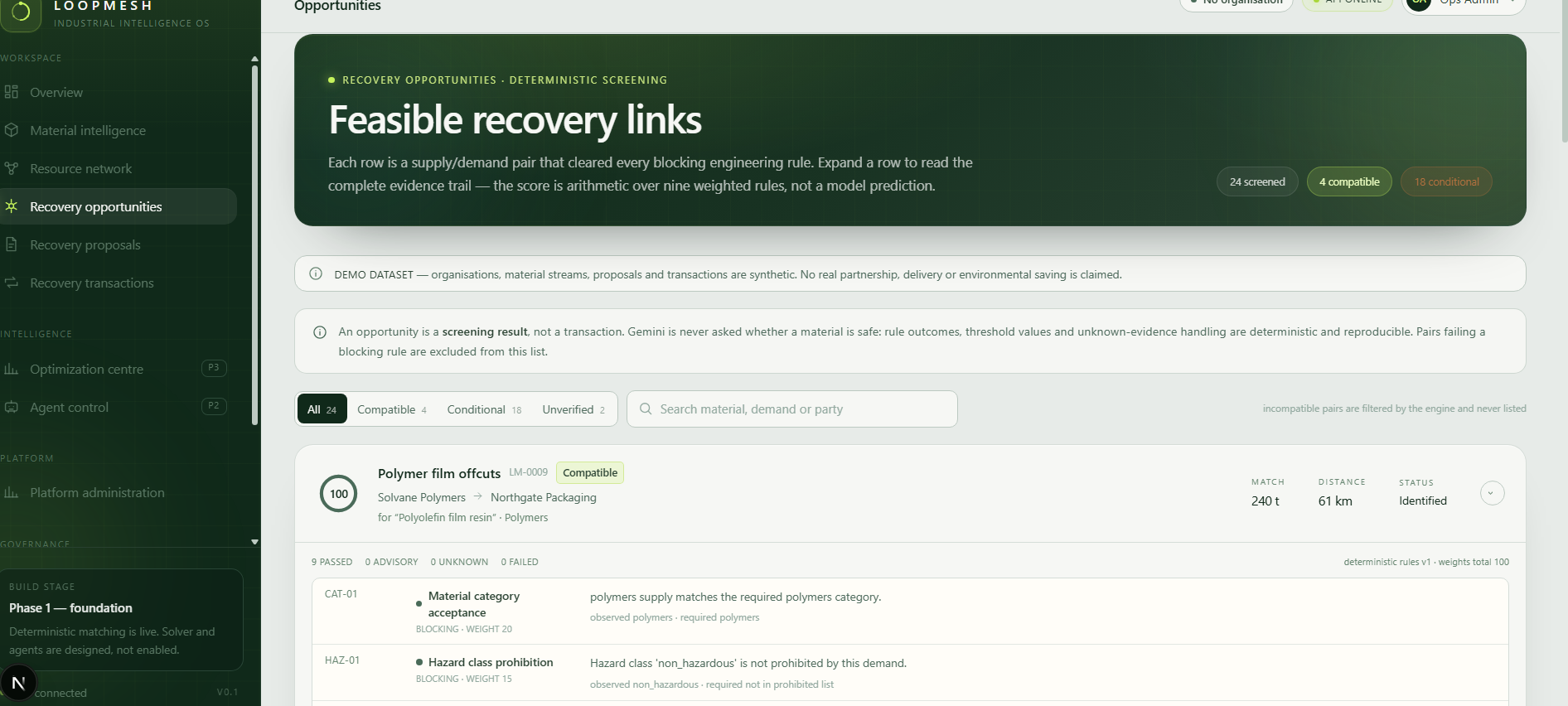
- Deterministic Matching: Rule-based matching of available resources with compatible industrial demand.
- Recovery Opportunities: Discovery and evaluation of potential circular resource exchanges.
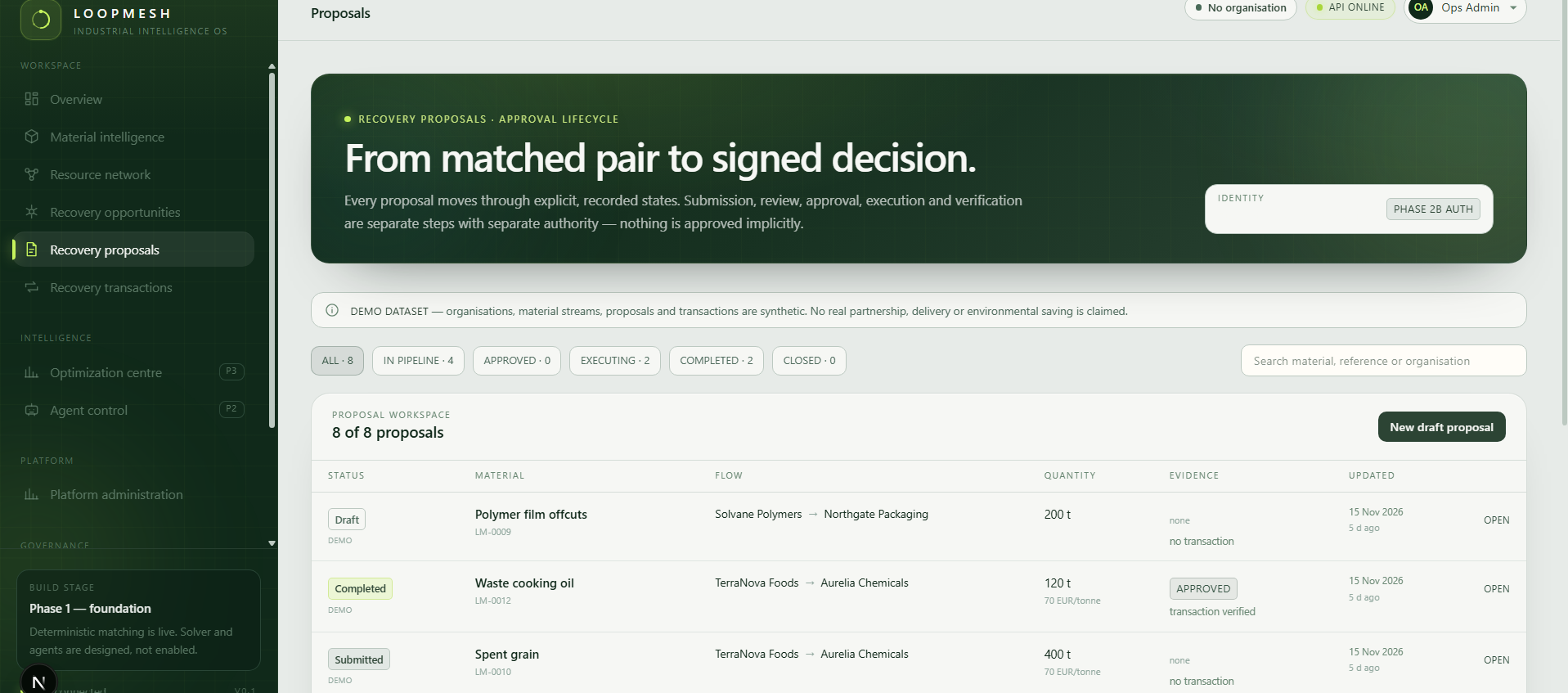
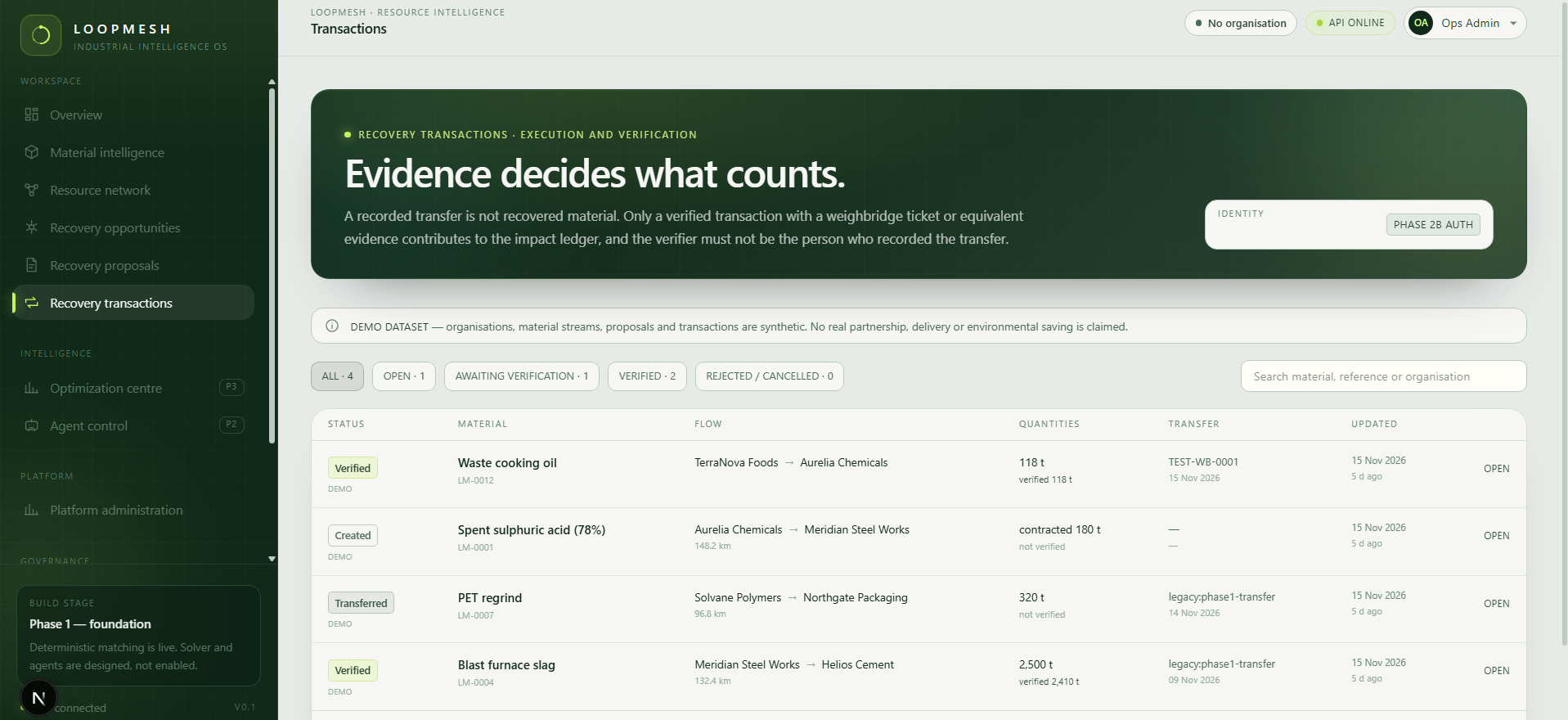
- Governed Workflows: Proposal approvals, transaction lifecycle management, and controlled operations.
- Impact Ledger: Traceable records of recovery activity and reported environmental impact.
- Audit Journal: An accountability layer that records important platform events.
How we built it
We built LOOPMESH as a full-stack application with a modular architecture.
Frontend: Next.js, React, TypeScript, and Tailwind CSS provide the interactive platform interface.
Backend: Python and FastAPI power the application APIs and business logic.
Data layer: A relational database supports organisations, material streams, opportunities, proposals, transactions, and audit records.
Core engineering: Deterministic matching, organisation-aware access control, governed approval workflows, transaction tracking, and auditability form the foundation of the platform.
We focused on building functional workflows rather than presenting circularity as a simple informational dashboard.
Challenges we faced
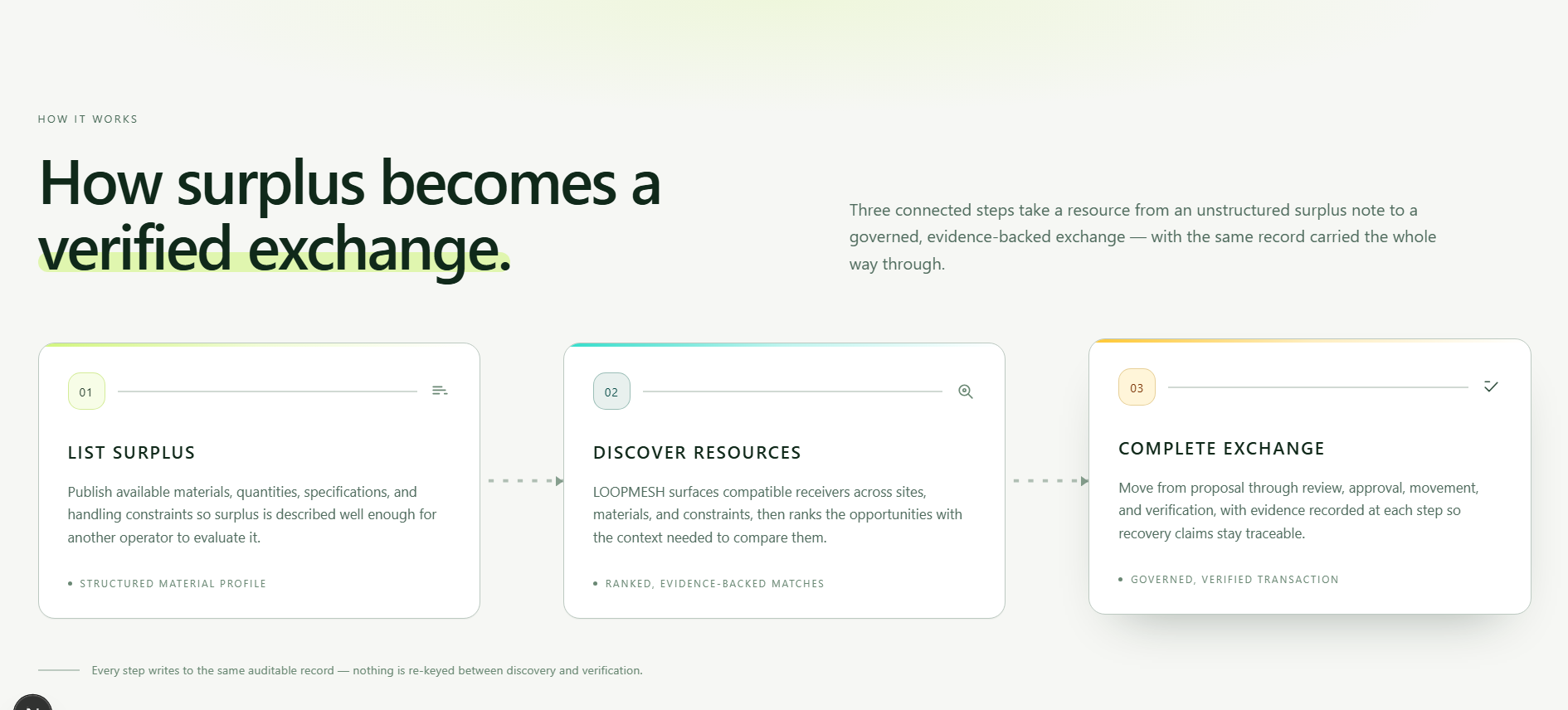
One major challenge was designing a consistent resource lifecycle across multiple organisations. Material discovery, matching, proposals, approvals, transfers, and verification all require clear states and controlled transitions.
Another challenge was implementing organisation-aware access and platform-level governance while keeping the system modular and maintainable.
We also worked on making the application testable, improving API integration, and ensuring the public landing page and authenticated workspace operate as distinct experiences.
What we learned
Building LOOPMESH strengthened our understanding of full-stack system architecture, deterministic business logic, multi-organisation access control, data modelling, and workflow governance.
We learned that a useful industrial intelligence platform needs more than matching algorithms: it also needs transparency, accountability, and evidence at every stage of a resource exchange.
What's next
Our next priorities include expanding real-world organisation onboarding, integrating verified material data, strengthening recovery verification, and deploying the platform for broader testing.
LOOPMESH aims to make industrial circularity connected, measurable, and accountable.
Note: The current demonstration includes synthetic demo data. Displayed recovery figures are illustrative and are not claims of independently verified real-world environmental impact.
Built With
- access
- algorithms
- api
- architecture
- authentication
- control
- css
- deterministic
- development
- fastapi
- full-stack
- multi-tenant
- next.js
- postgresql
- python
- react
- rest
- role-based
- sqlalchemy
- sqlite
- tailwind
- typescript
