-
-
https://rewear-rosy.vercel.app
-
-
-
-
Inspiration
What it does
How we built it
Challenges we ran into
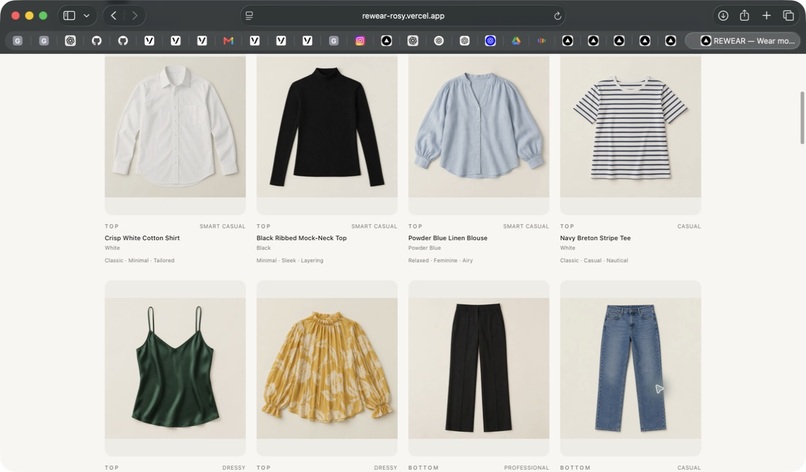
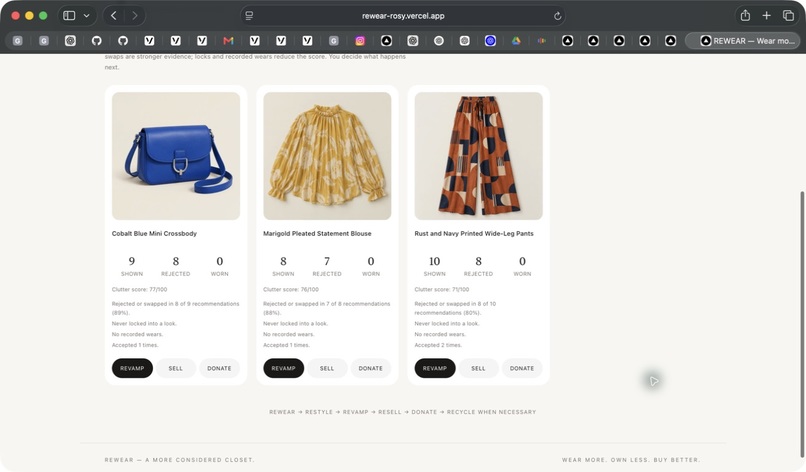
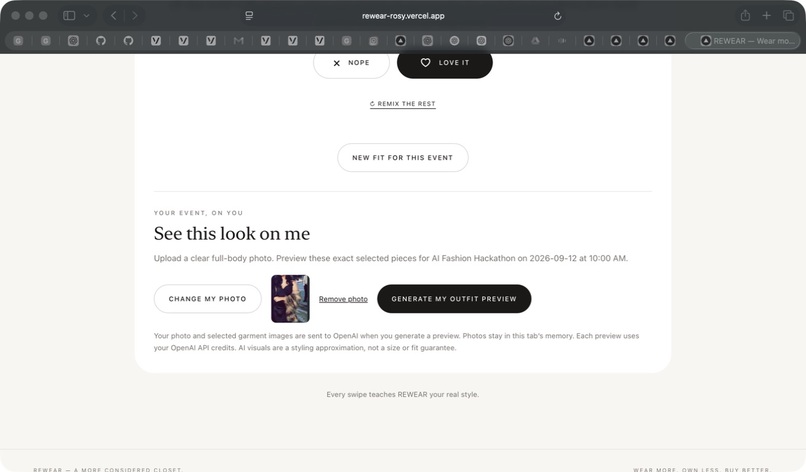
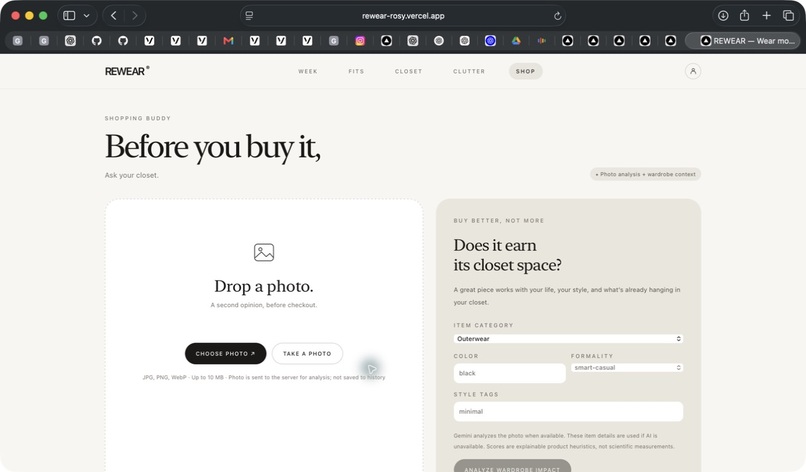
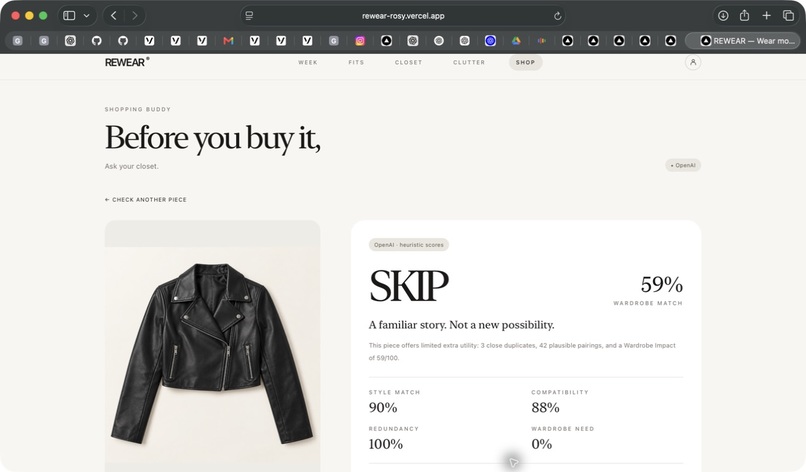
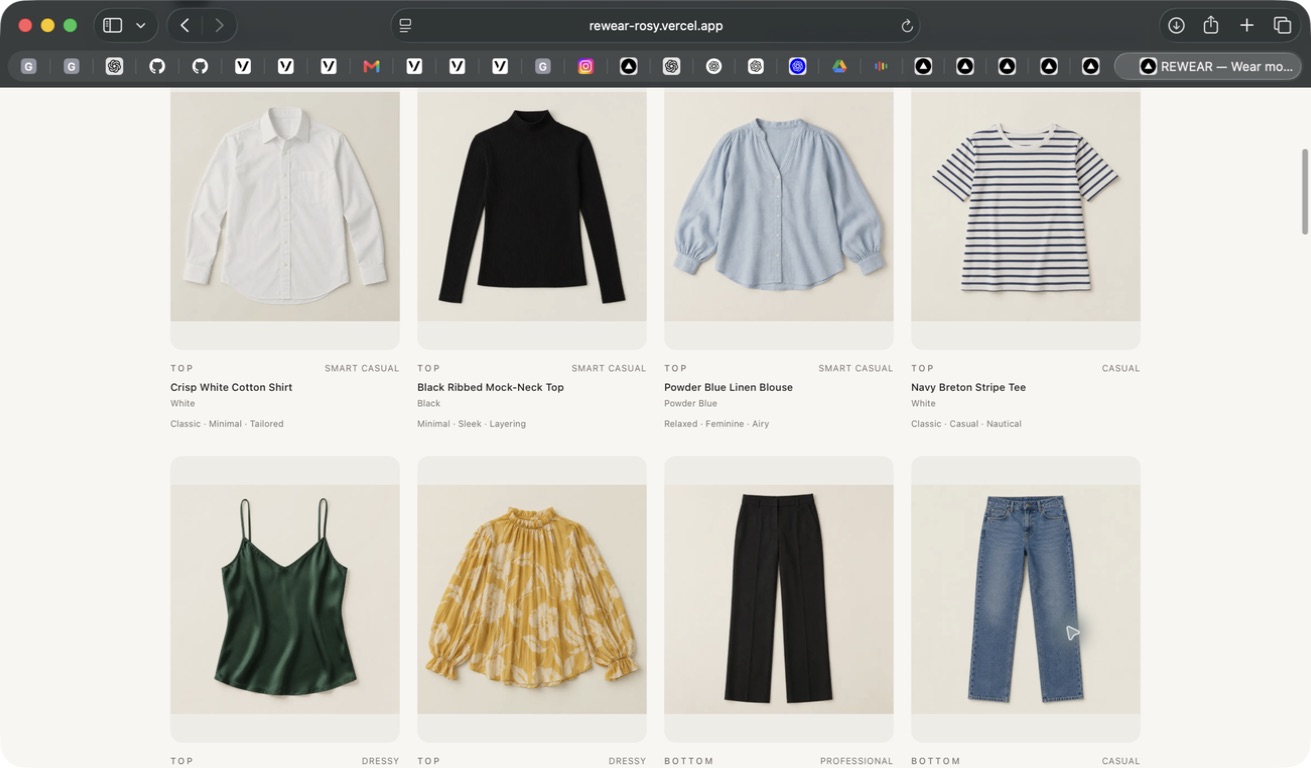
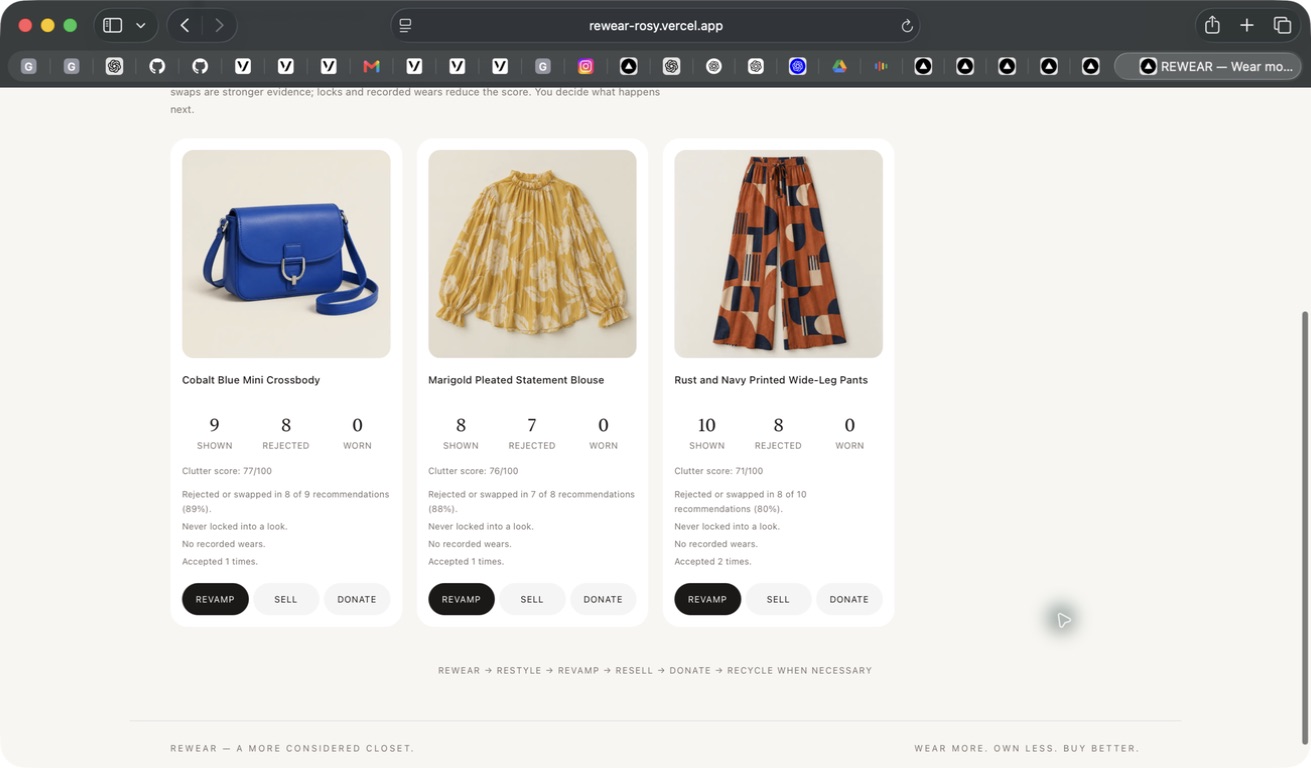
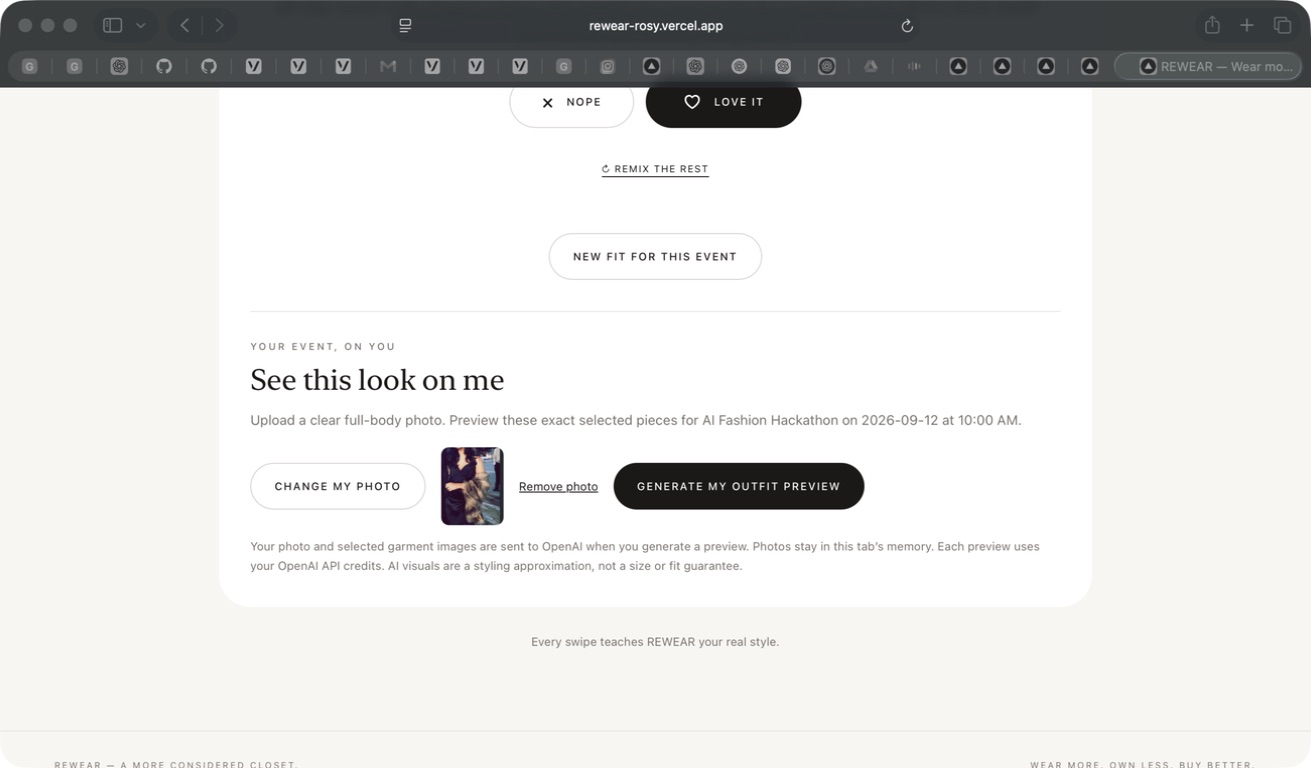
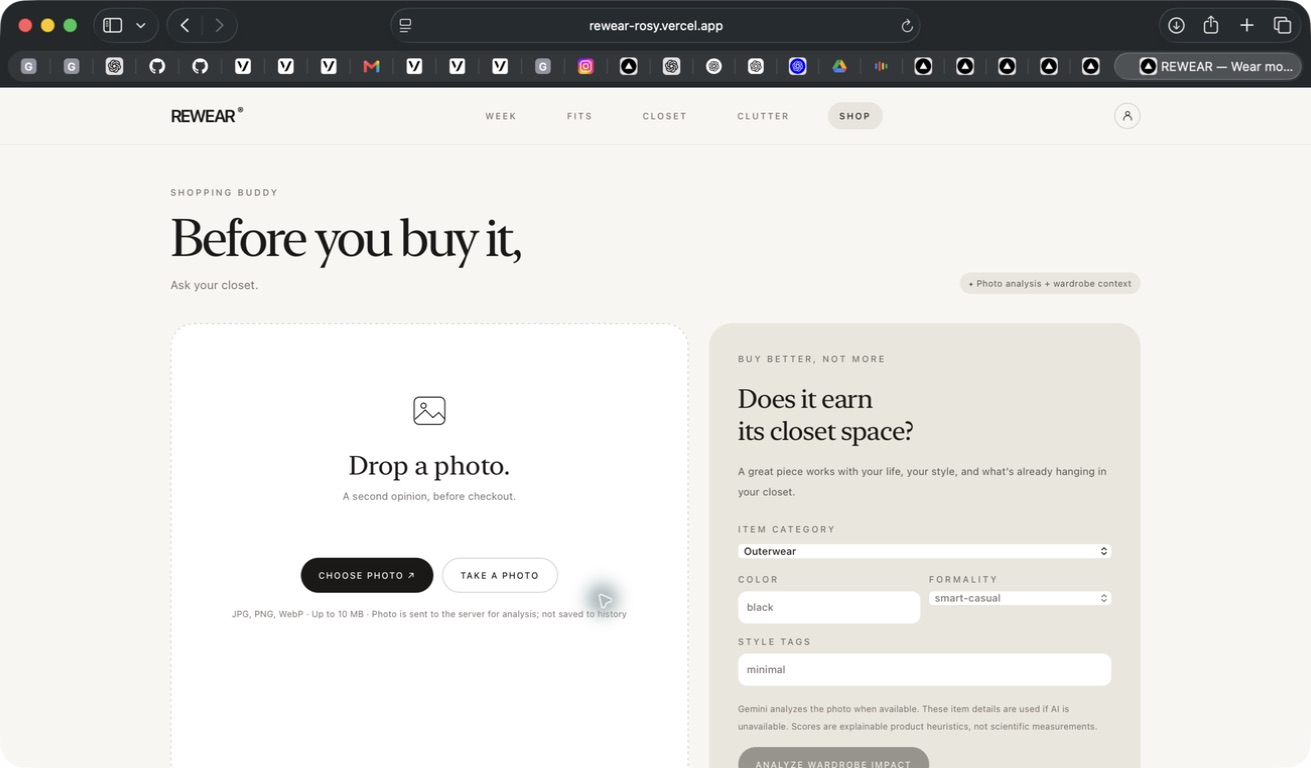
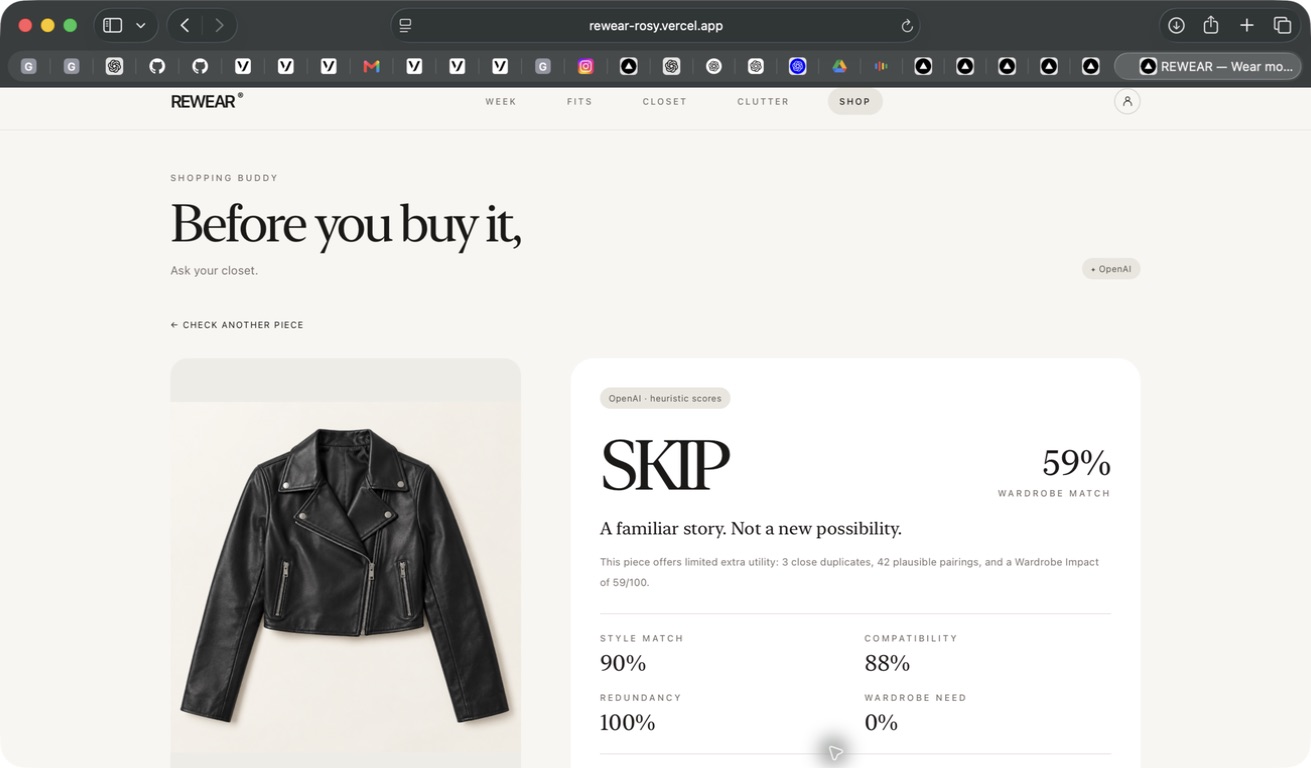
nspiration We started with a contradiction almost everyone has experienced: a closet full of clothes, but nothing to wear. Most fashion technology responds by helping us discover and buy more. We wanted to explore the opposite: what if AI could help us better understand, use, and circulate what we already own? That inspired LOOPD, an AI-powered wardrobe intelligence platform built around the full lifecycle of clothing, from deciding what to wear, to identifying what no longer serves us, to making smarter decisions about what enters our closet next. What it does LOOPD turns your wardrobe into an intelligent, evolving closet. It uses your closet and upcoming calendar events to create personalized weekly outfits. Users can swipe through recommendations, lock pieces they love, swap individual items, or remix the rest of the outfit. The important part is what happens after a rejection. LOOPD treats every swipe, lock, and swap as a behavioral signal. If a garment is repeatedly rejected or rarely chosen, it can surface as potential clutter. Instead of simply throwing that garment away, LOOPD supports circular fashion through three paths: Revamp, Sell, or Donate. Revamp uses AI to create approachable DIY transformations, while Sell can prepare a marketplace-ready listing. LOOPD also prevents future clutter through Shopping Buddy. Users can scan something they're considering buying, and LOOPD evaluates it against their existing wardrobe and style behavior to determine whether it fills a genuine wardrobe gap, unlocks new outfits, or simply duplicates something they already own. How we built it We built LOOPD as a Next.js and TypeScript web application, with Tailwind CSS for the responsive fashion-focused interface. Our digital closet is represented as structured garment data containing attributes such as category, color, style, material, season, formality, and occasion suitability. We use Google Gemini's multimodal capabilities as the intelligence layer for understanding garments, reasoning about outfit combinations, generating revamp ideas, preparing resale content, and analyzing potential purchases. User interactions such as accepts, rejections, locks, swaps, and clutter decisions are tracked to create a lightweight behavioral representation of the user's revealed style, rather than relying entirely on what users say they like. For the hackathon prototype, we kept the architecture intentionally lightweight, using shared seed data and browser storage for interaction state so we could focus on the intelligence and user experience rather than infrastructure. Challenges we ran into One of our biggest challenges was distinguishing between AI styling and AI wardrobe intelligence. Generating a nice outfit is relatively straightforward; understanding why someone repeatedly rejects a garment and turning that behavior into something useful is much more interesting. We also had to balance AI reasoning with deterministic application logic. We didn't want LOOPD to simply send everything to an LLM. Behavioral counters, rejection rates, state management, and clutter signals are handled by the application, while Gemini handles semantic and multimodal reasoning. Finally, because we were building within hackathon constraints, we had to aggressively prioritize the core experience over production infrastructure and external integrations. Accomplishments that we're proud of We're especially proud that LOOPD connects several traditionally separate fashion experiences into one continuous loop: Plan → Wear → Learn → Declutter → Circulate → Shop Smarter → Repeat. We're also proud of turning rejection into useful data. A left swipe isn't a failed recommendation; it's another signal about the user's real relationship with their wardrobe. And instead of using sustainability as an additional feature, we made fashion circularity a consequence of the recommendation system itself. Clothes that aren't working aren't immediately discarded; LOOPD first asks whether they can be rediscovered, revamped, resold, or donated. What we learned We learned that personalization doesn't always require asking users more questions. Behavior can be more informative than stated preference. Someone may describe their style one way while consistently choosing something completely different. By learning from what people actually accept, reject, lock, swap, and wear, an AI wardrobe system can develop a much richer understanding of personal style. We also learned that the most interesting question in fashion AI may not be: “What should I buy?” but: “How much more can I do with what I already own?” What's next for LOOPD Next, we want to evolve LOOPD from a hackathon prototype into a persistent personal wardrobe intelligence system. That includes real-time Google Calendar and weather integration, automatic closet digitization using computer vision, deeper long-term style learning, and integrations with resale and donation platforms. We also want Shopping Buddy to develop a richer Wardrobe Impact model that measures how much value a potential purchase adds before it enters the closet, including compatibility, redundancy, expected wear, upcoming utility, and the number of existing garments it can help bring back into rotation. Ultimately, LOOPD's goal isn't to stop people from enjoying fashion. It's to make our relationship with fashion more intentional: Wear more. Own less. Buy better. Stay LOOPD.
Accomplishments that we're proud of
What we learned
What's next for LOOPD
Built With
- antigravity
- gemini
- github
- javascript
- typescript
- vonage

Log in or sign up for Devpost to join the conversation.