-
-
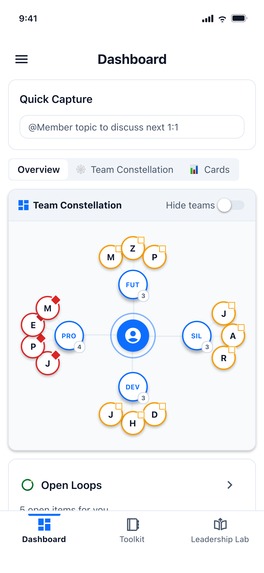
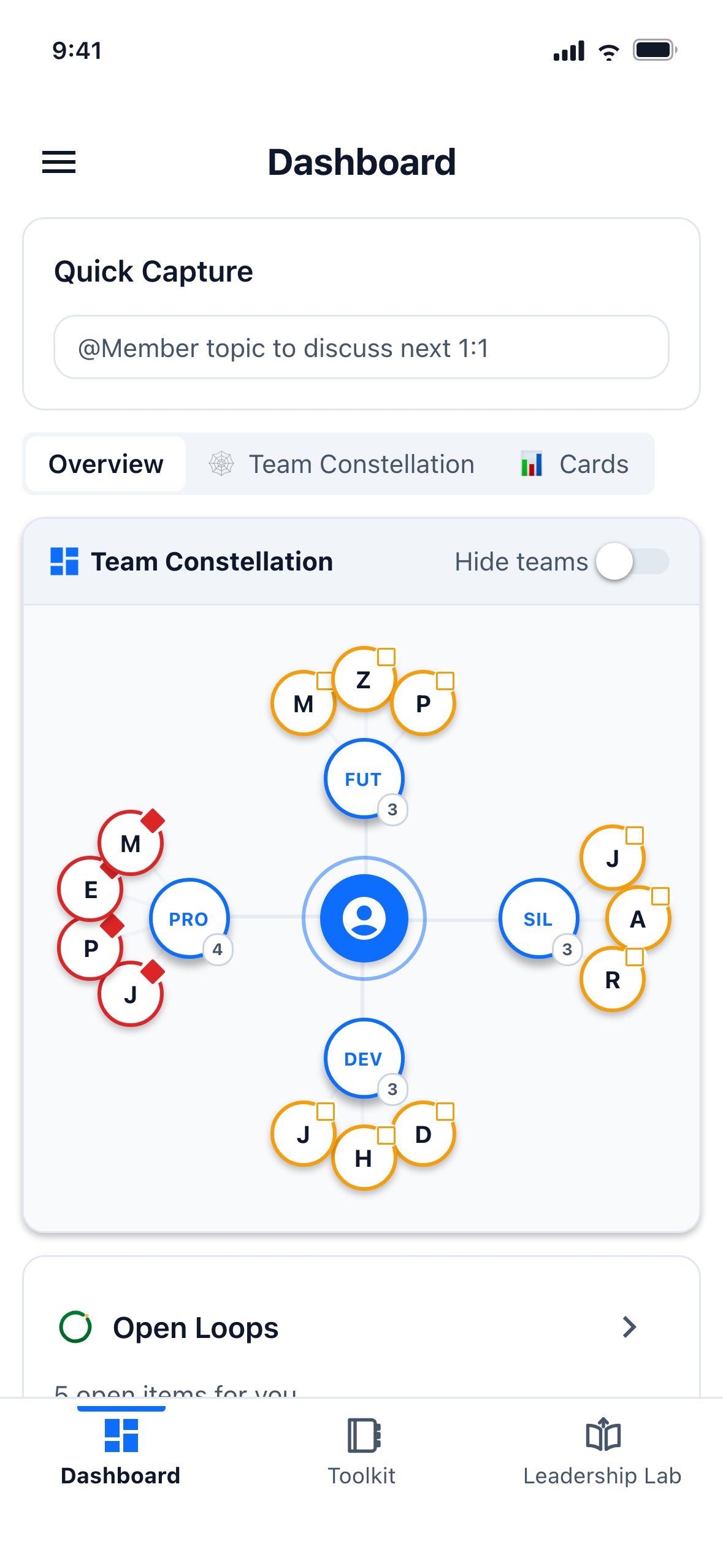
Overview of the app dashboard, showing my full team. From here you can get directly to 1:1 notes.
-
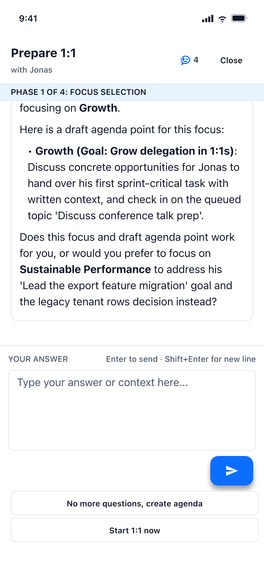
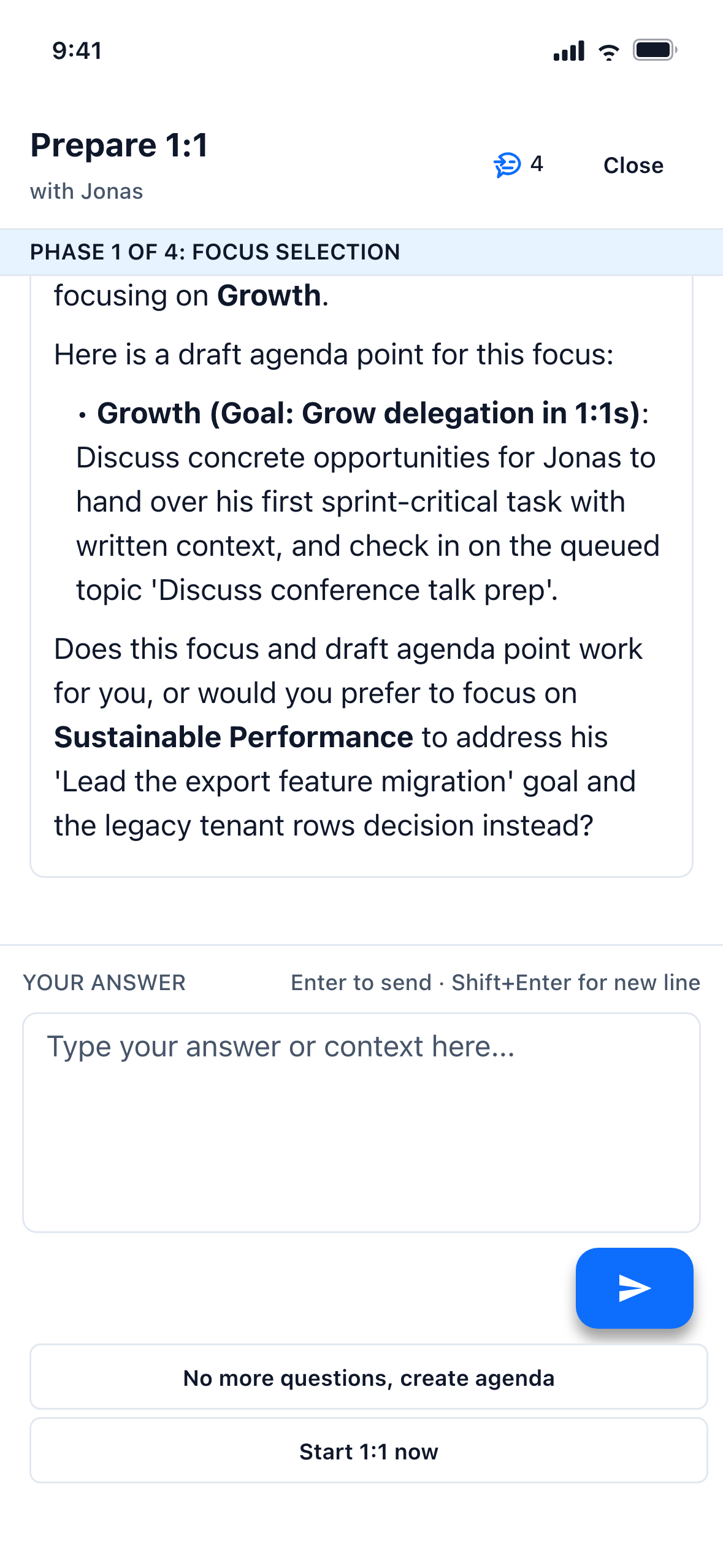
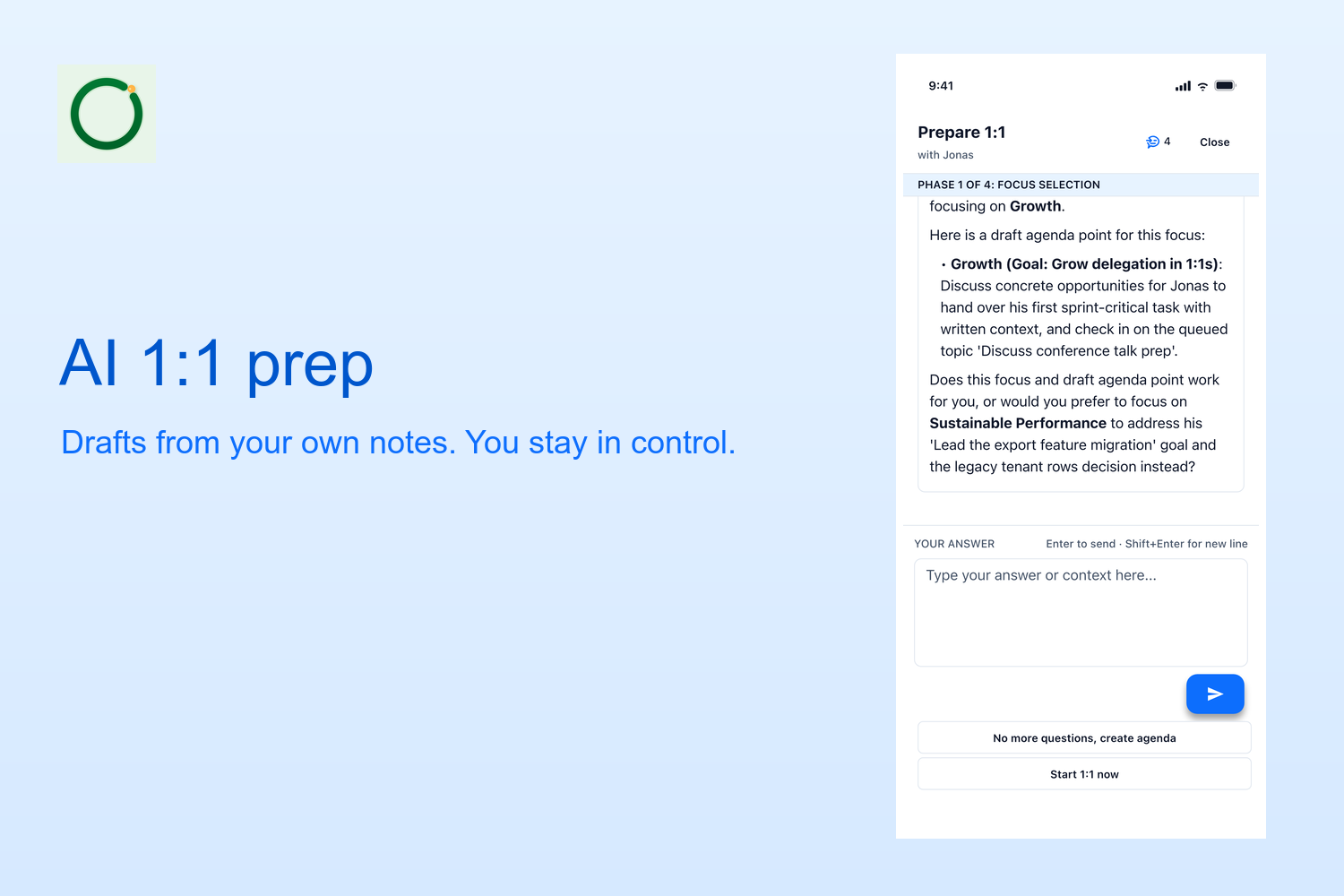
Agenda preparation before a new 1:1 meeting, with AI assistance to check development plan, open loops, and previous notes.
-
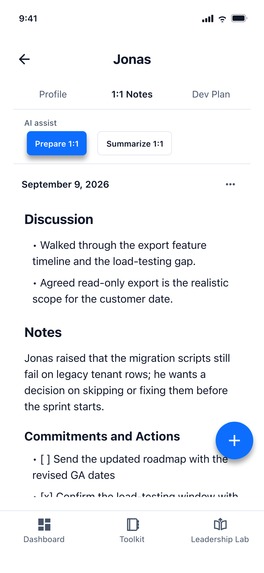
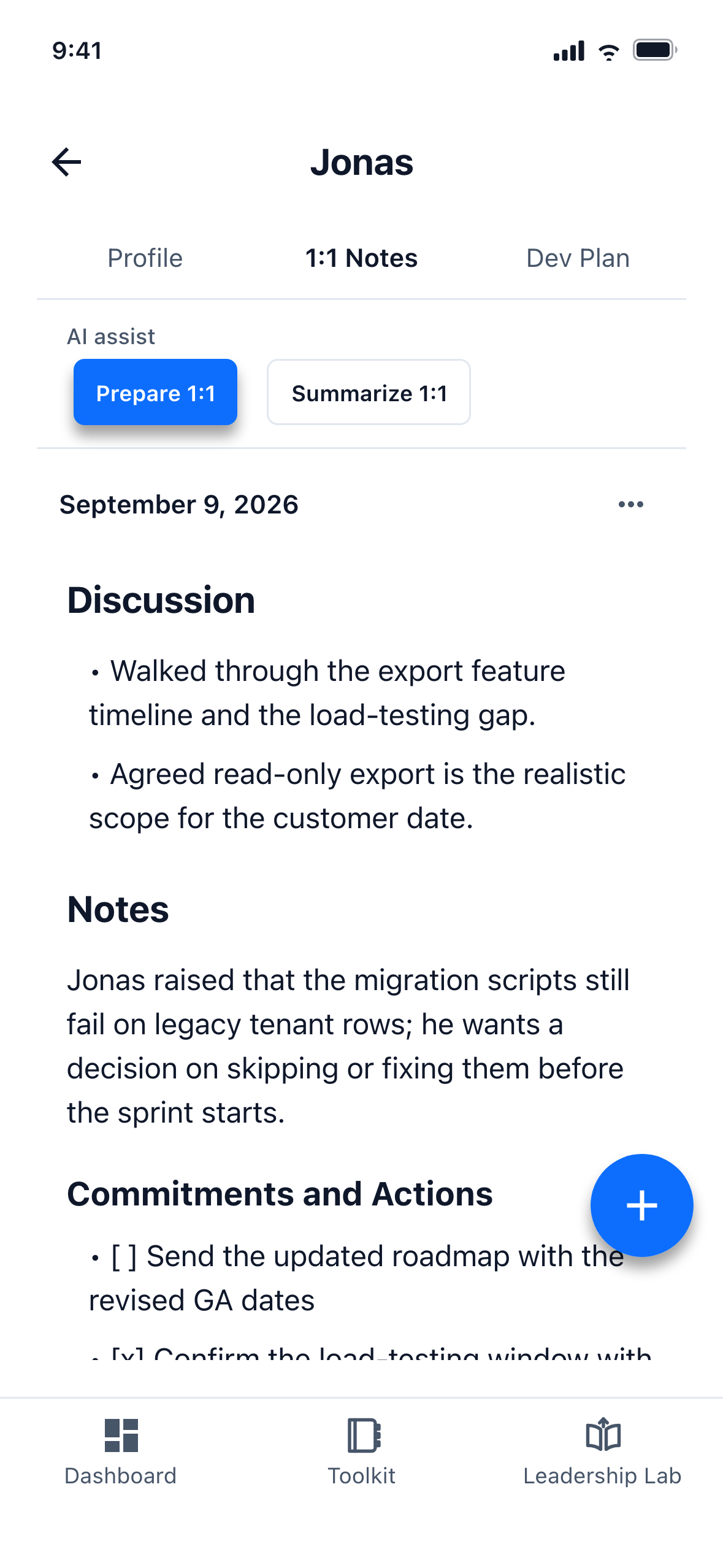
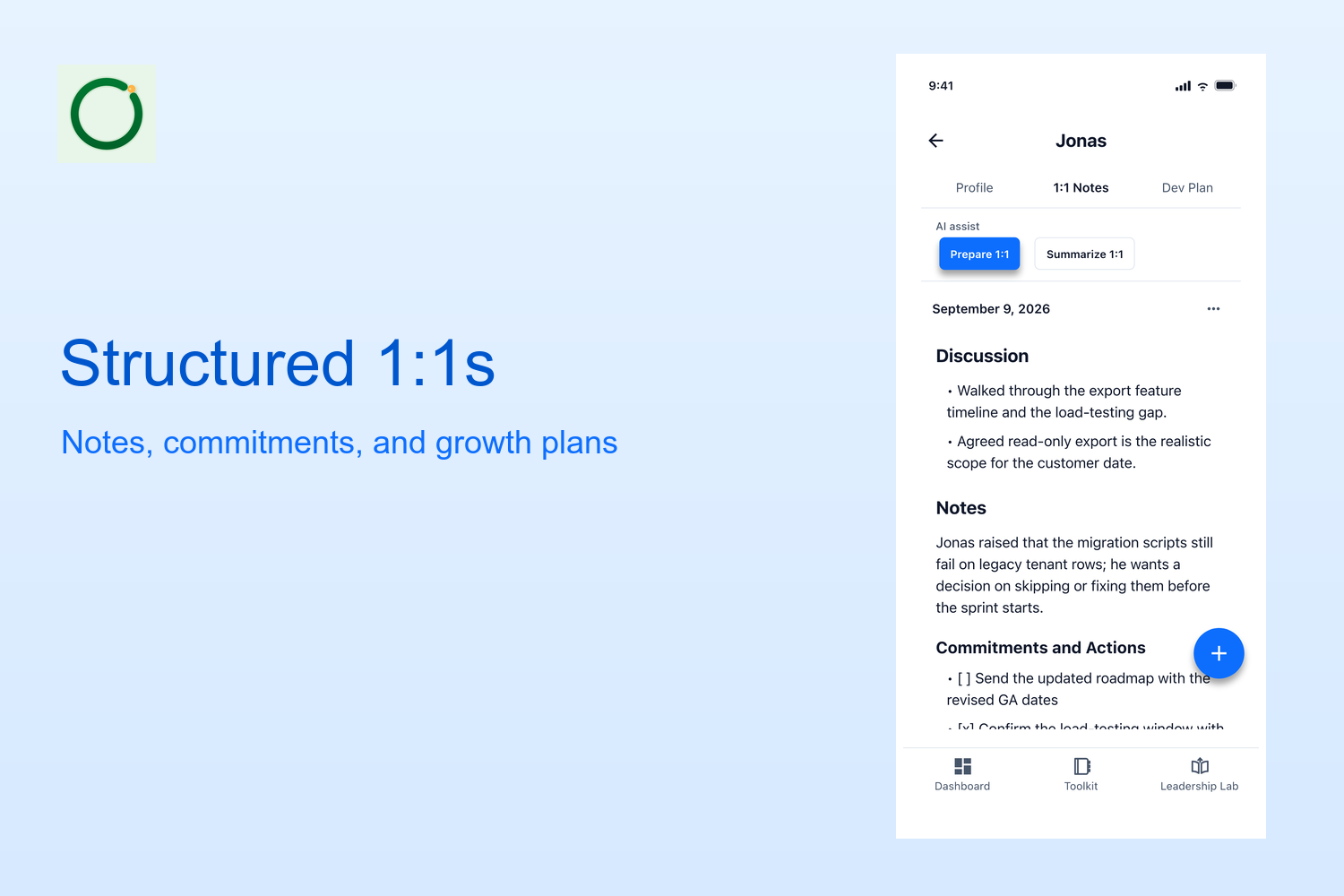
One to one notes with quick buttons for starting a new one with/without AI prep, and for summarizing the last one.
-
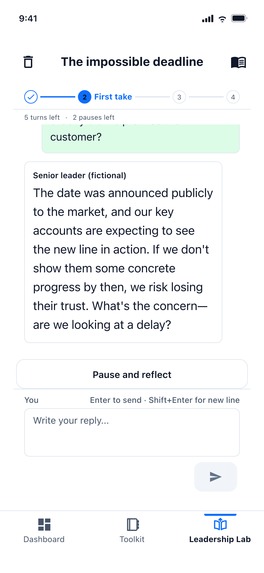
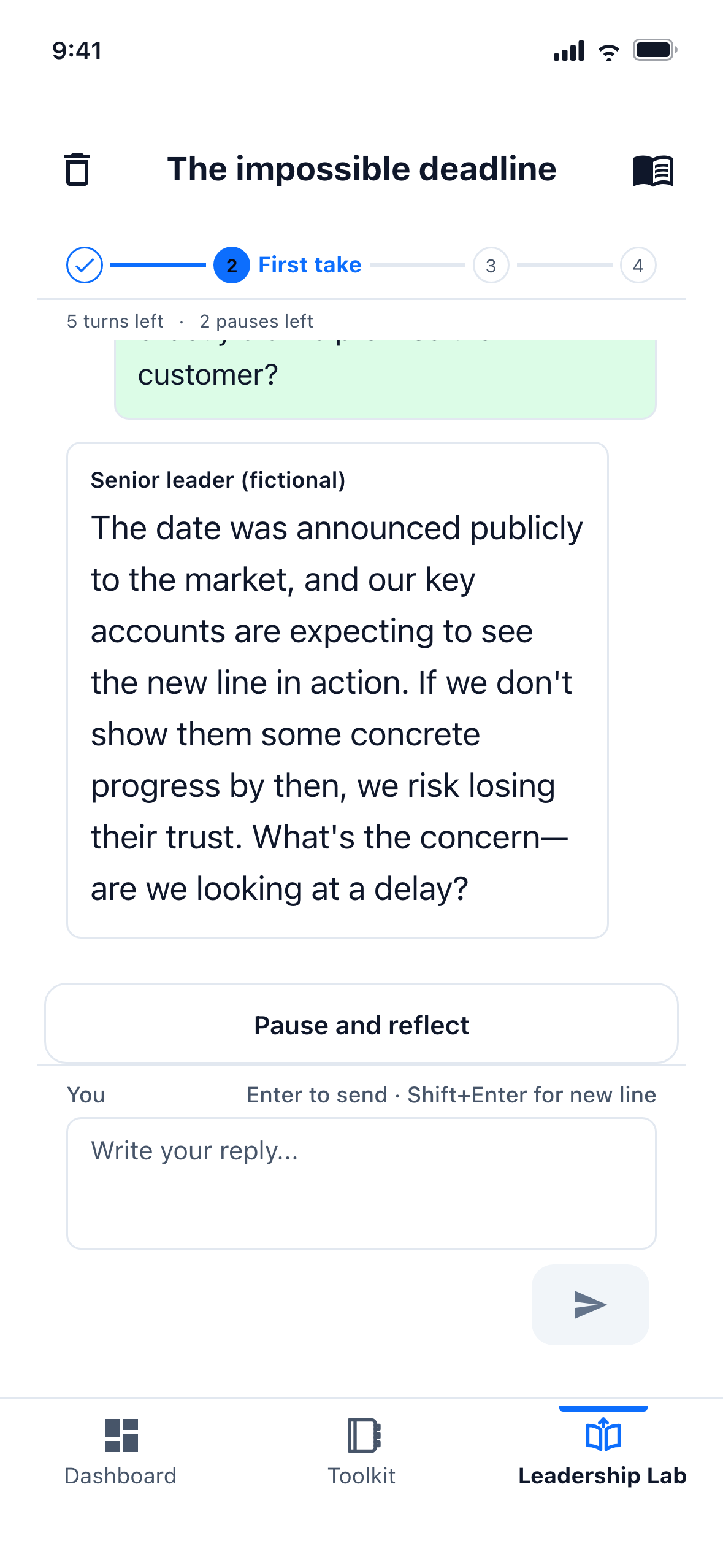
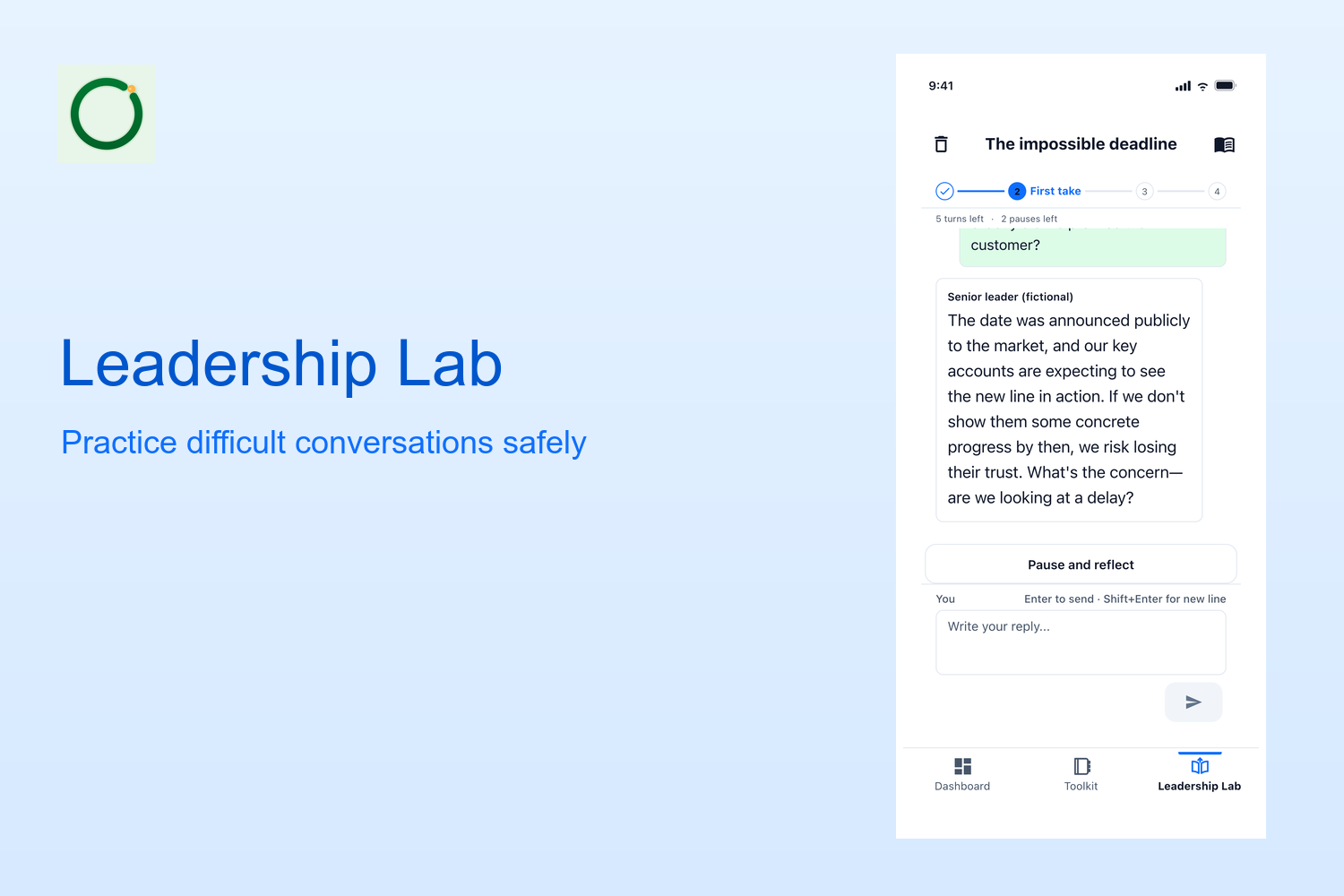
Leadership Lab - a flight-simulator where NPCs challenge you in difficult, but common, management scenarios.
-
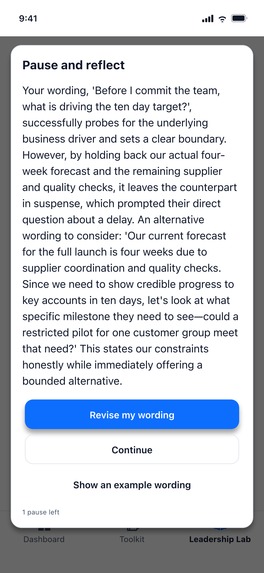
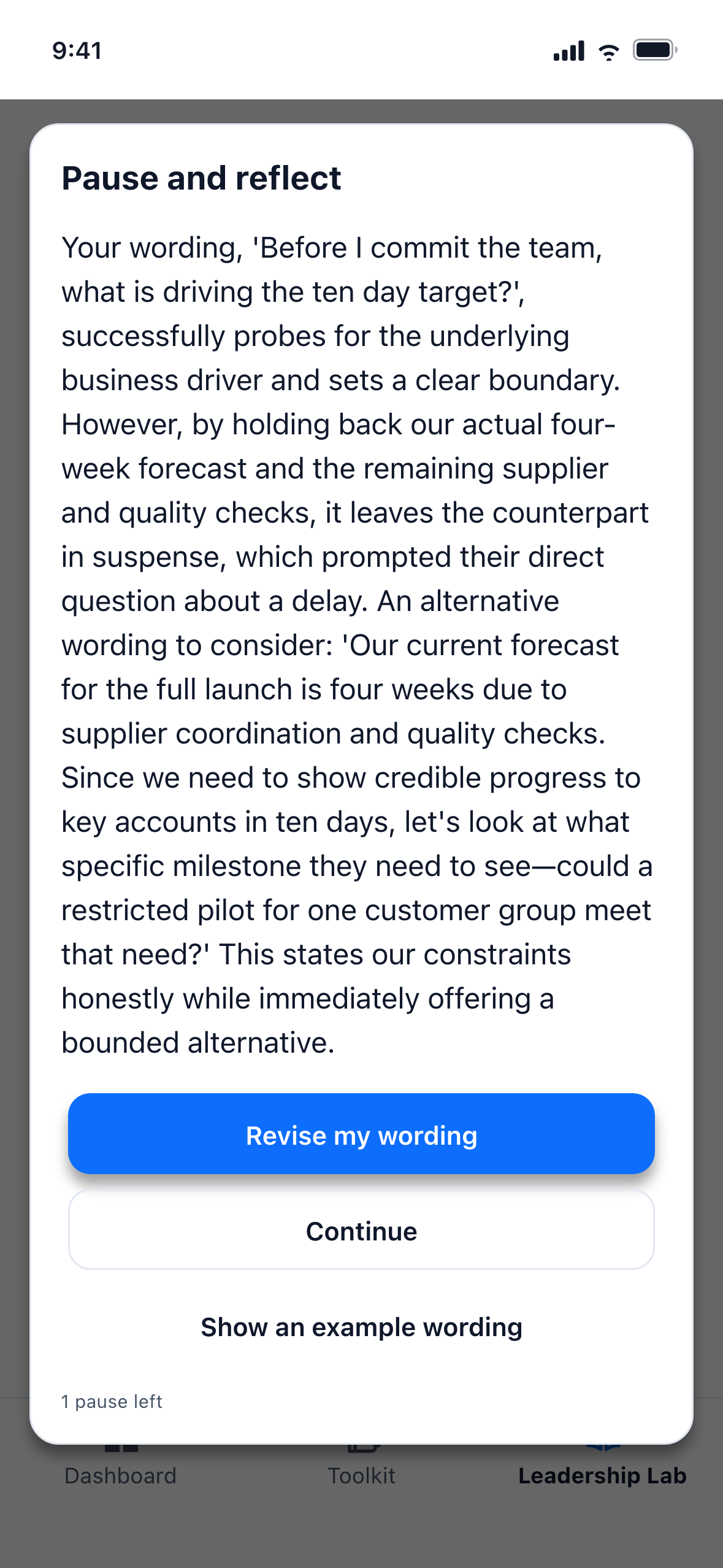
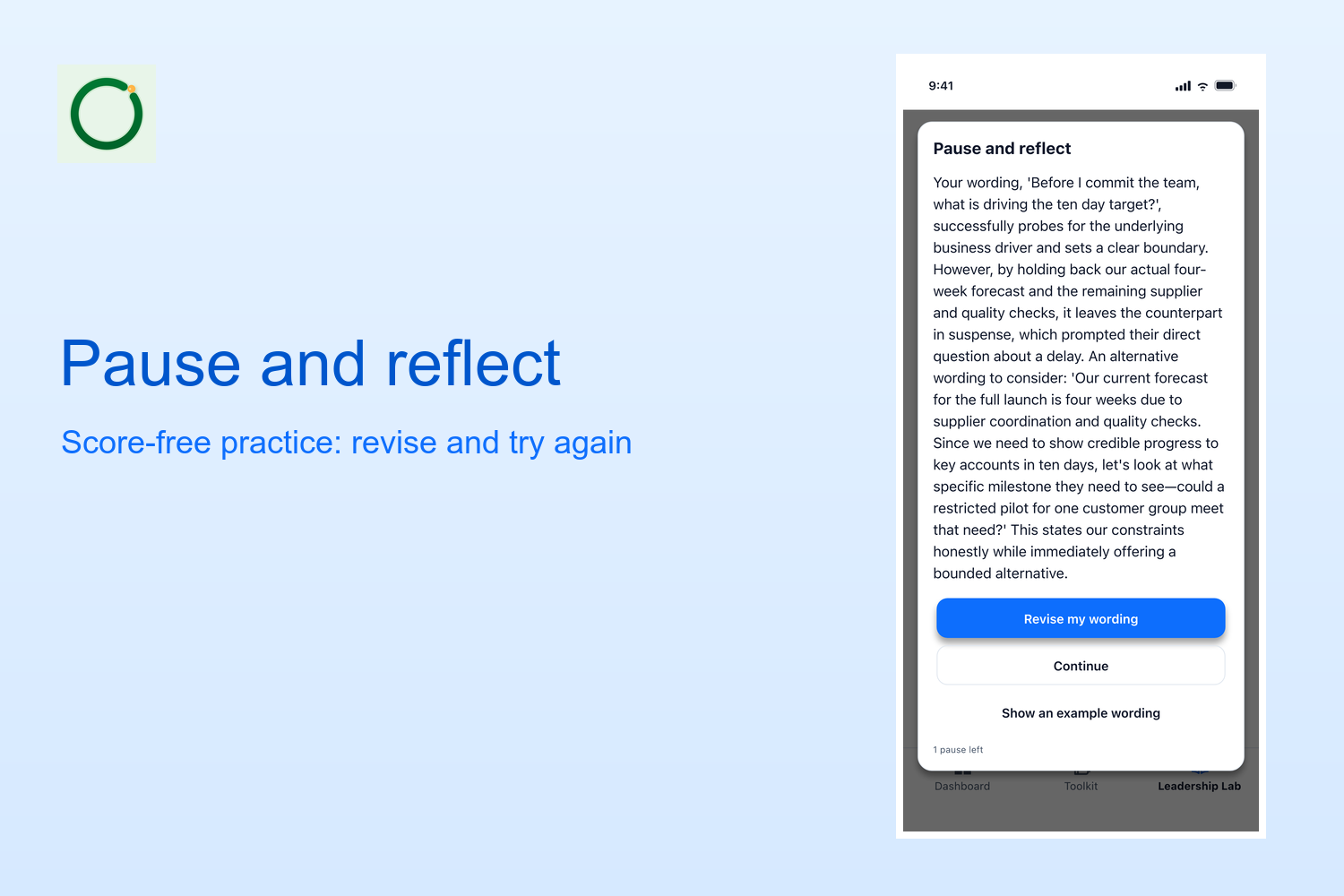
Leadership Lab - pause and reflect on progress, before trying again.
-
App logo, showing a loop being closed, 1024x1024
-
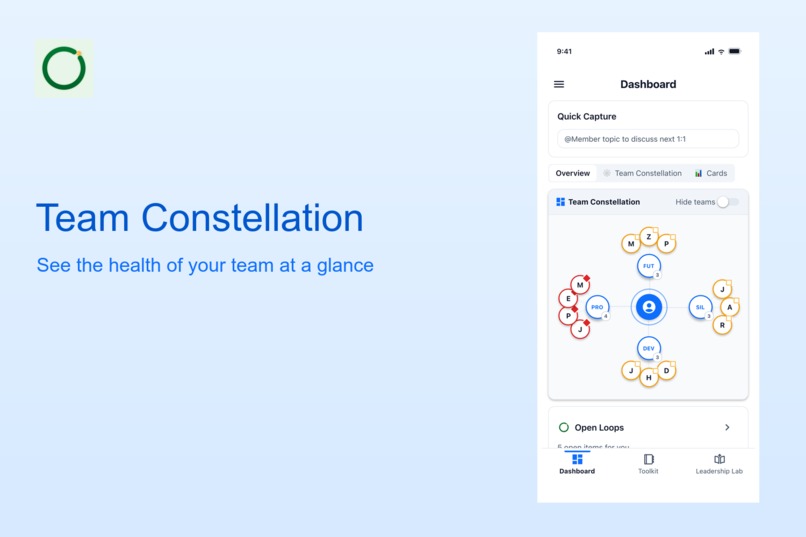
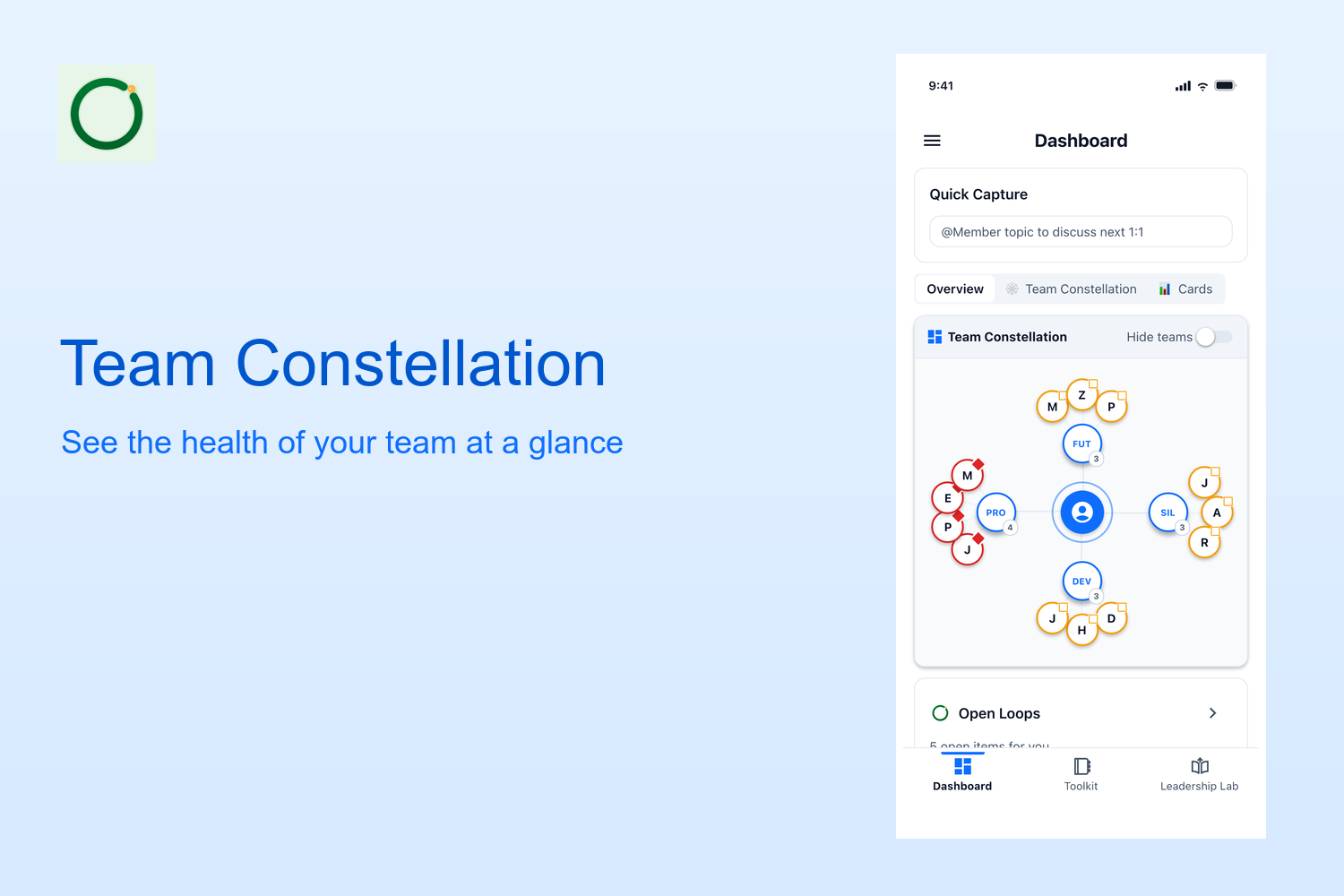
Team Constellation, on the dashboard. Quickly shows 1:1 status of all of your people.
-
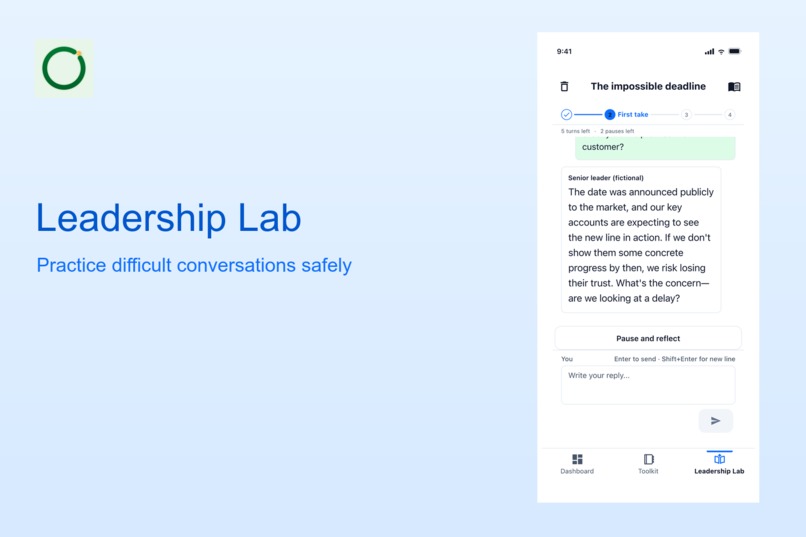
The Leadership Lab: your flight simulator for difficult conversations.
-
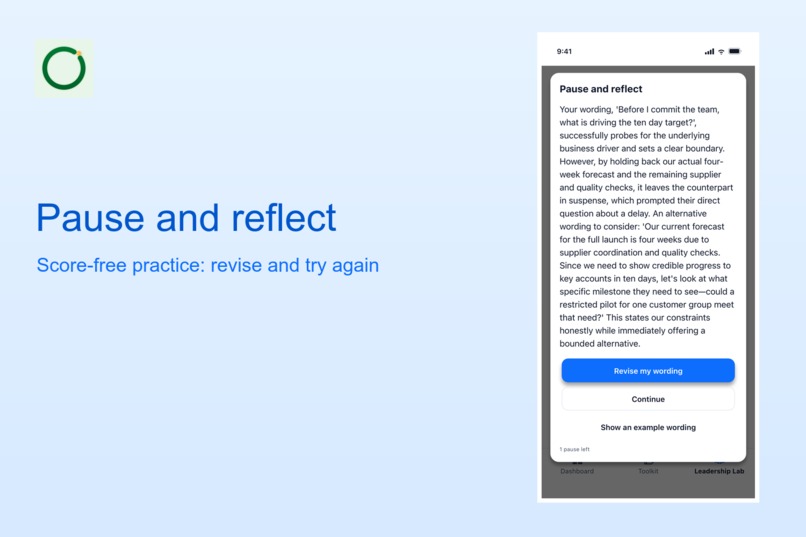
Leadership Lab: Pause and reflect, get tips grounded in best-practices
-
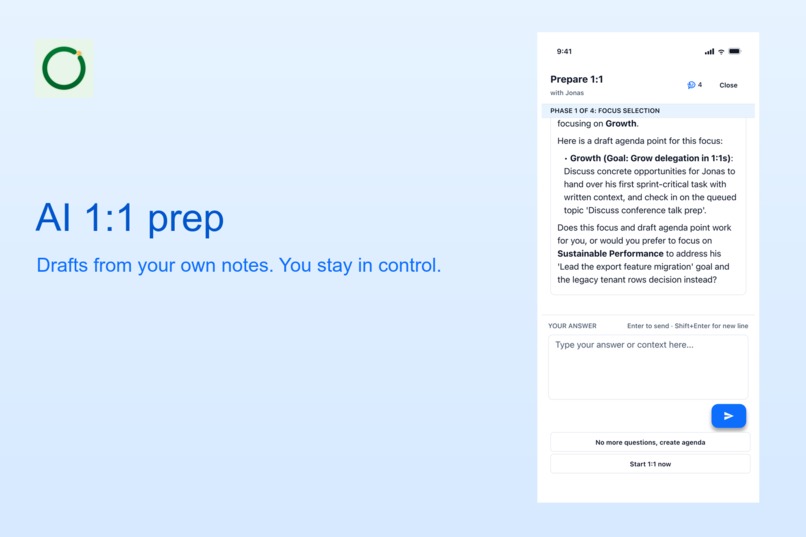
Get a nudge from AI to prepare a good 1:1 agenda, including development goals, previous notes.
-
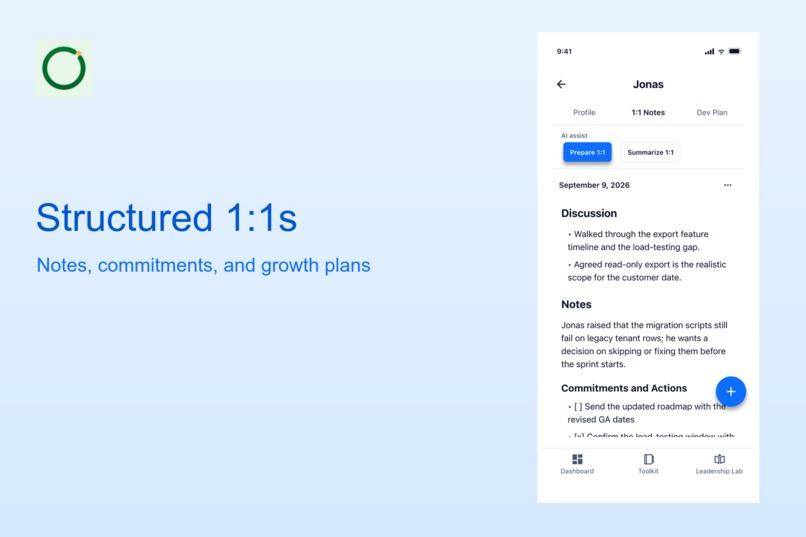
Structured 1:1 notes: say goodbye to a mix & match of management tools, and keep everything in the same place.
Inspiration
I spent two weeks preparing a 360 feedback round for a large team, with the help of an AI agent. AI was supposed to send the emails out for me, too. A month later, I found a dozen unsent email drafts in my outbox and realized I had let my team down. At the same time, I was trying to track commitments, earlier conversations, and development work across scattered notes in a variety of tools like Microsoft Todo, OneNote, and Google Drive. LoopCloser grew from that gap.
What it does
LoopCloser is a private notebook and toolbox for people managers. It brings together structured 1:1 notes, discussion queues, commitment tracking, development plan tracking, and 360 feedback workflows. Managers can capture a point (open loop) while it is fresh, route it to the right person's next 1:1, prepare a focused agenda, and carry commitments forward until they are closed. AI preparation and recap tools work from the manager's own private notebook material and produce manager-controlled drafts, not judgments about employees.
To ensure new managers get a push in the right direction, following best practices from resources like Good to Great, Crucial Conversations, etc., I have added Leadership Lab: a private flight simulator where managers can rehearse difficult workplace conversations with realistic counterparts who push back, get defensive, or disagree. Then the manager can pause, reflect, and try again.
LoopCloser is live on the web, Google Play, and the iOS App Store.
How I built it
I built LoopCloser as a shared TypeScript codebase for a React web app and React Native mobile app. Firebase Authentication and Firestore provide the secure, Firestore-backed notebook system of record., with data encrypted at rest Firebase Cloud Functions handle validated server operations and the Gemini-powered 1:1 preparation and recap workflows. RevenueCat manages subscription entitlements across the product. The architecture keeps shared manager workflows consistent across web, Android, and iOS. I reused architecture patterns from apps I have built before (StroboPro, Ballercast, and Zooked!), which saved me from repeating my own past mistakes.
Challenges I ran into
My initial payment-provider submission was rejected by Paddle because the "AI Coaching" that was included was interpreted as AI having influence on natural persons. That one pushed me to reframe the features as grounded "AI Summaries", which honestly is what they are.
Making shared UI code work cleanly across a PWA and native mobile apps takes some work and a lot of pushing on AI agents to follow conventions for common files vs abstractions, but is well worth it.
Accomplishments I am proud of
- Shipped a working web app, Google Play release, and iOS App Store release.
- Built one private workspace for 1:1s, commitments, development plans, and 360 feedback, that I use every day at my day job as an Engineering Manager.
- Shipped the Leadership Lab, where managers, and myself, can practice difficult conversations before the real one.
- Added grounded AI assistance that helps me, and other managers, prepare and recap.
- Integrated RevenueCat for iOS and Android to support a real cross-platform subscription product.
What I learned
I am not an influencer, and building the app turned out to be the easy part. Now I am learning to show my work, take criticism, and accept that the first version is never as good as I hoped it would be. Every piece of manager feedback so far has already changed what I build next. I thought I could compete for #buildinpublic but have quickly given that up - I am not the sort of person who wants to share everything, and probably never will be.
What's next for LoopCloser
I want to add more difficult conversations to Leadership Lab, as well as a built in knowledge base and training exercises. Some of the more complex flows, like 360 feedback and development plans, might need more refinement, but I am a big believer in LeanUX, getting the MVP out and then refining it from actual user feedback.
Built With
- firebase
- firestore
- functions
- gemini
- github-actions
- one.com
- react
- react-native
- revenuecat
- typescript

Log in or sign up for Devpost to join the conversation.