-
-
01-loopaal-home-hero.jpg
-
02-loopaal-worker-streams.jpg
-
03-loopaal-services-menu.jpg
-
04-loopaal-customer-journey.jpg
-
06-loopaal-safety-trust.jpg
-
05-loopaal-product-states.jpg
-
08-loopaal-dashboard-workflow.jpg
-
07-loopaal-setup-connections.jpg
Inspiration
Loopaal started from a simple problem I kept noticing: small businesses need consistent outreach, follow-up, research, memory, and client communication, but they usually do not have a full revenue-ops team. I wanted to build an automation system that feels like a group of careful co-workers, not a black-box bot that silently sends messages or loses context.
What it does
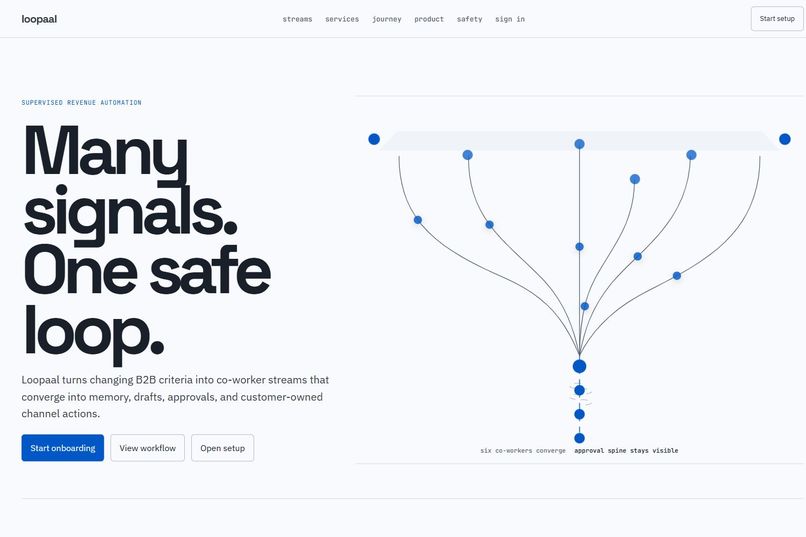
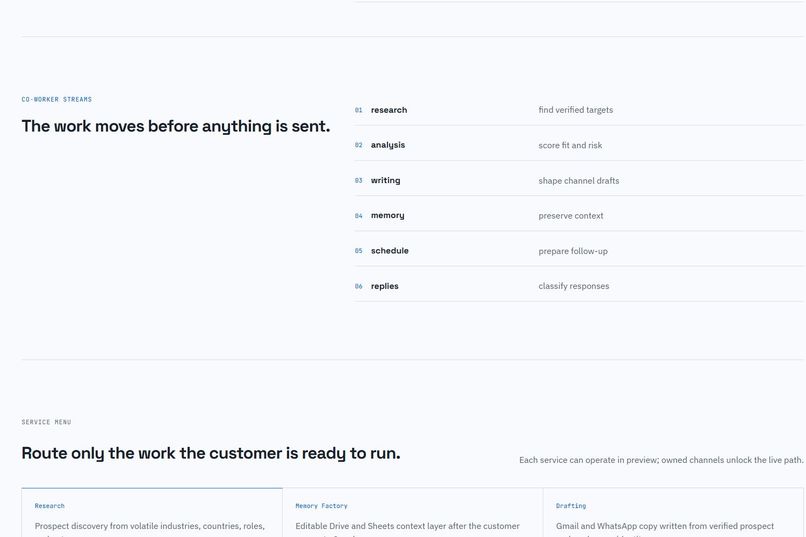
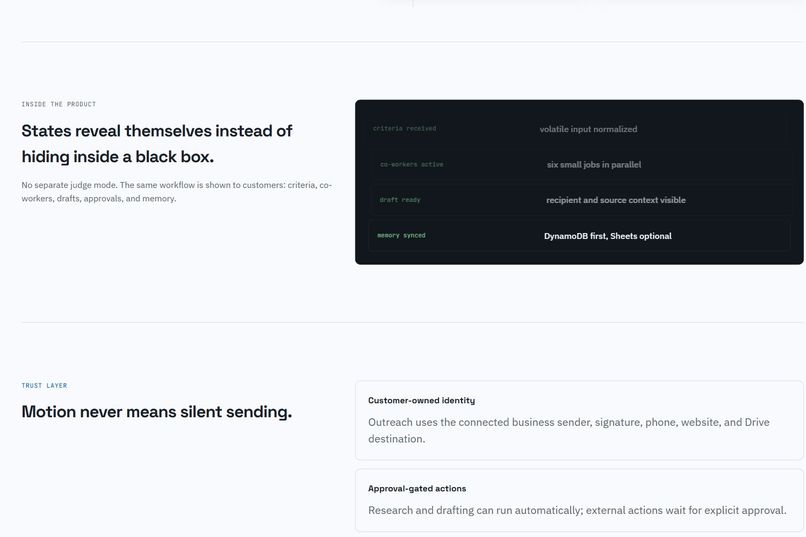
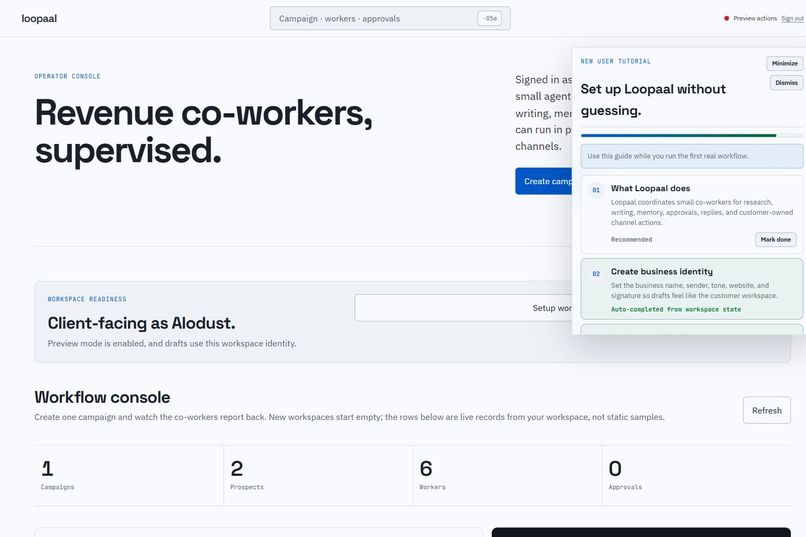
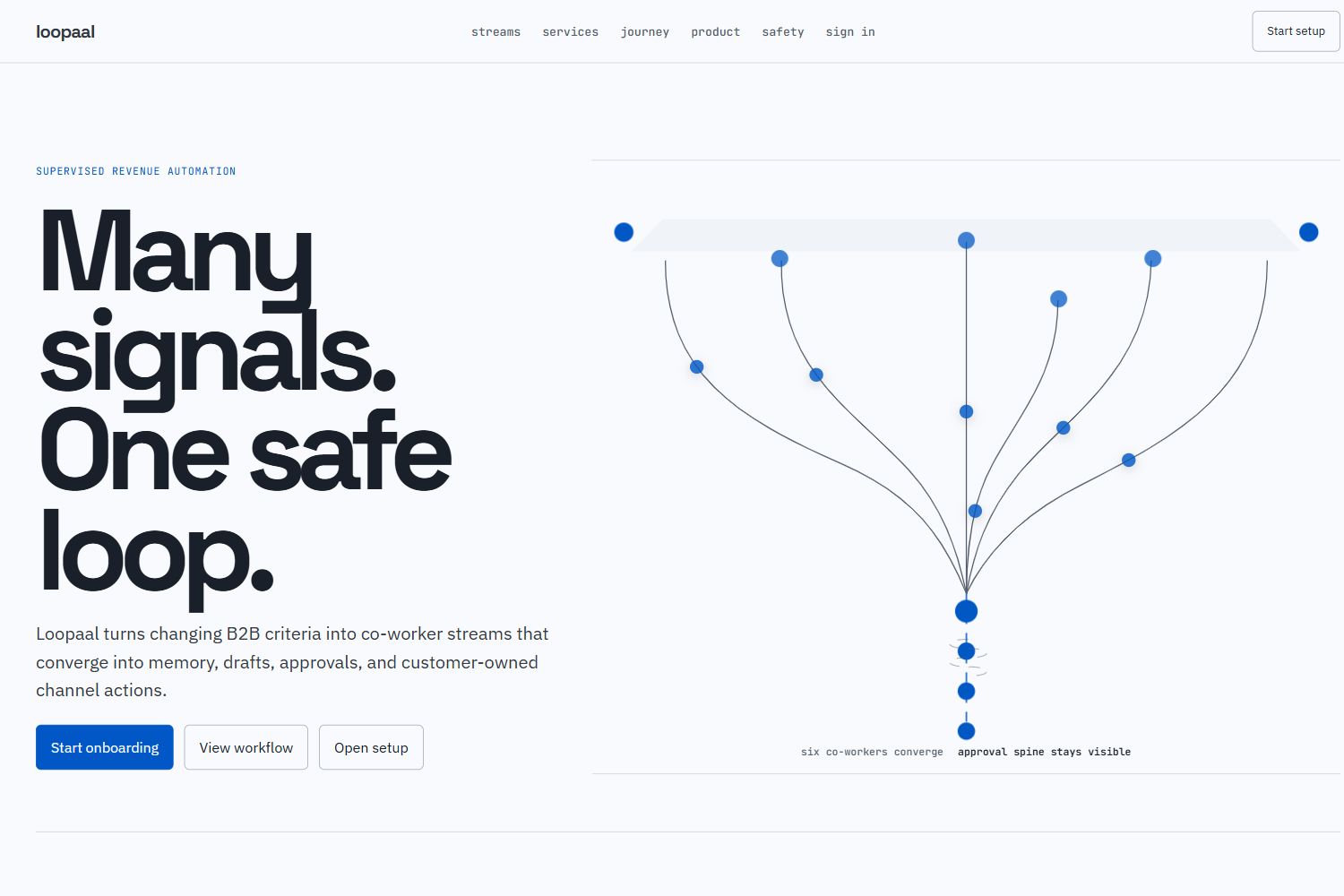
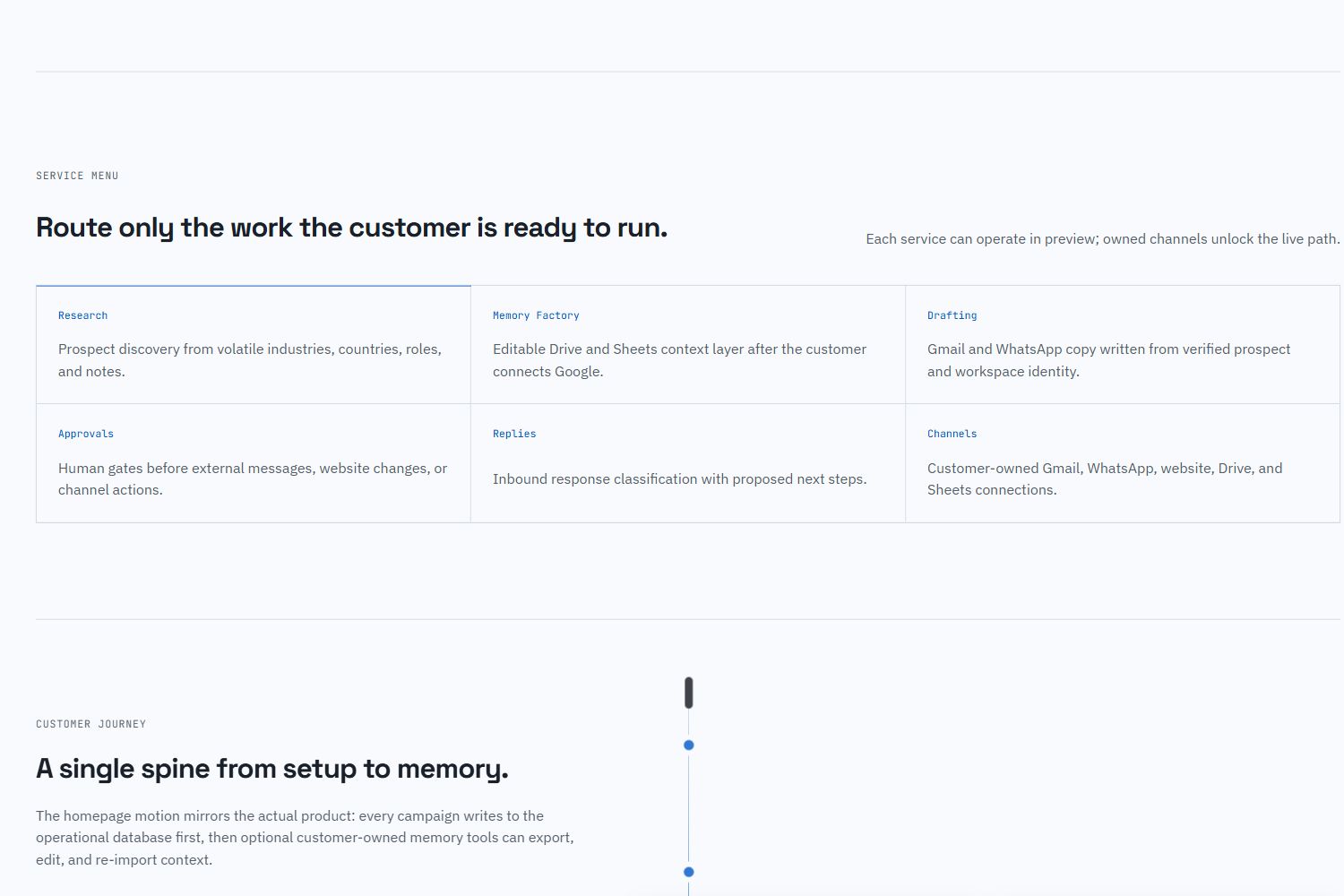
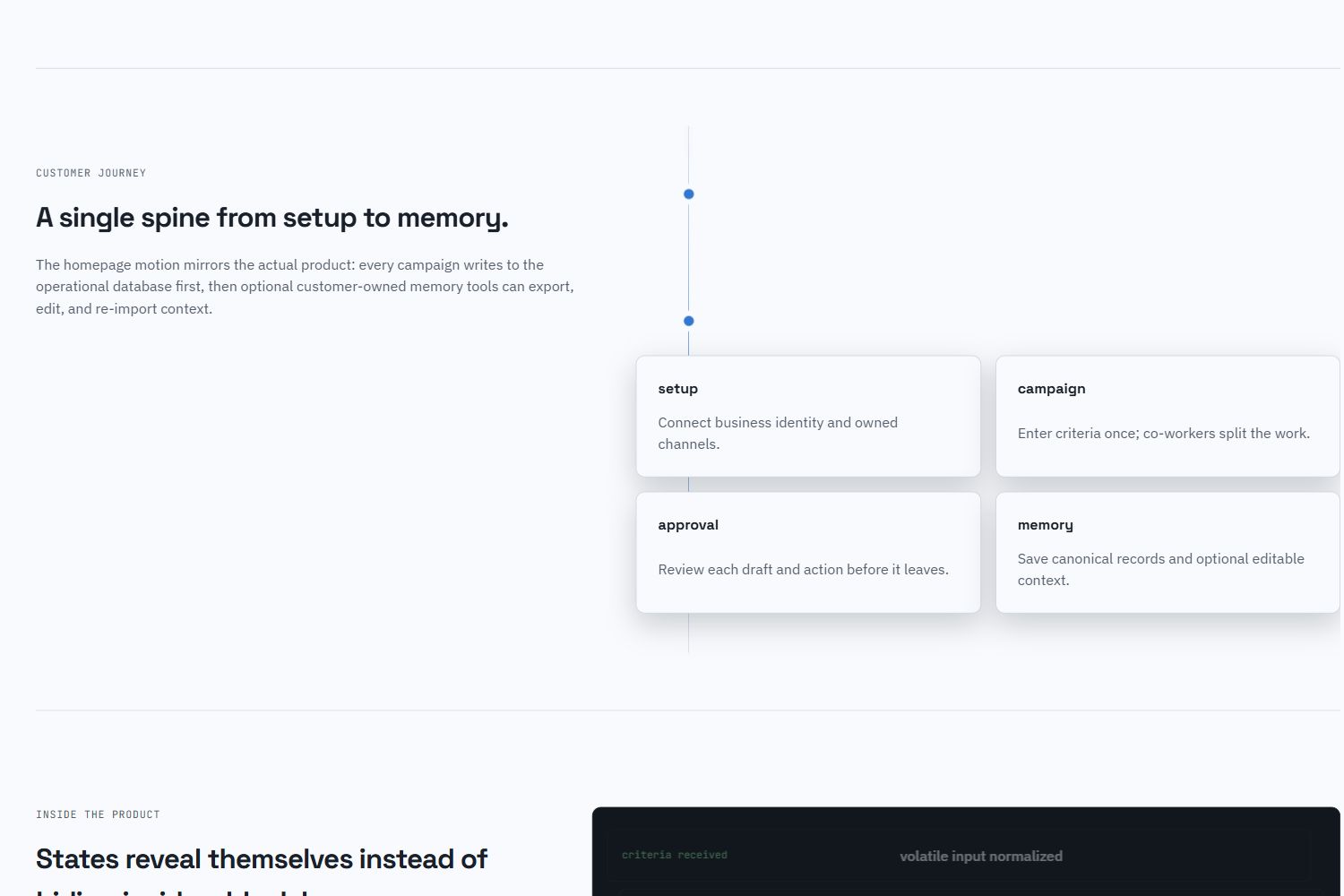
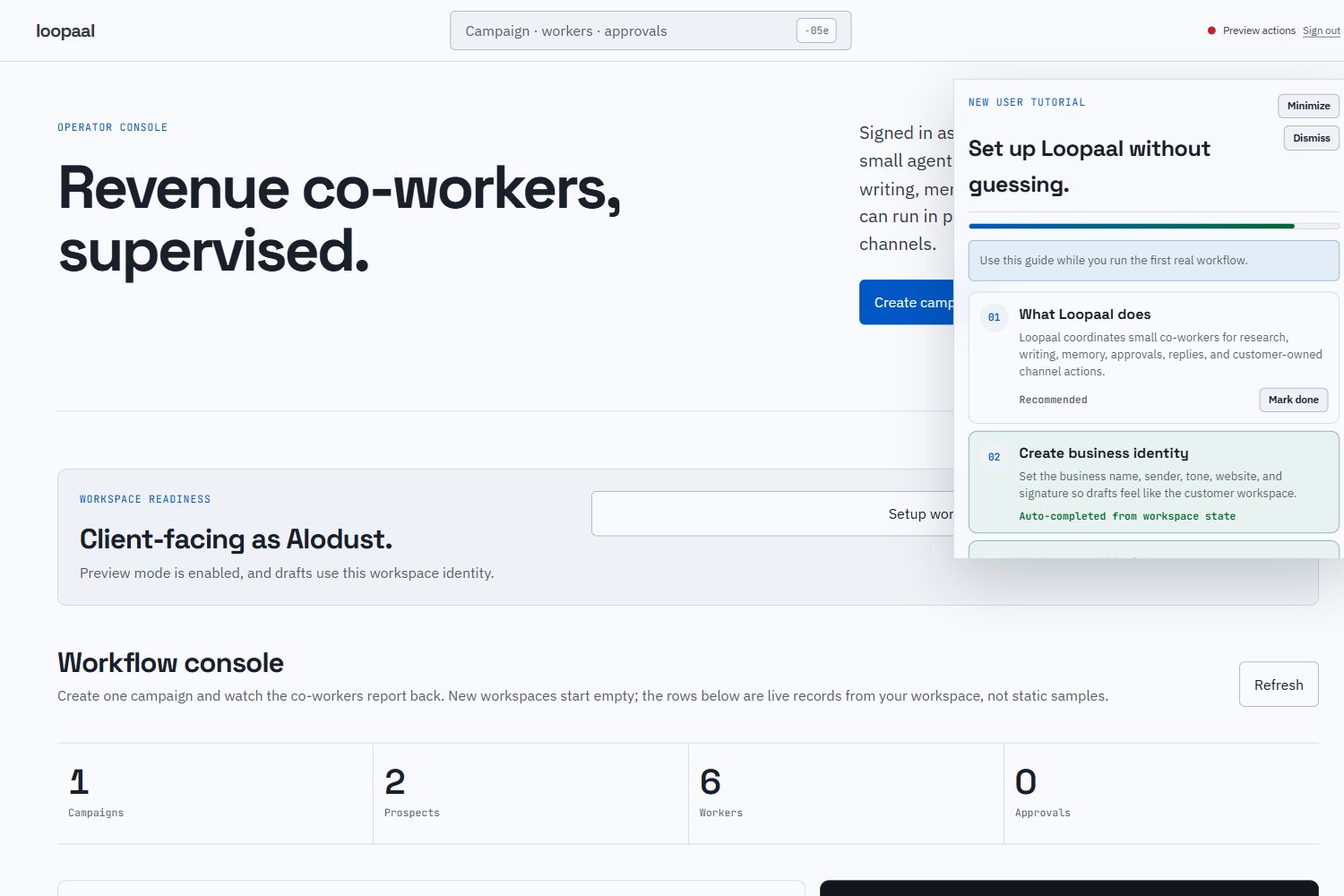
Loopaal is a supervised AI revenue-ops platform for B2B workflows. A user can create a campaign from flexible criteria such as industry, country, business names, decision-maker roles, and offer details. Loopaal then runs small co-worker agents in parallel to research prospects, analyze fit, draft outreach, save memory, prepare approvals, and keep an audit trail.
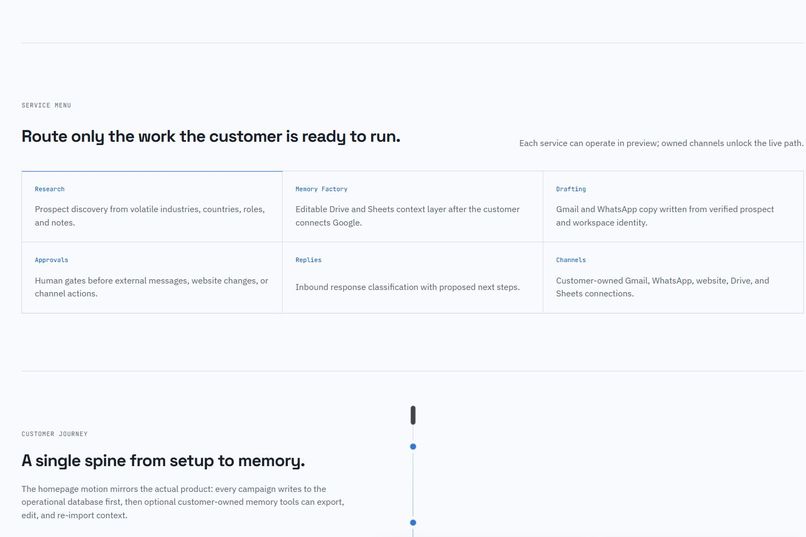
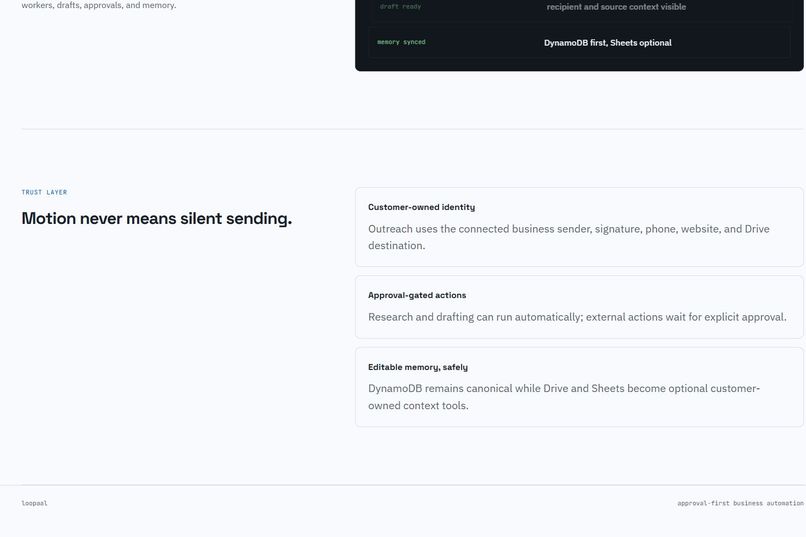
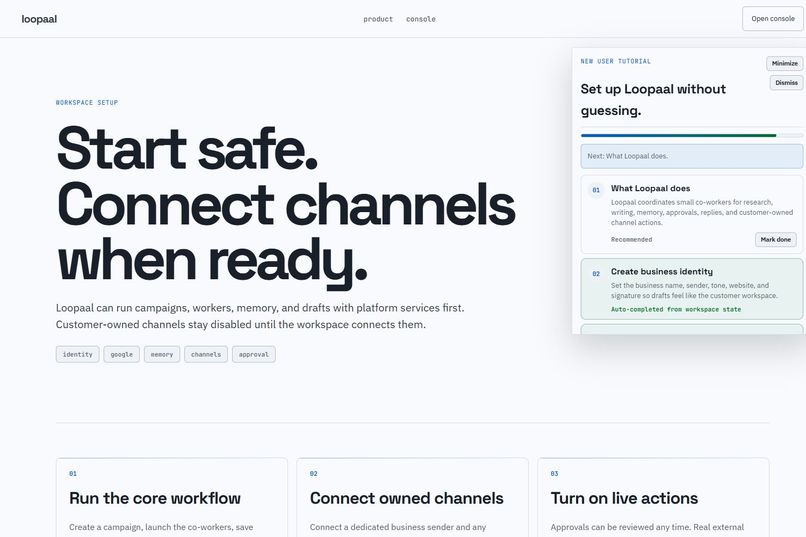
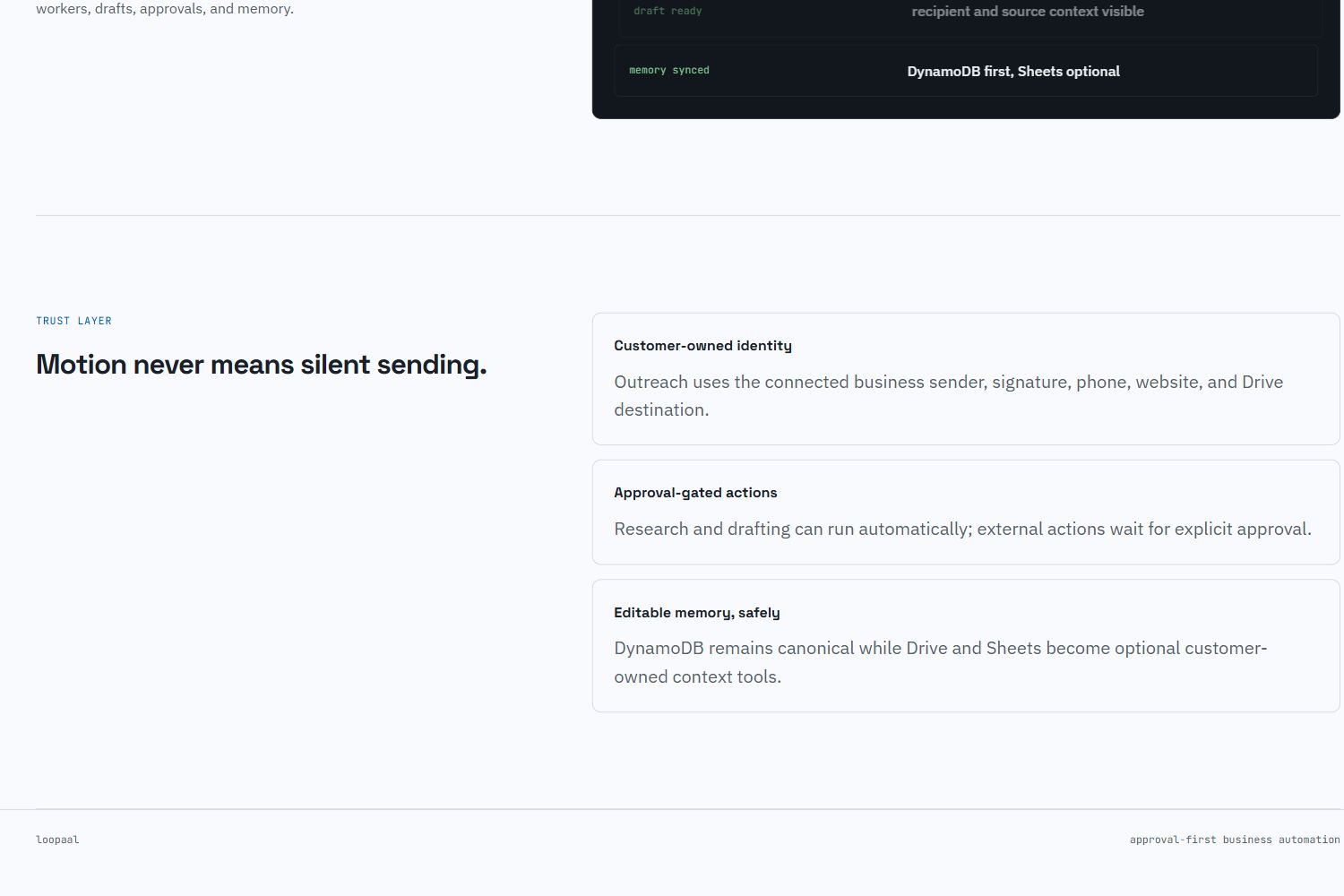
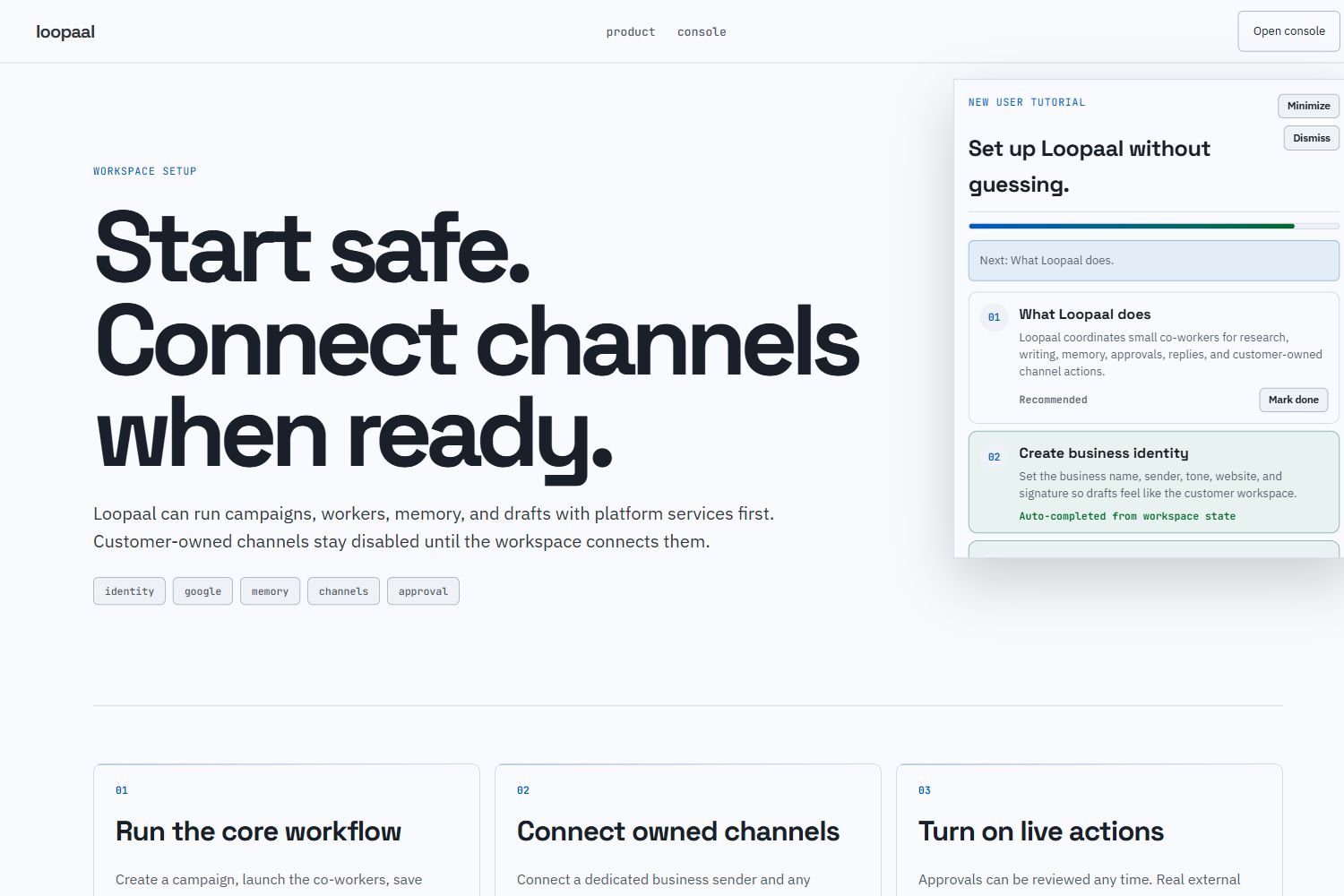
The system is designed around customer-owned channels. Users connect their own Gmail, Drive/Sheets, WhatsApp, and website webhook endpoints. Gmail drafts, WhatsApp messages, website updates, and live actions stay approval-gated so the user stays in control.
How I built it
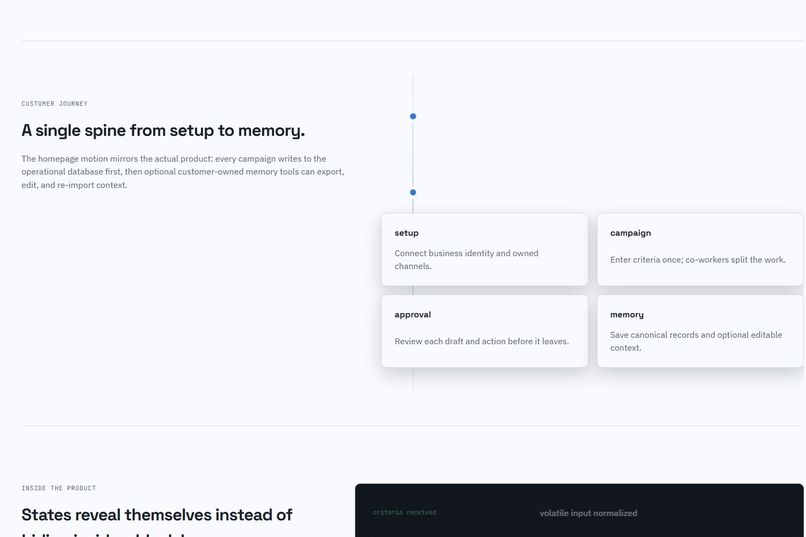
I built Loopaal as a Next.js App Router application deployed on Vercel. DynamoDB is used as the canonical operational database for campaigns, prospects, worker jobs, approvals, memory, connections, workspace identity, and audit events.
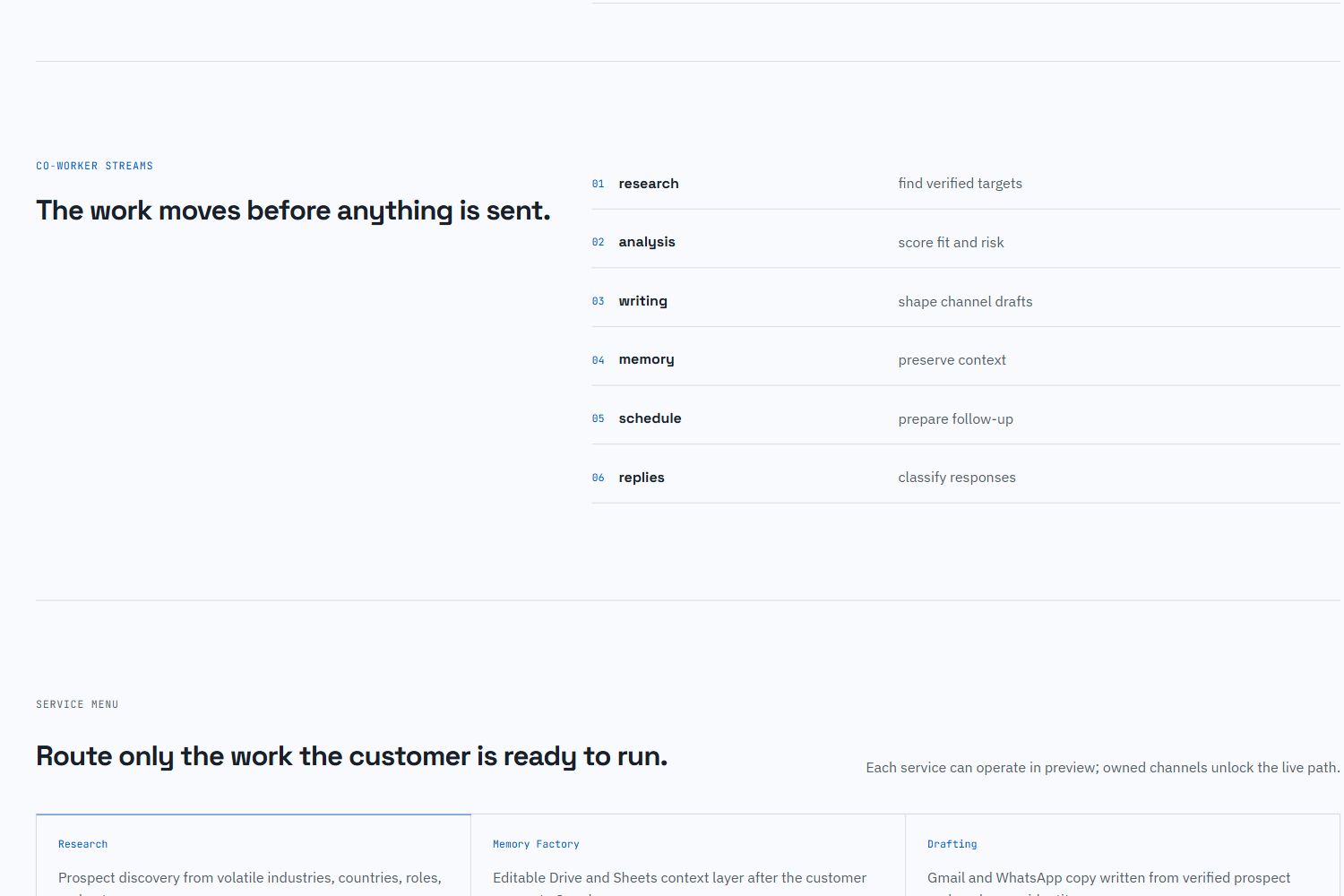
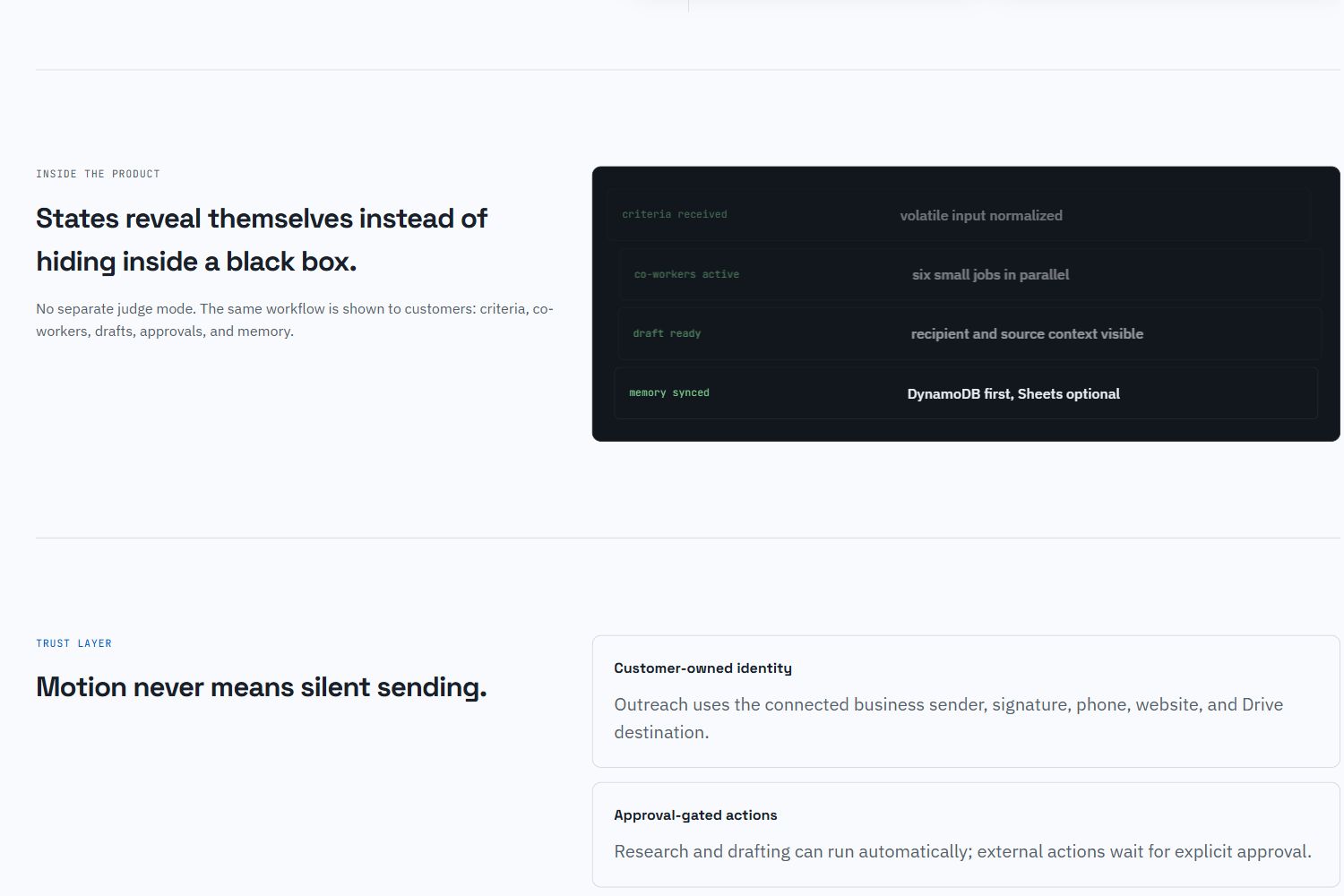
The AI/co-worker layer is structured around small task-specific workers such as researcher, analyst, writer, archivist, scheduler, and reply-handler. For memory, I built a hybrid model: DynamoDB remains the source of truth, while Google Drive/Sheets acts as an optional customer-owned “Memory Factory” where users can export, edit, and re-import context.
I also added Supabase Auth for user accounts, Google OAuth for Gmail/Drive/Sheets connection, a website webhook system for signed external updates, and onboarding/tutorial flows for new users.
Challenges
The biggest challenge was balancing automation with trust. It is easy to make an AI system that appears powerful, but much harder to make one that is safe, auditable, and usable by non-technical customers.
Some specific challenges were:
- separating app login from customer-owned business integrations;
- making Gmail drafts work without silently sending emails;
- designing memory so DynamoDB stays canonical while users can still edit context in Sheets;
- keeping WhatsApp and website actions flexible across different customer platforms;
- avoiding hardcoded founder credentials in a B2B product;
What I learned
I learned that agentic systems need strong product boundaries. The important part is not just “many agents working,” but how those agents report work, save state, ask for approval, and respect the customer’s connected identity.
I also learned a lot about integrating cloud systems together: Vercel for hosting, AWS DynamoDB for durable state, Supabase for auth, Google OAuth for user-owned channels, and webhook-based website automation.
What’s next
Next, I want to improve the WhatsApp Cloud API flow, add production-ready billing, support more website/CMS adapters, and expand the co-worker system into a more independent worker repo. I also want to make the Memory Factory more powerful so users can actively shape Loopaal’s context and behavior over time.
Built With
- awsdynamodb
- cloudflareworkers
- css/svgmotion
- geminiapi
- github
- gmailapi
- googledriveapi
- googleoauth
- googlesheetsapi
- hmacwebhooks
- metawhatsappcloudapi
- next.js
- node.js
- npm
- react
- supabaseauth
- typescript
- vercel

Log in or sign up for Devpost to join the conversation.