-
-
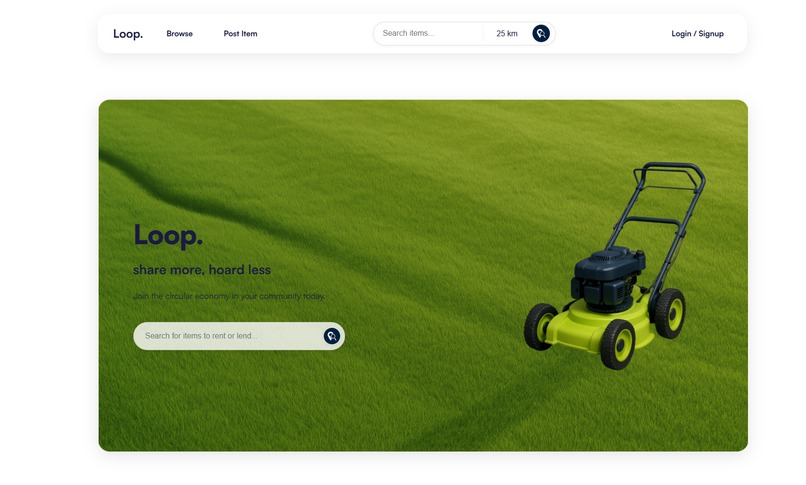
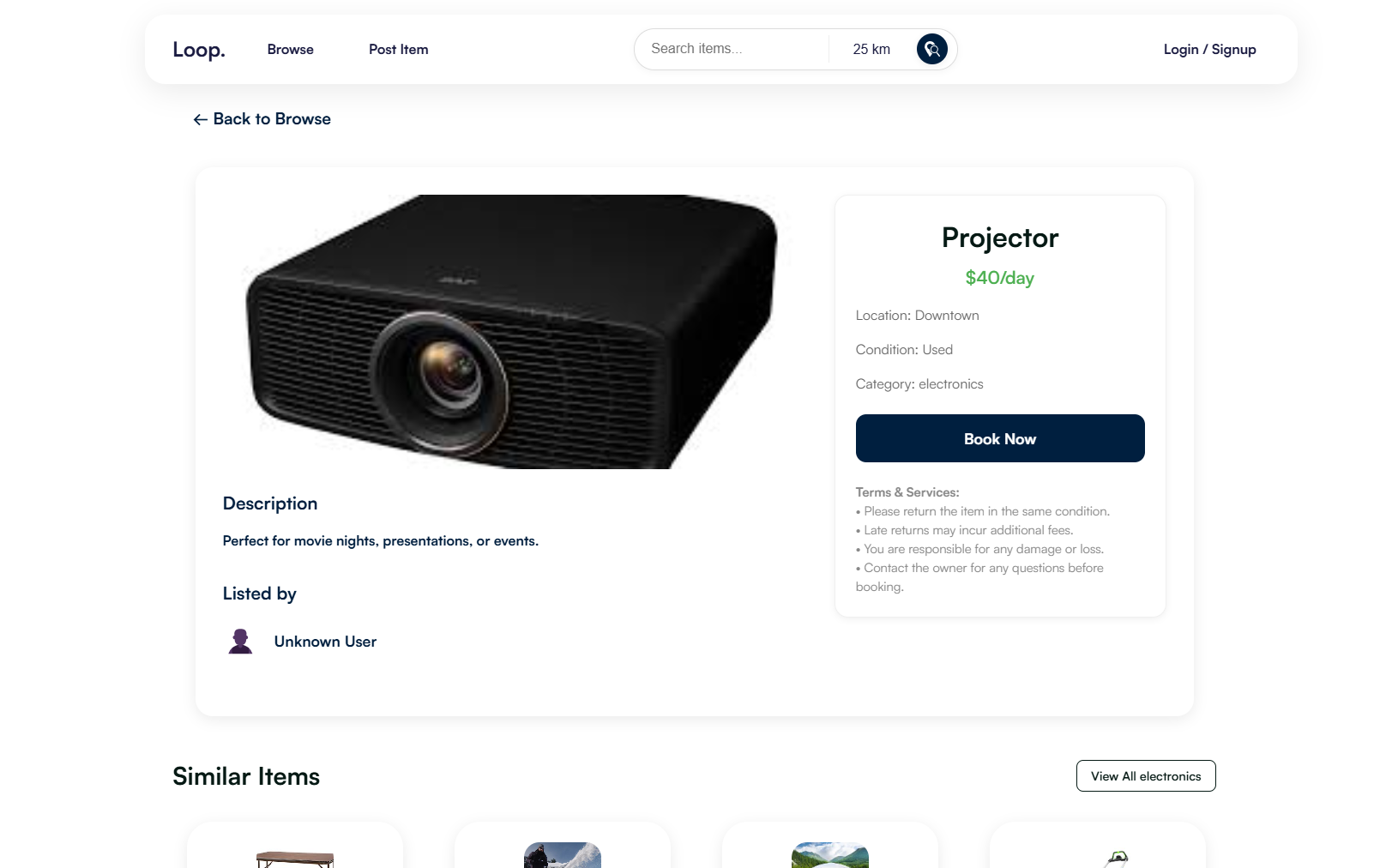
home page
-
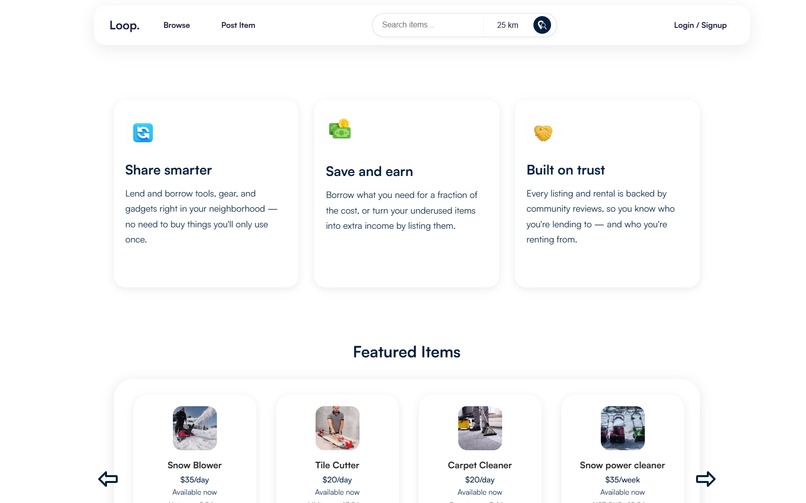
featured items
-
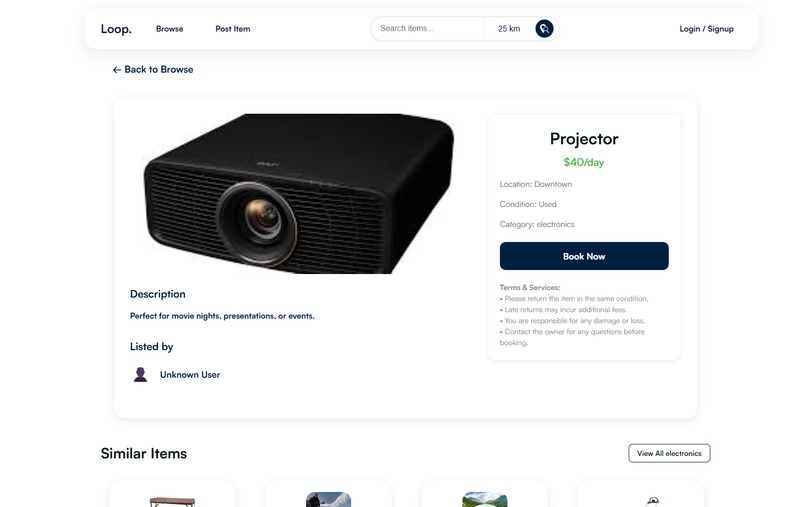
item specification
-
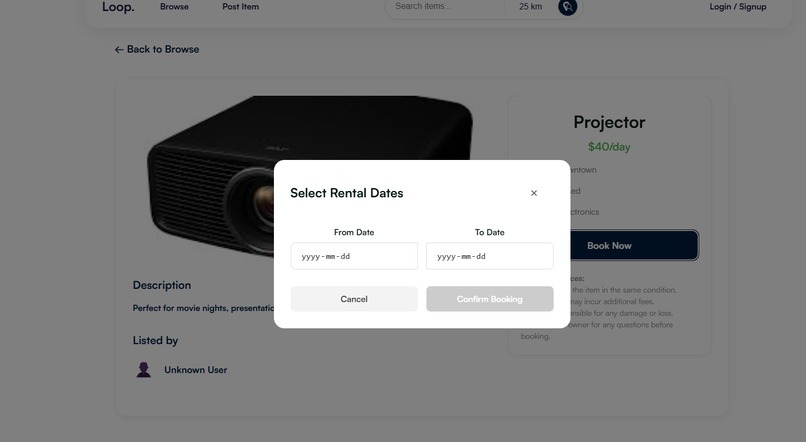
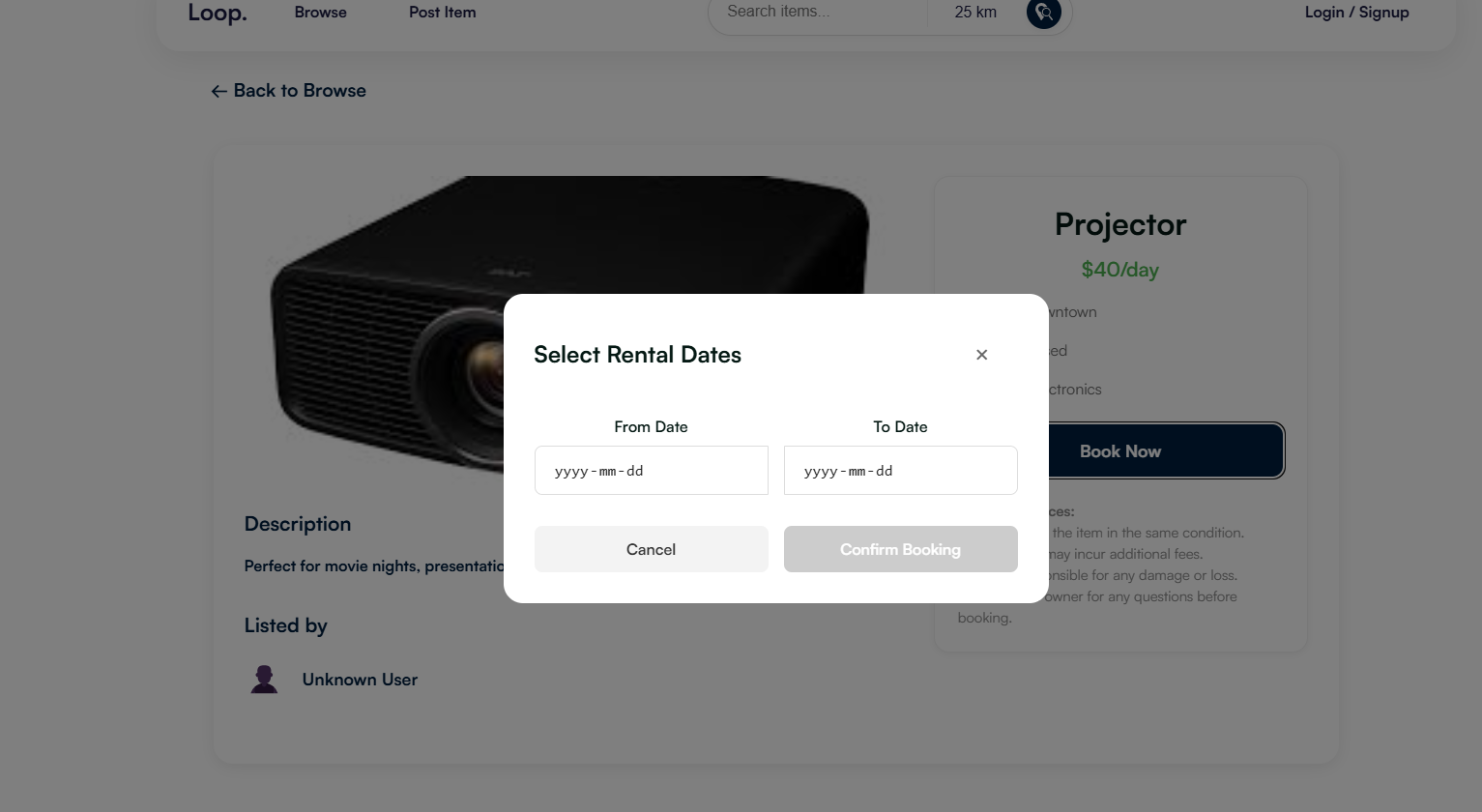
book now
-
-
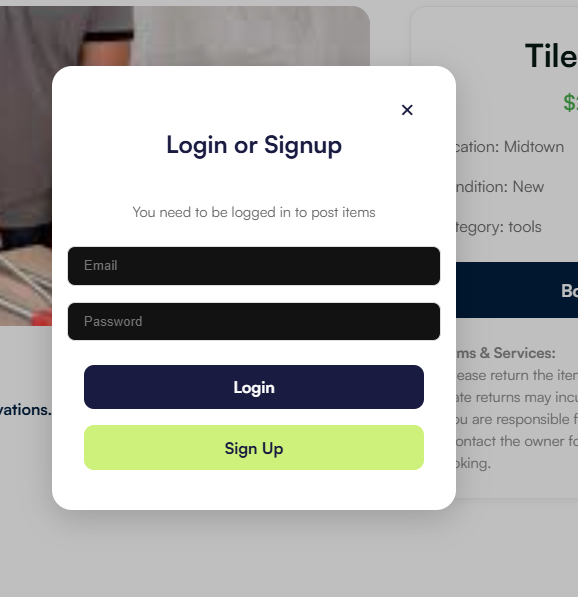
log in
Inspiration 🤩
Every year, over $7,000 worth of unused items sit idle in the average American household, from tools and camping gear to electronics and furniture. At the same time, the global sharing economy is growing rapidly—projected to reach $800 billion by 2031. We wanted to build a platform that helps people save money, reduce waste, and connect with their communities by renting items locally instead of buying new.
We were also driven by environmental concerns. Americans generate nearly 292 million tons of waste annually, much of it from underused consumer goods. Loop is our way of contributing to a circular economy where resources are shared, not wasted.
What it does 🦾
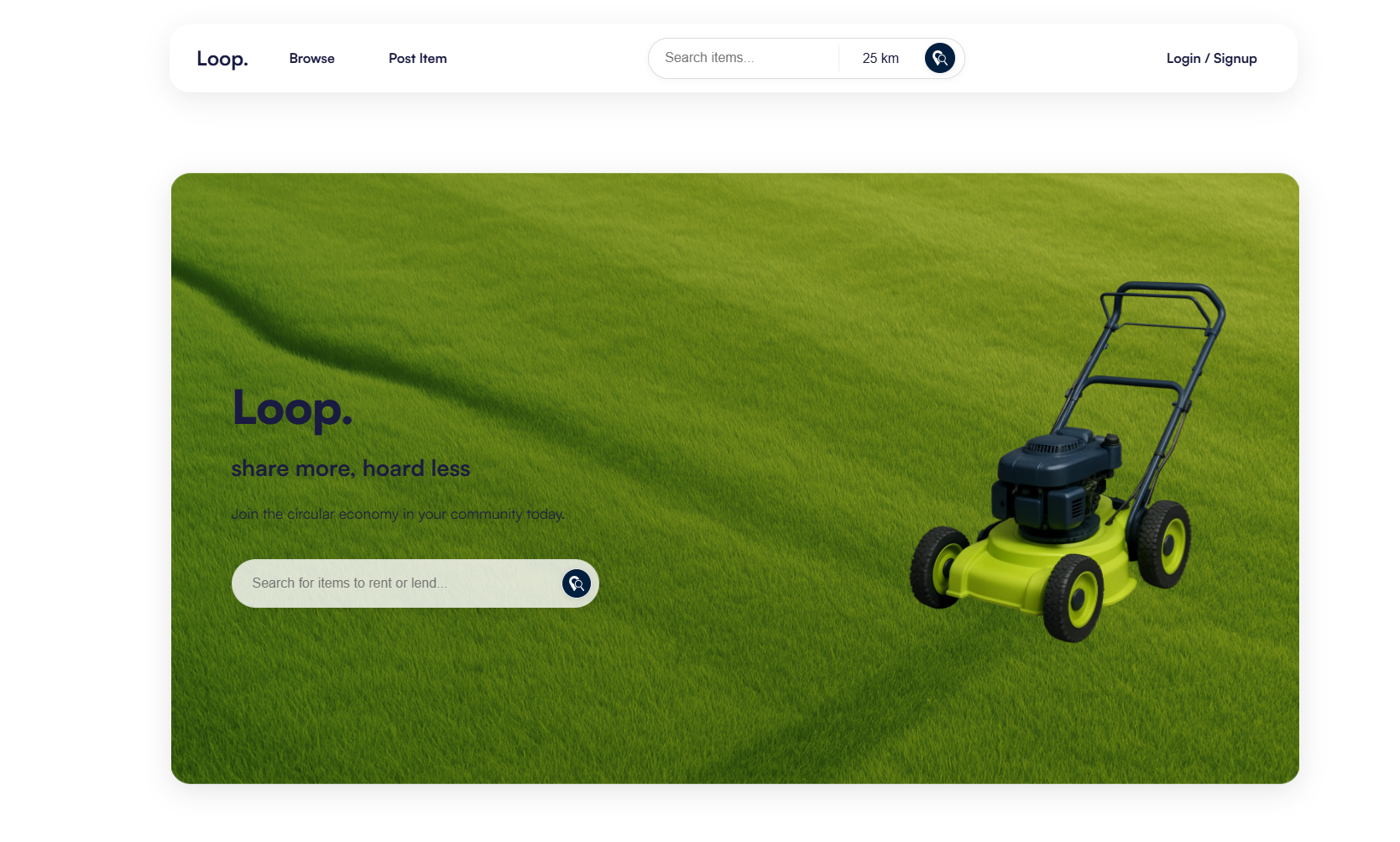
Loop is a web application that allows people to rent and lend everyday items with others in their neighborhood. Users can:
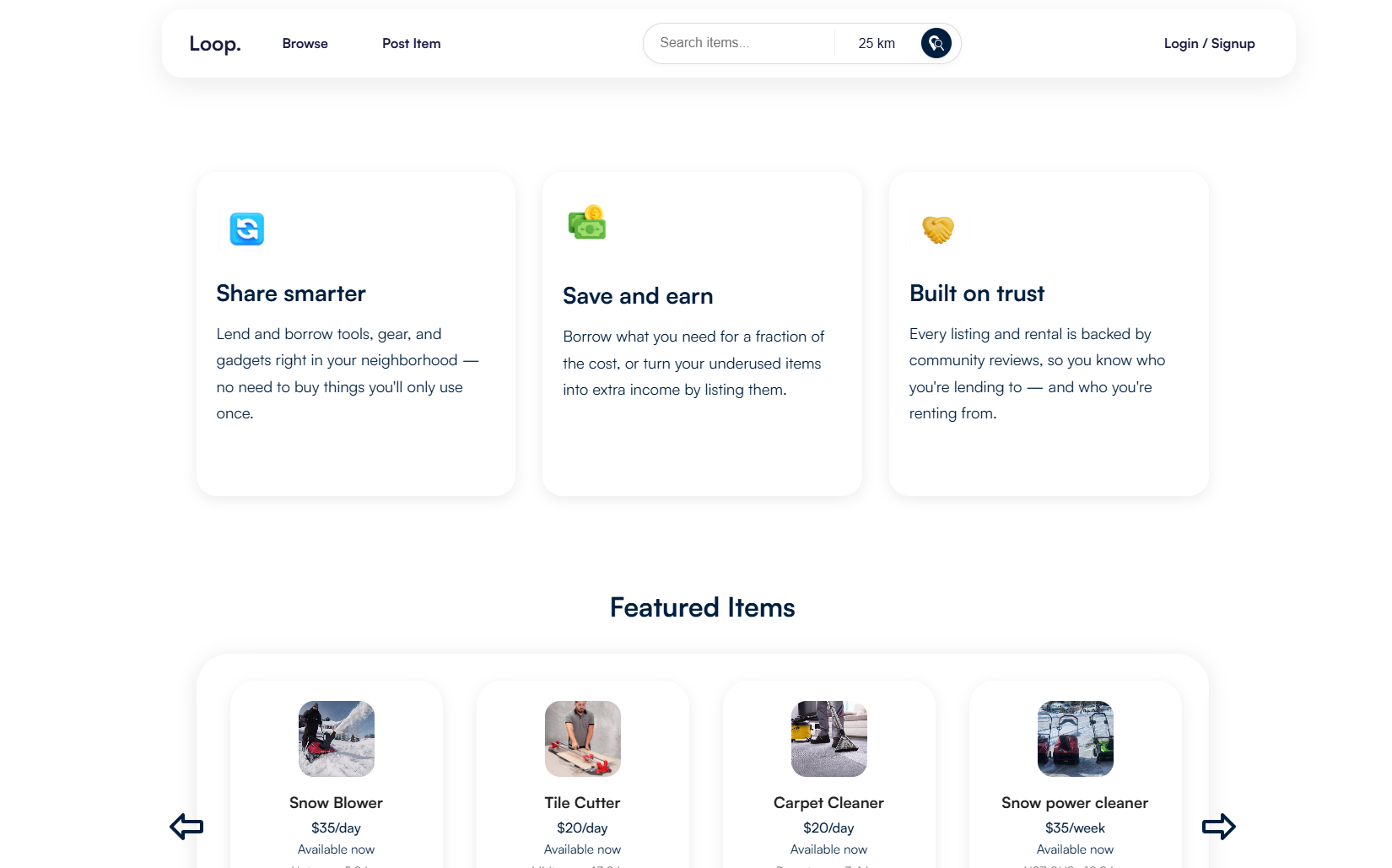
- Browse listings of available items like power washers, tents, or tools.
- Filter items by category and price range to find exactly what they need.
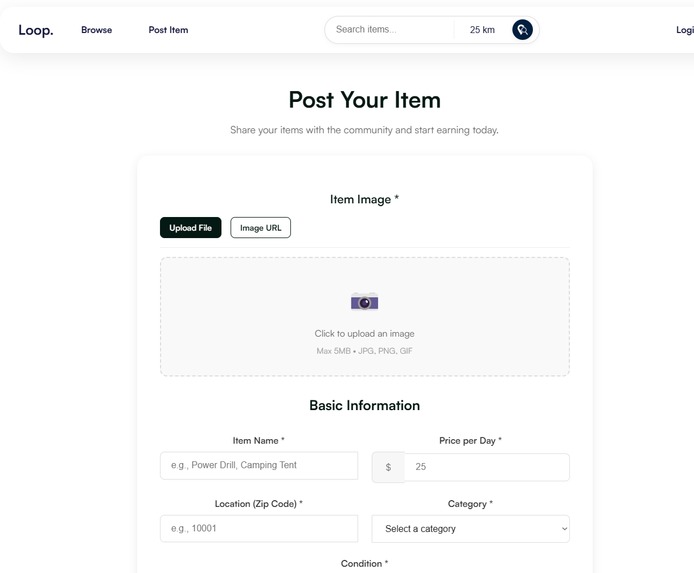
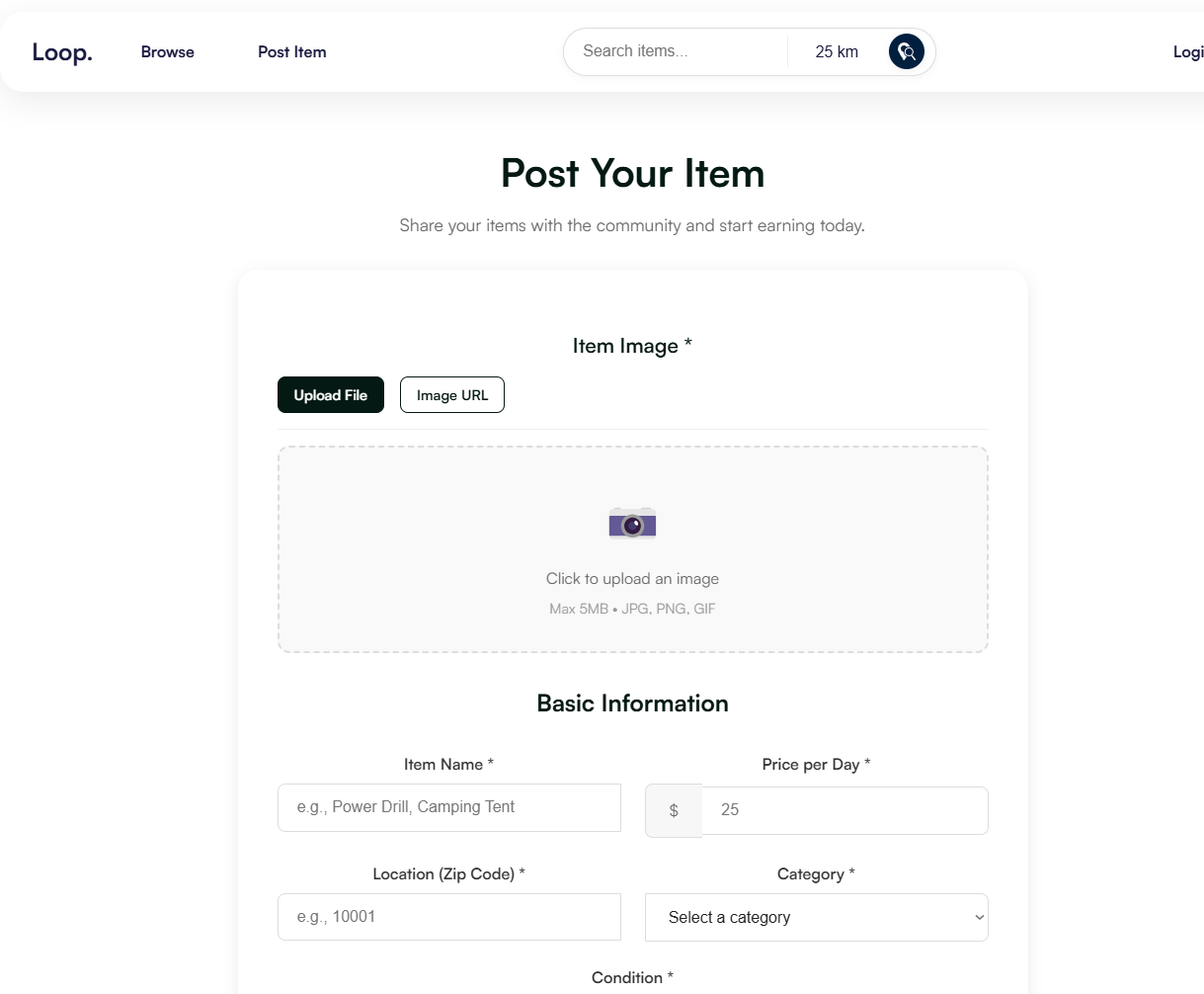
- Post their own items for others to rent, turning idle stuff into extra income.
- See detailed item cards with pricing, photos, and contact info.
The platform makes it easy to save money, reduce clutter, and help the planet.
How we built it 🫡
Loop was built as a modern, full-stack web application:
- Frontend: React.js + Vite for fast, modular development and responsive design.
- UI/UX: Custom components for item cards, filters, and modals for item previews. We used modern fonts and illustrations to give Loop a community-friendly, cartoony feel.
- Backend: Firebase for authentication, Firestore as our NoSQL database, and Firebase Storage for images.
- Features implemented:
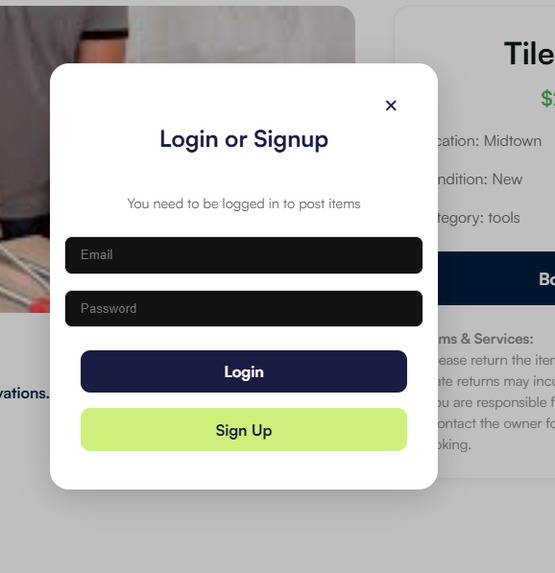
- User login/signup via Firebase Authentication.
- Dynamic item listing creation with real-time writes to Firestore.
- Browsing listings and filtering by category, price, and keywords.
- Responsive design for desktop and mobile users.
Challenges we ran into 😡
- Firestore Queries: Filtering data directly in Firestore required careful handling of null or empty filters, and writing complex queries with multiple constraints.
- Data Modeling: Designing the Firestore data structure to handle flexible filters, user ownership, and potential future booking features.
- Image Uploads: Integrating Firebase Storage required managing upload progress, generating download URLs, and linking them to Firestore documents.
- Time Constraints: Building both frontend and backend from scratch during a hackathon meant prioritizing core features over some nice-to-have functionality like reviews or payment integrations.
Accomplishments that we're proud of 🥳
- I successfully created a fully functional rental marketplace from scratch in a short period.
- My item listing and browsing experience feels smooth, modern, and user-friendly.
- I learned to handle Firestore queries dynamically based on user filters.
- I integrated Firebase Authentication and Storage seamlessly into the app.
What we learned 🤔
- How to design and implement dynamic Firestore queries based on variable filters.
- How to structure a React frontend for modularity and scalability.
- Best practices for connecting frontend UI with real-time databases.
- How to quickly build a project end-to-end during a hackathon, balancing scope and feasibility.
What's next for Loop 🤐
We see huge potential for expanding Loop:
- Booking and Payments: Integrate Stripe or PayPal for secure in-app payments and booking confirmations. -Services marketplace: Inspired by platforms like TaskRabbit. Users could not only rent physical items, but also hire local help for tasks like lawn care, furniture assembly, or event setups. This transforms Loop into a complete community platform for sharing both things and skills, fostering local connections and sustainability.
