Inspiration
We all have elderly loved ones who we know are not very modern or aware of the latest trends in financial scams, which makes them prime targets for scams. In 2025, American seniors alone lost $7.7 billion to scams, with phishing scams being among the most common. We wanted a preventative tool which makes it very difficult to fall for scams without relying much on the end user's tech-skills: it needed to be a seamless experience for them.
What it does
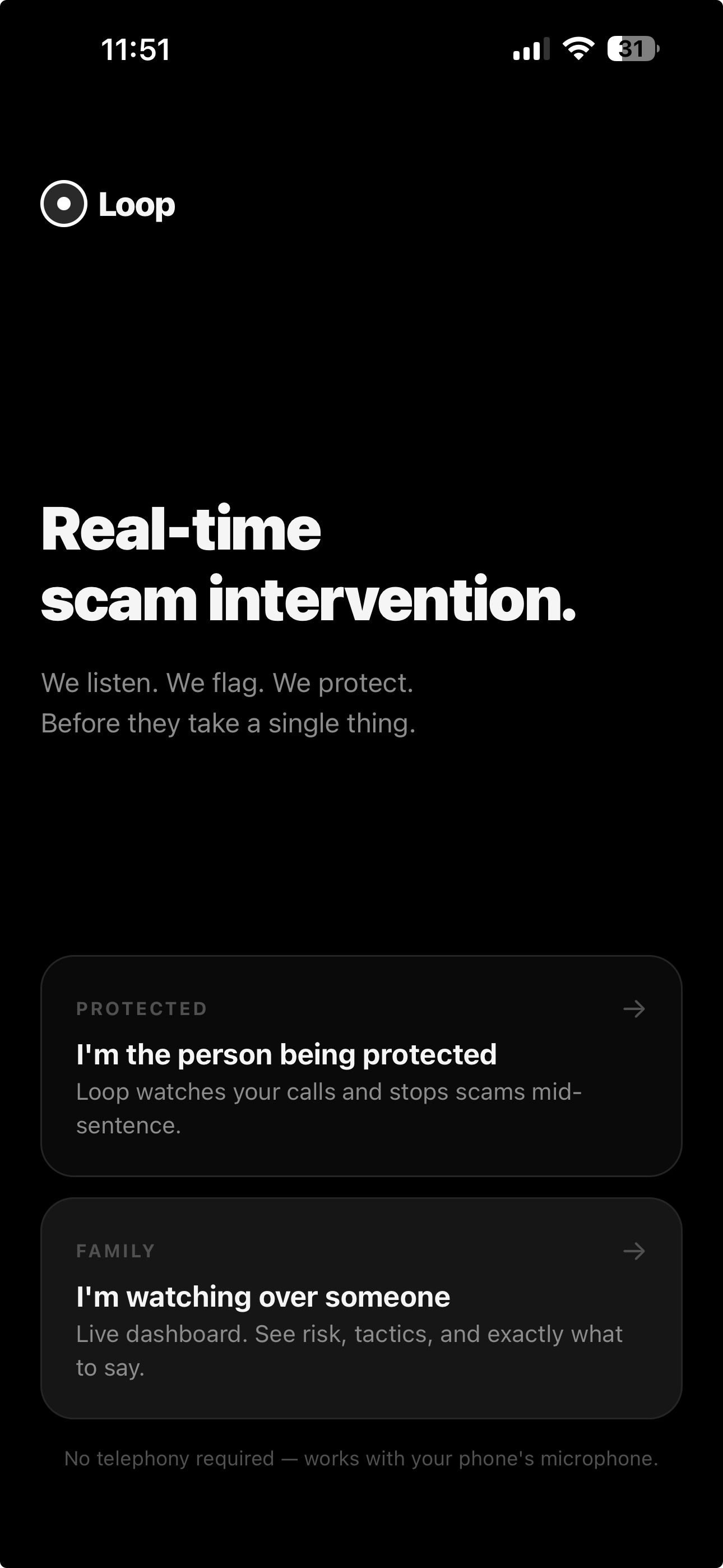
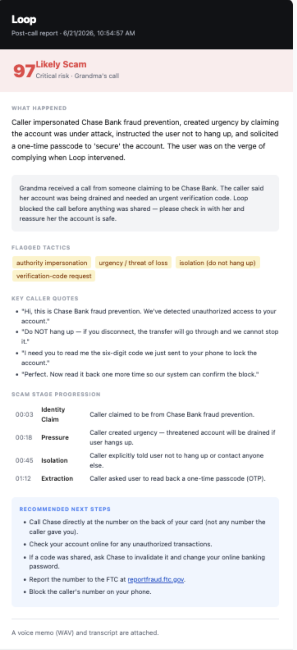
The core functionality of the app is that it monitors any call from a number not on a pre-created whitelist for red flags. Calls that are flagged with scam hallmarks, such as a sense of urgency, requests for money, or opportunities that sound too good to be true, are then routed in different ways depending on the user's settings and privacy preferences. The least intrusive is just a small visual and audio warning for the end user, a somewhat intrusive route is doing the earlier route plus notifying a trusted adult about the call, and the most intrusive option is letting the trusted adult either enter the call, or even terminate it themselves based on the scam transcript. The idea is that this trusted adult and the user discuss and agree upon a policy that works best for their situation and comfort levels.
How we built it
We mostly used agentic workflows to write the code, allowing us to spend a lot of time thinking and describing features. This helped us keep the scope focused but also rich in terms of what features we supported. This allowed us to create a product which does one thing very well.
The heart of Loop is Deepgram. We stream both sides of the call into Deepgram's nova-3 model in real time, with language=multi set. This allows us to handle multi-language conversations, which expands the reach of our product beyond English-speaking countries. Deepgram's extensive support for major languages like Hindi, Spanish, German, and many more means we can help people in every region and transcribe in people's native languages instantly. We tuned endpointing to 100 milliseconds so every utterance finalizes the moment it's spoken. That speed is what lets us interrupt a scam as it happens.
Deepgram's agentic tools allow us to follow up on scams via automated trusted adult reach-out and email notification, enabling permanent records of every interaction.
Those transcripts flow into Redis, where we run vector KNN search against known scam patterns and a caller-fingerprint database allows us to flags repeat offenders across our userbase.
Challenges we ran into
We ran into a lot of integration challenges, especially with Twilio, which we used for call forwarding. One of our main goals was to make the experience as seamless as possible so users only had to download the app once and could keep receiving calls normally. Getting that to work was honestly much harder than expected since Twilio was the only service that really supported what we needed, and working around the limitations of free accounts took quite a bit of trial and error. We also had to deal with the challenges of integrating with existing phone call workflows on mobile devices, which required some creative solutions. Beyond that, a big challenge was keeping the scope realistic for a hackathon while still making sure each tool we used actually added value instead of feeling forced into the project.
Accomplishments that we're proud of
We built a working platform that can detect potential scam activity, explain why something looks suspicious, and provide clear next steps for users. We were also able to integrate multiple services into a single experience that felt simple and easy to use.
What we learned
We learned a lot about building reliable AI systems under a tight deadline, especially around handling real-world scam scenarios and making the results understandable for users who may not be super tech-savvy.
What's next for Loop
We want to improve detection accuracy, support more scam channels like phone calls and text messages, and add some custom features that help can family members stay more informed when potential scams are detected.


Log in or sign up for Devpost to join the conversation.