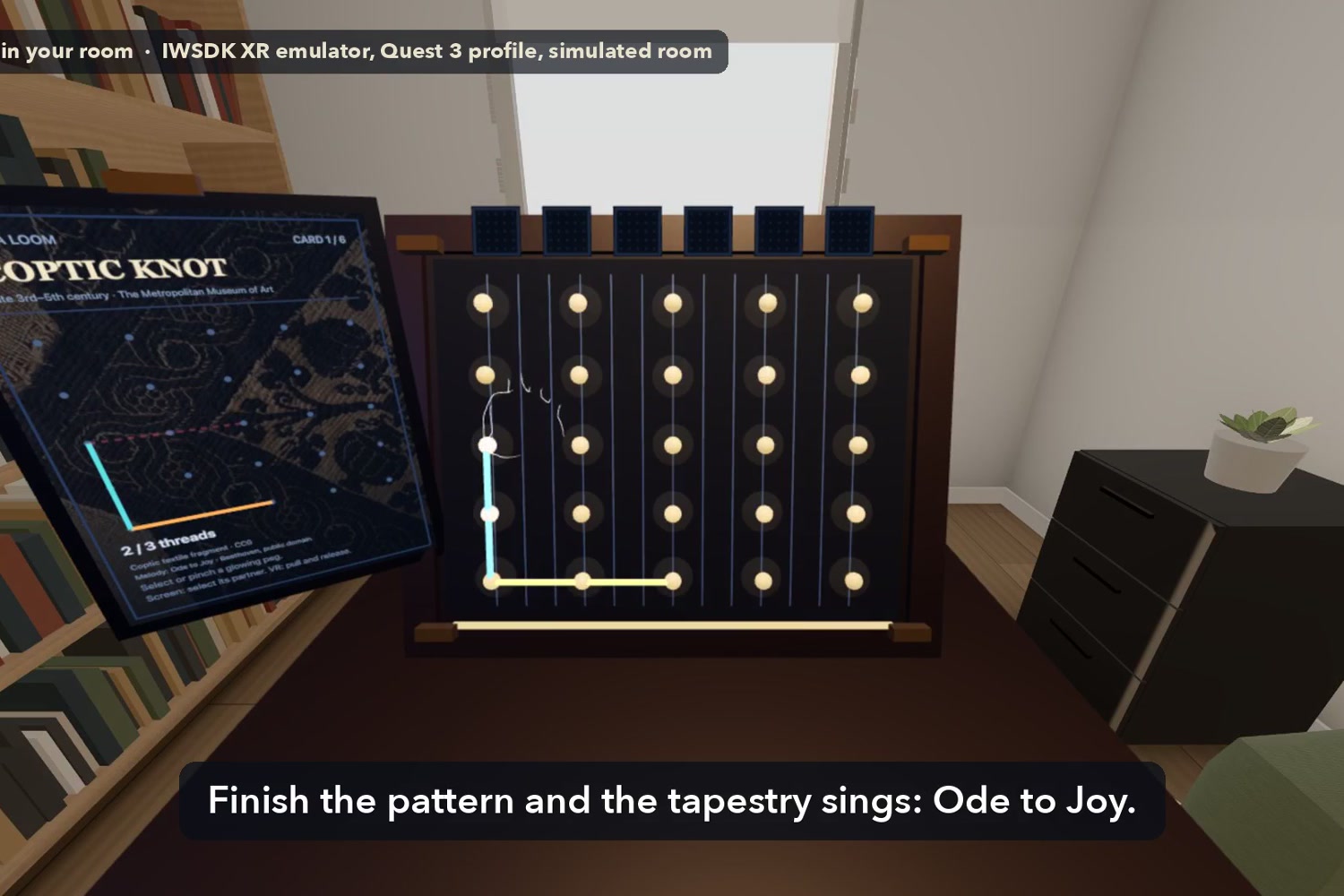
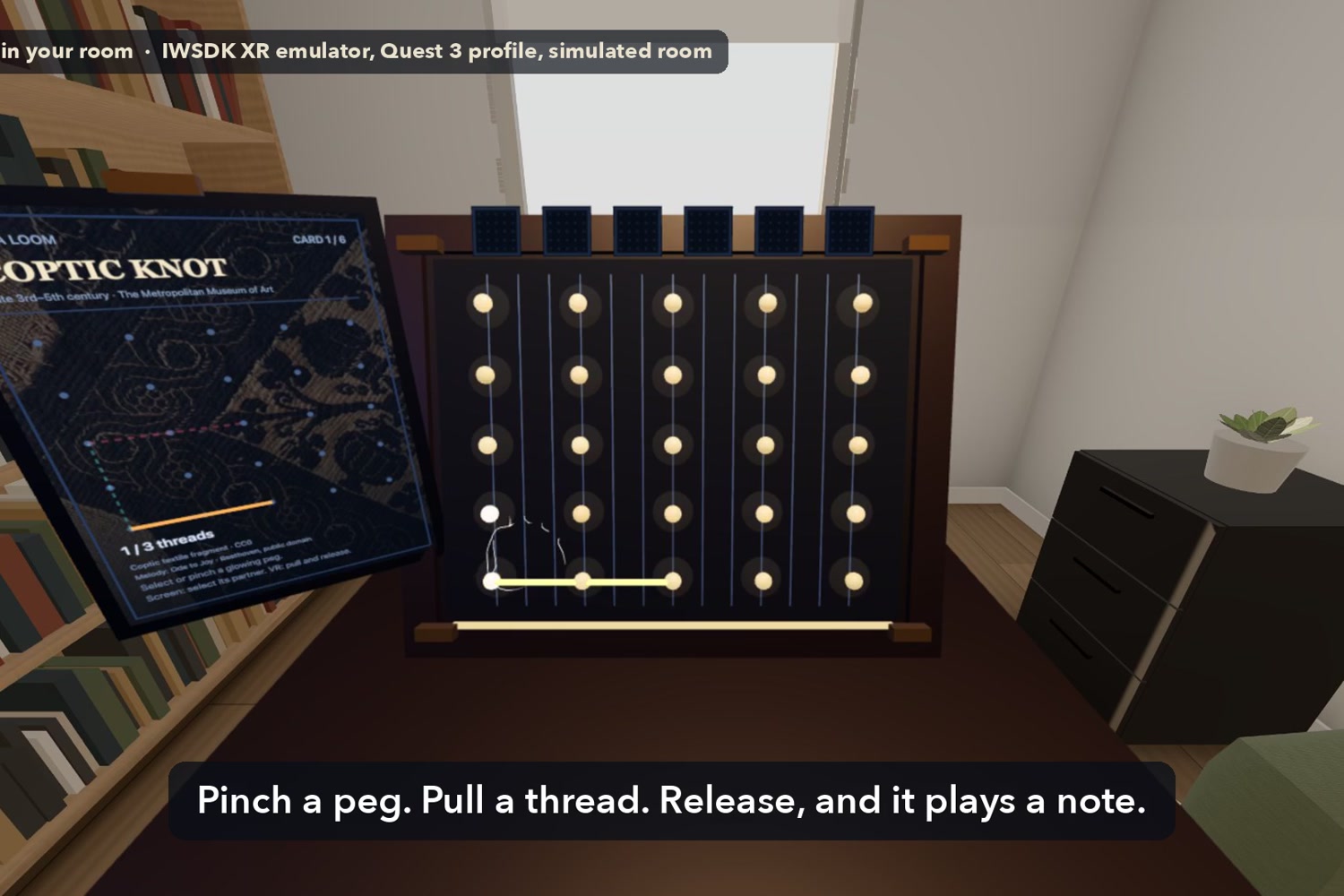
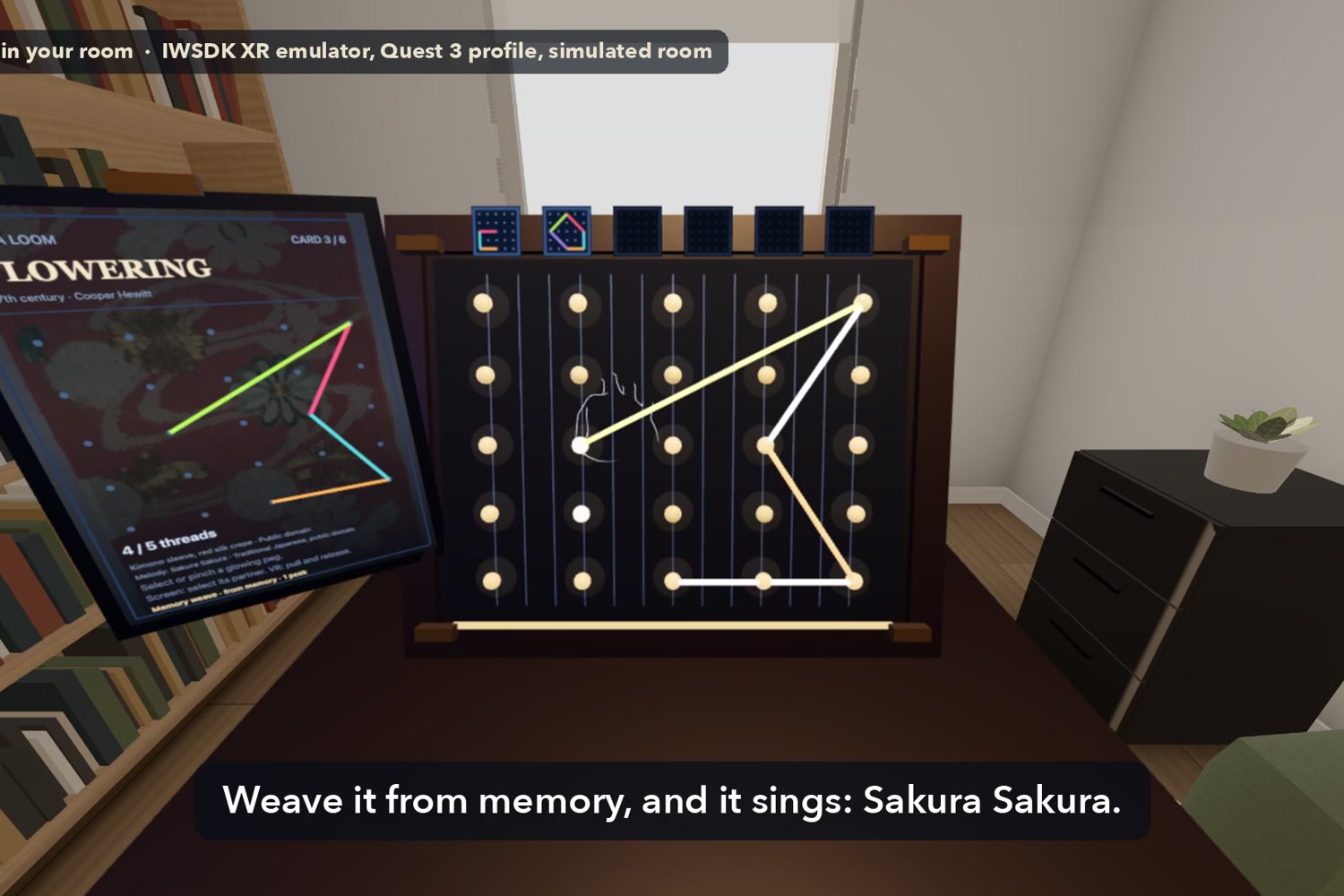
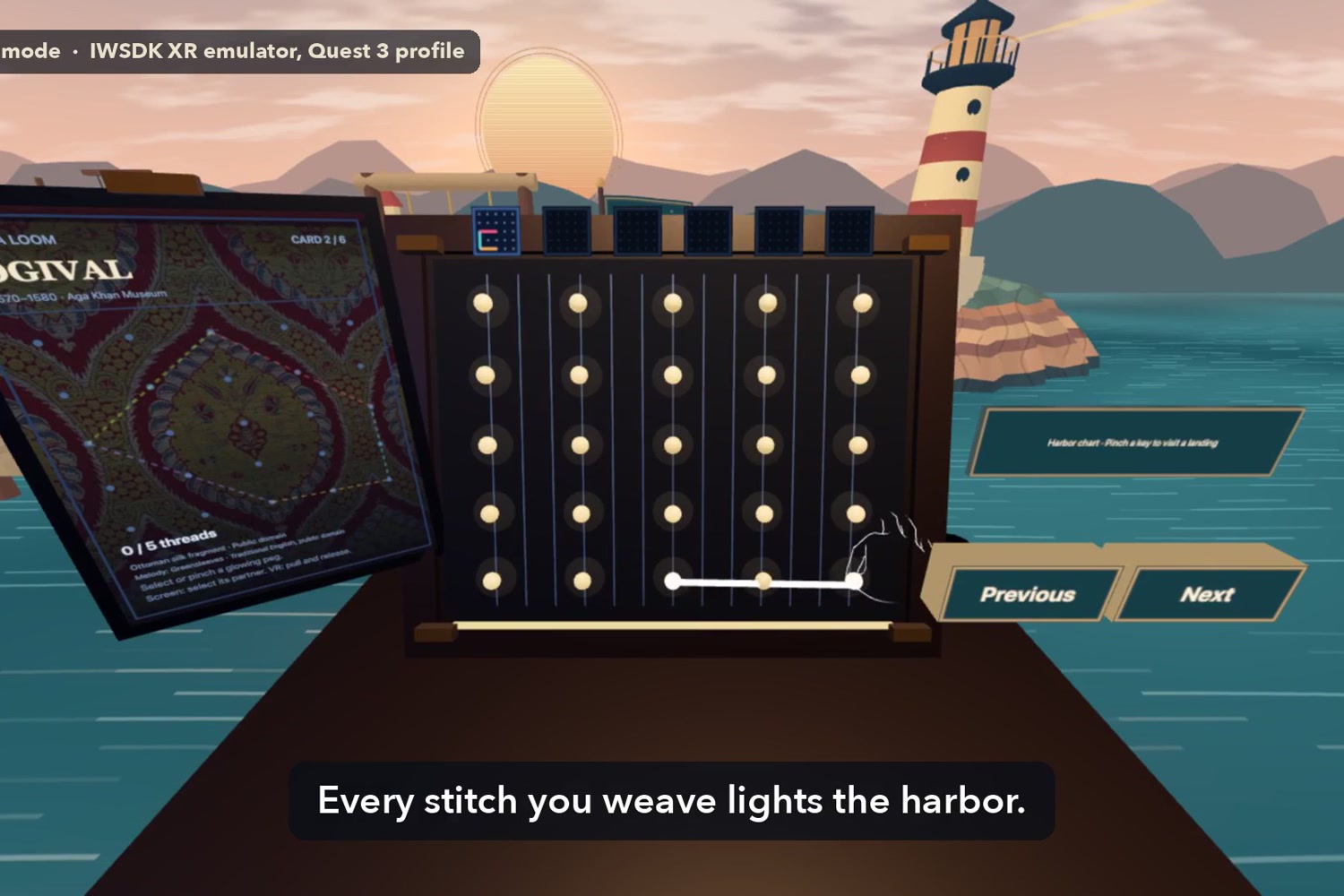
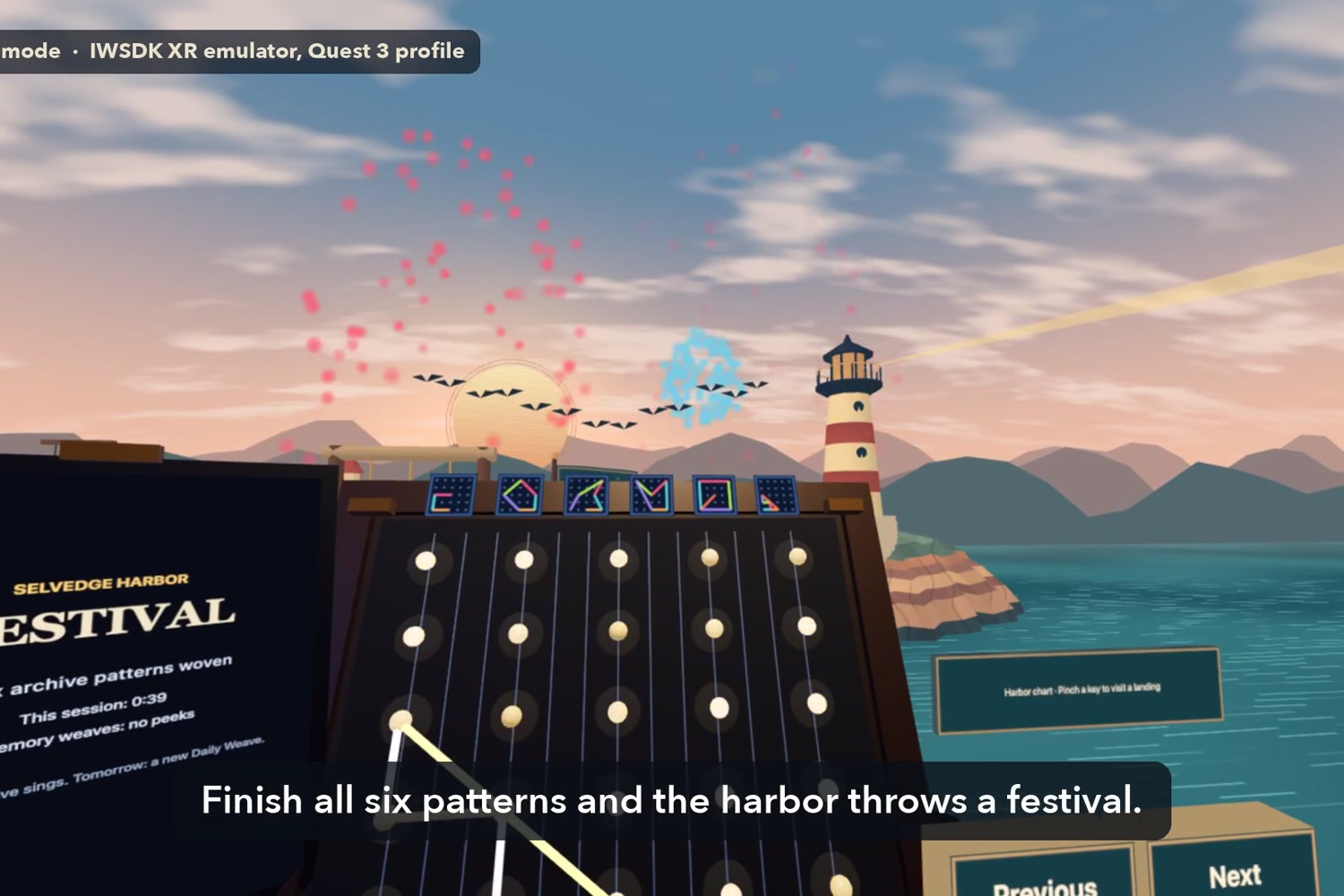
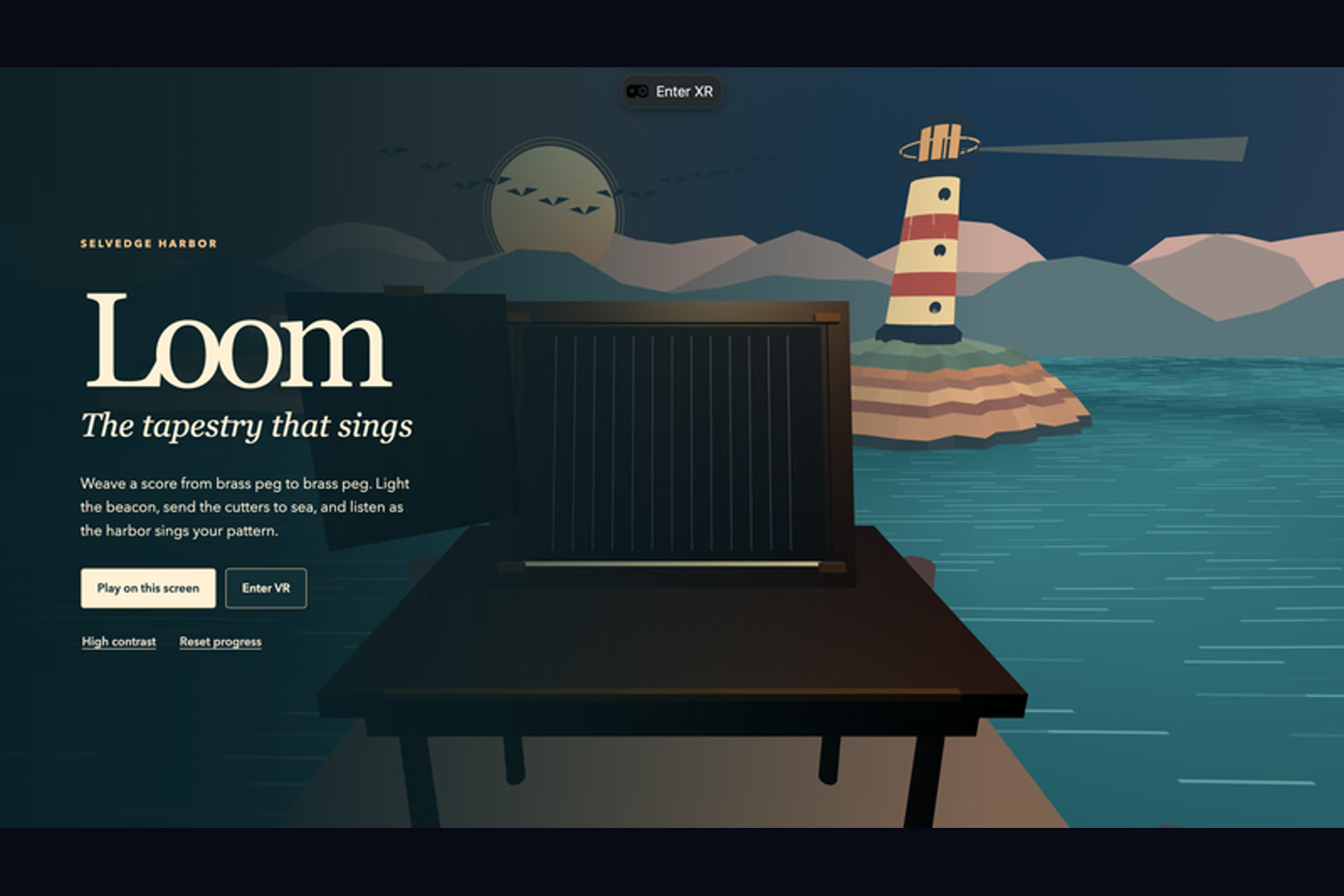
Loom: The Tapestry That Sings is a seated, hands-only musical weaving game set on the quay of Selvedge Harbor. A walnut loom waits in front of you, strung with 25 brass pegs. Pinch a peg, pull a glowing thread to another peg, and let go: the thread snaps into place, stays woven into the board, and plays a note. Six pattern cards are drawn from real textile archives - a Coptic fragment, Ottoman silk, a Japanese kimono sleeve, Italian bizarre silk, an American whole-cloth quilt and an Andean striped textile. Each card carries its source, date, institution, public-domain status and a public-domain melody: Ode to Joy, Greensleeves, Sakura Sakura, La Folia, Amazing Grace and an Andean pentatonic tune. The tapestry is the score; the loom is the instrument.
The harbor answers what you weave. The first correct stitch lights the lighthouse beacon and the village windows. The second sends the pilot cutters under sail. Finishing the pattern calls the terns home while the full melody plays. On screen, an optional walk from the table to Signal Point lets you inspect the woven signal flag, replay your latest archive melody, play a tide-pool phrase that a listening-post horn answers, dye your flag, and take a rubbing that appears in a conservation cabinet beside the six credited museum photographs.
The interaction is deliberately reduced to one verb. There are no in-headset menus, no controllers and no locomotion. You pinch, you pull, you release. The fingertip is authoritative: whichever peg is nearest your pinch is the one that lights up. The board is seated-optimized: the loom sits inside a two-foot reach, tilted toward the player. Each card takes one to two minutes, and the six-card archive fits inside ten minutes. Completed patterns stay saved on the device. After the archive, a Daily Weave offers one new date-seeded pattern each day, then Free Weave opens the board as a quiet toy.
The stage is procedural: table, pegs, warp, harbor, lighthouse, cutters, terns and shader water are generated from primitives at runtime; the only downloaded assets are six public-domain textile photographs. Audio is synthesized with the Web Audio API. Accessibility: fully seated, either hand, high-contrast mode, assist that widens the peg target after missed releases, and a desktop mode so judges can play without a headset.
Inspiration: string art and hand looms crafts where the pleasure is the tension of a single thread. VR usually turns that into a menu; Loom keeps the physical gesture and lets the pattern become music and a working harbor. Future plans: more archive cards, passthrough so the loom sits on a real desk, two-player cooperative weaving, shareable tapestry snapshots. Target launch: Meta VR Store in 2027.
Built With
- iwsdk
- three.js
- typescript
- vite
- web-audio
- webxr

