Project Overview: Mending the Intergenerational Divide
Healing a community starts at its roots—our families. Today, there is a profound disconnect between younger generations (Millennials/Gen Z) and their grandparents. We are losing irreplaceable family histories, recipes, and life lessons simply because the digital platforms we use to communicate are not built for the elderly.
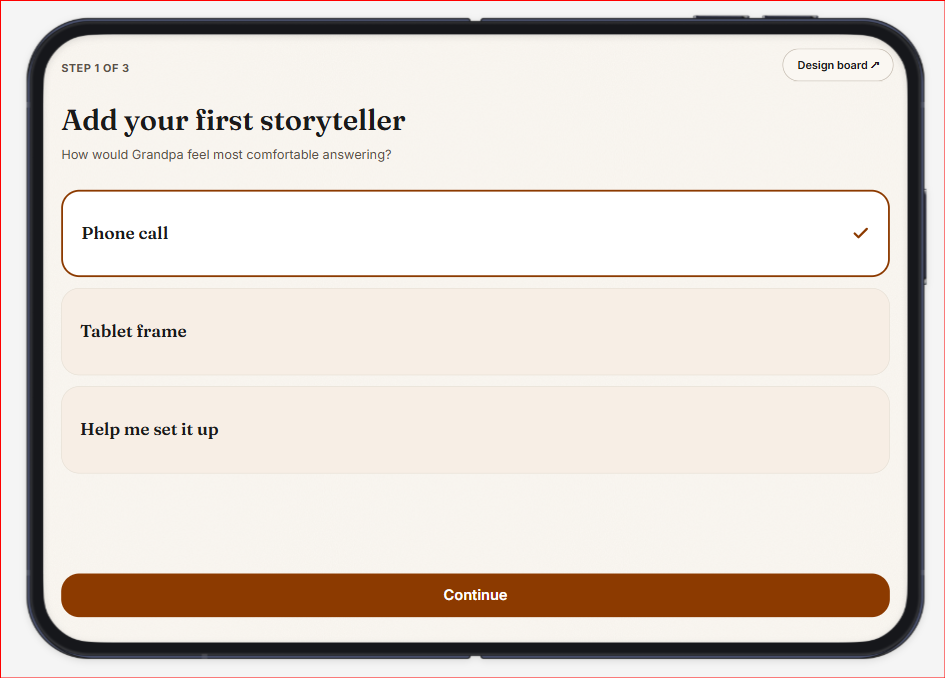
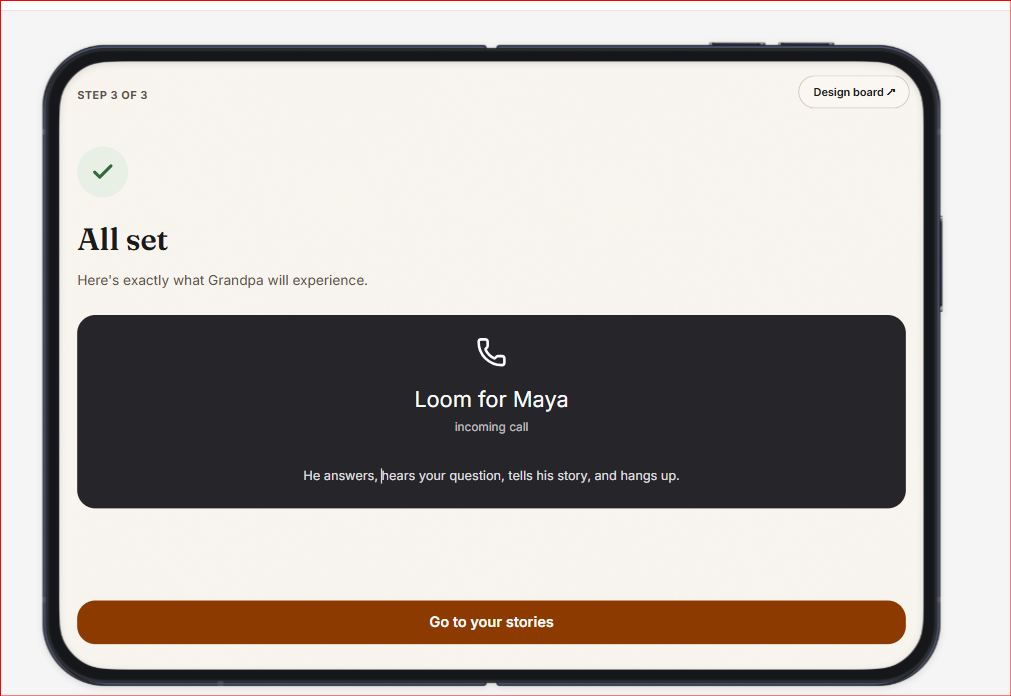
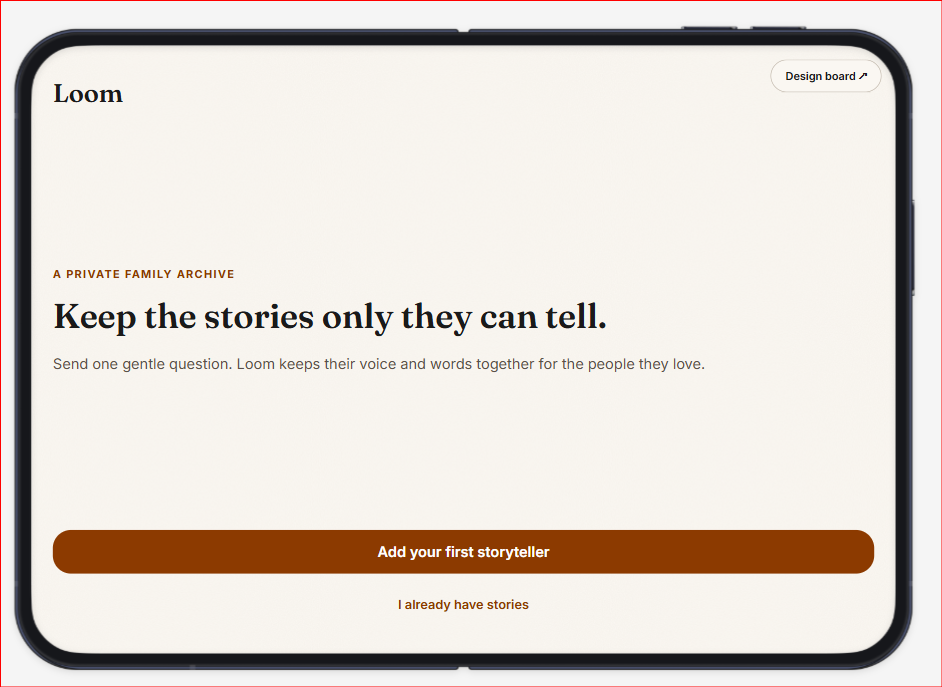
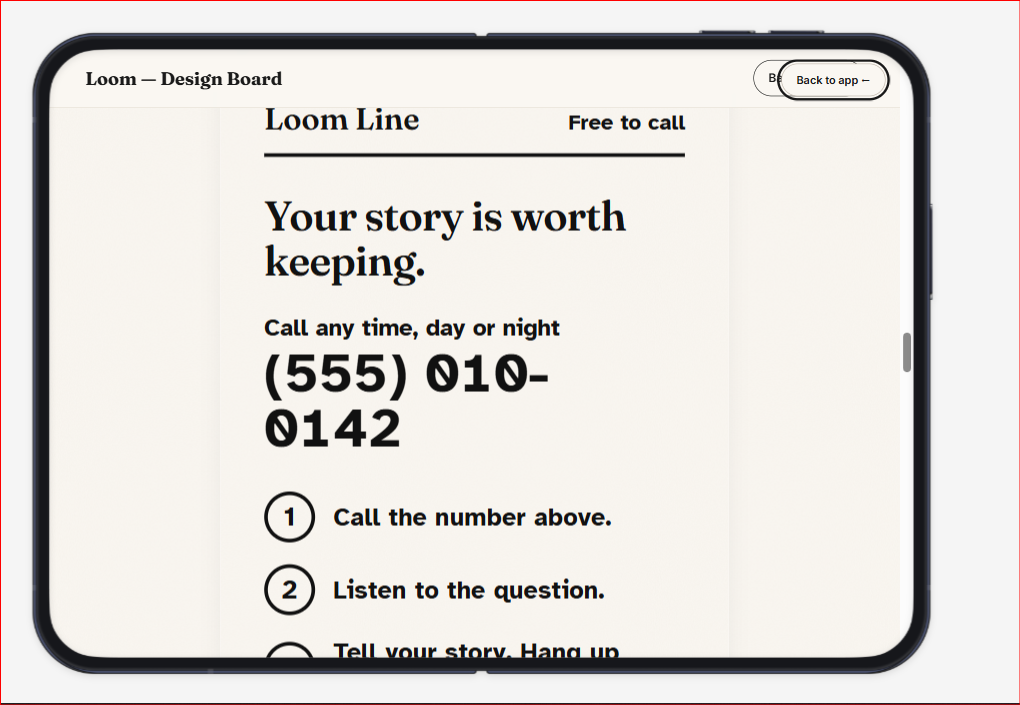
Loom is an asynchronous, voice-first storytelling application designed to mend this generational gap. By utilizing a unique dual-interface system, Loom bridges the digital divide, allowing grandparents to easily record their memories and younger generations to receive them as an engaging, digital scrapbook.
Research and Insights
Our UX research uncovered a stark reality: physical isolation among the elderly is an epidemic. However, standard "solutions" like FaceTime or WhatsApp fail because they introduce severe digital friction.
We identified three core pain points for elderly users:
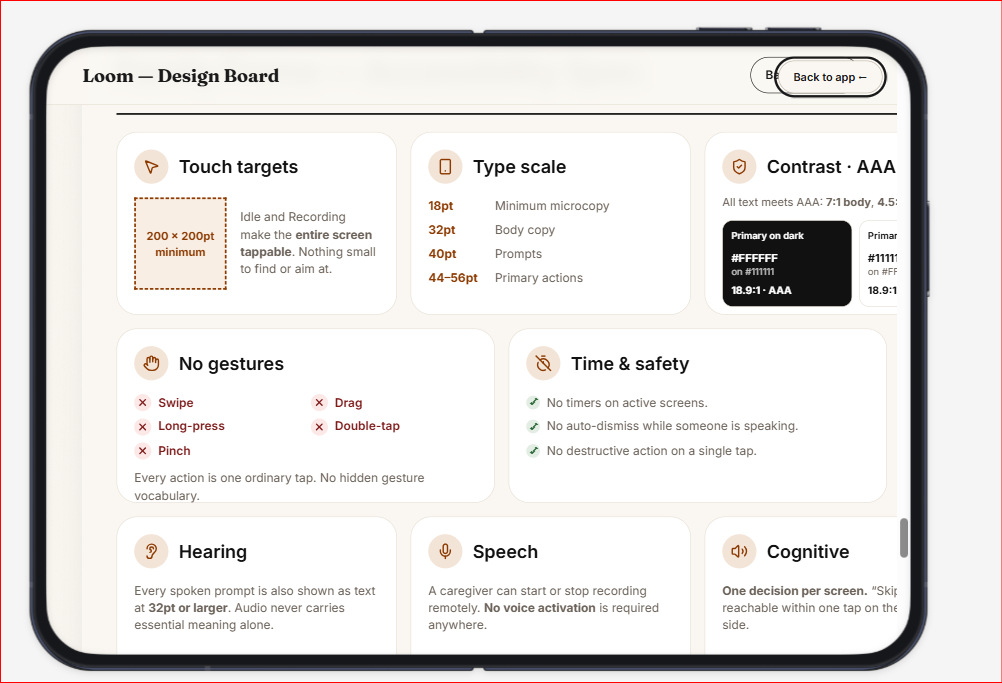
- Motor Degradation & Vision Loss: Standard 44x44 pixel tap targets and small typography are inaccessible to users with tremors or macular degeneration.
- Cognitive Overload: Complex navigation trees, hidden menus, and real-time communication pressures cause anxiety.
- The "Empty Page" Syndrome: When asked to "tell a story," many seniors don't know where to start without a prompt.
For younger users, the friction is time: they want to connect but are overwhelmed by the synchronous demands of daily life. The insight was clear: to mend this relationship, communication had to be asynchronous, prompted, and hyper-accessible.
Initial Mockups
Our early sketches resembled a standard messaging app with slightly larger text. We assumed a familiar chat interface would be easiest. However, when we mapped the user journey against our elderly personas, we realized typing was a massive barrier. The cognitive load of navigating a keyboard, finding the send button, and reading a response was too high. The UI felt cold, transactional, and frustrating—the exact opposite of our goal to make the user feel safe and hopeful.
Iterations
Based on these insights, we pivoted entirely. We realized we couldn't force two vastly different demographics into one UI. We iterated into a Dual-Interface Architecture:
- Iteration 1 (Grandparent Mode): We removed all complex navigation. The screen became a single, edge-to-edge interactive surface. We shifted from text to voice. Colors were adjusted to high-contrast, warm hues (deep ochre and soft cream) to reduce glare while maintaining readability.
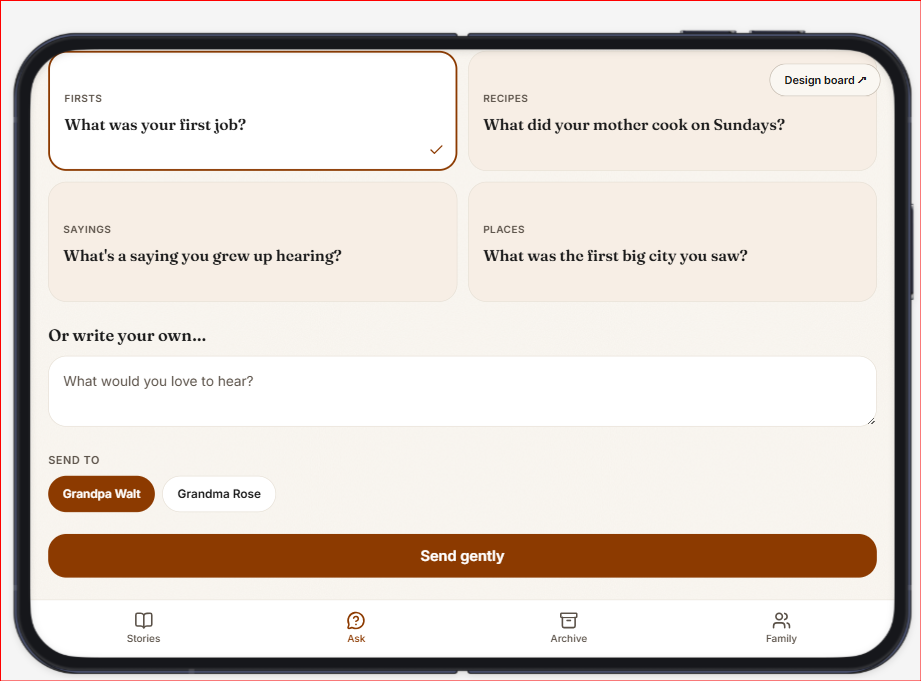
- Iteration 2 (Prompting): To solve the "empty page" syndrome, we introduced daily gentle prompts generated by the grandchild, such as, "Tell me about the day you met Grandma."
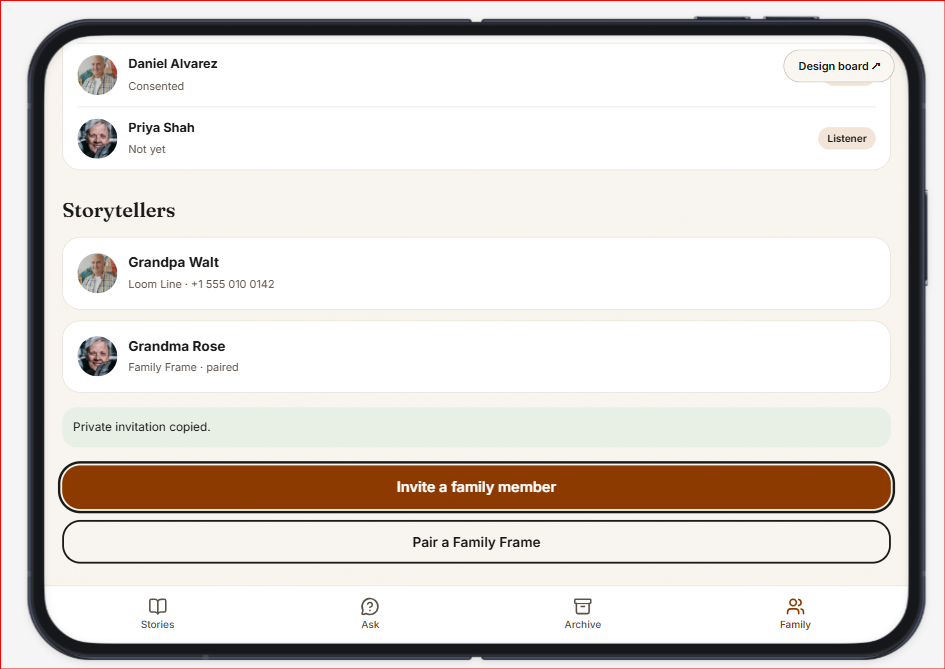
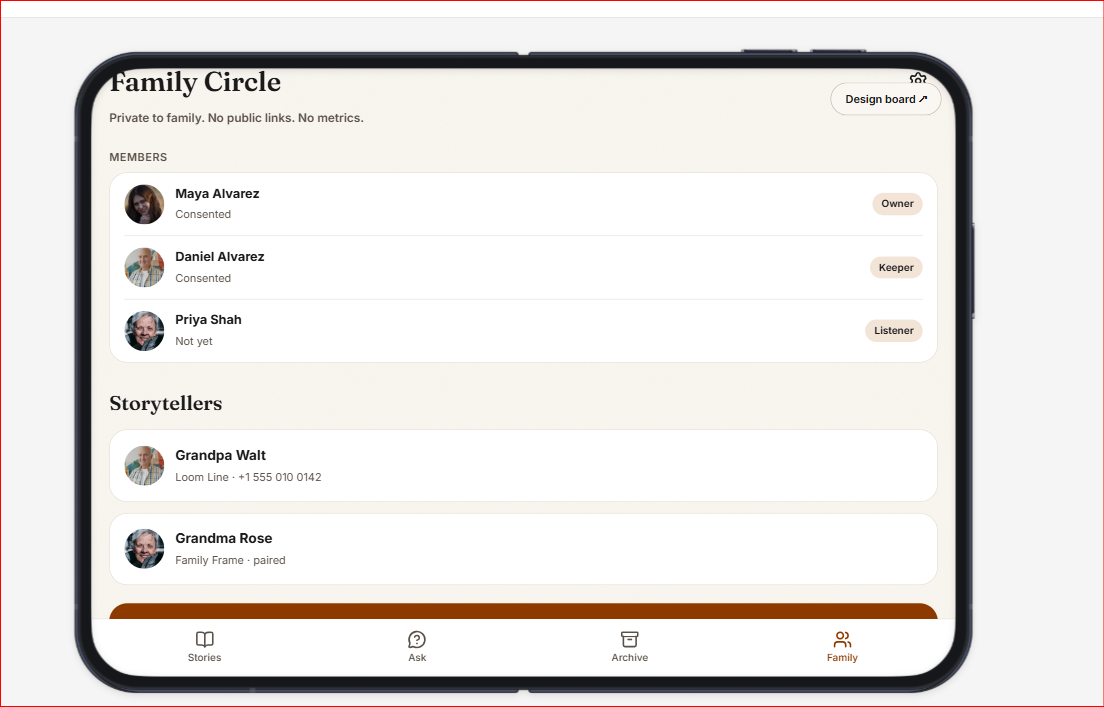
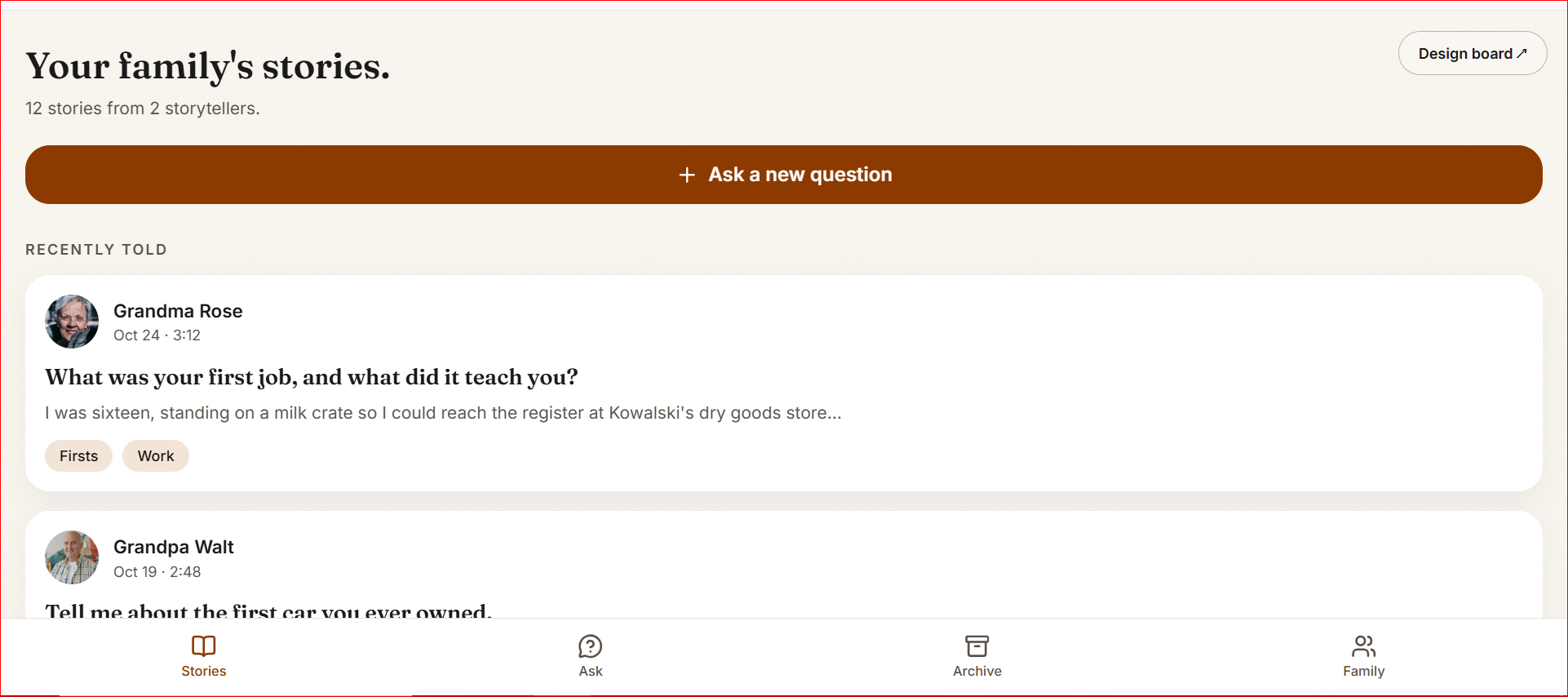
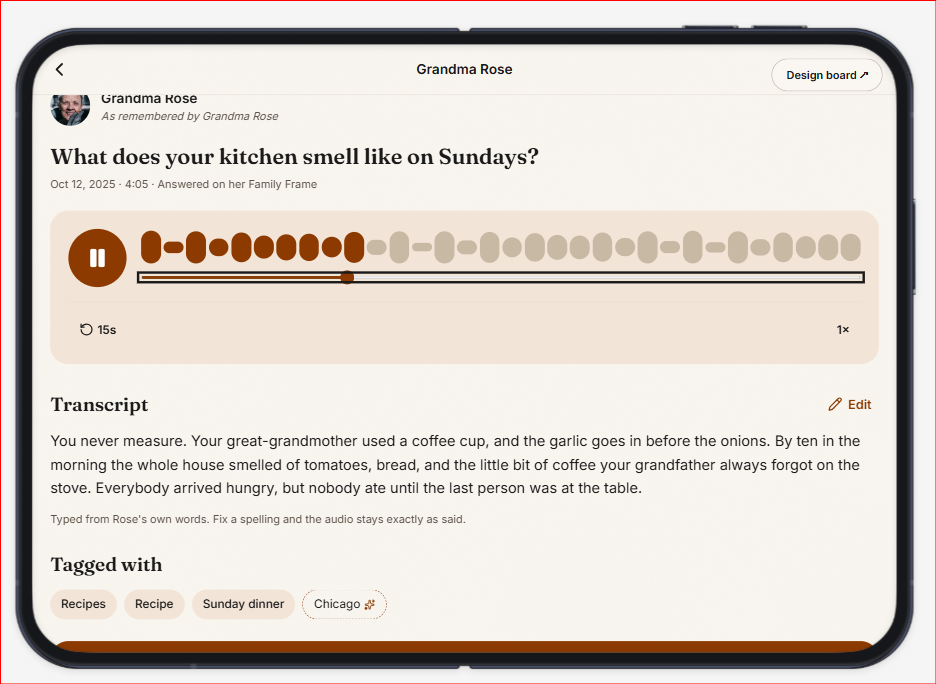
- Iteration 3 (Grandchild Mode): For the younger user, we designed the interface to feel like an intimate, private podcast feed. We added automatic transcription so grandchildren could read stories while commuting, and a feature to tag and archive stories to build a permanent family timeline.
Final Product
The final design of Loom offers two distinct but connected experiences that mend the family fabric.
The Grandparent Experience: When opened, the app simply displays the grandchild's smiling face and a daily prompt in massive, clear typography. The user simply taps anywhere on the screen to start recording their story, and taps again to send. It is entirely foolproof, safe, and comforting.
The Grandchild Experience: The younger user receives a beautifully packaged audio memory, complete with an auto-generated transcript and a "Mend" timeline that visualizes how many stories have been preserved. By removing the friction of synchronous calls and complex technology, Loom ensures that the cracks in our family histories are filled with gold.
Figma Link
https://truck-shop-13235391.figma.site
Citations & AI Use Documentation
- Visuals: All UI/UX visual designs, wireframes, and prototypes in the Figma file were created 100% manually, with no AI image generation used, in strict compliance with the hackathon rules.
- Text/Ideation: AI (LLM) was utilized strictly for structuring the project narrative, refining the copy in this process document, and simulating user research concepts.
Built With
- accessibility
- figma
- prototyping
- ui-design
- user-research
- ux-design
