-
-
thumbnail
-
screen 1
-
2
-
3
-
4
-
5
-
6
-
7
Inspiration
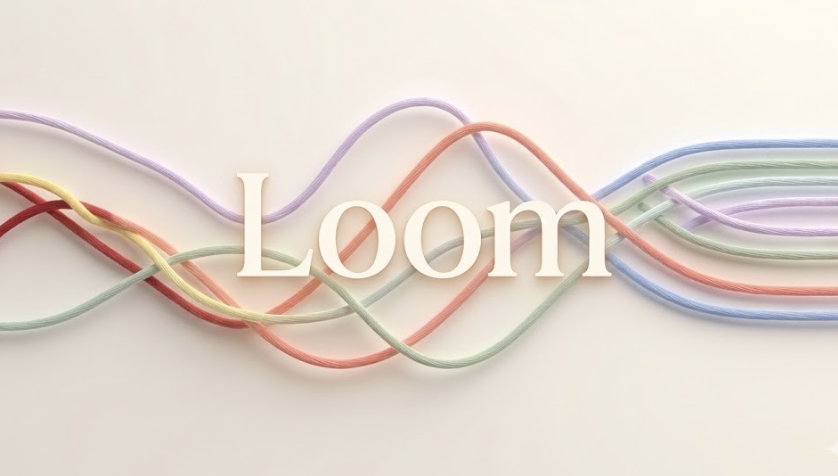
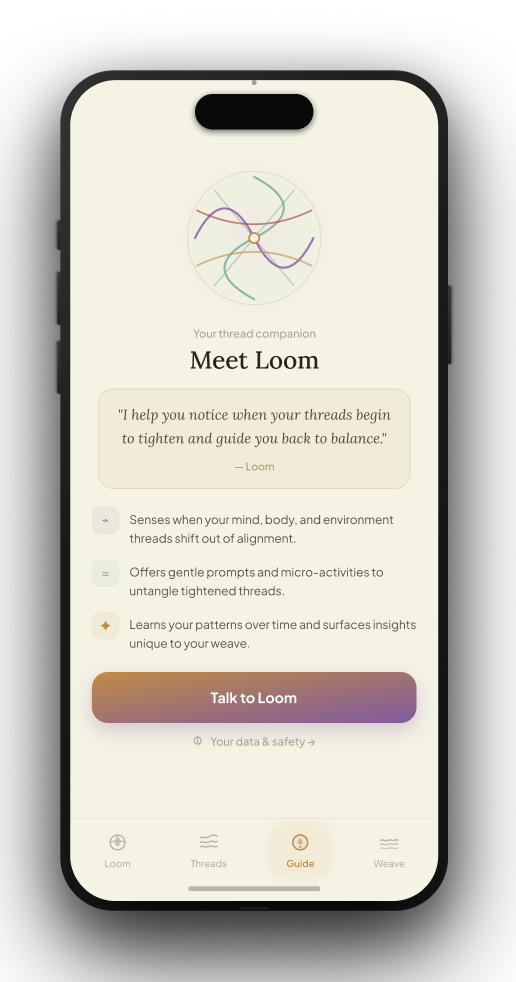
Modern environments constantly demand our attention through noise, light, crowded spaces, and social interactions. While our nervous system reacts instantly to these stimuli, we currently have no way to visualize when we are becoming overstimulated or mentally drained. This inspired us to imagine a tool that could make these invisible signals visible. Loom explores the idea that our mind, body, and environment interact like threads in a weave, shaping how we feel and function throughout the day.
What it does
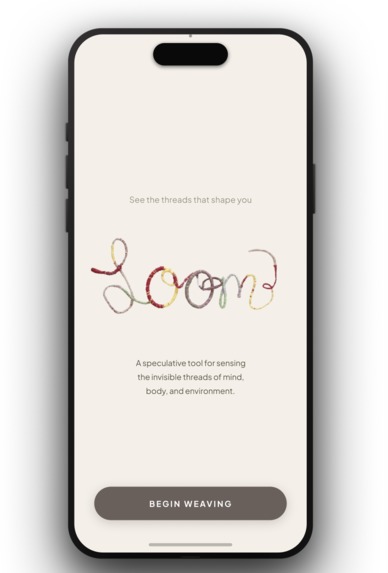
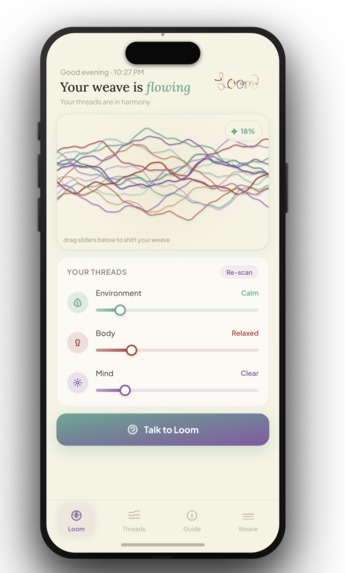
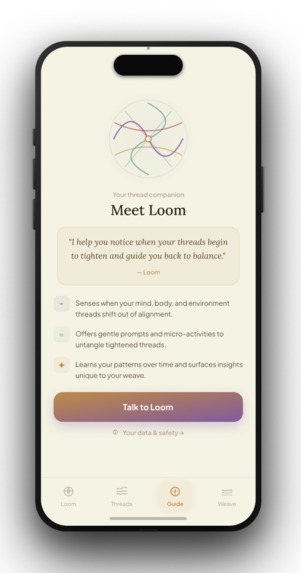
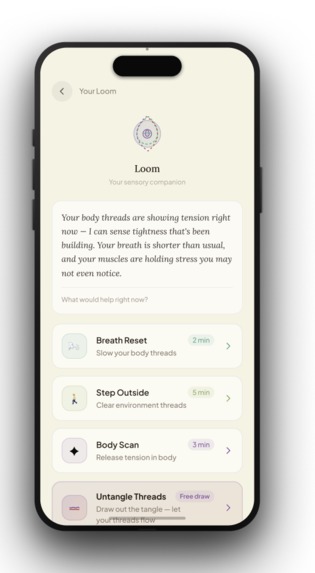
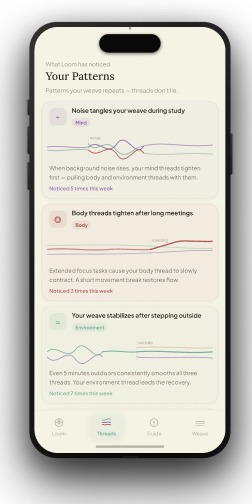
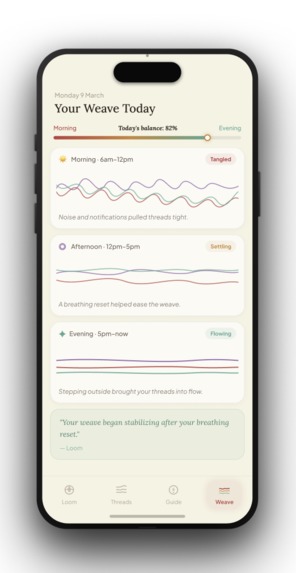
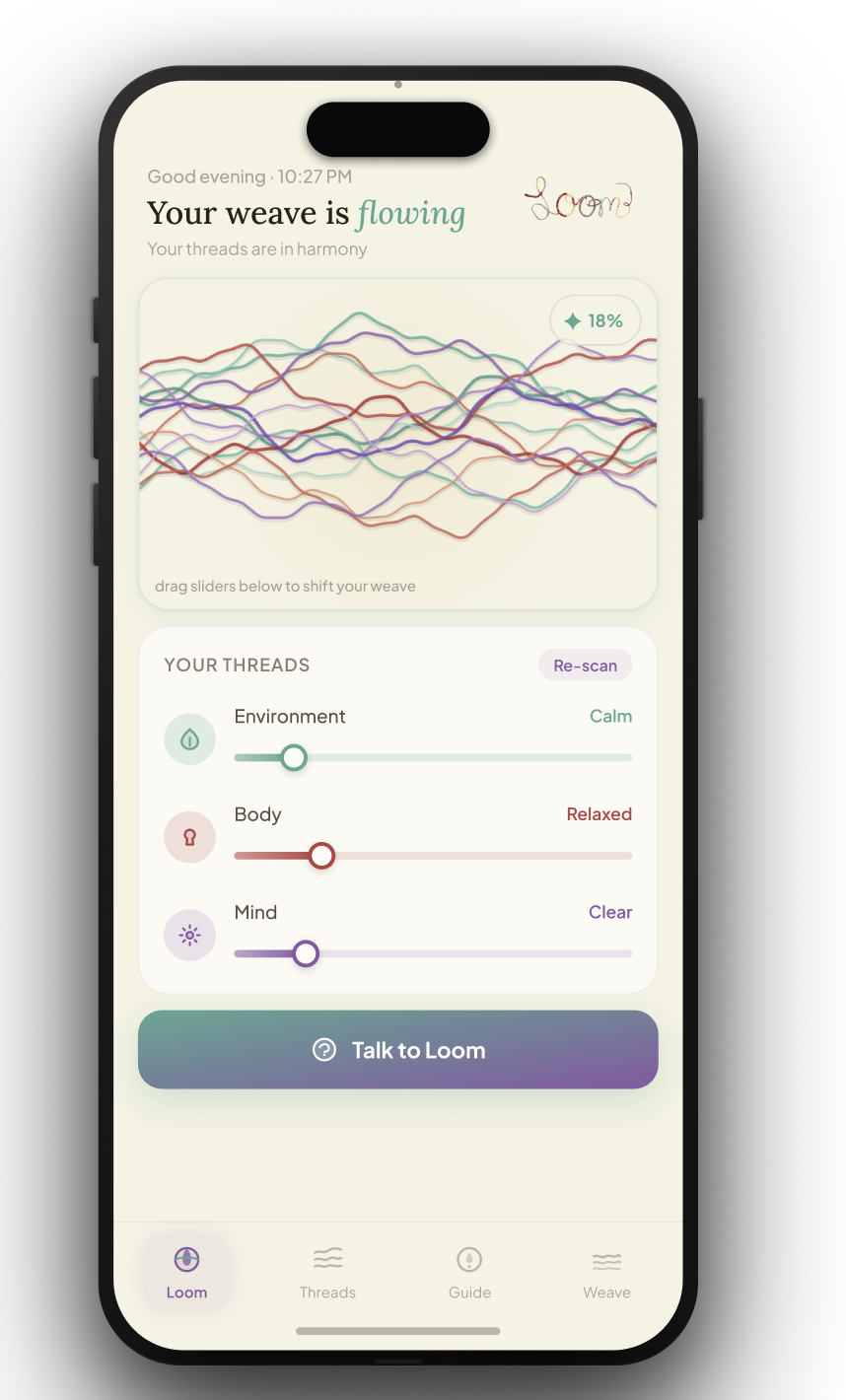
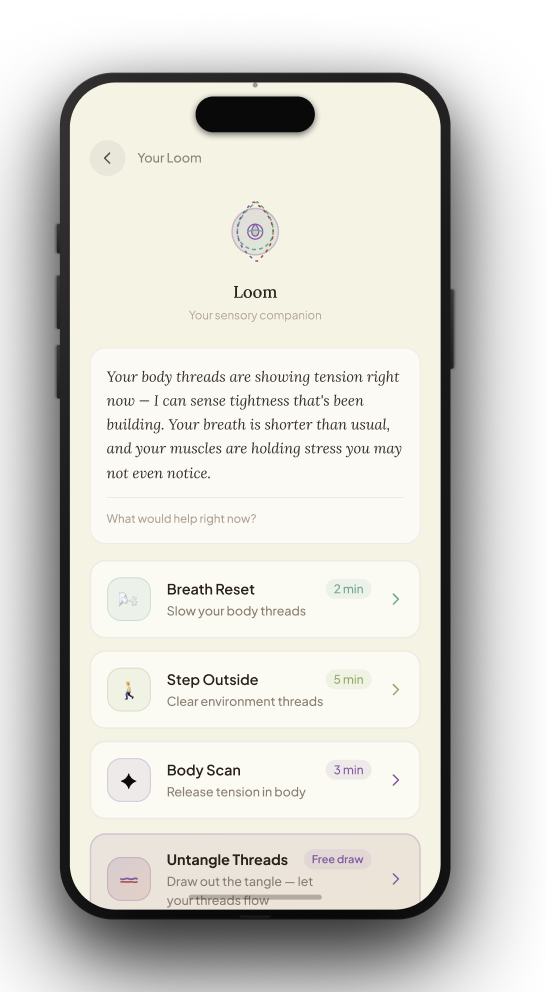
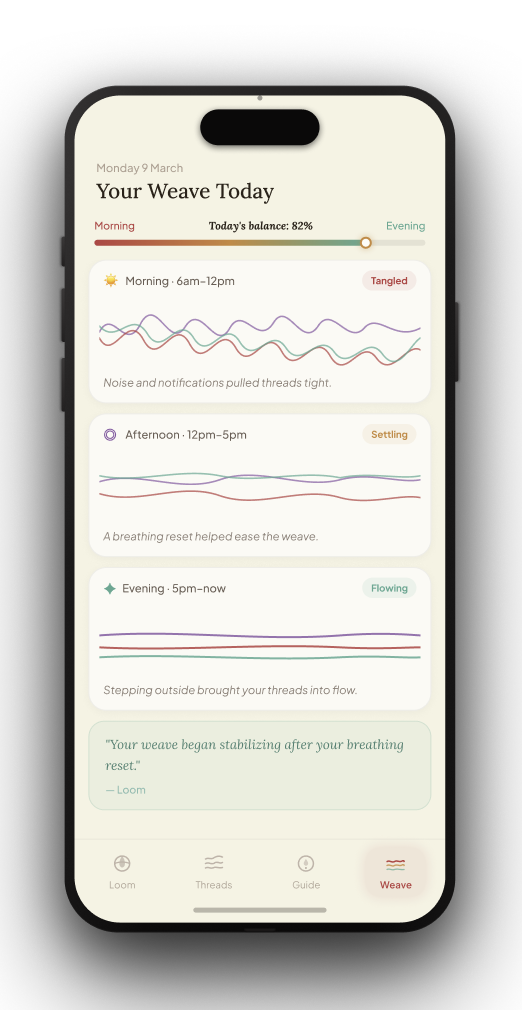
Loom is a speculative wellness tool that visualizes signals from the mind, body, and environment as dynamic threads. When a person experiences stress or sensory overload, these threads begin to tighten and tangle. Loom helps users recognize these patterns and guides them through simple activities—like breathing exercises, stepping outside, or body scans—to gradually untangle the threads and restore balance.
How we built it
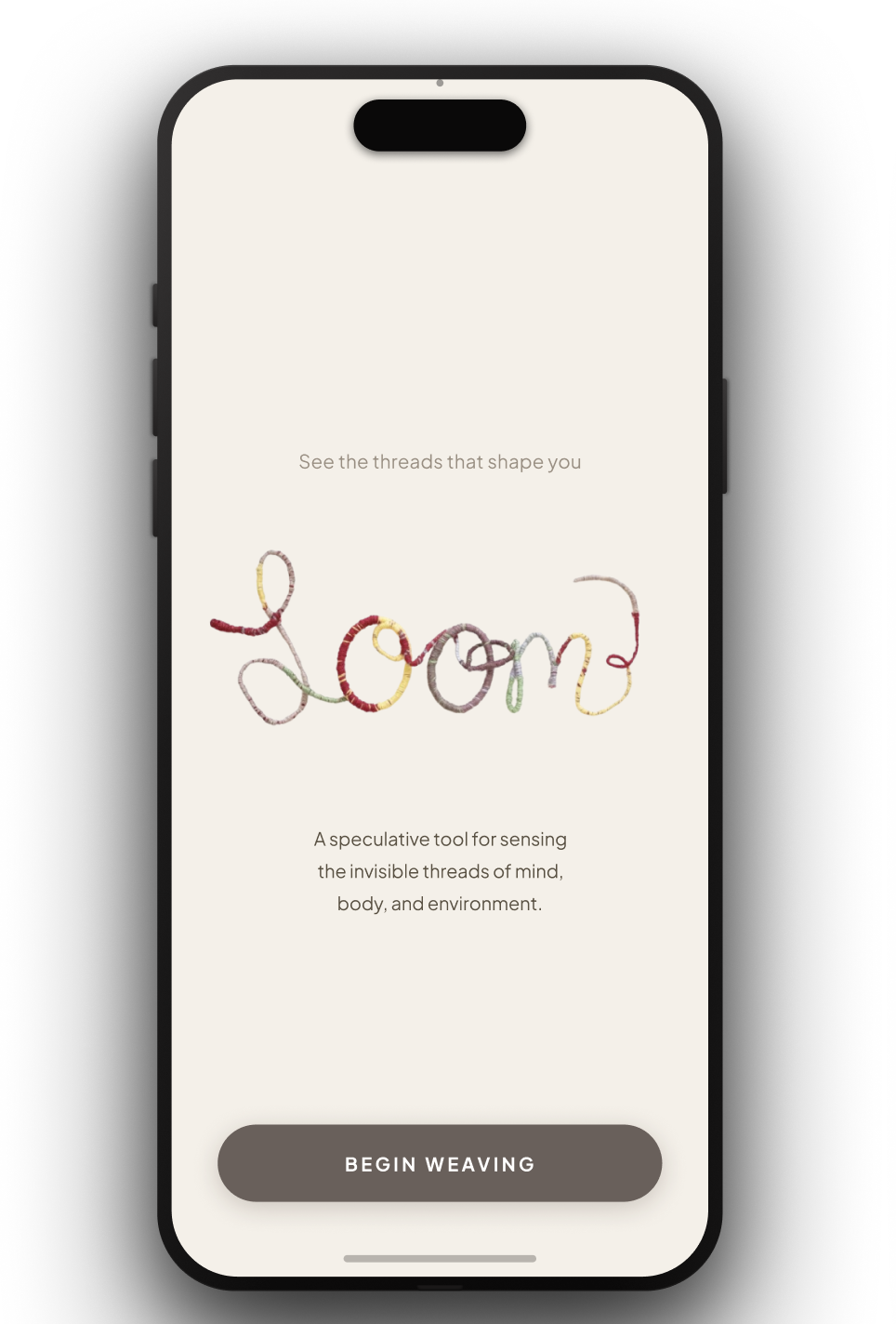
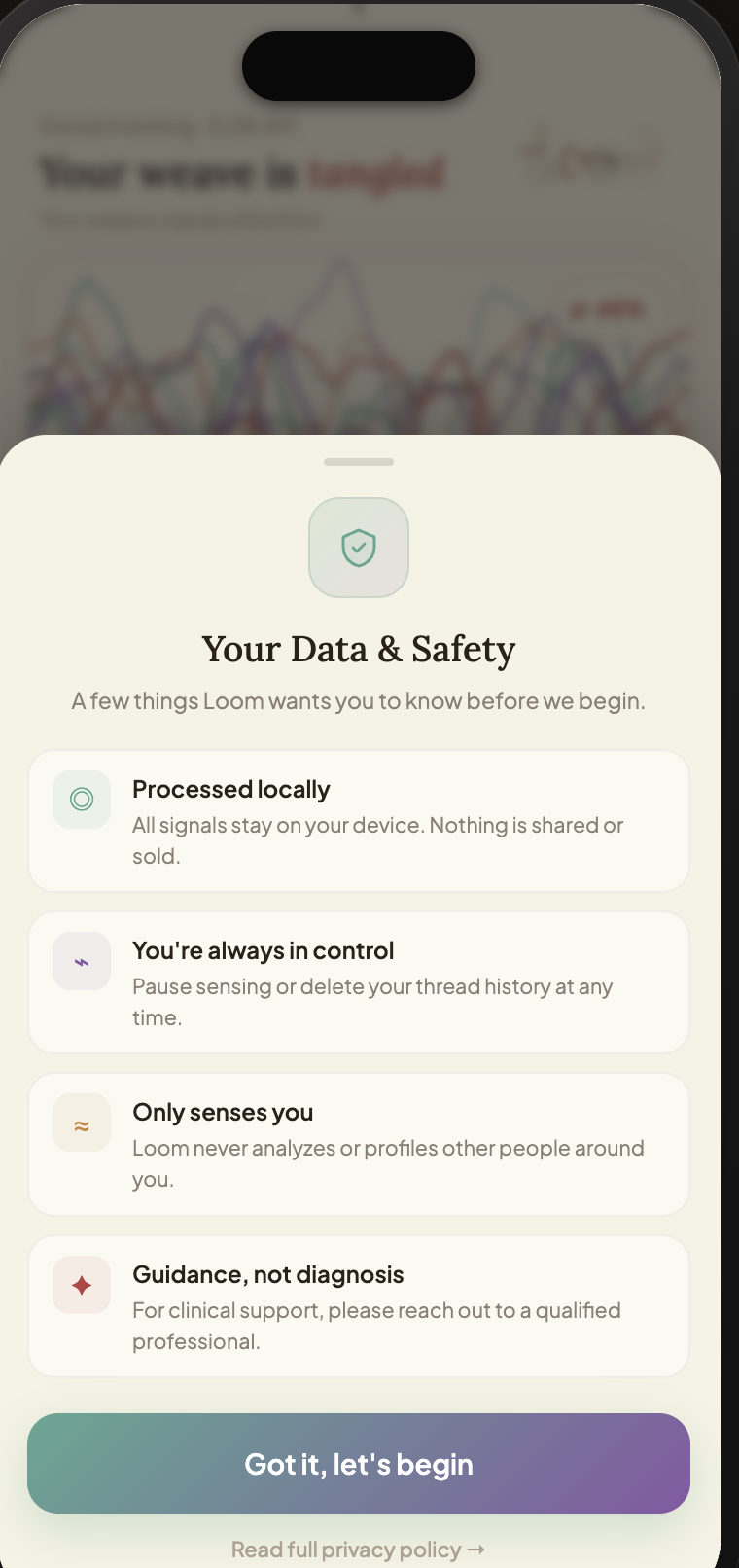
We built Loom as a design-driven prototype using research, ideation, and rapid prototyping. Our process included creating user personas, mapping user journeys, designing the information architecture, and building an interactive prototype in Figma. The interface focuses on a thread-based visualization instead of traditional charts or dashboards to make internal states easier to understand.
Challenges we ran into
One of the biggest challenges was translating an abstract concept—how the mind, body, and environment interact—into a clear visual system. We wanted to avoid typical health dashboards and instead design something intuitive and human-centered. Balancing simplicity with meaningful feedback required several iterations of the thread visualization and interaction flow.
Accomplishments that we're proud of
We are proud of turning a complex and invisible experience into a visual system that feels intuitive and engaging. The Loom concept allowed us to explore speculative design while still addressing a real problem: sensory overload and mental fatigue. Creating a cohesive product story—from research to prototype—was a major accomplishment within the limited time of the hackathon.
What we learned
Through this project, we learned how powerful visual metaphors can be in communicating complex human experiences. Designing Loom showed us that interactions and motion can sometimes convey information more effectively than numbers or graphs. We also learned the importance of storytelling and collaboration when building a product concept under tight time constraints.
What's next for Loom
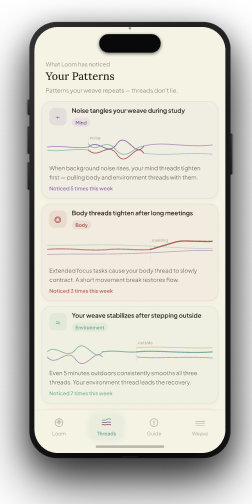
In the future, Loom could evolve into a fully functional system that integrates real-time environmental and physiological sensing. This would allow the tool to detect patterns more accurately and provide personalized guidance throughout the day. We also see potential for Loom to expand into collaborative environments where groups can better understand shared sensory dynamics.
Built With
- figjam
- figma
- figmake
- localstorage
- react
- tailwindcss
- typescript
- vite


Log in or sign up for Devpost to join the conversation.