-
-
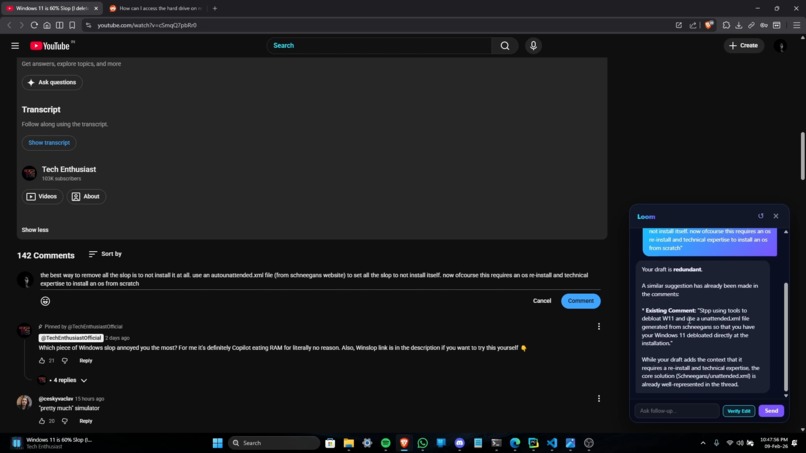
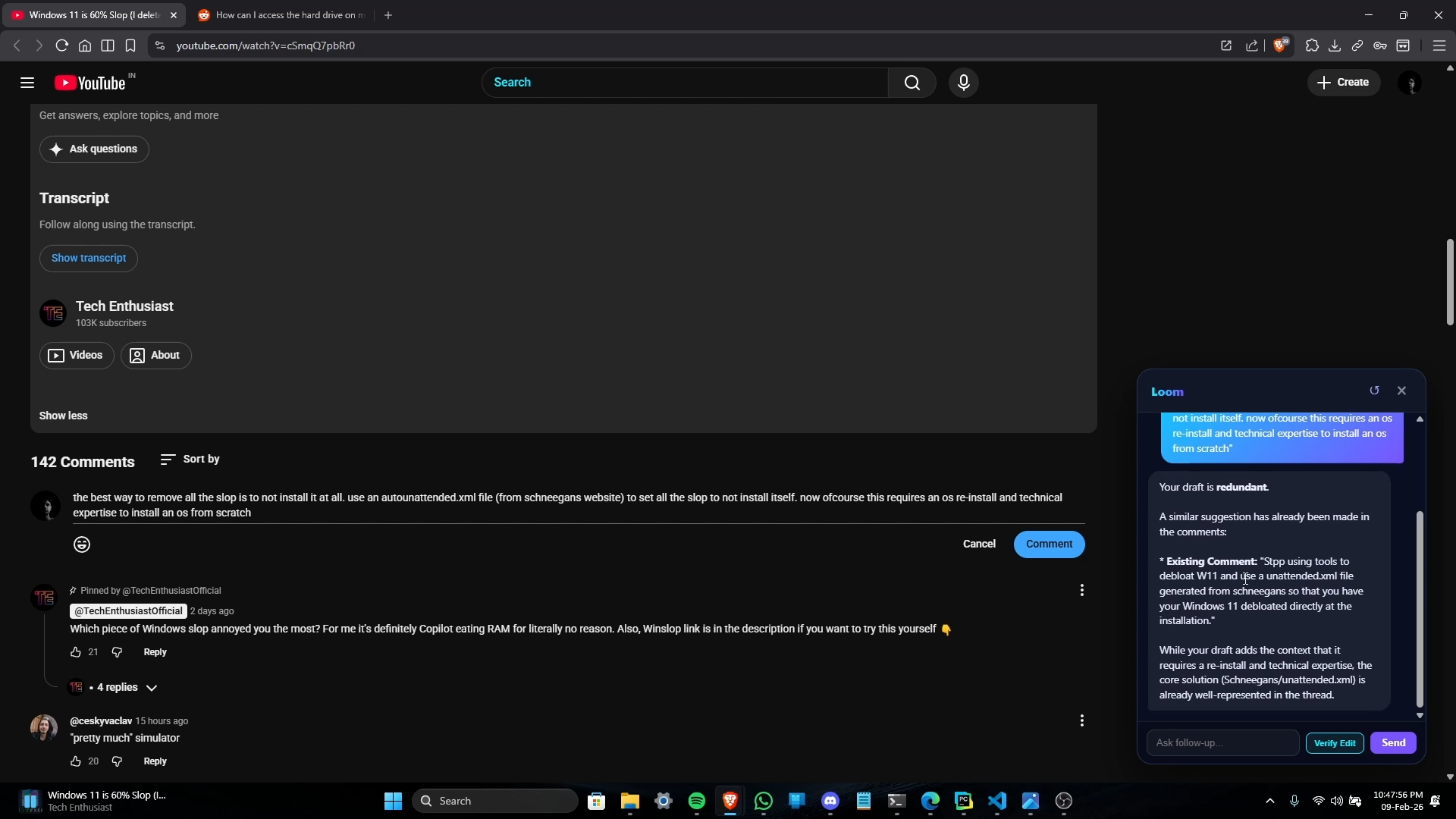
Analyzing the draft with Loom
-
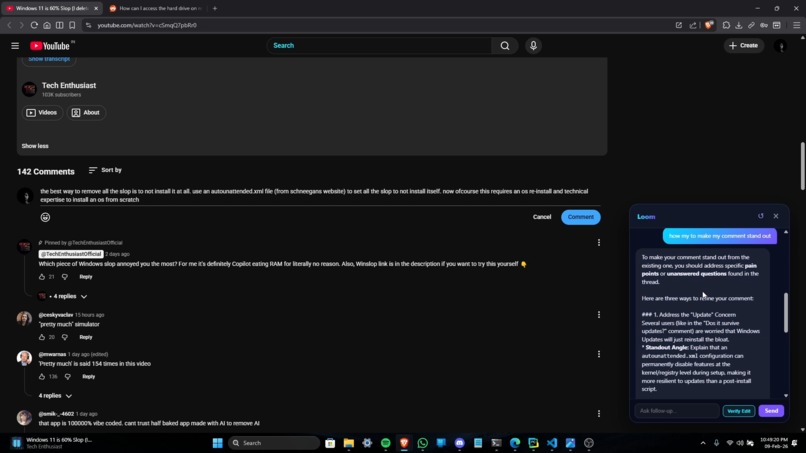
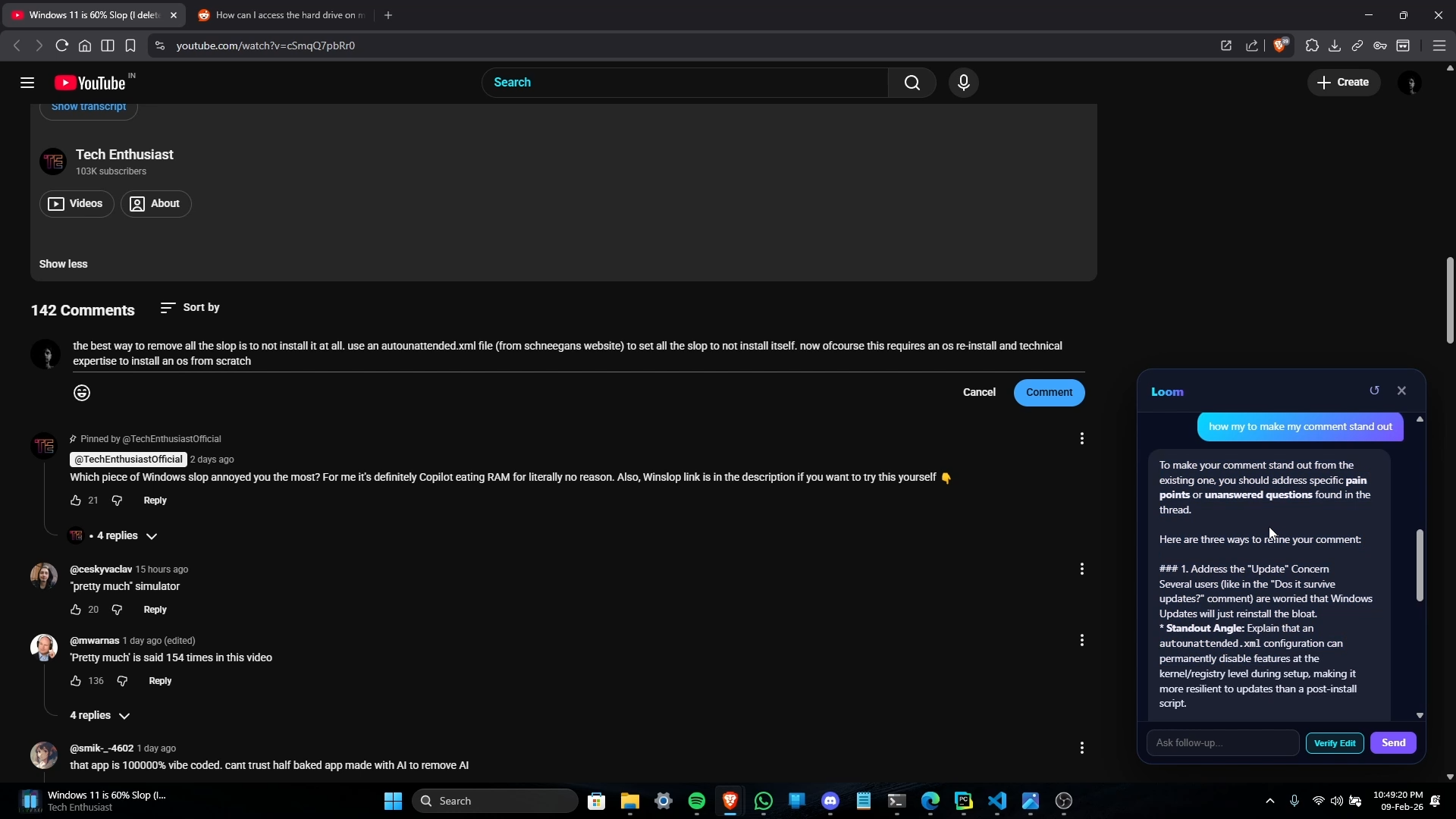
Asking Loom how to make the comment stand out if it is redundant
Inspiration
The inspiration for Loom came from the chaotic reality of high-volume technical subreddits and YouTube threads. We’ve all been there: a user asks for help with a broken laptop or a software bug, and you know exactly how to fix it. You start typing out a detailed, 5-step solution, only to realize after hitting 'post' that someone else suggested the exact same thing ten minutes ago.
When a thread has hundreds of comments, it's impossible to manually read every single one to check for redundancy. I wanted to build a tool that respects the user's time and the creator's space. By alerting users to existing answers before they post, Loom keeps threads cleaner and ensures that every new comment actually adds unique value to the conversation.
What it does
Loom is a context-aware browser extension that acts as a "pre-flight check" for digital discourse. It monitors your typing in real-time on YouTube and Reddit. When you're ready, it uses Gemini 3 to cross-reference your draft against the top level of the entire comment section and the specific page metadata (like video descriptions or post bodies).
It doesn't just check for keywords; it understands intent. If your question is already answered, Loom tells you where. If your point is unique, it helps you refine your language to be more impactful.
How we built it
Loom is built on a modern, high-performance stack:
- AI Core: Google Gemini 3 Flash Preview, utilizing the 'Medium' thinking level for deep semantic analysis.
- Backend: A FastAPI (Python) server that handles real-time data scraping from the YouTube Data API v3 and Reddit's JSON endpoints.
- Frontend: A JavaScript-based Chrome Extension (Manifest V3) with a glassmorphism UI injected directly into the browser DOM.
- Connectivity: Tunneling via ngrok to bridge the local backend with the live extension.
Challenges we ran into
One of the biggest hurdles was managing state in Single Page Applications (SPAs). YouTube and Reddit don't always trigger a "hard reload" when you navigate between posts, which initially caused Loom to get "stuck" on previous video contexts. We overcame this by implementing a robust URL observer and state-reset logic. Additionally, handling the varied structures of Reddit's nested JSON and YouTube's comment threads required a highly flexible parsing engine in the backend.
Accomplishments that we're proud of
We are particularly proud of Loom’s "Contextual Awareness." It doesn't just look at comments; it "reads" the video description and the original Reddit post. This means if you're about to ask a question that the creator already answered in the description, Loom will catch it, saving everyone's time.
What we learned
Building Loom taught us a lot about the nuances of LLM grounding. We learned that providing the AI with clear "System Instructions" regarding the thread context is just as important as the raw data itself. We also gained deep experience in DOM manipulation and creating non-intrusive, helpful UI/UX within existing social media platforms.
What's next for Loom
The roadmap for Loom includes:
- Support for more platforms: Expanding to Stack Overflow, GitHub Discussions, and X (Twitter).
- Proactive Refinement: A "one-click edit" feature that automatically replaces your draft with an AI-refined version.
- Community Context: Identifying "Top Contributors" within a thread to help users find the most reliable answers even faster.

Log in or sign up for Devpost to join the conversation.