-
-
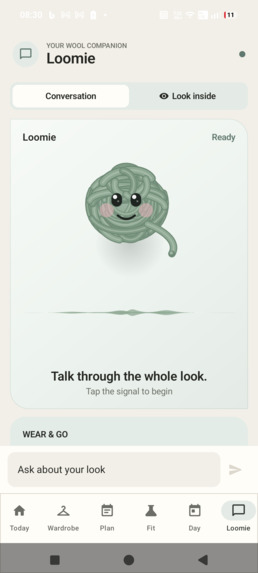
Loomie Voice Agent
-
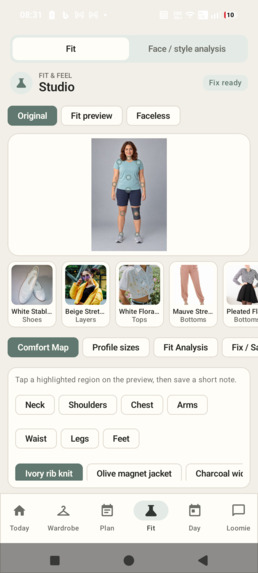
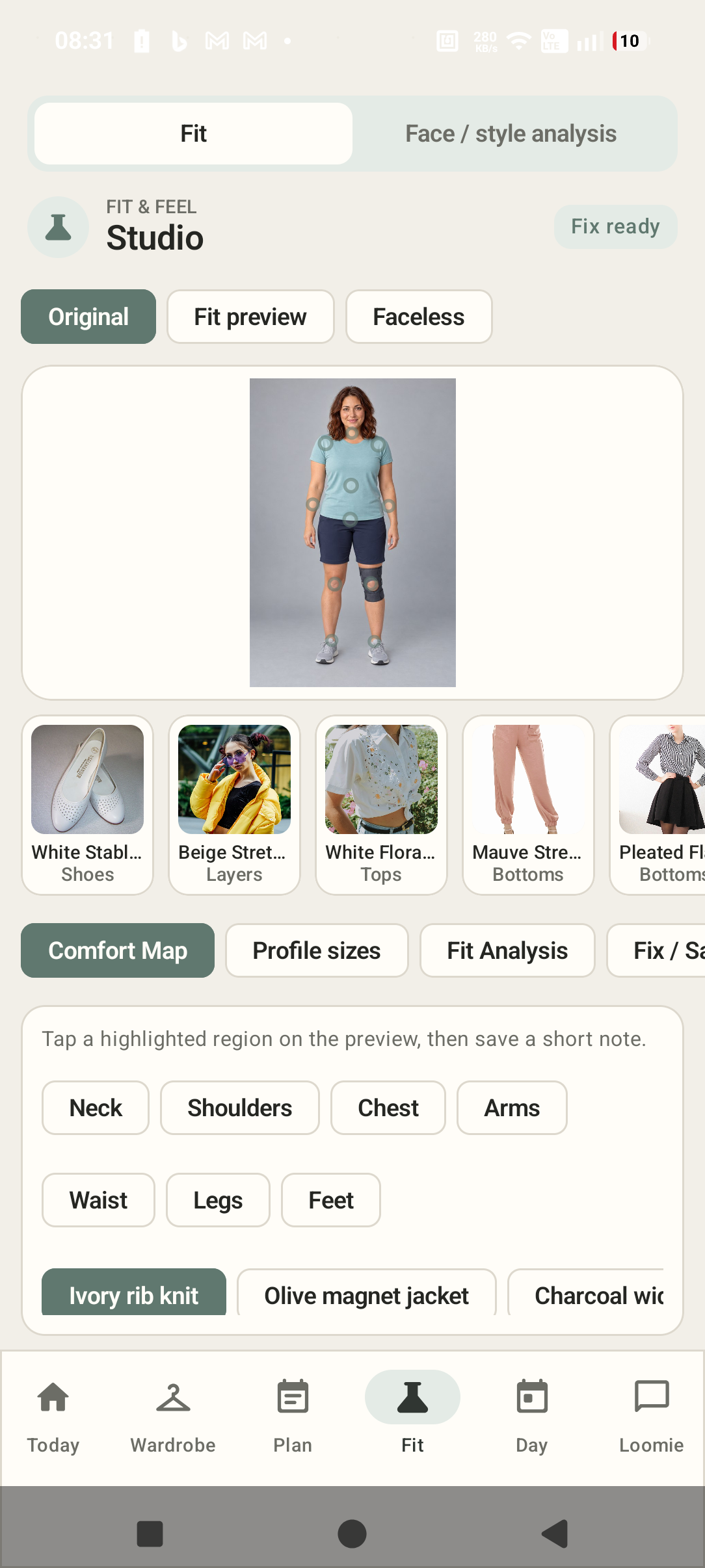
FIT Studio
-
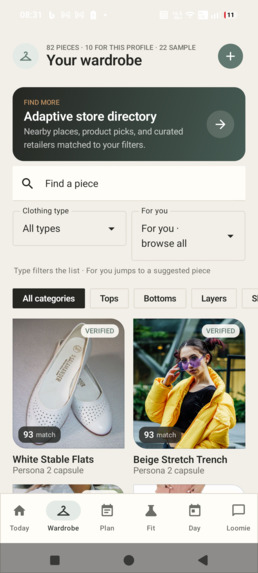
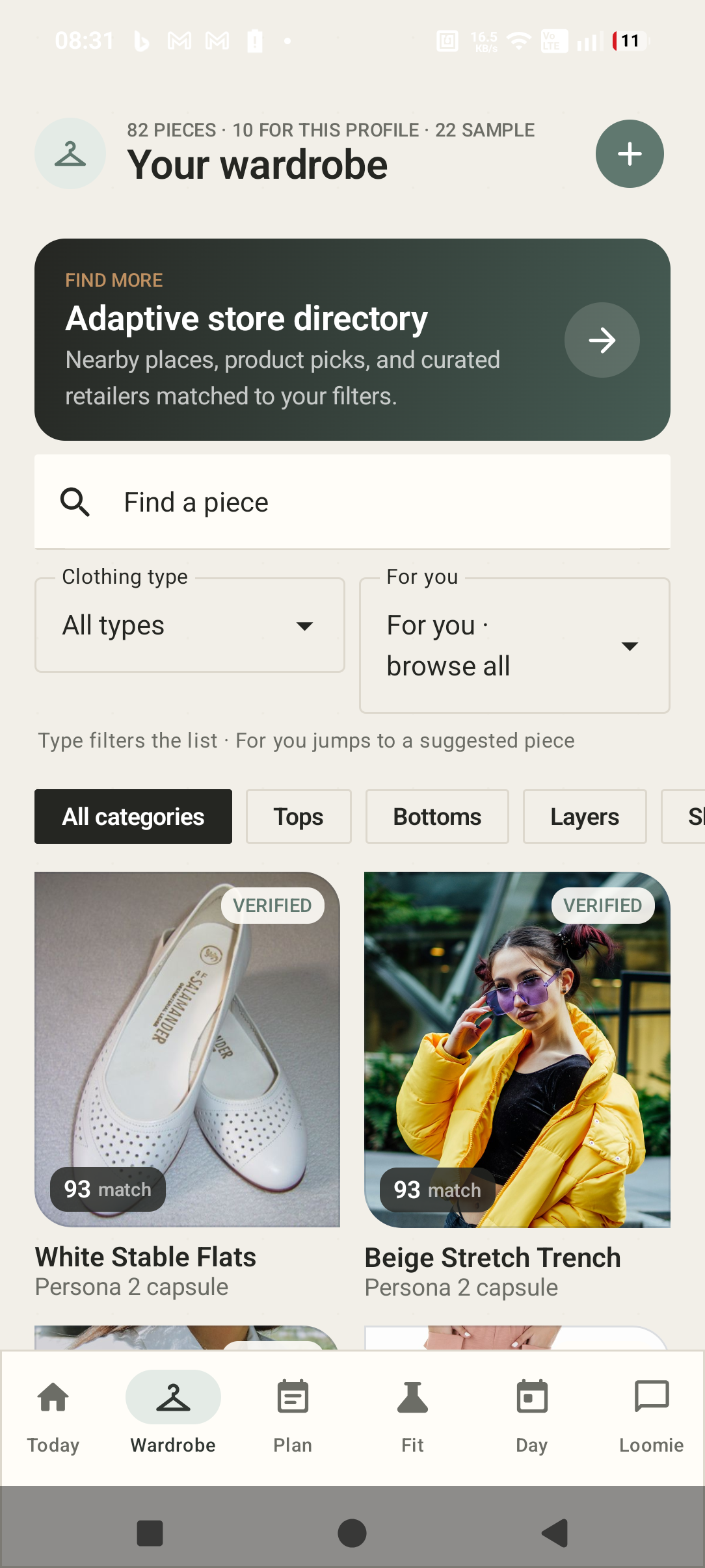
Wardrobe Section
-
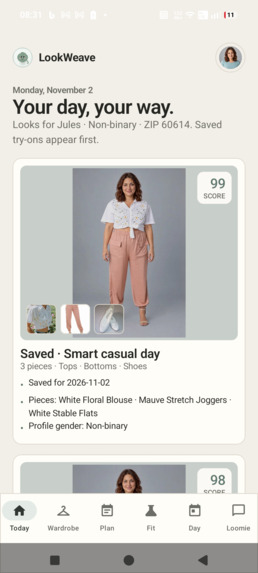
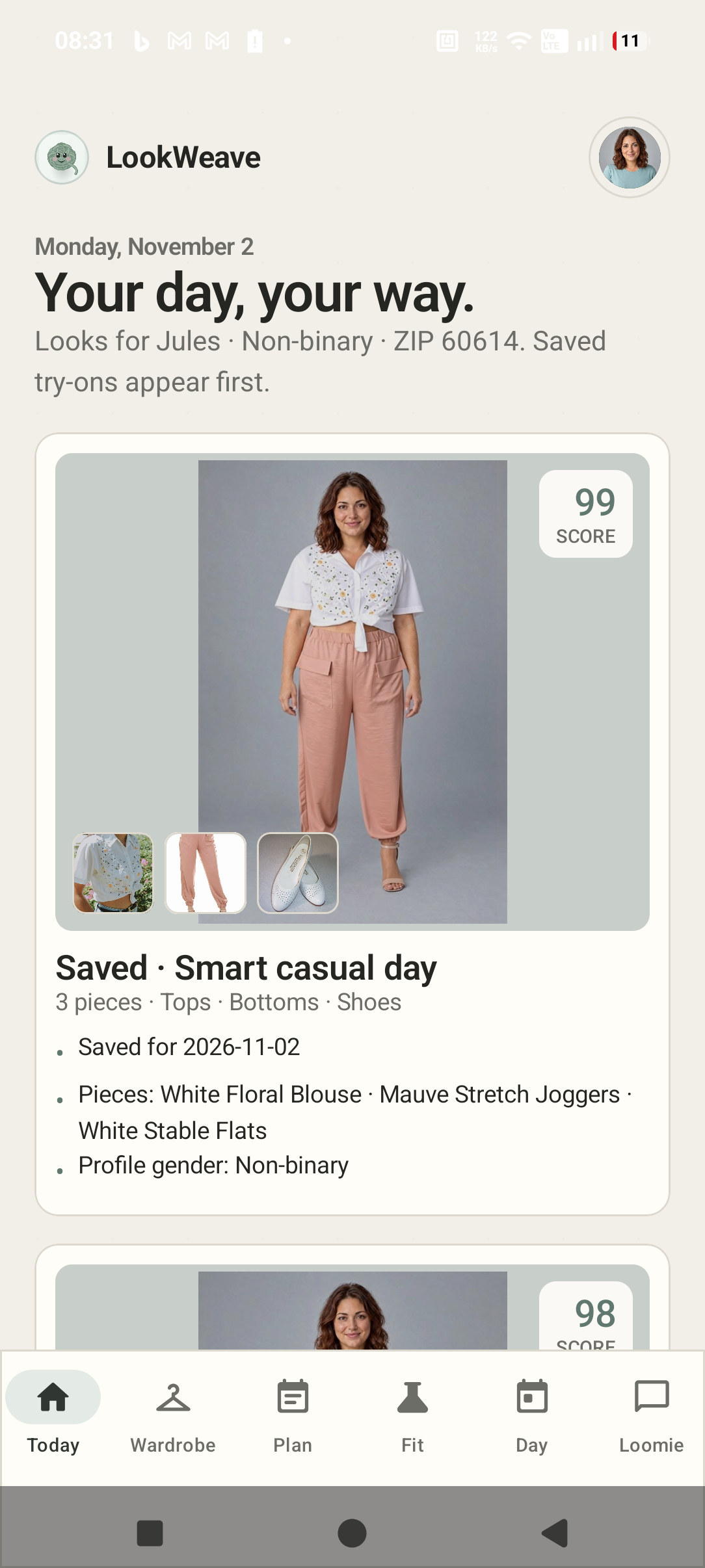
Daily Outfit Combinations
-
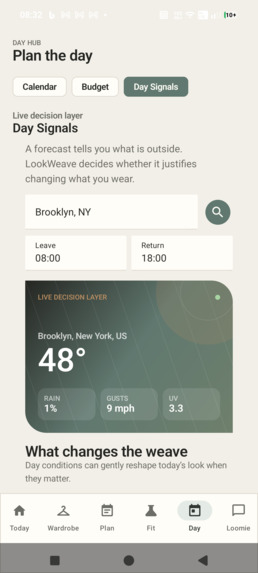
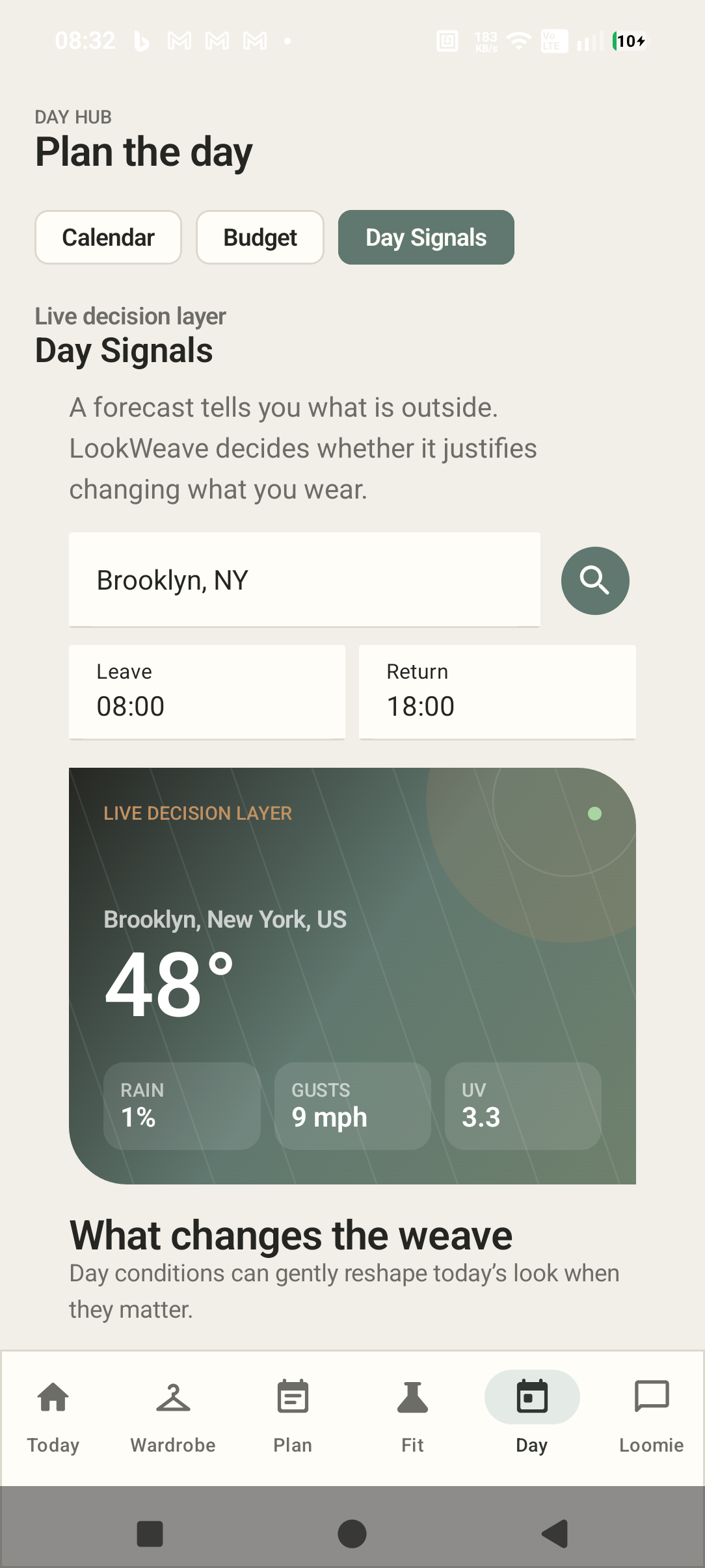
Day Signals
-
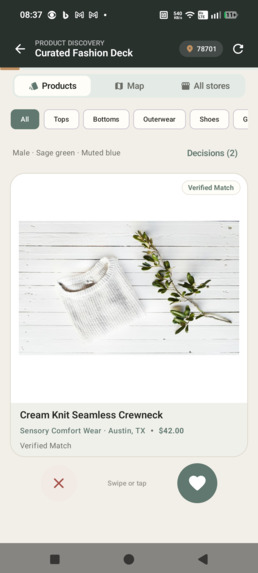
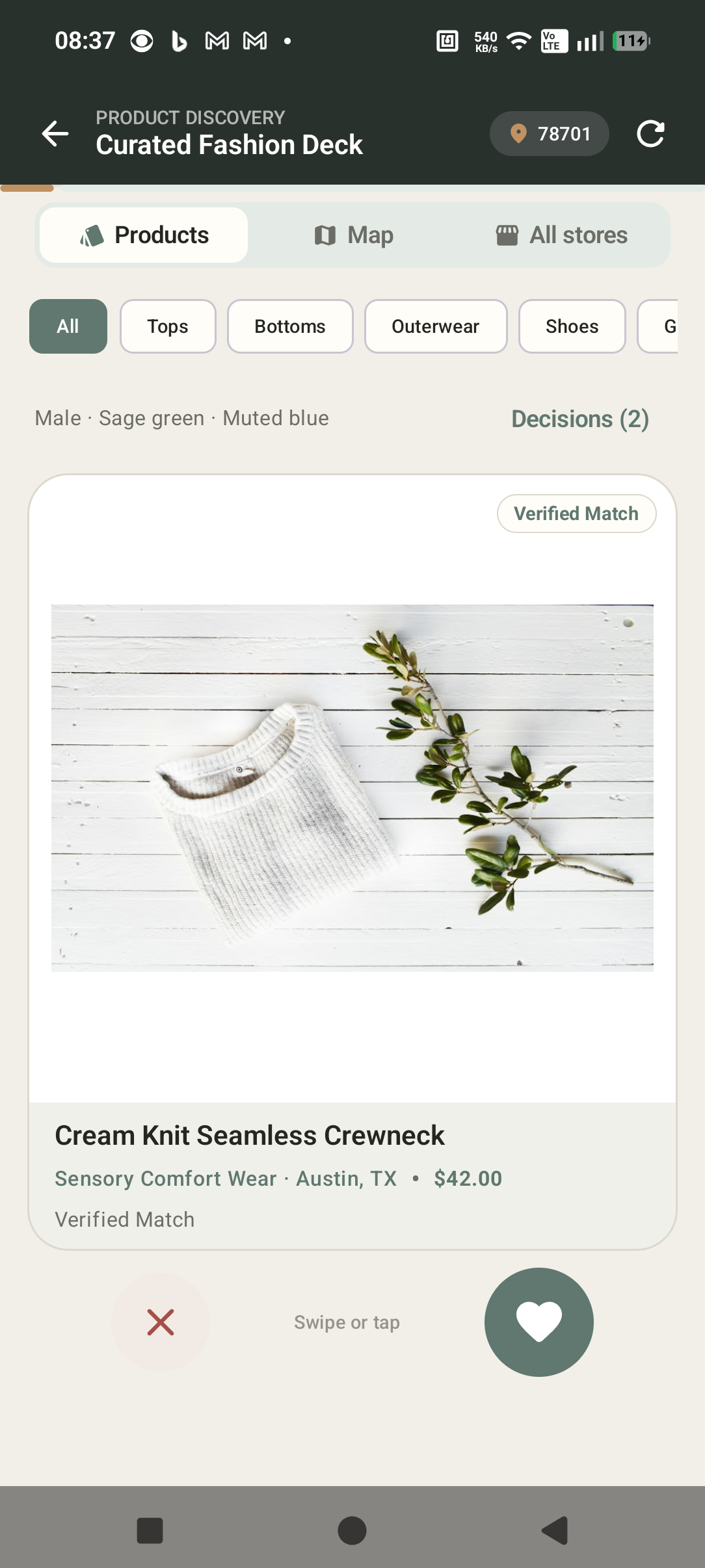
Shopping Tinder Interface for Agent learning
-
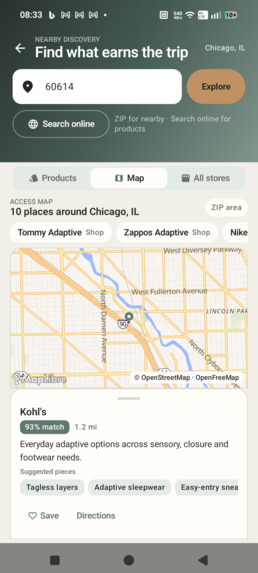
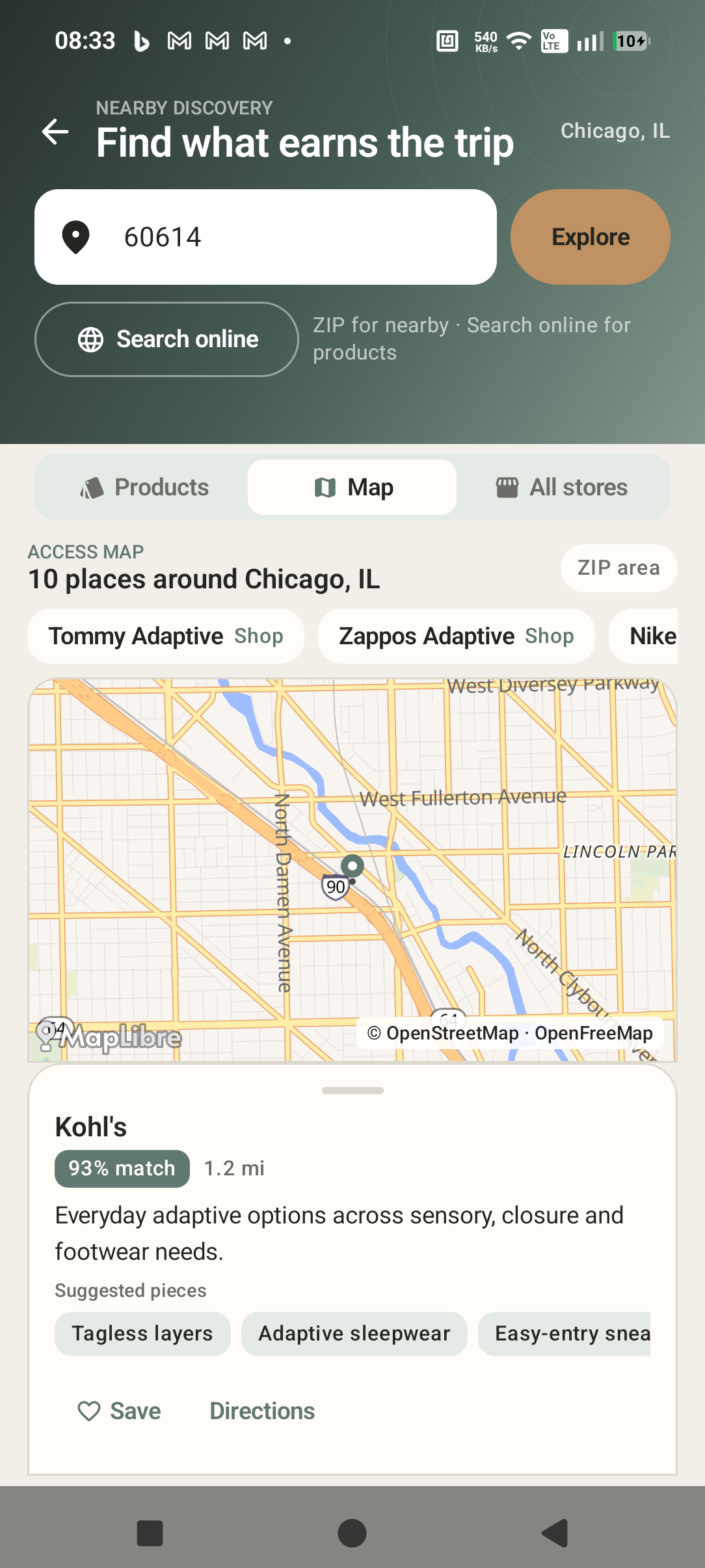
Store Locator
-
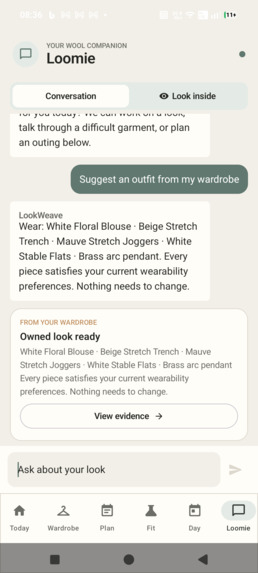
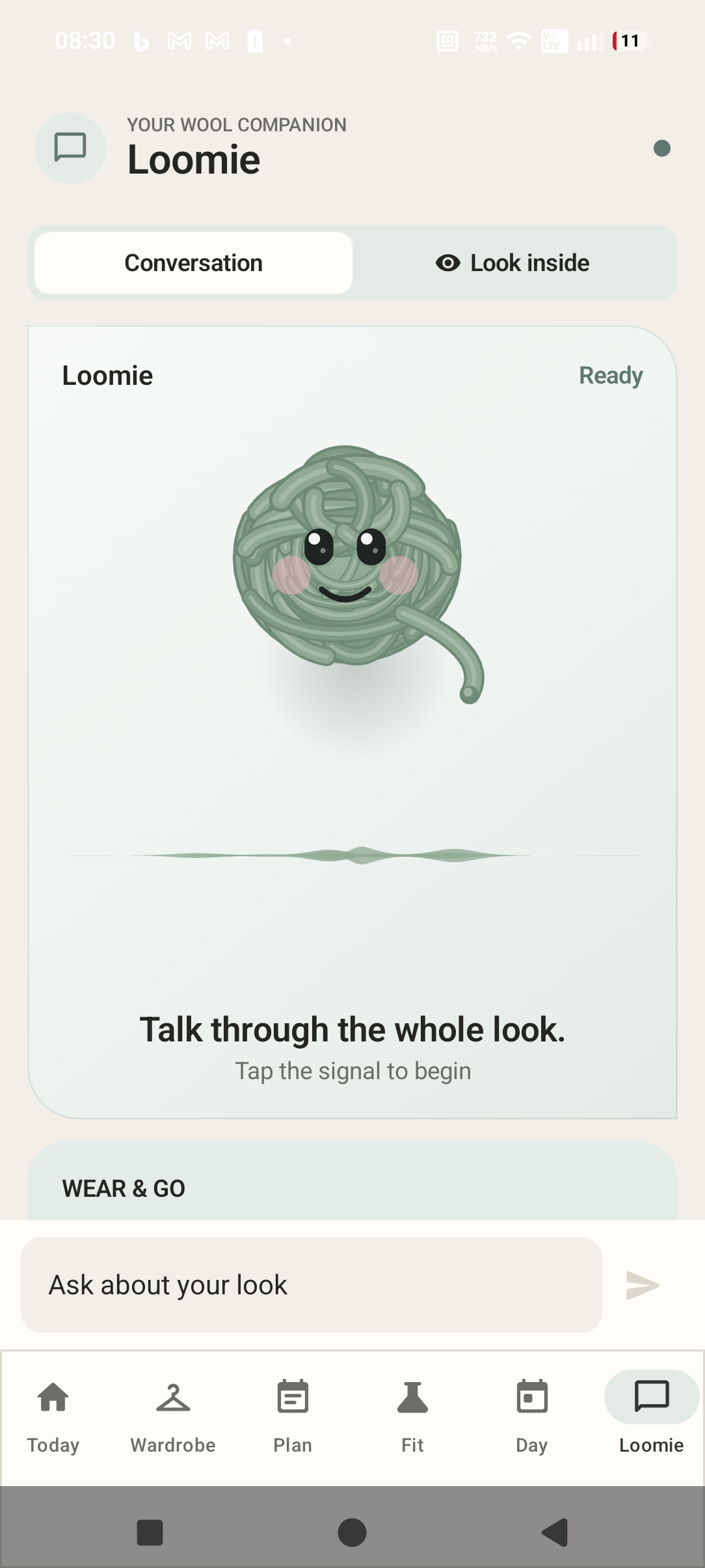
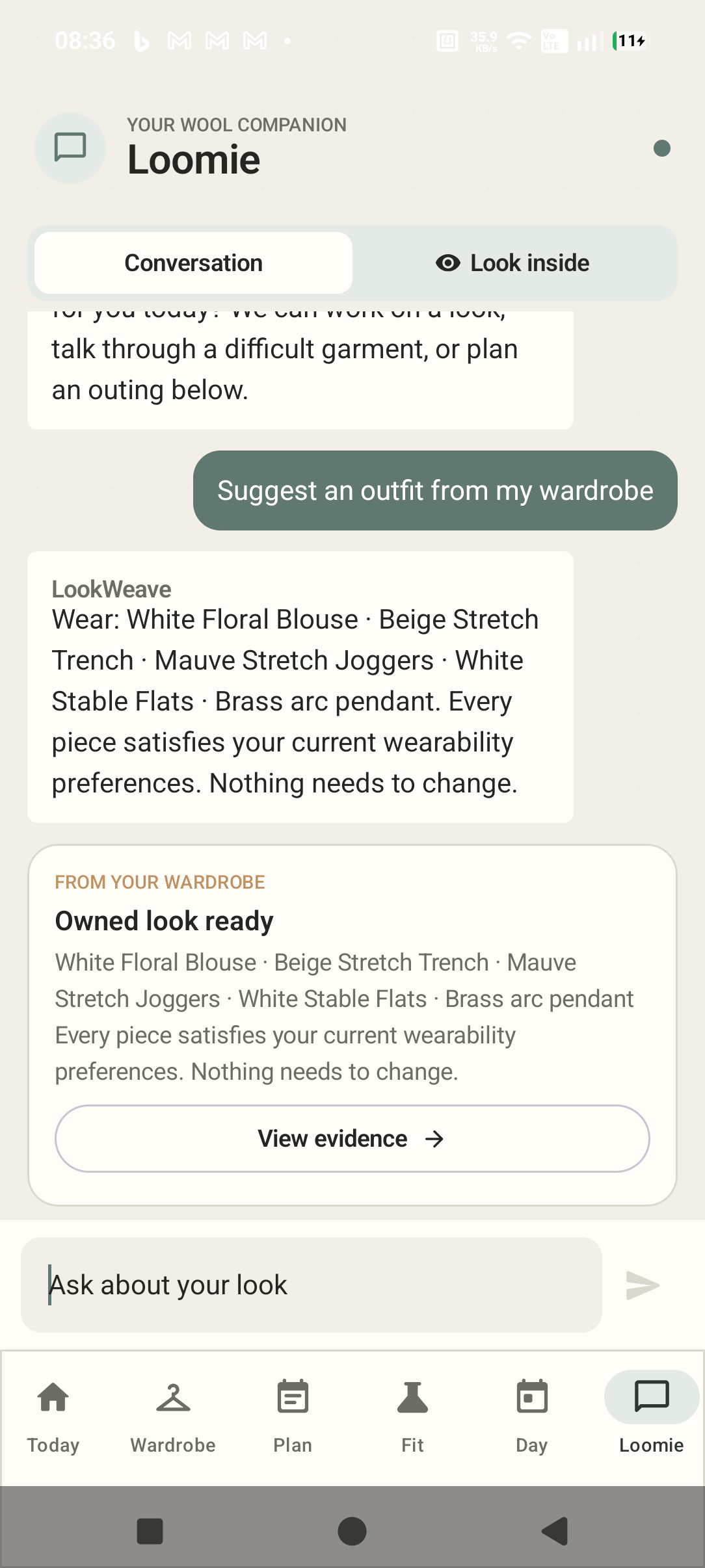
Loomie - Chat
-
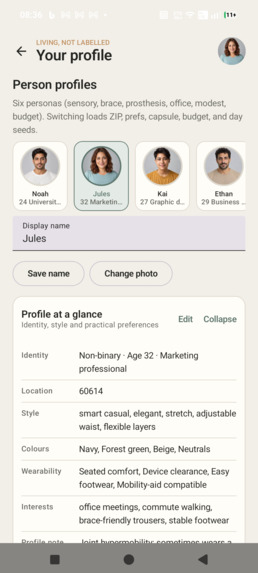
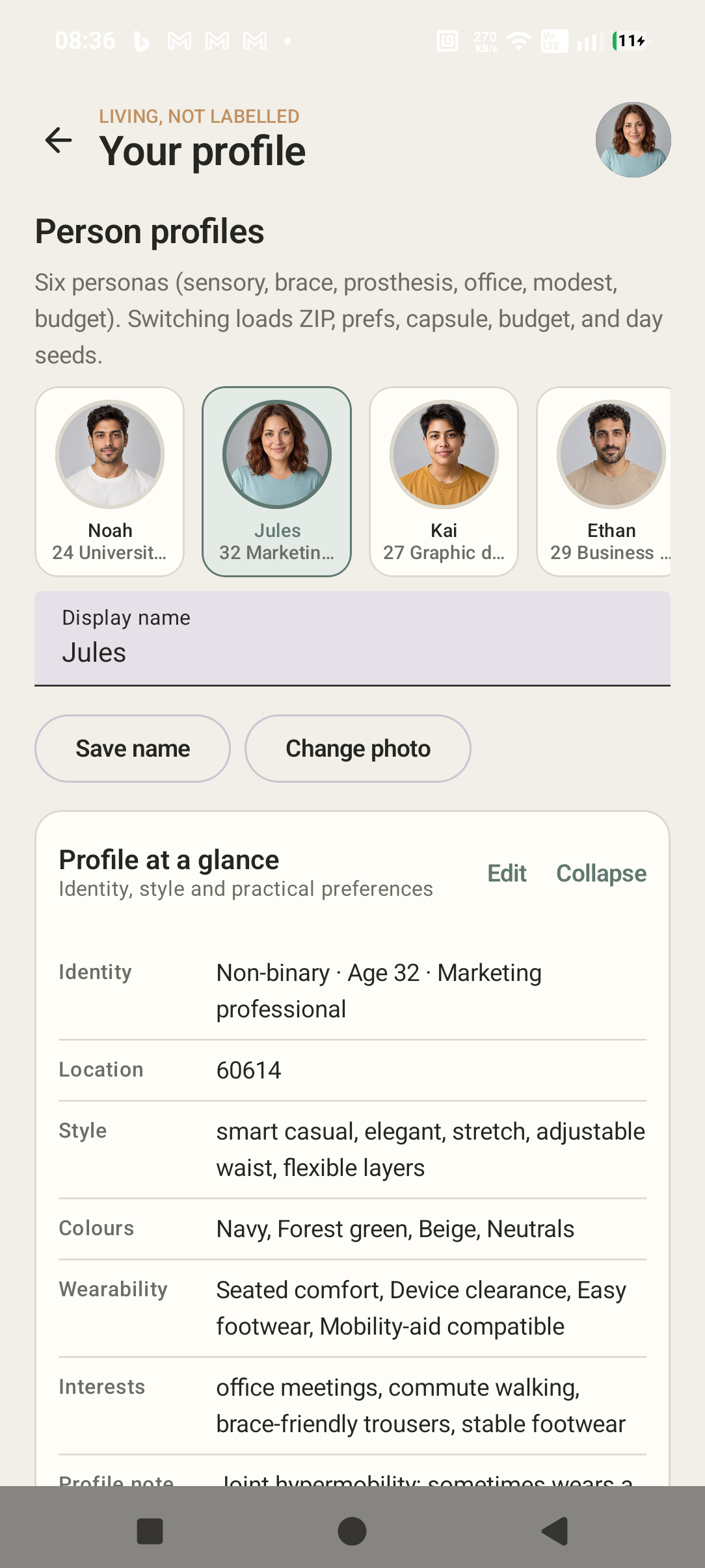
Profiles
-
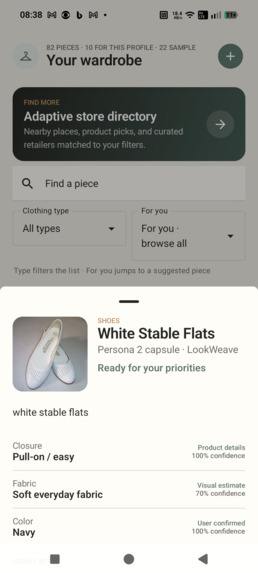
Garment Passport
-
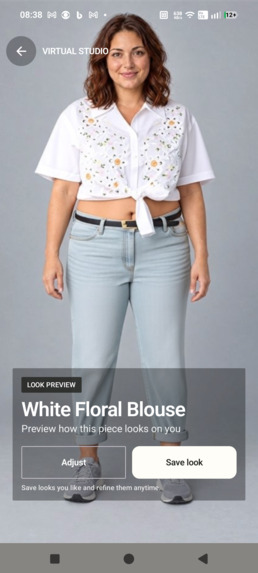
Try On
LookWeave: Fashion For Everyone
An inclusive, agentic AI fashion companion that understands your individuality, adapts to your lifestyle, and connects intelligent outfit planning with virtual try-on and personalized shopping.
Inspiration: Six People. Six Different Lives.
What makes an outfit perfect?
For some, it's style. For others, it's comfort, independence, affordability, practicality, or simply feeling like themselves.
Yet most fashion applications primarily recommend clothing based on appearance, trends, and size.
Real life is far more complicated.
According to the World Health Organization, approximately 1 in 6 people worldwide experience significant disability. Meanwhile, the UN Environment Programme estimates that 92 million tonnes of textile waste are generated globally each year.
These challenges inspired us to explore fashion through six fictional demonstration personas, each with different priorities:
| Persona | Their Everyday Challenge | How LookWeave Helps |
|---|---|---|
| Noah, 24 | Sensory discomfort from scratchy labels, stiff collars, and restrictive fabrics | Prioritizes soft materials, relaxed fits, and sensory-friendly clothing |
| Jules, 32 | Joint hypermobility, a knee brace, and difficulty with certain fastenings | Considers brace clearance, flexible cuts, accessible closures, and stable footwear |
| Kai, 27 | Uses a forearm prosthesis and values independent dressing | Evaluates sleeve openings, dressing effort, and easy-to-manage closures |
| Ethan, 29 | Walks to work but spends long hours seated | Balances professional appearance, breathability, flexibility, and all-day comfort |
| Amara, 26 | Balances modest fashion preferences with Miami's heat and humidity | Suggests breathable coverage, suitable layering, and personalized styling |
| Maya, 23 | Manages student life on a strict $50 monthly clothing budget | Prioritizes wardrobe reuse, affordable discoveries, and budget-conscious planning |
Six people. Six different lives. Six different definitions of a good outfit.
But these profiles are just examples.
Personalization Without Boundaries
LookWeave isn't restricted to a fixed set of accessibility filters or predefined personalities.
Personal preferences can involve almost anything relevant to clothing:
- Personal comfort: Sensory sensitivities, pressure points, flexibility, breathability, and preferred fits.
- Fabric and materials: Texture, softness, allergies, material avoidance, and ethical choices.
- Accessibility: Mobility requirements, assistive devices, dressing independence, and easy closures.
- Personal expression: Colors, aesthetics, style preferences, cultural clothing, and modesty.
- Lifestyle: Occupation, activities, daily routines, events, and travel.
- Environment: Temperature, humidity, UV, wind, air quality, and changing weather.
- Practical constraints: Budget, available wardrobe, garment evidence, and ease of maintenance.
- Individual requirements: Custom preferences and conditional rules expressed in natural language.
These factors can interact, conflict, and change depending on the situation.
That's why we built LookWeave around agentic AI and explainable outfit intelligence, instead of relying solely on traditional filtering.
Introducing LookWeave
LookWeave brings personal fashion decisions into one connected experience.
Its AI companion, Loomie, uses information from multiple sources to understand the person's needs and the situation.
But Loomie's role doesn't stop at suggesting outfits.
The intelligence extends across the entire fashion journey:
- Understand: Interpret personal preferences, custom rules, wardrobe information, schedules, and environmental context.
- Plan: Evaluate complete outfits using a deterministic wearability engine that identifies conflicts and explains necessary changes.
- Visualize: Integrate YouCam Virtual Try-On so users can explore how selected clothing might look on them.
- Discover: Research relevant products and retailers based on the same personal requirements, with supporting evidence where available.
- Improve: Incorporate real-life clothing feedback into future outfit decisions.
The same personal intelligence follows the user from deciding what to wear, to seeing it virtually, to discovering what to buy.
We aren't building another virtual fitting room or a shopping assistant with accessibility filters.
We're building a personal fashion intelligence layer that makes appearance, comfort, practicality, and individuality work together.
Imagine Jules preparing for an important client meeting.
Jules needs professional clothing, but also wears a knee brace and experiences difficulty with certain fastenings. The forecast predicts a warm afternoon and a colder evening.
LookWeave considers these requirements together. It evaluates the outfit, identifies potentially uncomfortable garments, preserves compatible pieces, suggests alternatives, and explains its decisions. Jules can then explore the look through YouCam Virtual Try-On and research suitable products.
One request. Multiple sources of intelligence. One personalized decision.
Key Features
1. Loomie: An Agentic Fashion Companion
Meet Loomie, our conversational AI assistant, represented by a friendly yarn-ball character.
Users can communicate with Loomie through text or an interactive voice interface.
Loomie brings together multiple sources of context:
- Personal preferences and accessibility needs
- Existing wardrobe information
- Clothing properties and verified evidence
- Calendar events and occasions
- Hourly weather and environmental conditions
- Budgets and shopping priorities
- Previous wearability feedback
- Product research from external sources
The agent can propose structured actions, retrieve custom rules, research products, and coordinate with the outfit-planning engine.
A Look Inside interface makes actions and their statuses visible to users.
2. Adaptive Wearability Intelligence
This is LookWeave's core innovation.
Instead of treating personal needs as basic shopping filters, we built an outfit-level constraint-solving system.
Users can specify preferences involving:
- Easy closures and reduced grip requirements
- Seated comfort and pressure sensitivity
- Sensory-friendly fabrics and construction
- Comfortable sleeve openings and device clearance
- Mobility, footwear stability, and ease of removal
- Heat sensitivity and layering requirements
- Material avoidance and ethical preferences
- Style, color, modesty, and budget
Users can also describe custom rules in natural language, review them, and save them as hard, soft, or conditional preferences.
When something conflicts, LookWeave can:
- Identify the problematic garment.
- Explain which rule it violates.
- Keep compatible pieces.
- Replace only what needs changing.
- Explain the new outfit and any unresolved uncertainties.
The goal isn't to change someone's entire style. It's to make their existing style work better for them.
3. YouCam-Powered Virtual Try-On
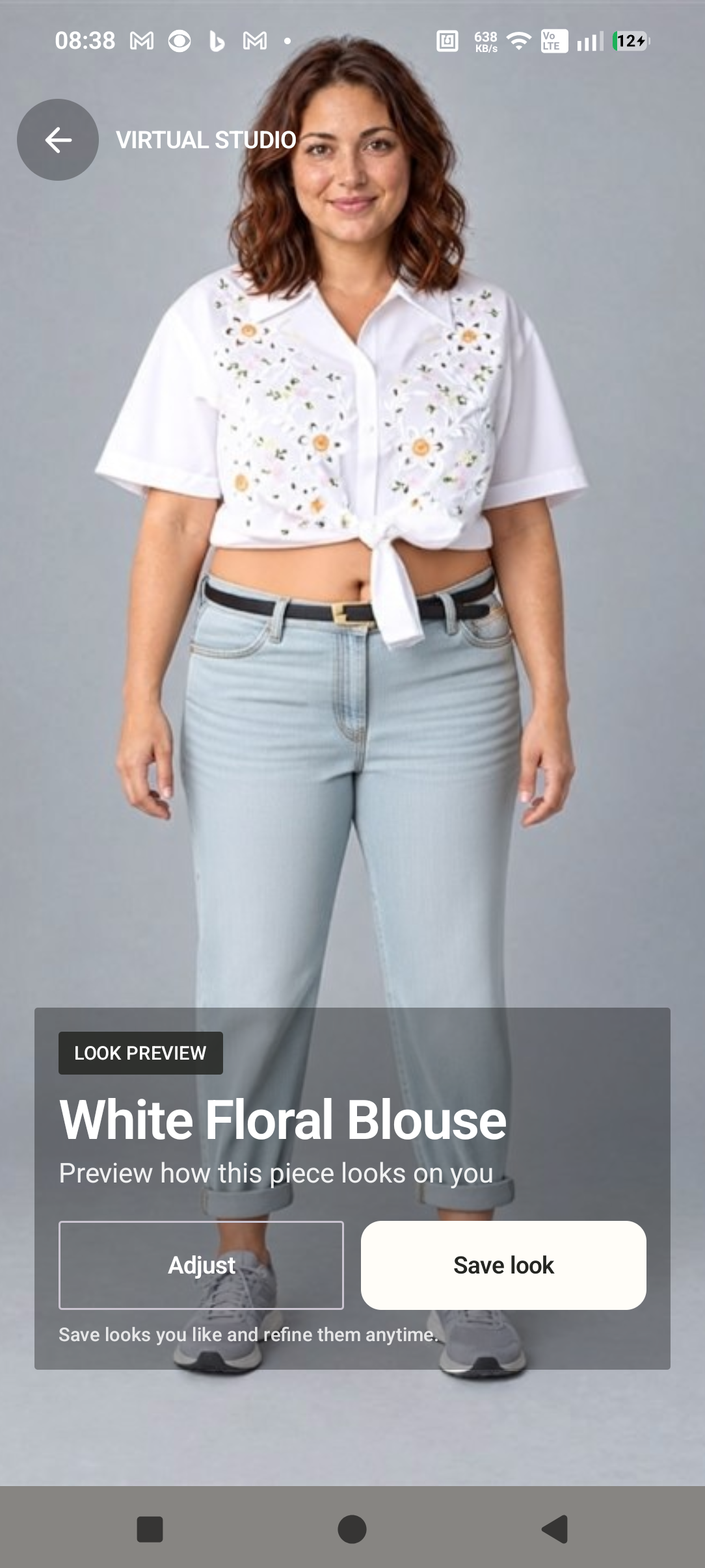
YouCam's Apparel Virtual Try-On API brings the recommendations to life.
Users can preview clothing on their own uploaded image before deciding whether to wear or explore an outfit.
We connect visual preview with a separate wearability evaluation.
YouCam helps answer, "How might this look on me?"
LookWeave helps answer, "Will this work for my needs?"
Importantly, a visually convincing preview is not presented as proof of physical fit, accessibility, or comfort.
How the integration works: The Android application accepts a person image and garment image, submits them through our Node.js gateway to YouCam's Apparel Virtual Try-On API, tracks the asynchronous generation task, and displays the resulting preview. Previously generated results can be reused to avoid unnecessary API requests.
This connects YouCam's visual generation capabilities with LookWeave's independent, explainable outfit-selection engine.
4. Style Studio and Personalized Appearance Guidance
LookWeave also integrates YouCam-powered facial analysis capabilities to support optional personal styling.
Features include:
- Facial color analysis
- Face-shape and proportion guidance
- Personalized color recommendations
- Eyewear and accessory suggestions
- Manual correction of analysis results
- Consideration of comfort and accessory-related preferences
This extends personalization beyond clothing into a more cohesive styling experience.
5. Privacy-Conscious Image Experience
We wanted personalization without making facial visibility mandatory.
LookWeave includes an optional offline facial-redaction feature that processes the image locally on the device to reduce visible facial detail.
This is separate from YouCam's cloud-based virtual try-on.
It gives users more choice over how they present themselves in outfit previews.
6. Context-Aware Daily Planning
A recommendation should account for when and where someone will wear it.
LookWeave considers:
- Calendar events and occasions
- Whole-day outfit planning
- Hourly temperature changes
- Weather, wind, UV, and environmental signals
- Appropriate layers for changing conditions
- Budget constraints and outfit reuse
For example, an outfit suitable for a warm afternoon may also need an additional layer for a cold evening.
7. Intelligent Wardrobe Management
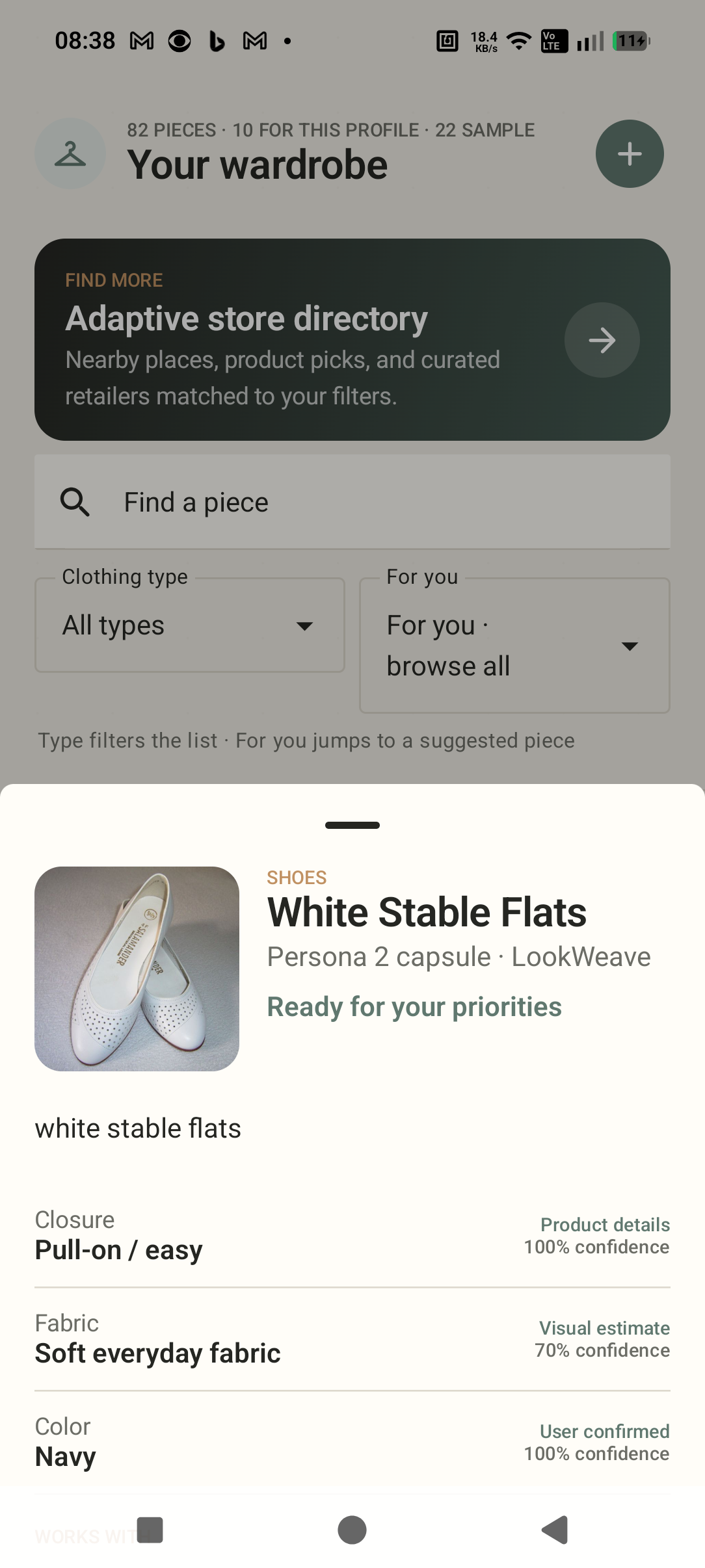
Users can explore and organize their wardrobe, review garment details, and evaluate how items match their preferences.
Features include:
- Garment categories and search
- Product information and evidence records
- Compatibility explanations
- Clothing imports through product URLs
- Manual review of imported information
- Integration with the outfit solver
The system distinguishes verified information, unknown properties, and known incompatibilities rather than inventing missing product details.
8. Adaptive Product Discovery
LookWeave connects wardrobe planning with product discovery.
Users can:
- Research products from external websites
- Explore clothing against personal requirements
- Review product details and source evidence
- Discover nearby retailers
- Browse products using a swipe-based interface
- Consider affordability and accessibility-related preferences
The experience is designed to help users discover useful clothing, not simply encourage more purchases.
9. Fit Feedback: Learning From Real Experience
Product descriptions cannot fully capture how clothing feels in daily life.
Our Fit experience lets users record observations after wearing garments.
For example:
- Was the fastening easy?
- Did the sleeves feel comfortable?
- Was there pressure while sitting?
- Did the garment interfere with a brace or device?
Saved observations become additional evidence for future decisions.
This creates an important feedback loop:
Recommend → Wear → Reflect → Improve future recommendations.
How We Built It
LookWeave is an Android-first application with a service-backed intelligence layer.
Technology Stack
| Layer | Technology |
|---|---|
| Android application | Kotlin, Jetpack Compose |
| Virtual try-on | YouCam Apparel Virtual Try-On API |
| Style analysis | YouCam facial color and face-shape analysis |
| Primary AI reasoning | Google Gemini |
| LLM fallback | Groq |
| Voice interaction | ElevenLabs |
| Product research | Tavily Search and Extract |
| Environmental context | Open-Meteo |
| Local privacy processing | Android on-device image processing |
| Maps and places | OpenStreetMap ecosystem |
| API gateway | Node.js |
| Outfit decision-making | Custom deterministic constraint solver |
The backend handles integrations and protects provider credentials from being embedded directly in the Android application.
How the Intelligence Works
- Understand the person: Read their wardrobe, preferences, rules, and observations.
- Understand the situation: Consider occasions, environmental context, and budgets.
- Gather evidence: Retrieve relevant garment facts and product information.
- Evaluate the outfit: Run deterministic compatibility checks.
- Explain the decision: Identify what stays, what changes, and why.
- Visualize the result: Use YouCam to preview selected clothing.
- Learn from feedback: Incorporate user-confirmed real-life observations.
We deliberately separate probabilistic AI reasoning from deterministic rule enforcement so that personal constraints are evaluated consistently.
Challenges We Overcame
Making AI decisions trustworthy
An LLM can explain clothing recommendations, but personal requirements should not depend entirely on generated text.
We addressed this by combining agentic tool proposals with a deterministic constraint solver.
Handling incomplete product information
Retail product pages rarely provide all the information required to assess accessibility or comfort.
LookWeave explicitly represents missing information as unknown, allowing the user to distinguish uncertainty from incompatibility.
Connecting appearance with real-world practicality
Virtual try-on is powerful for visual exploration, but appearance alone cannot determine whether clothing is comfortable or easy to wear.
We designed separate visual and wearability layers that complement each other.
Bringing many experiences into one application
The challenge was connecting AI, fashion, environmental data, personal preferences, shopping, and feedback into a coherent Android experience.
The result is a connected workflow rather than a collection of unrelated features.
What We're Proud Of
- Built a functional native Android experience.
- Integrated real YouCam virtual try-on into personalized outfit exploration.
- Created a custom, explainable, whole-outfit constraint solver.
- Connected structured AI tool actions with deterministic decision-making.
- Supported natural-language custom preferences.
- Introduced explicit evidence and uncertainty handling.
- Combined wardrobe, weather, occasions, budgets, and user feedback.
- Added an optional offline facial-privacy feature.
- Developed six distinct demonstration profiles to illustrate diverse needs.
- Verified the Android application through automated tests and physical-device testing.
Who Benefits, and Why It Matters
For individuals
LookWeave can make everyday dressing and shopping more personalized, informed, and confidence-building.
This includes people with accessibility or sensory needs, busy professionals, budget-conscious shoppers, students, and anyone whose clothing choices must adapt to their circumstances.
For retailers and fashion platforms
The same intelligence could eventually help retailers:
- Offer more meaningful personalization.
- Improve adaptive and inclusive product discovery.
- Explain why a product matches a customer's needs.
- Reduce uncertainty before purchases.
- Make better use of detailed product information.
For sustainability
By prioritizing existing wardrobe items and targeted replacements, LookWeave supports more intentional clothing decisions.
What's Next?
We see LookWeave evolving into a broader personal fashion intelligence platform.
Future directions include:
- Larger, verified garment and retailer datasets
- More detailed accessibility and comfort information
- Improved automated garment understanding
- Stronger feedback-driven personalization
- Better outfit planning across multiple activities
- More robust offline privacy processing
- Expanded YouCam-powered styling experiences
- More comprehensive product and inventory integrations
- Secure accounts and production-grade data storage
- Evaluation with real users across diverse needs
Potential business models include retailer integrations, personalized shopping services, premium planning tools, and B2B wearability intelligence.
Our priority would remain the same: keeping users in control of their preferences, evidence, and recommendations.
The Bigger Vision
Most fashion technology asks:
"What would look good on you?"
We're asking a different question:
"What would actually work for you?"
LookWeave combines the visual possibilities of YouCam with agentic reasoning, personal constraints, and real-world context to bring those two questions together.
Fashion should adapt to people. Not the other way around.
