-
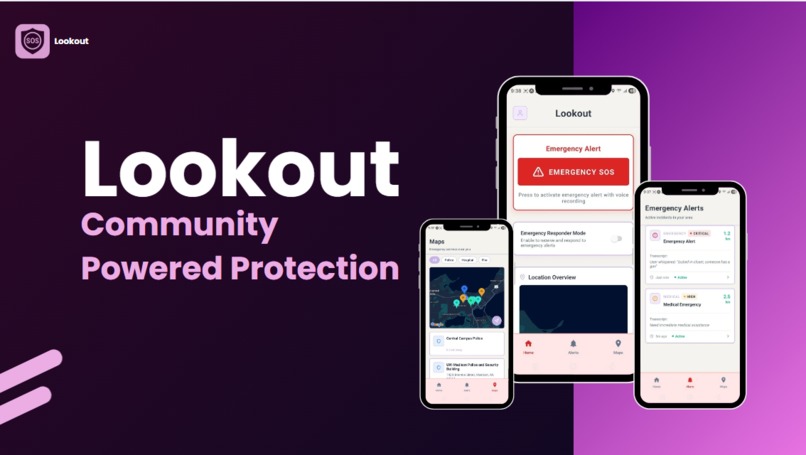
Lookout
-
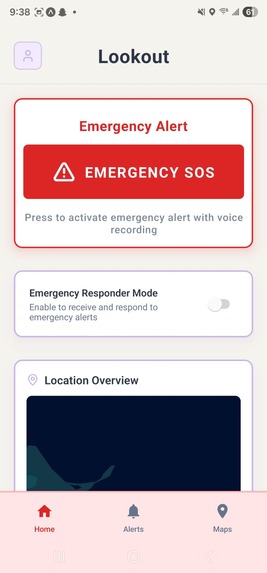
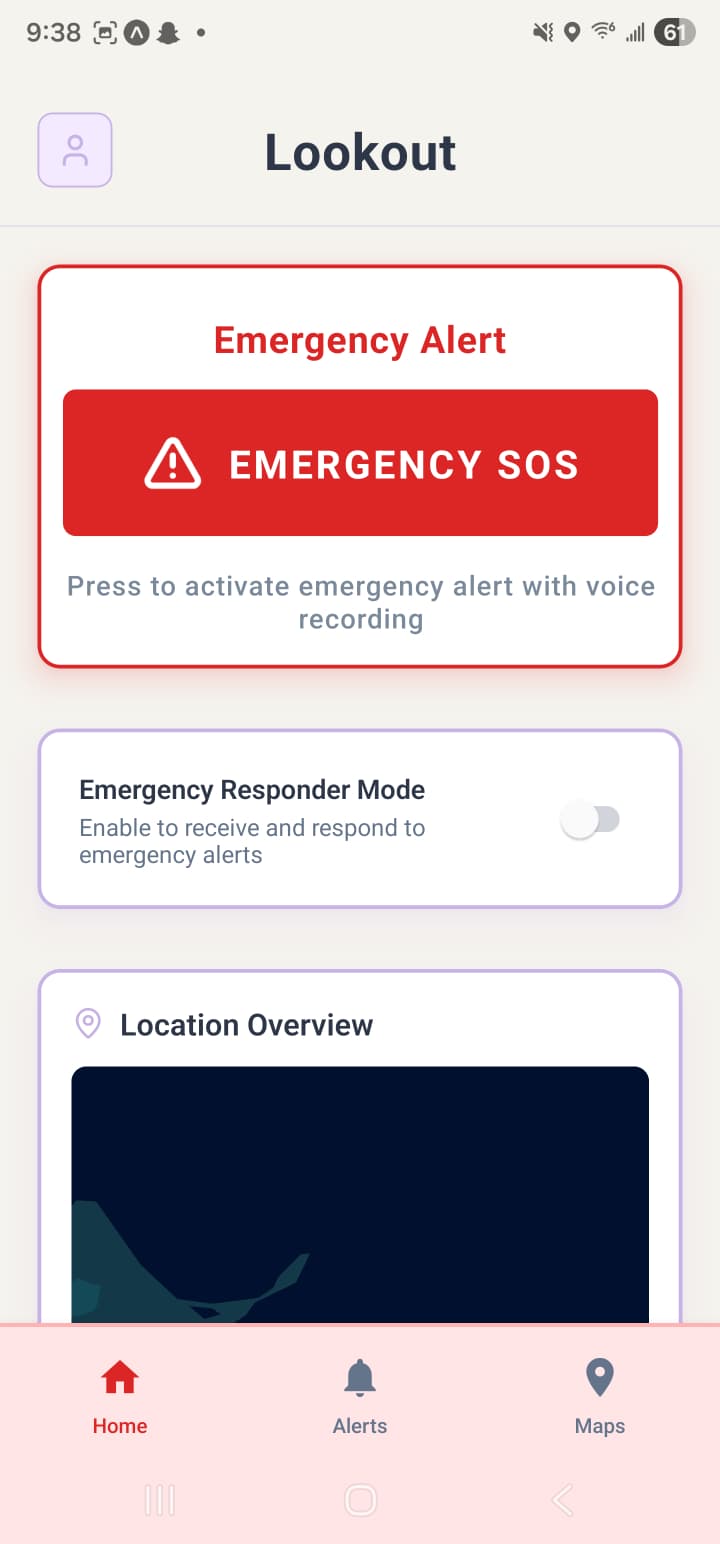
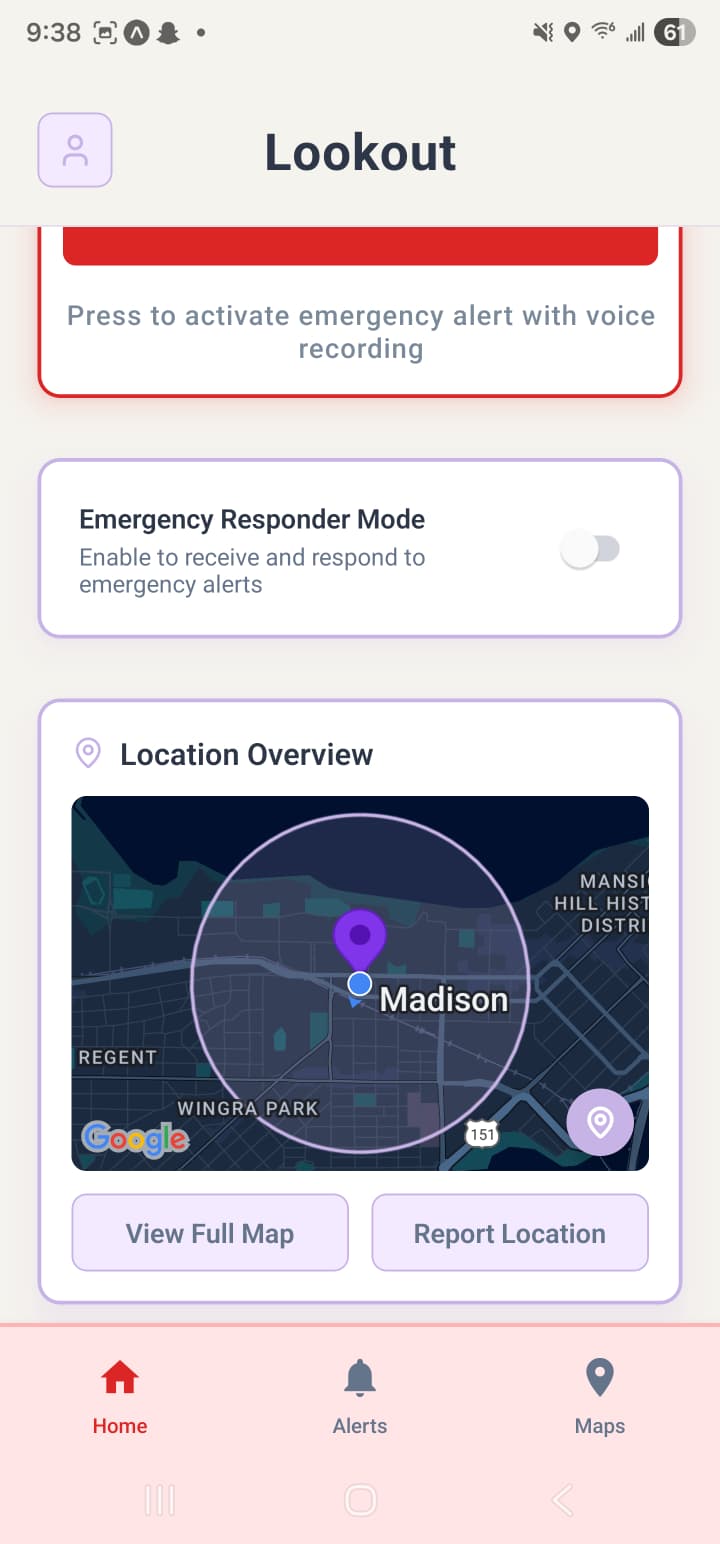
Emergency Button for Alert Trigger
-
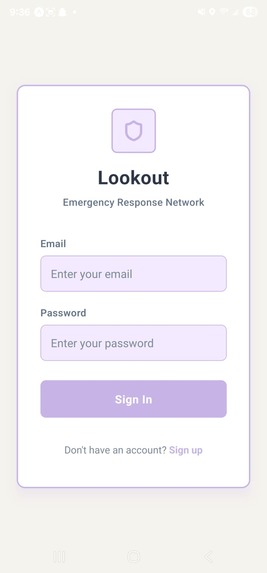
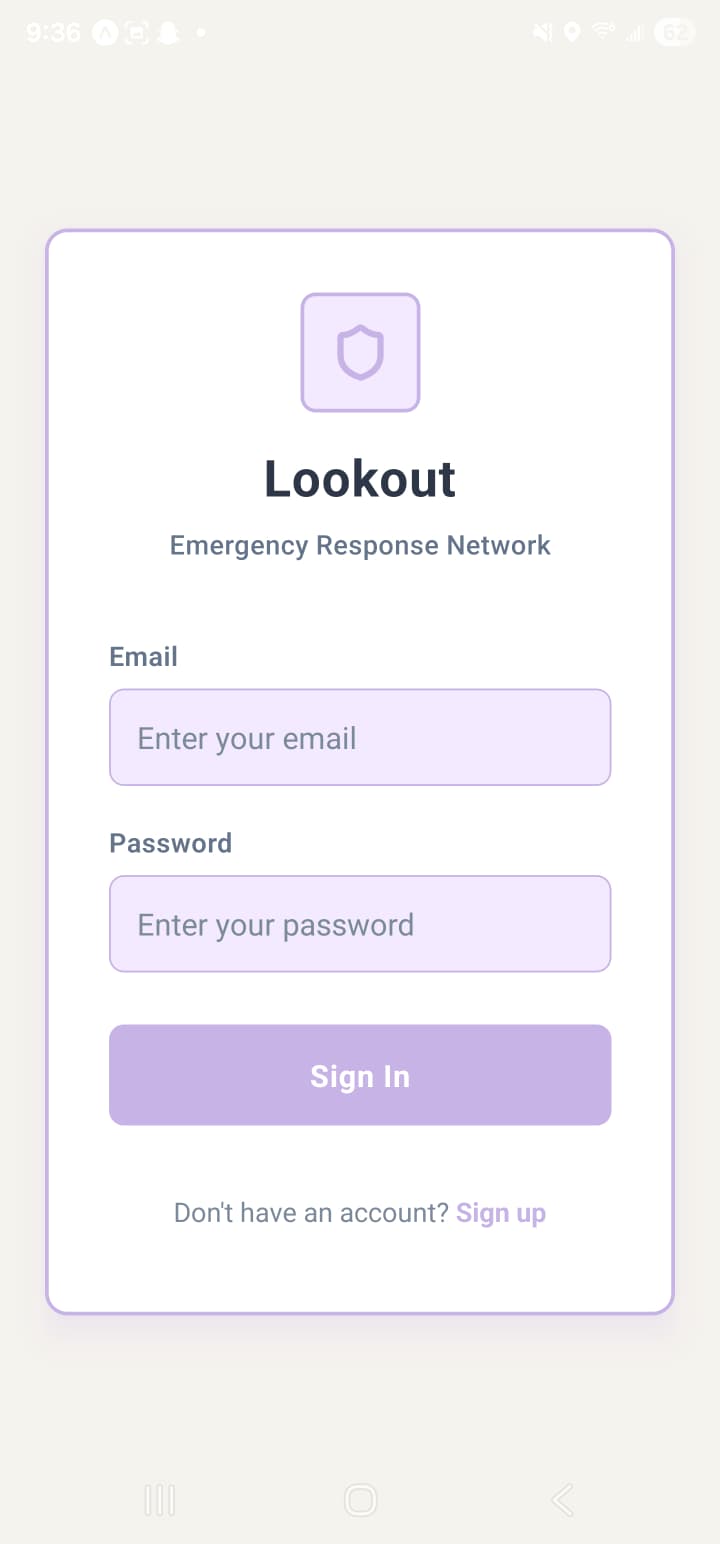
Functional Login for User Details
-
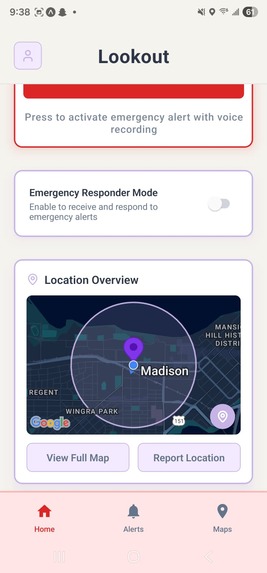
Nearest Responders' Locations
-
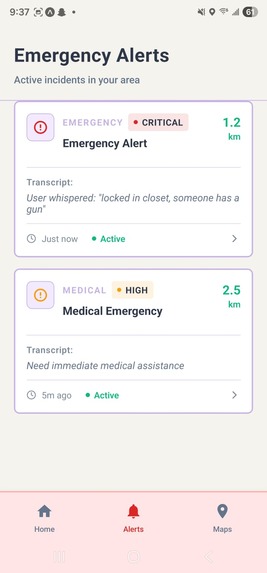
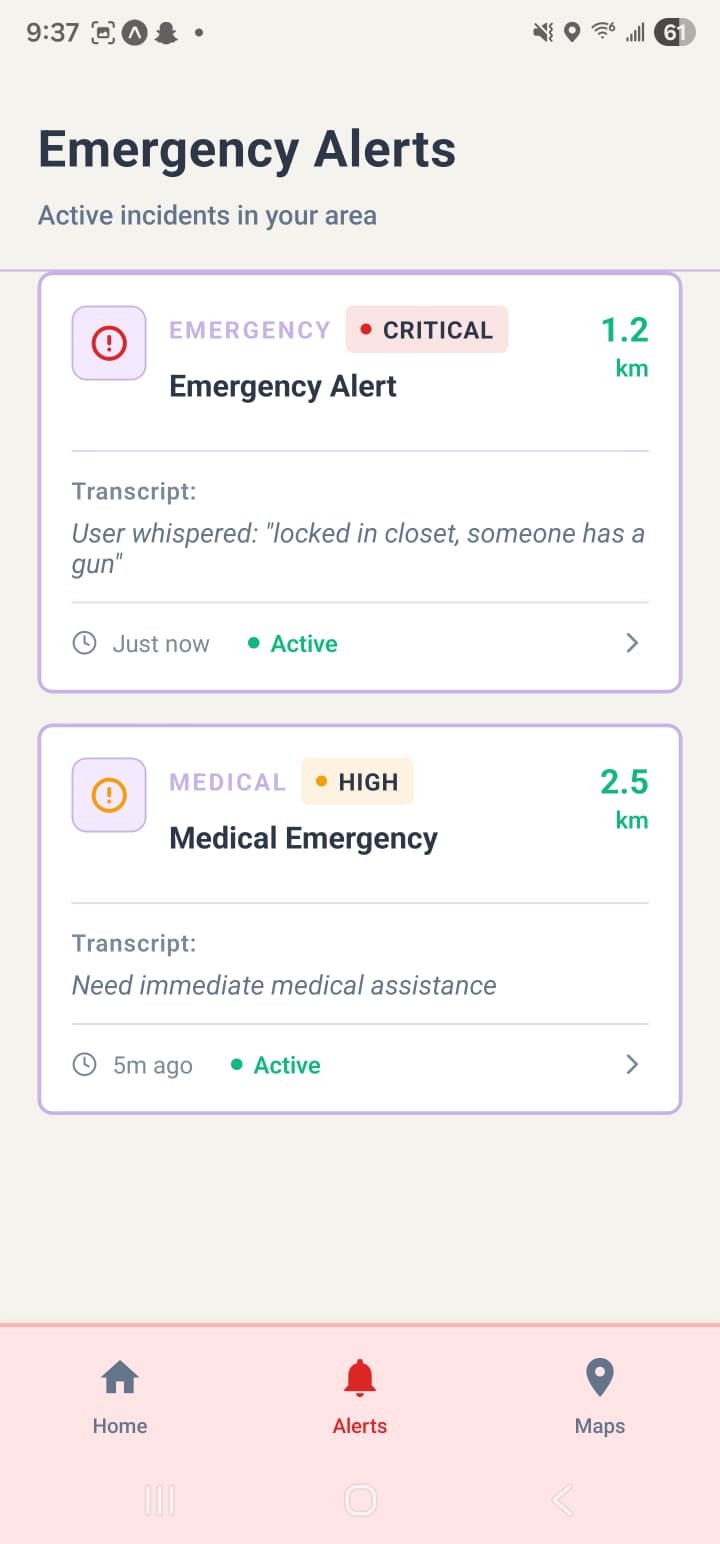
See Details about Emergency Alerts
-
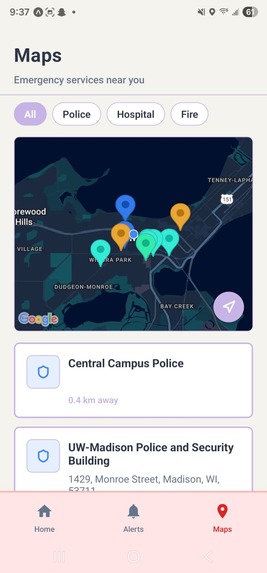
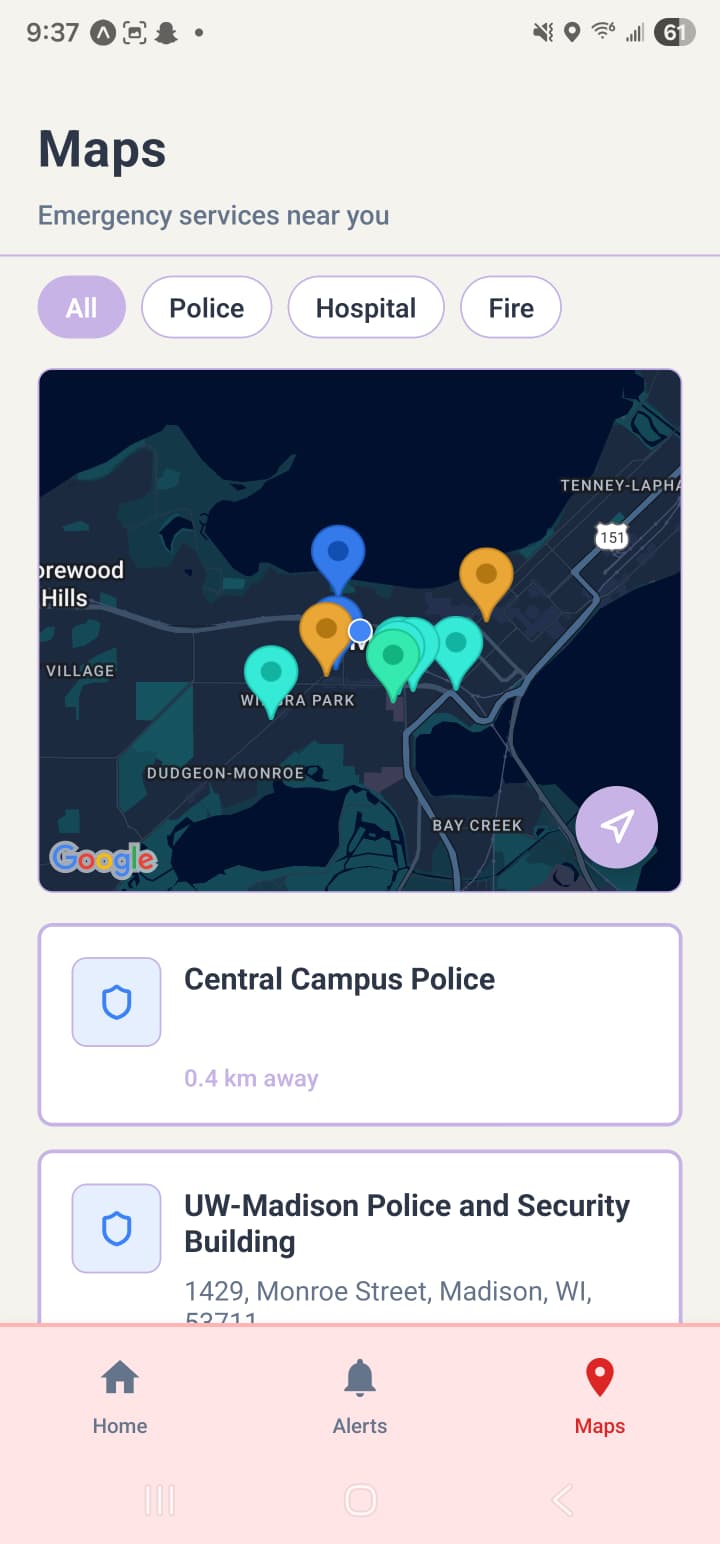
Map View for Nearest Emergency Services
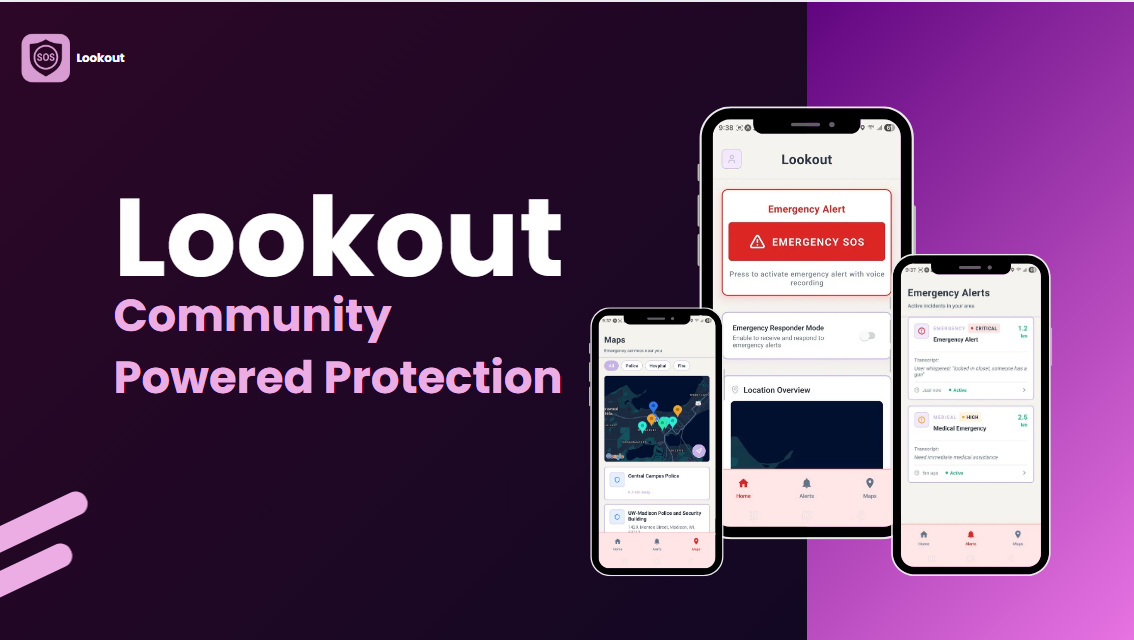
Lookout – Community-Powered Emergency Safety Platform
"Help should never be more than a mile away."
Inspiration
In emergency situations, every second is critical. Traditional emergency response systems often face significant challenges: delayed response times, limited resource availability, and the inherent isolation victims experience while waiting for help to arrive. The gap between when danger strikes and when help arrives can be the difference between safety and tragedy.
We recognized that communities themselves represent an untapped emergency response resource. Neighbors and nearby residents are often closer than any emergency service—yet there has been no reliable system to activate this network when it matters most.
Lookout was created to ensure that no person in danger is ever truly alone. By combining immediate community mobilization with official emergency services and AI-powered situational analysis, we've built a platform that transforms how emergency assistance is delivered in the critical first moments of a crisis.
What It Does
Lookout is a real-time emergency safety platform that simultaneously mobilizes a verified network of local community helpers, official emergency authorities, and AI-powered analytical tools the moment a user signals distress.
One-Tap Emergency Activation
When a user activates the SOS function, Lookout initiates a multi-layered emergency response protocol:
Immediate Community Mobilization:
- Instantly identifies and alerts all verified community helpers within a 1-kilometer radius
- Automatically expands the search radius if fewer than 10 verified responders are available
- Each helper receives the user's real-time location and situational context
Official Authority Notification:
- Simultaneous alerts are dispatched to police departments, medical emergency services, and fire departments
- Authorities receive complete incident packages including location data and real-time updates
Automated Audio Intelligence:
- Automatically begins a 30-second audio recording at the moment of SOS activation
- Audio is streamed in real-time to the backend infrastructure
- Whisper AI processes the audio stream, generating accurate transcriptions even in high-noise, high-stress environments
- Transcriptions are immediately distributed to all responders, providing crucial context about the emergency
Continuous Location Broadcasting:
- The user's GPS coordinates are updated and transmitted in real-time
- Responders can track the user's position dynamically
This integrated approach combines the proximity advantage of community helpers with the authority of official emergency services, all enhanced by AI-powered situational awareness.
Real-Time Safety Infrastructure Mapping
Lookout maintains a continuously updated map displaying critical safety infrastructure within the user's vicinity:
- Medical facilities (hospitals, clinics)
- Law enforcement facilities (police stations, posts)
- Fire and rescue stations
This infrastructure mapping helps users navigate toward safety and enables responders to coordinate their approach effectively.
Preventive Intervention: Fake Call System
Recognizing that not all threatening situations require immediate emergency activation, Lookout includes a fake call generation system designed for early-stage threat deterrence.
The system generates convincing, realistic phone conversations that users can activate in uncomfortable or potentially dangerous situations—such as unwanted attention or harassment. This feature allows users to extract themselves from uncomfortable situations without confrontation, providing a de-escalation tool that can prevent situations from reaching emergency status.
Community Reciprocity Model
Lookout operates on a fundamental principle of mutual aid: to receive assistance from the community network, users must also register as potential helpers within their own community.
This reciprocity model ensures:
- Network Density: Robust coverage across geographic areas, ensuring help is genuinely available within the promised radius
- Community Investment: Users who are both beneficiaries and providers develop a stake in the system's effectiveness
- Response Reliability: The mutual obligation creates a culture of responsibility where community members understand their role
This model transforms emergency response from a purely transactional service into a genuine community safety network built on shared responsibility.
Technical Architecture
Frontend Infrastructure (React Native with Expo)
The mobile application is built with a focus on clarity and instant accessibility during high-stress situations:
- Emergency-optimized interface with large, clearly marked SOS activation
- WebSocket client for continuous bidirectional communication
- Real-time map rendering with dynamic responder positioning
- Audio streaming capability with automatic fallback protocols
- Continuous GPS tracking with geofencing capabilities
Backend Infrastructure (Python-Based)
API Layer (FastAPI):
- RESTful endpoints for user management and incident reporting
- WebSocket server for real-time audio streaming and location broadcasting
- Authentication and role-based access control
Emergency Processing Pipeline:
- Geospatial query engine for proximity-based helper identification
- Dynamic radius expansion algorithm based on helper availability
- Priority routing system for official emergency service notification
Audio Processing Infrastructure:
- Real-time audio stream ingestion via WebSocket
- Integration with Whisper AI for speech-to-text conversion
- Transcript distribution system with sub-second latency
AI Integration (OpenAI Whisper)
The speech recognition system addresses the unique challenges of emergency audio analysis:
- Accurate speech-to-text conversion even during panicked, rapid, or unclear speech
- Background noise filtering to handle sirens, traffic, crowds, and environmental interference
- Real-time streaming transcription with progressive accuracy improvement
- Keyword extraction for rapid situational assessment
The AI system provides responders with crucial context that raw audio alone cannot efficiently convey, enabling faster, more informed response decisions.
Technical Challenges and Solutions
Speech Recognition Under Duress
Challenge: Emergency situations generate uniquely difficult audio conditions—panicked speech patterns, environmental noise, and inconsistent audio quality all combine to create significant transcription challenges.
Solution: We implemented multiple preprocessing layers including noise filtering and dynamic range compression before feeding audio to Whisper. We also developed a confidence scoring system that flags low-confidence transcriptions while still providing preliminary text to responders.
Real-Time Audio Streaming Reliability
Challenge: Mobile network conditions vary dramatically, and audio streaming must maintain continuity even under poor connectivity conditions.
Solution: We implemented an adaptive bitrate system that dynamically adjusts audio quality based on available bandwidth. A chunked upload system with automatic retry logic ensures that even if real-time streaming fails, audio segments are eventually delivered and processed.
Emergency User Interface Design
Challenge: Users in emergency situations experience cognitive impairment due to stress. Interface designs that work in normal conditions can become unusable under duress.
Solution: Through extensive user testing, we developed an interface that requires minimal decisions, uses universally understood symbols and colors, and maintains functionality even when users are shaking or moving.
Scalable Helper Network Management
Challenge: Managing a large distributed network of helpers requires balancing rapid response times with system performance. Querying thousands of potential helpers must happen in seconds.
Solution: We implemented geospatial indexing that enables sub-second proximity queries. The notification system uses batch processing with priority queuing to handle surge capacity during incidents in dense areas.
Accomplishments
We successfully developed and validated a complete end-to-end emergency response pipeline:
- Functional Integration: The entire system—from mobile SOS activation through audio streaming, AI transcription, helper notification, and authority dispatch—operates as a cohesive, reliable platform
- AI Performance Validation: Whisper AI delivers accurate transcriptions for emergency context understanding, even in challenging acoustic environments
- Intelligent Helper Selection: The dynamic radius expansion algorithm successfully balances response coverage with response time
- User Experience Optimization: The interface reduces emergency activation to a single deliberate action while maintaining safeguards against accidental activation
- Fake Call Authenticity: The preventive fake call system generates sufficiently realistic conversations to serve its deterrent purpose
Lessons Learned
Simplicity Is a Safety Feature: Every additional step in the emergency activation process represents potential failure under stress. The most effective emergency systems require the least from users in their moment of greatest vulnerability.
Audio-Based Assistance Demands Robust Infrastructure: Real-time audio processing and streaming is fundamentally complex. Building reliable audio-based features requires treating infrastructure resilience as a primary design requirement.
Community Models Require Built-In Trust Mechanisms: For users to rely on community helpers in genuine emergencies, trust must be systematically built through transparent verification processes, accountability mechanisms, and continuous community engagement.
Real-Time Systems Need Minimal, Clear Communication: When seconds matter, information presentation must be ruthlessly prioritized. Responders need immediate answers: Where is the user? What is happening? Everything else is secondary.
Future Development
We plan to enhance the system's reliability and scale through:
- Advanced Verification Systems: Enhanced background checks and skills-based helper categorization
- Helper Training Programs: Comprehensive training covering emergency response protocols and personal safety
- Offline Capability: Core emergency features that operate without active internet connectivity
- Municipality Partnerships: Integration with official emergency services dispatch systems
- Multilingual Support: Expanded interface localization and AI transcription capabilities
Mission and Vision
Lookout was built on a fundamental belief: When someone is afraid, help should never be more than a mile away.
Traditional emergency response systems face an immutable challenge—distance. Emergency services must travel from central locations, which takes time. But in nearly every emergency situation, there are people nearby who could help if they only knew help was needed.
Lookout solves this awareness problem. A single tap activates an entire community. It transforms proximity into protection. It ensures that victims never face those critical first moments alone.
This is not about replacing traditional emergency services—it's about ensuring help exists in the gap. It's about giving communities the tools to protect their own members. It's about recognizing that the most powerful emergency response resource we have is each other.
Every feature we build represents progress toward a world where no person in danger is ever truly isolated. Where help is always within reach. Where a single tap can save a life.
That is the promise of Lookout.
Built With
- expo.io
- fastapi
- gemini
- python
- react-native
- tds
- typescript
- whisper


Log in or sign up for Devpost to join the conversation.