LookLab: Your AI-Powered Fitting Room
Inspiration
We all do it: scroll through TikTok, Instagram, or Pinterest, spot an outfit we love, and wonder whether it would actually look good on us.
Online fashion shopping often leaves that question unanswered. Product photos show clothes on models, but shoppers have to imagine how those same pieces might look on their own bodies.
We wanted to make that experience more personal.
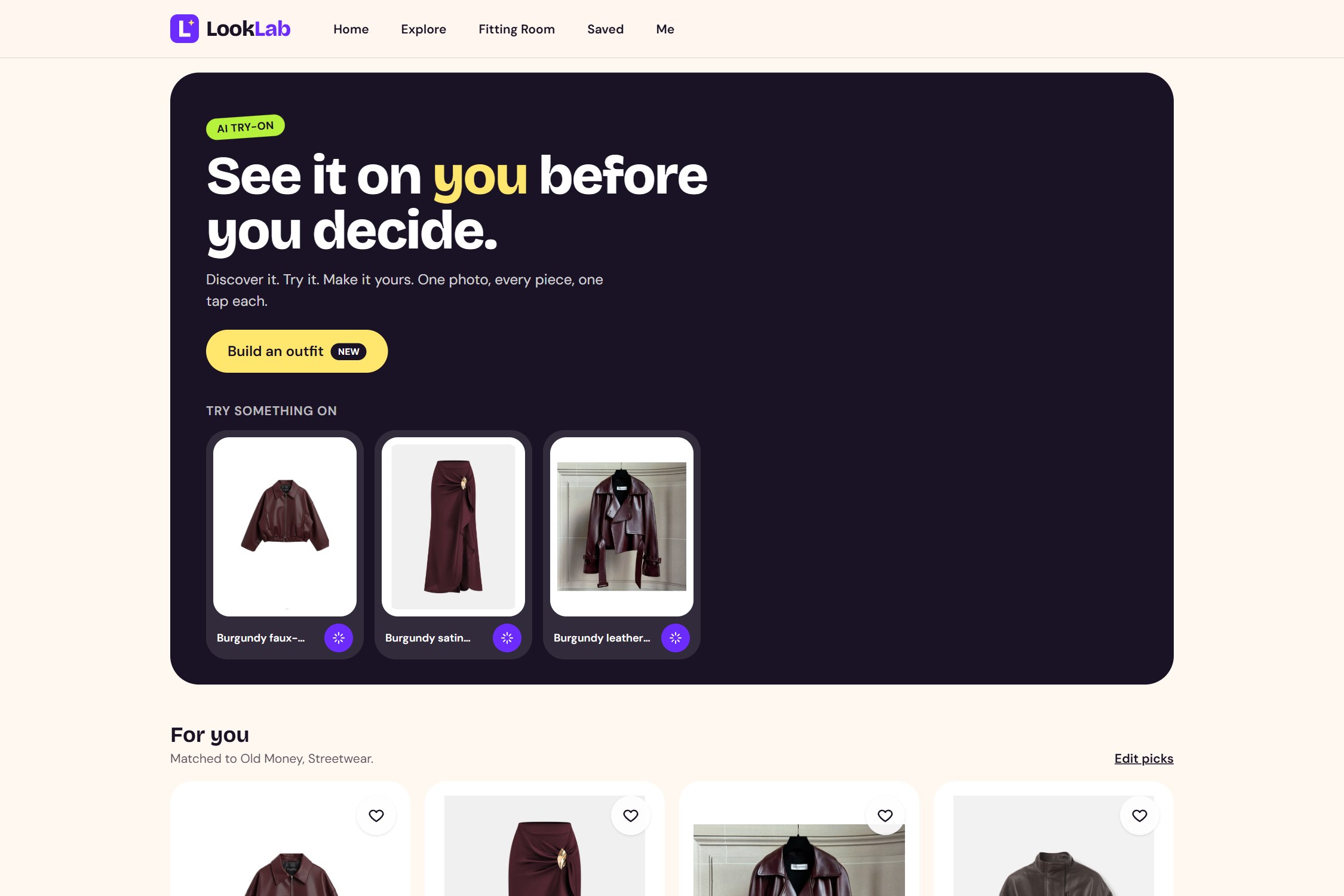
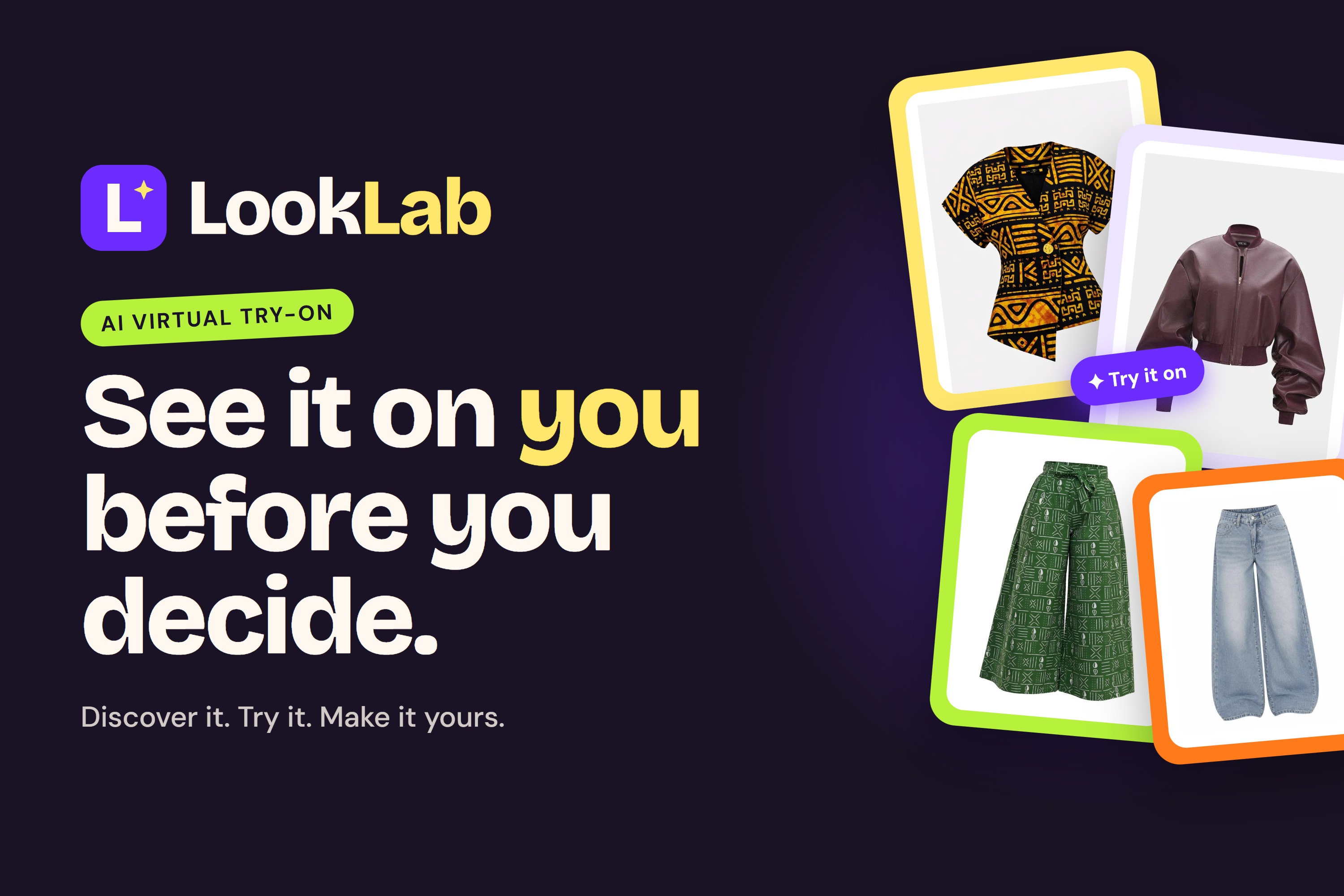
LookLab brings fashion discovery and virtual try-on together in one place, helping people explore different styles, see how clothes might look on them, build outfits, and compare their favourite looks before making a purchase.
What It Does
LookLab is an AI-powered fashion discovery platform with a built-in virtual fitting room.
1. Discover Fashion
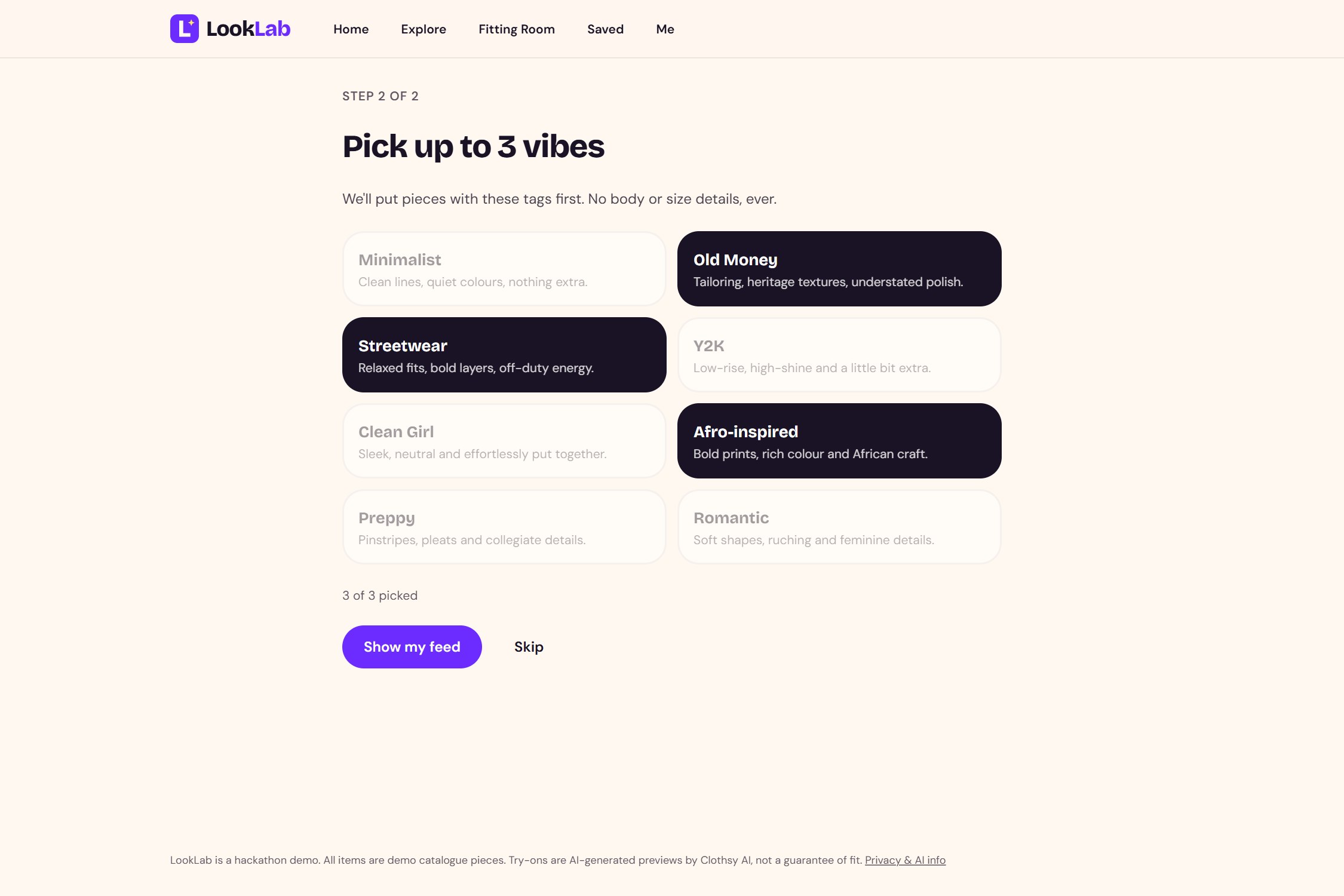
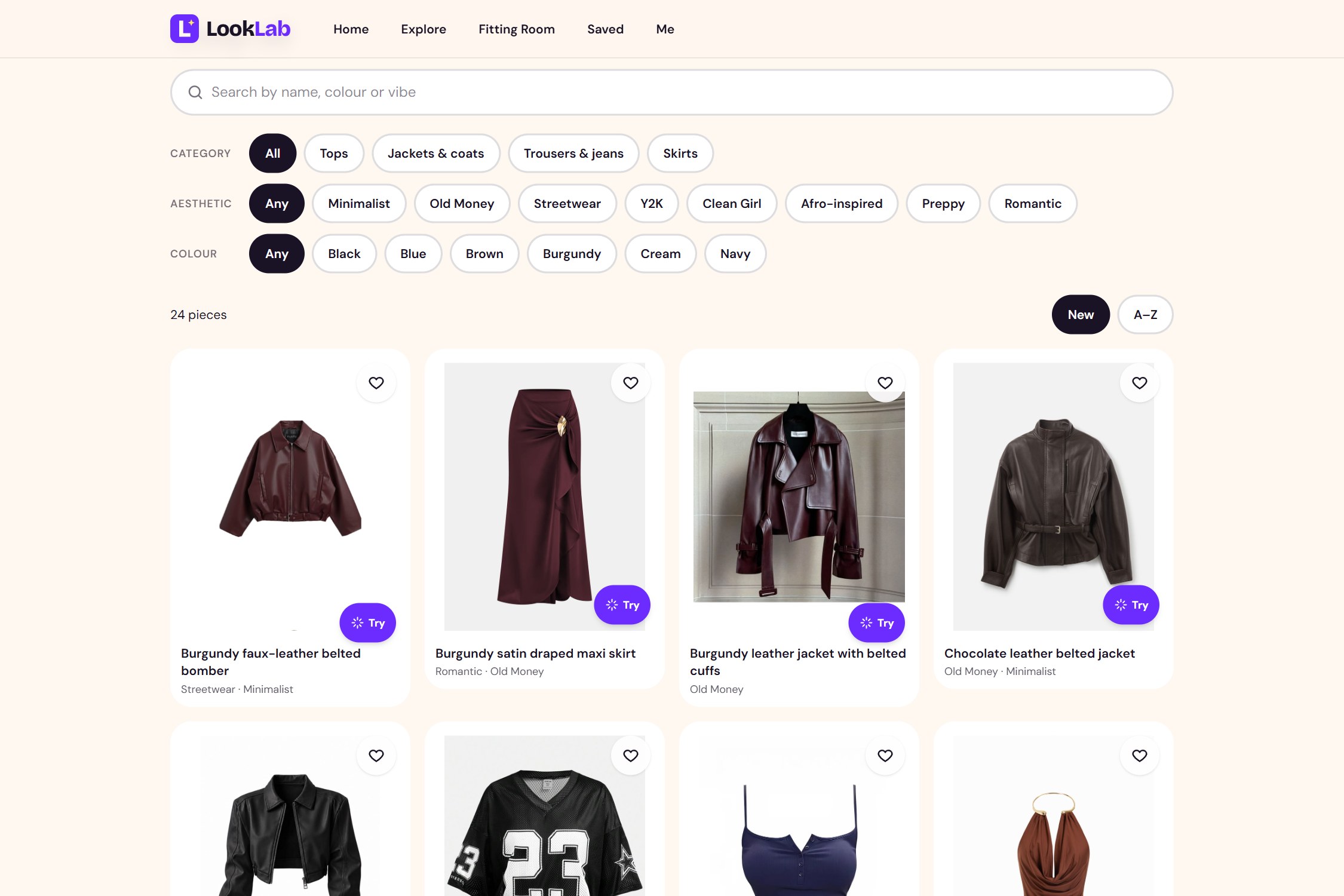
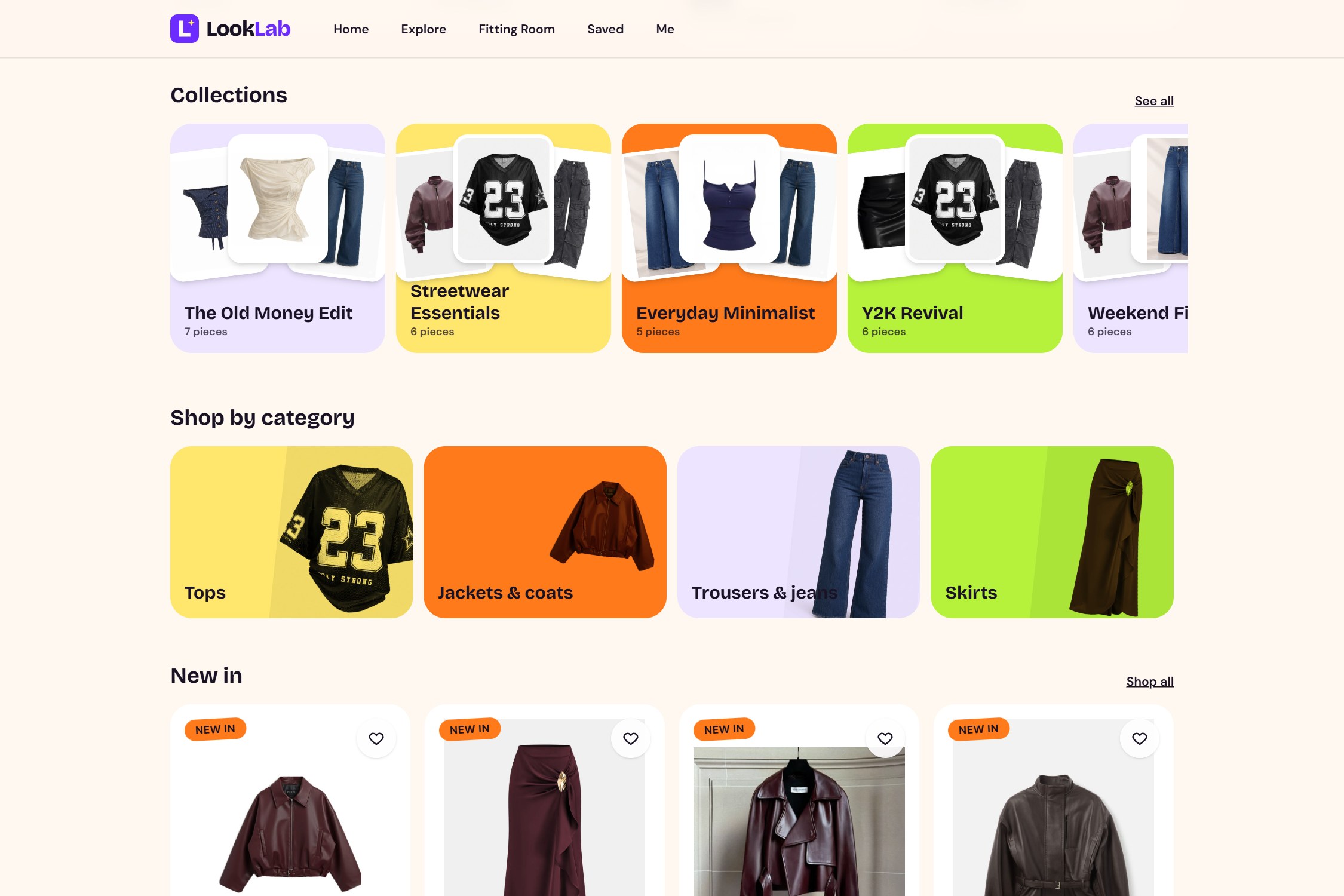
Users can explore a curated fashion feed featuring different clothing styles and aesthetics.
- Eight fashion aesthetics, including Old Money, Streetwear, and Y2K.
- Six curated collections.
- Search and filtering tools.
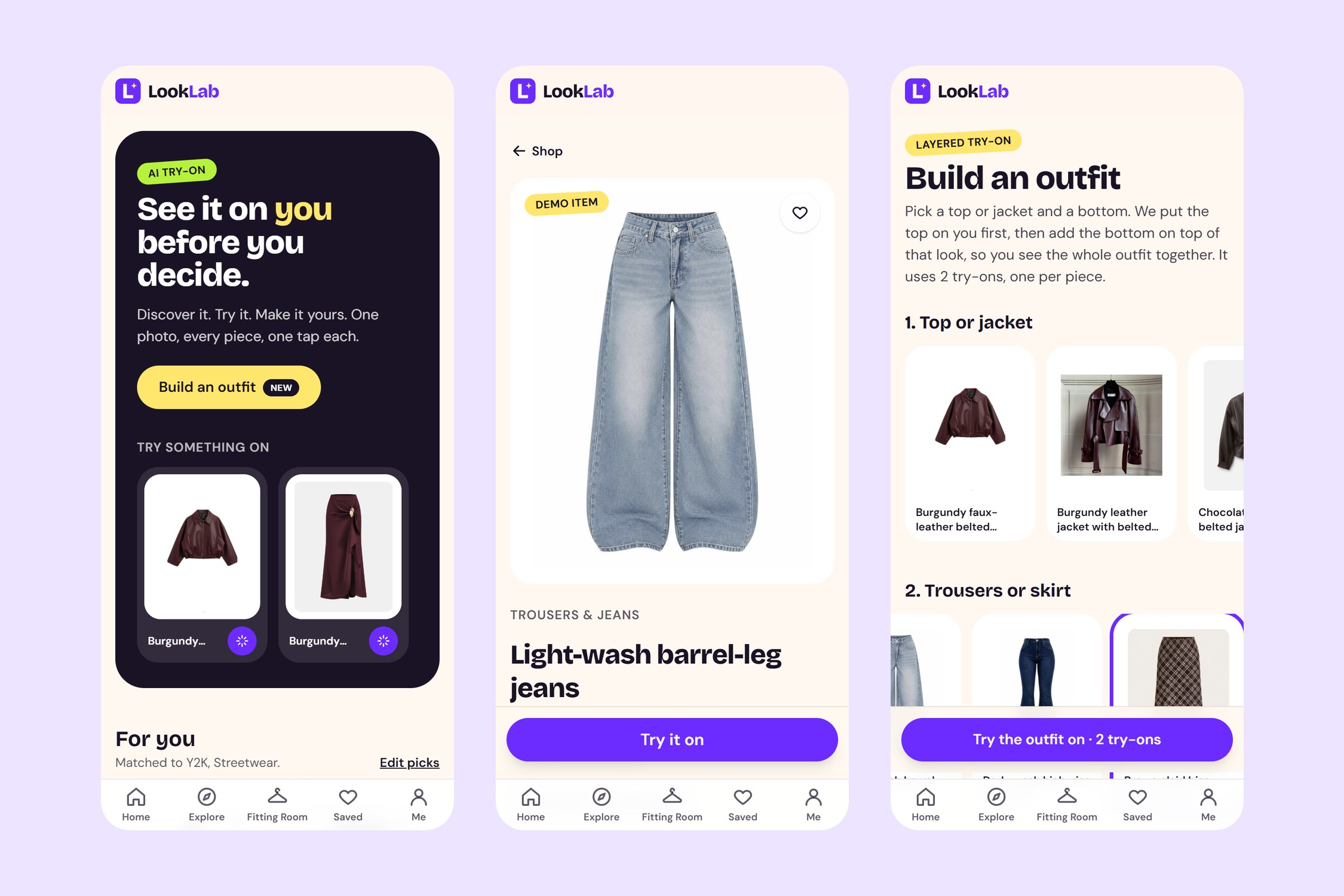
- A personalised discovery experience based on users' selected interests.
Rather than relying on an opaque recommendation system, LookLab uses transparent tag-overlap scoring to calculate how relevant items are to a user's selected interests.
2. Try Clothes On Virtually
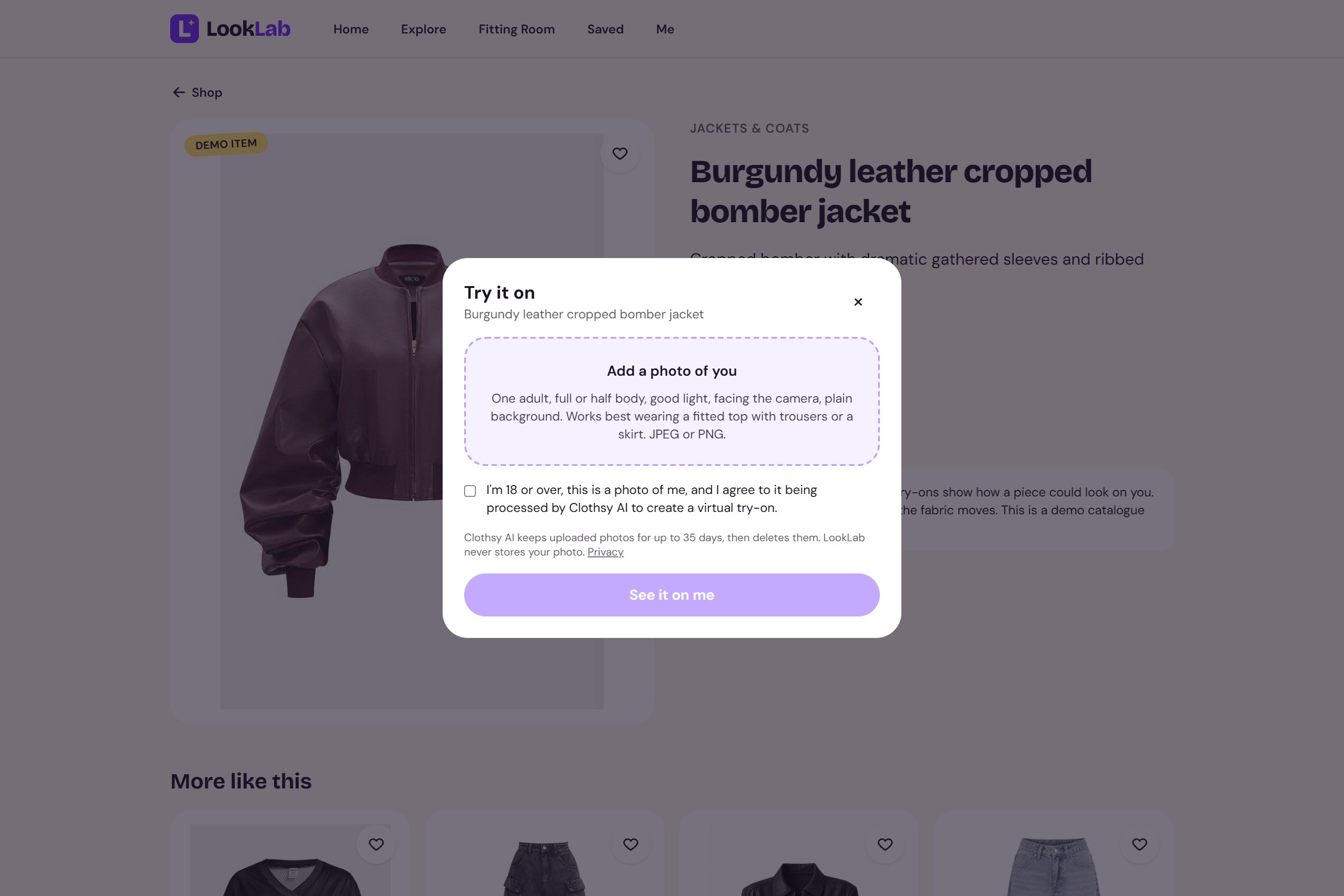
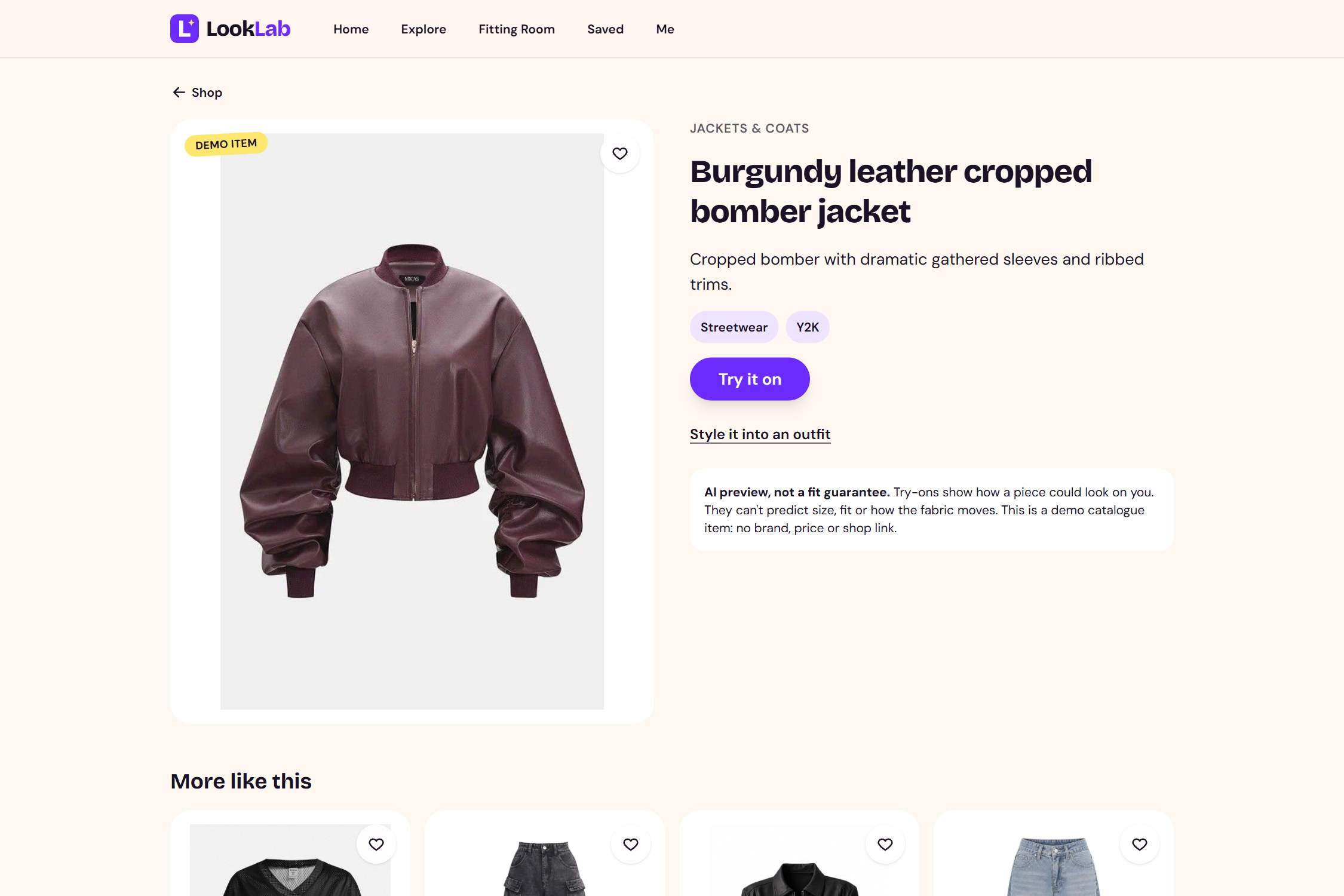
Users can select a garment, upload a photo of themselves, provide explicit consent, and generate an AI-powered preview of themselves wearing the selected item.
The virtual try-on process typically takes around 20 seconds.
LookLab integrates the Clothsy AI Try-On API to generate these previews.
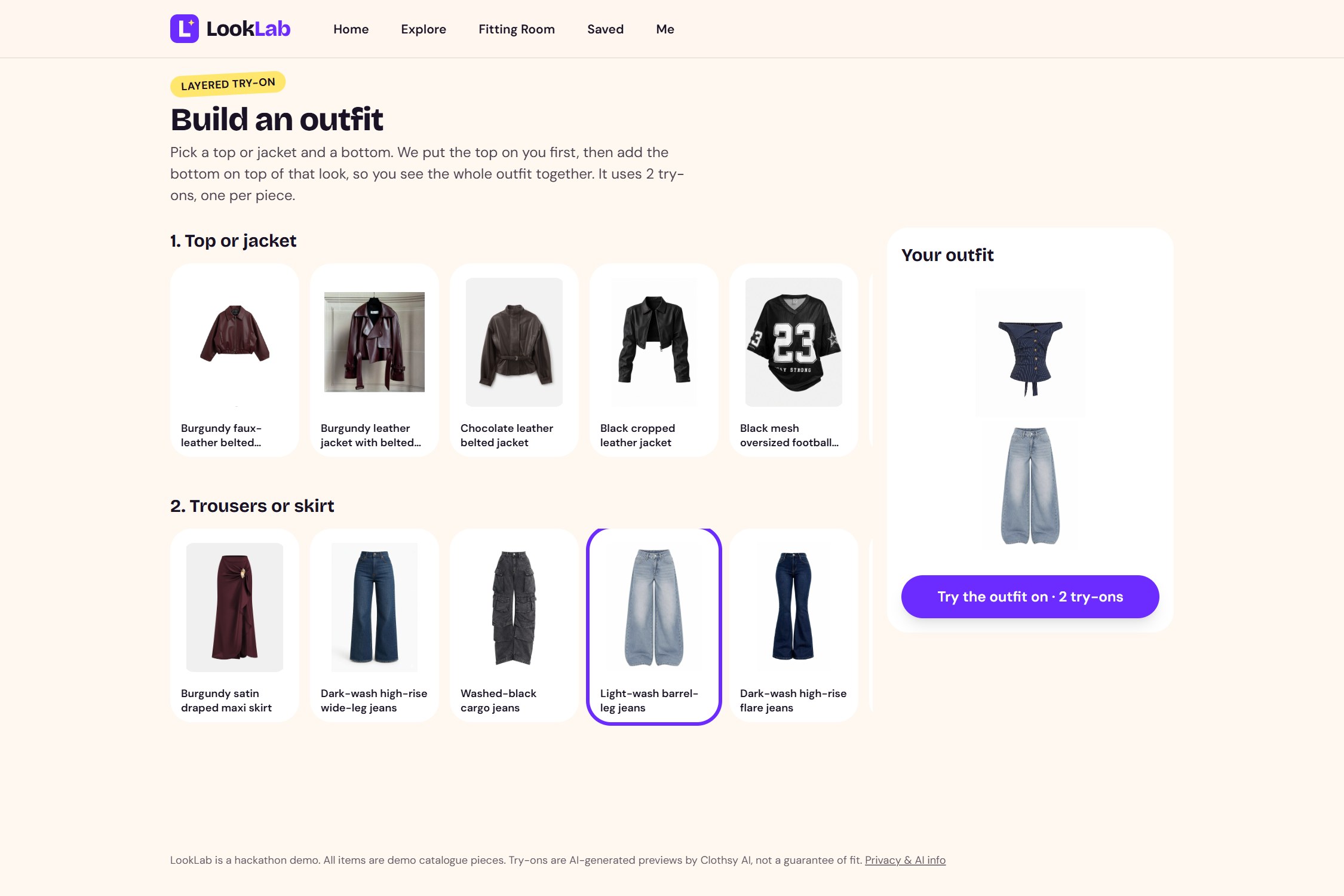
3. Build Complete Outfits
Users can experiment with combinations instead of trying individual garments in isolation.
They can select a top and a bottom, apply the top first, and then layer the bottom onto the generated result.
If the second generation fails, LookLab preserves the first result rather than losing the entire outfit attempt.
4. Compare Different Looks
Users can compare two generated looks side by side, use a reveal slider to examine differences, and compare generated outfits against their original photo.
This makes it easier to evaluate different clothing options.
5. Save Favourite Looks
LookLab includes a fitting-room experience that keeps generated looks together.
- Original uploaded photos are reused for up to 24 hours.
- Generated looks can be saved beyond that period.
- Guest users can upgrade to an email account without losing their existing fitting-room session.
- Saved looks remain accessible across devices.
- Users can delete individual looks or remove all their saved data.
How We Built It
LookLab was built using:
- Next.js 16 with App Router and Cache Components
- React 19
- TypeScript
- Tailwind CSS v4
- Supabase Authentication
- Supabase PostgreSQL
- Supabase Storage
- Clothsy AI Try-On API
- Vercel
Architecture
The application uses Next.js for its frontend and server-side functionality.
Supabase handles authentication, database storage, and saved-look management. Row Level Security (RLS) policies protect database records so users can only access their own private data.
The Clothsy AI integration runs server-side. API credentials are never exposed to the browser, and users cannot directly submit arbitrary image URLs to the AI service. Instead, garments are resolved on the server using product IDs.
Credit-Aware Engineering
We started development with only 20 AI credits, so managing API usage was an important engineering consideration.
We implemented:
- Idempotency keys to prevent duplicate requests from repeated clicks.
- Database constraints that allow only one running try-on per user.
- Per-user and global usage limits.
- A kill switch to stop AI requests when necessary.
- Failure handling so unsuccessful try-ons do not count as completed generations.
These safeguards helped us test the application without unnecessarily exhausting our limited credits.
Privacy and Security
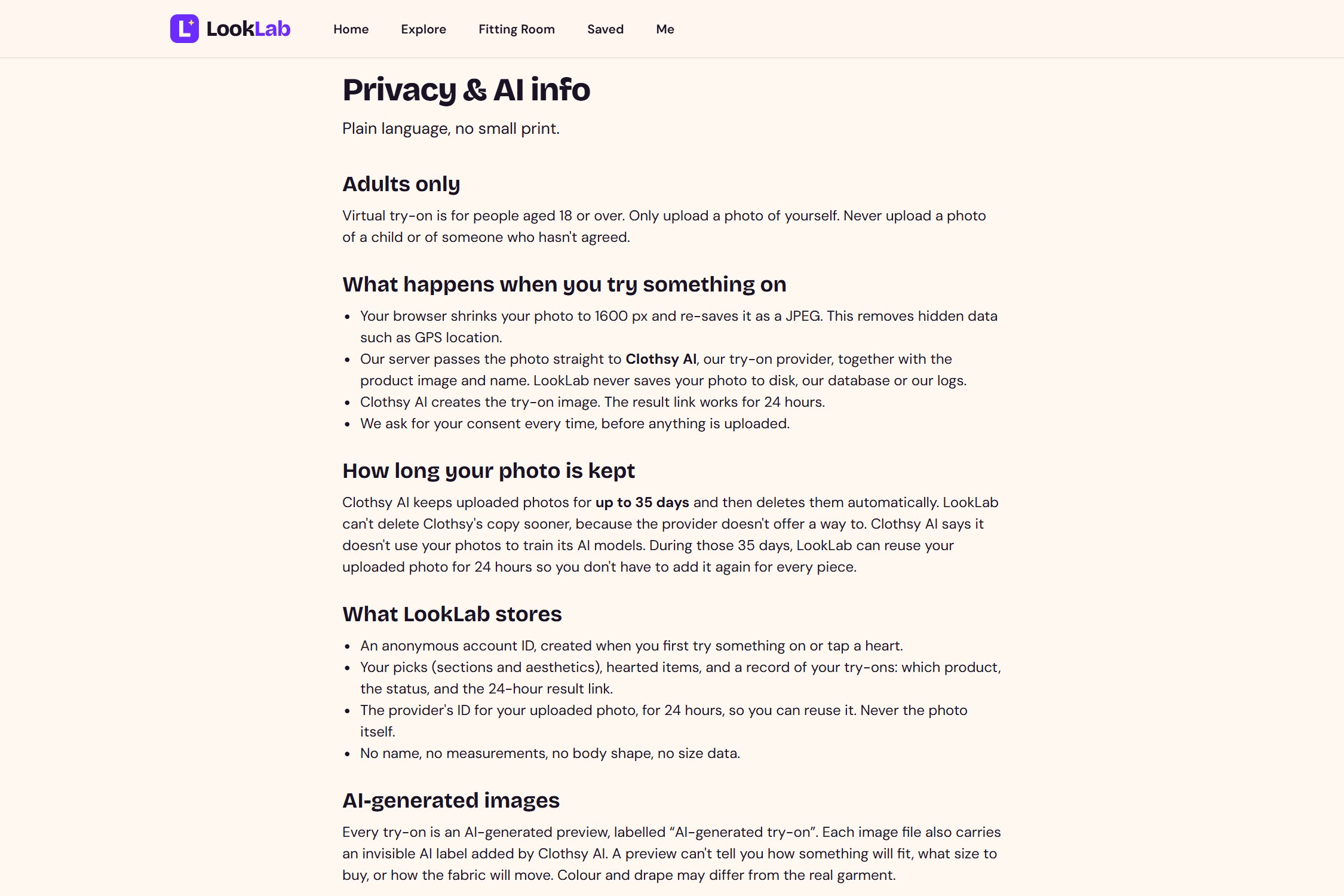
Because LookLab handles personal photos, privacy was considered throughout the implementation.
- Users must explicitly consent before each try-on.
- Original photos are not stored by LookLab.
- Images are resized in the browser and stripped of GPS metadata.
- Image uploads are streamed from memory.
- Saved looks are stored separately from original uploaded photos.
- Database access is protected with Row Level Security.
- AI API credentials remain on the server.
The AI provider may retain uploaded images for up to 35 days under its own retention policy. We make this distinction clear rather than claiming that images are never retained by third parties.
Testing
We created automated tests covering security, data management, and important application flows.
| Test area | Tests |
|---|---|
| Two-user Row Level Security | 38 |
| Try-on API refusal paths | 18 |
| Save and delete operations | 15 |
| Delete-my-data functionality | 12 |
| Layered outfit generation | 11 |
| Total | 94 |
The tests were designed to verify application behaviour without consuming AI generation credits.
Challenges We Ran Into
Making Layered Outfits Work
Our original approach was to send a top and bottom together in a single flat-lay request. However, the AI model frequently ignored one of the garments.
We changed the implementation to sequential layering: generate the top first, then apply the bottom to the resulting image. Although this requires two AI credits, it produces a more reliable experience. We also implemented a fallback that preserves the first result if the second generation fails.
Working Within AI Model Limitations
Not every garment category worked reliably with the provider.
Tops, jackets, jeans, and skirts performed well during testing. Dresses and some revealing designs failed the provider's safety screening, while shoes were not reliably detected.
We removed unsupported categories and disabled a camisole that failed twice rather than presenting an unreliable feature as functional.
We also discovered that applying a lower-body garment to a photo of someone wearing a dress could cause the model to reinterpret the upper body. We added photo guidance recommending a fitted top with trousers or a skirt.
Authentication Edge Cases
We wanted users to experience the fitting room before creating an account.
This introduced challenges around converting anonymous guest sessions into permanent accounts, handling existing email accounts, preserving saved looks, and working within Supabase email rate limits.
We implemented an account-upgrade flow that preserves the guest's existing fitting-room experience.
AI Tools and Development Contributions
AI-assisted development tools were used during the creation of LookLab to support parts of the software development process.
Development tools used: [Insert the actual AI development tools used, such as Claude Code, ChatGPT, Cursor, or GitHub Copilot.]
How they contributed: [Describe the specific tasks they assisted with, such as generating or reviewing code, debugging, implementing interfaces, or explaining technical concepts.]
AI assistance was used as a development aid rather than a substitute for understanding and validating the application. The developer reviewed and tested the resulting implementation and remains responsible for the application's architecture, functionality, security, and final behaviour.
Accomplishments
We built a working fashion discovery and virtual fitting-room experience that connects the full journey:
Discover → Try → Build Outfits → Compare → Save
We are particularly proud of:
- Integrating an external AI try-on service into a functional consumer application.
- Building a complete outfit-layering workflow.
- Implementing guest-to-account conversion without losing user progress.
- Protecting user data with database-level access controls.
- Building privacy-conscious photo handling.
- Completing 94 automated tests without spending AI credits.
- Deploying a working application and verifying that sensitive API credentials are not exposed in the browser's JavaScript.
What We Learned
Building LookLab taught us that integrating an AI model into a product involves much more than making an API request.
The experience depends on understanding model limitations, managing usage costs, handling unpredictable outputs, designing useful fallbacks, and communicating privacy expectations clearly.
We also learned that a good virtual try-on experience needs more than a generated image. Users need ways to discover relevant products, experiment with combinations, compare results, and keep the looks they like.
What's Next
There is still room to make LookLab more useful for everyday fashion shopping.
Our next priorities include:
- Integrating retailer catalogues and affiliate product feeds.
- Adding size guidance using retailer-provided size charts.
- Introducing shareable outfit collections.
- Improving garment compatibility and try-on reliability.
- Providing engagement insights to help users understand their saved looks.
Our long-term goal is to make online fashion discovery feel more personal and help people make more confident purchasing decisions.
Project Links
- Live application: https://looklab-tau.vercel.app/
- GitHub repository: https://github.com/ifeoluwaadebulugbe/Looklab
- Demo video: https://www.youtube.com/watch?v=5QTWp7neN7w
Built With
Next.js, React, TypeScript, Tailwind CSS, Supabase, PostgreSQL, Supabase Storage, Clothsy AI Try-On API, Vercel
Built With
- ai
- api
- artificial
- auth
- computer
- css
- generative
- intelligence
- javascript
- next.js
- postgresql
- react
- storage
- supabase
- tailwind
- typescript
- vercel
- vision
