-
-
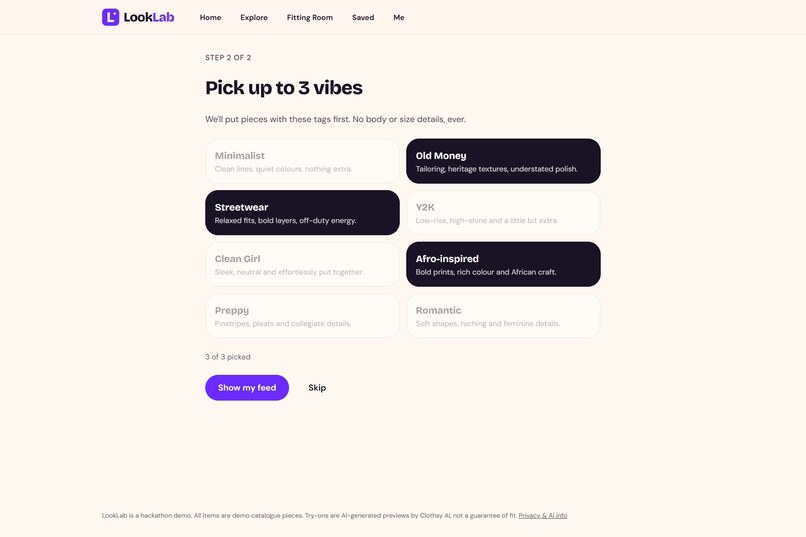
ONBOARDING
-
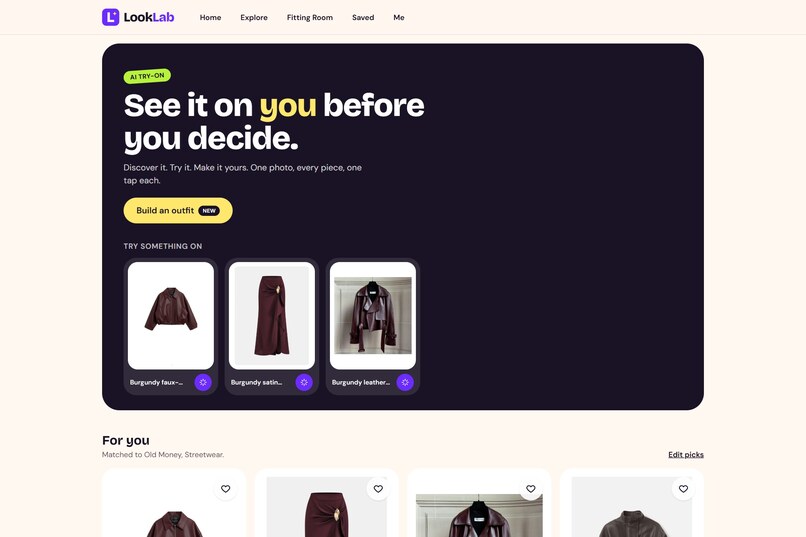
HOME
-
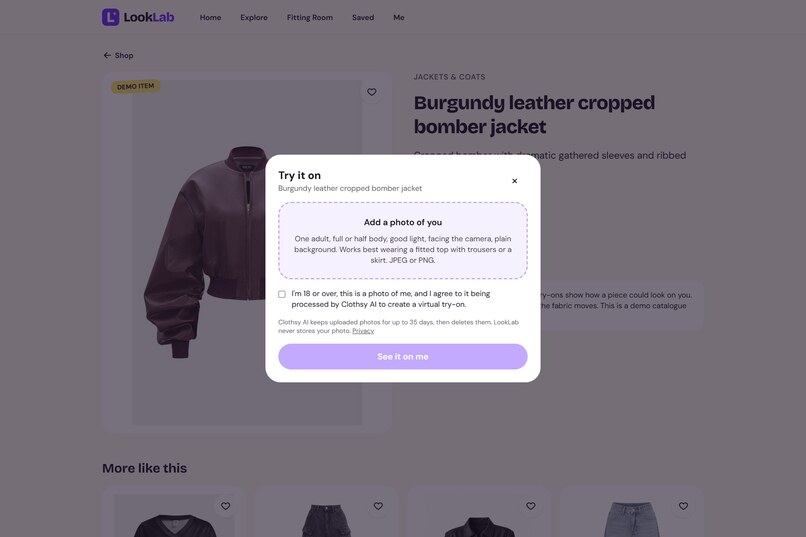
TRY-ON CONSENT
-
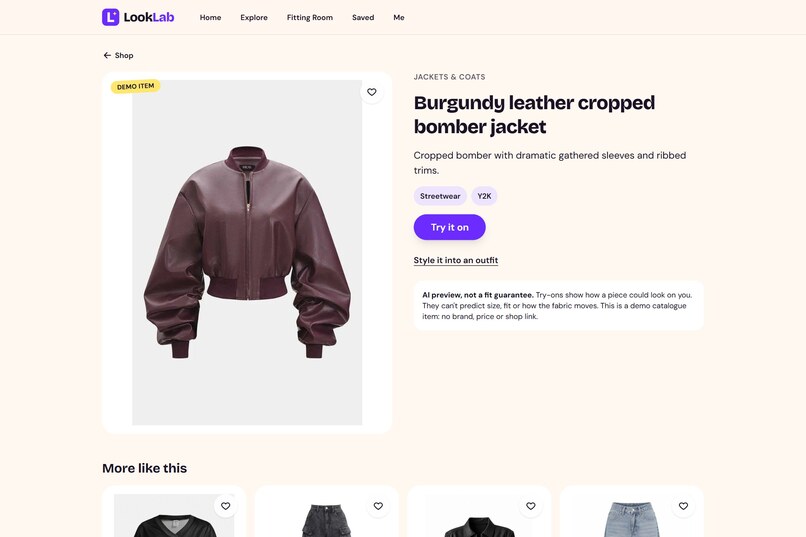
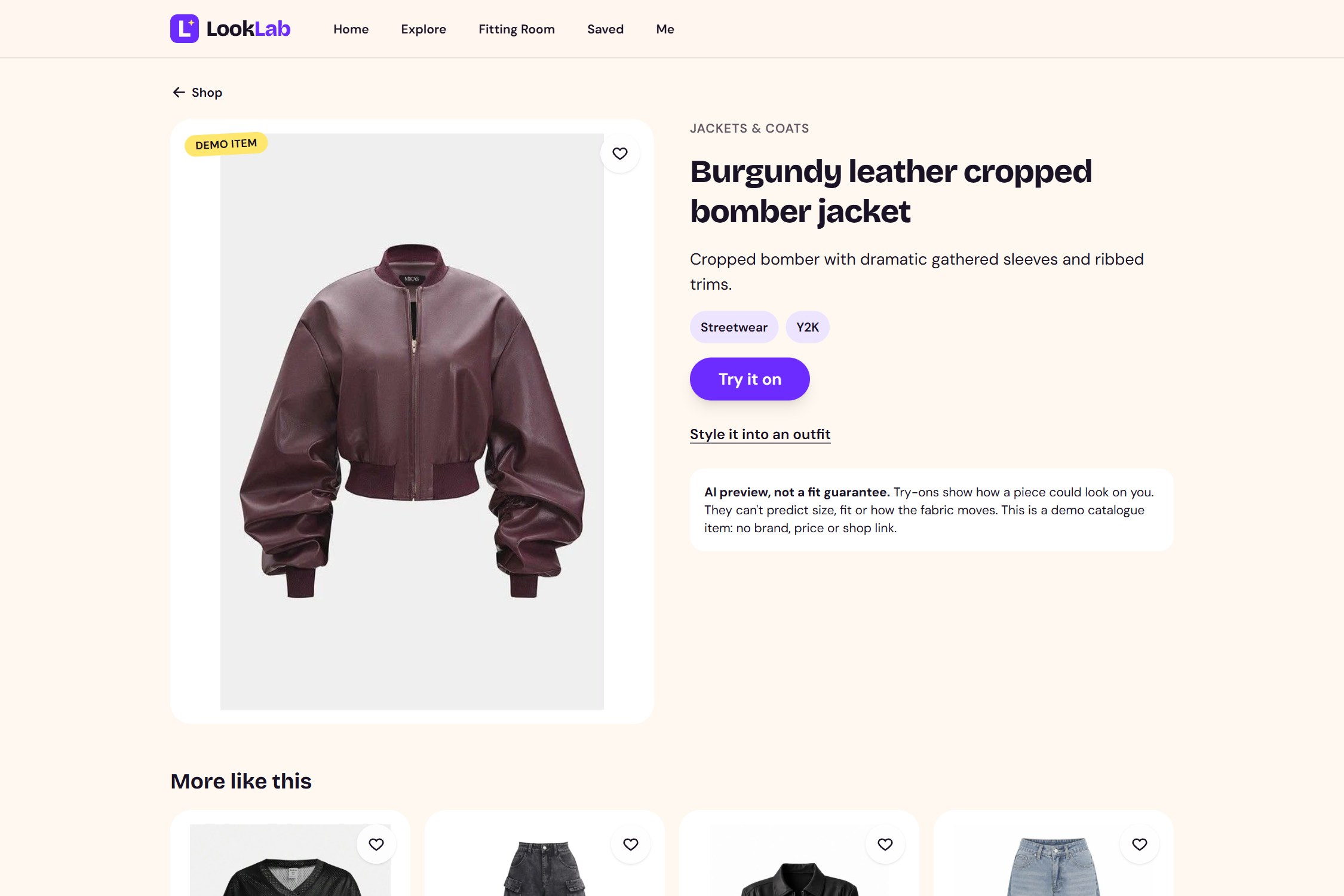
PRODUCT
-
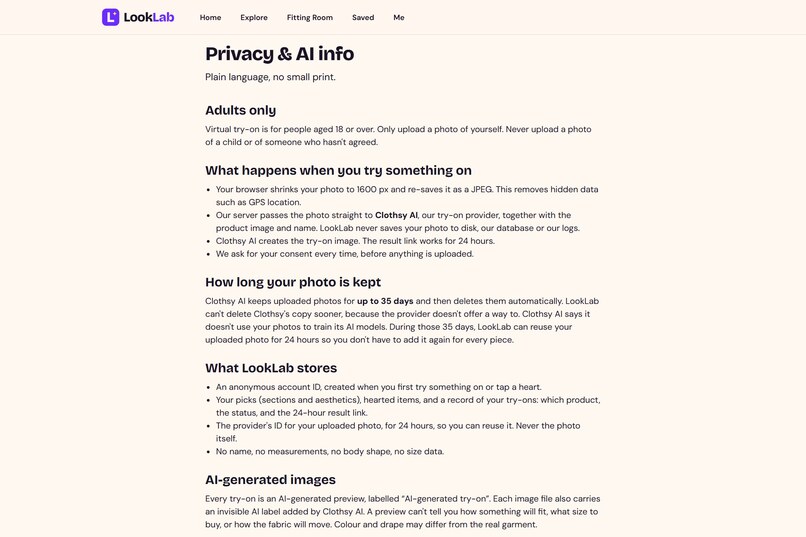
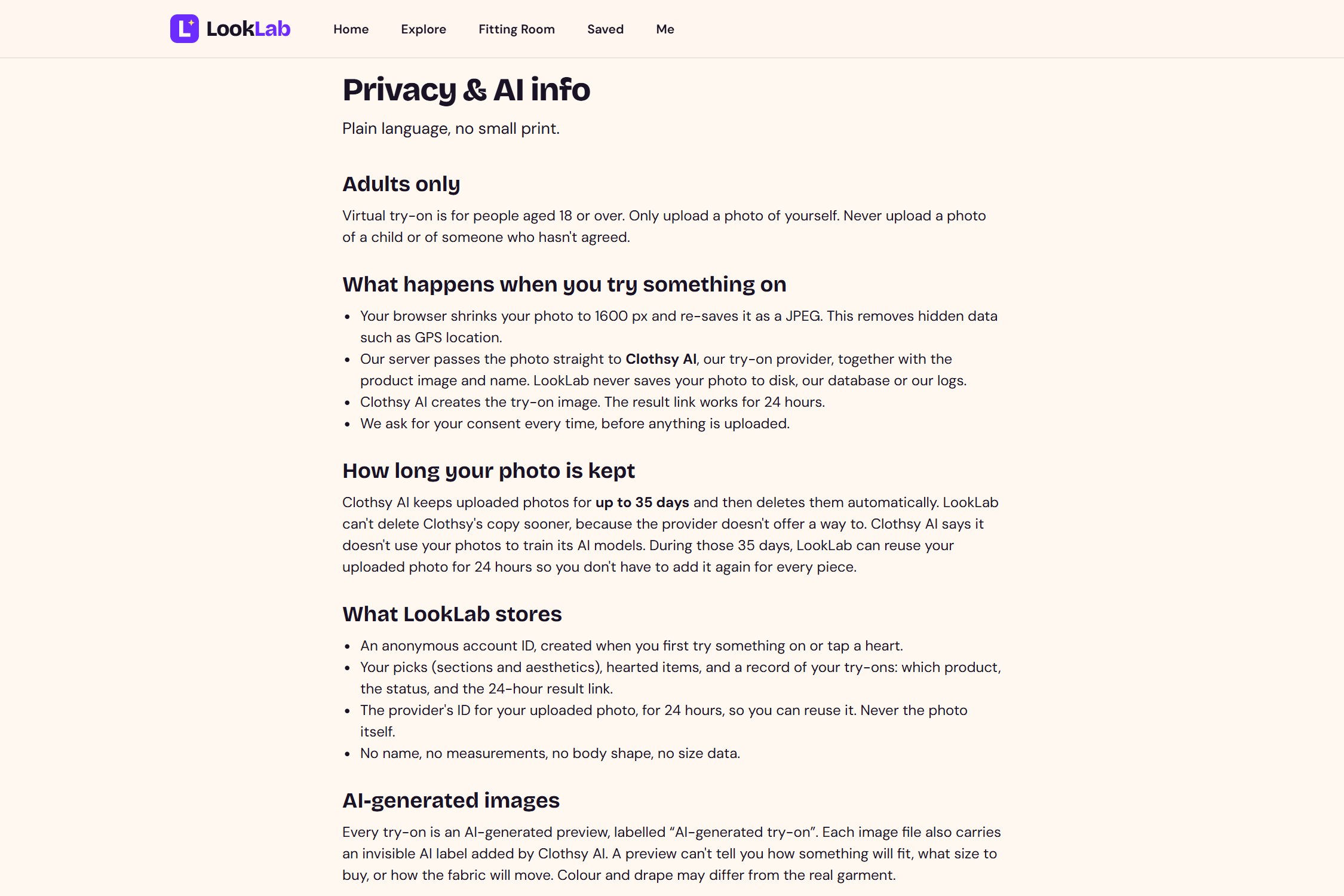
PRIVACY AND AI
-
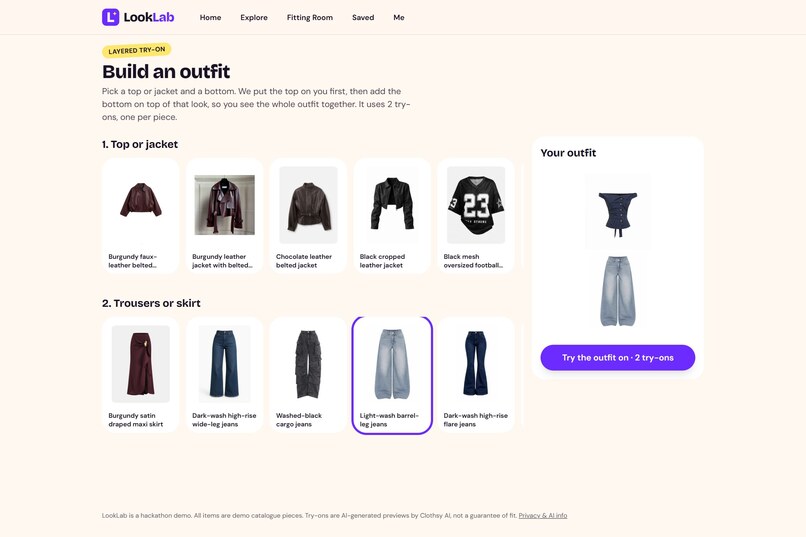
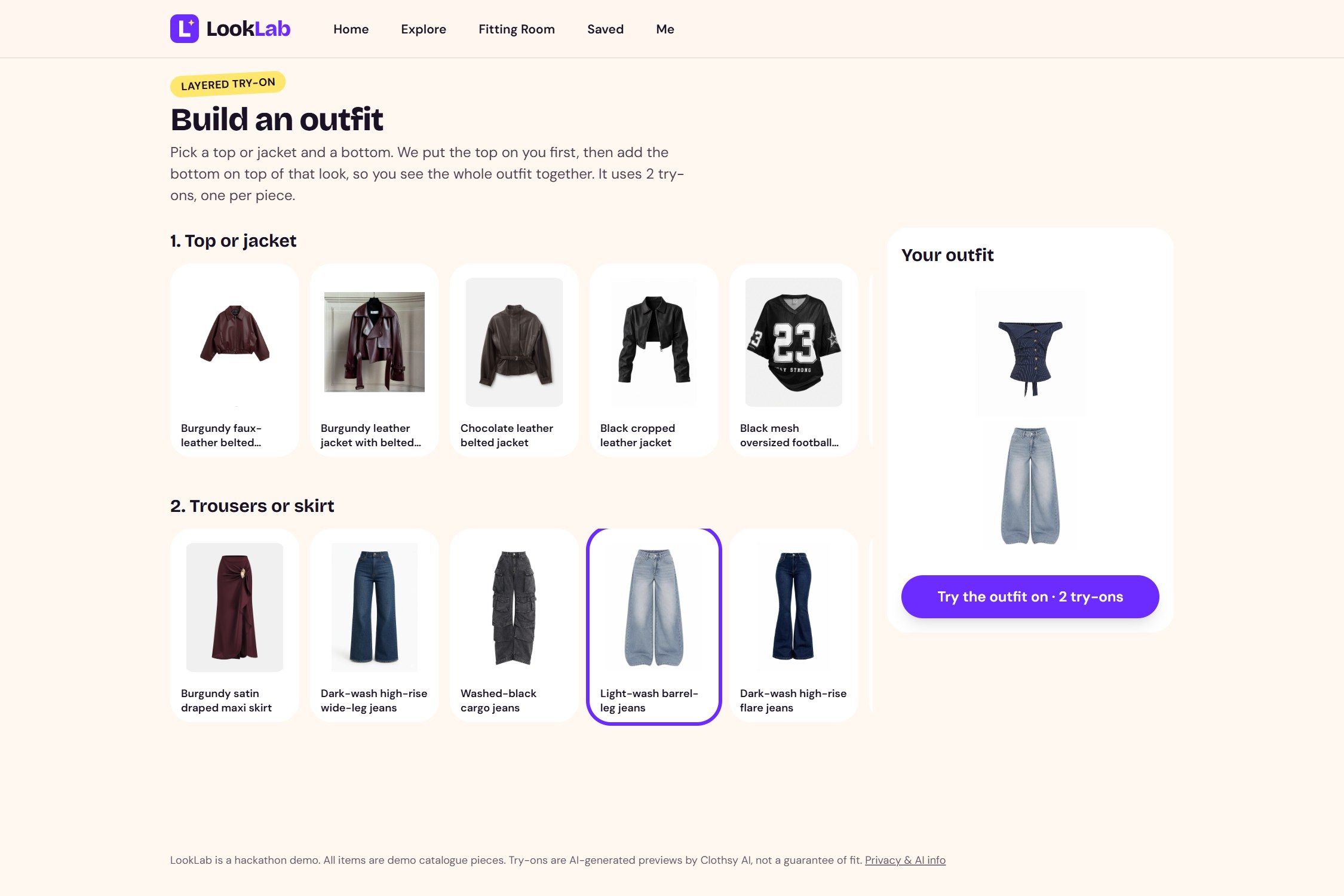
BUILD AN OUTFIT
-
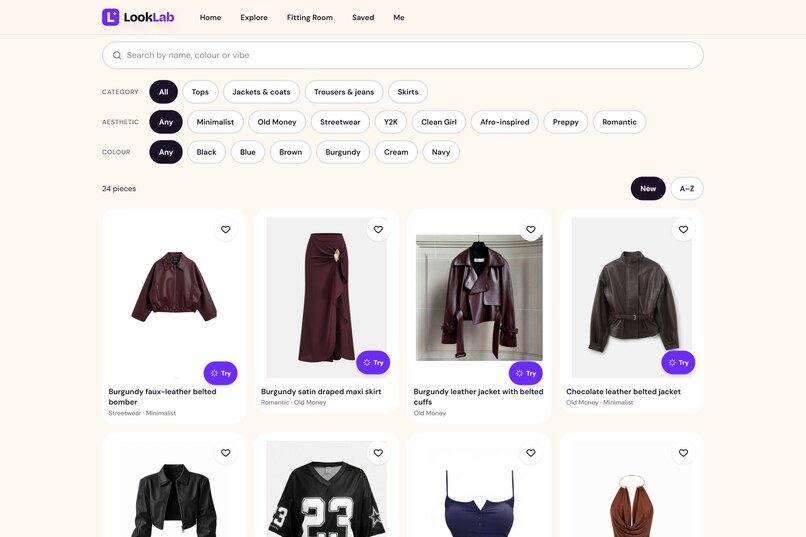
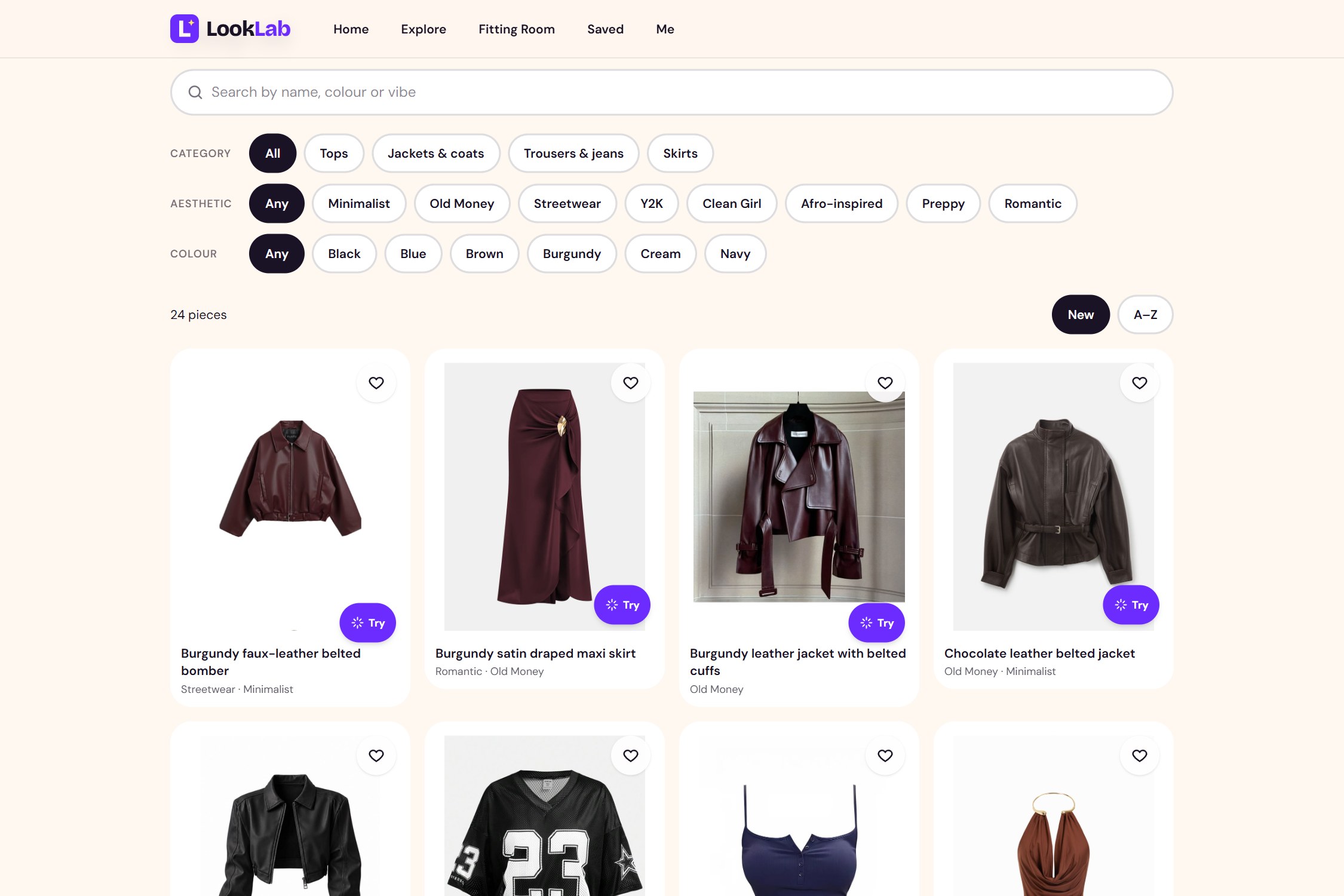
SHOP
-
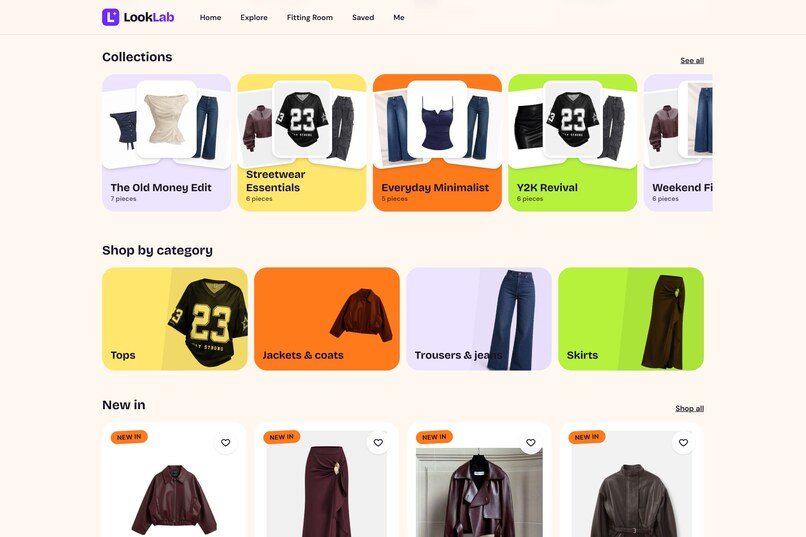
COLLECTIONS
-
MOBILE
LookLab
Inspiration
We all do it: scroll TikTok or Pinterest, fall for an outfit on a model, and then guess whether it would work on us.
That gap between "I love how this looks on her" and "I can see how this looks on me" is where online fashion shopping breaks down.
Most virtual try-on demos stop at "upload two images, get one result". We wanted try-on to feel like a fitting room: somewhere you try a few things, compare them, and decide.
What It Does
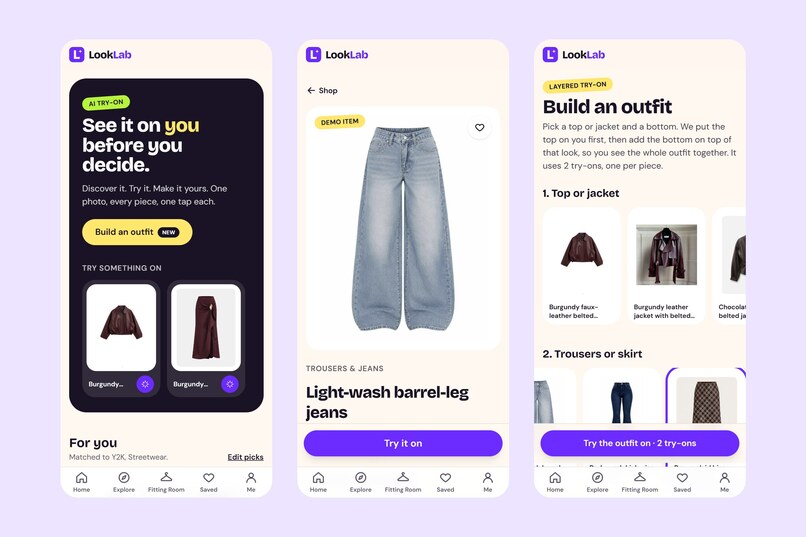
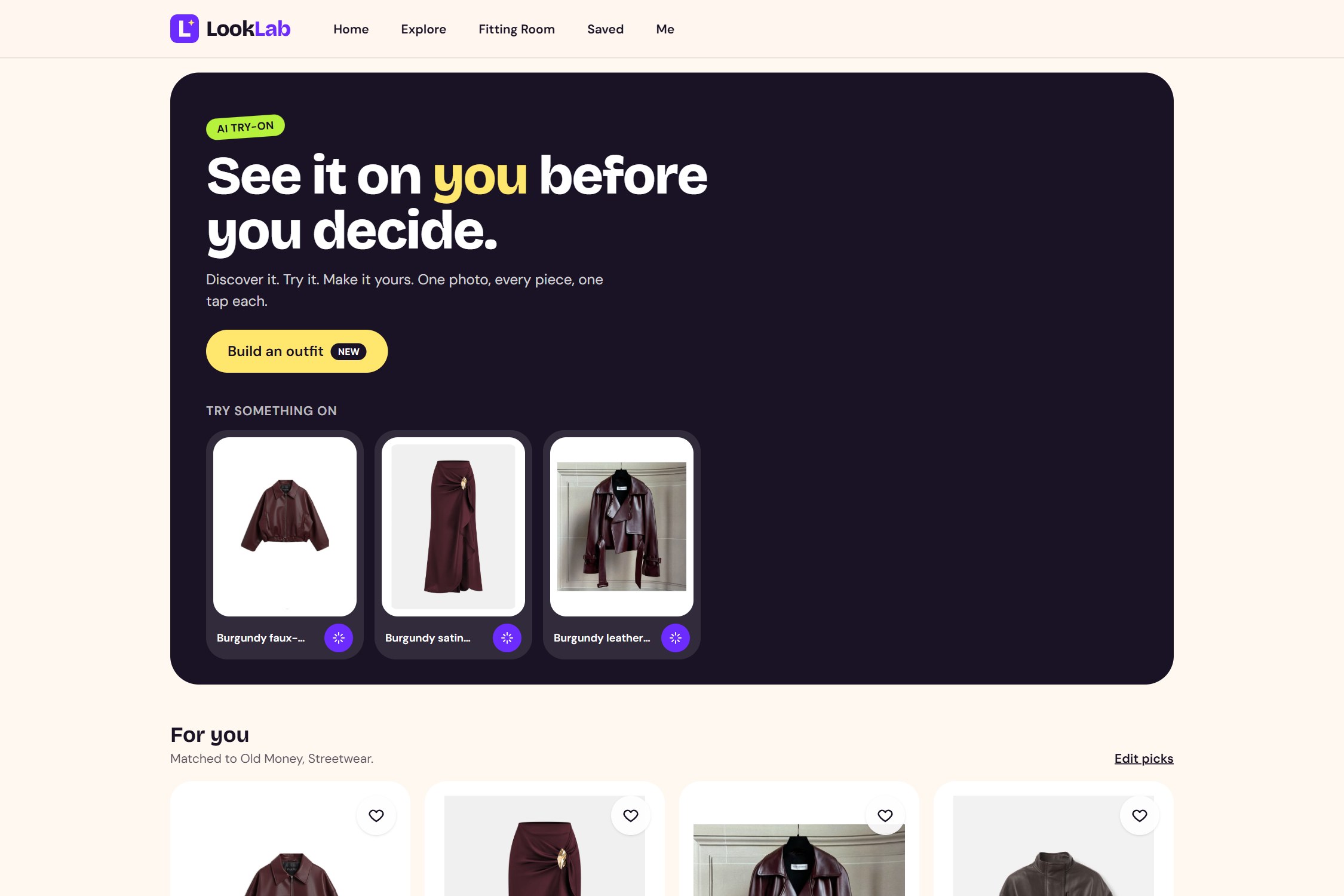
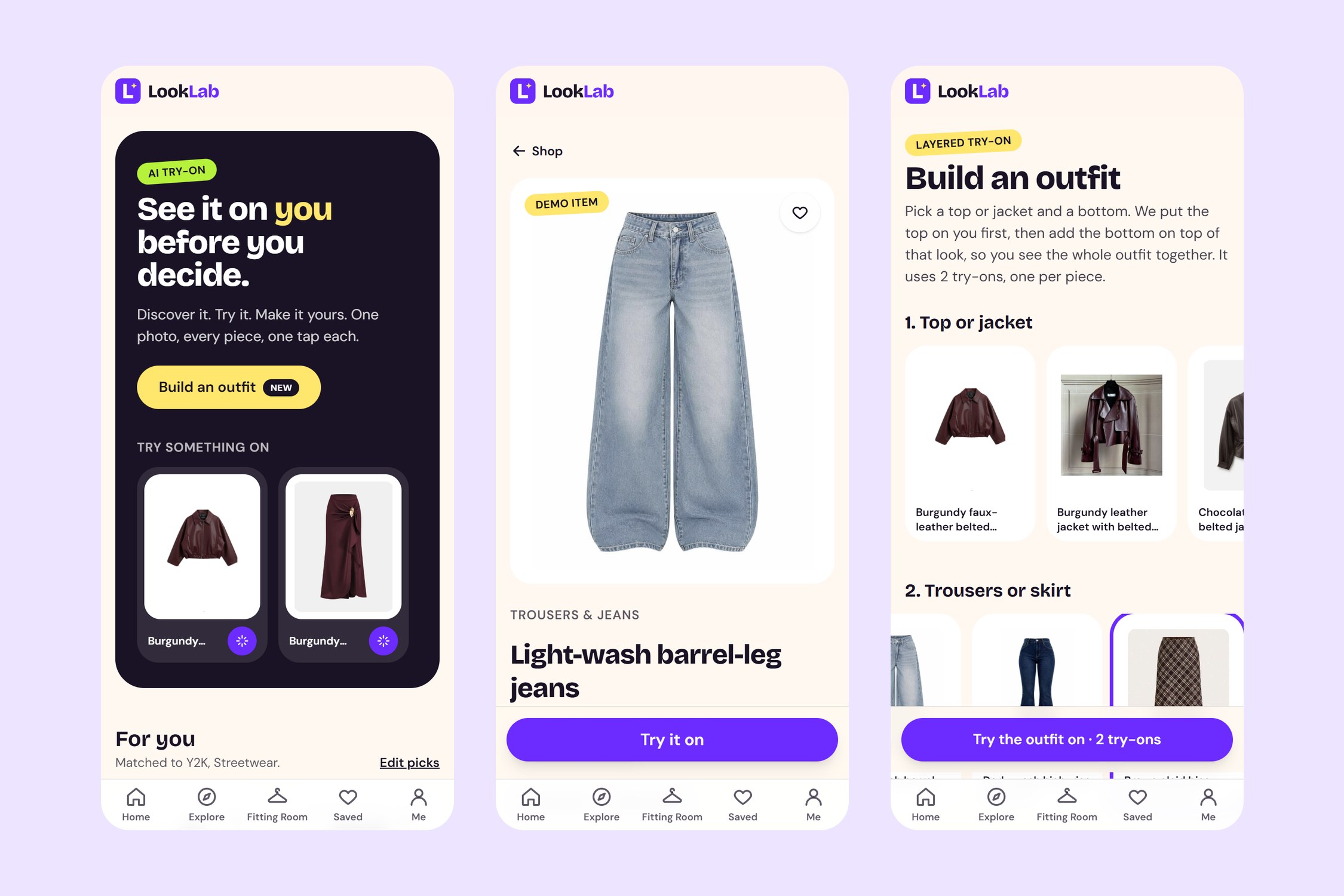
LookLab is a fashion discovery app where every piece has a Try It On button.
1. Discover
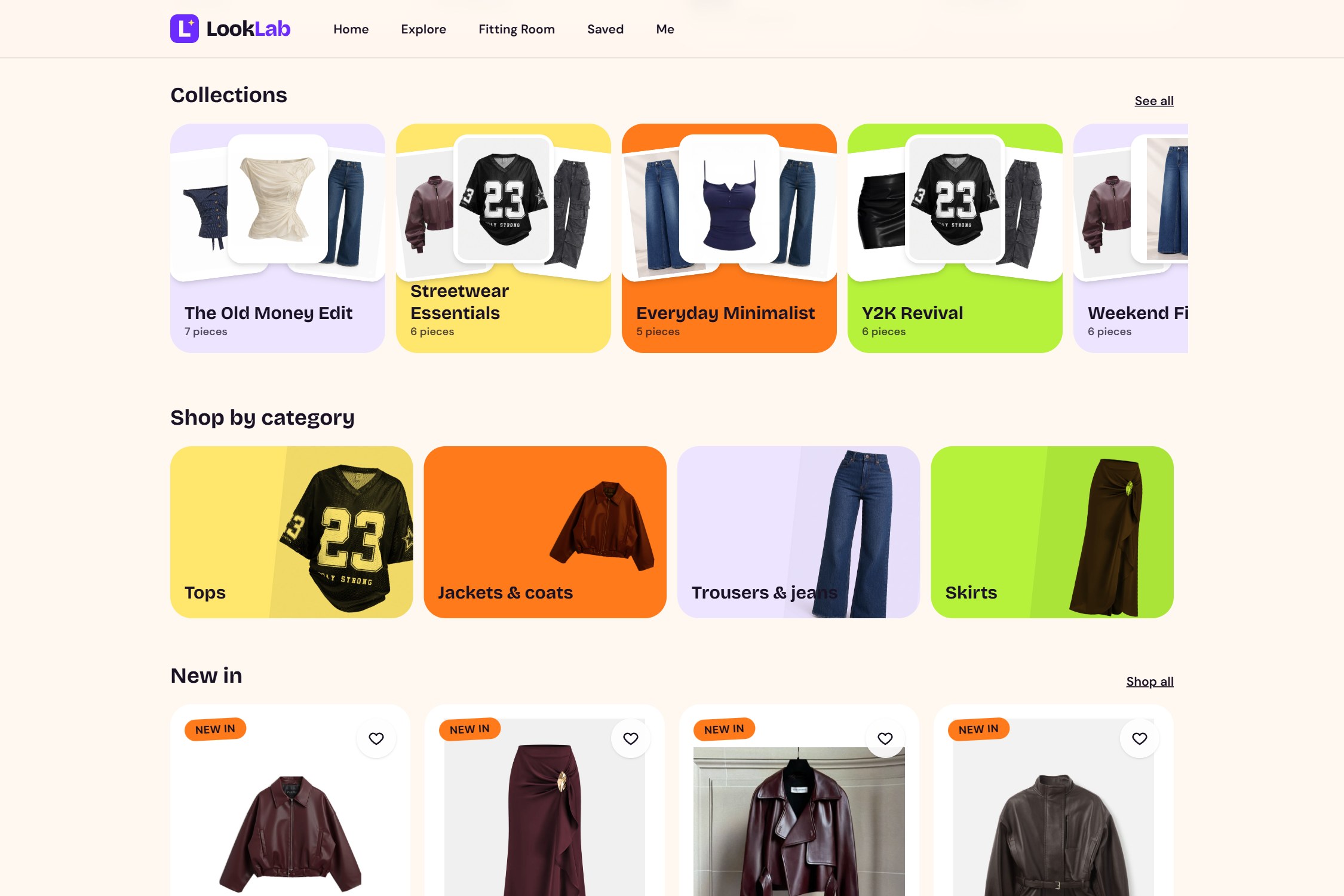
- An editorial feed.
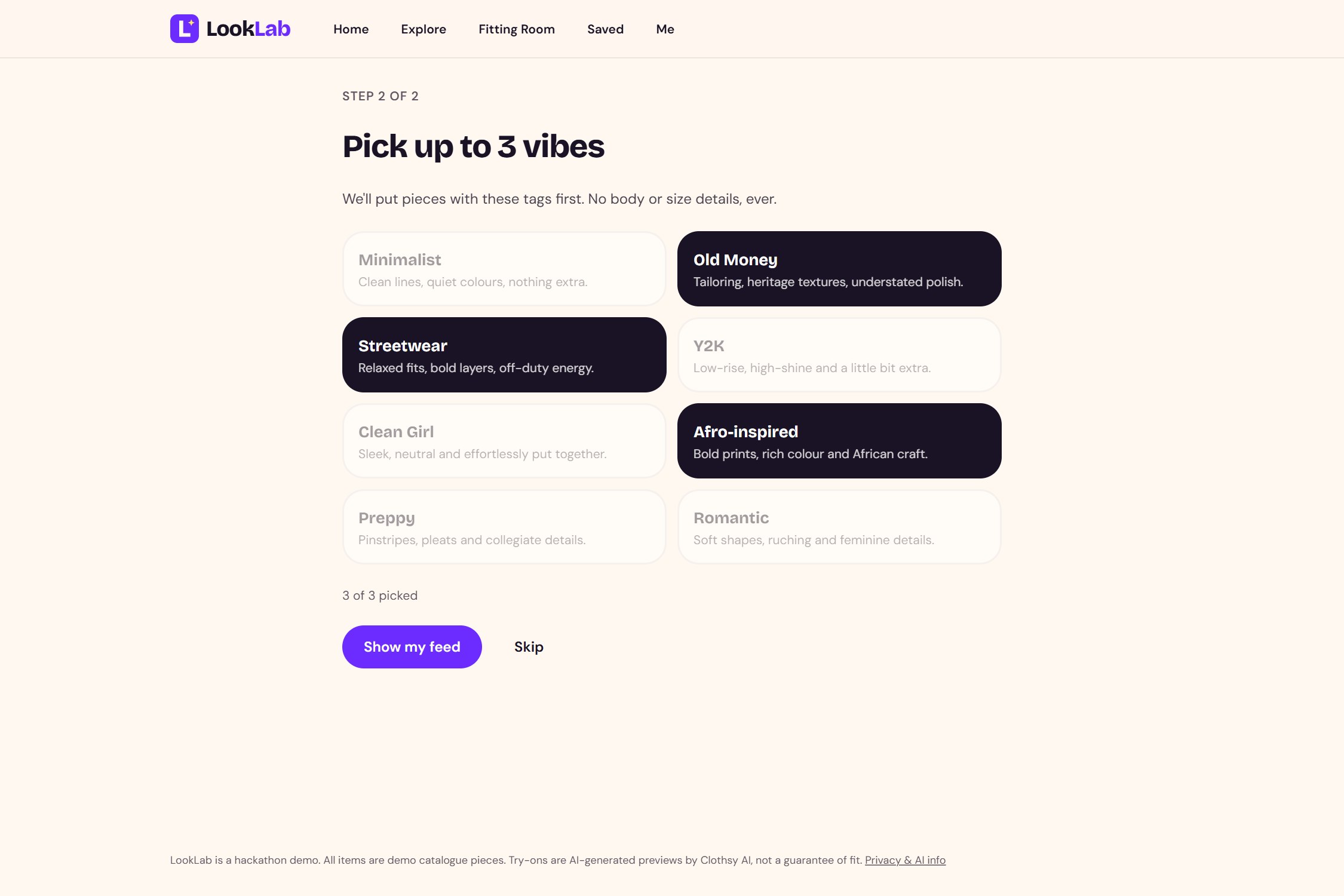
- 8 fashion aesthetics (Old Money, Streetwear, Y2K, etc.).
- 6 curated collections.
- Search and filters.
- A 2-step onboarding experience that puts relevant pieces first using a transparent tag-overlap score rather than a black-box recommendation algorithm.
2. Try It On
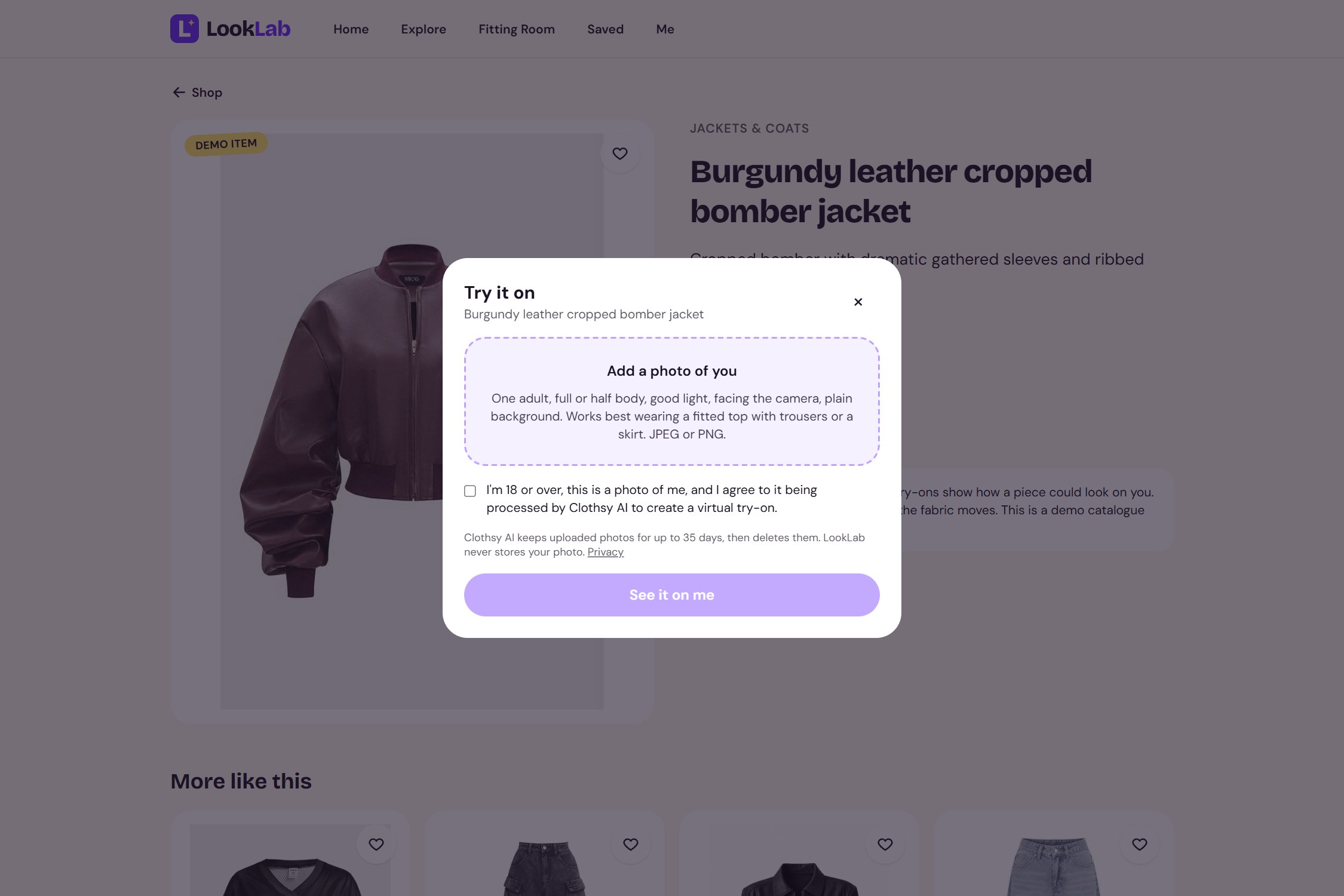
- Upload one photo.
- Tick an 18+ consent checkbox.
- In approximately 20 seconds, see an AI-generated preview of yourself wearing the selected piece.
- Powered by the Clothsy AI Try-On API.
3. Fitting Room
- Your photo is reused for 24 hours, making subsequent try-ons just one tap away.
- Every look from your session is kept together.
4. Build an Outfit
- Pick a top and a bottom.
- LookLab layers them: the top goes on first, then the bottom is added over that result.
- See the complete outfit on yourself.
5. Compare
- View two looks side by side.
- Use a reveal slider.
- Compare before-and-after images against your original photo.
6. Save Looks
- Add your email to turn your guest account into a permanent account without losing anything.
- Saved looks outlive the 24-hour preview.
- Access your saved looks from any device.
7. Your Data Is Yours
- Delete individual looks.
- Delete all your data in one tap.
How We Built It
Technology Stack
- Frontend: Next.js 16 (App Router, Cache Components), React 19, TypeScript and Tailwind CSS v4.
- Deployment: Vercel.
- Authentication: Supabase Auth, with invisible anonymous sign-in on the first try-on and email account upgrades when saving.
- Database: Supabase Postgres with Row Level Security (RLS) enabled on every table.
- Storage: Supabase Storage, with a public catalogue bucket and a private saved-looks bucket.
- AI Integration: Clothsy AI through its official SDK, running exclusively server-side.
The browser never sees the API key and never calls the AI API directly. Garments are always resolved server-side using their product IDs, preventing users from directing try-on requests at arbitrary images.
Credit-Aware Engineering
Credits represent real money, and we started with just 20.
We implemented several safeguards:
- Every click carries an idempotency key.
- A database unique index allows only one running try-on per user, preventing double-clicks from consuming credits twice.
- Per-user and global usage caps.
- A kill switch for controlling usage.
- Failed try-ons are refunded by the provider and never counted.
On Day 1, we ran a garment test matrix against the real API before building the catalogue. This allowed us to design around what actually works.
Testing and Reliability
Every safeguard has a dedicated test script:
| Test | Checks |
|---|---|
| Two-user RLS | 38 |
| Every refusal path of the try-on route | 18 |
| Save/delete looks | 15 |
| Delete-my-data | 12 |
| Layered outfits | 11 |
| Total | 94 |
None of these tests spend credits.
Challenges We Ran Into
1. What the Model Accepts
Our test matrix showed that tops, jackets, jeans and skirts work beautifully.
However:
- Dresses and very revealing cuts (strapless, strappy and high-slit designs) consistently failed the provider's safety screening.
- Shoes weren't detected at all.
We removed those categories and disabled try-on for one camisole that failed twice rather than shipping a broken experience.
2. Full Outfits for One Credit
Our original idea was to combine a top and bottom into one flat-lay image and spend a single credit.
It looked clever, but during a live test, the AI ignored the top completely.
We switched to an honest layered approach:
- First, try on the top.
- Then, use the first result as the new "you" and apply the bottom.
- If the second layer fails, users keep the top look instead of losing everything.
3. Lower-Body Garments Re-imagine Your Top Half
Trying a skirt on a photo of someone wearing a dress causes the AI to invent a new top.
We addressed this through photo guidance, recommending that users wear a fitted top with trousers or a skirt for the best results.
4. Authentication Edge Cases
Several authentication scenarios required careful handling:
- Upgrading a guest account to an email account without losing its Fitting Room.
- Handling situations where an email already has an account.
- Working around Supabase's built-in email rate limits.
Accomplishments That We're Proud Of
1. A Real, Working Try-On Experience
We built a complete experience, not a mock-up:
Discover → Try → Reuse Your Photo → Compare → Save
2. Responsible by Design
Privacy and transparency were built into the product from the beginning.
- Explicit consent is required every time.
- We never store users' original photos.
- Photos are resized in the browser, stripping GPS metadata, and streamed directly from memory.
- We honestly disclose that the AI provider retains uploads for up to 35 days.
- Every generated result carries an AI label.
- Saved files are stored byte-for-byte so the provider's embedded AI label survives.
- We make no unsupported claims about fit, sizing or return-rate reductions.
3. Verified Security
- We scanned the live site's JavaScript for exposed secrets and found none.
- A two-user test confirms that users cannot read or delete one another's saved looks.
What We Learned
1. Test AI on real inputs first. One afternoon of testing saved us from building a catalogue full of garments that couldn't be tried on.
2. Honest limitations make a better product than clever shortcuts. Our layered outfit approach costs more credits, but it shows users what they actually selected.
3. When every API call costs money, reliability is part of the product. Idempotency, single-flight guards and usage caps aren't nice-to-haves. They're essential to making the product work correctly.
What's Next for LookLab?
We have several ideas for taking LookLab further:
- Real retailer catalogues: Integrating affiliate product feeds.
- Size guidance: Using real retailer size charts to help shoppers make more informed decisions.
- Shareable looks: Letting users share outfits and ask friends "Which one?" in their group chats.
- Engagement measurement: Understanding whether people who try something on return to those products and engage with them again.
Built With
- clothsy-ai
- next.js
- postgresql
- react
- supabase
- tailwindcss
- typescript
- vercel
